
How to Grocery Shop
Good grocery shopping habits lay the foundation for a healthier lifestyle. Shopping with intention helps you make better choices, reduce processed foods, and fill your cart with fresh, wholesome ingredients. Instead of grabbing whatever is convenient, you’ll have nutritious, delicious options ready to enjoy.
I didn’t always pay attention to what I put in my grocery cart. I prioritized taste, convenience, and price, sometimes without thinking about quality or sourcing. Over time, I learned it’s never too late to adopt healthier habits.

Here are four questions to guide your grocery trips:
1. Is it local?
Local produce can often be fresher and support nearby farmers, but it’s not automatically organic or pesticide-free. For meat and fish, look for wild-caught or grass-fed/pasture-raised options. Local is a helpful guide, not a strict rule.2. How processed is it?
Not all processing is bad. Washing, slicing, and freezing are normal. The concern is ultra-processed foods — products with additives, refined sugars, and unhealthy fats. A practical way to check is the ingredient list: shorter, familiar lists are usually better. Pay attention to artificial colors, hydrogenated oils, and excessive sugar.3. Is it organic?
Organic choices are personal, but they can reduce exposure to synthetic pesticides and hormones in meat and dairy. Tools like the Dirty Dozen and Clean Fifteen lists can help you decide which produce matters most. Organic doesn’t have to be all-or-nothing — even selective choices make a difference.4. Is it functional?
I think about what each food does for me — energy, digestion, and overall health. This “functional eating” mindset helps me choose ingredients intentionally for meals, smoothies, and salads. It’s less about restriction and more about alignment with your health goals.Tools and Resources I UseDr. Berg’s nutrition advice: Helped me understand how diet impacts inflammation and overall wellness.
Fooducate app: Scan or search foods to see ingredient quality and nutrition ratings.
How Not to Die by Michael Greger: A science-based guide to the foods that support long-term health, even for omnivores.
These resources transformed how I think about food, making me more mindful about what ends up in my cart and on my plate.
Quick Tips
Start with one habit at a time.
Read labels, but don’t stress over perfection.
Focus on fresh, wholesome ingredients whenever possible.
Explore my [healthier recipes] to put these choices into practice.
Meal Prep - Sample Recipes
Meal prepping saves time, helps you eat healthier, and can even reduce grocery costs. Having pre-prepared meals on hand makes it easier to stick to nutritious choices and resist the temptation of less healthy options.
When shopping for meal prep:
Plan ahead: Outline your meals and make a structured grocery list to stay organized.
Focus on whole foods: Prioritize fresh produce, lean proteins, whole grains, and healthy fats while minimizing processed items.
Shop smart: The perimeter of the store usually contains the freshest, least processed options. Check labels to avoid added sugars, artificial additives, and unhealthy oils.
Buy strategically: Purchase in bulk when possible, choose seasonal and local produce, and use convenient items like pre-cut vegetables or frozen fruits to save time without compromising nutrition.
Protein matters: Opt for lean meats, wild-caught fish, or plant-based alternatives.
Hydrate wisely: Water and natural beverages support overall health better than sugary drinks.
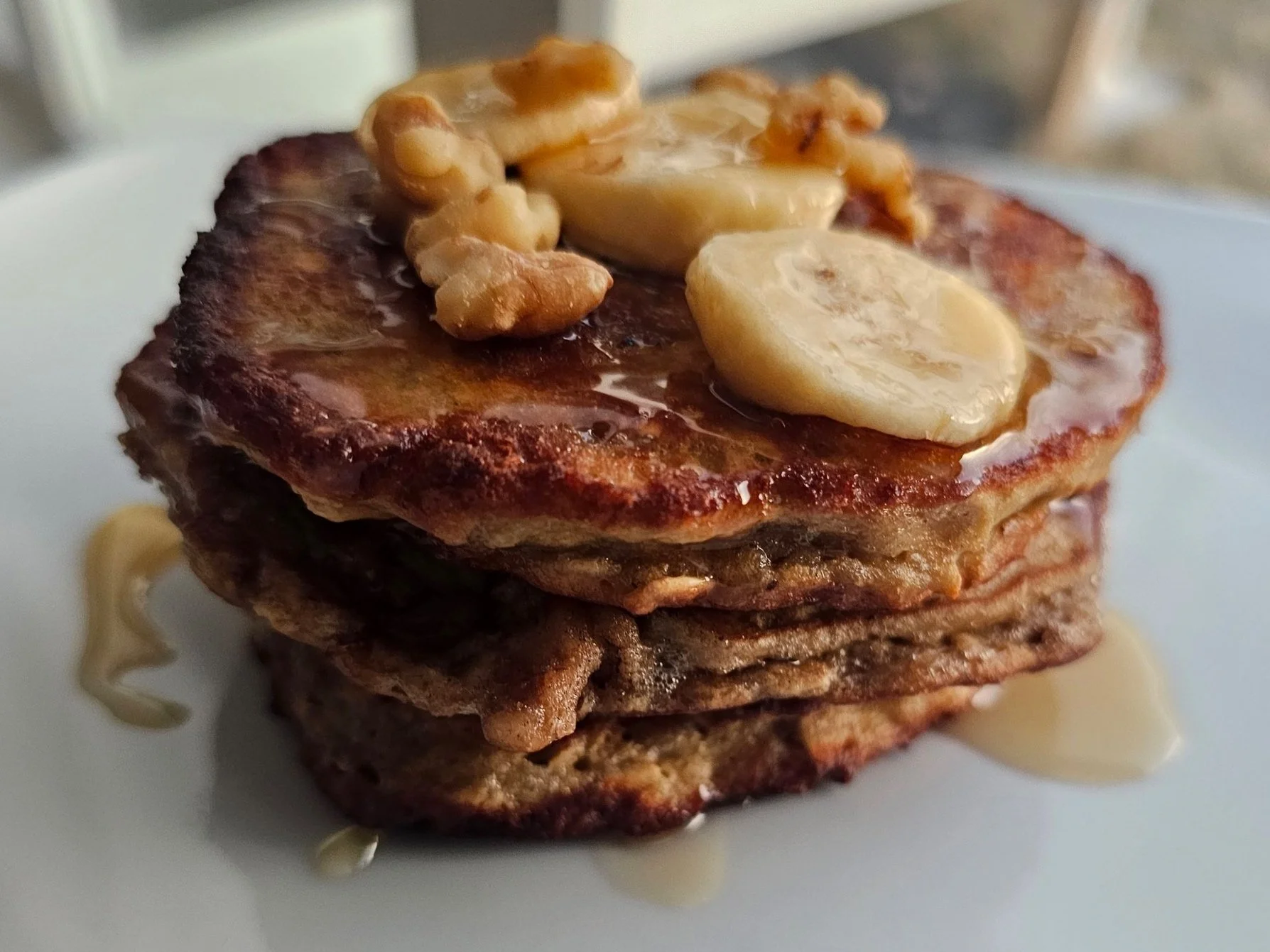
Banana Oat Protein Pancakes
Ingredients:
1 large banana or 2 small
2 eggs
1/4 cup rolled oats
1/8 - 1/4 cup gluten-free flour
Pinch of salt
1 scoop vanilla protein powder
1/2 teaspoon baking powder
1/8 - 1/4 cup gluten-free flour
1/4 cup walnuts
1/4 teaspoon cinnamon
1/8 teaspoon nutmeg
Dash of vanilla extract
Coconut oil and butter (for cooking)
Optional: Walnuts, banana, and honey to garnish

Roasted Beet and Kale Salad with Sweet Potato
Ingredients:
1-2 sweet potatoes
1 teaspoon berbere seasoning
1/2 teaspoon salt
2 tablespoons olive oil (for sweet potatoes)
2 tablespoons pumpkin seeds
3-4 beets (including stems, set leaves aside to cook separately)
1 teaspoon salt
1 teaspoon black pepper
1 teaspoon oregano
1 1/2 tablespoons olive oil (for the beets)
1/2 bunch kale
1/2 packet arugula (with spinach)
1/4 cup broccoli sprouts
1 tablespoon olive oil (for dressing)
1/2 cup grated carrots or carrot chips
1/2 - 1 avocado
*Roast sweet potatoes for 35 minutes and beets for 45 minutes at 400°F. Wrap beets in foil to retain moisture.
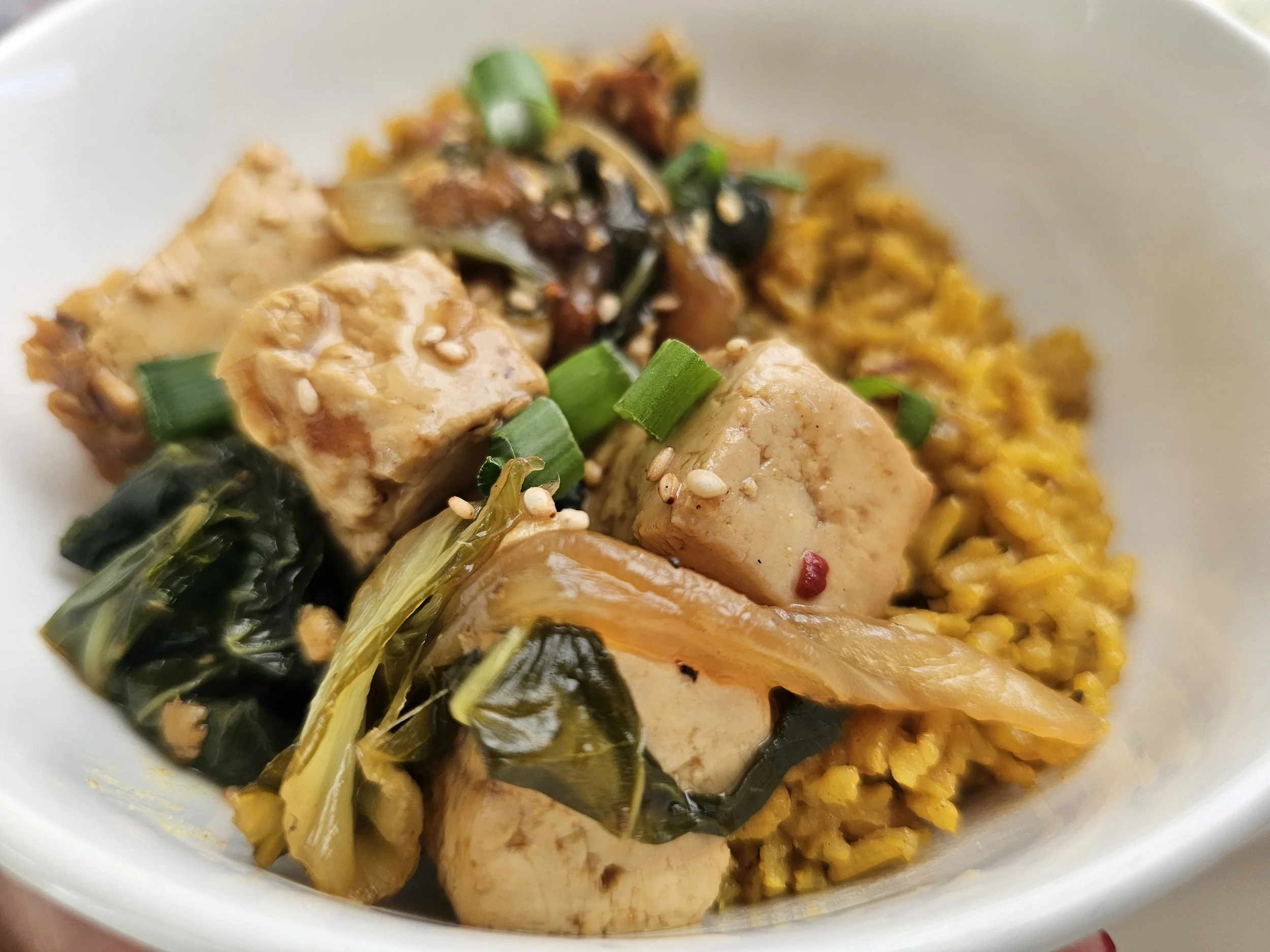
Tofu and Bok Choy Stir-Fry with Cape Malay (Yellow) Rice
Ingredients:
1 block extra firm tofu
1/8 cup green onions (optional for garnish)
1/3 large yellow onion Olive oil or coconut oil (for cooking)
1 bunch bok choy
1 teaspoon salt
1 teaspoon black pepper
Sesame seeds (optional for garnish)
Sticky sauce:
2 tablespoons soy sauce
1 teaspoon cornstarch
3 garlic cloves, minced
1 teaspoon teriyaki sauce
1 teaspoon fish oil sauce
1 teaspoon cooking wine
1 teaspoon granulated sugar
1/2 teaspoon chili flakes (optional)
1 teaspoon vinegar
1 teaspoon ground ground ginger
1/2 cup water 2 teaspoons all-purpose seasoning( (non-salty)
Cape Malay rice (2 servings, so double if you want more):
1 cup brown rice
2 tablespoons oil or butter
1/2 tablespoon light brown sugar
1/4 teaspoon turmeric
1/2 teaspoon oregano
1/4 teaspoon ground ginger
Pinch of cardamom
1/4 teaspoon curry powder
1/2 teaspoon salt
2 tablespoons raisins
2 chicken (or beef) bouillon cubes
2-3 bay leaves
2 cups water