
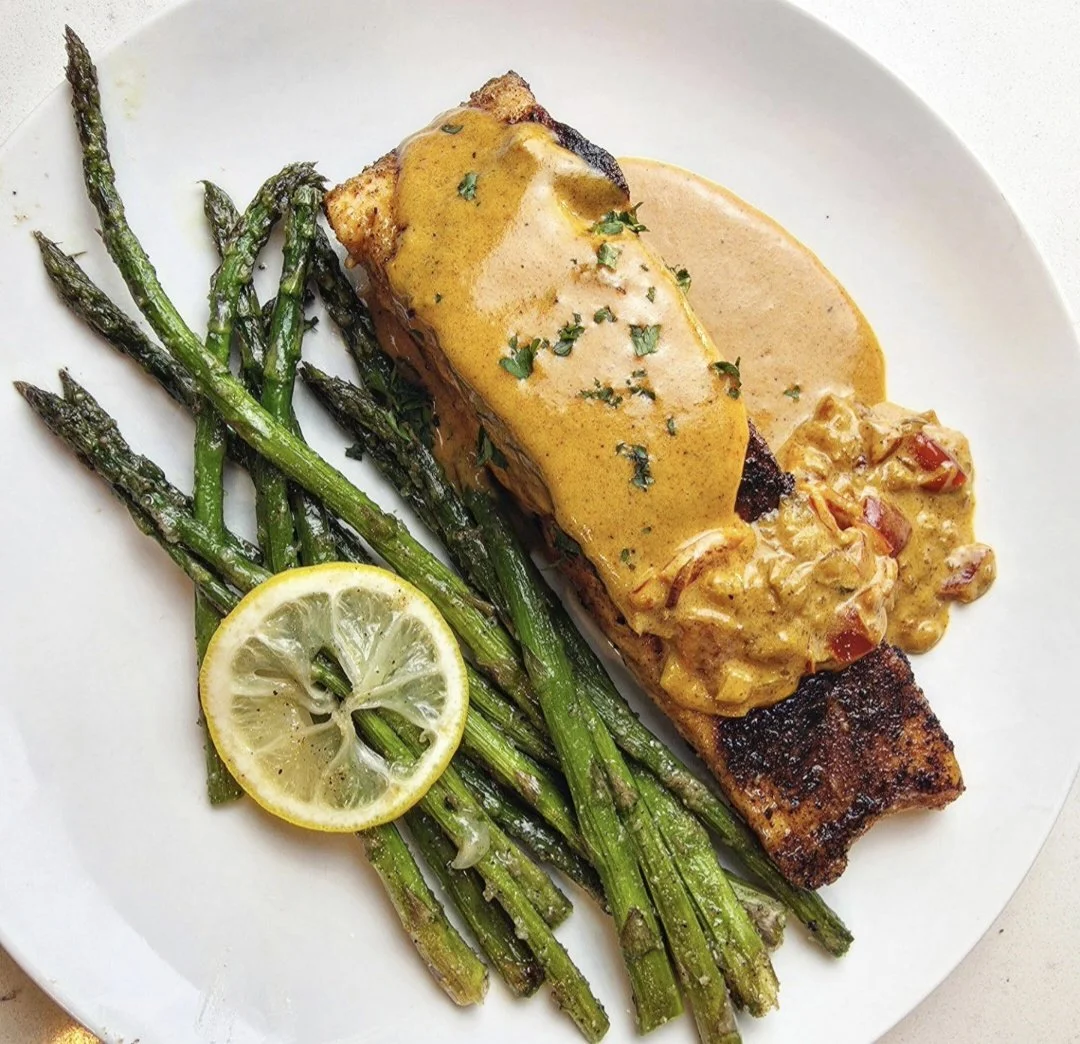
Blackened Salmon with Berbere Cream Sauce (30-Minute Recipe)
Salmon is one of my favorite proteins, in fact I try to eat it at least once a week. It’s rich in omega-3s, packed with protein, vitamins B12 and D, and it’s just plain delicious. For this recipe, I wanted to take a classic weeknight staple and elevate it with a little international flair, blending bold flavors from East Africa and the American South into one gorgeous, flavorful dish.
Blackened salmon is a favorite for a reason: the seared, smoky crust locks in moisture, giving each bite a deep, savory punch. Traditionally, you might see Cajun or Creole seasoning used, but I love swapping in berbere—a complex, aromatic East African spice blend that’s one of my go-to all-purpose seasonings. Berbere adds warmth, heat, and depth that’s a little different from what you find on every other weeknight plate.
If you’re making berbere at home, toast the whole seeds (like coriander, fenugreek, cardamom, and cumin) before grinding with paprika, chili, garlic, and ginger. The result is a fragrant, spicy seasoning that’s fantastic on salmon, roasted veggies, or even in soups. Premade blends work perfectly too, and sourcing from an authentic store is always a bonus.
For the sauce, I lean on a Creole-style cream sauce, which is similar to Cajun but generally a little more balanced and bright thanks to the tomato flavour, onions, bell pepper, and spices. Adding cream turns it into a silky, luxurious accompaniment that pairs beautifully with the bold, spiced salmon. You can keep the sauce rustic, with all the veggies, or strain it smooth for a more elegant finish, the choice is yours.
One of the things I love about this sauce is its versatility. It’s perfect on salmon, but also shines with flounder, shrimp, or any firm-fleshed fish. I served mine here with citrus forward, roasted asparagus for a classic pairing, but this is a dish that adapts beautifully to what’s in season.

Blackened Salmon with Berbere Cream Sauce
Tender, flaky salmon gets a bold East African-inspired kick with a silky berbere cream sauce. Quick, flavorful, and versatile, this dish is perfect for weeknights, entertaining, or seasonal meals.
Ingredients
- 4 salmon fillets
- 4 tsp berbere seasoning (about 1 tsp per fillet, adjust to taste)
- 1 tsp salt (¼ tsp per fillet)
- 1 tsp garlic powder (¼ tsp per fillet)
- 1 tsp onion powder (¼ tsp per fillet)
- Olive oil, for drizzling
- ½ medium red onion, diced
- 1–2 garlic cloves, minced
- 1/3 cup celery, diced
- 1 red bell pepper, diced
- 1 hot chili pepper, minced
- 2 tsp berbere seasoning
- 1 tsp smoked paprika
- 1 tsp black pepper
- 1 tsp seasoned salt
- 1 tsp cayenne pepper (optional, for extra heat)
- 2 tsp chicken bouillon paste
- 1 tbsp tomato paste
- 1 tbsp Worcestershire sauce
- 1 tbsp rice vinegar
- 1 tbsp flour
- 1 tbsp butter
- 1 tbsp sun-dried tomatoes, minced
- 1 cup heavy cream
- 1 cup water
- 1/3 cup grated Parmesan cheese
- Lemon juice, to finish (optional)
- Cooking oil or ghee, for sautéing
Instructions
- Pat the salmon dry. Drizzle lightly with olive oil, then rub with berbere, salt, garlic powder, and onion powder. Set aside to absorb flavors.
- In a pan, sauté the garlic and onion for 1–2 minutes. Add the celery and cook for 1 minute. Stir in the bell pepper and chili; cook for 2 minutes. Add the spices and sauté for 30 seconds to release their aroma, adding oil if needed.
- Stir in the bouillon paste and cook for 30 seconds. Push everything to one side, melt the butter, and mix in the flour to form a roux. Add the sun-dried tomatoes, Worcestershire sauce, and rice vinegar.
- Add the water and cream. Simmer over medium-low heat for about 5 minutes, stirring frequently. Stir in the Parmesan and cook until the sauce thickens. Adjust seasoning with salt and a squeeze of lemon juice if desired.
- Heat a cast-iron pan over medium-high heat (turn on the vent). Once hot and lightly smoking, add oil. Place the salmon skin-side down and sear for 2–4 minutes, depending on thickness. Avoid overcrowding the pan.
- Flip and cook for another 2–3 minutes. Lower heat if needed to prevent burning. For thicker fillets, transfer to a 400°F oven and cook for 3–5 minutes until the internal temperature reaches 145°F. Let rest for 5 minutes.
- Plate the salmon and spoon the sauce over top. Serve as is, or strain part of the sauce for a smoother texture.
Notes
- The berbere is customizable. Adjust the heat level to your taste.You can also substitute with Cajun, Old Bay, or Creole seasoning if needed.
- Serve with asparagus, roasted vegetables, rice, or grits.
- The sauce also works beautifully tossed with pasta like linguine.
Nutrition Facts
Calories
420Fat (grams)
30 gCarbs (grams)
10 gFiber (grams)
3 gSugar (grams)
4 gProtein (grams)
36 gI am not a certified nutritionist and any nutritional information on dontmissmyplate.com should only be used as a general guideline.

Baked Snapper with a Quick African Pepper Sauce
At least in its authentic glory, African pepper sauce is commonly served as a condiment, dip or cooking sauce to pair with grilled meats and vegetables or used in stews, giving your dish a perfect balance of heat and depth of flavour. It's most popular in West Africa, but you see other versions of this with other peppers taking centre stage across the Continent. The combination of peppers, herbs, and spices can enhance or top off almost any dish, and it is extremely versatile. I pick this over conventional hot sauce any day because it uses fresh vegetables, and you can make batches to freeze for future use.
This version provides a quick, easy and convenient way to add flavour to your fish. I used red snapper in this recipe, but you can also use halibut, sea bass, bream, tilapia, or any fish with a mild taste that will absorb all the flavours. For the pepper sauce, instead of cooking down and frying the blended vegetables on the stovetop as is typically done, I roasted the vegetables to bring the flavours out before blending them, then used the pepper mix to coat the fish while it baked.
One great thing about this sauce is that you can tailor it to your tastes and tolerance by adding more or fewer tomatoes and peppers. You can also remove the seeds from the hot peppers to take the heat down a notch. I prefer habanero peppers in terms of the heat and flavour, but you can use a range of peppers, from jalapenos to scotch bonnet. In any case, I recommend using the freshest ingredients possible. In addition, especially since peppers are part of the Dirty Dozen, try using organic peppers if you can afford them.

Baked Red Snapper with Quick African Pepper Sauce

Ingredients
- 1 large red snapper
- 1 tablespoon garlic powder
- 2-3 garlic cloves
- 2 lemon slices (optional)
- 1 sprig fresh thyme
- 1 sprig fresh parsley
- 2 teaspoons salt
- 2 teaspoons black pepper
- 2 teaspoon Royco Usavi Mix (optional)
- 2 teaspoons oregano
- 2 teaspoons basil
- 1/2 cup olive oil, and extra for roasting the peppers
- 1 teaspoon salt
- 1/2 teaspoon black pepper
- 1 chicken bouillon cube
- 1/4 cup parsley, stems removed
- 5 large basil leaves
- 1/3 large yellow onion
- 3-4 mini sweet peppers
- 2 small habanero peppers
- 1 1/2 - 2 Roma tomatoes
- 1 inch piece fresh ginger
- Salt and pepper to taste
Instructions
- Place your peppers, onion, tomato, and garlic on a baking sheet with parchment paper—season with salt and pepper to taste.
- Roast the vegetables for 25 minutes at 400F or until roasted to your desired doneness.
- Remove from the oven and allow to cool for 15 minutes, then transfer to a food processor or blender. Add the ginger, parsley, basil, bouillon cube, salt, and pepper. Blend until combined, and a paste forms. Add the olive oil during this process to help smoothen the mixture.
- Set aside while you prepare the fish.
- Make sure your fish is clean, and then pat it dry with paper towels. Add the salt, pepper, garlic, herbs, and optional Royco/all-purpose seasoning.
- Stuff the inside of the fish with the thyme, parsley, lemon and garlic.
- Place the fish inside some foil and place it on a baking tray. Spoon the pepper sauce over both sides of the fish, ensuring it is fully coated.
- Place the fish in the oven and bake at 350F for 30 minutes. After 15-20 minutes, remove the fish, open the foil (without burning yourself with the hot air) and baste the sauce over the fish.
- Leave the foil open and allow the cause to continue cooking. This will help thicken and caramelize the sauce, developing the flavours further.
- Remove from the oven and spoon some sauce into the serving dish, placing the fish on top and adding the rest of the sauce on top. Garnish with fresh parsley and serve!
Notes
- To avoid overcooking the fish, check the internal temperature after 15-20 minutes and use that to determine how much more time you need.
- If you want a thicker sauce, you can place it on the stovetop before covering the fish with it and baking.
- If you get fresh fish from the market, ensure it is cleaned and descaled.
Nutrition Facts
Calories
237Fat (grams)
13.3 gSat. Fat (grams)
1.9 gCarbs (grams)
24.9 gFiber (grams)
6 gProtein (grams)
10.9 gI am not a certified nutritionist and any nutritional information on dontmissmyplate.com should only be used as a general guideline.