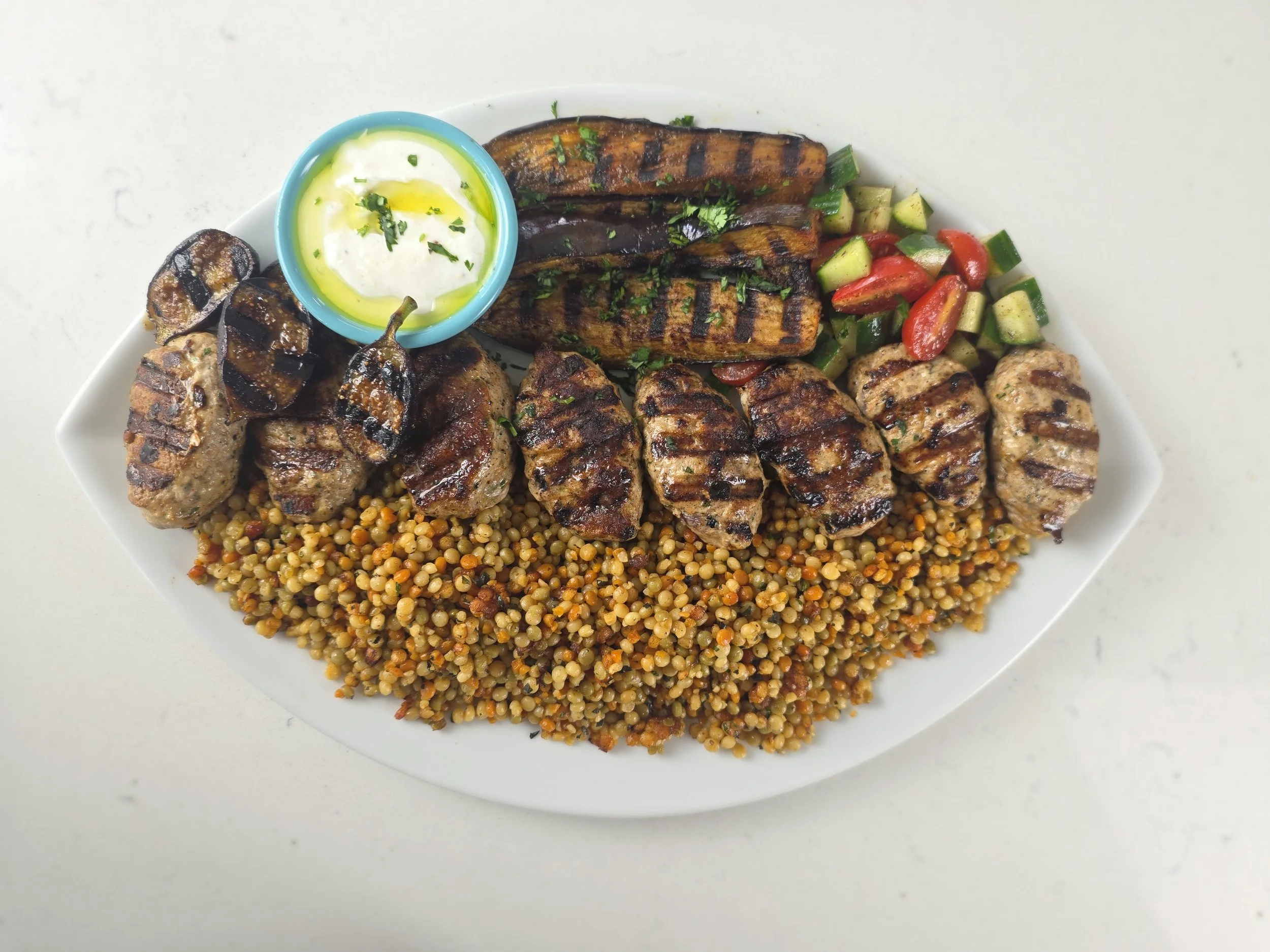
Chicken Kofta with Spiced Couscous
Warmly spiced chicken kofta served with fragrant couscous, grilled eggplant, fresh cucumber-tomato salad, caramelized figs, and lemon yogurt. This easy dinner brings together savory, smoky, sweet, and fresh flavors in one satisfying plate.
After making my Lamb Kofta with Cape Malay Rice and Beef Suya Kofta with Jollof Rice, I wanted to explore another way to build a kofta plate. This time, I took the chicken in a North African-inspired direction, leaning into warm spices, fresh herbs, grilled vegetables, lemon, and creamy yogurt.
The chicken kofta is grilled for a smoky char before finishing in the oven, while the couscous provides a fragrant base. Grilled eggplant adds richness, the cucumber-tomato salad brings freshness and crunch, and the lemon yogurt balances the warm spices. The grilled figs add a little natural sweetness that ties the whole plate together.
Like the other kofta recipes, this isn't meant to recreate one specific traditional dish. It's an approachable interpretation inspired by the flavors of the region, with simple components that come together into a colorful, satisfying meal.
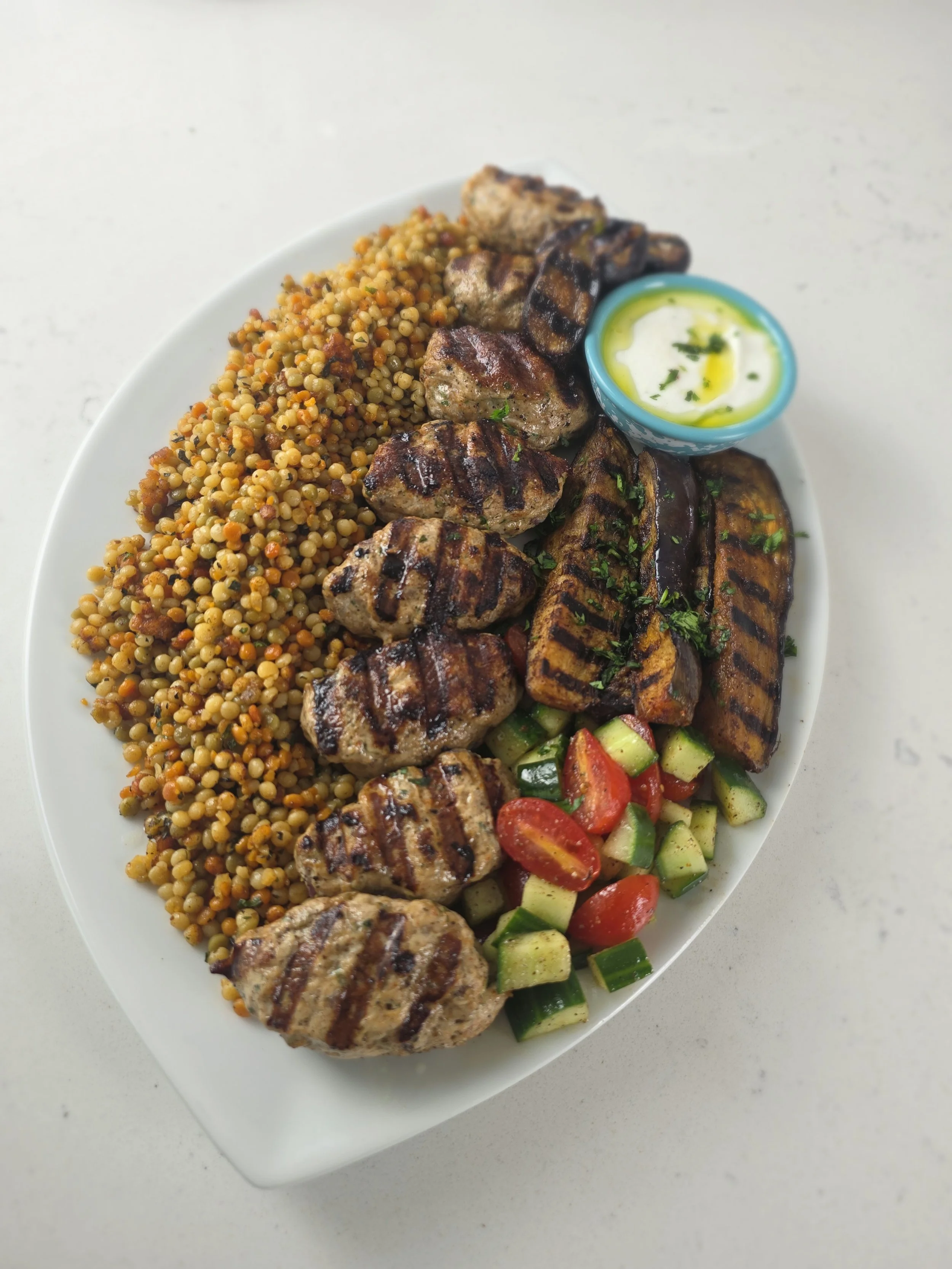

Chicken Kofta with Spiced Couscous
Flavorful chicken kofta seasoned with toasted cumin and coriander, grilled for a smoky char, and served with spiced couscous, grilled eggplant, fresh cucumber-tomato salad, caramelized figs, and creamy lemon yogurt.
Ingredients
- 1 lb ground chicken
- ¼ large red onion, finely grated
- 2–3 garlic cloves, minced
- 2 tbsp fresh parsley, finely chopped
- 1 tbsp olive oil
- 1 tsp chicken seasoning
- 1 tsp whole cumin seeds
- 1 tsp whole coriander seeds
- ½ tsp smoked paprika
- ½ tsp ground ginger
- ¼ tsp ground cinnamon
- ¼ tsp black pepper
- ¼ tsp cayenne pepper
- 1 tsp salt
- 1 cup packaged couscous
- Chicken broth, amount called for on package
- 1 tbsp butter
- ½ tsp ground cumin
- ¼ tsp ground coriander
- ¼ tsp ground cinnamon
- ¼ tsp salt, depending on the broth
- 2 tbsp fresh parsley, chopped
- Juice of ½ lemon
- 1 large eggplant
- 1½ tbsp olive oil
- ½ tsp ground cumin
- ½ tsp smoked paprika
- ¼ tsp ground coriander
- ½ tsp salt
- ¼ tsp black pepper
- 3 fresh figs
- 1 tsp olive oil
- ⅛ tsp ground cinnamon
- Pinch of salt
- ¾ cup Greek yogurt
- 1 tbsp fresh lemon juice
- 1 small garlic clove, finely grated
- 1 tsp olive oil
- ¼ tsp salt
- 1–2 tsp water, as needed
- 1 English cucumber, diced
- 1 cup cherry tomatoes, halved
- 1 tbsp olive oil
- ¼ tsp salt
- ¼ tsp black pepper
Instructions
- Place the whole cumin and coriander seeds in a dry skillet over medium heat. Toast for 1–2 minutes, shaking the pan occasionally, until fragrant. Remove from the heat and let cool slightly, then lightly crush with a mortar and pestle or the bottom of a heavy pan. Keep them coarse rather than grinding them into a powder.
- In a bowl, combine the ground chicken, finely grated red onion, garlic, parsley, olive oil, chicken seasoning, toasted cumin and coriander seeds, smoked paprika, ginger, cinnamon, black pepper, cayenne, and salt if needed. Gently mix until just combined. Cover and refrigerate for 30 minutes to 2 hours.
- While the kofta mixture chills, prepare the lemon yogurt. Combine the Greek yogurt, lemon juice, grated garlic, olive oil, and salt. Add 1–2 teaspoons of water until smooth and spreadable. Cover and refrigerate until ready to serve.
- Prepare the cucumber-tomato salad by combining the cucumber and cherry tomatoes. Toss with olive oil, salt, and black pepper. Cover and refrigerate until ready to serve.
- Preheat the oven to 375°F. Remove the chicken mixture from the refrigerator 20–30 minutes before cooking. Divide it into 8 equal portions and shape each into a thick oval.
- Cut the eggplant lengthwise into long wedges. Toss with olive oil, cumin, smoked paprika, coriander, salt, and black pepper.
- Heat a grill pan over medium-high heat. Grill the eggplant for 2–3 minutes per side, until charred and grill marks develop. Transfer to a baking sheet.
- Lightly oil the grill pan if needed. Grill the koftas for 2–3 minutes per side, turning as needed to develop good grill marks. Transfer them to the baking sheet with the eggplant.
- Transfer the kofta and eggplant to the 375°F oven. Bake the kofta for 6–8 minutes, or until the center reaches 165°F. Remove the kofta and let them rest for 5 minutes. Continue cooking the eggplant for another 10–15 minutes, or until completely tender.
- While the kofta and eggplant finish cooking, prepare the couscous according to the package directions, using chicken broth instead of water. Add the butter, cumin, coriander, cinnamon, and salt to the cooking liquid. Once cooked, fluff with a fork and stir in the parsley and lemon juice.
- Cut the figs in half lengthwise, leaving the skin on. Lightly brush the cut sides with olive oil and sprinkle with cinnamon and a little salt. Place them cut-side down on the hot grill pan and grill for 1–2 minutes, until caramelized and marked. Flip and grill the skin side for about 30 seconds, then remove from the heat.
- Spread the couscous across a large platter. Arrange the chicken kofta, grilled eggplant, cucumber-tomato salad, and grilled figs alongside it.
- Spoon 3–4 tablespoons of lemon yogurt onto the front of the platter. Using the back of a large spoon, drag it through the yogurt in one smooth, curved motion to create a wide smear. Drizzle lightly with olive oil and finish with a little paprika, if desired. Serve immediately.
Notes
- For moist kofta: The finely grated onion and olive oil help keep the chicken juicy. Mix gently and avoid overworking the meat.
- Toast the whole spices: Toasting and lightly crushing the cumin and coriander seeds brings out a deeper, more aromatic flavor.
- Chilling the mixture: Refrigerating the chicken mixture helps it firm up, making the kofta easier to shape and cook.
- Grill, then bake: Grilling first gives the kofta their smoky char and grill marks, while the oven finishes cooking them without drying them out.
- Couscous shortcut: Packaged couscous keeps this meal quick and easy. Cooking it in chicken broth with cumin, coriander, cinnamon, parsley, and lemon gives it plenty of flavor.
- Serving: For a polished presentation, spread the lemon yogurt directly onto the platter rather than serving it in a bowl.
Nutrition Facts
Calories
650Fat (grams)
28 gSat. Fat (grams)
7 gCarbs (grams)
47 gFiber (grams)
5 gSugar (grams)
10 gProtein (grams)
38 g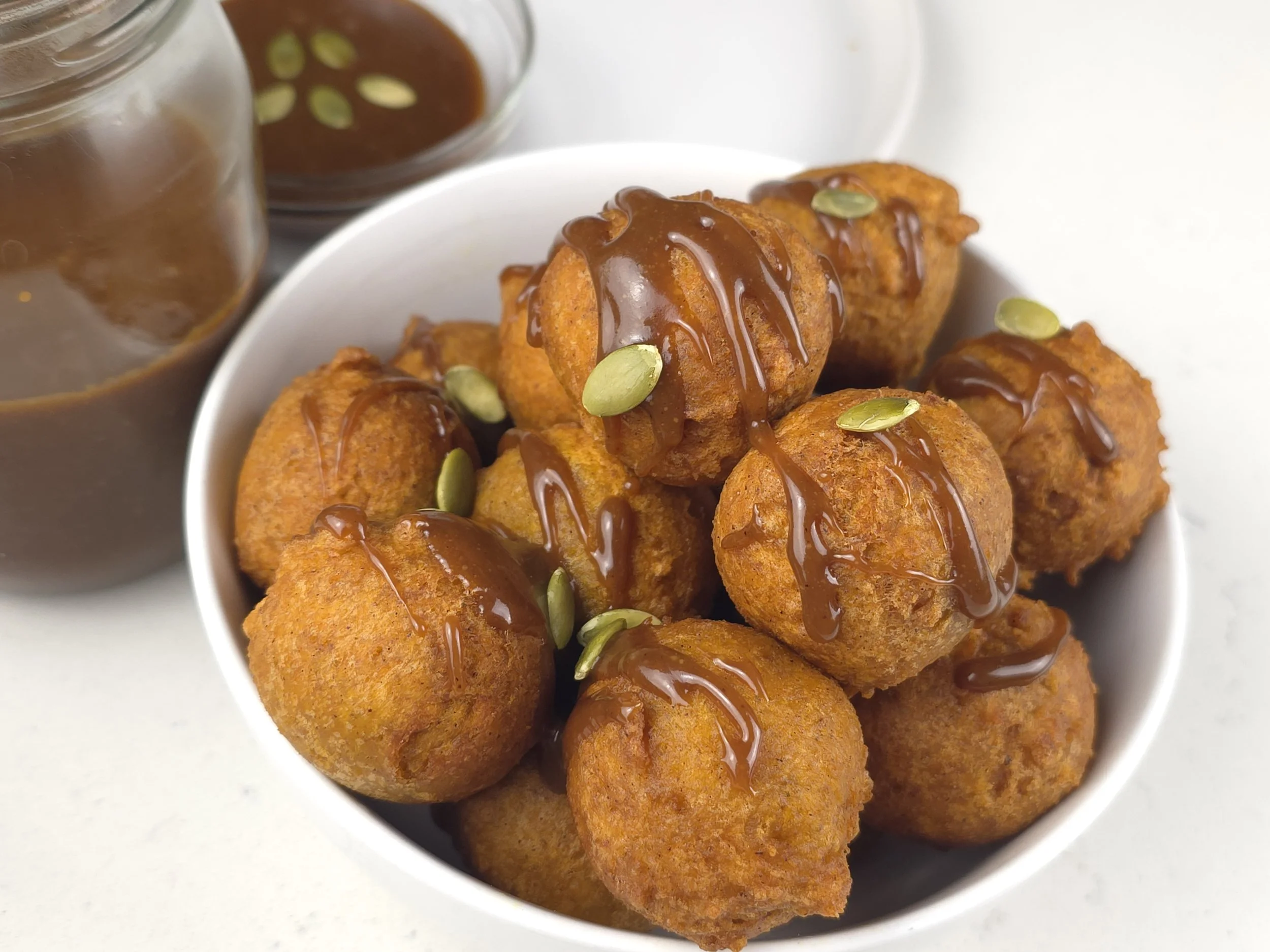
Pampoenkoekies (Pumpkin Fritters) with Peanut Caramel
Crispy pumpkin fritters, inspired by South African pampoenkoekies and paired with a rich peanut caramel.
Pampoenkoekies are popular South African pumpkin fritters, typically made with cooked pumpkin, flour, egg and warm spices. This version draws on a few different flavors and food memories, while keeping the spirit of the classic.
I grew up eating fat cakes in Zimbabwe, simple fried dough that can be made into round balls or flatter discs. I was also familiar with banana fritters, which I remember being served for dessert at school. After moving to the United States, I encountered a similar idea in the form of donut holes, small pieces of fried dough often tossed in sugar and warm spices. Those influences inspired the small, round shape of these fritters, which are almost like little pumpkin doughnuts.
Pumpkin and peanut butter are also a natural pairing in Zimbabwean cooking, from pumpkin leaves cooked with peanut butter to hearty dishes featuring pumpkin and peanuts. There is also nhopi, a beloved dish made with pumpkin and peanut butter that can be enjoyed as either a sweet or savory preparation. That familiar combination inspired the peanut caramel served alongside the fritters.
The result is a crisp, warmly spiced pumpkin fritter with a silky peanut caramel finished with a little fresh lemon juice to balance the richness. It stays true to the spirit of pampoenkoekies while bringing together flavors and influences from different parts of my food journey.
Updated September 2026: I’ve updated this recipe with revised ingredients and instructions, including a new peanut caramel, to improve the flavor and texture of the original recipe.
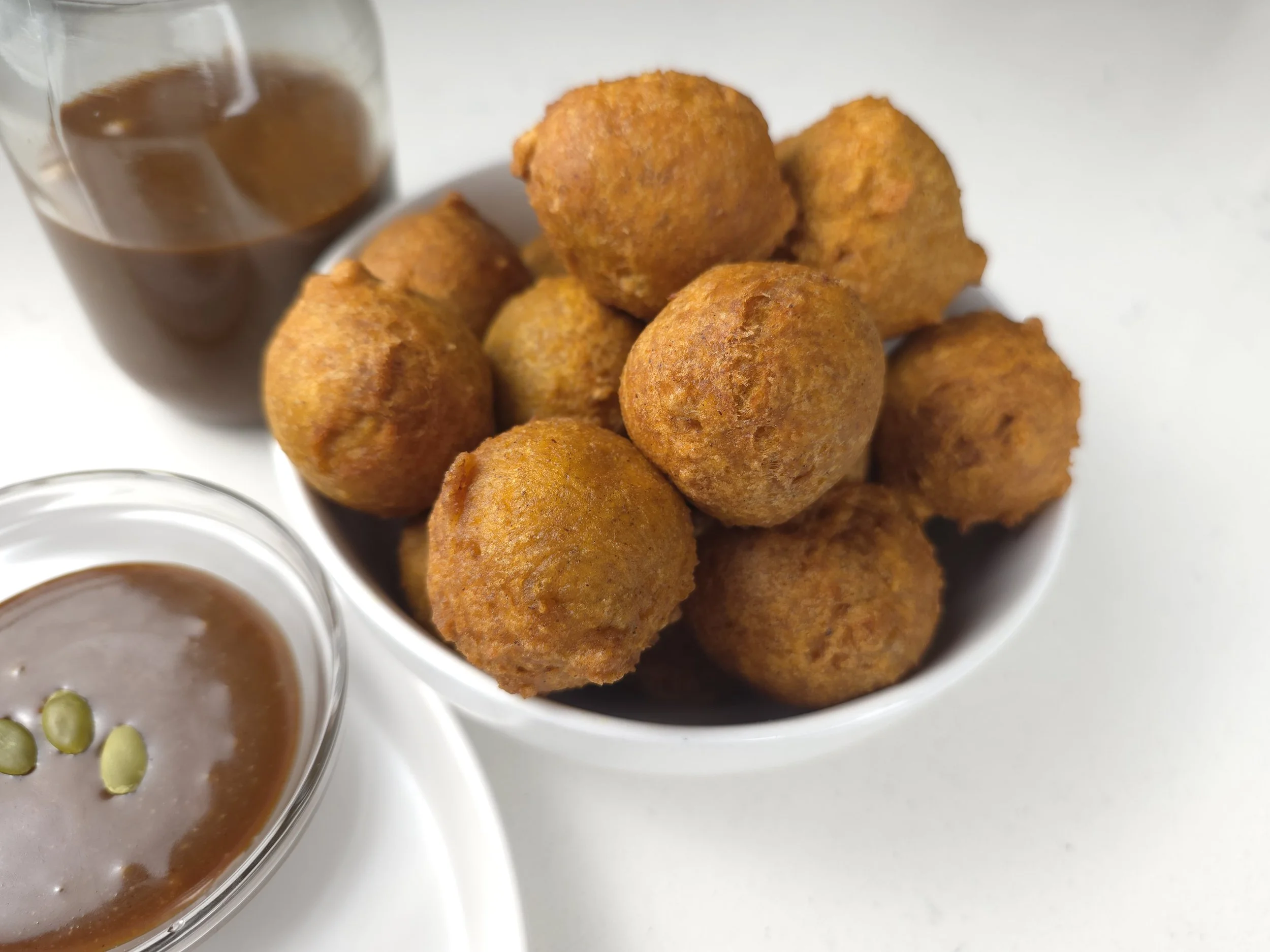

Pampoenkoekies (Pumpkin Fritters) with Peanut Caramel
Crispy on the outside and soft and warmly spiced inside, these pumpkin fritters are inspired by South African pampoenkoekies and served with a rich peanut caramel brightened with fresh lemon juice.
Ingredients
- 1 cup pumpkin puree
- 1 large egg
- 2 tablespoons light brown sugar
- 1 teaspoon vanilla extract
- 1 cup all-purpose flour
- 2 teaspoons baking powder
- 1 teaspoon ground cinnamon
- ½ teaspoon ground ginger
- ⅛ teaspoon ground nutmeg
- Pinch of ground cloves
- Pinch of salt
- 4 cups peanut oil, for deep frying
- ¼ cup unsalted butter
- 1 cup packed dark brown sugar
- 2 tablespoons packed light brown sugar
- ½ cup heavy cream
- ½ teaspoon ground cinnamon
- ⅛ teaspoon ground nutmeg
- Pinch of inch ground cloves
- Pinch of salt
- ⅓ cup creamy peanut butter
- ½ teaspoon vanilla extract
- ¼ teaspoon fresh lemon juice
- Pumpkin seeds
- Peanut caramel (see recipe)
Instructions
- In a large bowl, whisk together 1 cup pumpkin puree, 1 large egg, 2 tablespoons light brown sugar, and 1 teaspoon vanilla extract until smooth.
- In a separate bowl, whisk together 1 cup all-purpose flour, 2 teaspoons baking powder, 1 teaspoon cinnamon, ½ teaspoon ginger, ⅛ teaspoon nutmeg, a tiny pinch of cloves, and a pinch of salt.
- Add the dry ingredients to the pumpkin mixture and stir just until combined. The batter should be thick enough to scoop and not have pockets of flour. Don't overmix and let the batter rest for 5 minutes.
- Pour 4 cups peanut oil into a deep, heavy-bottomed pot and heat to 340–345°F. Keep it on medium-low heat.
- Using a small cookie scoop, portion approximately 1 tablespoon of batter for each fritter. Hold the scoop close to the surface of the oil and gently release the batter. Fry in small batches, leaving enough space for the fritters to float freely without touching one another for approximately 2–3 minutes per side, turning gently, until evenly golden brown and cooked through.
- Test the first fritter by cutting it open. The center should be tender and cooked, not wet or gummy. If the exterior is browning too quickly, reduce the oil temperature slightly and cook the fritters for longer.
- Transfer the fritters to a wire rack or paper towel-lined plate to drain.
- Serve warm with the peanut caramel.
Notes
- Use the cinnamon, ginger, nutmeg and cloves listed in the recipe, or substitute 1 teaspoon pumpkin spice for all four spices.
- The batter should be thick enough to scoop and hold its shape. If it is too loose, add flour 1 tablespoon at a time.
- Keep the fritters small, using about 1 tablespoon of batter per fritter, to help the centers cook through.
- Fry the fritters in a deep pot so they can float freely in the oil. Avoid using a shallow skillet.
- Fry in small batches and keep the oil between 340°F and 345°F.
- Test the first fritter by cutting it open to make sure the center is soft and cooked through, not wet or gummy.
- The peanut caramel thickens as it cools. If it becomes too thick, gently reheat it and whisk in a small splash of heavy cream.
Storage
- Fritters: Store cooled fritters in an airtight container in the refrigerator for up to 3 days. Reheat in a 350°F oven or air fryer until warmed through and crisp.
- Peanut caramel: Store in an airtight container in the refrigerator for up to 1 week. Gently reheat in a saucepan over low heat or in short intervals in the microwave, stirring until smooth. If needed, whisk in a small splash of heavy cream to loosen.
- For best texture, store the fritters and caramel separately. Don't refrigerate the fritters with the caramel already drizzled over them, because they'll lose their crisp exterior.
Nutrition Facts
Calories
181Fat (grams)
7.5 gCarbs (grams)
26.6 gProtein (grams)
3 g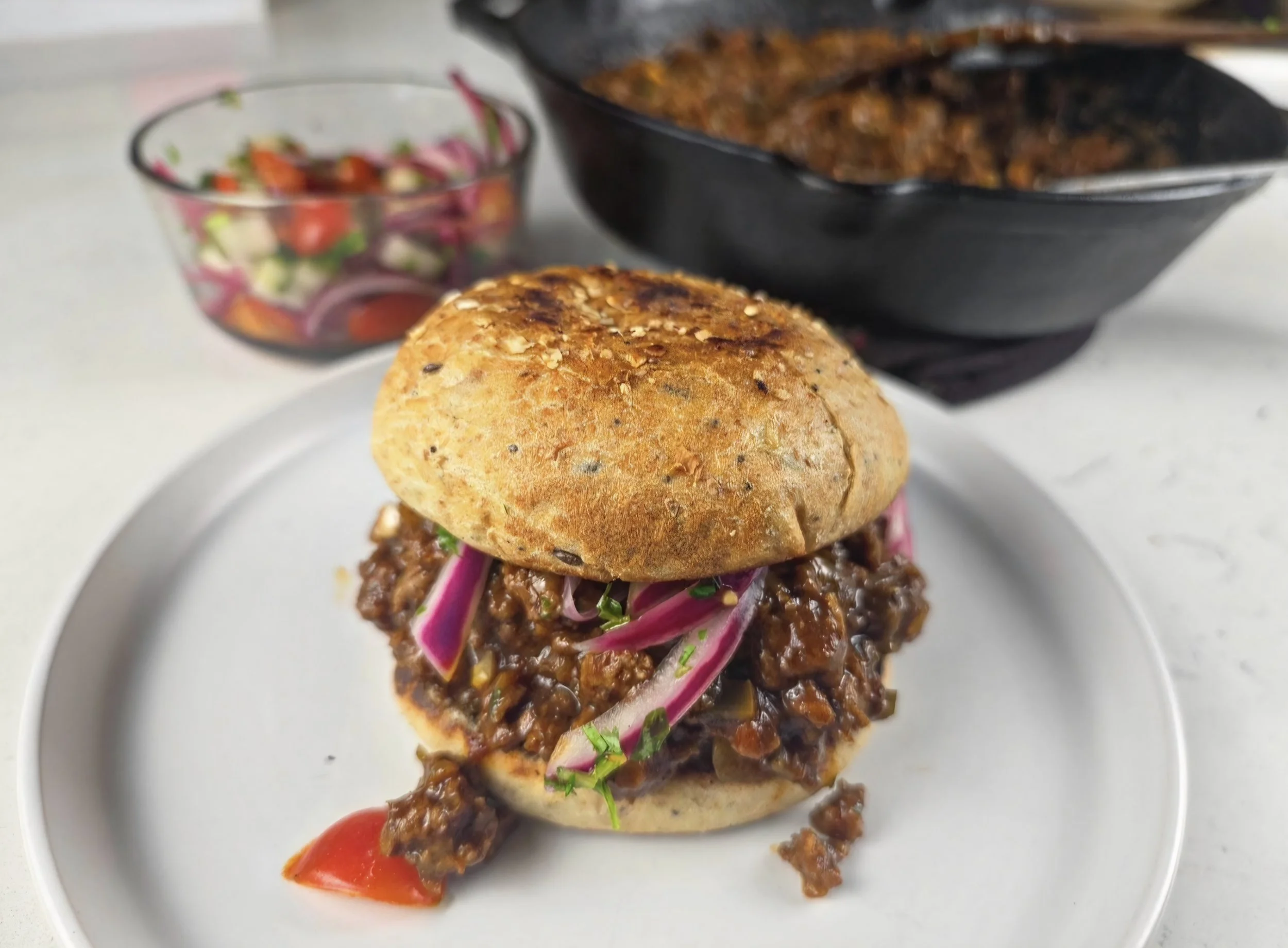
Goat Sloppy Joes
Sloppy Joes are one of those classic American comfort foods that are easy to love: saucy ground meat, a toasted bun, plenty of flavor, and a dinner that comes together without requiring hours in the kitchen. This version keeps everything that makes a sloppy Joe satisfying, but gives it an East African-inspired flavor profile with ground goat, warm spices, coconut cream, and a bright, quick-pickled kachumbari-style topping.
Ground goat takes the place of the more traditional ground beef. Goat is widely eaten across East Africa, where it appears in everything from stews and curries to grilled dishes, and it's also popular across parts of Southern Africa. Its rich flavor works especially well with the warm spices used here, while still fitting naturally into the familiar sloppy Joe format.
The seasoning brings together pilau seasoning, curry powder, cumin, coriander, ginger, garlic, smoked paprika, and chile. The result is deeply savory and aromatic, with enough warmth and spice to make the filling interesting without losing the comforting character of a sloppy Joe. The sauce keeps the sweet, tangy, tomato-rich qualities you'd expect, with tomato sauce, ketchup, brown sugar, Worcestershire sauce, and broth. Coconut cream is added toward the end to make the sauce richer and round out the spices. It doesn't turn the filling into a coconut curry; it simply adds another layer of flavor and helps create the thick, glossy sauce that makes a sloppy Joe so good.
Then comes the part that really brings everything together: a quick-pickled kachumbari-inspired topping. Kachumbari is a fresh East African salad commonly made with tomatoes and onions, often with cucumber and fresh herbs. Here, those vegetables get a quick pickle with vinegar, giving them a bright, tangy crunch that cuts through the richness of the goat.
And this is still very much an easy weeknight dinner. The goat cooks in one skillet, the sauce comes together with pantry staples, and the quick-pickled topping can be made while the meat simmers. There's no complicated technique or long list of steps—just a few smart layers of flavor that make an otherwise familiar sandwich feel completely different.
For the best result, don't skimp on the sauce, and toast the buns well before assembling. The toasted bun gives the sloppy Joe enough structure to hold all that saucy filling without immediately becoming soggy. Add the pickled vegetables right before serving for the best crunch.
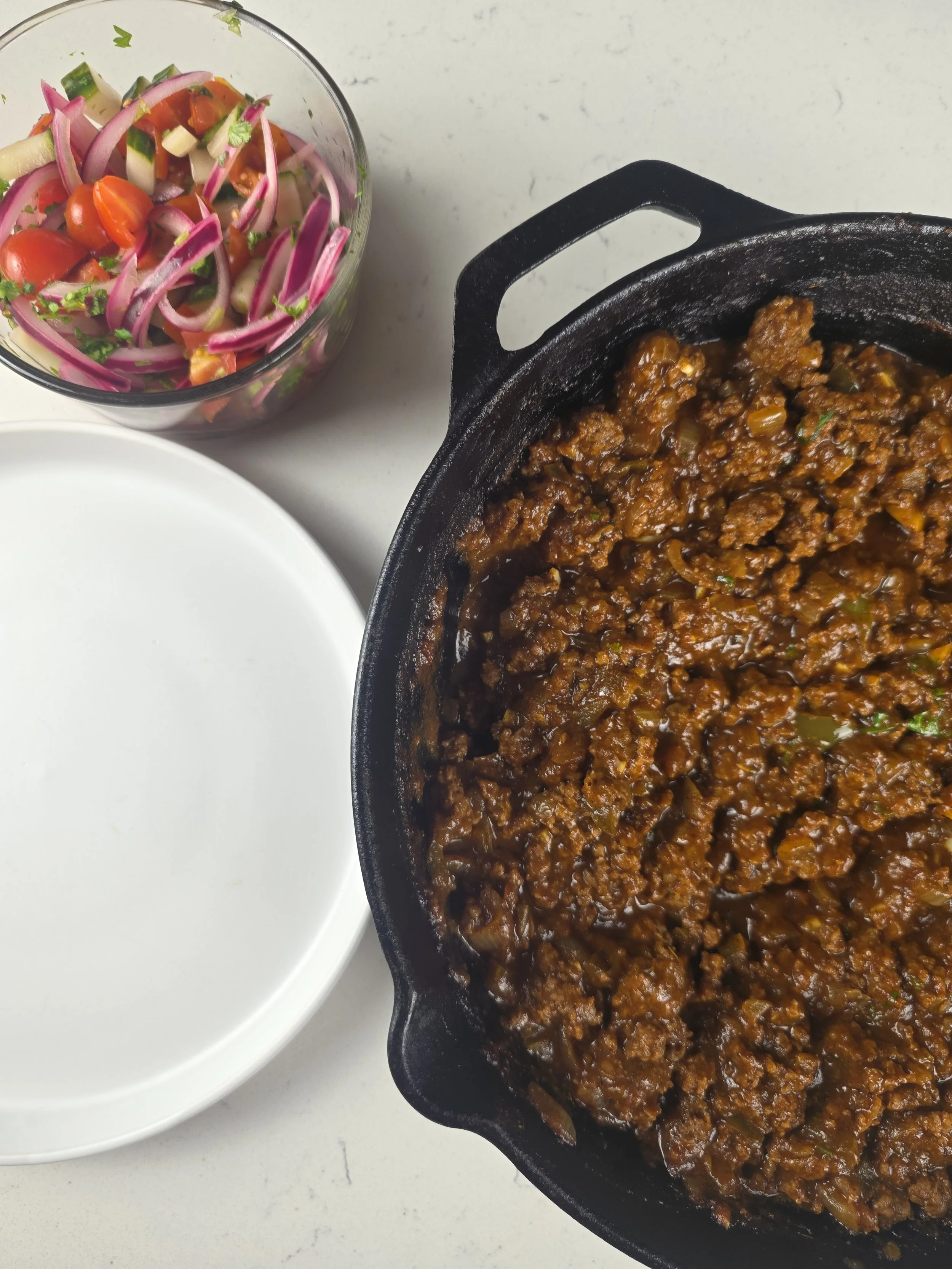
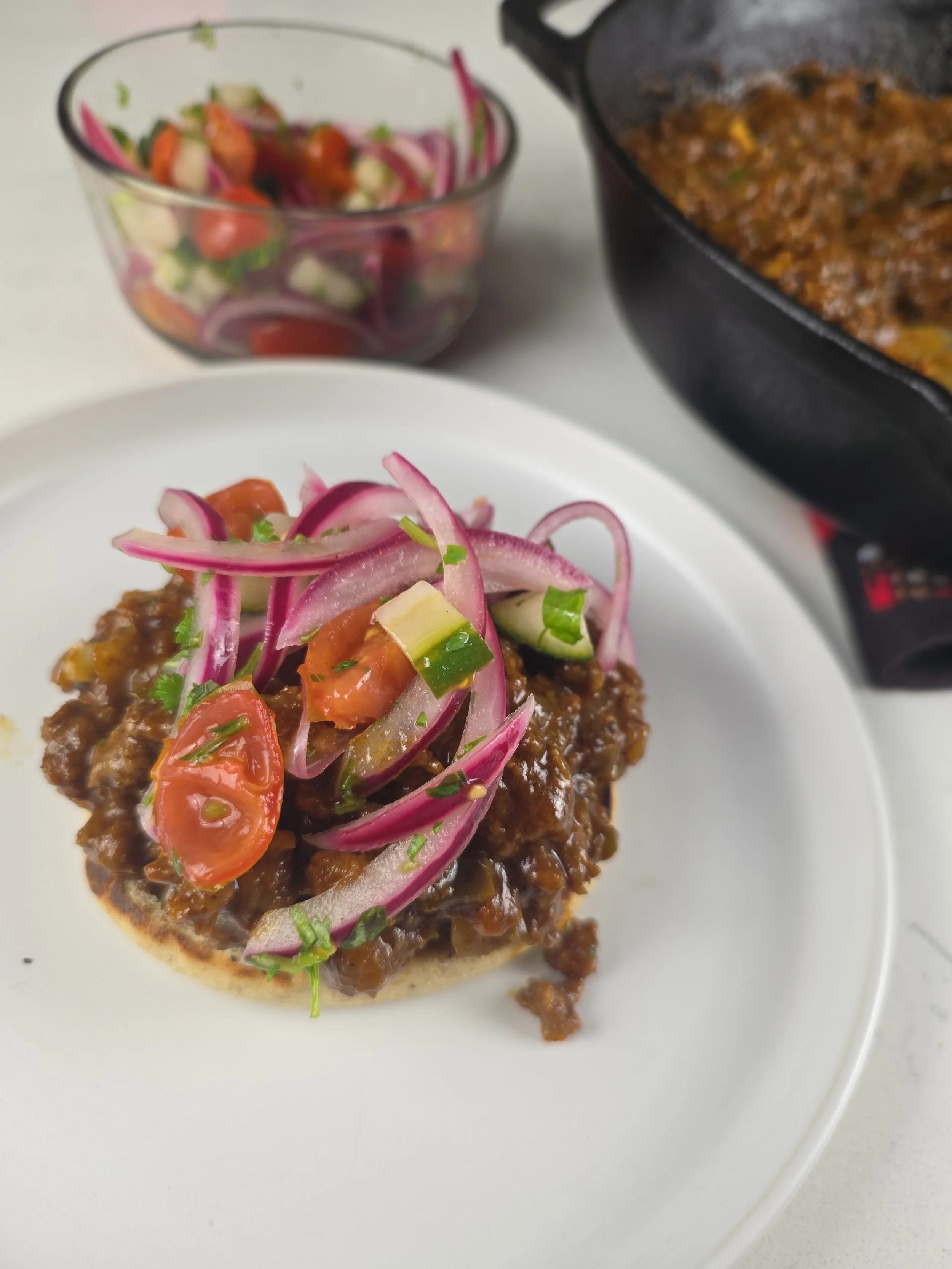

Goat Sloppy Joes
Saucy ground goat simmered with warm East African-inspired spices, tomato, and coconut cream, piled onto toasted buns and topped with a bright, tangy kachumbari-style pickle.
Ingredients
- 1 lb ground goat
- 1 tbsp neutral oil or beef tallow
- 1 tbsp butter
- ½ medium yellow onion, finely diced
- ½ green bell pepper, finely diced
- 1 small jalapeño, finely diced
- 3 garlic cloves, minced
- 1½ tsp pilau seasoning
- 1 tsp curry powder
- ½ tsp smoked paprika
- ½ tsp ground cumin
- ½ tsp ground coriander
- 1 tsp ground ginger
- ¼ tsp cayenne pepper
- ½ tsp salt
- 1 tsp light brown sugar
- 1 tbsp tomato paste
- ½ cup tomato sauce
- ¼ cup ketchup
- 1 tbsp Worcestershire sauce
- 1 cup beef broth
- ⅓ cup coconut cream
- ½ cup quartered cherry tomatoes
- ½ small-to-medium red onion, thinly sliced
- ¼ cup diced cucumber
- ½ cup water
- ¼ cup apple cider vinegar
- 1 tsp salt
- 1 tsp sugar
- 1 bay leaf
- 3–4 whole allspice berries
- 4 multigrain buns, buttered
- Quick-pickled kachumbari-style topping
- Fresh cilantro and lime juice, for finishing
Instructions
- Heat the oil in a large skillet over medium-high heat. Add the ground goat and cook for 5–7 minutes, breaking it apart as it browns.
- Add the onion, green bell pepper, and jalapeño. Cook for 4–5 minutes, until softened and beginning to brown.
- Add the garlic and cook for 30 seconds.
- Add the butter and entire spice blend and stir for about 30 seconds, allowing the spices to become fragrant.
- Add the tomato paste and cook for 1 minute.
- Add the tomato sauce, ketchup, Worcestershire sauce, and broth (or bouillon cube and water). Stir well.
- Reduce the heat to medium-low and simmer uncovered for 8–10 minutes, stirring occasionally. The mixture should be thick but still generously saucy. Add another splash of water or broth if needed.
- Stir in the coconut cream and simmer for another 2–3 minutes. Taste and adjust the seasoning if needed.
- Toast the buns until lightly golden. This helps prevent the saucy filling from making the buns soggy.
- Spoon the goat filling onto the toasted buns and top with the quick-pickled kachumbari-style vegetables.
- Finish with fresh cilantro and serve immediately.
- Combine the water, vinegar, salt, sugar, bay leaf, and allspice in a small saucepan and bring to a boil.
- Pour the hot pickling liquid over the tomatoes, onion, and cucumber.
- Let sit for 10–15 minutes while the goat cooks.
- Drain well before serving and add fresh chopped cilantro.
Notes
- Ground goat has a naturally rich, distinctive flavor that works especially well with the warm spices in this recipe. Ground beef can be used instead if goat isn't available.
- Keep the goat mixture saucy. If it becomes too thick while simmering, add a little extra water or broth until it reaches a loose, spoonable consistency.
- Toast the buns well before assembling. This gives them enough structure to hold the saucy filling and helps prevent them from becoming soggy.
- Make the quick-pickled tomato, onion, and cucumber topping first so it has time to absorb the tangy brine while you prepare the goat. Drain it well before assembling to keep the toasted buns from becoming soggy.
- The topping is best added just before serving so the vegetables retain as much texture as possible.
Nutrition Facts
Calories
600Fat (grams)
27 gSat. Fat (grams)
10 gCarbs (grams)
59 gFiber (grams)
6 gSugar (grams)
16 gProtein (grams)
31 gI am not a certified nutritionist and any nutritional information on dontmissmyplate.com should only be used as a general guideline.
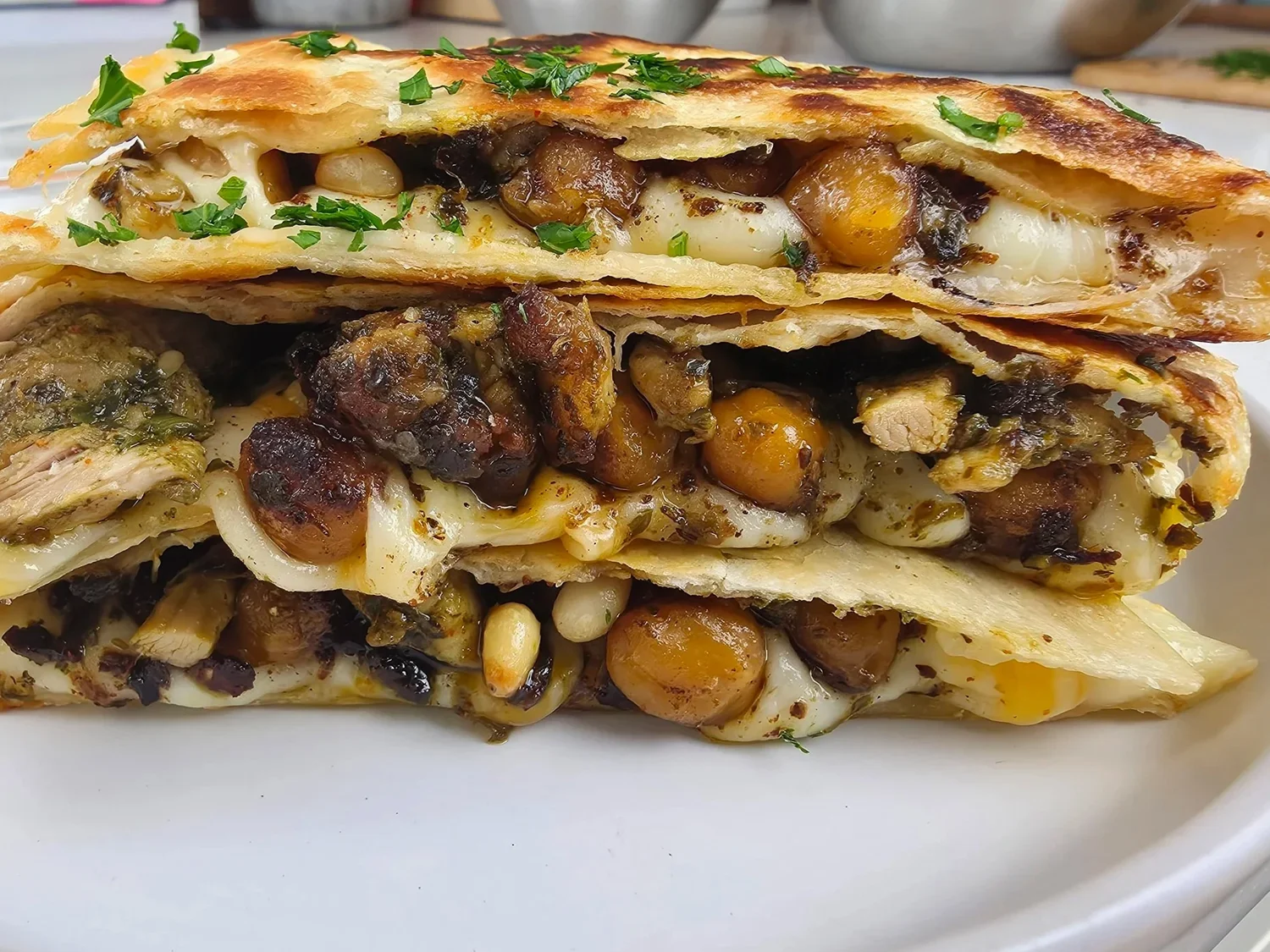
Chermoula Chicken and Chickpea Quesadillas
These chicken and chickpea quesadillas put a North African-inspired spin on a familiar weeknight favorite, layering chermoula-marinated chicken, warmly spiced chickpeas, toasted pine nuts, and melted cheese inside a crisped tortilla, finished with a cool, spicy harissa yogurt on the side.
The chicken is marinated in chermoula, one of the flavors that makes this quesadilla especially interesting. It's a bright, herb-filled North African sauce traditionally made with fresh herbs, garlic, lemon, olive oil, and warm spices, and I think of it as North Africa's answer to chimichurri: a fresh, punchy sauce that works as both a marinade and a finishing condiment. Here it does the marinating, soaking into the chicken and giving it plenty of flavor before it even hits the skillet. If you want to see chermoula in a different context, I've also used it in this chicken and chermoula recipe, where the sauce takes more of a starring role.
The chicken is paired with chickpeas seasoned with cumin, paprika, coriander, cinnamon, and black pepper. The chickpeas add substance without making the quesadilla feel overly heavy, while toasted pine nuts bring a little crunch to the filling. Melted cheese pulls everything together and turns those distinctly North African-inspired flavors into something familiar and comforting. The harissa yogurt on the side adds another layer of contrast, with chile heat and smoky spice cooled down by the yogurt, giving you something creamy to dip each crisp wedge into.
I love using quesadillas as a starting point for experimenting with different cuisines because the format is so forgiving. The tortilla and melted cheese provide a familiar foundation, while the filling can take you almost anywhere. A North African-inspired chicken and chickpea combination might not be the first filling that comes to mind when you think of a quesadilla, but that's exactly what makes it fun.
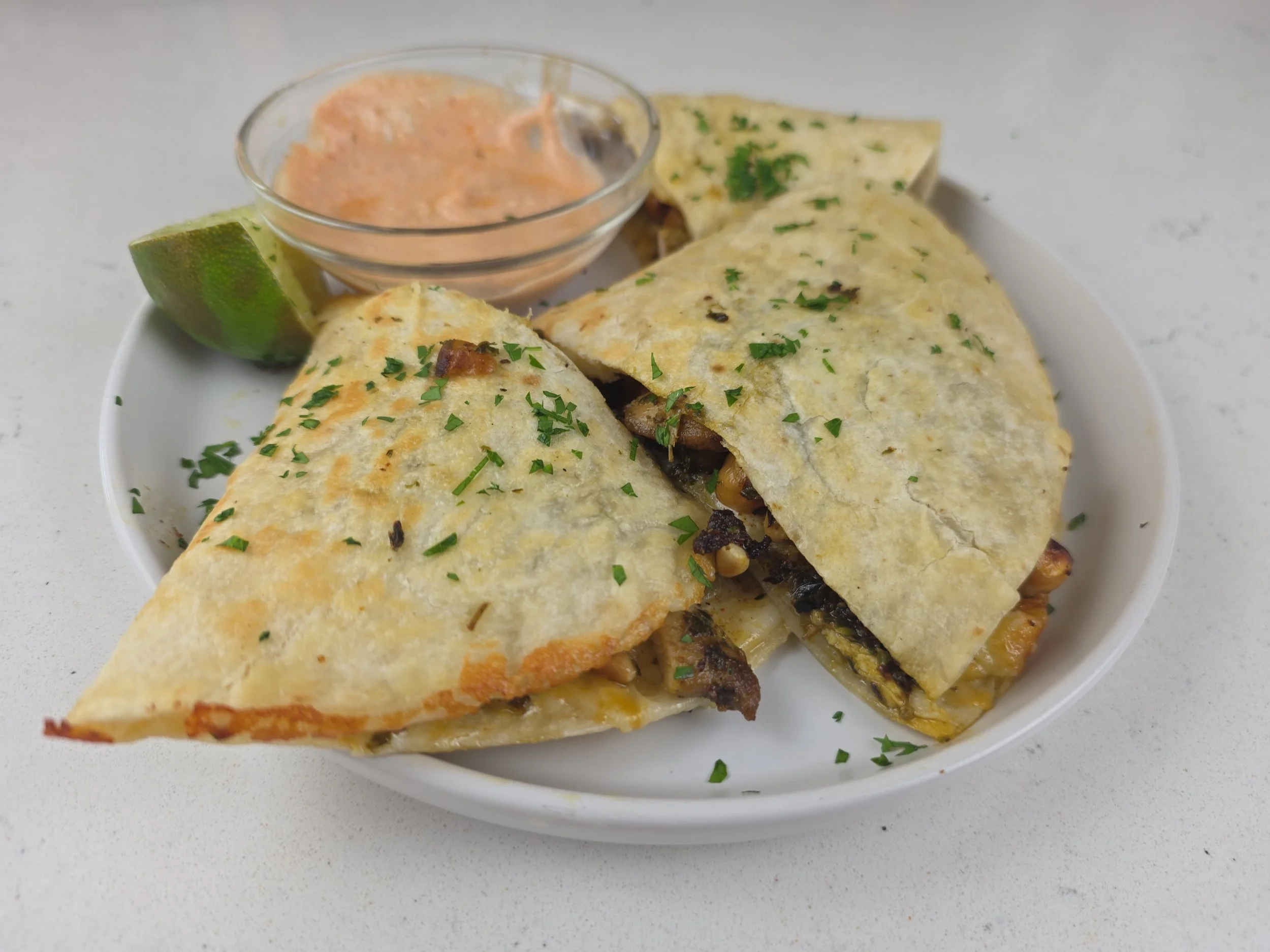
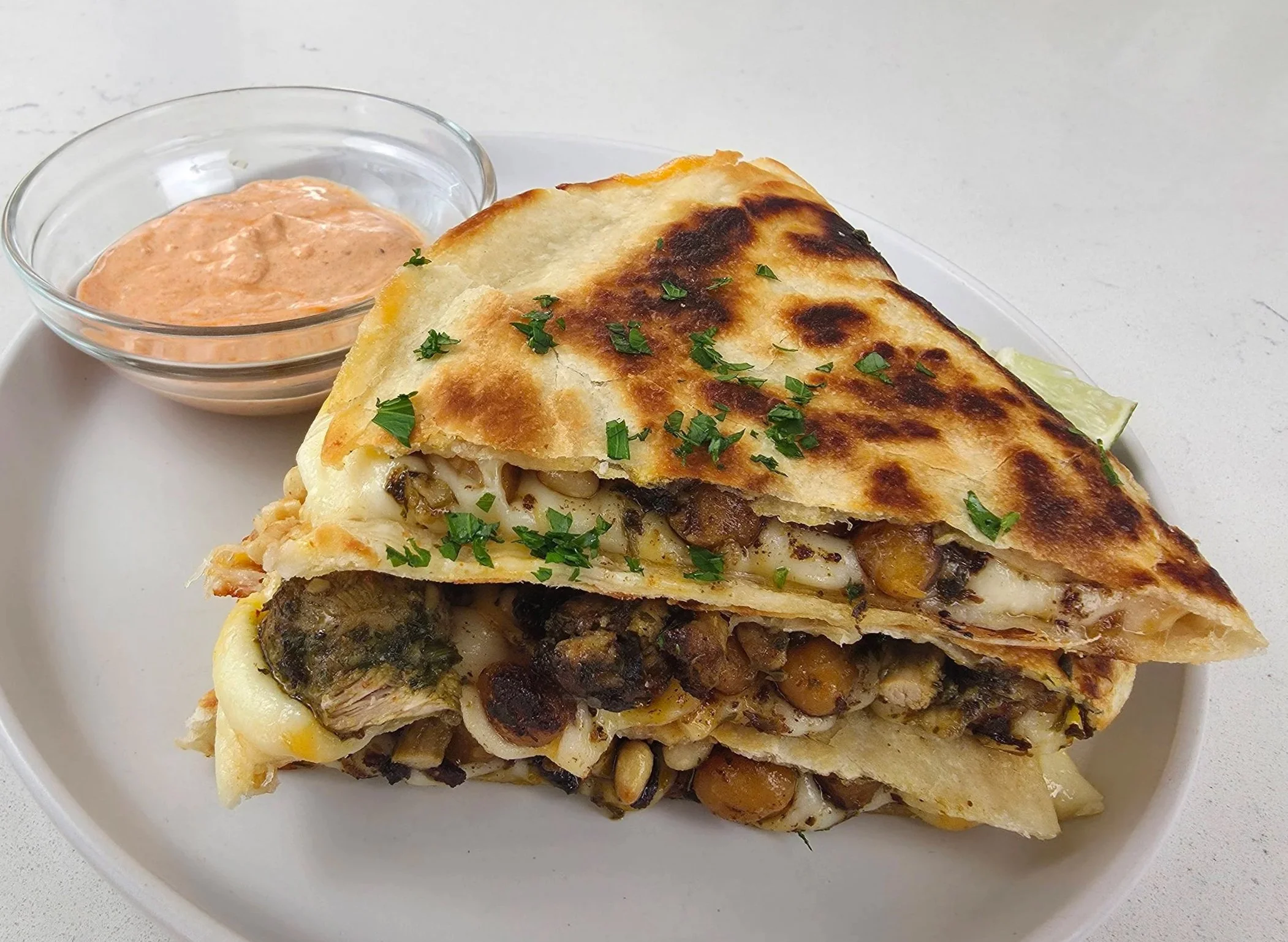

Chicken, Chickpea & Chermoula Quesadillas
Crispy chicken and chickpea quesadillas filled with chermoula-marinated chicken, warm spices, toasted pine nuts, and melted cheese, served with a creamy harissa yogurt for dipping.
Ingredients
- 1½ tsp cumin seeds
- 1½ tsp coriander seeds
- 1 cup packed fresh cilantro
- ½ cup packed fresh parsley
- 4 garlic cloves
- ½ large jalapeño, roughly chopped
- ¼ cup olive oil
- 3 tbsp fresh lemon juice
- 1 tsp paprika
- ½ tsp cayenne pepper
- ¾ tsp salt
- ½ tsp black pepper
- 1–2 tsp Worcestershire sauce
- Umami seasoning, to taste
- 4 bone-in chicken thighs, meat removed and cut into thick strips
- ½ cup cooked chickpeas
- 1 tsp olive oil
- ¼ tsp ground cumin
- ¼ tsp paprika
- ⅛ tsp ground coriander
- ⅛ tsp ground cinnamon
- ⅛ tsp black pepper
- ⅛ tsp salt
- 2 10-inch flour tortillas
- ¾–1 cup shredded melting cheese per quesadilla, approximately 3–4 oz each depending on the cheese
- 2 tbsp toasted pine nuts
- 1–2 tsp neutral oil or butter, for cooking
- 2 tbsp Greek yogurt
- ½–1 tsp harissa
- ½ tsp fresh lemon juice
- ⅛ tsp salt
- ½–1 tsp water, as needed
Instructions
- Toast the cumin and coriander seeds in a dry skillet over medium-low heat for 1–2 minutes, until fragrant. Let them cool slightly, then grind them into a fine powder.
- Add the toasted spices, cilantro, parsley, garlic, jalapeño, olive oil, lemon juice, paprika, cayenne, salt, black pepper, Worcestershire sauce, and umami seasoning to a food processor. Pulse until the mixture forms a textured, spoonable sauce. Taste and adjust the salt or seasoning as needed.
- Remove the meat from the chicken thighs and cut into thick strips. Place the chicken in a bowl and toss with the chermoula until thoroughly coated. Cover and refrigerate overnight.
- When ready to cook, heat a skillet over medium-high heat with a small amount of oil. Allow excess marinade to drip from the chicken, then add the chicken to the skillet in a single layer. Cook for about 6–8 minutes, turning occasionally, until browned and the thickest pieces reach 165°F (74°C). Remove from the skillet and set aside.
- Heat 1 tsp olive oil in a nonstick skillet over medium-high heat. Add the cooked chickpeas in a single layer and cook for about 5–7 minutes, stirring occasionally, until they develop browned edges. Add the cumin, paprika, coriander, cinnamon, black pepper, and salt. Toss for about 30 seconds, until fragrant, then remove from the heat.
- Mix the Greek yogurt, harissa, lemon juice, and salt in a small bowl. Add a little water if needed to create a smooth dipping consistency. Refrigerate until ready to serve.
- Heat a clean skillet over medium heat. Place one tortilla in the skillet and cover one half with the cheese. Add half of the chicken, half of the seasoned chickpeas, and half of the toasted pine nuts. Add a little more cheese over the filling, then fold the tortilla over.
- Cook for 2–3 minutes, until the underside is golden and crisp and the cheese has begun to melt. Carefully flip and cook the other side until golden and the cheese is fully melted. Repeat with the second tortilla.
- Transfer the quesadillas to a cutting board and allow them to rest for about 1 minute. Cut into wedges and serve immediately with the harissa yogurt.
Notes
- Chermoula: The whole spices are toasted and ground before blending for a more aromatic marinade.
- Marinating: The chicken can be marinated overnight, making this easier to prepare as a weeknight or weekend dinner.
- Chicken: Because the chicken is coated in chermoula, the herbs may darken as they cook. This is normal. Cook until the thickest piece reaches 165°F (74°C).
- Chickpeas: They don't need to become completely crispy. The goal is simply to develop some browned edges and add another layer of texture.
- Cheese: Use a good melting cheese. For a particularly gooey quesadilla, use approximately 3–4 oz of cheese per 10-inch tortilla.
- Serving: The quesadillas are large and can be sliced into wedges and shared, making two quesadillas suitable for four servings.
- Make ahead: The chermoula and harissa yogurt can be prepared ahead of time, and the chicken can marinate overnight.
Nutrition Facts
Calories
650Fat (grams)
37 gCarbs (grams)
42 gFiber (grams)
5 gSugar (grams)
4 gProtein (grams)
39 gSodium (milligrams)
1000 mgI am not a certified nutritionist and any nutritional information on dontmissmyplate.com should only be used as a general guideline.
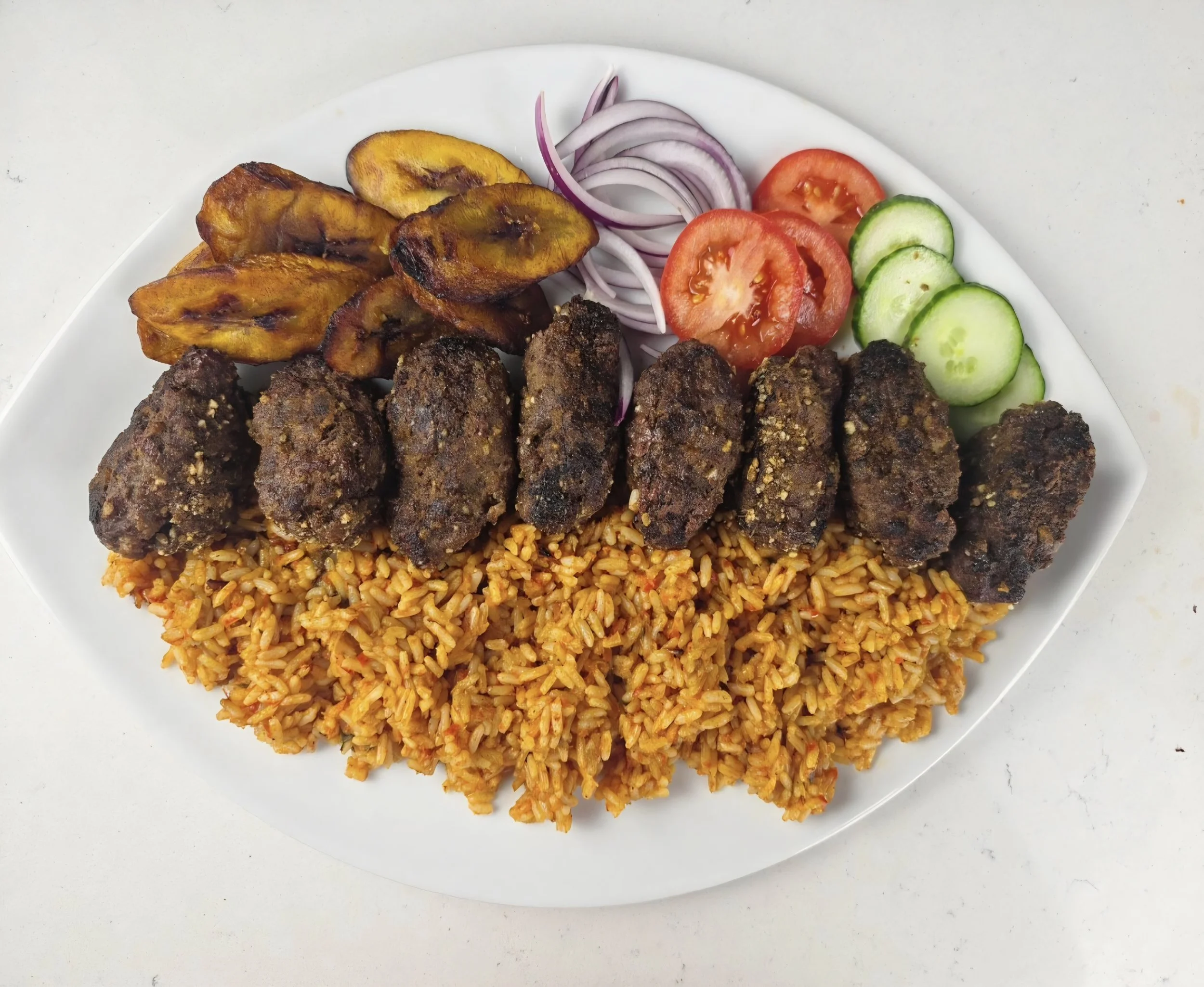
Beef Suya Kofta with Jollof Rice
Bold, nutty beef suya kofta served with West African-inspired jollof rice, sweet fried plantains, and fresh tomato, cucumber, and red onion. This flavorful weekend dinner brings together contrasting spicy, savory, sweet, and fresh flavors in one satisfying plate without turning it into an all-day cooking project.
Suya is a popular street food in Nigeria, traditionally made with meat seasoned with yaji, a distinctive spice blend commonly made with ground roasted peanuts, chilies, ginger, garlic, and other spices. The seasoned meat is grilled over high heat, giving it a deeply savory, spicy, and nutty flavor.
For these kofta, those flavors are paired with the familiar shape and texture of kofta. The meat is seasoned with a suya seasoning straight from Lagos, then finished with finely ground roasted peanuts for a nutty exterior. The basic kofta structure is adapted from my Lamb Kofta with Cape Malay Rice, but the seasoning and accompaniments take this version in a completely different direction. Rather than making yaji completely from scratch, the ready-made spice provides the foundation while the additional peanuts reinforce one of suya's defining flavors.
The kofta are served with West African-inspired jollof rice, a beloved rice dish with many regional and household variations throughout West Africa. Nigerian, Ghanaian, Senegalese, and other preparations differ in their rice, seasoning, cooking methods, and accompaniments, making jollof a dish with no single universal formula.
This isn't an attempt to recreate an authentic Nigerian suya or jollof recipe. Instead, it draws inspiration from West African food traditions and adapts those flavors into an approachable home-cooked meal. Think of it as a celebration of the flavors and an interpretation that can be recreated in your own kitchen.
Fresh tomato, cucumber, and red onion are served alongside the suya to provide a cool, crisp contrast to the richly seasoned meat, while fried plantains add a touch of sweetness.
For another way to use the flavors of yaji, try the Spicy Suya Steak with Creamy Cauliflower Purée and Peanut Gremolata, which takes those flavors in a completely different direction.
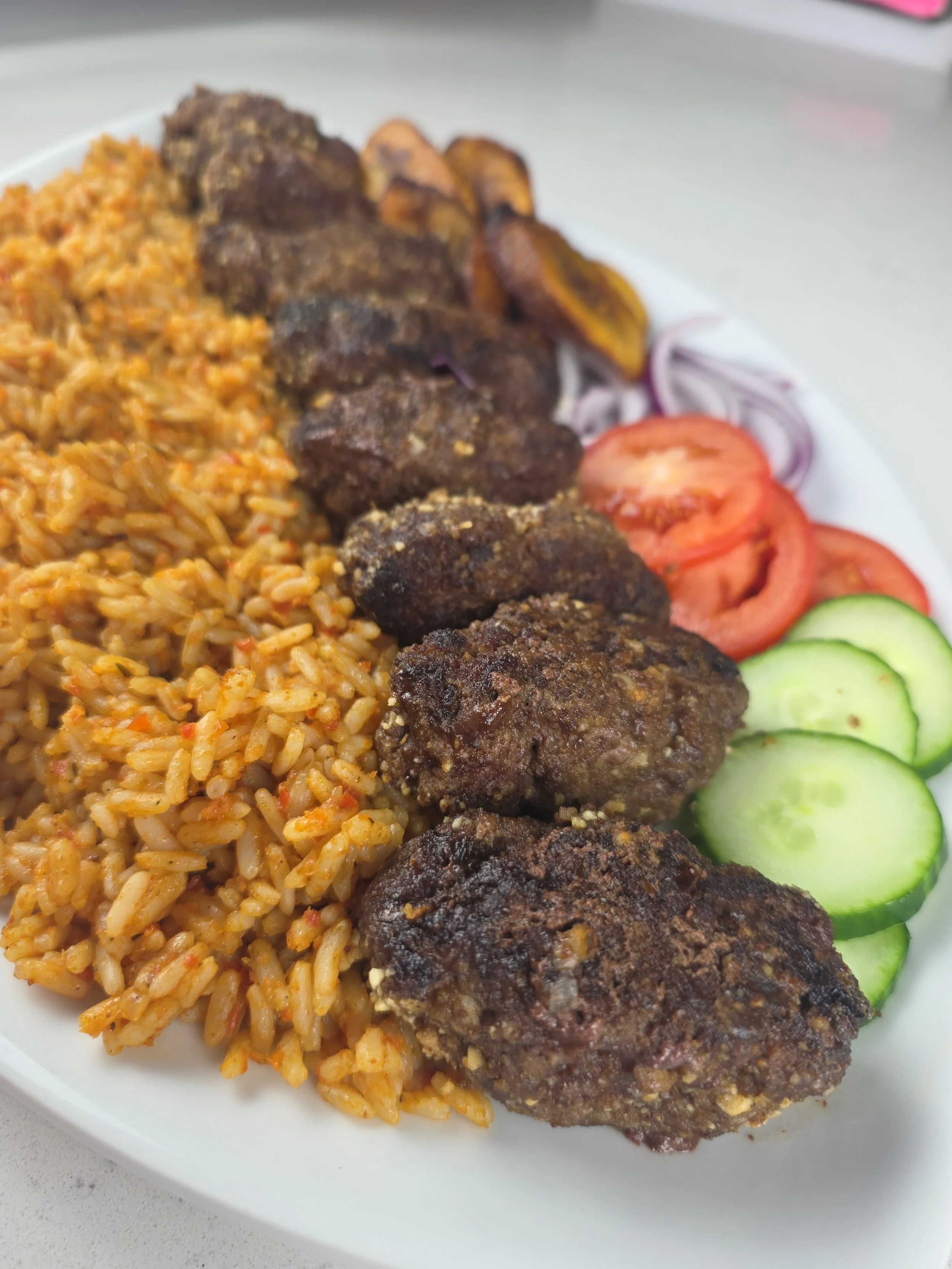

Beef Suya Kofta with West African Jollof Rice
Juicy beef kofta seasoned with Nigerian suya seasoning, coated in finely ground roasted peanuts, and served with tomato-pepper jollof rice, fried plantains, and fresh vegetables.
Ingredients
- 1 lb (450 g) ground beef
- 2 cloves garlic, minced
- 2 tbsp heaped, very finely grated onion (keep the juices)
- 1½ tbsp suya seasoning
- ½ tsp all-purpose steak seasoning
- ½ tsp salt
- 1 tbsp ghee or high-heat cooking oil, for cooking
- ¼ cup roasted unsalted peanuts
- 1½ tbsp suya seasoning
- 2 cups parboiled long-grain rice, rinsed
- ¼ cup neutral cooking oil
- 1 large red bell pepper
- 3 Roma tomatoes
- ½ medium red onion
- 2 cloves garlic
- 1-inch piece fresh ginger
- ½ Scotch bonnet, optional
- 2 tbsp tomato paste
- 1 tsp curry powder
- 1 tbsp fresh thyme leaves
- 2 bay leaves
- 2½ cups chicken stock
- 1 tsp salt, plus more to taste
- ½ tsp black pepper
- ½ tsp Spice for Rice
- 2 ripe plantains
- Neutral oil, for frying
- 1 large tomato, sliced
- ½ red onion, thinly sliced
- ½ English cucumber, sliced
- Salt, to taste
Instructions
- 1. Prepare the peanut-suya coating
- 1. Place the ¼ cup roasted peanuts in a spice grinder.
- 2. Pulse briefly until finely ground and sandy. Do not grind continuously or the peanuts will turn into peanut butter.
- 3. Mix the ground peanuts with 1½ tbsp suya seasoning.
- 4. Set aside.
- 2. Prepare the kofta
- 1. In a large bowl, combine the ground beef, garlic, grated onion, 1½ tbsp suya seasoning, Shisanyama seasoning and salt.
- 2. Mix gently until just combined. Do not overwork the meat.
- 3. Cover and refrigerate for 30 minutes.
- 4. Divide into 6–8 portions and shape each into an elongated kofta.
- 3. Prepare the jollof pepper base
- 1. Roughly chop the bell pepper, tomatoes and onion.
- 2. Add them to a blender with the garlic, ginger and Scotch bonnet, if using.
- 3. Blend until smooth.
- 4. Set aside.
- 4. Cook the jollof base
- 1. Heat ¼ cup oil in a heavy-bottomed pot over medium heat.
- 2. Add the 2 tbsp tomato paste and cook for 2–3 minutes, stirring frequently.
- 3. Add the blended pepper mixture.
- 4. Cook uncovered over medium-low heat, stirring occasionally, until the mixture is thick, concentrated and noticeably darker. Do not rely solely on a set cooking time; the mixture should lose much of its excess water before the rice is added.
- 5. Add the curry powder, fresh thyme, bay leaf, black pepper, salt and South African Spice for Rice.
- 6. Stir well and taste the sauce. Adjust the salt if needed.
- 5. Add the rice
- 1. Add the rinsed rice to the cooked pepper mixture.
- 2. Stir gently until the rice is coated.
- 3. Add 2½ cups chicken stock.
- 4. Stir once and bring to a gentle simmer.
- 5. Cover the pot tightly with aluminum foil, then place the lid over the foil.
- 6. Reduce the heat to low and cook for approximately 20 minutes.
- 7. Check the rice. If the grains are tender, turn off the heat. If they are still firm, add a small amount of additional stock or water, reseal and cook until tender.
- 8. Once tender, keep covered and let the rice rest for 10 minutes.
- 9. Remove the bay leaf and gently fluff with a fork.
- 6. Cook the plantains
- 1. Peel the plantains and slice diagonally into approximately ½-inch pieces.
- 2. Heat about ¼ inch of oil in a skillet to approximately 325–340°F.
- 3. Fry the plantains for 3–4 minutes per side, until golden brown and soft in the center.
- 4. Transfer to a paper-towel-lined plate and season lightly with salt if desired.
- 7. Cook the kofta
- 1. Preheat the oven to 375°F (190°C).
- 2. Heat a grill pan over medium-high heat and add the 1 tbsp ghee or cooking oil.
- 3. Sear the kofta for approximately 2 minutes per side, until browned and marked.
- 4. Transfer them to a parchment-lined baking sheet.
- 5. Press the peanut-suya mixture onto the outside of each kofta, creating a thin, even coating.
- 6. Bake uncovered for 8–12 minutes, or until the center of the thickest kofta reaches 160°F (71°C).
- 7. Remove from the oven and rest for 5 minutes.
- 8. Serve
- Arrange the jollof rice on a platter and nestle the beef suya kofta alongside it. Add the fried plantains and fresh tomato, cucumber and red onion.
- Serve immediately.
Notes
- Suya seasoning: Use a Nigerian suya/yaji seasoning you enjoy. Yaji blends vary, so adjust the amount and salt according to the particular blend you're using. Suya seasoning is the defining flavor here; the additional Shisanyama seasoning is deliberately kept small.
- Peanuts: Pulse rather than continuously grinding them. You want a fine, sandy texture—not peanut butter.
- Kofta moisture: The finely grated onion helps keep the beef moist. Mix gently and avoid overcooking.
- Cooking temperature: Ground beef kofta should reach 160°F (71°C) in the center.
- Jollof base: The most important step for a deeply flavored rice is cooking the blended tomato-pepper mixture down sufficiently before adding the rice. Don't stop simply because a particular number of minutes has passed.
- Plantains: Use ripe plantains for sweetness and a soft interior that balances the savory kofta and spicy rice.
I am not a certified nutritionist and any nutritional information on dontmissmyplate.com should only be used as a general guideline.
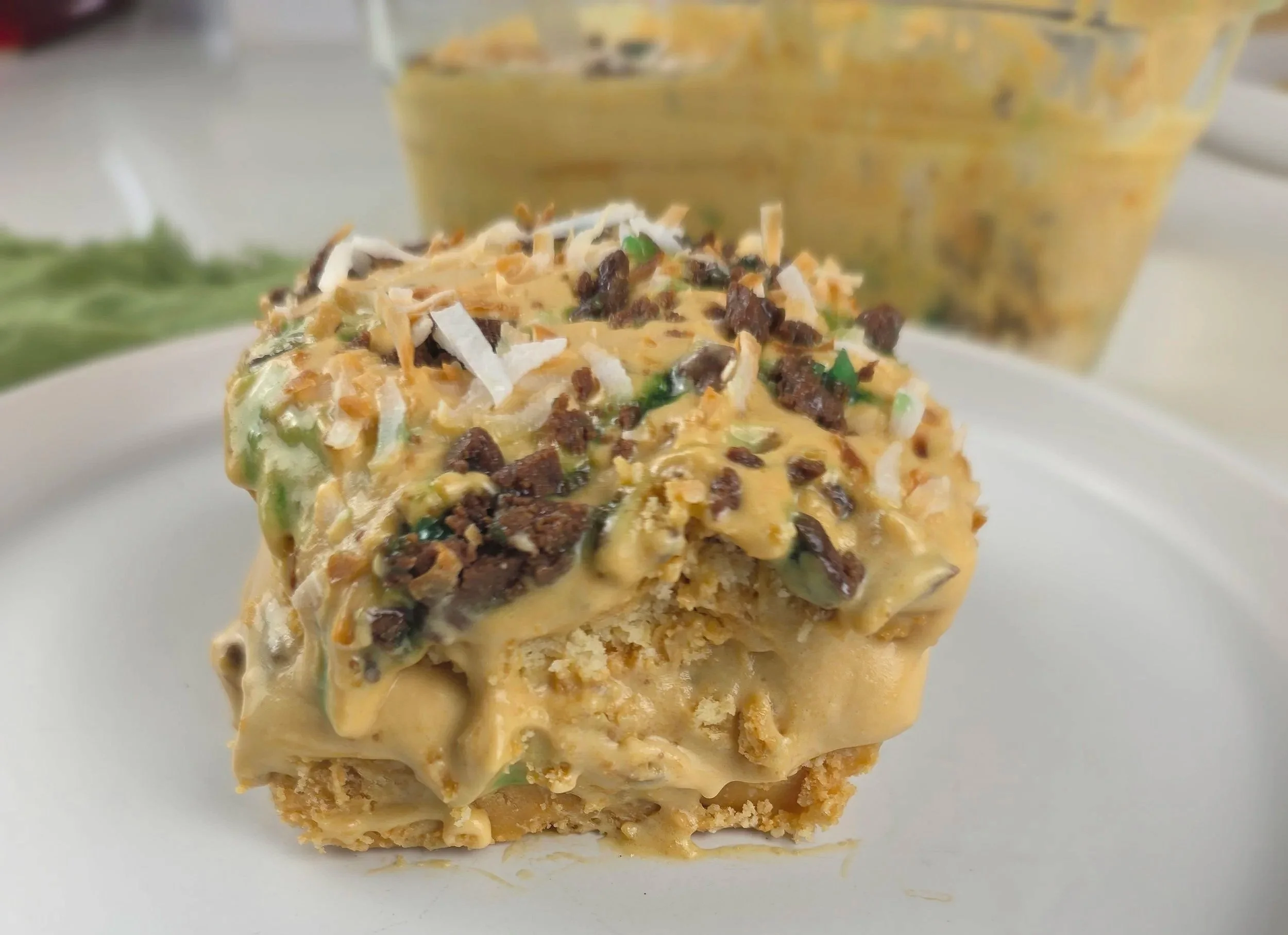
Peppermint Crisp Tart with Coconut
A no-bake South African classic of Tennis biscuits, whipped cream, and caramel, topped with Peppermint Crisp chocolate. My version adds coconut throughout for a tropical twist, no oven needed, just fridge time.
If you didn't grow up in Southern Africa, there's a good chance you've never heard of Peppermint Crisp Tart, but it's one of the most beloved desserts in the country, the kind of thing that shows up at every family gathering, Christmas, and braai. It's a no-bake tart built from layers of crushed Tennis biscuits, whipped cream, and a caramel sauce, all finished with grated Peppermint Crisp, a chocolate bar that's equal parts sweet and crunchy. The biscuits soften just enough in the fridge to turn almost cake-like, while the caramel and cream stay rich and smooth underneath.
For my version, I wanted to keep everything that makes the original so good while putting my own spin on it. I folded coconut cream into the caramel layer, topped it all with toasted coconut, and turned the Tennis biscuits into a buttery coconut crumb crust instead of the usual straight biscuit layer. It's still unmistakably Peppermint Crisp Tart at heart, but there's a subtle coconut flavor running through every layer now.
It's creamy, minty, rich with caramel, and about as easy as dessert gets, no oven required. Honestly that's part of the charm of this one. You assemble it, slide it into the fridge, and let time do the rest of the work for you.
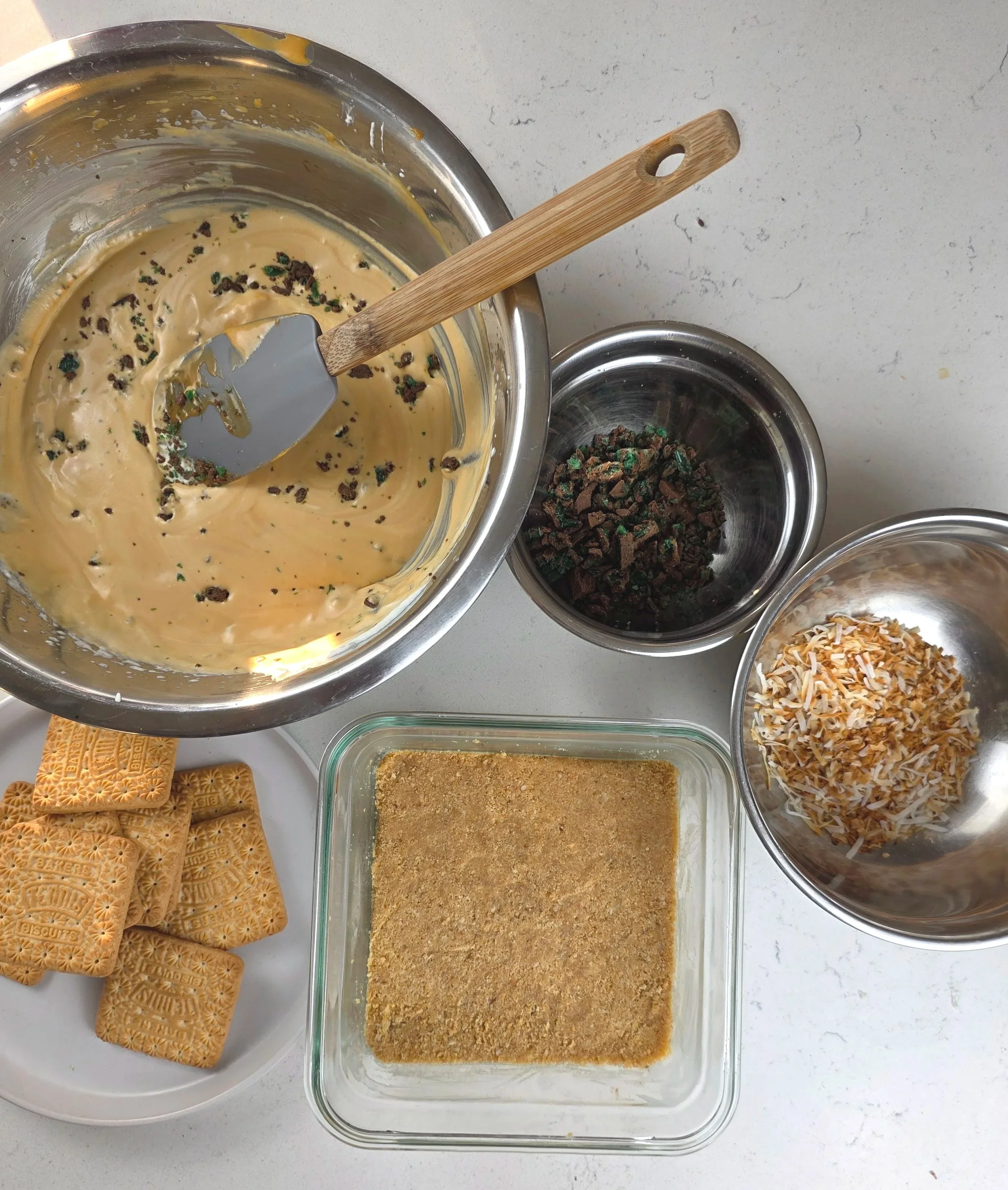
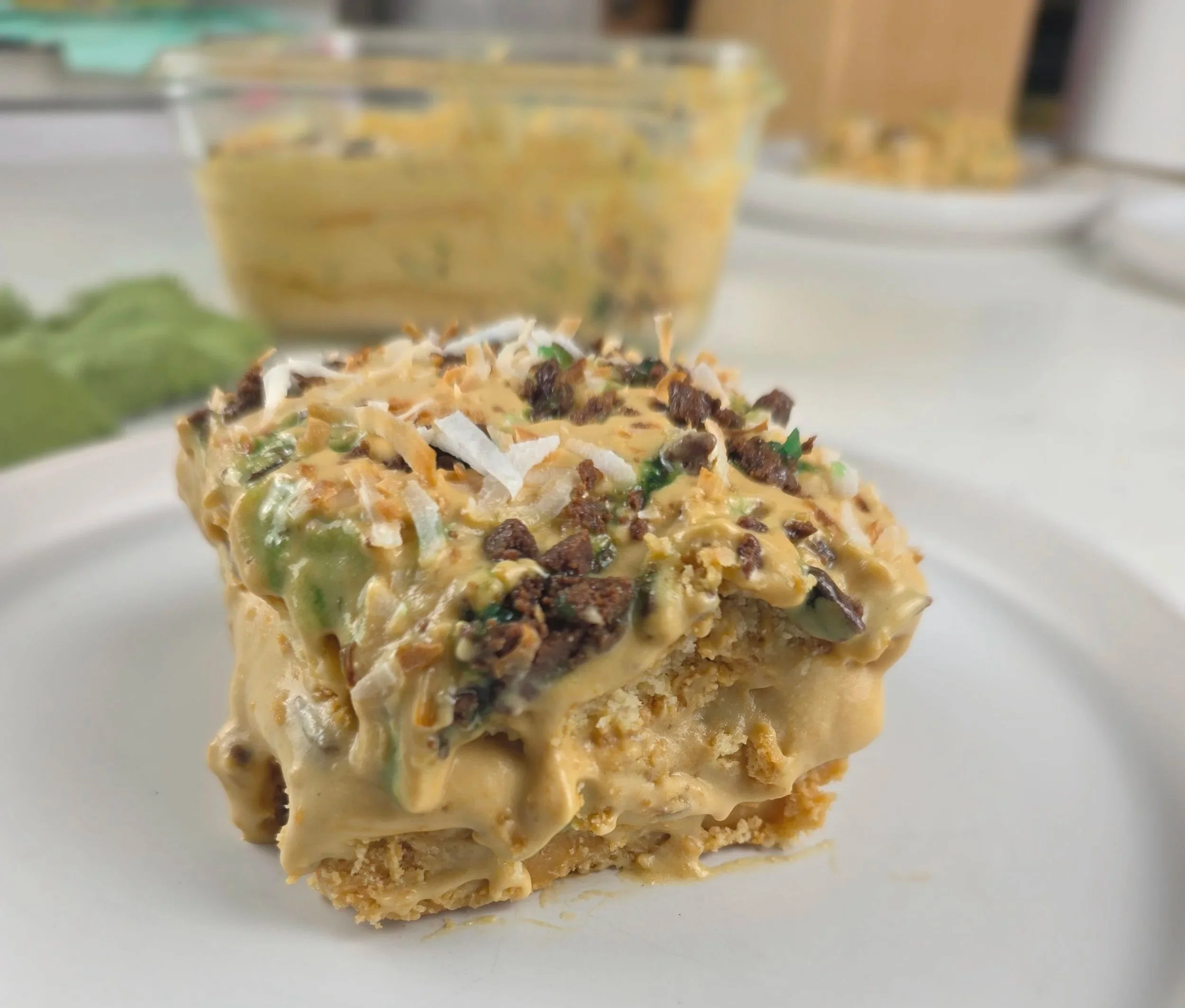

Peppermint Crisp Tart with Coconut
A no-bake South African classic of Tennis biscuits, whipped cream, and coconut caramel, topped with toasted coconut and grated Peppermint Crisp chocolate. No oven needed, just fridge time to set.
Ingredients
- 16-18 Tennis biscuits
- 4-6 tbsp unsalted butter, melted
- 3 tbsp unsweetened coconut flakes
- 7 oz (198 g) dulce de leche or Caramel Treat
- ¼ cup (60 ml) coconut cream, chilled
- 1 cup (240 ml) cold heavy whipping cream
- 2 tbsp granulated sugar
- ½ tsp vanilla extract
- Pinch of salt
- 2 Peppermint Crisp bars, chopped
- About ½ Peppermint Crisp bar, finely chopped
- 1-2 tbsp toasted coconut flakes
Instructions
- First make the crust. Add the Tennis biscuits and coconut flakes to a food processor and pulse into fine crumbs. Add the melted butter gradually, pulsing after each addition, until the crumbs resemble wet sand and hold together firmly when pressed. You may not need all 6 tablespoons. You can also transfer the crumbs to a bowl before adding the butter and mix with a spatula instead.
- Press the crumb mixture firmly and evenly into the bottom of a 6 × 6-inch dish in a layer about ⅓ inch thick, substantial enough to hold together when cut but not so thick it's hard to cut through. Cover and chill while preparing the filling.
- In a bowl, combine the dulce de leche, coconut cream, vanilla and salt. Stir with a spatula until completely smooth.
- In a separate bowl, beat the cold heavy cream and granulated sugar until medium-stiff peaks form. Do not overwhip!
- Fold about one-third of the whipped cream into the caramel mixture to loosen it. Then gently fold the loosened caramel mixture into the remaining whipped cream until smooth and fluffy.
- Chop 2 Peppermint Crisp bars, reserving approximately ½ bar for the topping. Gently fold the remaining chopped Peppermint Crisp into the filling. Spread half of the filling over the chilled biscuit crust.
- Arrange a single layer of whole Tennis biscuits over the filling, breaking them as necessary to fit. Spread the remaining filling over the biscuits and smooth the top.
- Sprinkle with the reserved chopped Peppermint Crisp and toasted coconut flakes.
- Cover and refrigerate for at least 4 hours, preferably overnight, until thoroughly chilled and set. Serve chilled.
Notes
- Chocolate: If Nestlé Peppermint Crisp isn't available, substitute an equivalent amount of peppermint chocolate, such as peppermint Aero.
- Dulce de leche: Traditional South African Peppermint Crisp Tart uses Nestlé Caramel Treat. Dulce de leche works as a readily available U.S. substitute, either works in this recipe.
- Tennis Biscuits: Tennis biscuits are the classic South African coconut biscuits traditionally used in this tart. If unavailable in the U.S., substitute Voortman Coconut Cookies or another thin, crisp coconut biscuit. Leibniz Butter Biscuits or a similar crisp tea biscuit also work, though the coconut flavor will be less pronounced.
- Coconut Cream: Use canned coconut cream. It's mixed directly into the caramel and doesn't need to be whipped.
- Crust Note: For the best texture, press the biscuit mixture into a firm, even layer about ⅓ inch thick. You want a substantial crust that holds together when cut but isn't so thick that it becomes difficult to cut through.
Nutrition Facts
Calories
690Fat (grams)
41 gSat. Fat (grams)
27 gCarbs (grams)
52 gSugar (grams)
37 gProtein (grams)
6 gSodium (milligrams)
167 mgI am not a certified nutritionist and any nutritional information on dontmissmyplate.com should only be used as a general guideline.
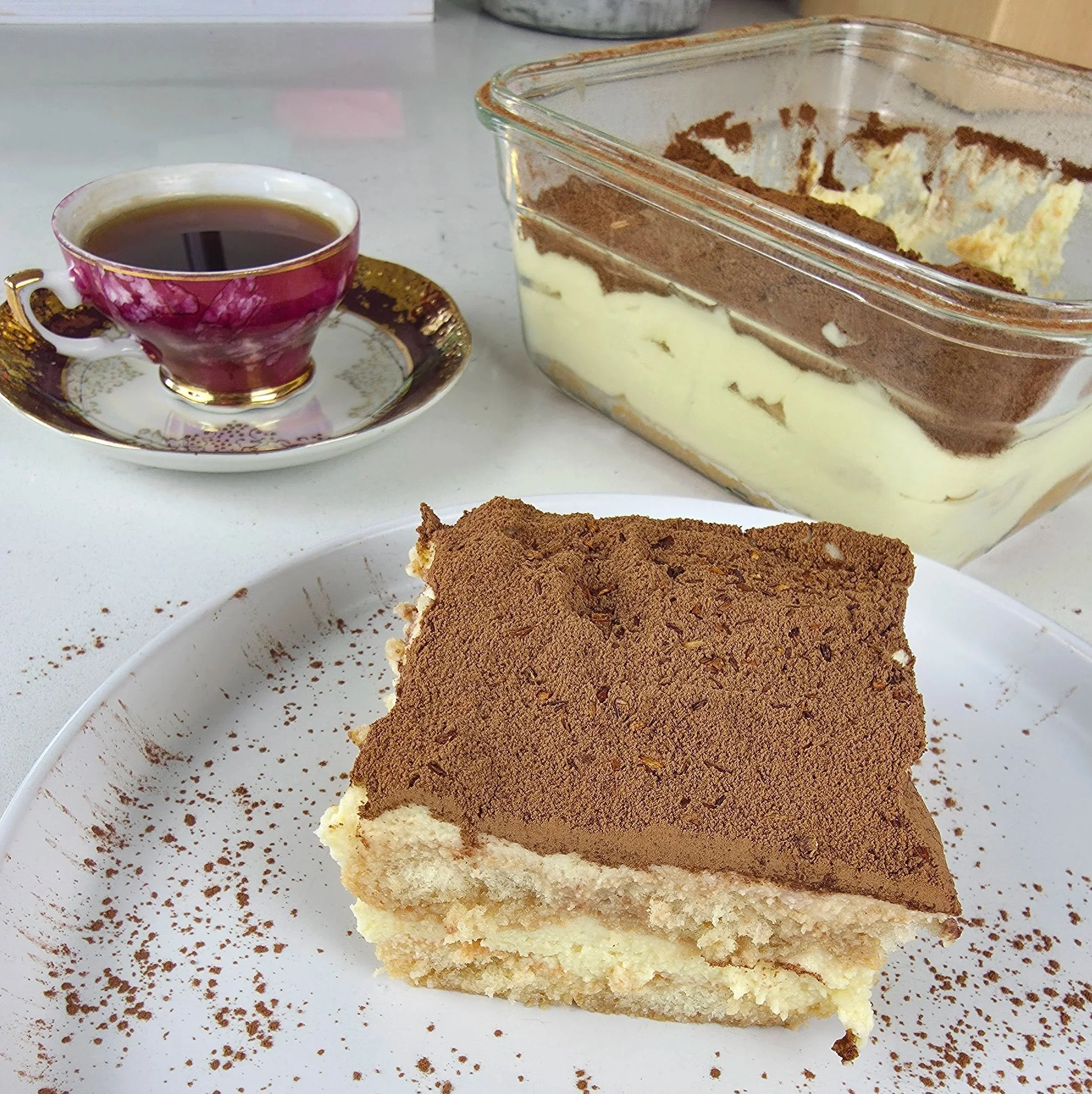
Rooibos Tiramisu
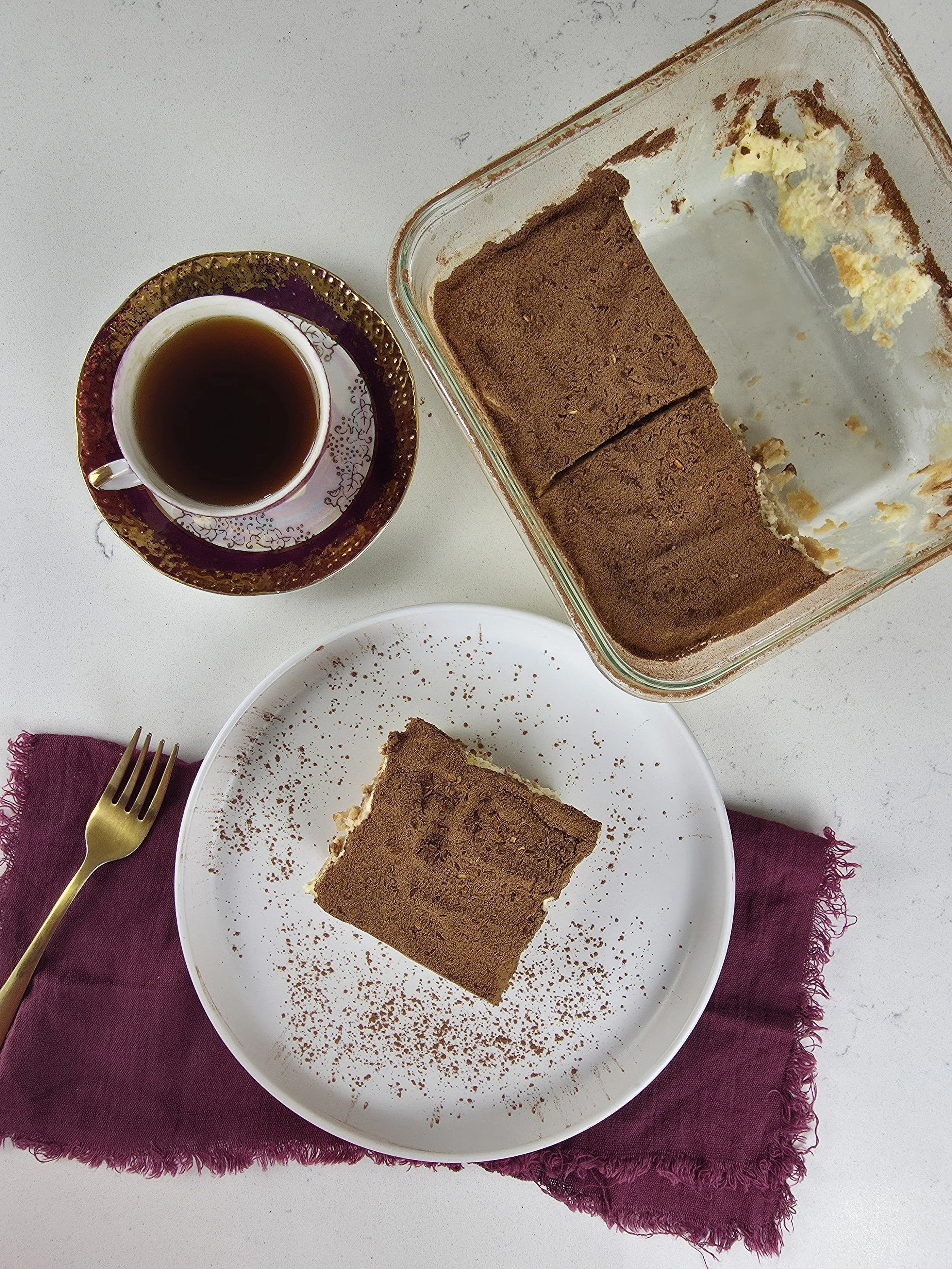
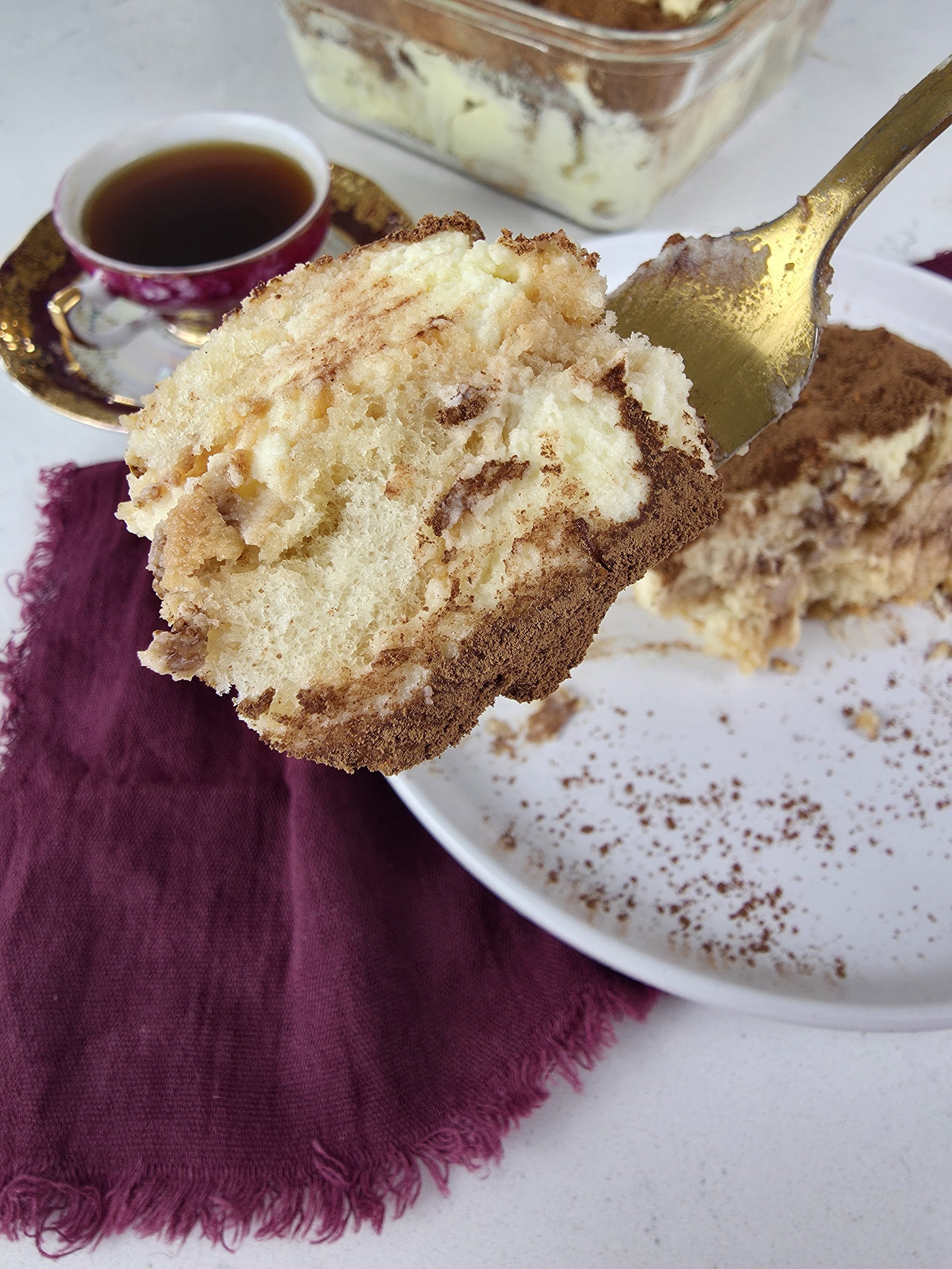
A Southern African-inspired take on Italian tiramisu, this Rooibos Tiramisu replaces the traditional coffee soak with strong rooibos tea, masala wine and vanilla for a creamy, aromatic dessert that's perfect for tea lovers.
Tiramisu is one of those desserts that doesn't really need an introduction. Creamy mascarpone, delicate ladyfingers, cocoa and that unmistakable coffee-soaked bite make it a classic for a reason. But what happens when you're a tea lover who wants to experience tiramisu without making coffee the star?
I first fell in love with making tiramisu during a cooking class in Italy, where I had the chance to make the classic version from scratch. There's something special about preparing a dish in the place where it originated—or at least, in the country that made it famous around the world. Working with mascarpone, egg yolks, sugar and those delicate Italian ladyfingers gave me a much better appreciation for why the dessert works so well. But when I started thinking about putting my own spin on it, I didn't want to simply swap one ingredient for another and call it a new recipe. I wanted the twist to actually make sense, and for me, that meant rooibos.
Rooibos is naturally caffeine-free, with a mellow, nutty, earthy sweetness and subtle notes that can lean toward vanilla, honey and even cocoa depending on the blend. It also happens to be one of those ingredients that immediately brings a South African connection to a dessert that is otherwise unmistakably Italian.
Instead of soaking the ladyfingers in coffee, they're dipped in a strong rooibos infusion, finished with a little marsala wine and vanilla. The result isn't supposed to taste like coffee tiramisu with tea substituted for the coffee. The goal is something different: a tiramisu where rooibos has its own identity.
I also wanted to keep the dessert approachable for people who simply aren't coffee drinkers. If you love tea, don't drink caffeine, or just want something unexpected for dessert, this version gives you the creamy, cocoa-dusted experience of tiramisu while taking it in a completely different direction.
The mascarpone cream remains rich and airy, while the rooibos brings warmth and depth. A small amount of espresso powder in the cocoa topping is there only to deepen the chocolate notes—not to turn the dessert back into a coffee tiramisu.
It's a little bit Italy, a little bit Southern Africa, and very much my kind of fusion.

Rooibos Tiramisu
A Southern African-inspired twist on classic Italian tiramisu, made with bold rooibos tea, masala wine, mascarpone and a cocoa-espresso finish.
Ingredients
- 1 cup water
- 2 teaspoons loose-leaf rooibos
- 1 tablespoon granulated sugar
- 2 tablespoons masala wine
- ½ teaspoon vanilla extract
- 2 large egg yolks
- ¼ cup (50g) granulated sugar
- 1 tablespoon masala wine
- 8 ounces (225g) mascarpone, slightly softened
- ⅔ cup (160ml) heavy whipping cream, cold
- ½ teaspoon vanilla extract
- Pinch of salt
- 12–14 Savoiardi ladyfingers
- Topping
- 1 tablespoon unsweetened cocoa powder
- ¼ teaspoon espresso powder
- Optional: a tiny pinch of very finely crushed rooibos leaves for visual garnish
Instructions
- Bring 1 cup of water to a boil. Add the rooibos and steep for 8–12 minutes, or until very strong. If needed, add a little more water and additional loose-leaf rooibos to account for evaporation and maintain enough liquid for dipping the ladyfingers. Remove the tea bags or strain the loose tea once the rooibos is ready. You can prepare the remaining components while the tea steeps.
- While the tea is still hot, stir in the sugar until dissolved. Allow the tea to cool to warm or room temperature, then stir in the masala wine and vanilla. Set aside.
- In a heatproof bowl, whisk together the egg yolks, sugar, and 1 tablespoon of masala wine. Place the bowl over a saucepan of gently simmering water, making sure the bottom of the bowl does not touch the water. Whisk constantly until the mixture reaches 160°F. Remove from the heat and let cool for about 5 minutes.
- Transfer the cooked yolk mixture to a large bowl. Add the mascarpone, vanilla, and salt, and whisk until smooth.
- In a separate bowl, whip the cold heavy cream to medium-stiff peaks. Gently fold half of the whipped cream into the mascarpone mixture, then fold in the remaining cream just until combined. Do not overmix.
- Pour the rooibos soak into a shallow dish. Dip each ladyfinger very briefly, about 1 second per side, until moistened but not saturated.
- Arrange the dipped ladyfingers in a single layer across the bottom of a 6 × 6-inch dish, breaking them as needed to fit. Spread half of the mascarpone cream evenly over the ladyfingers. Add a second layer of dipped ladyfingers, followed by the remaining mascarpone cream. Smooth the top.
- Combine the cocoa powder and espresso powder, then sift the mixture evenly over the tiramisu. If desired, finish with a tiny pinch of finely crushed rooibos leaves for visual contrast.
- Cover and refrigerate for at least 4 hours, preferably overnight. Serve chilled.
Notes
- Strong rooibos matters. The tea should taste more concentrated than a normal cup because the mascarpone and ladyfingers will mellow it.
- Don't oversoak the ladyfingers. A very quick dip keeps the tiramisu structured rather than soggy.
- The espresso powder is subtle. It deepens the cocoa flavor without turning this into coffee tiramisu.
- Masala wine: The small amount adds warmth and spice without overpowering the rooibos.
- Egg safety: The yolk mixture is heated to 160°F before being incorporated into the cream.
Nutrition Facts
Calories
580Fat (grams)
37 gSat. Fat (grams)
22 gCarbs (grams)
56 gSugar (grams)
29 gProtein (grams)
9 gI am not a certified nutritionist and any nutritional information on dontmissmyplate.com should only be used as a general guideline.
Berbere Bang Bang Crab & Shrimp Quesadillas
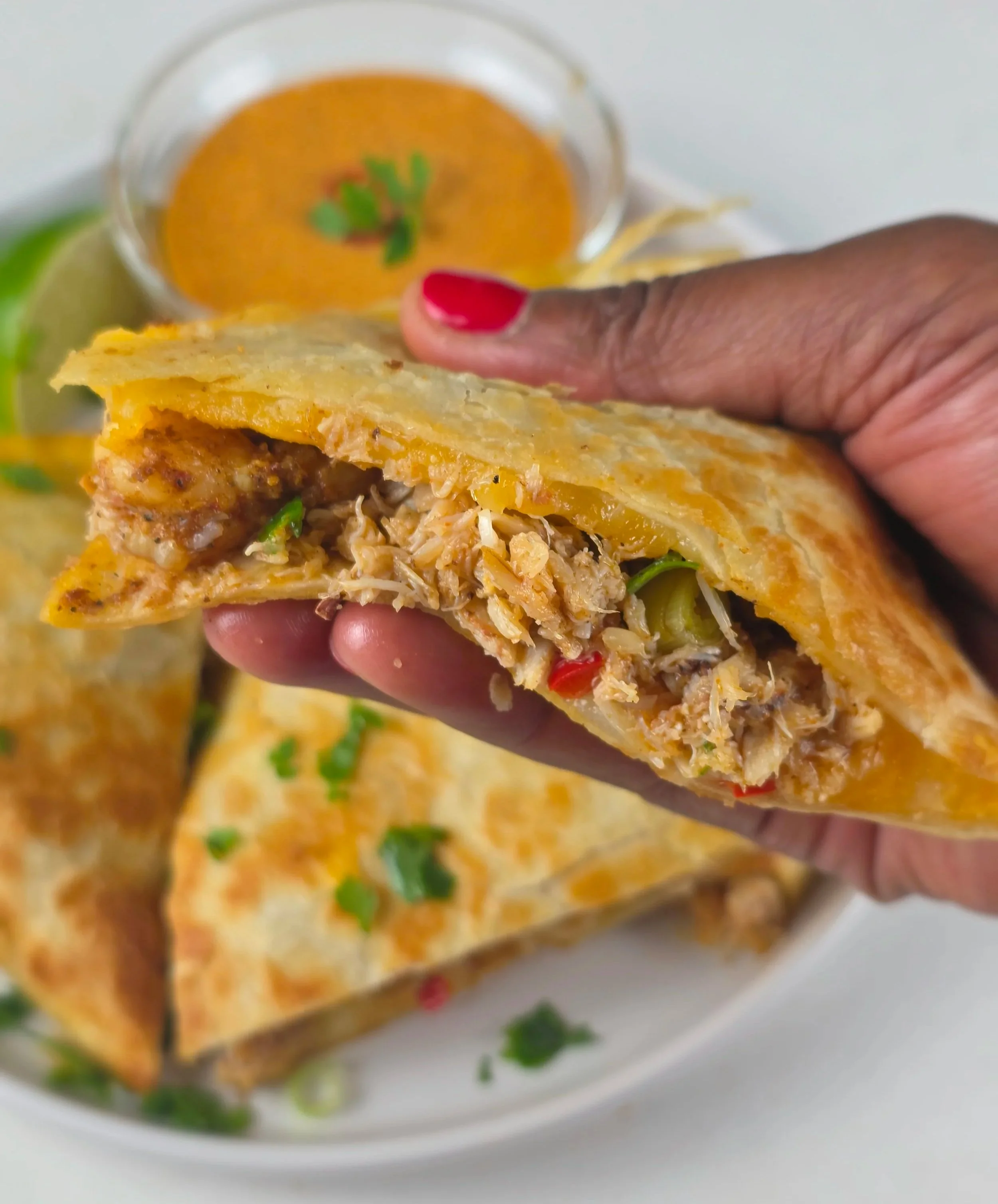
These quesadillas take a familiar cheesy favorite and give it a seafood-forward Afrofusion twist. They're packed with sweet lump crab, whole seasoned shrimp, melted Monterey Jack and Colby cheese, fresh red chili, and a creamy homemade Bang Bang sauce layered with fragrant berbere.
Quesadillas are one of those wonderfully adaptable foods that can take on almost any flavor profile, and this version is a great example. The combination of seafood and cheese might not be the first pairing that comes to mind for everyone, but here it absolutely works. The mild, creamy cheese provides the perfect backdrop for sweet crab and juicy shrimp, while berbere brings warmth, chile heat, and aromatic depth.
Berbere is one of the spices I reach for again and again, especially when I'm cooking seafood. I love the way its combination of chile and warm spices works with the natural sweetness of shrimp and crab. I've used it in recipes like my Blackened Salmon with Berbere Cream Sauce, and here I've taken it in a completely different direction by building it into both the seafood seasoning and the Bang Bang sauce. The result is a quesadilla that's creamy, spicy, savory, slightly sweet, and packed with flavor. The Berbere Bang Bang sauce is the signature element, adding a creamy, sweet-and-tangy finish with enough berbere to make its presence known without overwhelming the seafood.
This is also the kind of recipe I love for summer: quick enough for a weeknight lunch or dinner, fun enough for a casual gathering, and indulgent enough to feel like something you'd order at a restaurant. The seafood comes together quickly, while the quesadillas get golden and crisp in a skillet. For the cheese, I use Monterey Jack because it melts beautifully, with Colby adding a little more flavor. I intentionally use a generous amount for that dramatic cheese pull, but you can absolutely adjust the amount to your preference—the seafood is the star, after all.
There are a few tricks that make a big difference.
Don't overcook the shrimp; they only need a few minutes in a hot skillet and should be removed as soon as they're opaque and cooked through. The lump crab is already cooked, so you're simply warming it with garlic, butter, seasoning, lime, and scallions. Cooking it too long can dry it out and take away its delicate texture. I also recommend having all of your fillings ready before you start cooking the tortillas. Once the quesadilla is golden and the cheese has melted, fill it while it's still hot. As it cools, the melted cheese can seal the edges together, making the quesadilla difficult to open and fill neatly.
I like to finish these with fresh scallions, chili, and sauce on the side for dipping. Since the quesadillas are rich and cheesy, something fresh and acidic makes the perfect accompaniment. Try serving them with a simple lime-dressed green salad, cucumber and tomato salad, crunchy cabbage slaw, avocado and citrus salad, or even fresh fruit with lime and chili. I would skip the fries here—the quesadilla is already doing plenty of heavy lifting.
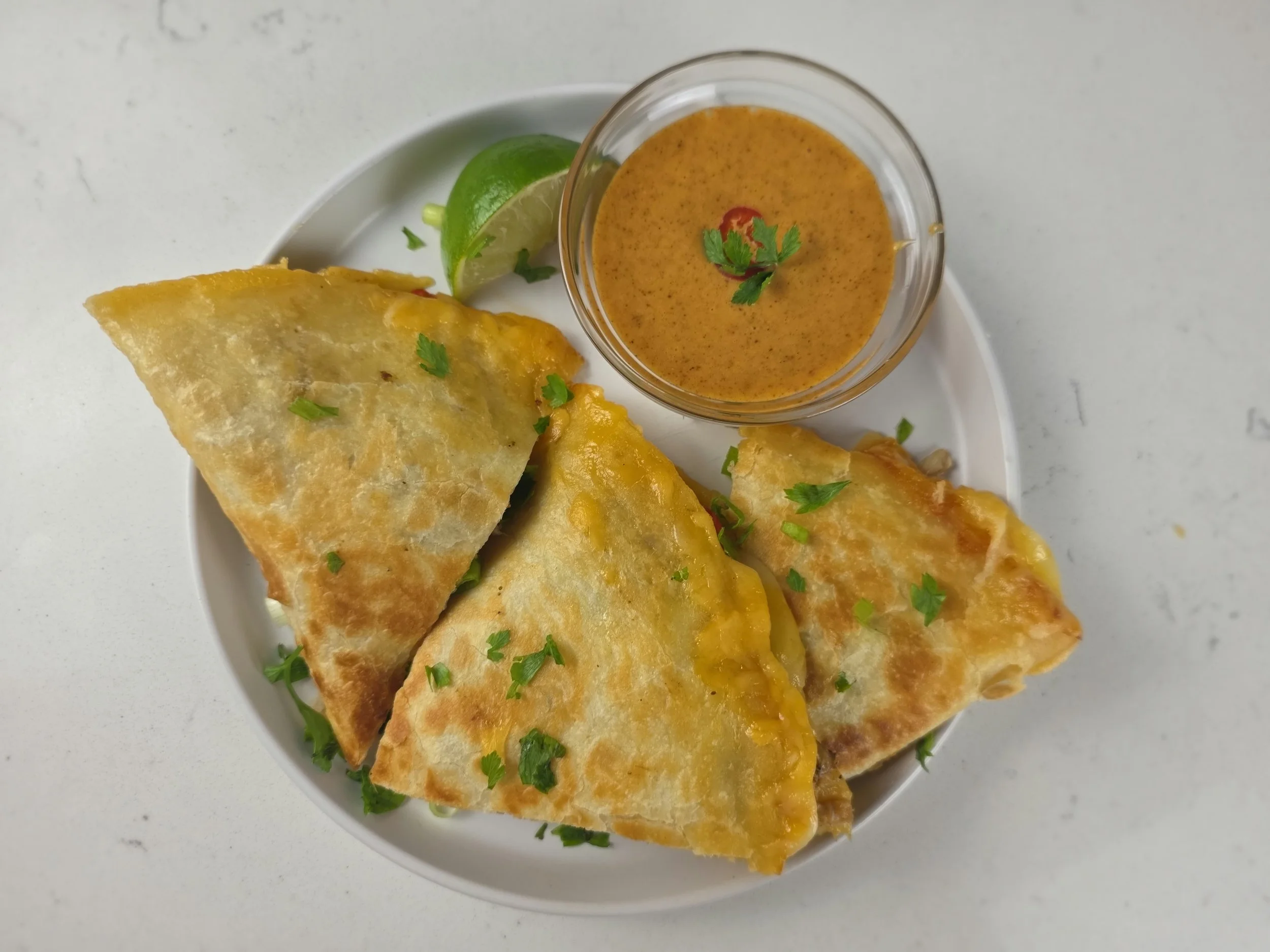

Berbere Bang Bang Crab & Shrimp Quesadillas
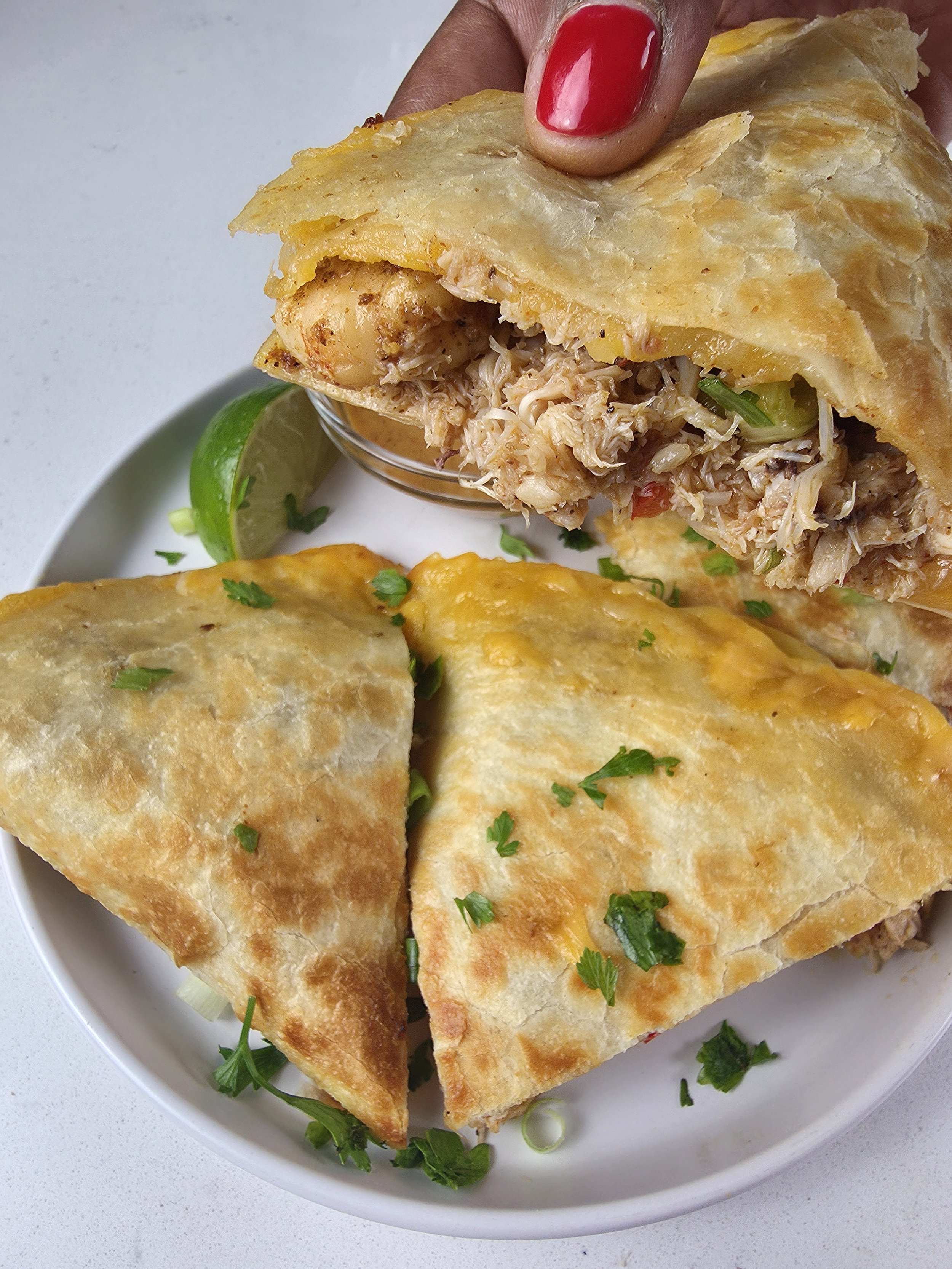
Golden 10-inch quesadillas filled with whole seasoned shrimp, tender lump crab, Monterey Jack and Colby cheese, and fresh red chili, finished with a creamy, sweet-and-spicy Berbere Bang Bang sauce. Berbere is used throughout the recipe to give the seafood and sauce a warm, aromatic chile flavor.
Ingredients
- ½ cup mayonnaise
- 2 tablespoons sweet chili sauce
- 1 tablespoon honey
- 1 tablespoon fresh lime juice
- 1 teaspoon hot sauce
- 2 teaspoons berbere seasoning
- ¼ teaspoon garlic powder
- Pinch of salt
- ½ lb whole shrimp, peeled and deveined
- 1 teaspoon neutral oil
- ½ teaspoon berbere seasoning
- ¼ teaspoon garlic powder
- ¼ teaspoon onion powder
- ¼ teaspoon chili powder
- ¼ teaspoon salt
- ⅛ teaspoon black pepper
- 1 teaspoon fresh lime juice
- 8 oz lump crab meat, well drained
- 1 teaspoon neutral oil (to coat when seasoning)
- ½ teaspoon Old Bay seasoning
- 1 tablespoon thinly sliced green onion
- 1 teaspoon butter (for warming)
- 1 small garlic clove, finely minced
- 1 teaspoon fresh lime juice
- 2 large 10-inch flour tortillas
- 1½ cups shredded Monterey Jack and Colby cheese, combined
- ½–1 fresh red chili, thinly sliced into rings
- 1 tablespoon thinly sliced green onion, reserved for garnish
- Ghee or neutral oil, for cooking
Instructions
- Make the Berbere Bang Bang Sauce: Whisk together the mayonnaise, sweet chili sauce, honey, lime juice, hot sauce, berbere seasoning, garlic powder, and salt. Cover and refrigerate while preparing the rest of the recipe.
- Season the shrimp: Pat the shrimp very dry and keep them whole. Toss with a little oil, then season with the berbere, garlic powder, onion powder, chili powder, salt, and black pepper. Set aside for a few minutes while preparing the crab.
- Prepare the crab: Drain the crab and gently check for any shell pieces, keeping the lumps as intact as possible. In a bowl, season the crab with a little oil, Old Bay seasoning, and sliced green onion.
- Cook the shrimp: Heat 1 teaspoon ghee or neutral oil in a skillet over medium-high heat. Add the whole shrimp in a single layer and cook for approximately 1½–2 minutes per side, depending on size, until opaque and just cooked through (145°F). Turn off the heat and add 1 teaspoon lime juice. Remove the shrimp from the skillet immediately and set aside. Do not overcook.
- Warm the crab: Reduce the skillet to medium-low heat. Add the butter and minced garlic and cook for approximately 30 seconds. Add the seasoned lump crab and gently warm for 1–2 minutes. The crab is already cooked, so you're simply warming it and allowing the seasonings to coat it. Turn off the heat, add 1 teaspoon lime juice, and set aside.
- Cook the first quesadilla: Heat a nonstick skillet over medium-low to medium heat and lightly coat with ghee or neutral oil. Place one 10-inch tortilla in the skillet.
- Spread approximately ¾ cup of the cheese mixture over one half of the tortilla, using more or less depending on your preference. Add several thin rings of red chili as the cheese melts. Once the tortilla begins to brown and the cheese is melting, fold the tortilla over.
- Cook for 2–3 minutes, until lightly golden underneath and the cheese is beginning to melt. Carefully flip and cook another 2–3 minutes, until golden. Remove from the skillet and place on a cutting board.
- Fill while hot: This step is important! Carefully open the folded quesadilla while it is still hot, before the melted cheese has cooled and sealed the edges together. Add half of the crab, half of the shrimp, and some of the remaining green onion. Gently close the quesadilla.
- Cut the quesadilla into 3 wedges. Repeat the process with the second tortilla.
- Finish and serve: Garnish with the remaining sliced green onion and a few thin rings of fresh red chili. Serve immediately with Berbere Bang Bang sauce for dipping.
Notes
- Use a flavorful berbere blend. Berbere is essential to this recipe and is used in the shrimp, crab, and Bang Bang sauce. Different blends vary in heat and intensity, so adjust to your preference.
- Don't overcook the seafood. Cook the shrimp just until opaque and cooked through, and gently warm the already-cooked crab so it stays tender.
- Fill the quesadilla while it's hot. Have the seafood ready before cooking the tortillas, then fill each quesadilla immediately after cooking. Once the melted cheese cools, it can seal the tortilla shut and make it difficult to open neatly.
- Adjust the cheese to your preference. The recipe uses a generous ¾ cup per 10-inch tortilla for a dramatic cheese pull, but you can use less if you prefer a lighter quesadilla. Serve with a fresh salad or slaw to balance the richness.
Nutrition Facts
Calories
550Fat (grams)
38 gSat. Fat (grams)
13 gCarbs (grams)
35 gFiber (grams)
2 gSugar (grams)
8 gProtein (grams)
30 gI am not a certified nutritionist and any nutritional information on dontmissmyplate.com should only be used as a general guideline.
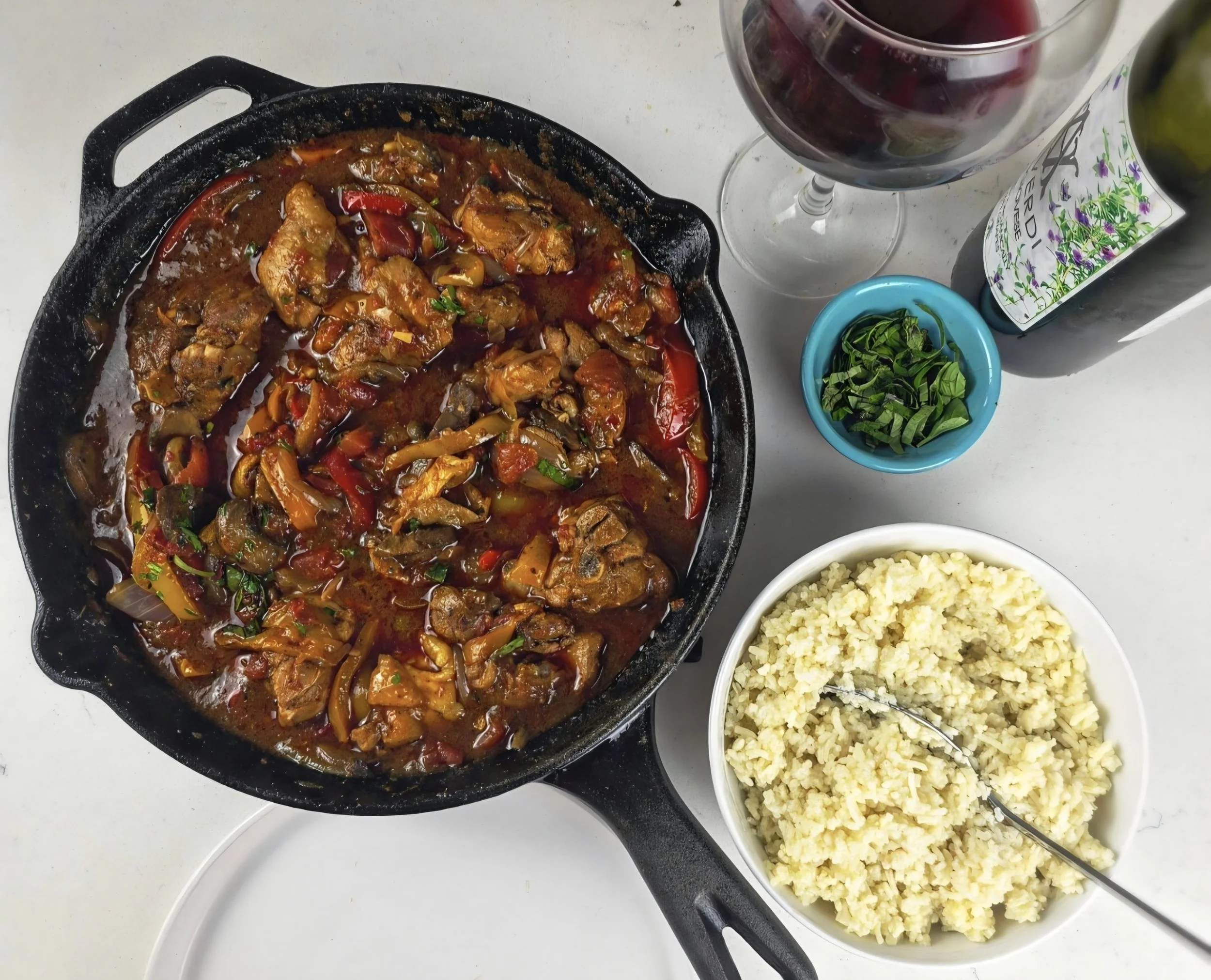
Mum's Chicken Cacciatore
Hunter's style chicken cacciatore, my mum's Sunday version with bell peppers and tomatoes, and what it taught me about Rome before I'd ever been there.
Cacciatore means "hunter's style" in Italian — a rustic, slow-cooked braise that has fed Italian families for generations. The classic version varies by region: in Rome it's white wine and rosemary, in the north you'll find olives and capers, and in the south tomatoes take center stage. It's the kind of dish that belongs to whoever is making it, which is probably why it traveled so well.
I grew up eating my mum's version on Sunday evenings, occasionally and always memorably. Bell peppers, tomatoes, juicy cuts of bone-in chicken, a rich deeply spiced sauce served over rice. It was bold and comforting and unlike anything else she made. Looking back, I realize she was introducing me to global flavors before I had any language for it. I just knew it tasted different in the best way.
Years later I ate cacciatore stuffed inside a trapizzino in Rome, the iconic Roman street food that folds thick crispy triangular bread around slow-cooked fillings. The Roman version was white wine, rosemary, no tomato. I came home thinking about it and immediately called my mom. Her version is nothing like what I ate in Rome, and that's exactly the point. Some dishes don't need to be reinvented. They just need to be made.
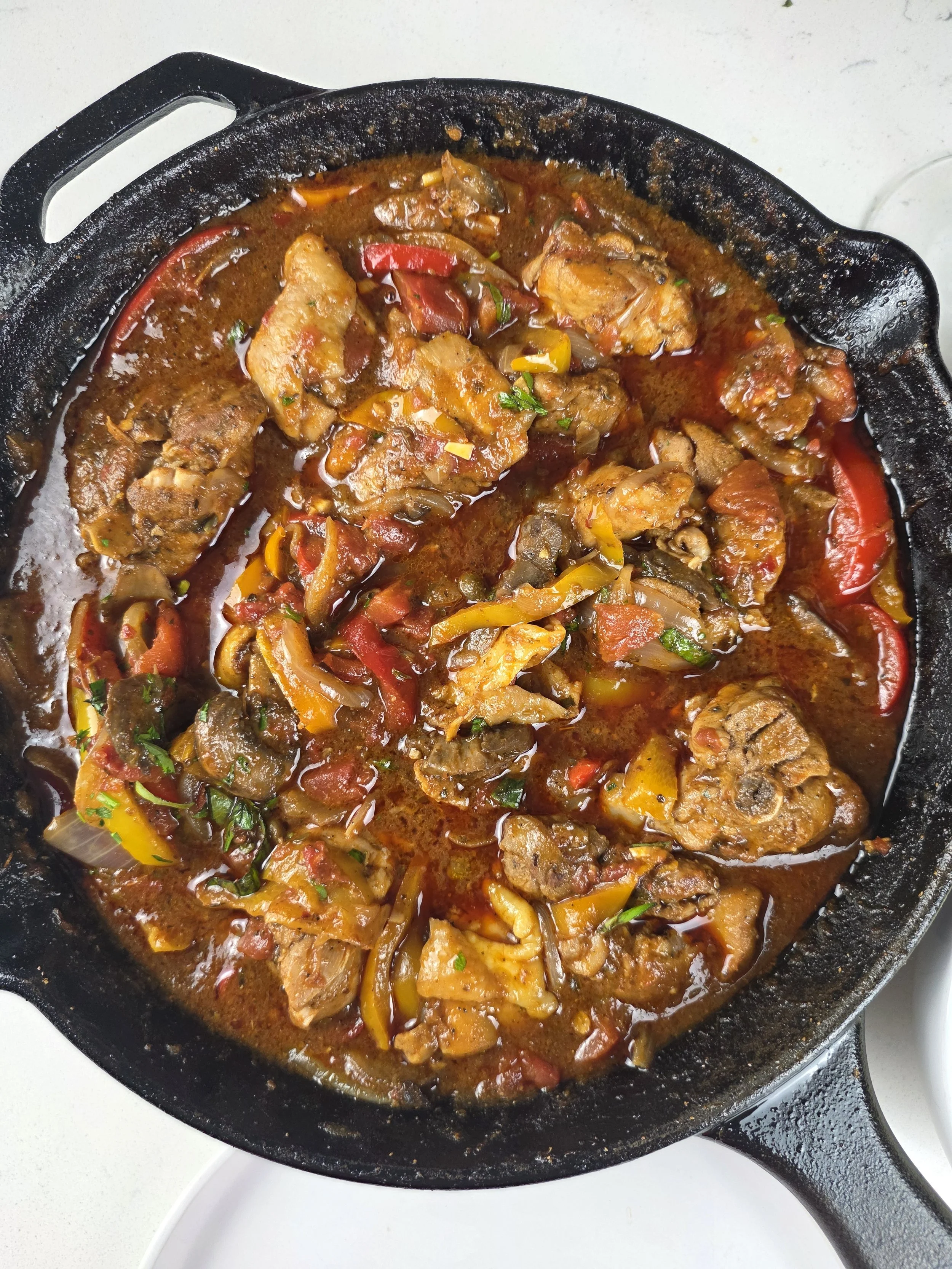
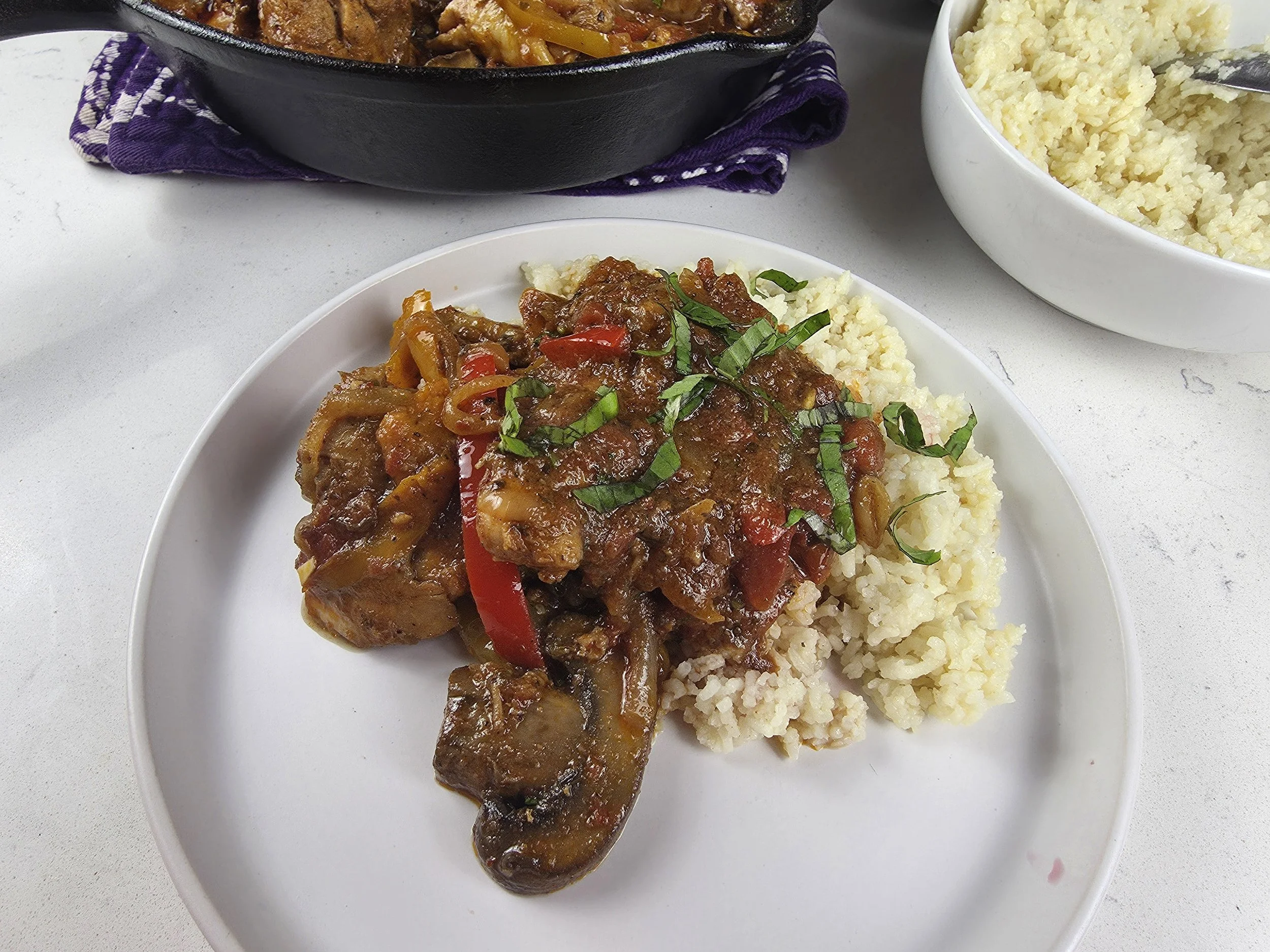

Mom's Chicken Cacciatore
Bone-in chicken thighs braised in a spiced tomato and bell pepper sauce with mushrooms, capers, and a splash of red wine. My mom's version of cacciatore — bold, simple, and served over rice.
Ingredients
- 4 large bone-in, skin-on chicken thighs
- 1 teaspoon chicken spice
- 1 teaspoon salt
- 1 teaspoon black pepper
- 1 teaspoon garlic powder
- 1 teaspoon onion powder
- 1 teaspoon dried oregano
- 1 teaspoon paprika
- 1 tablespoon butter
- 1 tablespoon olive oil
- 1 medium yellow onion, sliced into half moons
- 3 garlic cloves, finely minced
- 1 tablespoon tomato paste
- 1/2 red bell pepper, sliced
- 1/2 green bell pepper, sliced
- 1/2 orange bell pepper, sliced
- 1 cup button mushrooms, sliced
- 1 can (14 ounces) diced tomatoes with oregano and basil
- 1/2 cup red wine
- 1 cup chicken broth (or 1 cup water plus 1 teaspoon bouillon paste)
- 1 teaspoon dried oregano
- Fresh basil leaves, to finish
- Salt and black pepper, to taste
- Cooked rice, for serving
Instructions
- Combine chicken spice, salt, black pepper, garlic powder, onion powder, oregano, and paprika in a small bowl. Divide in half, and use one half to season the quartered chicken thighs and reserve the other half for later. Let chicken sit at room temperature for at least 5 minutes while you prep remaining ingredients.
- Heat 1 tablespoon butter and 1 tablespoon olive oil in a large Dutch oven or heavy-bottomed pot over medium-high heat until the butter is foaming. Add chicken skin-side down and cook, undisturbed, until deeply golden brown, 4–5 minutes. Flip and cook the other side until lightly browned, 2–3 minutes. Transfer to a plate and set aside.
- In the same pot over medium heat, add onion and garlic. Cook, stirring occasionally, until softened and translucent, 2–3 minutes.
- Add the reserved spice blend and tomato paste. Cook, stirring constantly, until slightly darkened and fragrant, 1–2 minutes.
- Add bell peppers and mushrooms. Cook, stirring occasionally, until peppers are just softened, 3–4 minutes.
- Pour in drained canned tomatoes, red wine, and water with bouillon paste. Add capers. Stir to combine, scraping up any browned bits from the bottom of the pot. Bring to a gentle boil over medium-high heat.
- Return chicken to the pot skin-side up, nestling it into the sauce. The liquid should come at least about halfway up the chicken — add a small splash more water if needed. Add dried oregano.
- Reduce heat to low, partially cover, and simmer until chicken is cooked through and reaches an internal temperature of 165°F, 30–35 minutes.
- If the sauce is still too thin once chicken is cooked through, remove chicken and set aside. Increase heat to medium-high and reduce sauce uncovered for 5–10 minutes until thickened to your liking. Return chicken to the pot and warm through for 2 minutes.
- Squeeze fresh lemon over the top, scatter fresh basil, adjust seasoning with salt and pepper, and serve hot over rice.
Nutrition Facts
Calories
480Fat (grams)
24 gCarbs (grams)
18 gFiber (grams)
4 gProtein (grams)
38 gI am not a certified nutritionist and any nutritional information on dontmissmyplate.com should only be used as a general guideline.
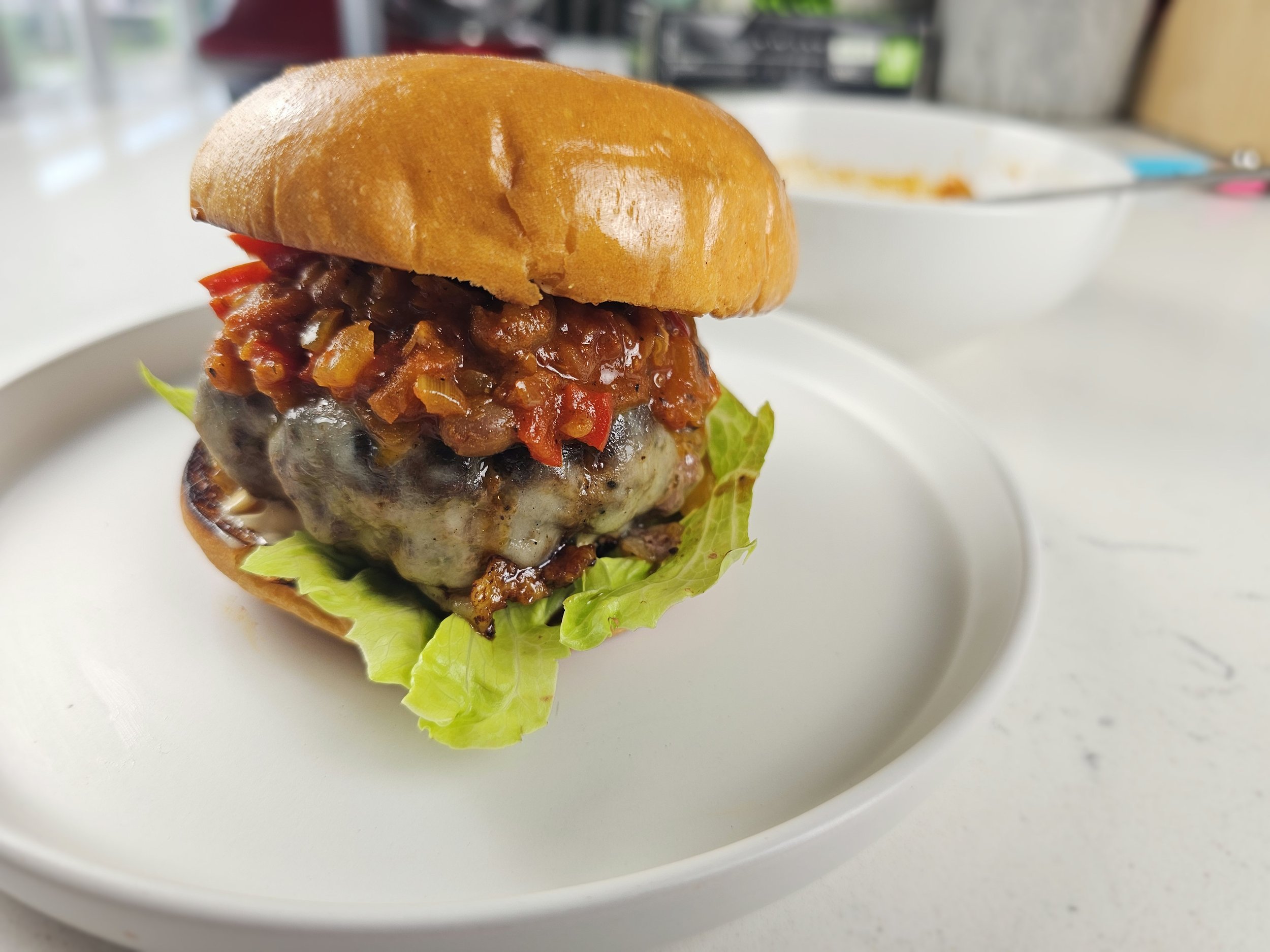
Boerewors-Inspired Burger with Chakalaka
This Boerewors-Inspired Burger with Chakalaka started with a simple question: What would happen if I took everything I love about traditional boerewors and turned it into a cheeseburger?
Boerewors is one of Southern Africa's most iconic sausages, enjoyed across countries including South Africa and Zimbabwe. Traditionally made with beef, pork, toasted coriander, black pepper, warm spices, and a touch of vinegar, it's known for a flavor that's bold, aromatic, and instantly recognizable. Instead of stuffing those flavors into a sausage casing, I wanted to see how they'd translate into a thick, juicy burger.
After several rounds of testing, I landed on a blend of beef and pork that stays tender and juicy while letting the boerewors-inspired seasoning shine. Toasted coriander and freshly cracked black pepper provide the familiar aroma, while allspice, garlic, cloves, nutmeg, and a splash of red wine vinegar add depth without overwhelming the meat.
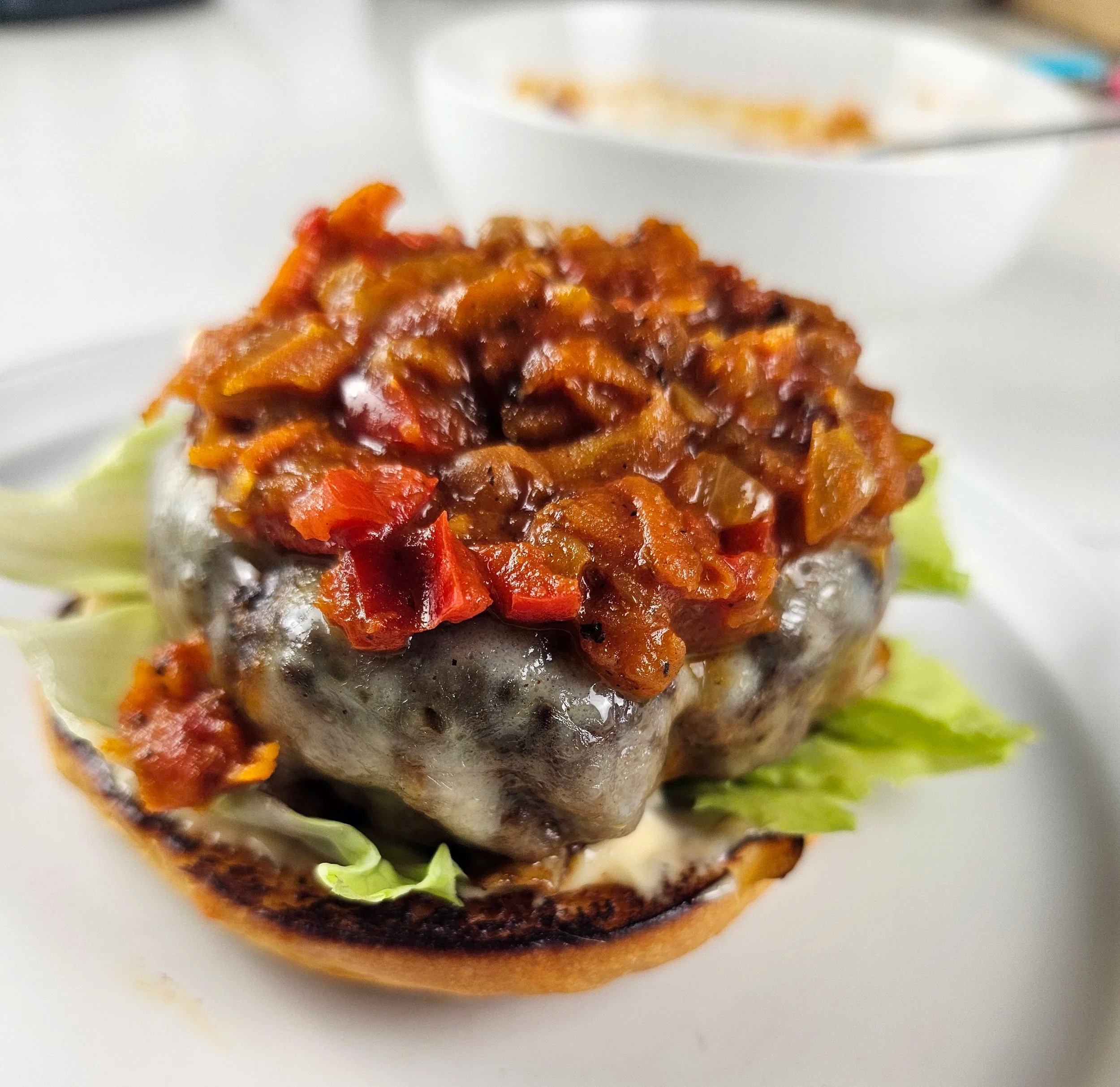
Once the burger was where I wanted it, the toppings became the next challenge. Rich, well-seasoned beef needs something bright to balance it, and chakalaka does exactly that. This classic vegetable relish brings sweetness, acidity, gentle heat, and plenty of texture. Add melted cheese, crisp lettuce, spicy mayo, and a toasted brioche bun, and every bite feels balanced instead of heavy.
This recipe is also a little personal. Chakalaka featured in one of my television cooking challenges (100 Cooks), and while developing this burger I kept wondering how I'd approach that challenge today. Burgers have always been one of my favorite things to cook because they're won or lost in the details. A good meat blend, thoughtful seasoning, a proper crust, perfectly melted cheese, and toppings that complement the patty all matter.
The finished burger feels familiar if you've grown up eating boerewors, but it's just as enjoyable if these flavors are completely new to you. My goal wasn't to recreate the sausage—it was to capture its character in a different form. I hope it gives you a delicious introduction to one of Southern Africa's most iconic flavor combinations.

Boerewors-Inspired Burger with Chakalaka
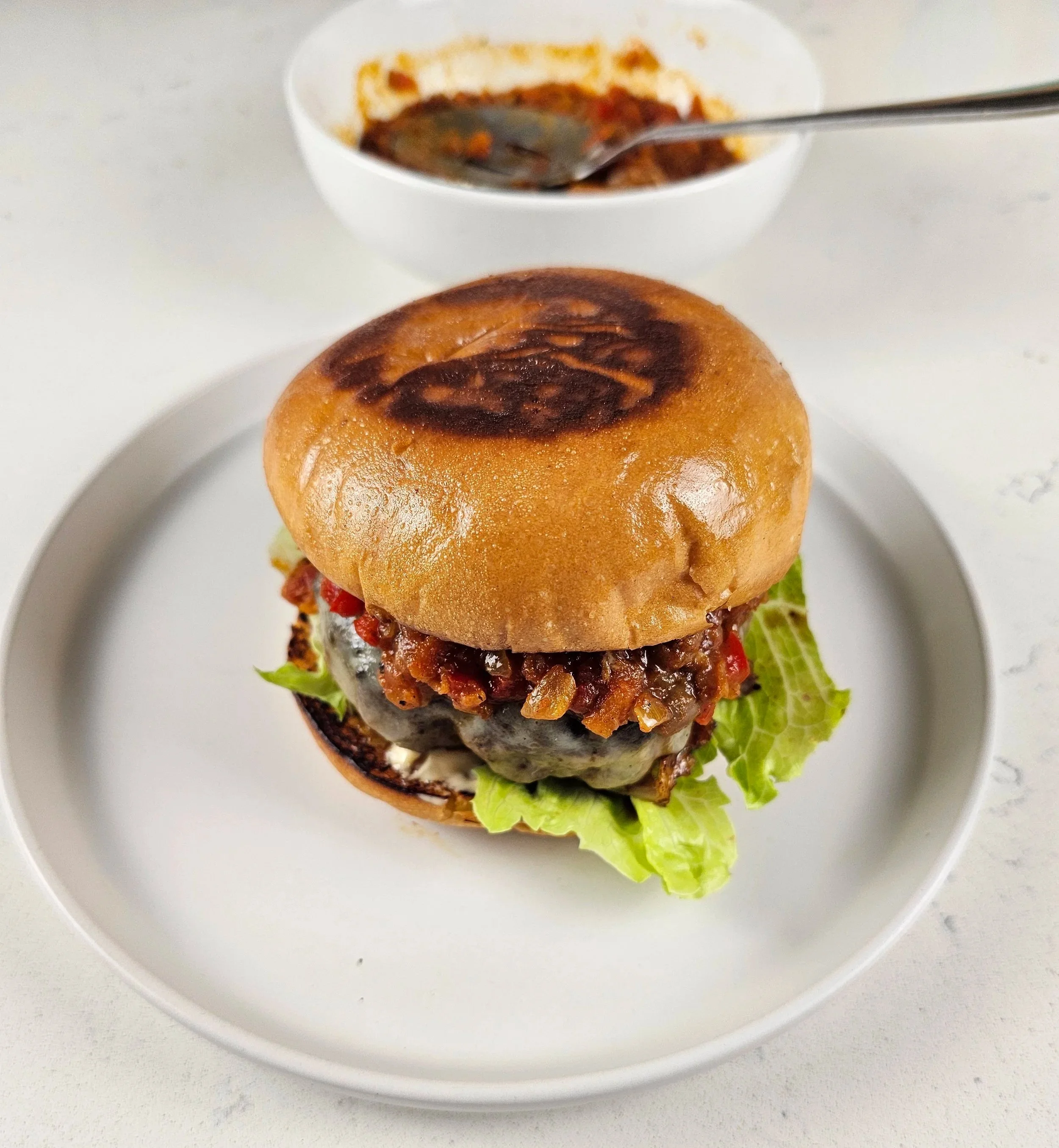
Inspired by the bold flavors of traditional boerewors sausage, this juicy burger combines ground beef and pork with toasted coriander, black pepper, warm spices, and a splash of red wine vinegar. Topped with homemade chakalaka, melted provolone or American cheese, crisp lettuce, and served on a toasted brioche bun, it's a hearty Southern African-inspired burger packed with flavor.
Ingredients
- 10.4 oz ground beef
- 4 oz ground pork
- 3 tsp boerewors seasoning mix
- 1¼ tsp red wine vinegar
- 2 tsp salt
- 1 tsp whole black peppercorns
- 2 tbsp whole coriander seeds
- ½ tsp whole allspice berries
- 1 tsp smoked paprika
- 1 tsp garlic powder
- ⅛ tsp ground cloves
- ⅛ tsp ground nutmeg
- 1 tbsp neutral oil
- ½ onion, diced
- 1 carrot, grated
- 1 bell pepper, diced
- 2 cloves garlic, minced
- 1 tsp curry powder
- ½ tsp smoked paprika
- ½ tsp ground cumin
- ½ tsp chili flakes (optional)
- ½ can diced tomatoes
- Salt and pepper, to taste
- 2 brioche buns, toasted
- 2 slices provolone or American cheese
- Lettuce
- 2–4 tbsp chakalaka
- Spicy mayo (2 tbsp mayonnaise + 1–2 tsp hot sauce)
Instructions
- 1. Prepare the seasoning
- Toast the coriander seeds, peppercorns, and allspice until fragrant. Crush them and combine with the remaining spices. Store the extra seasoning in an airtight jar.
- 2. Make the patties
- In a bowl, combine:
- 10.4 oz beef
- 4 oz pork
- 3 tsp boerewors seasoning
- 1¼ tsp red wine vinegar
- Mix gently until just combined.
- Divide into two equal patties (about 7.2 oz each).
- Shape each patty ½–1 inch wider than your brioche buns and make a shallow thumb indent in the center.
- ---
- 3. Make the chakalaka
- Heat the oil over medium heat. Cook the onion until softened. Add the carrot, bell pepper, and garlic. Stir in the spices, then the tomatoes. Simmer until thick and well combined. Season to taste.
- ---
- 4. Cook the burgers
- 1. Heat a cast-iron skillet over medium-high for about 5 minutes.
- 2. Add a small amount of ghee.
- 3. Place the burgers in the pan and cook 4 minutes without moving them.
- 4. Flip the burgers and reduce the heat to medium.
- 5. Cook for another 3½–4 minutes, checking the internal temperature.
- 6. Add the cheese during the last minute.
- 7. Add 1–2 teaspoons water to an empty part of the skillet and immediately cover with a lid for 30–60 seconds to melt the cheese.
- 8. Cook until the burgers reach 160–165°F (71–74°C).
- 9. Rest for 3 minutes.
- ---
- 5. Toast the buns
- Toast the brioche buns in a little butter or ghee until golden.
- ---
- 6. Assemble
- Bottom bun
- Spicy mayo
- Lettuce
- Burger with melted cheese
- Spoonful of chakalaka
- Top bun
Notes
- This recipe was developed using 7.2 oz patties, which provided the best balance of juiciness, burger-to-bun ratio, and presentation.
- Shape the patties wider than the buns to account for shrinkage during cooking. You can also press your thumb gently in the center to create a dimple in each to help this.
- Mix the meat gently to maintain a tender texture.
- Toasting the whole spices before grinding makes a noticeable difference in flavor.
- If your chakalaka is too loose, simmer it uncovered for a few extra minutes before serving.
I am not a certified nutritionist and any nutritional information on dontmissmyplate.com should only be used as a general guideline.
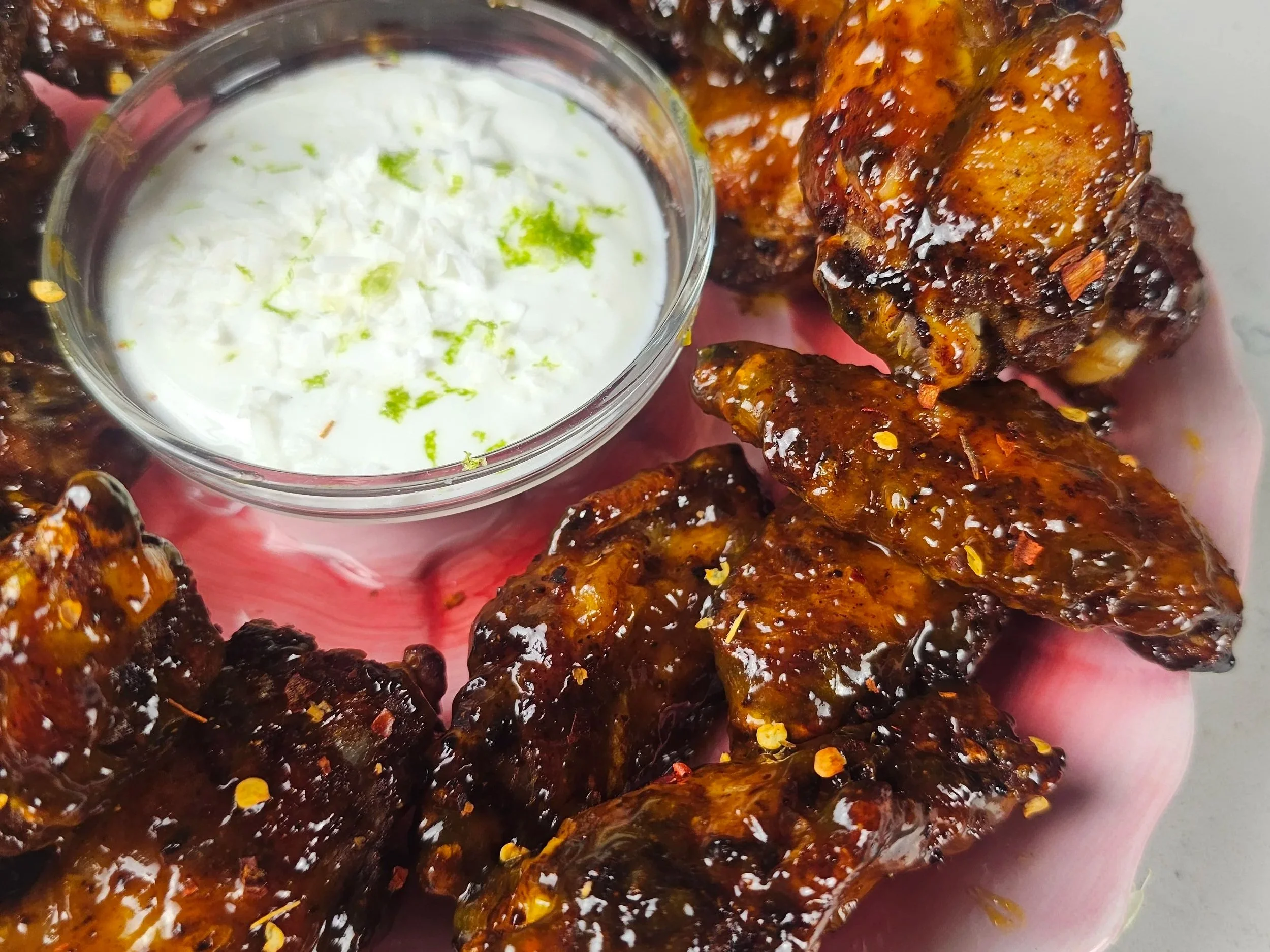
Passion Fruit-Glazed Chicken Wings
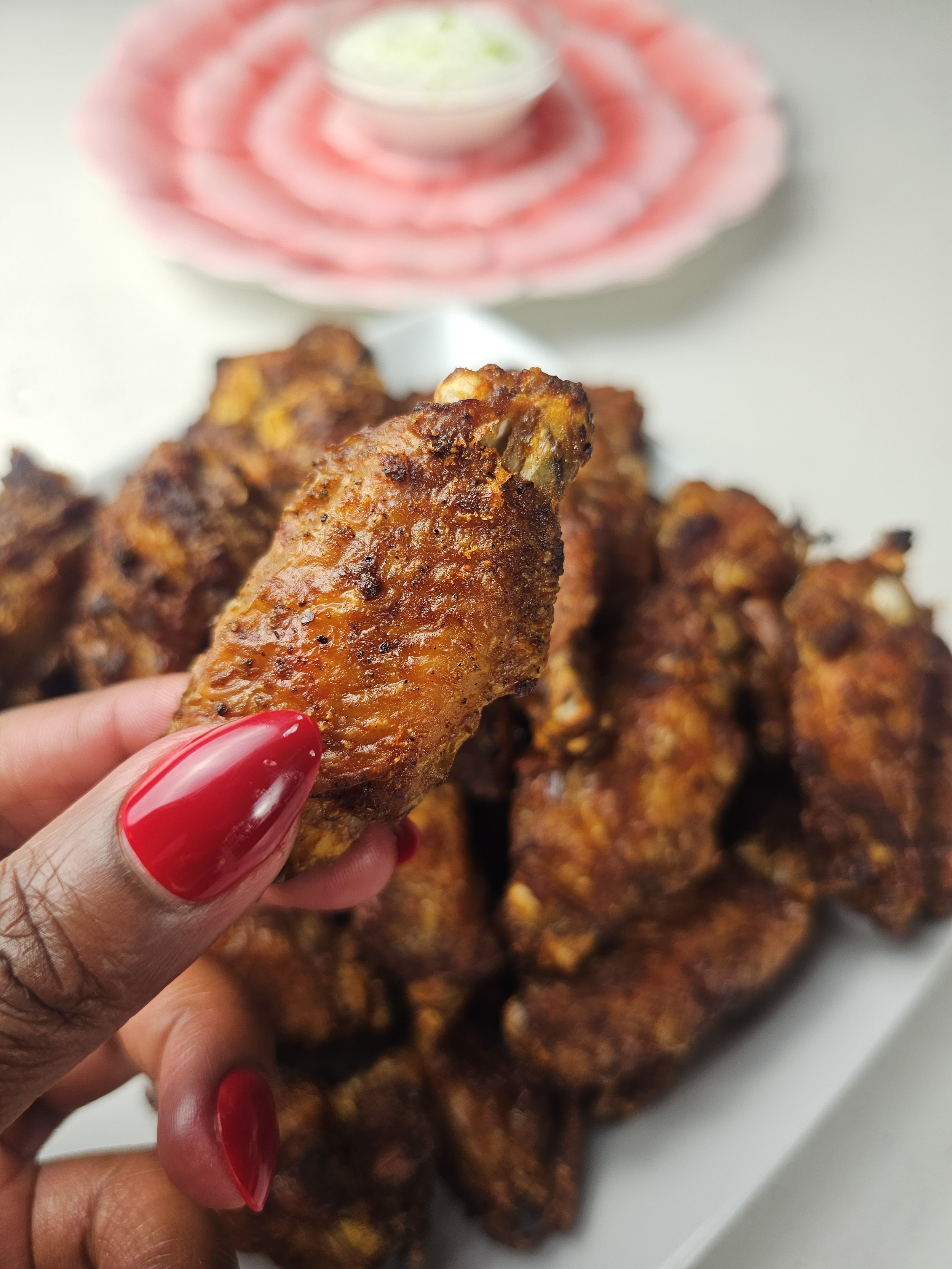
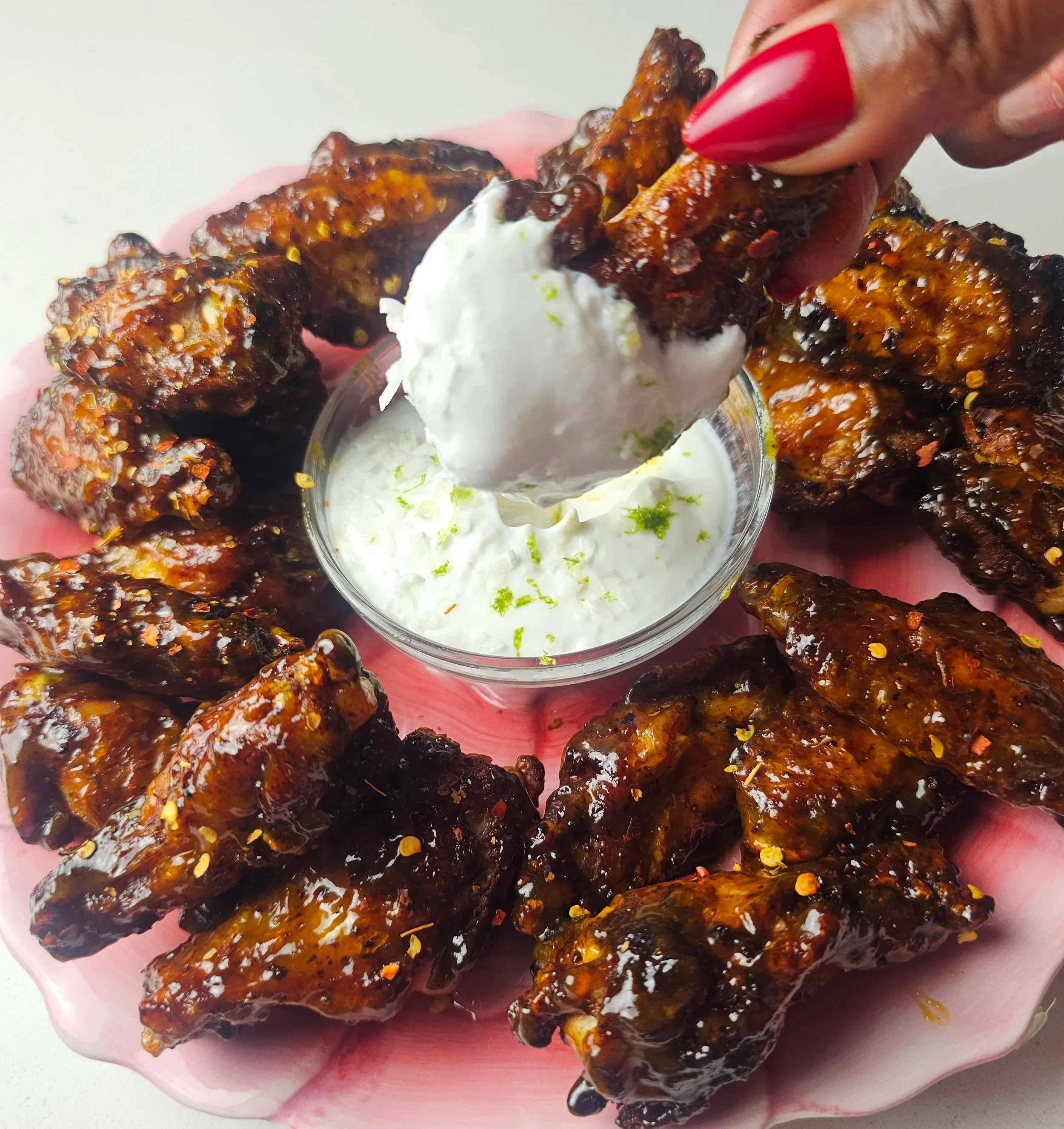
These passion fruit glazed chicken wings are crispy, sticky, and bursting with tropical flavour, made using an air fryer for convenience and finished with a glossy, caramelised glaze that clings to every bite. Passion fruit is widely used across East African cuisine and other tropical food cultures for its naturally sharp acidity, floral sweetness, and ability to cut through rich, fatty meats like chicken wings. When reduced into a glaze, it becomes intensely aromatic, balancing tartness with sweetness in a way that feels both refreshing and deeply savoury.
This recipe highlights how tropical fruit glazes can transform everyday chicken wings into something vibrant and elevated. Passion fruit is especially effective because of its high acidity and fragrant seed pulp, but it can also be interchanged with other tropical fruits like pineapple or mango for different sweetness profiles, or even adjusted with a touch of citrus such as lime to enhance brightness. The key is balance — the glaze should never be overly sharp or overly sweet, but reduced until it lightly coats the wings in a sticky, glossy layer.
The wings themselves are seasoned with a simple chicken spice blend and other seasonings and air fried for about 20 minutes until golden, crispy on the outside, and juicy inside. Unlike deep frying, the air fryer creates a clean crisp texture while still allowing the skin to render and caramelize when coated in glaze.
These wings are perfect for game nights, casual weekend cooking, summer gatherings, or when you want a fast but flavour-packed meal with a tropical twist. Served with a coconut lime Greek yogurt dip, they deliver contrast: spicy, sweet, tangy wings paired with a cool, creamy finish.

Passion Fruit-Glazed Chicken Wings
Passion fruit glazed chicken wings cooked in the air fryer until crisp and golden, then coated in a glossy tropical glaze made from reduced passion fruit pulp, water, sugar, honey, and lime. These wings balance acidity and sweetness while keeping the wings juicy inside and crisp outside. Serve with a coconut lime yogurt dip for cooling contrast.
Ingredients
- 3 lbs chicken wings (drums and flats)
- 2 tbsp oil
- 2 tsp salt
- 1½ tsp black pepper
- 1½ tsp smoked paprika
- 1½ tsp onion powder
- 1½ tsp garlic powder
- ½ tsp ground ginger
- 1 tbsp chicken spice seasoning (I used Robertson's)
- ¾ cup frozen passion fruit pulp (thawed) - optional swaps: mango or pineapple can be used for a sweeter, less acidic glaze profile.
- ¼ cup water
- 2 tbsp honey
- Pinch of salt
- Lime juice (optional to balance)
- Chili flakes (optional)
- ¼ cup granulated sugar (start point, add more to balance)
- ½ cup Greek yogurt
- 1–2 tbsp coconut unsweetened flakes
- Zest of ½ lime
- Juice of ½ lime
- Pinch of salt
Instructions
- In a large bowl, add the oil and seasonings with the chicken and marinate for at least 30 minutes in the fridge.
- Preheat air fryer and cook at 200°C / 400°F for 18–20 minutes, and shake or flip halfway through. Wings should be crisp, golden, fully cooked, but still juicy inside. You may need to do this in batches of 2-3 depending on the side of your air fryer.
- To make the glaze while the chicken cooks, add the passion fruit pulp, water, sugar, honey and salt to a saucepan. Heat over medium-low heat until gently simmering. Stir occasionally and simmer 5–8 minutes.
- IMPORTANT: Watch the texture - you want it glossy, slightly thickened and still pourable (NOT jam). Then adjust - If it’s too tart / sharp → add 1 tbsp sugar, stir, simmer 1–2 min → repeat if needed (don’t jump big amounts). If it’s too sweet → add ½ tsp lime juice max.
- Toss wings in warm glaze in a large bowl and plate. You can also air fry 2–3 min after glazing to set coating.
- For the dip, mix yogurt, lime, and salt. Top with coconut flakes.
- Adjust seasoning and chill or serve immediately
Notes
- 18–20 minutes is ideal for juicy air fryer wings (20 min = best balance, longer if you want crispier, up to 25)
- Passion fruit glaze should be reduced but still pourable. not jam. Keep tasting and adjusting until you reach your desired balance and tossing with the wings. Glaze works best when balanced with sweetness and lime dilution.
- Wings do not need to be hot before glazing.
- Air fryer finish after glazing improves gloss and photo quality.
- 3 lbs serves 4–6 people depending on appetite
Nutrition Facts
Calories
490Fat (grams)
30 gCarbs (grams)
16 gProtein (grams)
32 gI am not a certified nutritionist and any nutritional information on dontmissmyplate.com should only be used as a general guideline.
Tamarind-Glazed Baby Back Pork Ribs
Let’s talk about ribs.
I’ve always had a serious weakness for them. There is something about that sticky, smoky, sweet and savory bite that just hits differently. My first real memory of ribs was at a place called Spur, tucked inside a Holiday Inn in Harare, and I remember being completely obsessed. That was the moment I understood why ribs have such universal appeal. They are messy, rich, comforting, and a little indulgent in the best way.
For this recipe, I wanted to bring that same cookout energy into summer with a twist that reflects how I cook now. Simple, bold, and built for real home kitchens.
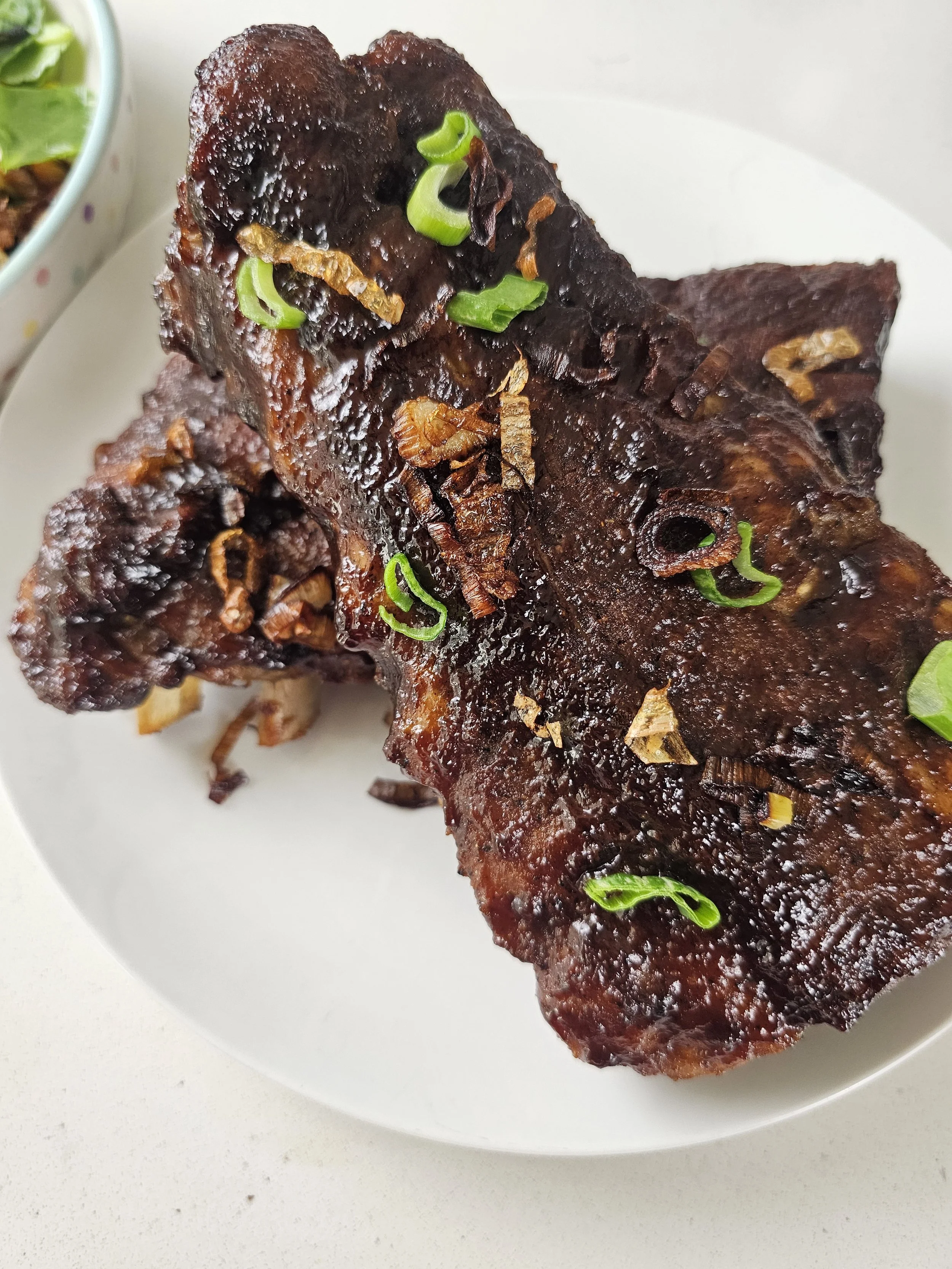
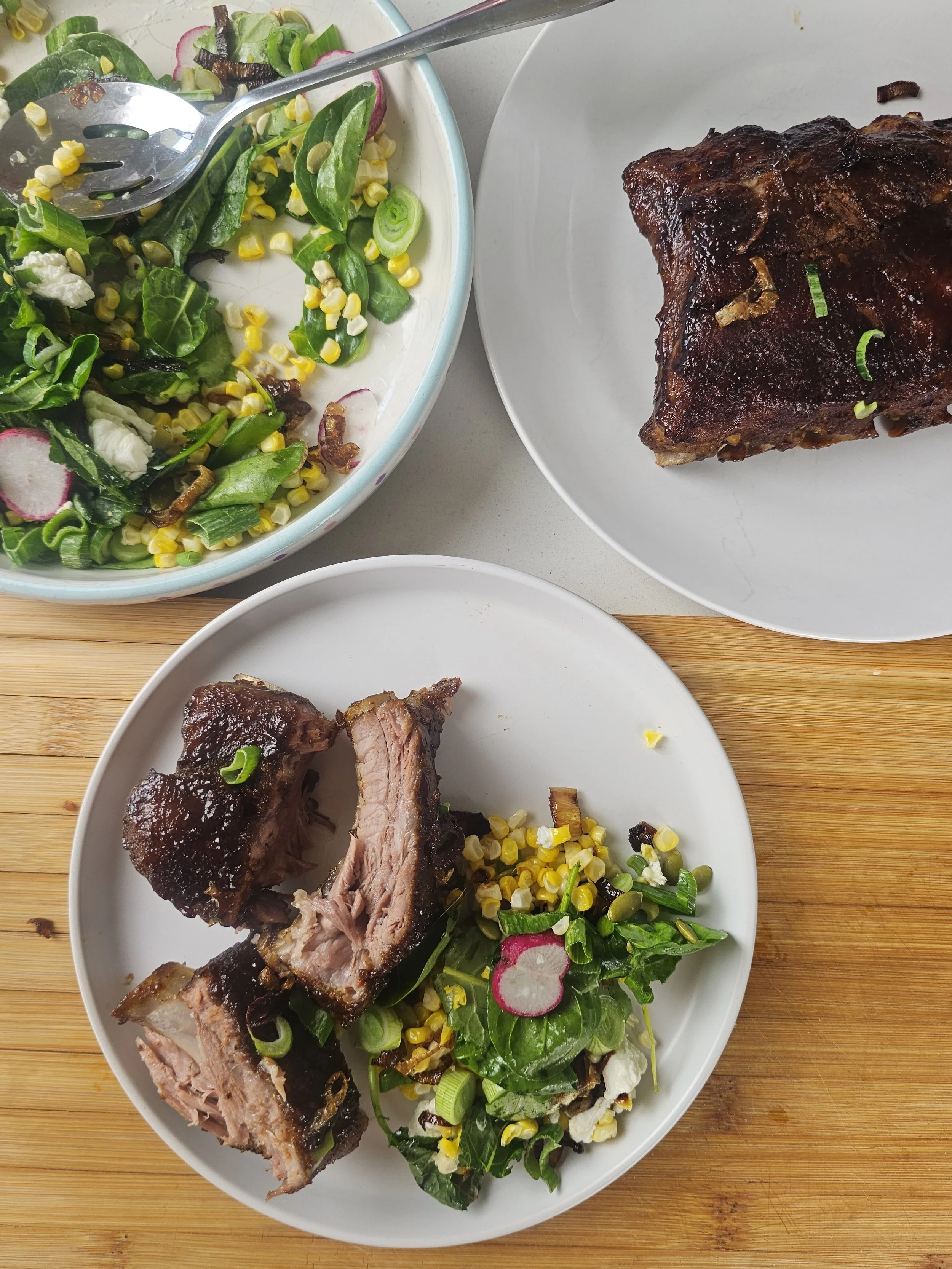
One of the key elements here is tamarind, a classic ingredient used across East African cooking and many other global cuisines. It has that deep tangy sweetness that works beautifully in savory dishes, which is exactly why it pairs so well with ribs. That sweet and sour balance cuts through the richness of the meat and creates a sticky glaze you cannot stop going back for. If you are not into sweet and sour, a classic BBQ sauce will also work.
I keep the ribs straightforward with simple seasoning, oven baking, and a high heat finish until caramelized. Nothing complicated. The focus is flavor, texture, and accessibility so it can be recreated easily at home.
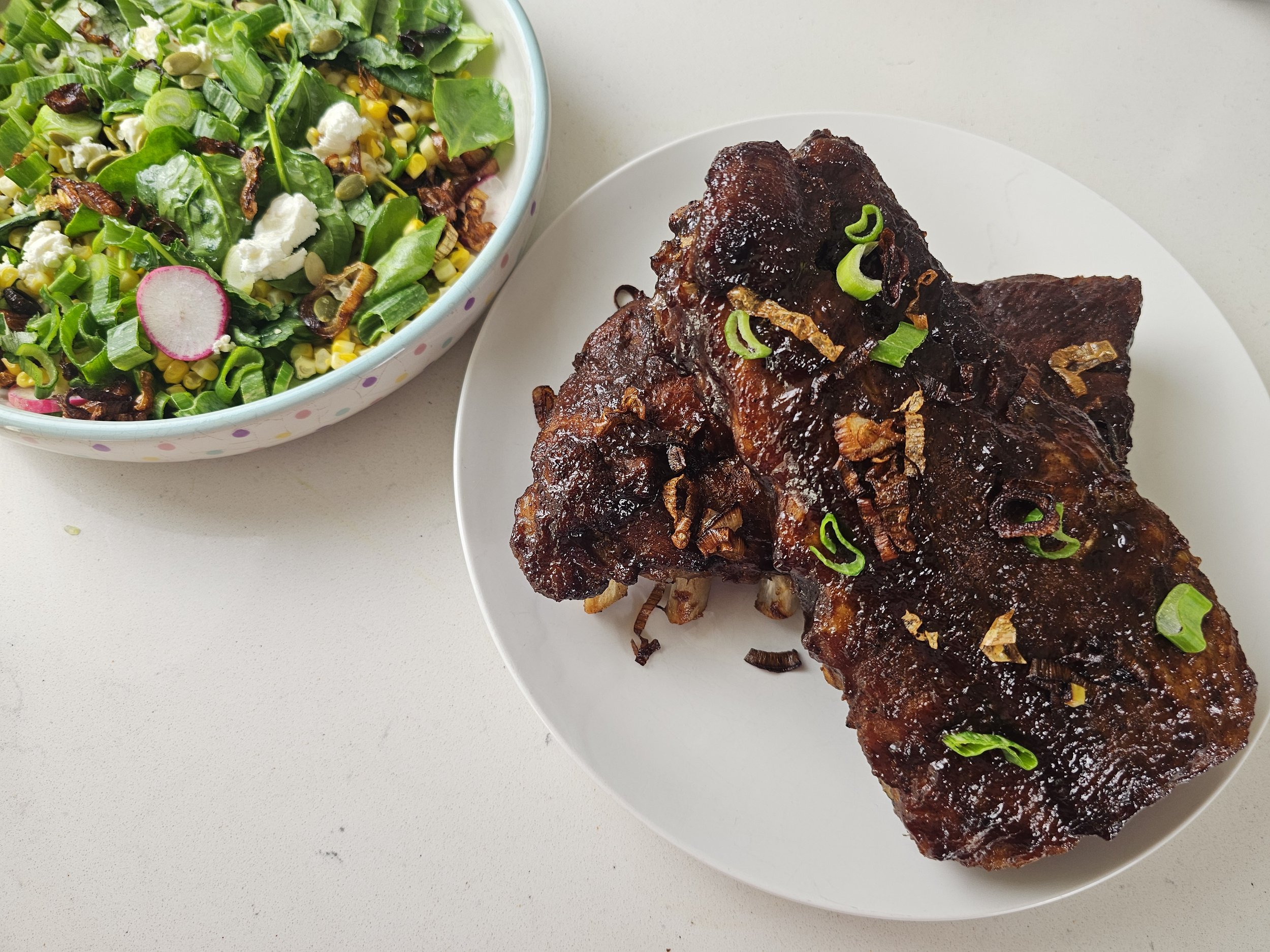
The farmers’ market influence is in the side dish, not the ribs. A corn salad made with seasonal corn, radish, goat cheese, pumpkin seeds, and spring onions. I use the spring onions two ways, fresh for brightness and fried for crunch, adding contrast and texture without overcomplicating the plate.
In the end, it comes together as a dish that feels like summer. Sweet heat from the glaze, freshness from the salad, richness from the ribs, and crunch in every bite.
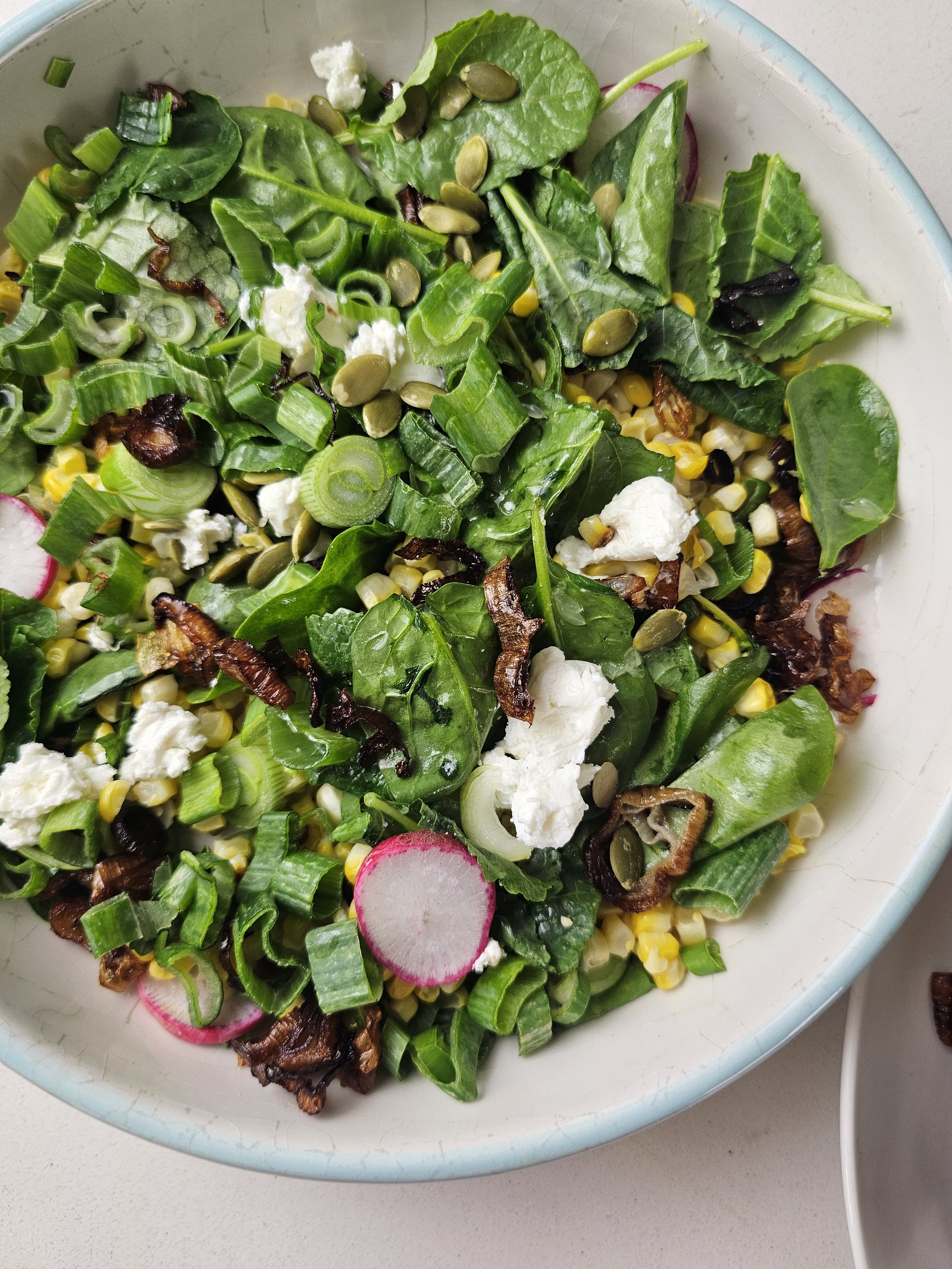

Tamarind-Glazed Baby Back Pork Ribs
Tender baby back ribs baked in the oven, then coated in a glossy tamarind glaze with a bright sweet-sour depth and gentle smokiness. Served with a fresh seasonal corn salad with goat cheese, crisp radish, and spring onions, it brings easy summer cookout vibes with a subtle East African-inspired twist.
Ingredients
- 1 rack baby back pork ribs
- 1½ tsp seasoned salt
- 1 tsp black pepper
- 1 tbsp BBQ seasoning (I used Robertson's)
- 1 tsp smoked paprika
- 1 tsp garlic powder
- 3 tbsp tamarind concentrate
- 3 tbsp brown sugar
- 2 tbsp soy sauce
- Juice of ½–1 lime (adjust to taste)
- 1–2 tsp water (or more, if needed for looseness)
- 2-3 corn cobs (charred or grilled on grill plate)
- 1–2 tbsp olive oil (your chili olive oil works)
- 1 cup salad greens (spring and spinach mix)
- 1–2 tsp white balsamic vinegar
- 2-3 small radish (thin sliced)
- Pumpkin seeds
- Goat cheese (crumbled)
- 1 bunch spring onions (with large bulbs, to be fried and used fresh)
- Salt and pepper to taste
Instructions
- Set oven to Oven: 300°F (150°C)
- season ribs and rub every surface, nook and cranny.
- Wrap ribs tightly in foil and palce on a bakign tray.
- Bake for 2 to 2½ hours.
- while that bakes, make the tamarind glaze. just mix iall the infgrindeitns together, heat on medium ubtil it gently. bubbles, then reuce to lwo for 5-88 mnutes ubtil thciiken, or rather a hioney consitincy. use water to help if needed and taste and adjsut as neeed.
- then rpepr your salad, on a grill plate grill the corn until soften with black rbwon spots, rotinaint got about 10-15 min utes. tey to keep the heat steayd for even cooking. mix aeveryhing then nd hold off on dressing until ready to serve.
- once the ribs are done, uncover and brus with th glaze. set oven to broil at 500F/xxC for 2-5 mon tues, deopneding on your oven snd th epsoiton of the bakign tray. make sure you keep an eye you dont want it to burn!
- Serve immedialey with salad.
I am not a certified nutritionist and any nutritional information on dontmissmyplate.com should only be used as a general guideline.
Mango Ginger Cream Ice Lollies (Popsicles)
Some recipe ideas come from childhood memories, others come from travel. This one started with a mango ginger milkshake at Nairobi Street Kitchen.
The combination immediately stood out to me. Mango and ginger aren't unusual ingredients on their own, but together they create something special: the sweetness of ripe mango balanced by the warmth and gentle bite of fresh ginger.
Across East Africa, ginger appears in drinks and desserts in ways that often differ from what many people are familiar with elsewhere. Seeing how ingredients are used differently from one country to another is one of my favorite parts of exploring food cultures.
After trying the milkshake, I couldn't stop thinking about how well those flavors would work as a frozen dessert. The creaminess of the drink already felt halfway between a milkshake and ice cream, making it a natural candidate for an ice lolly.
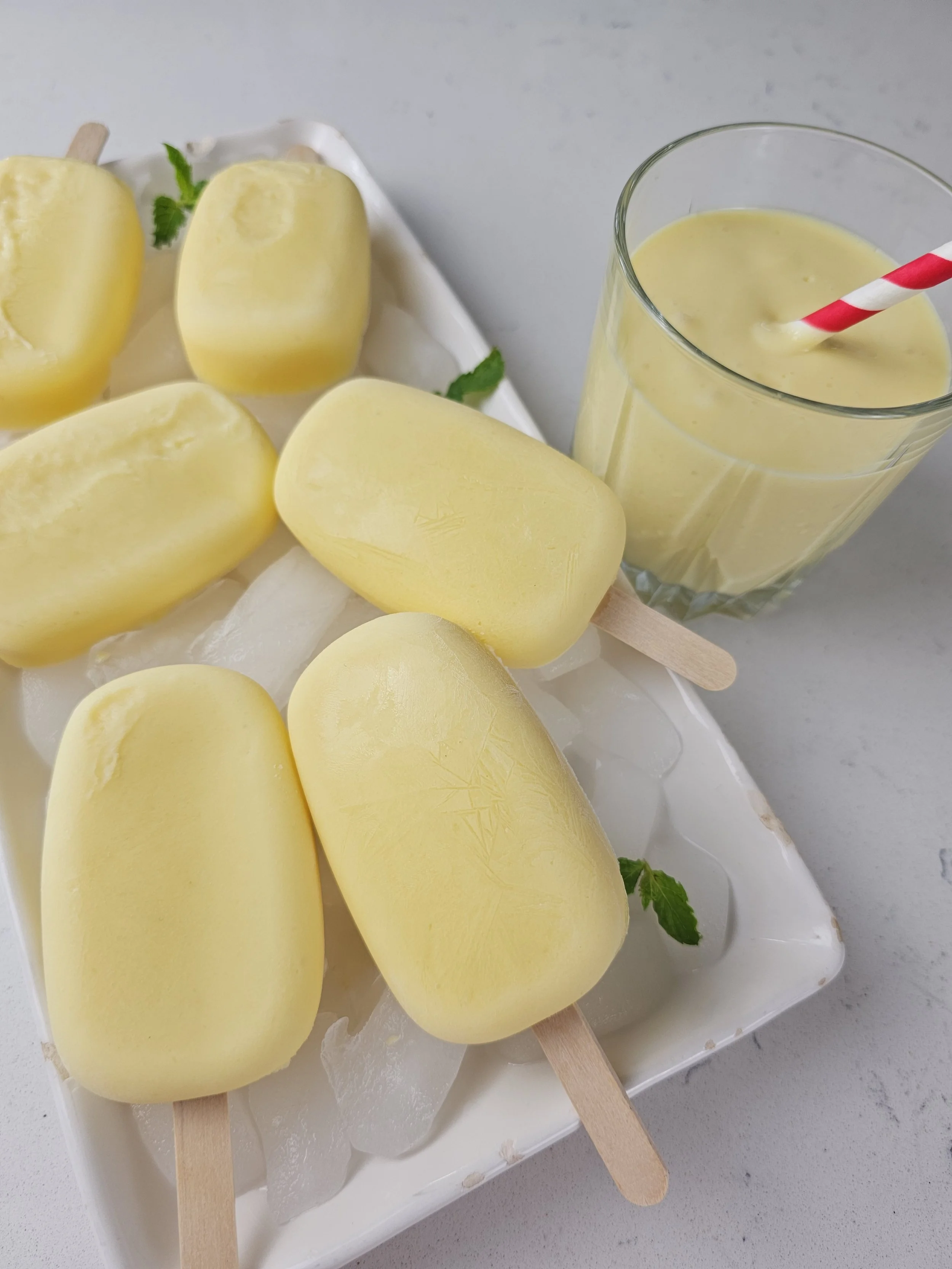
These Mango Ginger Ice Lollies transform that inspiration into a refreshing summer treat. Made with real mango, fresh ginger infusion, cream, and ice cream, they're fruity, creamy, and just spicy enough to keep you coming back for another bite.
Whether you're looking for a unique frozen dessert or simply want a new way to enjoy mango season, these ice lollies capture the flavor combination that inspired them in Nairobi.
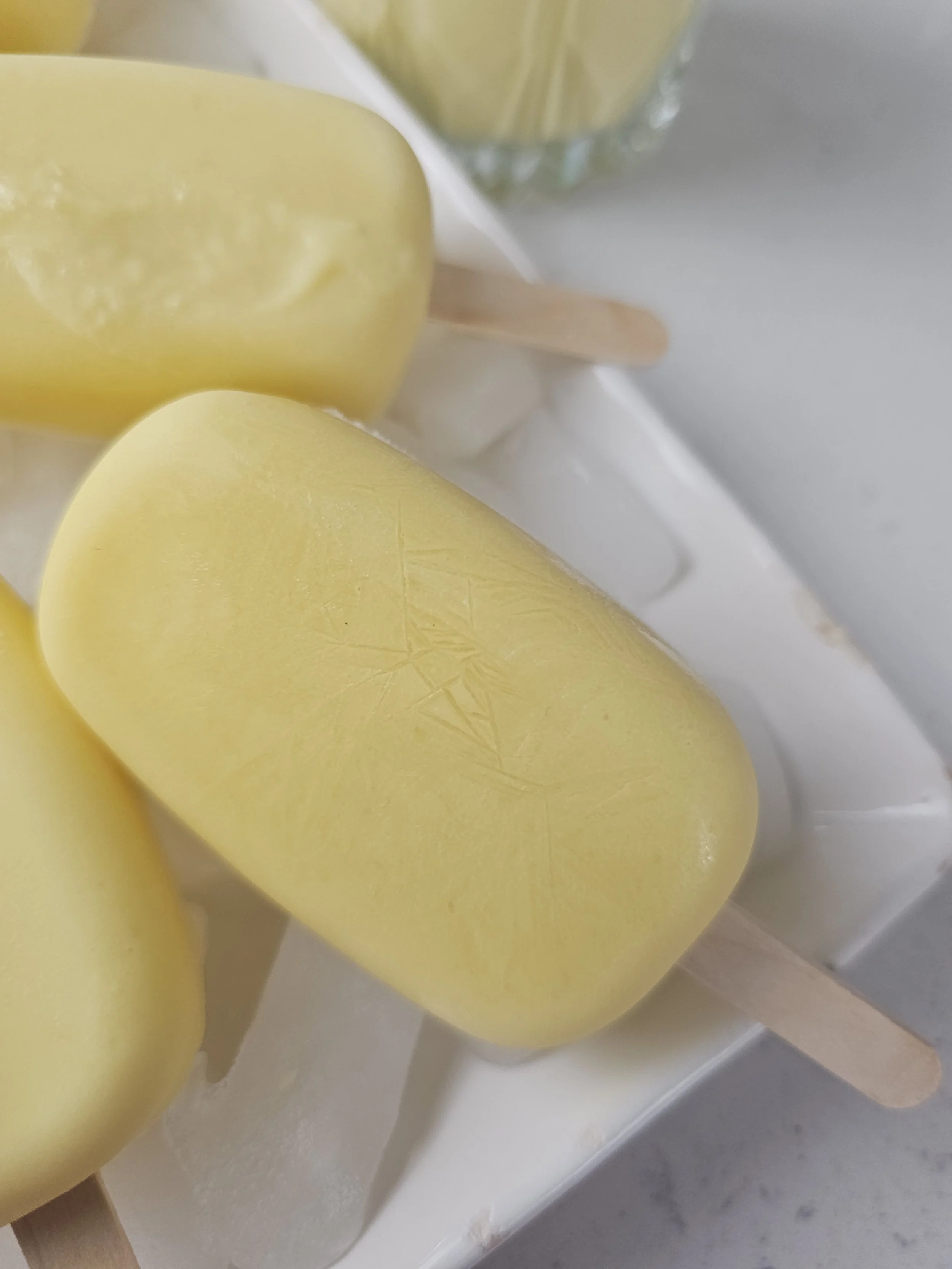

Mango Ginger Ice Lollies
A creamy mango and ginger ice lolly inspired by a memorable milkshake in Nairobi. Sweet mango, fresh ginger, cream, and ice cream come together in this refreshing frozen dessert.
Ingredients
- 2 tbsp freshly grated ginger
- ¼ cup water
- 2½ cups frozen mango chunks
- 1 cup vanilla ice cream
- 3 tbsp heavy cream (for blending and added creaminess if needed)
- Juice of ½ lime
- Pinch of salt
- 2–4 tbsp ginger infusion, to taste
Instructions
- Step 1: Make the Ginger Infusion
- 1. Combine the grated ginger and water in a small bowl.
- 2. Let sit for 10–15 minutes.
- 3. Strain through a fine mesh sieve, pressing gently to extract as much liquid as possible.
- 4. Discard the solids and reserve the ginger liquid.
- Step 2: Blend the Ice Lolly Base
- 1. Add the frozen mango, vanilla ice cream, heavy cream, lime juice, salt, and 3 tablespoons of ginger infusion to a blender.
- 2. Blend until smooth.
- 3. If the mixture is too thick, add milk one tablespoon at a time until thick but pourable.
- 4. Taste and add additional ginger infusion if desired. The ginger flavour should be slightly stronger than you want in the finished ice lolly, as freezing will mellow it.
- Step 3: Fill the Moulds
- 1. Pour the mixture evenly into 6 ice lolly moulds.
- 2. Leave a little space at the top for expansion.
- 3. Insert sticks or lids.
- Step 4: Freeze
- 1. Freeze for 6–8 hours or overnight until completely solid.
- Step 5: Serve
- 1. Briefly run the outside of the moulds under warm water for 2–3 seconds.
- 2. Gently release the ice lollies.
- 3. Serve immediately.
Notes
- The sweetness of the final ice lollies will depend on the ripeness of the mango and the brand of ice cream used.
- Lime juice brightens the flavour and helps balance the richness of the cream and ice cream.
- The pinch of salt enhances both the mango and ginger flavours without making the ice lollies taste salty.
- For a stronger ginger kick, increase the ginger infusion gradually and taste as you go.
Nutrition Facts
Calories
120Fat (grams)
5 gCarbs (grams)
18 gFiber (grams)
1.5 gSugar (grams)
15 gProtein (grams)
2 gI am not a certified nutritionist and any nutritional information on dontmissmyplate.com should only be used as a general guideline.
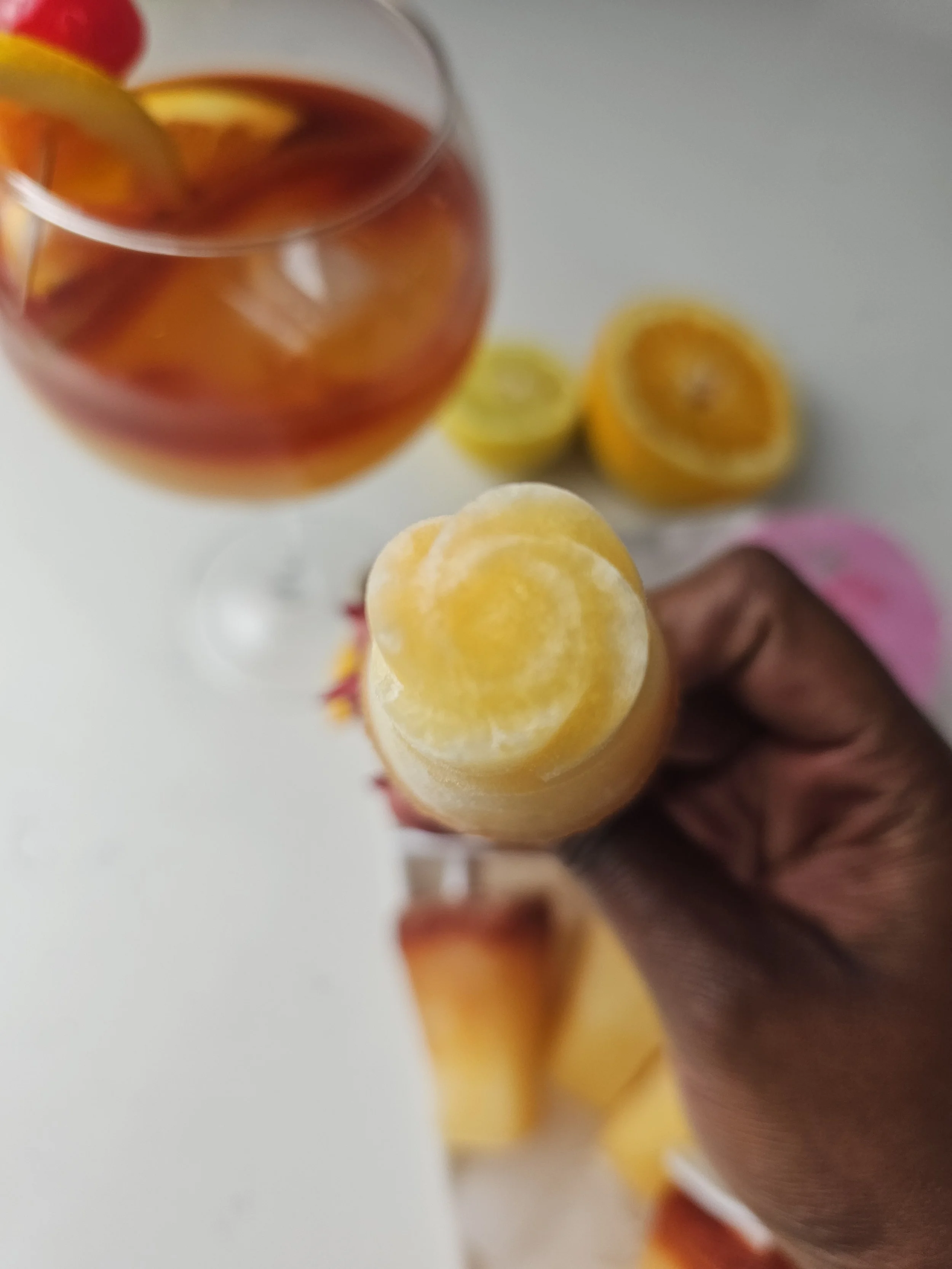
Malawi Shandy Ice Lollies (Popsicles)
The Malawi Shandy is one of those drinks that instantly takes me back to Zimbabwe.
I remember drinking it on houseboat holidays in Kariba and during trips to Victoria Falls—two destinations known for sunshine, adventure, and escaping everyday life. In both places, an ice-cold Malawi Shandy always seemed to taste better in the heat. Bright, citrusy, and finished with a few dashes of bitters, it was the kind of drink that felt synonymous with holidays, road trips, and long afternoons spent outdoors.
For most of my life, I never questioned the name. It wasn't until recently that I learned the word "shandy" likely traces its roots to the British shandygaff, a drink traditionally made by mixing beer with lemonade or ginger beer. Over time, however, the drink evolved into something distinctly Southern African. Today, Malawi Shandy is enjoyed far beyond Malawi itself and can be found throughout the region, where it is typically served as a refreshing non-alcoholic drink, though some people add vodka or rum for a simple cocktail.
Part of what makes Malawi Shandy so memorable is its appearance. The combination of citrus and bitters creates a beautiful amber-red gradient that is instantly recognizable to many Southern Africans. For some, it's a nostalgic reminder of family gatherings, holidays, and summer afternoons. For me, it's one of those flavors that immediately transports me back to some of Zimbabwe's most memorable warm-weather destinations.
For this recipe, I wanted to preserve both the flavor and the visual identity of the original by transforming it into an ice lolly. The result captures everything I love about Malawi Shandy: bright citrus, gentle spice, bittersweet complexity, and the sunset-like gradient that made me fall in love with the drink in the first place.
More than just a frozen treat, these ice lollies are a tribute to one of Southern Africa's most beloved warm-weather drinks and the memories attached to it.



Malawi Shandy Ice Lollies (Popsicles)
These Malawi Shandy Ice Lollies transform one of Southern Africa's most beloved citrus drinks into a refreshing frozen treat. Made with fresh orange juice, lemon, ginger ale, Sprite, and Angostura bitters, they capture the bright, bittersweet flavor and signature amber-red gradient of the original drink.
Ingredients
- 1 cup (240ml) freshly squeezed orange juice (about 4 oranges)
- 1 cup (240ml) Sprite
- ½ cup (120ml) ginger ale
- Juice of ½ lemon
- 2 tsp Angostura bitters
- 2 tsp prepared citrus base mixture
Instructions
- In a jug or bowl, combine the orange juice, Sprite, ginger ale, and lemon juice. Stir gently to combine, taking care not to remove too much carbonation.
- Pour the mixture into six ice lolly moulds, filling each mould approximately 90% full.
- Transfer the moulds to the freezer and chill for 35–45 minutes, or until the edges begin to freeze while the centre remains slushy.
- In a small bowl, combine the Angostura bitters with 2 teaspoons of the citrus base. Stir until evenly mixed.
- Remove the moulds from the freezer. Carefully pour approximately 1 teaspoon of the bitters mixture into each mould over the semi-frozen base. Do not stir or swirl! Allow the bitters mixture to settle naturally.
- Gently insert the mould lids or sticks without pressing down aggressively.
- Return the moulds to the freezer and freeze for 6–8 hours or overnight.
- To release the ice lollies, briefly run the outside of the mould under warm water for 2–3 seconds before gently pulling.
Notes
- Freshly squeezed orange juice produces the brightest flavour and colour.
- Do not over-stir after adding the bitters mixture, as this will disrupt the natural gradient effect.
- Each ice lolly will develop a slightly different pattern, making every one unique.
- For an adult version, serve alongside a Malawi Shandy spiked with vodka or rum.
- If using larger moulds, freezing times may increase.
- Store in an airtight container or in the moulds for up to 2 months. For best flavour and texture, enjoy within 3 weeks.
Serving Suggestion:
<span>• Garnish with orange slices and maraschino cherries.</span><br><span>• Serve alongside a chilled Malawi Shandy.</span><br><span>• Perfect for summer gatherings, braais, picnics, and poolside entertaining.</span><br><span>• Pair with tropical fruit platters or citrus-forward desserts.</span>
Nutrition Facts
Calories
45Carbs (grams)
11 gFiber (grams)
.2 gSugar (grams)
9 gProtein (grams)
.3 gI am not a certified nutritionist and any nutritional information on dontmissmyplate.com should only be used as a general guideline.
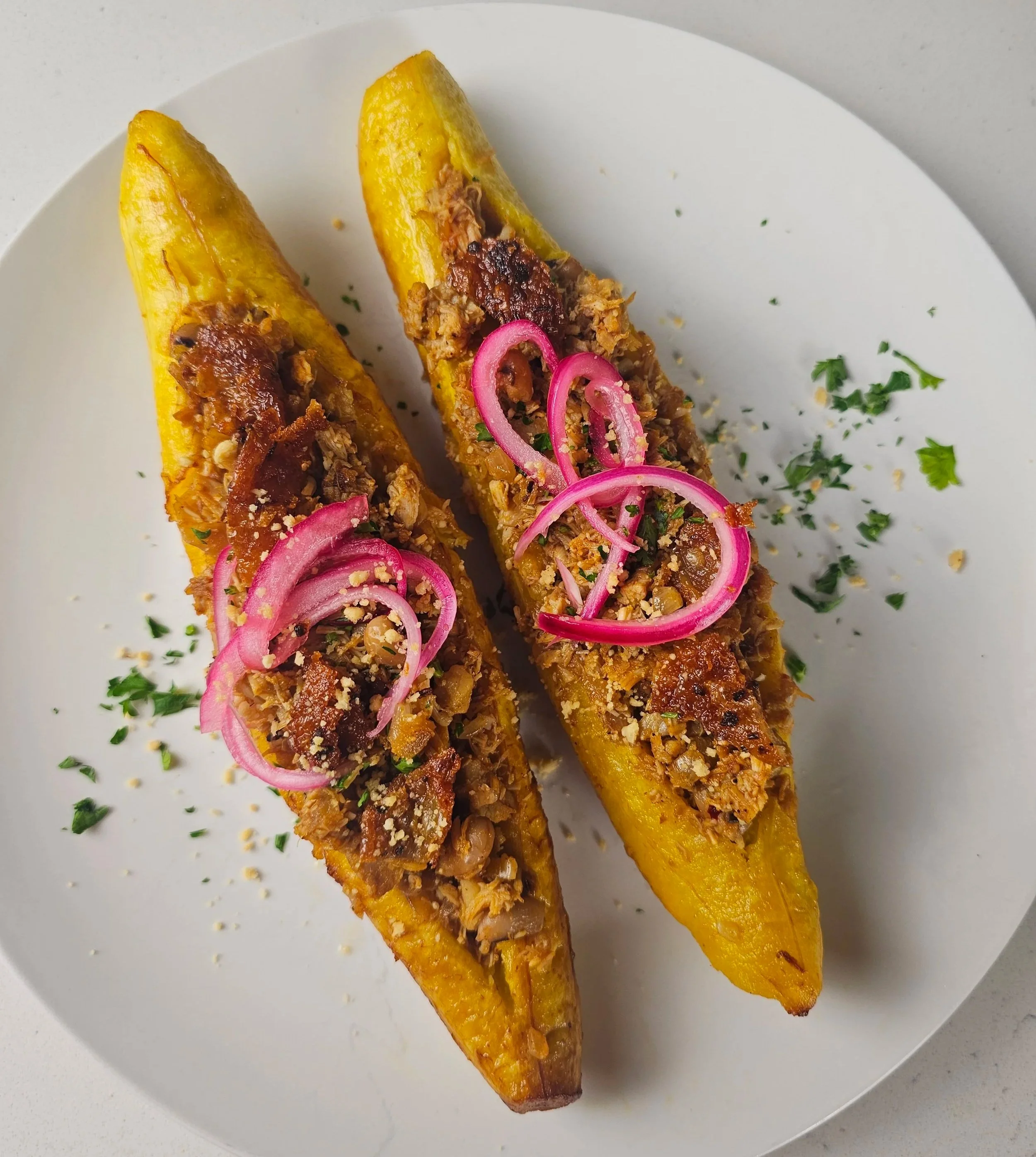
Suya-Spiced Chicken Plantain Boats
I am obsessed with plantains. They are incredibly versatile, and having a few on hand is never a bad idea. Whether they're fried, baked, mashed, or stuffed, plantains can easily become the foundation of a quick meal or a show-stopping dish.
Plantain boats are one of those recipes that naturally invite creativity. A simple base of ripe plantains is transformed into something bold, layered, and deeply satisfying. In this version, leftover rotisserie chicken is reimagined into a 30-minute dish that draws inspiration from Caribbean plantain traditions and the peanut-forward, spice-driven flavors found across parts of Africa.
As a Zimbabwean, I grew up with dishes like huku nedovi, where peanuts play a central role in creating richness and depth. While this recipe is not a traditional Zimbabwean dish, the combination of peanuts and warming spices immediately feels familiar to me. That same appreciation for nutty, savory flavors is part of what drew me to suya (yaji) seasoning, a West African spice blend known for its smoky, bold character and use of ground peanuts.
Across the Caribbean and Latin America, plantains are a foundational ingredient used in both sweet and savory preparations. Their natural sweetness makes them ideal for balancing spice, acidity, and richness. Plantains are also enjoyed throughout many African countries, often fried, roasted, or served alongside stews and grilled meats, making them a natural bridge between the influences behind this dish.
The filling combines shredded rotisserie chicken with suya seasoning, tomato paste, Worcestershire sauce, and aromatics, then is lightly bound with peanut butter for texture and cohesion. Quick-pickled red onions provide brightness and acidity, while crispy chicken skin is repurposed as a crunchy topping that reinforces the roasted flavor of the bird. A final sprinkle of crushed peanuts echoes the nutty notes in the seasoning and ties the dish together.
Designed for speed, flexibility, and maximum flavor, these Suya-Spiced Chicken Stuffed Plantain Boats show how a handful of pantry ingredients and leftovers can be transformed into something vibrant, visually striking, and deeply satisfying in under 30 minutes.

Suya-Spiced. Chicken Plantain Boats
Sweet fried plantains stuffed with suya-spiced rotisserie chicken, crunchy peanuts, crispy chicken skin, and tangy quick-pickled red onions. This easy 30-minute recipe brings together bold flavors, contrasting textures, and a creative use for leftover chicken.
Ingredients
- 4 ripe yellow plantains with black spots (not overly ripe to hold structure)
- Peanut oil, for frying (shallow fry)
- Crispy chicken skin, from rotisserie chicken
- 2 cups shredded rotisserie chicken (mostly thigh/leg meat, some breast)
- 1 small yellow onion, finely diced
- 2 garlic cloves, minced
- 1 tbsp suya spice
- 1 tsp smoked paprika
- 2 tsp tomato paste
- ½ tsp chicken boullion paste
- 1 tbsp Worcestershire sauce
- 1-2 tbsp peanut butter
- 2–3 tbsp to ½ cup water (adjust if chicken is more or less dry)
- Salt and black pepper, to taste
- 1 tsp chili flakes, to taste (optional)
- 2 tbsp crushed roasted peanuts (optional garnish)
- Fresh parsley, chopped (optional garnish)
- Pickled red onions (store bought or homemade, optional garnish)
- ½ large red onion
- ½ cup vinegar
- ½ cup hot water
- ½ tsp salt
- 1 tsp sugar
- 1-2 bay leaves
- 1 tsp black peppercorns
- 1 tbsp grenadine
Instructions
- In a bowl or jar, combine the vinegar, hot water, sugar, salt, bay leaf, peppercorns, and grenadine. Add the sliced red onion and stir well. Set aside while you prepare the remaining ingredients.
- Place the chicken skin in a cold skillet and set over medium heat. Cook for 5–8 minutes, turning occasionally, until crisp and golden brown. Transfer to a plate and set aside. You can chop finely or into shards.
- Heat at least 1 inch of peanut oil in a skillet over medium to medium-low heat. Fry the peeled plantains for 2–3 minutes, turning occasionally, until golden and softened. Remove from the oil and let rest for 3–5 minutes.
- Using a sharp knife, cut a lengthwise slit down the center of each plantain, being careful not to cut all the way through.
- Using the back of a spoon, gently press and widen the opening to create a deep cavity for the filling. If necessary, trim a thin slice from the bottom so the plantains sit flat.
- Heat a skillet over medium heat. Add the diced onion and cook for about 2 minutes, until softened.
- Add the garlic and cook for 30 seconds more.
- Stir in the tomato paste and boullion paste. Cook for 1–2 minutes, until the mixture darkens slightly and becomes fragrant.
- Add the shredded chicken, suya spice, paprika, chili flakes, salt, and black pepper. Stir to combine.
- Add the peanut butter and 2–3 tablespoons, or up to half a cup of water. Mix until evenly coated. Cook for 2–3 minutes, until thick, moist, and slightly sticky.
- Add the beans and Worcestershire sauce, and finish for another 1–2 minutes.
- Spoon the chicken filling generously into each plantain boat, in portions.
- Top with the pickled red onions, crispy chicken skin, crushed roasted peanuts, and chopped parsley.
- Serve warm.
Notes
- If filling looks dry: add 1 tbsp water at a time until glossy
- Plantains must be ripe (yellow with black spots) for softness
- Don’t overfill peanut butter, it should bind, not dominate
- Worcestershire replaces soy sauce in this version for deeper, rounder umami
- The final dish should look layered, not saucy
- Texture contrast is essential: crispy skin + soft plantain + acidic onions
I am not a certified nutritionist and any nutritional information on dontmissmyplate.com should only be used as a general guideline.
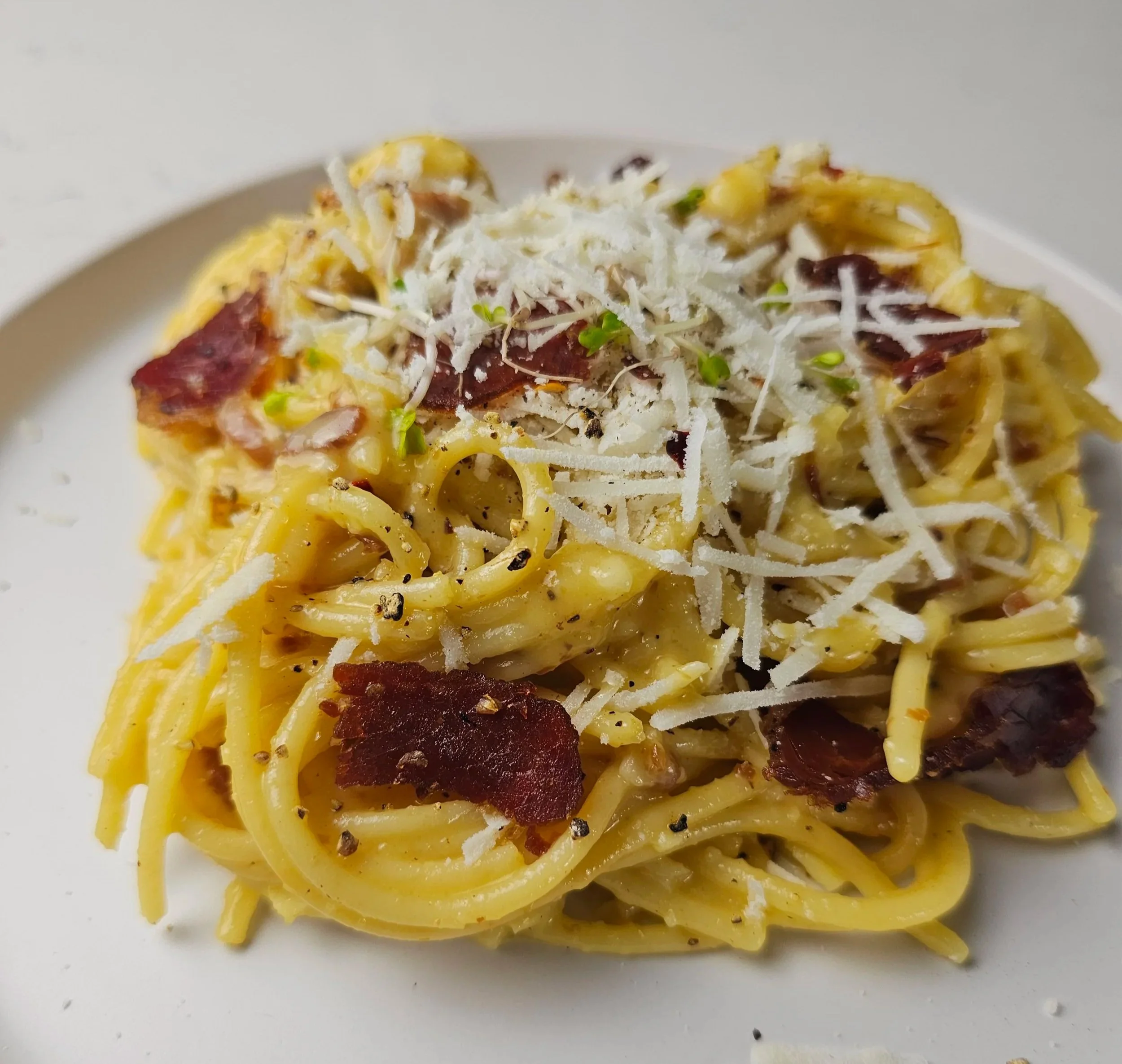
Biltong Carbonara
Carbonara is one of the most iconic Roman pasta dishes in the world, traditionally built around cured pork, pecorino cheese, eggs, black pepper, and pasta water to create a silky emulsion without cream. In this version, I wanted to reinterpret that structure through a Southern African lens using one of the region’s most beloved ingredients: biltong.
Biltong is a cured and air-dried beef commonly enjoyed across Zimbabwe, South Africa, Botswana, and Namibia. While many people compare it to jerky, the flavor and texture are completely different. Biltong is richer, more tender, and deeply savory, with concentrated beef flavor from the curing and drying process. It is not just a snack where I come from, it is part of the culture.
For this dish, I wanted to respect the foundation of a traditional carbonara while introducing the bold identity of biltong in a way that still feels intentional and balanced. Instead of replacing the classic smoky pork notes entirely, I use rendered bacon fat to preserve that familiar carbonara backbone while allowing the cured beef flavor of the biltong to take center stage.
The result is a fusion dish that feels both comforting and personal. Silky pasta coated in a glossy pecorino and egg sauce, layered with black pepper, smoky bacon fat, and the deep umami of biltong.
This recipe reflects the kind of cooking I love most, honoring classic techniques while telling my own story through flavor.

Biltong Carbonara
A Southern African-inspired twist on classic Roman carbonara made with biltong, pecorino, eggs, and smoky bacon fat for a rich, savory pasta with bold cured beef flavor.
Ingredients
- 8 oz (225g) dry spaghetti noodles
- 3 strips thick bacon (for rendered fat)
- 1 cup (black pepper) biltong, divided into two portions (½ cup finely chopped and ½ cup sliced for garnish)
- 2 whole eggs
- 1 egg yelp
- 1 1/4 cup grated pecorino cheese
- 1½ teaspoon freshly cracked black pepper
- 1 large garlic clove, smashed
- 1–1½ cups reserved pasta water
- Chilli flakes (optional)
Instructions
- In a large mixing bowl, combine the egg, yolk, pecorino, ½ teaspoon of the black pepper, and 1/2 the biltong, finely chopped. Mix thoroughly with a fork until fully combined then set aside.
- Bring a large pot of salted water to a boil. Cook the spaghetti noodles until 1 minute before al dente according to package instructions.
- Reserve 1–1½ cups pasta water before draining.
- Place bacon strips into a cold pan. Turn heat to medium-low and cook until crispy and the fat has rendered, about 6–8 minutes. Remove bacon (use for another reicepe) and set the oil aside. Keep rendered fat in the pan.
- Lower heat to low-medium then add smashed garlic clove and a small pinch of black pepper to the bacon fat. Cook for 20–30 seconds until fragrant, then remove garlic.
- Add drained pasta into the pan and toss in the bacon fat, follwoed by add a small splash of reserved pasta water and toss again.
- Transfer the pasta to the mixing bowl with the egg mixture.
- Wait about 10 seconds so the pasta is hot but not scorching.
- Toss aggressively until the sauce begins coating the pasta.
- Add reserved warm pasta water gradually, 1 tablespoon at a time, until the sauce becomes glossy and silky. Be patirnet, it's can take a few mintue!
- Twirl pasta onto serving plates and top servings with sliced biltong, extra pecorino, freshly cracked black pepper and chilli flakes.
- Serve immediately.
Nutrition Facts
Calories
640Fat (grams)
34 gSat. Fat (grams)
14 gCarbs (grams)
38 gFiber (grams)
2 gProtein (grams)
32 gI am not a certified nutritionist and any nutritional information on dontmissmyplate.com should only be used as a general guideline.
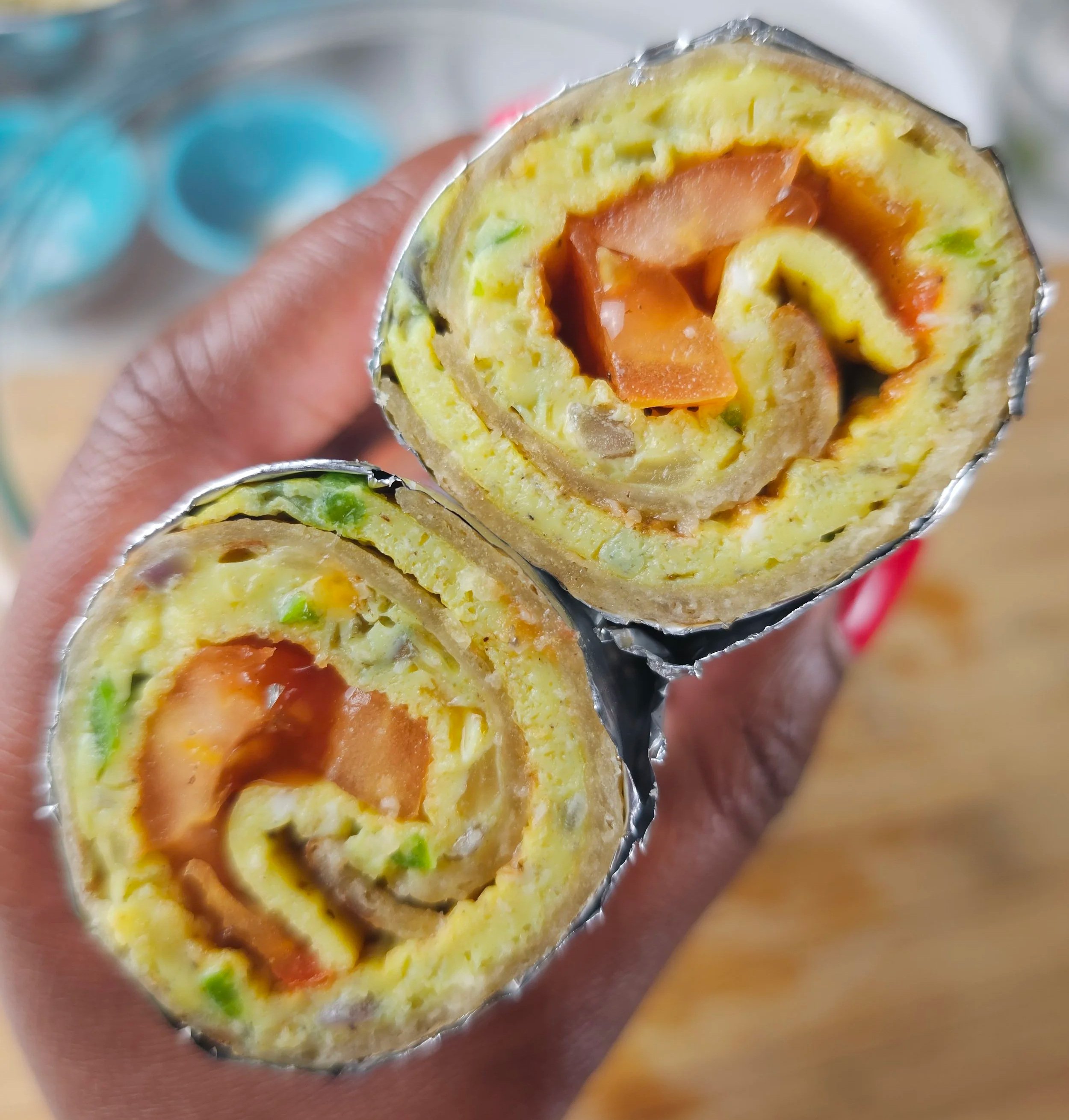
Ugandan Rolex Egg Wrap (Street Food Recipe)
Good street food does not need to stay on the street. It can absolutely live in your kitchen.
The Rolex is a beloved Ugandan street food made from a simple vegetable omelette wrapped in soft chapati, a flaky unleavened flatbread similar to roti. I have spent time in Uganda and other parts of East Africa, and I draw inspiration from the way street food culture shows up across the region, fast, fresh, and deeply satisfying.
Across East Africa, chapati is a staple that shows up at breakfast, lunch, and everything in between. It is often used as the base for quick handheld meals like the Rolex, which makes it one of the most practical and versatile snacks you can make at home.
For me, this recipe is part of a wider way of cooking, taking inspiration from street foods across Uganda and the region, then recreating them in a home kitchen where they are just as accessible, flexible, and fun to eat.
The Rolex is exactly what it sounds like. Eggs are cooked into a thin omelette, layered with vegetables, and rolled tightly in flatbread to create a warm portable wrap. It works just as well for breakfast as it does for a midday snack or quick dinner.
There is no single correct way to make it. Some versions are simple with just eggs, onion, and tomato, while others are packed with cabbage, peppers, or whatever you have on hand. That flexibility is what makes it such a perfect everyday dish. It adapts to your kitchen and your schedule.
In this version, I keep it simple, fast, and home friendly so you can recreate it without special ingredients or long prep times. It is proof that street food does not have to stay on the street. It can become part of your everyday cooking rhythm.
Whether you are looking for a quick breakfast wrap, an easy lunch, or a satisfying snack, this Ugandan Rolex is the kind of recipe that fits into real life. No rules, just good food.
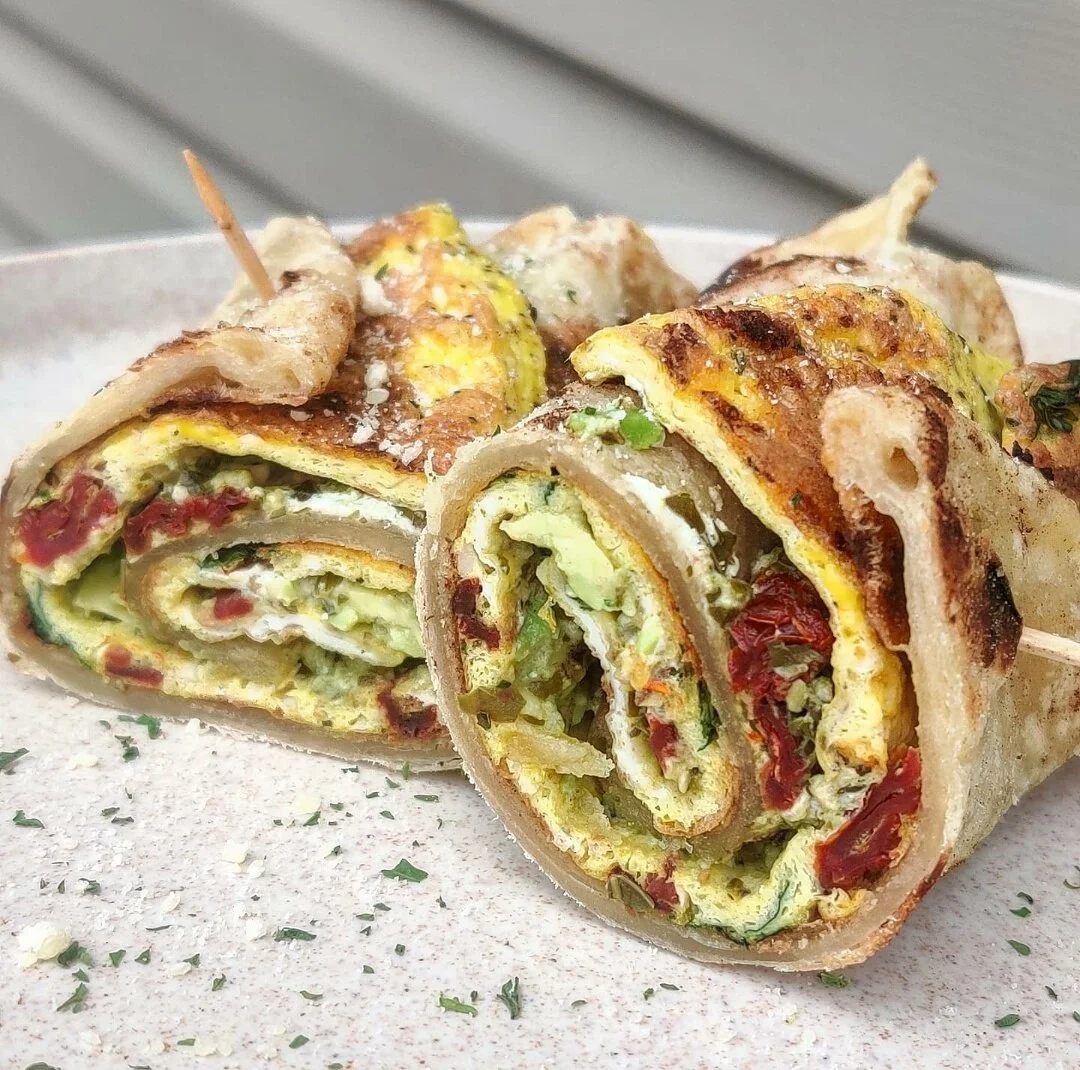
Ugandan Rolex (Omelette Rolled in Chapati)
A delicious and satisfying East African street food classic, fluffy vegetable omelette wrapped in soft, flaky chapati flatbread. This “rolex” is customizable, quick to make, and perfect for breakfast, brunch, or anytime you want a flavorful, handheld meal.
Ingredients
- 1 cup all-purpose flour
- 1 teaspoon salt
- 1 tablespoon vegetable oil, plus extra for cooking
- 1/4 cup hot water + 1 tablespoon hot water (adjust as needed)
- 4 eggs
- 1/2 teaspoon black pepper
- 1 tablespoon fresh parsley, chopped
- 1 teaspoon Italian seasoning
- 1 teaspoon dried parsley
- Pinch of salt
- 2 tablespoons pesto
- 1/4 cup Parmesan cheese, grated
- 2 tablespoons sun-dried tomatoes, chopped
- 2 tablespoons goat cheese
- 1 avocado, mashed or sliced with lemon juice
Instructions
- In a medium bowl, mix the flour and salt. Add the vegetable oil and mix. Gradually add the hot water while stirring to form a soft dough. On a lightly floured surface, knead the dough for about 5 minutes until smooth. Shape into a ball, then divide into two equal pieces. Cover and let rest for 10 minutes.
- On a lightly floured surface, roll each dough ball into a circle about 1/4 inch thick and roughly the size of the pan you’ll use to cook the omelette.
- Lightly brush each chapati with oil, then press into a lightly floured shallow plate. Flip and repeat.
- Heat a non-stick pan over medium-high heat and lightly oil it. Cook each chapati for about 15 seconds per side, flipping once, until you see brown spots and the chapatis are cooked through. Set aside.
- In a bowl, beat the eggs with black pepper, fresh parsley, Italian seasoning, dried parsley, salt, Parmesan cheese, half of the goat cheese, and half of the sun-dried tomatoes.
- Pour the egg mixture into the hot pan and cook omelettes one at a time until set.
- Place each omelette on top of a chapati. Top each with half an avocado and 1 tablespoon of pesto. Sprinkle with the remaining sun-dried tomatoes and goat cheese.
- Roll up each chapati tightly to form a “rolex.” Cut each in half, secure with toothpicks, and serve hot.
I am not a certified nutritionist and any nutritional information on dontmissmyplate.com should only be used as a general guideline.
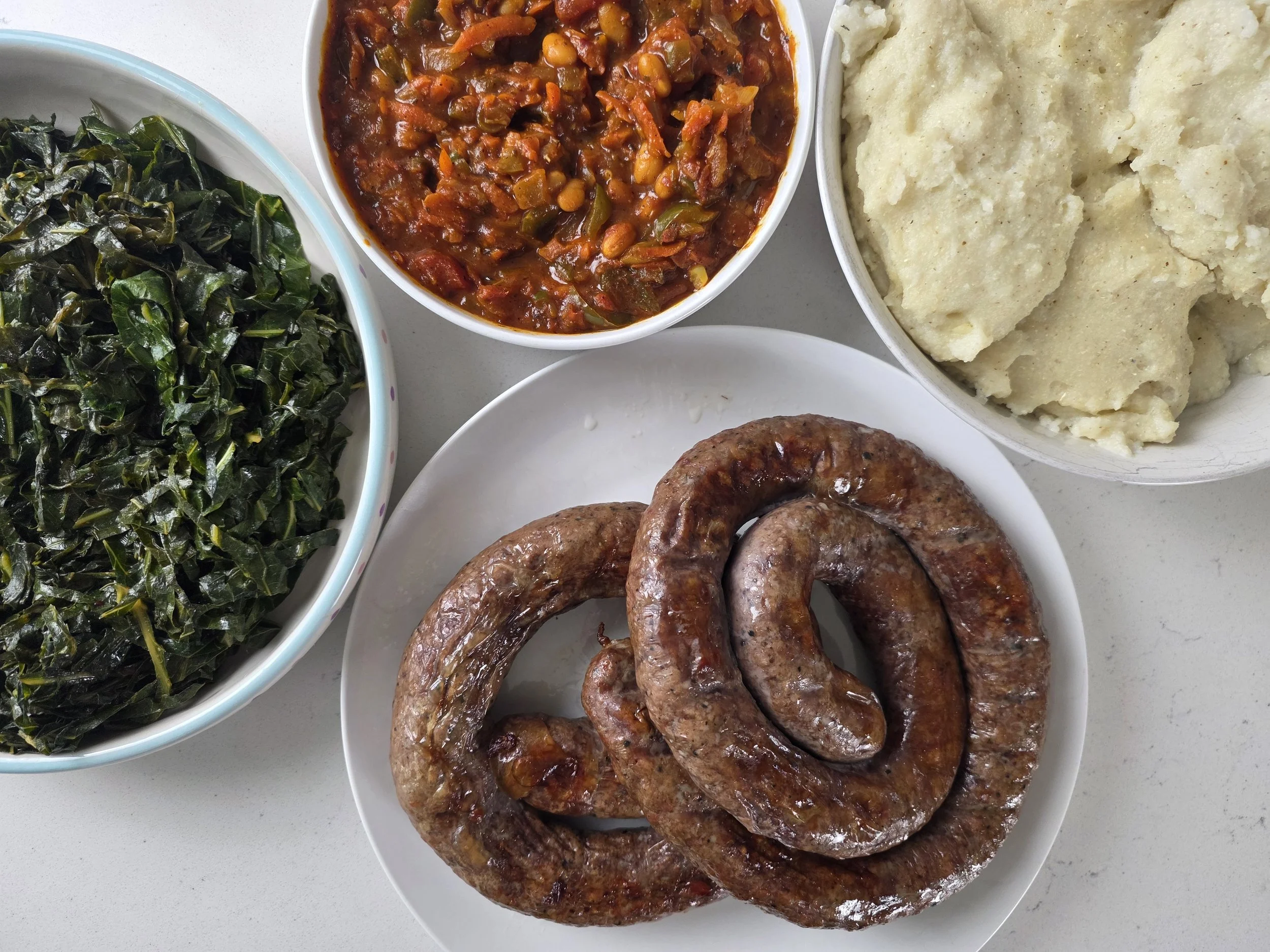
Braai-Style Homemade Boerewors Sausage with Cherry Plum
This is Part 3 of my braai-inspired series, and the final plate brings everything full circle with one of the most iconic elements of Southern African food culture: boerewors.
After exploring peri-peri chicken in Part 1 and BBQ- and curry-spiced lamb in Part 2, this final installment shifts focus to the centerpiece of many braai gatherings: sausage. In many Southern African homes, boerewors is not just another protein on the grill; it is often the anchor around which everything else is built. From the fire itself to the sides and conversations shared around the table, it holds a central place in the braai experience.
Traditional boerewors is typically made with a higher fat content (often around a 70/30 lean-to-fat ratio), which is key to its signature juiciness and flavour when grilled over open heat. That balance of fat is what gives it its distinctive texture and keeps it from drying out during the braai process.
For this final plate, I also followed through on the community vote, which leaned heavily toward sausage over fish. That result raised an interesting reflection on how different proteins fit into braai culture. While fish certainly plays an important role in some coastal traditions and regions, sausage remains one of the most recognizable and widely enjoyed staples of everyday braai cooking.
Rather than overcomplicating the process, I kept this recipe grounded and accessible. The sausage is made using seasoned ground meat, which can easily be prepared at home and stuffed into casings for full control over flavour and texture. It also serves as a practical introduction for anyone interested in trying homemade boerewors without needing specialized cuts or advanced butchery skills. I used a sausage-stuffing attachment for a KitchenAid mixer, though standalone sausage stuffers work just as well.
The plate is completed with classic sides: pap/sadza, chakalaka, and collard greens. These are not simply additions to the meal; they create balance. Pap/sadza provides the foundation, chakalaka brings heat and spice, and the greens add freshness and contrast. Together, they complete the structure of a proper braai plate.
To close the series, I paired the meal with a cherry plum drink, another choice inspired by the community vote. Throughout this series, drinks have played a subtle but important role in reflecting how braai culture extends beyond food alone. The drink adds brightness and balance, complementing the plate rather than competing with it.
This final recipe is less about complexity and more about completeness: a full braai experience that brings together fire, food, sides, and shared culture on one plate.
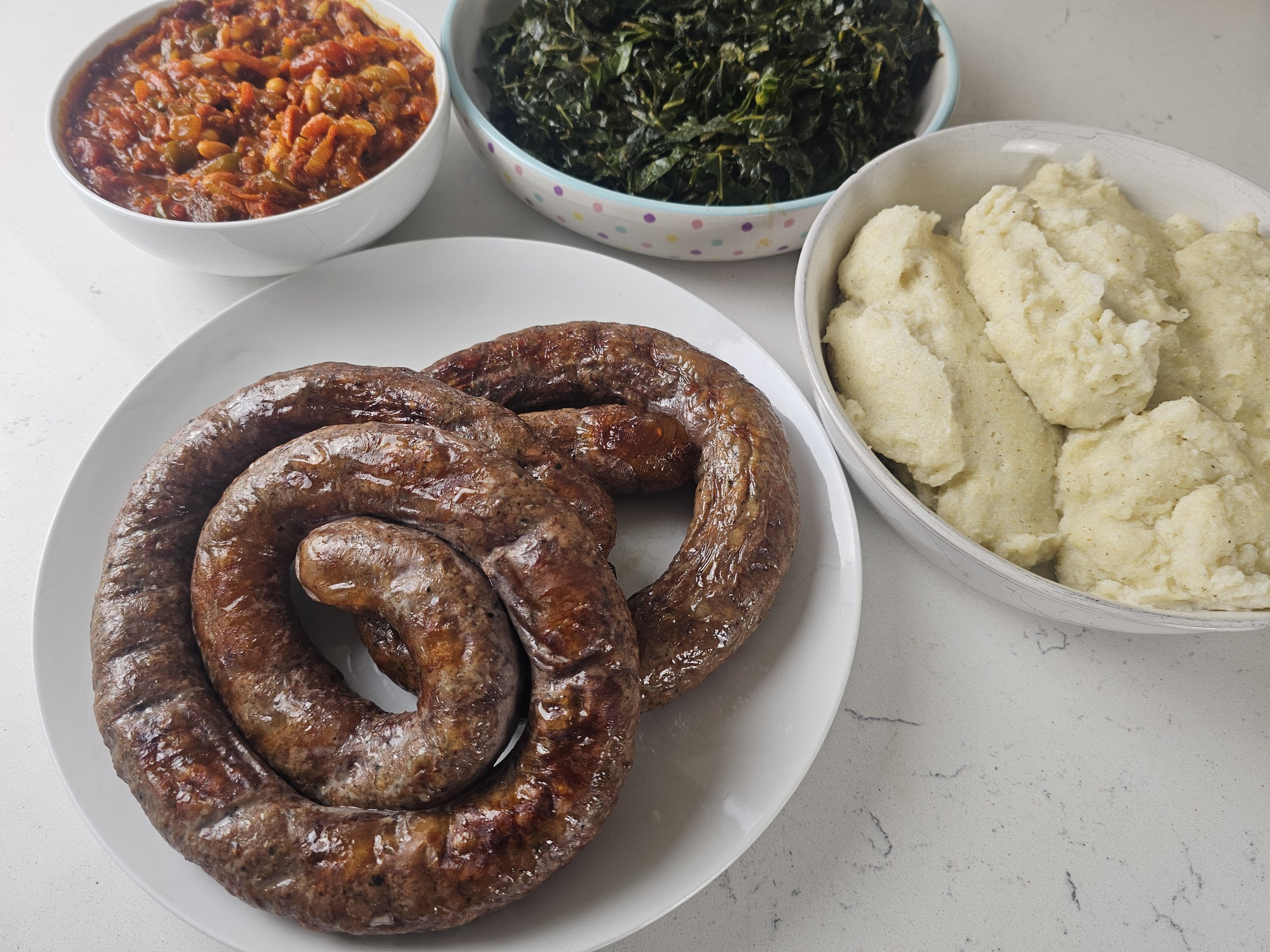

Braai-Style Boerewors Sausage with Pap, Chakalaka, and Collard Greens
A traditional boerewors-style sausage made from seasoned ground meat, stuffed and grilled for a classic Southern African braai plate. Served with soft pap, rich chakalaka (vegetable relish), and collard greens, and paired with a refreshing cherry plum drink.
Ingredients
- 2.4 lb ground beef (not too lean)
- 1 lb ground pork
- 2 tsp salt
- 1 tsp whole black peppercorns
- 2 tbsp whole coriander seeds
- 1/2 tsp whole allspice berries
- 1 tsp smoked paprika
- 1 tsp garlic powder
- 1/8 tsp ground cloves
- 1/8 tsp ground nutmeg
- 1 tbsp red wine vinegar
- 1 packet sausage casings (standard pack; amount used will vary depending on stuffing size for 3.4 lb meat)
- 2 cups maize meal
- 3 cups hot water (add gradually)
- 1 to 1½ cups cold water
- 1 tsp salt
- 1 tbsp butter
- 1 onion, chopped
- 2–3 carrots, grated
- 1 chilli pepper, minced (optional)
- 2–3 garlic cloves, minced
- 1 inch ginger, grated (optional)
- 1/2 cup roasted tomatoes, diced
- 1/2 green bell pepper, chopped
- 1/2 cup baked beans
- 1 tbsp curry powder
- 1 tsp coriander spice
- 1 tsp smoked paprika
- 1 tbsp tomato paste
- 2 tbsp cooking oil
- 1 cup water
- 2 tbsp Worcestershire sauce
- Salt and pepper to taste
- 4–5 cups collard greens
- 2 tbsp oil or butter
- 1 tbsp garlic powder
- Salt to taste
- Splash of water or stock
- Splash of vinegar
Instructions
- Toast coriander seeds, peppercorns, and allspice berries until fragrant, then crush.
- Mix spices with ground beef, pork, salt, paprika, garlic powder, cloves, nutmeg, and vinegar until just combined.
- Let the mixture rest for 20–30 minutes before stuffing.
- Stuff into casings, then loosely cover and refrigerate for 1–12 hours (overnight recommended).
- Before cooking, remove from fridge for 10–15 minutes.
- Grill over medium heat or bake at 325°F (160°C) for about 30 minutes, turning halfway, until browned and cooked through. Do not pierce sausages while cooking.
- Mix maize meal with cold water to form a smooth paste.
- Gradually add hot water while stirring to avoid lumps.
- Cook on low heat for about 15 minutes, stirring occasionally.
- Add more maize meal if needed to adjust thickness.
- Beat with a wooden spoon until smooth, then cover and let rest.
- Heat oil in a pan.
- Sauté onion, carrot, green pepper, chilli, garlic, and ginger until soft.
- Add curry powder, coriander, and smoked paprika and cook briefly.
- Add roasted tomatoes, tomato paste, baked beans, and water.
- Simmer 10–15 minutes until thick.
- Stir in Worcestershire sauce at the end and season.
- Sauté greens in oil or butter until wilted.
- Add a splash of water or stock, cover, and simmer until tender.
- Finish with salt and vinegar
Notes
- Always wash sausage casings properly according to packet instructions before use.
- Resting the sausage mixture before stuffing improves texture and handling.
- Do not cook sausages on high heat; low to medium heat prevents splitting.
- Pap texture can be adjusted by adding more maize meal or water depending on preference.
- Stuffing sausages takes practice; small tears or uneven lengths are normal for first attempts.
Nutrition Facts
Calories
650Fat (grams)
40 gCarbs (grams)
55 gProtein (grams)
30 gI am not a certified nutritionist and any nutritional information on dontmissmyplate.com should only be used as a general guideline.
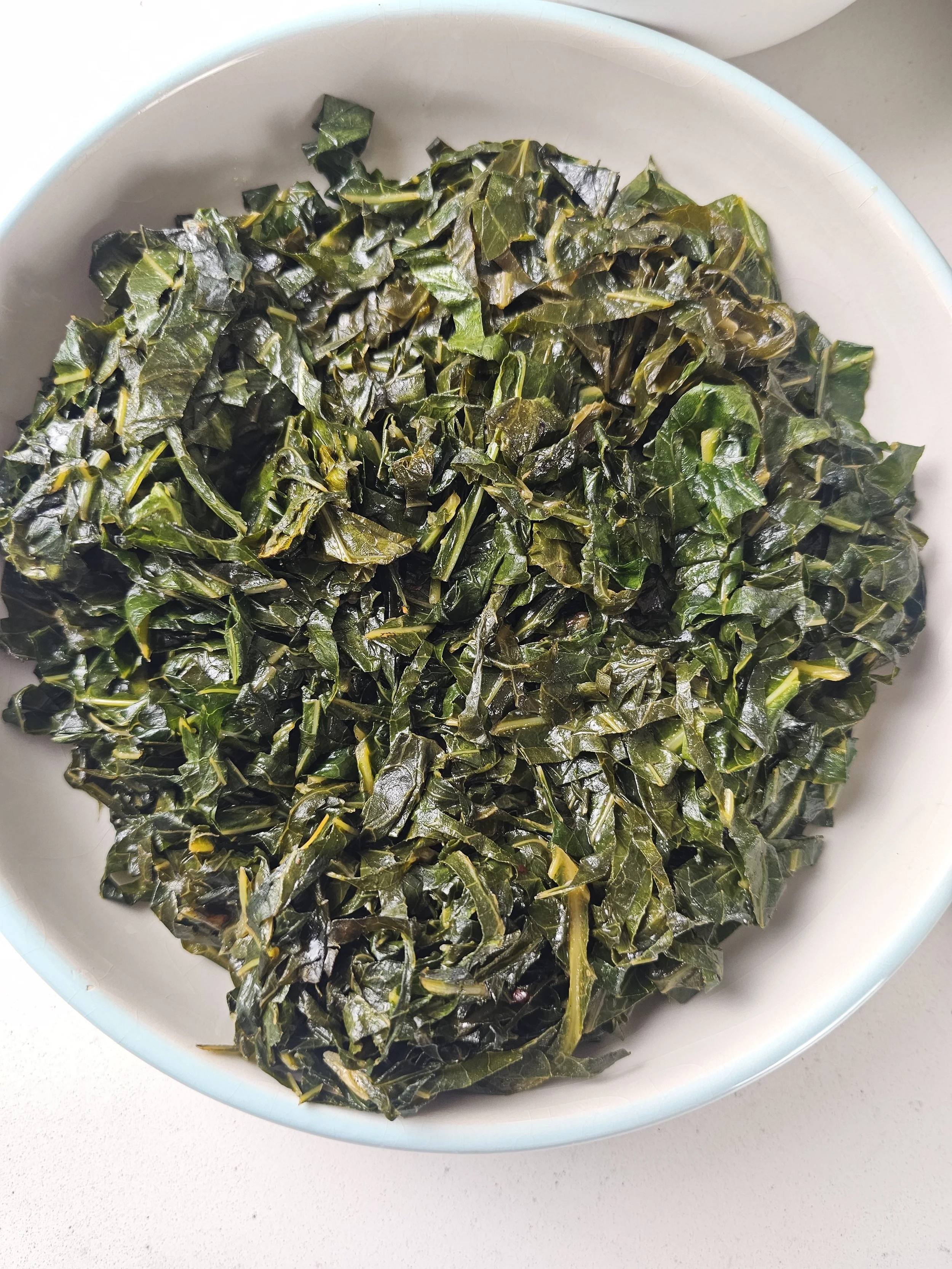

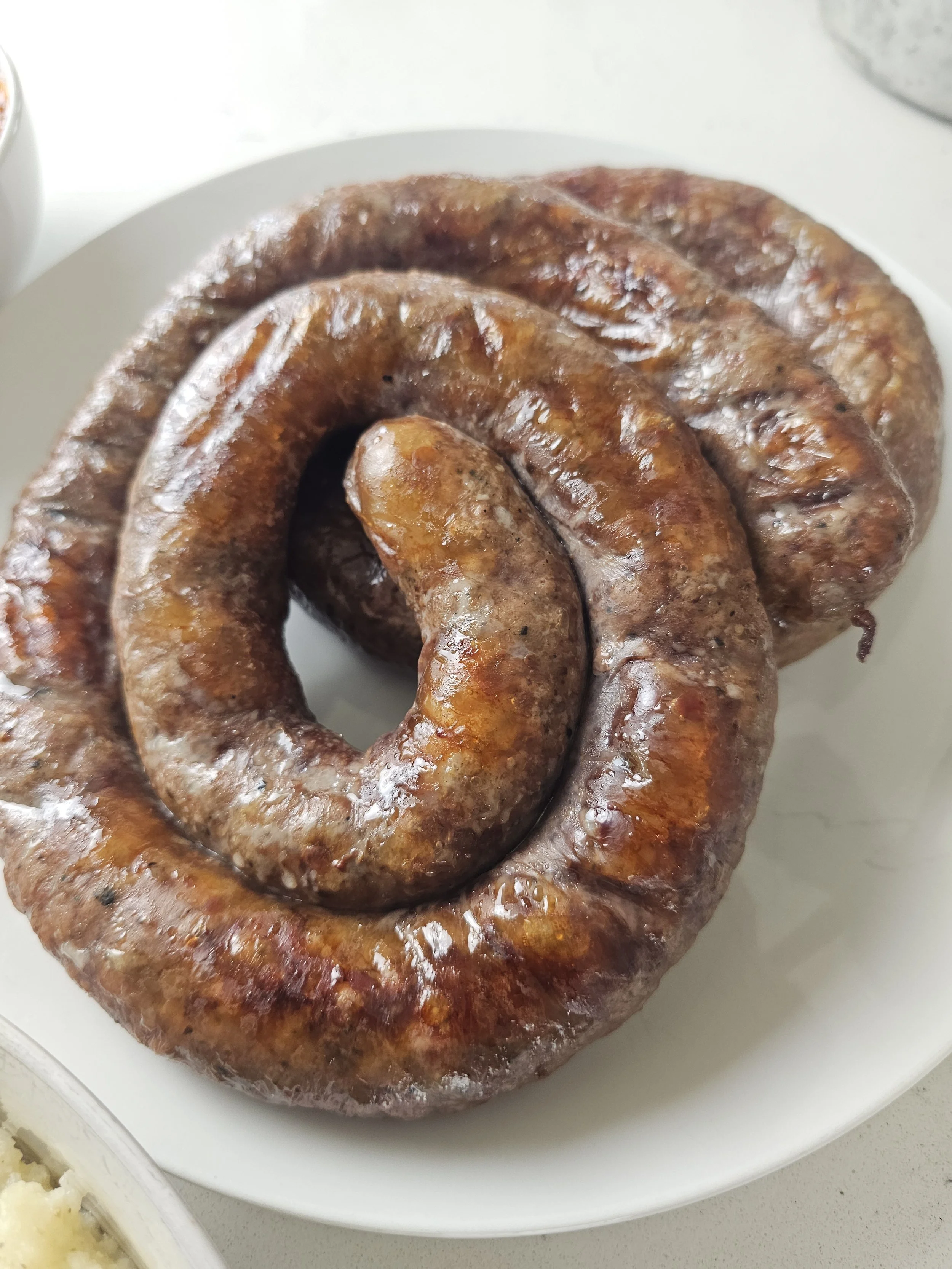
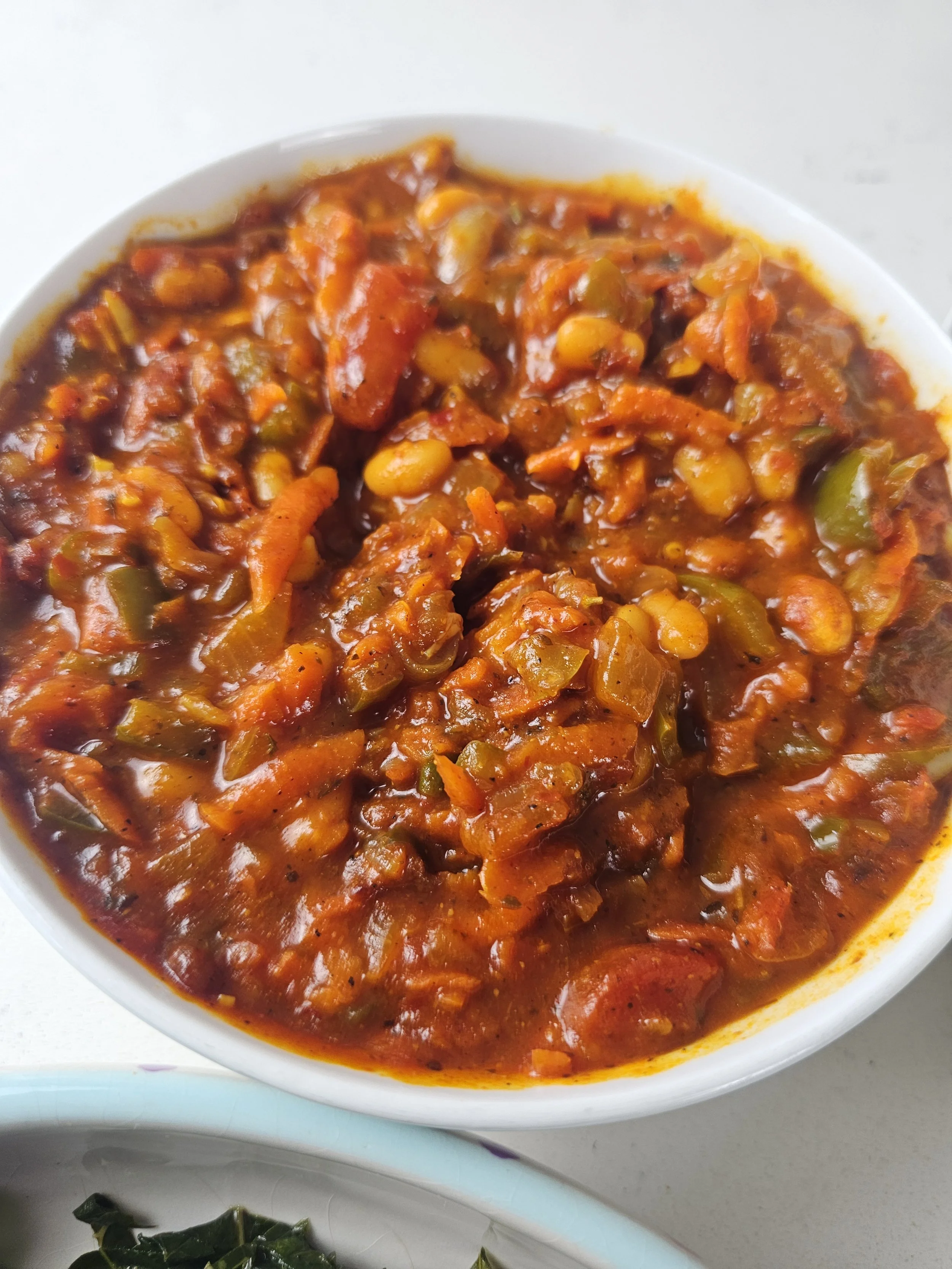
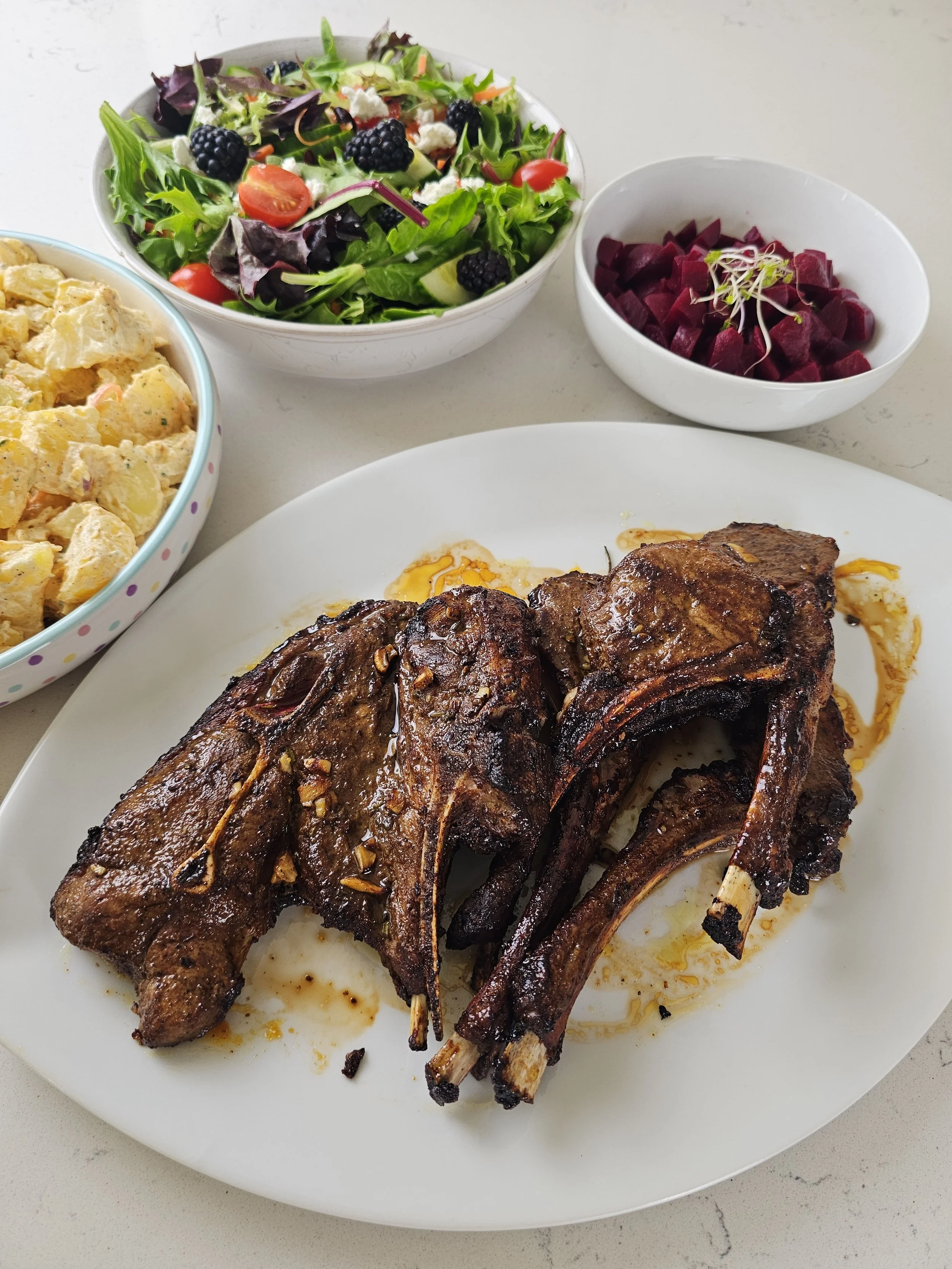
Braai-Style Spiced Lamb Chops with Pine Nut
This is Part 2 of a Southern African braai-inspired series exploring how traditional grilling culture can be interpreted in a modern home kitchen, shaped by audience input and regional food traditions.
Braai culture across Southern Africa is not uniform. While some regions lean heavily toward beef cuts like T-bone steaks, others incorporate lamb, boerewors, chicken, or fish depending on geography, availability, and personal preference. This diversity highlights how braai is not a fixed recipe system, but a flexible cultural practice that adapts across communities.
This lamb chop recipe came from a recent poll I shared with you all, and I loved seeing what you wanted to explore next in this braai-inspired series.
For this dish, the lamb is marinated overnight using a blend of BBQ spices, curry powder, paprika, rosemary, garlic, and lemon, building deep layered flavour before being grilled and served as a full plate.
It is paired with a fresh salad trio of beetroot, potato, and garden salad, offering contrast in texture and temperature. The combination reflects a classic braai balance: rich, smoky protein alongside simple, fresh, cooling sides that complete the plate without overpowering it.
Start the series here: Peri-Peri Chicken Braai Plate with Cream Soda.
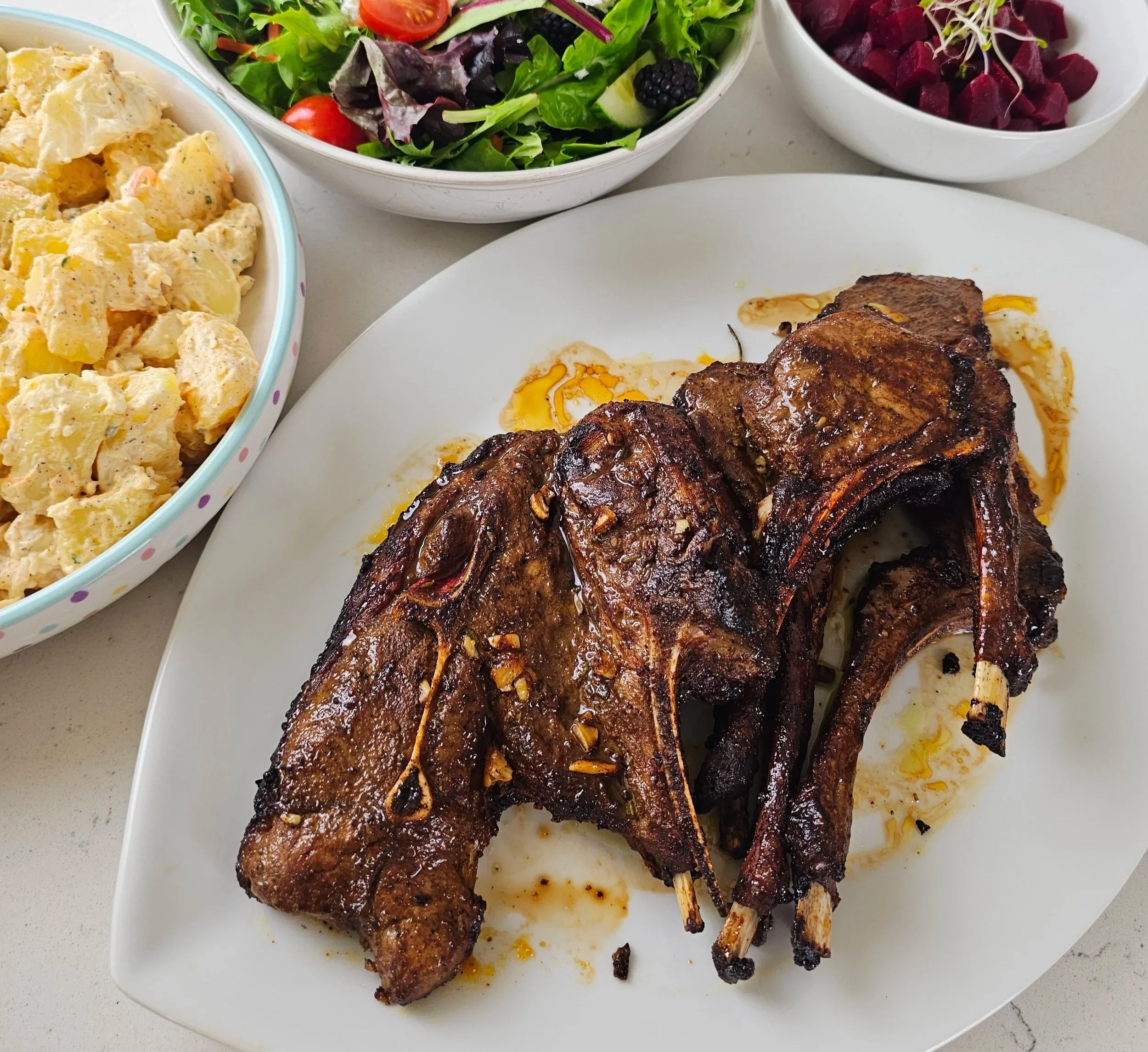

Braai-Style Spiced Lamb Chops with Beetroot, Potato, and Garden Salads
Overnight BBQ-spiced braai-style lamb plate served with simple sides and inspired by Southern African grilling traditions and regional meat preferences.
Ingredients
- 4 lamb rib chops
- 2 lamb shoulder chops
- 2 tbsp olive oil (plus more if needed)
- 2 tbsp Worcestershire sauce
- 1½ tbsp lemon juice
- 3 garlic cloves, minced
- 2 tsp salt
- 1 tsp black pepper
- 1 tsp smoked paprika
- 1 tsp fresh rosemary, finely chopped
- ½ tsp salt
- 1 tsp black pepper
- ½ tsp ground cumin
- 1 tsp barbecue seasoning (I used Robertson’s)
- 1 tsp curry powder
- 6–8 cups spring greens
- 1 cup cherry tomatoes, halved
- ½ large cucumber, sliced
- ½ large red onion, sliced or diced
- Olive oil and balsamic vinegar, for dressing
- Salt and black pepper, to taste
- 3–4 cooked beets, diced
- 2 tbsp white vinegar
- 1 tsp sugar
- ½ tsp salt
- 4 butter potatoes
- ⅓ cup mayonnaise
- 1 tsp Dijon mustard
- ½ cup slaw mix (cabbage and carrot)
- ⅓ large red onion, finely diced
- Salt and black pepper, to taste
Instructions
- In a large bowl, combine all marinade ingredients. Coat the lamb chops evenly, cover, and refrigerate for at least 4 hours, preferably overnight for deeper flavour.
- Remove the lamb from the fridge 20–30 minutes before cooking to allow it to come closer to room temperature.
- Prepare the beetroot salad by combining the diced beetroot, vinegar, sugar, and salt in a bowl. Mix well and set aside for at least 15 minutes.
- Boil the potatoes until fork tender. Drain and allow to cool slightly before chopping into chunks.In a bowl, combine the potatoes, mayonnaise, Dijon mustard, slaw mix, and red onion. Season with salt and black pepper, then mix until evenly coated.
- Add the spring greens, cherry tomatoes, cucumber, and red onion to a large bowl. When ready to serve. drizzle with olive oil and balsamic vinegar, season with salt and black pepper,
- Heat a grill pan, indoor grill, outdoor grill, or skillet over medium-high heat. Cook the rib chops for 3–5 minutes per side. Cook the shoulder chops for 5–7 minutes per side, depending on thickness and preferred doneness.
- Remove the lamb from the heat and rest for 5–10 minutes before serving.
- Plate the lamb chops alongside the beetroot, potato, and garden salads and serve immediately.
Notes
- Overnight marination helps develop deeper flavour in the lamb.
- BBQ spice gives the dish its smoky braai-style profile.
- Lamb shoulder chops benefit from slightly longer cooking for tenderness.
Nutrition Facts
Calories
760Fat (grams)
48 gCarbs (grams)
34 gFiber (grams)
6 gSugar (grams)
10 gProtein (grams)
42 gI am not a certified nutritionist and any nutritional information on dontmissmyplate.com should only be used as a general guideline.
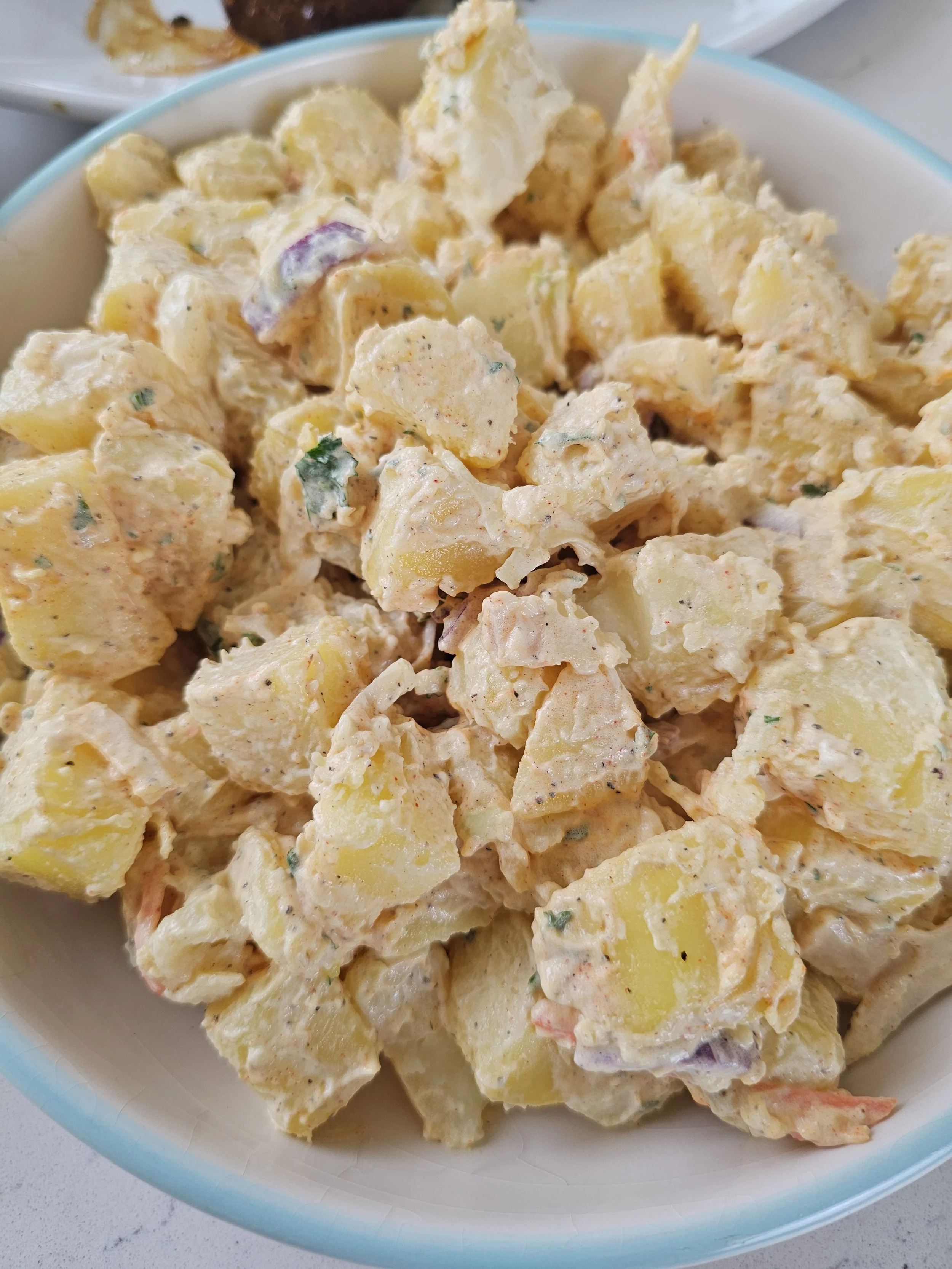
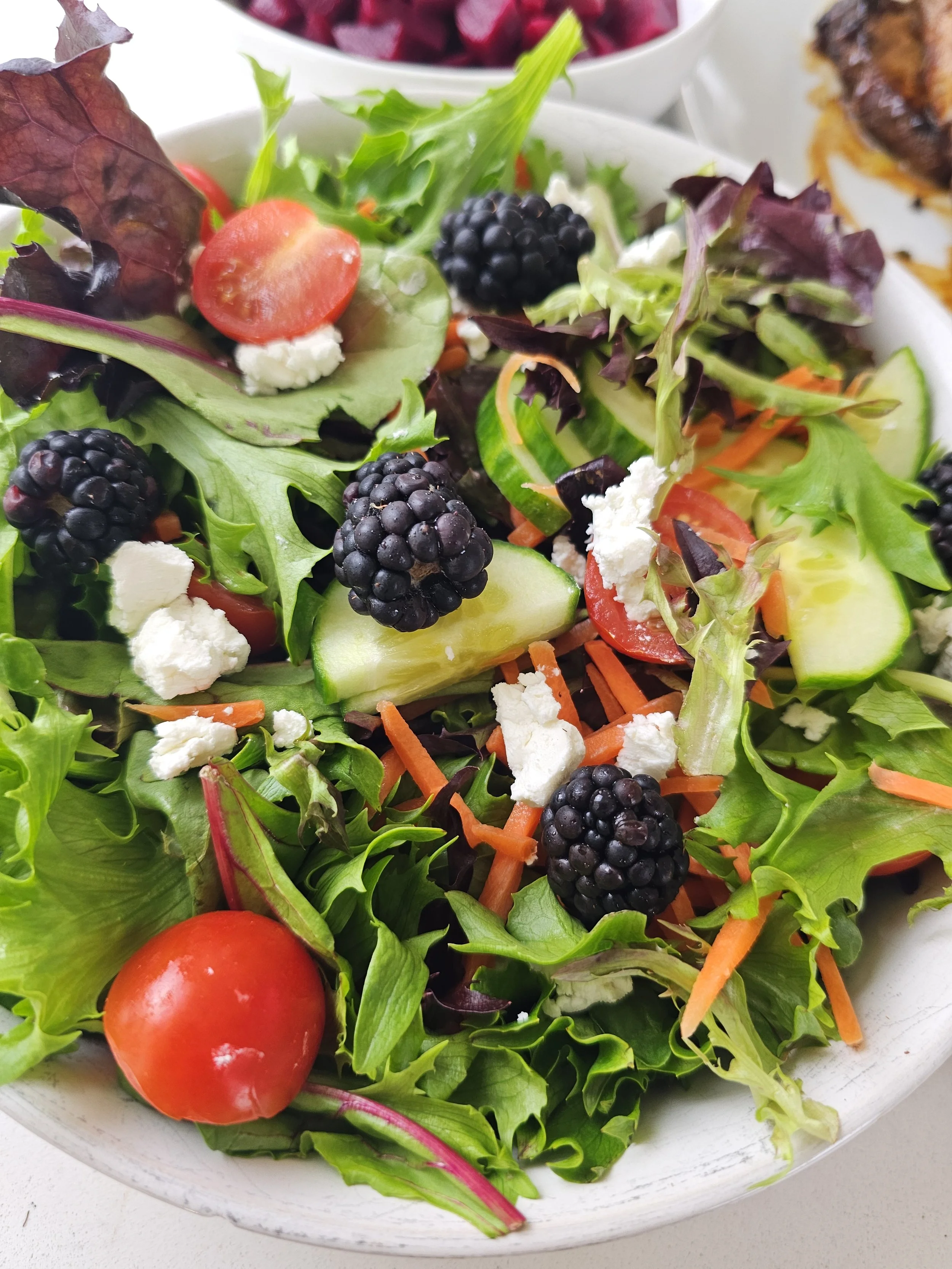
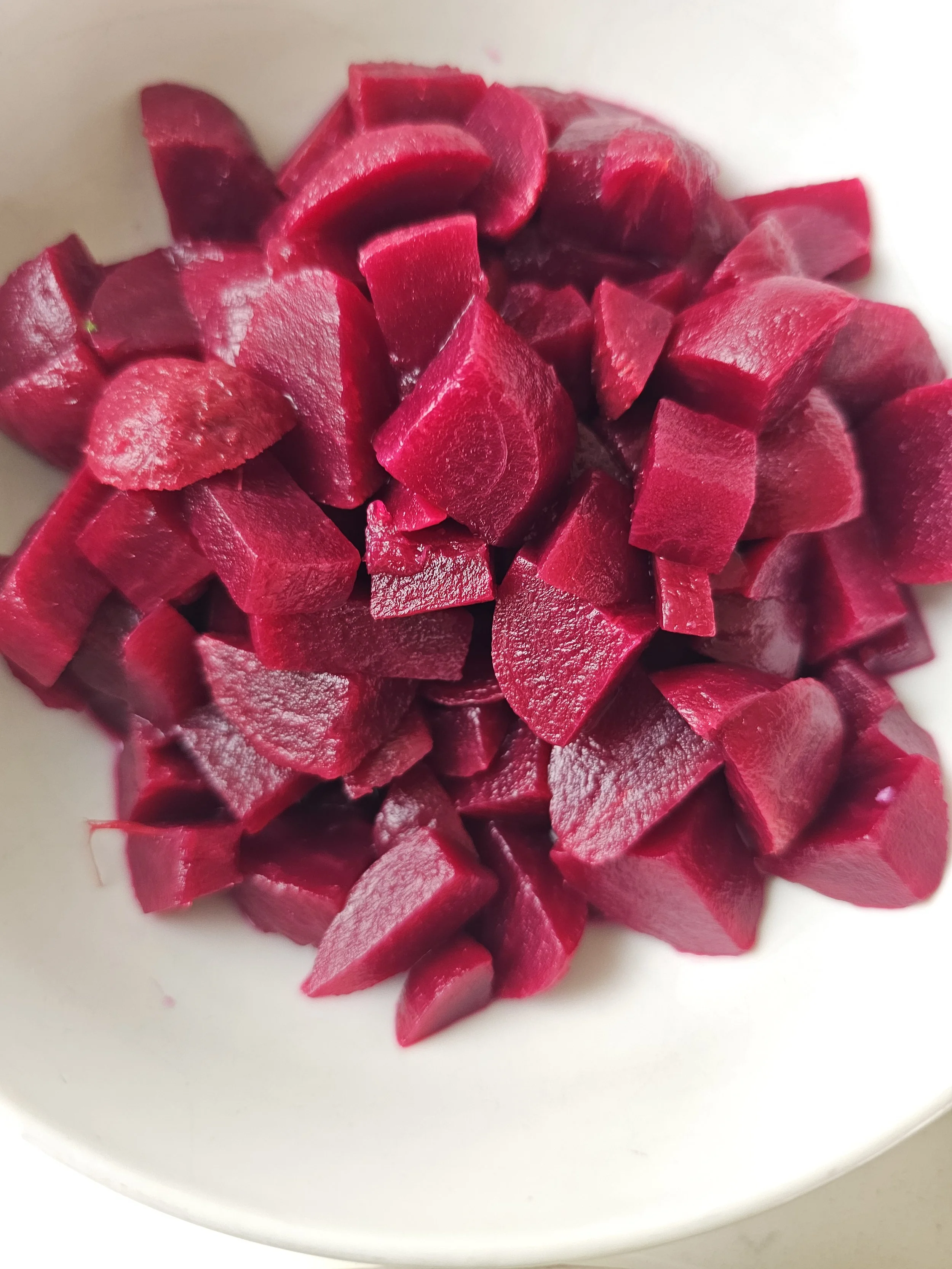
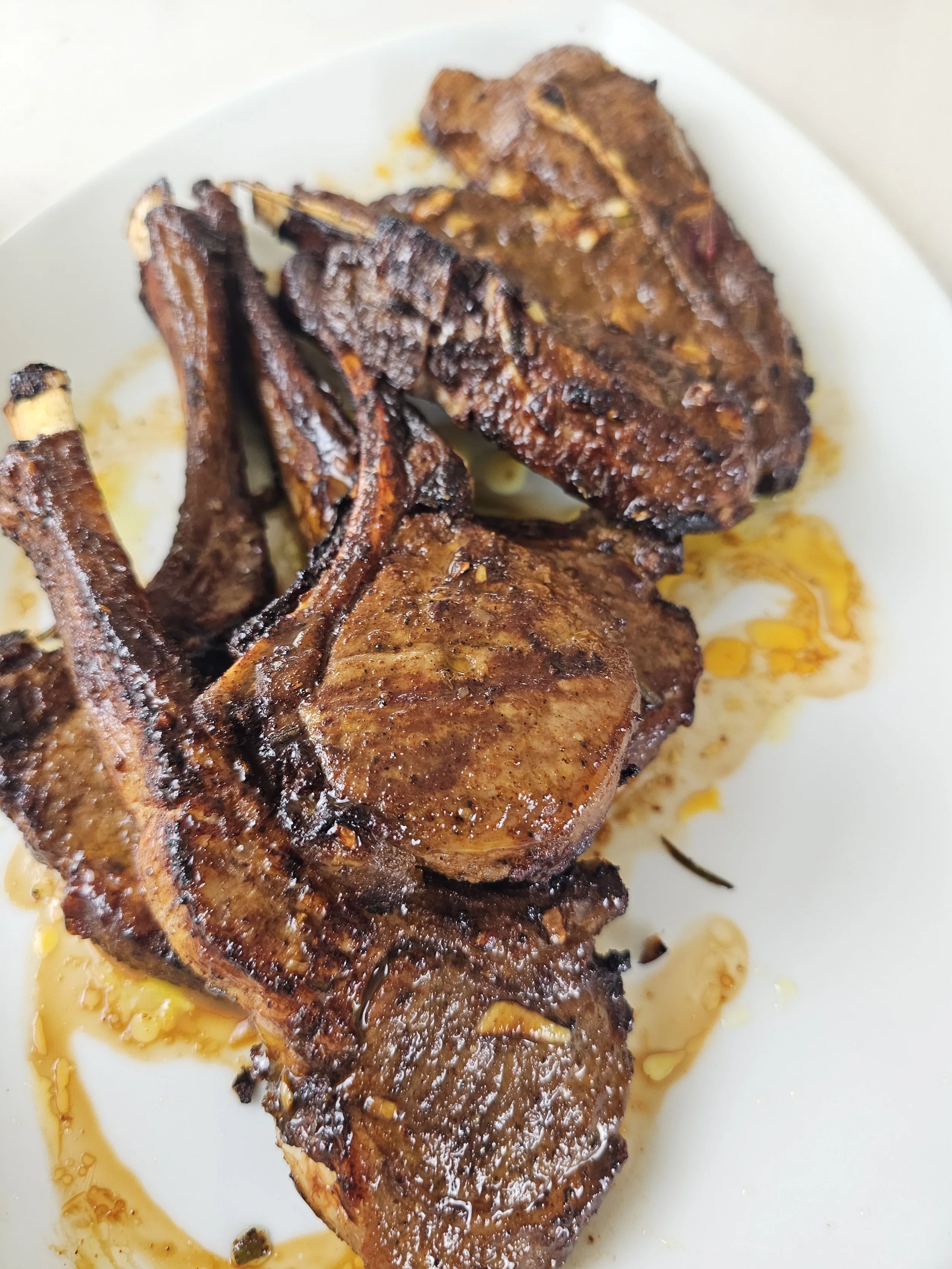
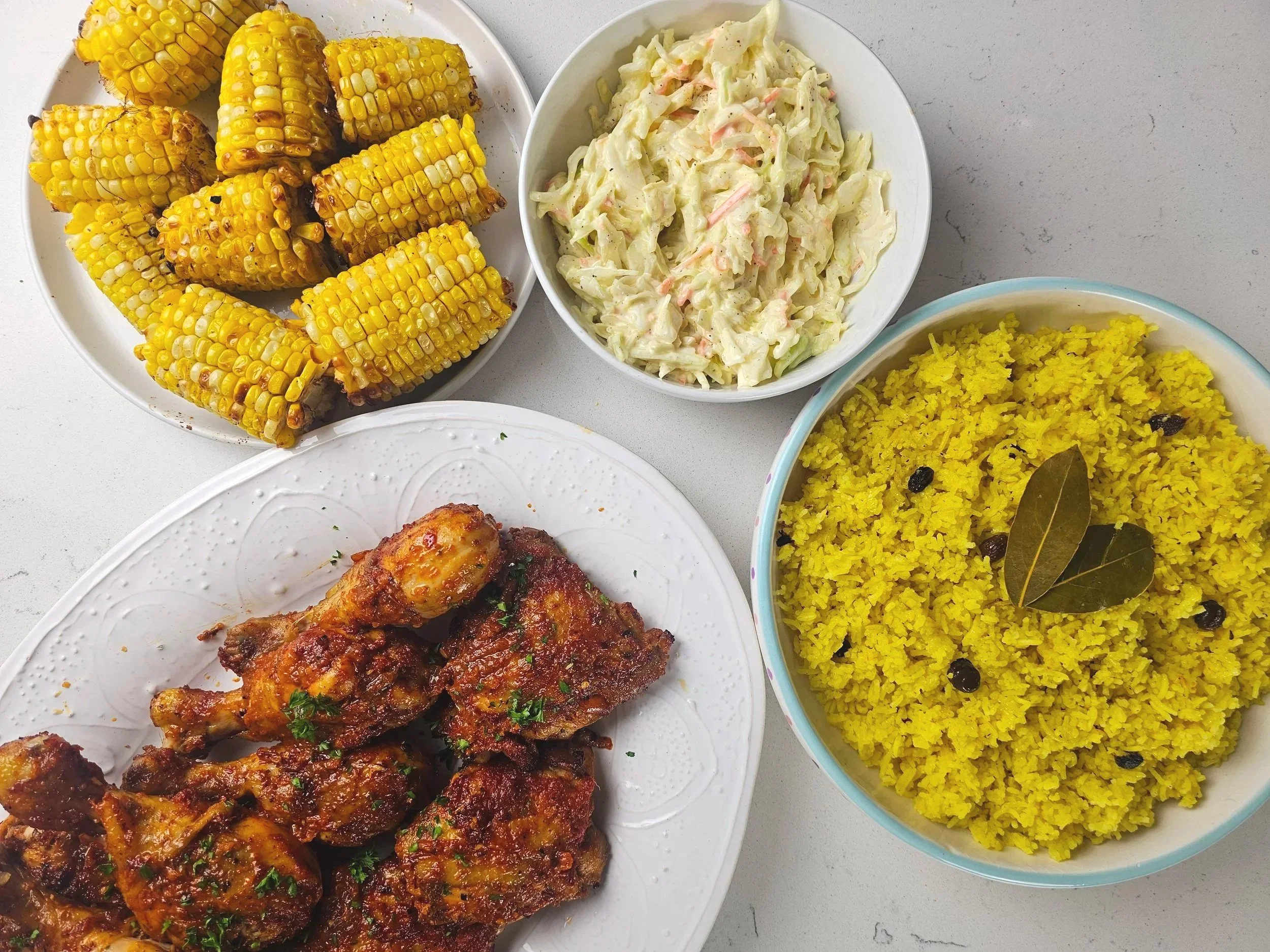
Peri-Peri Chicken Braai Plate with Cream Soda
This peri-peri chicken braai plate is Part 1 of a three-part series exploring Southern African braai culture, flavour traditions, and modern drink pairings inspired by audience voting.
At the centre of Southern African cooking is the braai, a social and culinary tradition built around fire, gathering, and shared meals. It is not just a cooking method, but a cultural experience where food, conversation, and community come together.
In this first part of the series, peri-peri marinated chicken is paired with a classic cream soda, a nostalgic Southern African soft drink known for its bright green colour and vanilla-like sweetness. The pairing reflects a common regional flavour principle: balancing heat and smoke with sweetness and carbonation to soften spice while enhancing grilled depth.
The plate is completed with turmeric yellow rice, grilled corn, and fresh coleslaw, forming a balanced, vibrant summer braai-style meal designed for both flavour and visual storytelling.
This recipe is intended not only as a step-by-step guide, but also as an introduction to how braai culture translates into home kitchens using accessible equipment like ovens and indoor grills.
Continue the series: Braai-Style Spiced Lamb Chops with Pine Nut
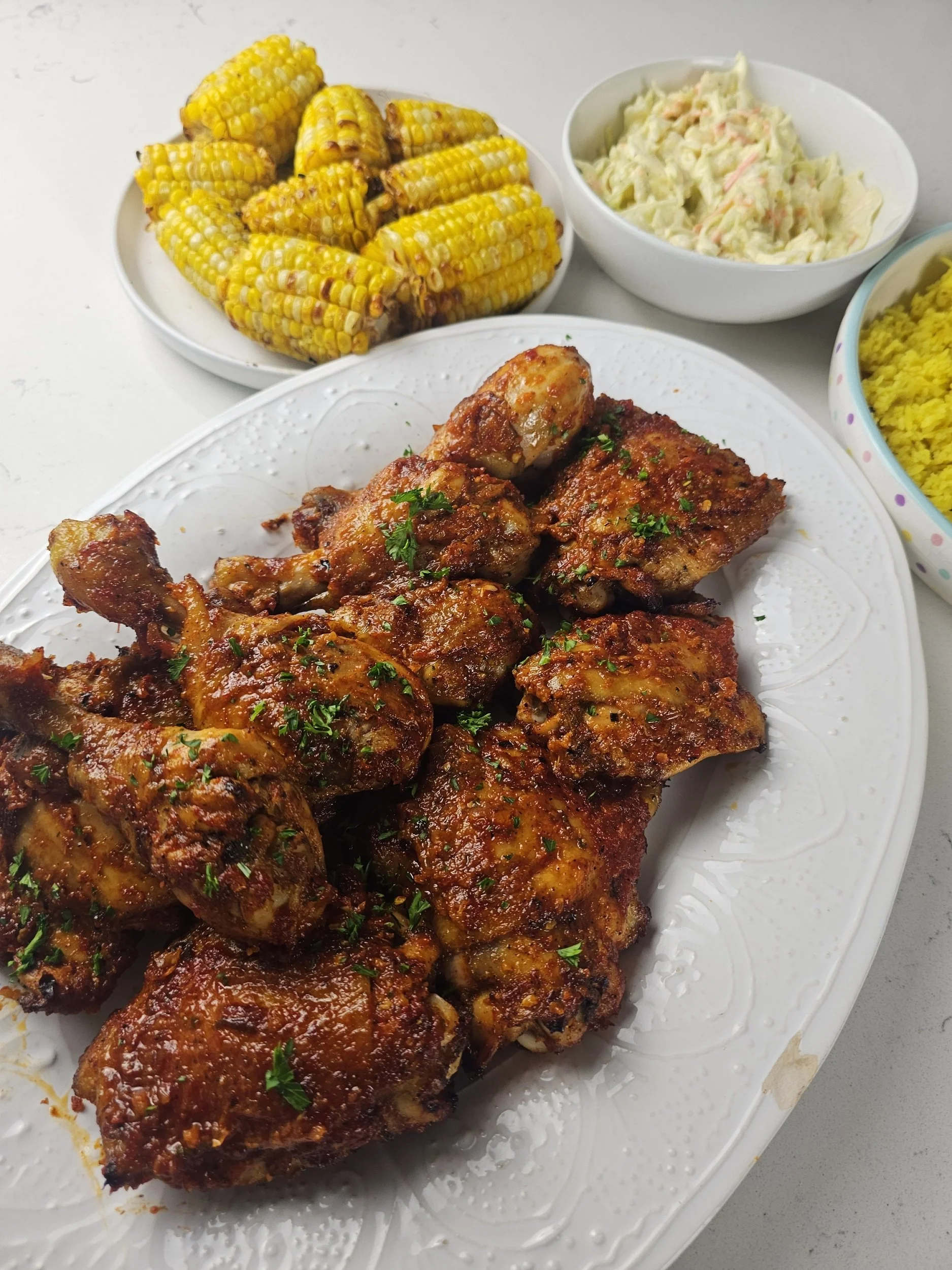

Peri Peri Chicken with Yellow Rice, Corn and Coleslaw
A bold and flavorful peri-peri chicken braai plate inspired by Southern African cookout culture. Smoky, spicy chicken is served with yellow rice, grilled corn, fresh coleslaw, and paired with cream soda for a nostalgic summer braai experience. Perfect for gatherings, weekend grilling, or an easy indoor braai-style meal.
Ingredients
- 10 chicken pieces (mix of thighs and drumsticks)
- 2 tbsp Portuguese or chicken seasoning (I used Robertson’s)
- 1 tsp salt
- 1 tsp black pepper
- 1 tbsp chili flakes (optional)
- 1 tbsp olive oil
- 4–5 garlic cloves, unpeeled
- 3–4 bird’s eye or Thai chili peppers
- 1 red bell pepper, core removed and halved
- ½ large onion, cut into wedges
- 1 tsp salt
- 2 tsp smoked paprika
- 2 bay leaves
- 1 tsp dried oregano
- ¼ cup olive oil
- Juice of 1 lemon
- 2 tsp lemon zest
- 1–1½ tsp red wine vinegar
- 1 tsp chili flakes
- 2–3 tbsp fresh parsley, for garnish
- 1½ cups basmati rice
- 3 cups water
- 1 tsp curry powder
- 1 tsp rice seasoning
- 1 tbsp butter or oil
- 2–3 star anise
- 2 bay leaves
- 1 tsp salt
- ¼ cup raisins (optional)
- 4 corn cobs, in husks
- Butter
- Salt, to taste
- Peri-peri or Old Bay seasoning
- 4 cups pre-shredded slaw mix (cabbage and carrot)
- ⅓ cup mayonnaise
- 1 tbsp vinegar
- 1 tsp sugar
- Salt and black pepper, to taste
Instructions
- Season the chicken with Portuguese seasoning, salt, black pepper, chili flakes, and olive oil.
- Roast the bell pepper, chili peppers, onion, and garlic cloves at 400°F (200°C) for 15–20 minutes. Remove the chili peppers and garlic after 15 minutes to prevent burning and bitterness.
- Add the roasted vegetables to a food processor along with the remaining marinade ingredients. Blend until mostly smooth. Reserve ½ cup of the marinade and refrigerate for later.
- Coat the chicken thoroughly with the remaining marinade and marinate for at least 2 hours, preferably overnight.
- Preheat the oven to 400–425°F (200–220°C).
- Pat the chicken pieces lightly dry with a paper towel, then place them on a wire rack over a baking tray or grill pan. Roast for about 35 minutes, flipping halfway through cooking.
- Brush the chicken with some of the reserved peri-peri sauce near the end of cooking. Broil for 3–5 minutes for a lightly charred finish, if desired.
- Rinse the rice until the water runs mostly clear.
- Add the rice, water, curry powder, rice seasoning, butter, star anise, bay leaves, salt, and raisins (if using) to a pot. Bring to a boil uncovered, then reduce heat, cover, and simmer until tender and fluffy.
- Steam or grill the corn until tender. Remove the husks and lightly char if desired. Finish with butter, salt, and peri-peri or Old Bay seasoning.
- Combine the slaw mix in a bowl. In a separate bowl, whisk together the mayonnaise, vinegar, sugar, salt, and black pepper. Toss with the vegetables until evenly coated.
- Serve the peri-peri chicken with yellow rice, corn, and coleslaw. Pair with a chilled cream soda for the full braai-inspired experience.
Notes
- Traditionally, braai food is cooked over an open flame or braai stand, but oven roasting and indoor grilling work well for home kitchens.
- Cream soda is a nostalgic and widely recognized pairing in Southern Africa, especially during braais and summer gatherings.
- Leftover peri-peri chicken works well in wraps, sandwiches, or rice bowls.
Nutrition Facts
Calories
720Fat (grams)
32 gCarbs (grams)
58 gFiber (grams)
5 gSugar (grams)
12 gProtein (grams)
45 gI am not a certified nutritionist and any nutritional information on dontmissmyplate.com should only be used as a general guideline.