
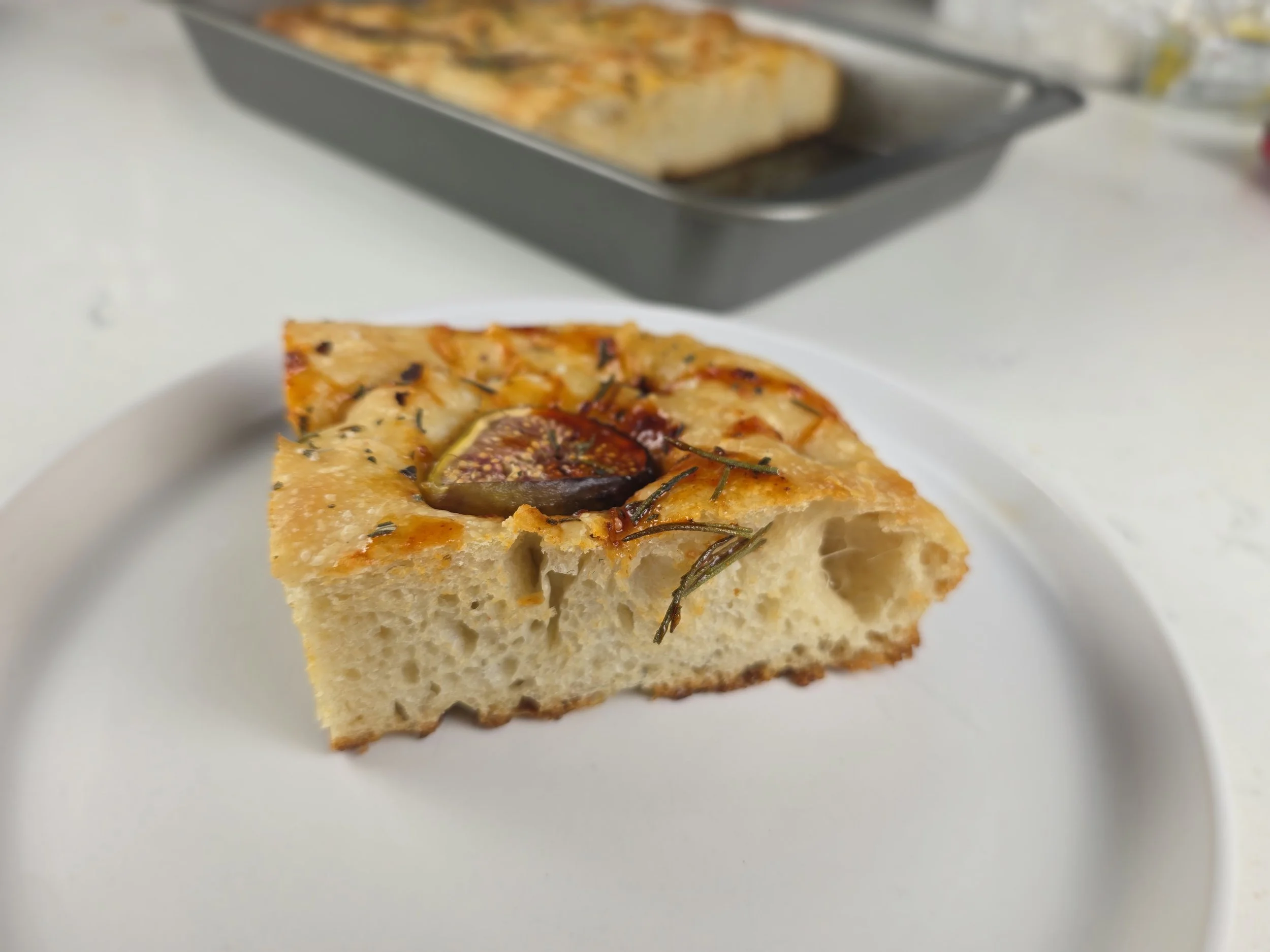
Harissa Hot Honey, Fig & Rosemary Focaccia
A golden, olive-oil-rich focaccia topped with fresh figs, rosemary, salt and a drizzle of homemade harissa hot honey. This version brings together Italian bread-making with North African heat and sweet, jammy figs.
If you've only ever had focaccia with olives, tomatoes or garlic, this one is a fun change. It keeps the classic Italian base, with a chewy, olive-oil-rich crumb, and tops it with fresh figs, rosemary and flaky salt, then finishes everything with a harissa hot honey that brings sweetness, heat and a little tang to every bite.
Figs have been around for a very long time. People have grown them across the Mediterranean and Middle East for thousands of years, and they show up throughout the Bible, including that line in 1 Kings about people living "under their own vine and fig tree." I liked the idea of putting a fruit with that much history on a loaf like this. In the oven, the figs become soft and almost jammy, with caramelized edges. Next to the salty olive oil and rosemary, they're sweet enough to notice, but the bread still eats like bread, not dessert.
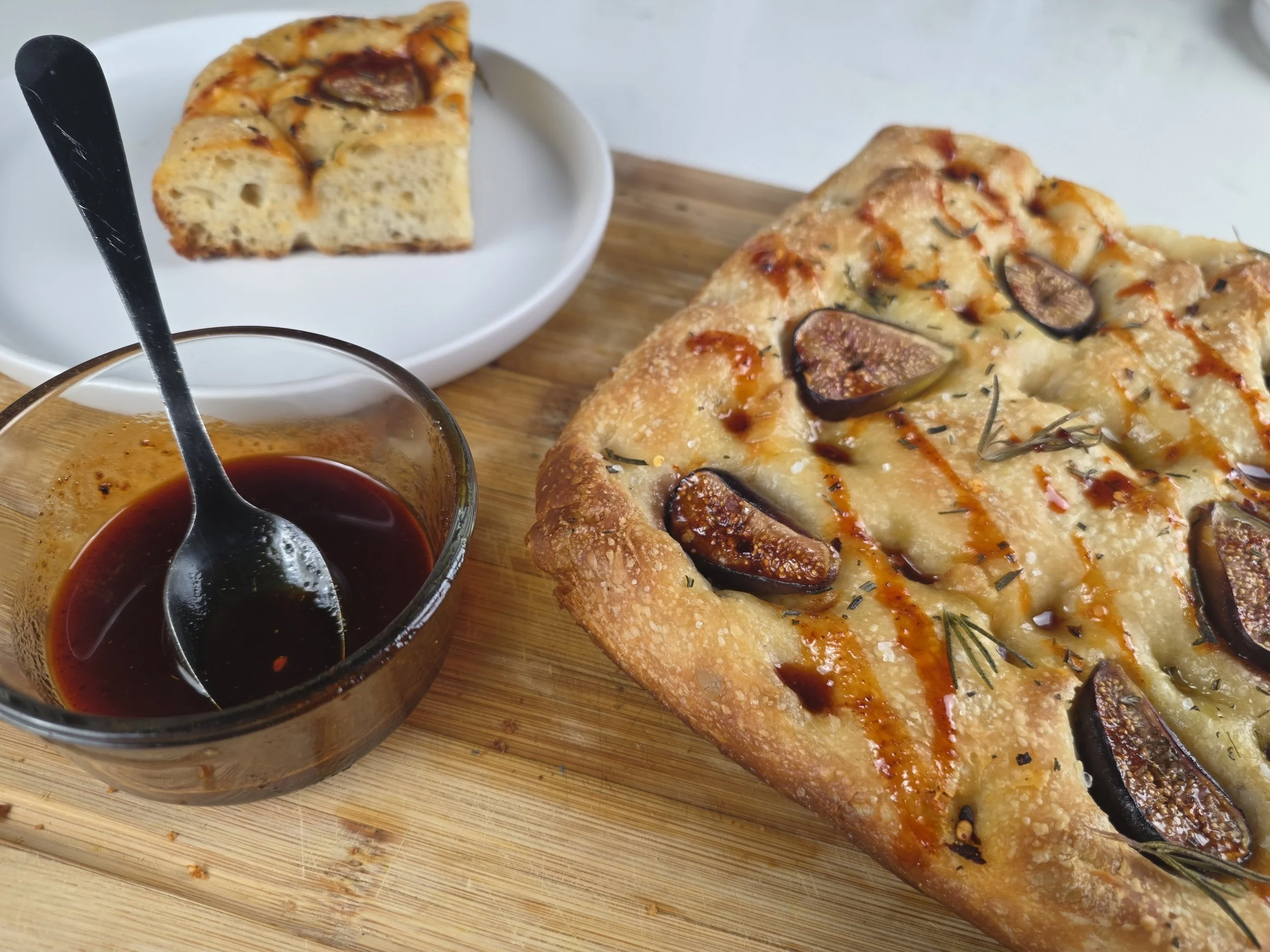
The hot honey is my favorite part. Harissa is a North African chile paste with a deep, savory heat, and I warm it gently with honey, then add a squeeze of lemon and a pinch of salt. Poured over the warm focaccia, it settles into the dimples and around the figs. The leftover hot honey is also great on roasted vegetables, chicken, cheese, biscuits, pizza, pretty much anything that could use some sweet heat.
I learned a lot making this, mostly from all the bakers who've already shared what they know about folds, overnight fermentation and what properly proofed dough should look like. Two things stuck with me. First, be patient with the final proof. My kitchen was too cool and the dough just sat there. Once I moved the pan somewhere warm and draft-free, it turned bubbly and puffy, and the difference was obvious. That's why the instructions give you visual cues instead of relying on a set proofing time. Second, stop fiddling. One stretch-and-fold, two gentle coil folds 30 minutes apart, then into the fridge overnight.
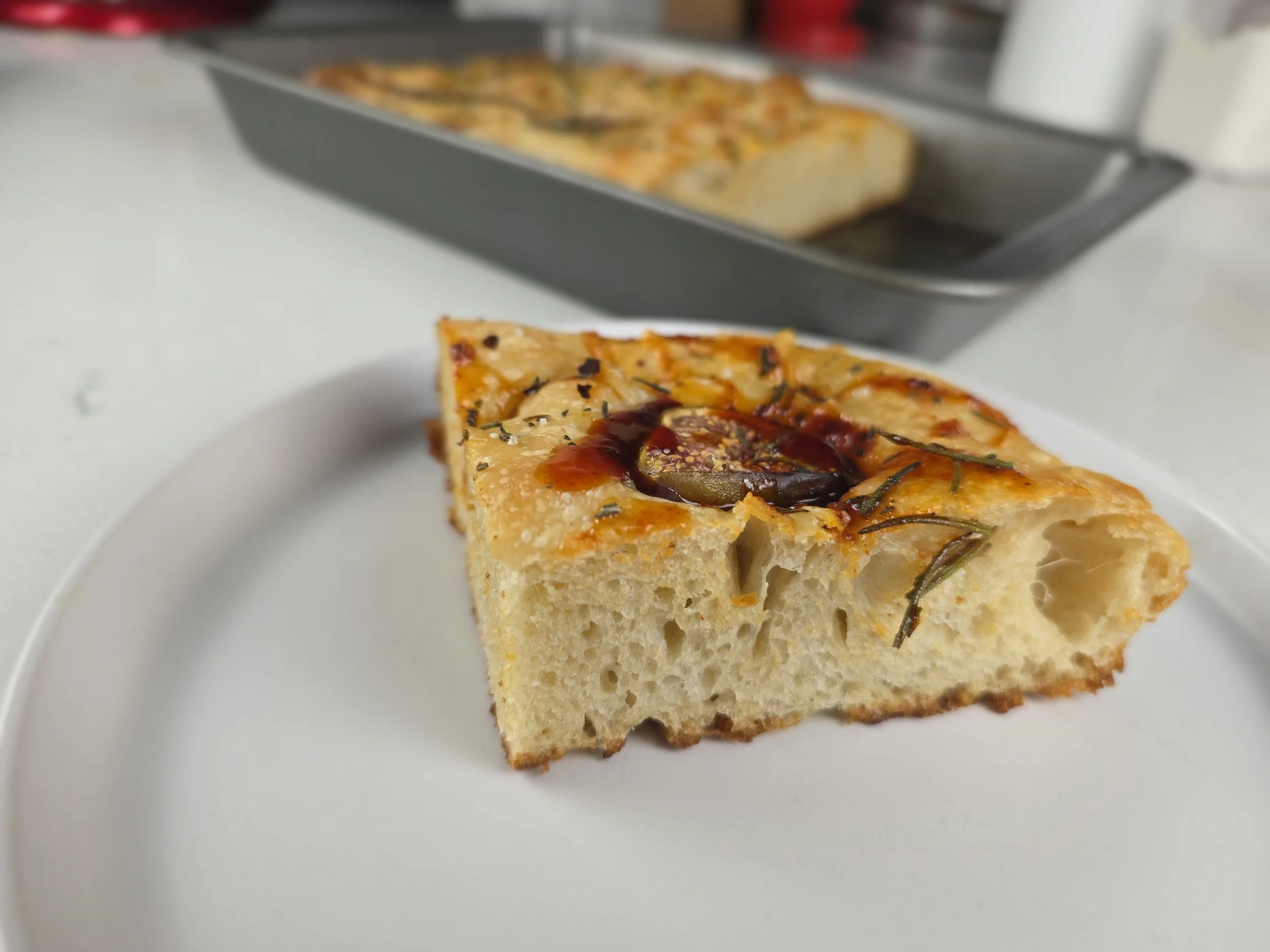
This is a more moderately hydrated focaccia, which gives it a soft but chewy crumb with plenty of structure. The edges bake up crisp and golden, while the bottom becomes rich with olive oil. It's just as good eaten on its own, served alongside a meal or sliced for a sandwich.. The edges bake up crisp and golden, while the bottom becomes rich with olive oil. It's just as good eaten on its own, served alongside a meal or sliced for a sandwich. It's the kind of bread I'd happily put on the table at a dinner party, but it's also sturdy and versatile enough to become an everyday favorite.
If you're new to making focaccia, don't overthink it. Pay attention to the dough, give it enough time to proof, and let the visual cues guide you. Once you understand what the dough is supposed to look and feel like, the process becomes much less intimidating.

Harissa Hot Honey Fig & Rosemary Focaccia
Sweet, savory, spicy, and full of contrast, this homemade focaccia is topped with fresh figs, rosemary, flaky salt, and a drizzle of harissa hot honey. The soft but chewy bread and crisp, olive-oil-rich edges make the perfect base for jammy figs and North African-inspired chile heat.
Ingredients
- 3⅓ cups bread flour
- 1⅓ cups warm water, plus up to 3 tablespoons additional warm water as needed
- 1 teaspoon instant yeast
- 1½ teaspoons salt
- 1 tablespoon olive oil, plus approximately 2 tablespoons for the pan
- 4–6 fresh figs, halved, skin on
- 1–2 tablespoons fresh rosemary, roughly chopped
- 2 tablespoons olive oil
- Coarse or flaky salt, to taste
- ¼ teaspoon red pepper flakes, optional
- ¼ cup honey
- 1 tablespoon harissa paste
- ½ teaspoon fresh lemon juice
- Pinch of salt
Instructions
- In a large bowl, mix together 3⅓ cups bread flour, 1 teaspoon instant yeast, and 1½ teaspoons salt.
- Add 1⅓ cups warm water and 1 tablespoon olive oil and mix until a soft, cohesive, slightly sticky dough forms. The dough should not feel stiff or dry. If it does, add additional warm water 1 tablespoon at a time, mixing between additions, up to 3 additional tablespoons. For my batch, I needed all 3 tablespoons of additional water. Once the dough is soft, cohesive, and slightly sticky, cover the bowl and let it rest for 30 minutes.
- With slightly wet hands, perform a stretch-and-fold by grabbing one side of the dough, gently stretching it upward, and folding it over itself. Rotate the bowl and repeat on all four sides. Cover and let the dough rest for another 30 minutes.
- Wet your hands and perform the first coil fold by sliding both hands underneath the center of the dough and gently lifting it, allowing the ends to tuck underneath. Rotate the bowl about 90 degrees and repeat for approximately 4 gentle lifts. Cover and let the dough rest for 30 minutes.
- Repeat the same gentle coil-fold process for the second and final coil fold. Do not continue folding or manipulating the dough beyond this point. Cover the bowl tightly with foil or plastic wrap and refrigerate overnight for 8–18 hours.
- The next day, generously coat a 9×13-inch baking pan with approximately 2 tablespoons olive oil. Remove the dough from the refrigerator and transfer it directly into the prepared pan. Let it rest for 15 minutes.
- Gently stretch the dough toward the edges and corners of the pan without forcing it. If the dough resists or springs back, let it rest for another 10–15 minutes, then gently stretch it again.
- Cover the pan and place it in a warm, draft-free environment around 75–80°F (23.9–26.7°C). A turned-off oven with the light on works well. Start checking the dough at approximately 1½ hours. The dough is ready when it is visibly puffy, airy, bubbly, noticeably expanded, and gently jiggly. The exact timing will depend on the temperature of your kitchen and dough, so use the appearance of the dough as your guide rather than relying strictly on the clock. Do not rush this step, the dough needs enough time to properly proof, which helps create a softer, lighter crumb.
- While the dough finishes proofing, make the harissa hot honey. Combine ¼ cup honey and 1 tablespoon harissa paste in a small saucepan and warm gently over low heat, stirring until combined. Do not boil, you can also use the microwave. Remove from the heat and stir in ½ teaspoon lemon juice and a tiny pinch of salt. Set aside.
- Once the dough has finished proofing, carefully remove the pan from the oven and set it aside. Preheat the oven to 425°F. While the oven preheats, remove the cover from the proofed dough and drizzle 2 tablespoons olive oil evenly over the surface. Lightly oil your fingertips and press them firmly into the dough to create deep focaccia dimples without punching all the way through.
- Arrange the halved fresh figs, cut-side up, across the surface. Scatter the chopped rosemary over the top, adding a few small intact rosemary sprigs for presentation if desired. Sprinkle with coarse or flaky salt and approximately ¼ teaspoon red pepper flakes, if using. Do not add another drizzle of olive oil after this; the 2 tablespoons of topping oil are the total amount used on the surface before baking.
- Bake at 425°F for 20–25 minutes, beginning to check around the 20-minute mark. The focaccia is ready when the surface is golden, the edges are crisp and browned, and the bottom is well browned. If it needs additional color, continue baking for a few more minutes rather than significantly extending the bake time.
- Remove the focaccia from the oven and allow it to cool for 10 minutes. If it is still extremely hot after 10 minutes, give it a little longer before adding the honey. Drizzle the harissa hot honey over the warm focaccia in thin ribbons, then let it continue cooling for 15 minutes before cutting.
- Transfer the focaccia to a cutting board if it releases easily from the pan. Cut into rectangles or squares; a 9×13-inch pan can be cut into 9 large pieces or 12 medium pieces. If the focaccia sticks to the pan, run a thin metal spatula around the edges and underneath the individual pieces rather than trying to force the entire slab out at once. Serve warm or at room temperature.
Notes
- The dough should be soft, sticky, and hydrated, not stiff. If it feels dry after adding the initial water, add the additional warm water 1 tablespoon at a time, up to 3 tablespoons.
- The final proof is important. Proof the dough in a warm, draft-free environment around 75–80°F (24–27°C) and judge readiness by the dough’s appearance rather than the clock. It should look puffy, airy, bubbly, expanded, and gently jiggly. If using a turned-off oven with the light on for proofing, remove the focaccia from the oven before preheating.
- The figs are best placed cut-side up so they soften and caramelize as they bake.
- The harissa hot honey can be adjusted to taste. Add more or less harissa depending on how much heat you want.
- For the best texture, serve the focaccia the day it is baked. For longer storage, freeze individual pieces once completely cooled.
- If the focaccia sticks to the pan, run a thin metal spatula around the edges and underneath individual pieces rather than trying to lift the entire loaf at once.
About the crumb: This recipe uses a more moderate hydration, which gives the focaccia a soft but chewy crumb with plenty of structure. The edges bake up crisp and golden, while the bottom becomes rich with olive oil. It is delicious served on its own, alongside a meal, or sliced for a sandwich.
Nutrition Facts
Calories
220Fat (grams)
8 gCarbs (grams)
34 gFiber (grams)
2 gSugar (grams)
8 gProtein (grams)
5 gSodium (milligrams)
310 mg