

Malawi Shandy Ice Lollies (Popsicles)
The Malawi Shandy is one of those drinks that instantly takes me back to Zimbabwe.
I remember drinking it on houseboat holidays in Kariba and during trips to Victoria Falls—two destinations known for sunshine, adventure, and escaping everyday life. In both places, an ice-cold Malawi Shandy always seemed to taste better in the heat. Bright, citrusy, and finished with a few dashes of bitters, it was the kind of drink that felt synonymous with holidays, road trips, and long afternoons spent outdoors.
For most of my life, I never questioned the name. It wasn't until recently that I learned the word "shandy" likely traces its roots to the British shandygaff, a drink traditionally made by mixing beer with lemonade or ginger beer. Over time, however, the drink evolved into something distinctly Southern African. Today, Malawi Shandy is enjoyed far beyond Malawi itself and can be found throughout the region, where it is typically served as a refreshing non-alcoholic drink, though some people add vodka or rum for a simple cocktail.
Part of what makes Malawi Shandy so memorable is its appearance. The combination of citrus and bitters creates a beautiful amber-red gradient that is instantly recognizable to many Southern Africans. For some, it's a nostalgic reminder of family gatherings, holidays, and summer afternoons. For me, it's one of those flavors that immediately transports me back to some of Zimbabwe's most memorable warm-weather destinations.
For this recipe, I wanted to preserve both the flavor and the visual identity of the original by transforming it into an ice lolly. The result captures everything I love about Malawi Shandy: bright citrus, gentle spice, bittersweet complexity, and the sunset-like gradient that made me fall in love with the drink in the first place.
More than just a frozen treat, these ice lollies are a tribute to one of Southern Africa's most beloved warm-weather drinks and the memories attached to it.



Malawi Shandy Ice Lollies (Popsicles)
These Malawi Shandy Ice Lollies transform one of Southern Africa's most beloved citrus drinks into a refreshing frozen treat. Made with fresh orange juice, lemon, ginger ale, Sprite, and Angostura bitters, they capture the bright, bittersweet flavor and signature amber-red gradient of the original drink.
Ingredients
- 1 cup (240ml) freshly squeezed orange juice (about 4 oranges)
- 1 cup (240ml) Sprite
- ½ cup (120ml) ginger ale
- Juice of ½ lemon
- 2 tsp Angostura bitters
- 2 tsp prepared citrus base mixture
Instructions
- In a jug or bowl, combine the orange juice, Sprite, ginger ale, and lemon juice. Stir gently to combine, taking care not to remove too much carbonation.
- Pour the mixture into six ice lolly moulds, filling each mould approximately 90% full.
- Transfer the moulds to the freezer and chill for 35–45 minutes, or until the edges begin to freeze while the centre remains slushy.
- In a small bowl, combine the Angostura bitters with 2 teaspoons of the citrus base. Stir until evenly mixed.
- Remove the moulds from the freezer. Carefully pour approximately 1 teaspoon of the bitters mixture into each mould over the semi-frozen base. Do not stir or swirl! Allow the bitters mixture to settle naturally.
- Gently insert the mould lids or sticks without pressing down aggressively.
- Return the moulds to the freezer and freeze for 6–8 hours or overnight.
- To release the ice lollies, briefly run the outside of the mould under warm water for 2–3 seconds before gently pulling.
Notes
- Freshly squeezed orange juice produces the brightest flavour and colour.
- Do not over-stir after adding the bitters mixture, as this will disrupt the natural gradient effect.
- Each ice lolly will develop a slightly different pattern, making every one unique.
- For an adult version, serve alongside a Malawi Shandy spiked with vodka or rum.
- If using larger moulds, freezing times may increase.
- Store in an airtight container or in the moulds for up to 2 months. For best flavour and texture, enjoy within 3 weeks.
Serving Suggestion:
<span>• Garnish with orange slices and maraschino cherries.</span><br><span>• Serve alongside a chilled Malawi Shandy.</span><br><span>• Perfect for summer gatherings, braais, picnics, and poolside entertaining.</span><br><span>• Pair with tropical fruit platters or citrus-forward desserts.</span>
Nutrition Facts
Calories
45Carbs (grams)
11 gFiber (grams)
.2 gSugar (grams)
9 gProtein (grams)
.3 gI am not a certified nutritionist and any nutritional information on dontmissmyplate.com should only be used as a general guideline.
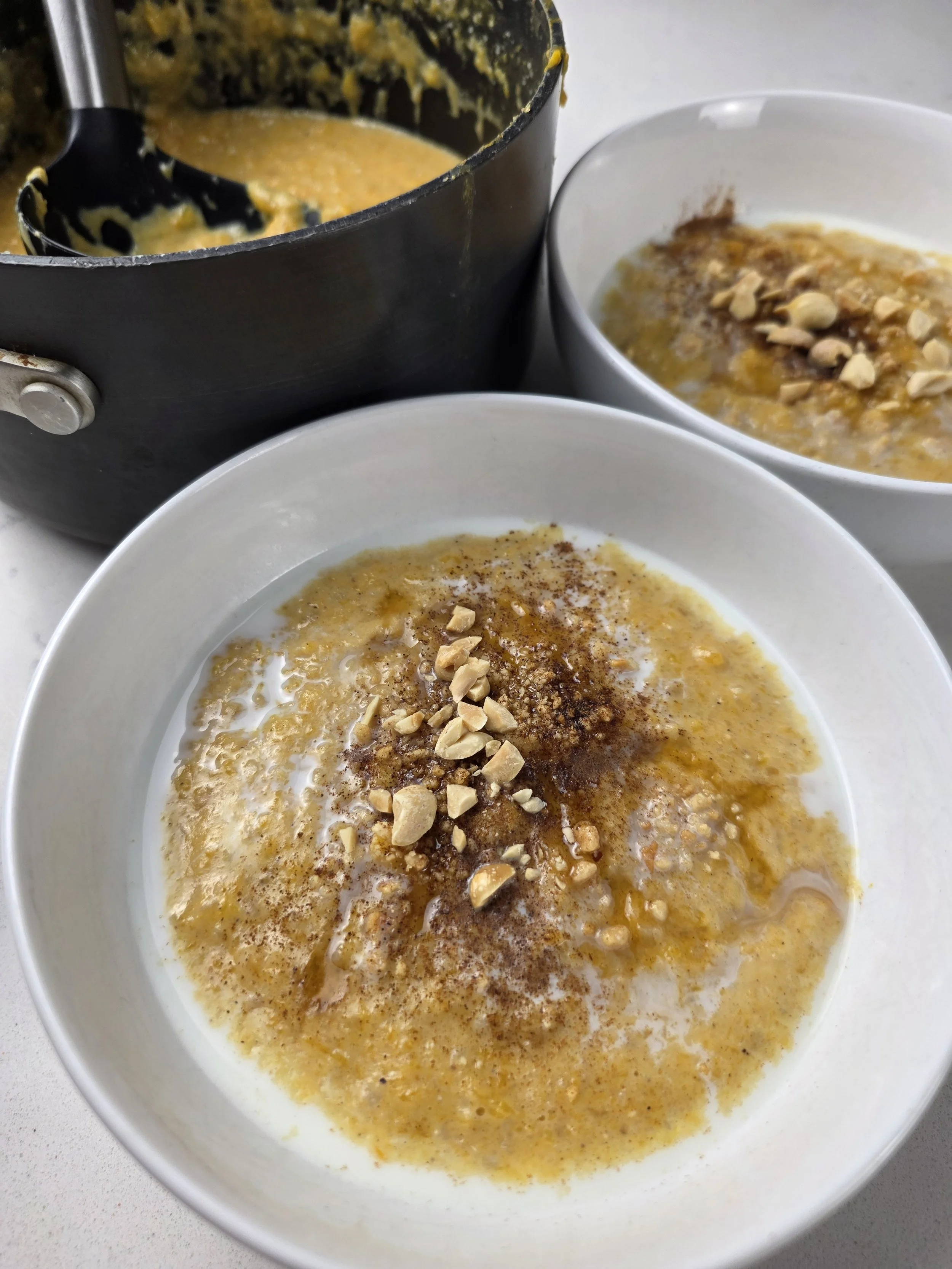
Pumpkin Peanut Wheat Porridge (Nhopi)
Inspired by Zimbabwean Nhopi and Kenyan Uji wa Ngano
There is something deeply comforting about warm porridge cultures across Africa. Whether it is maize-based, millet-based, sorghum-based, or wheat-based, many of us grew up with some version of a hot, nourishing bowl that anchored mornings, cold days, illness recovery, or simple moments of comfort.
During my recent trip to Kenya, I tried uji wa ngano, a creamy wheat porridge often served with plenty of hot milk. It immediately reminded me of the porridges I grew up eating in Zimbabwe. One of the most popular versions, alongside maize meal porridge served with butter or peanut butter, is nhopi — a pumpkin and peanut butter porridge, sometimes thickened with maize meal. Rich, lightly spiced, earthy, and deeply nostalgic, it remains a beloved comfort food across generations.
That experience made me curious about how these traditions could speak to each other.
This recipe became a fusion of both ideas. Instead of using pumpkin as the main base like traditional nhopi, I used creamy wheat as the foundation and allowed roasted butternut and peanut butter to layer warmth, sweetness, richness, and familiarity into the porridge.
The bulgur wheat adds texture and grain bite similar to Kenyan wheat porridge, while the cream of wheat and powdered milk helps create a smoother, creamier consistency. Cardamom, brown sugar and cinnamon bring warmth that ties the dish together beautifully.
The final result sits somewhere between the two traditions: creamy, comforting, lightly spiced, and deeply filling. It is the kind of breakfast that feels both grounding and exploratory at the same time.

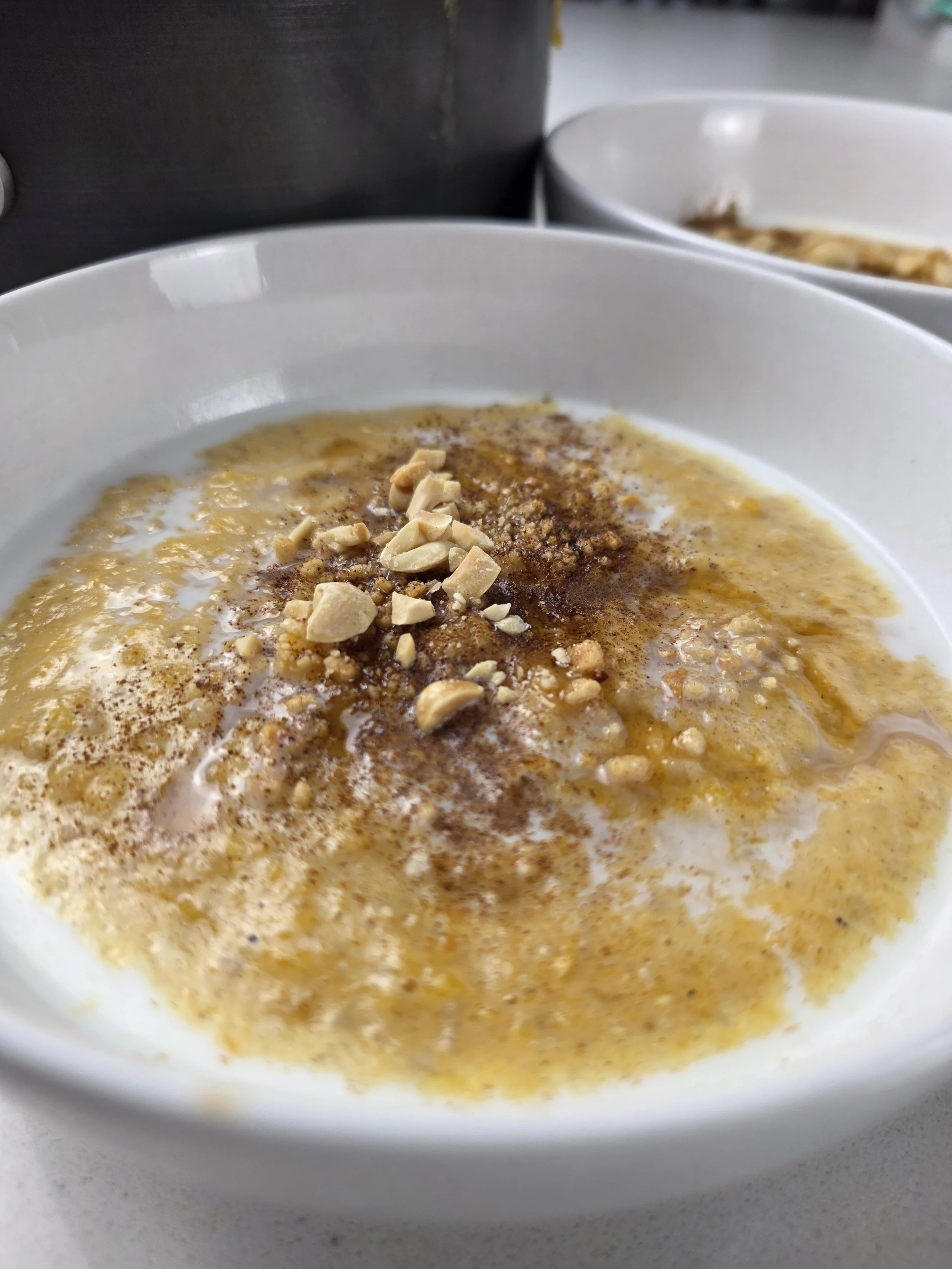

Pumpkin Peanut Wheat Porridge
A creamy wheat porridge with roasted butternut, peanut butter, and warm spices inspired by Zimbabwean and Kenyan breakfast traditions (nhopi and uji wa Ngano).
Ingredients
- ½ cup bulgur wheat
- ⅓ cup cream of wheat
- 2½ cups water
- 3–5 cups milk (adjust as needed)
- 2 to 2½ cups roasted butternut, mashed
- 2 tbsp peanut butter
- 2 tbsp brown sugar or honey (adjust to taste)
- ½ tsp cardamom
- ½ tsp cinnamon
- ½ tsp salt
Instructions
- Heat the water in a medium or large pot over medium-high heat. Add the bulgur wheat, reduce the heat to medium-low, and simmer for 10–12 minutes, or until softened.
- Stir in the Cream of Wheat and whisk continuously for about 3 minutes. If the mixture thickens too quickly, gradually add water, 1/4 cup at a time, until smooth.
- Add the cinnamon, cardamom, salt, and roasted butternut squash. Whisk well, adding a little milk as needed to create a smoother texture.
- Next, stir in the powdered milk for extra richness and creaminess. Add the brown sugar and peanut butter, then continue adding milk until the porridge reaches your desired consistency, simmering gently over low heat. Adjust seasoning to taste if needed.
- Serve warm with optional toppings such as crushed peanuts, honey, and a sprinkle of cinnamon.
Notes
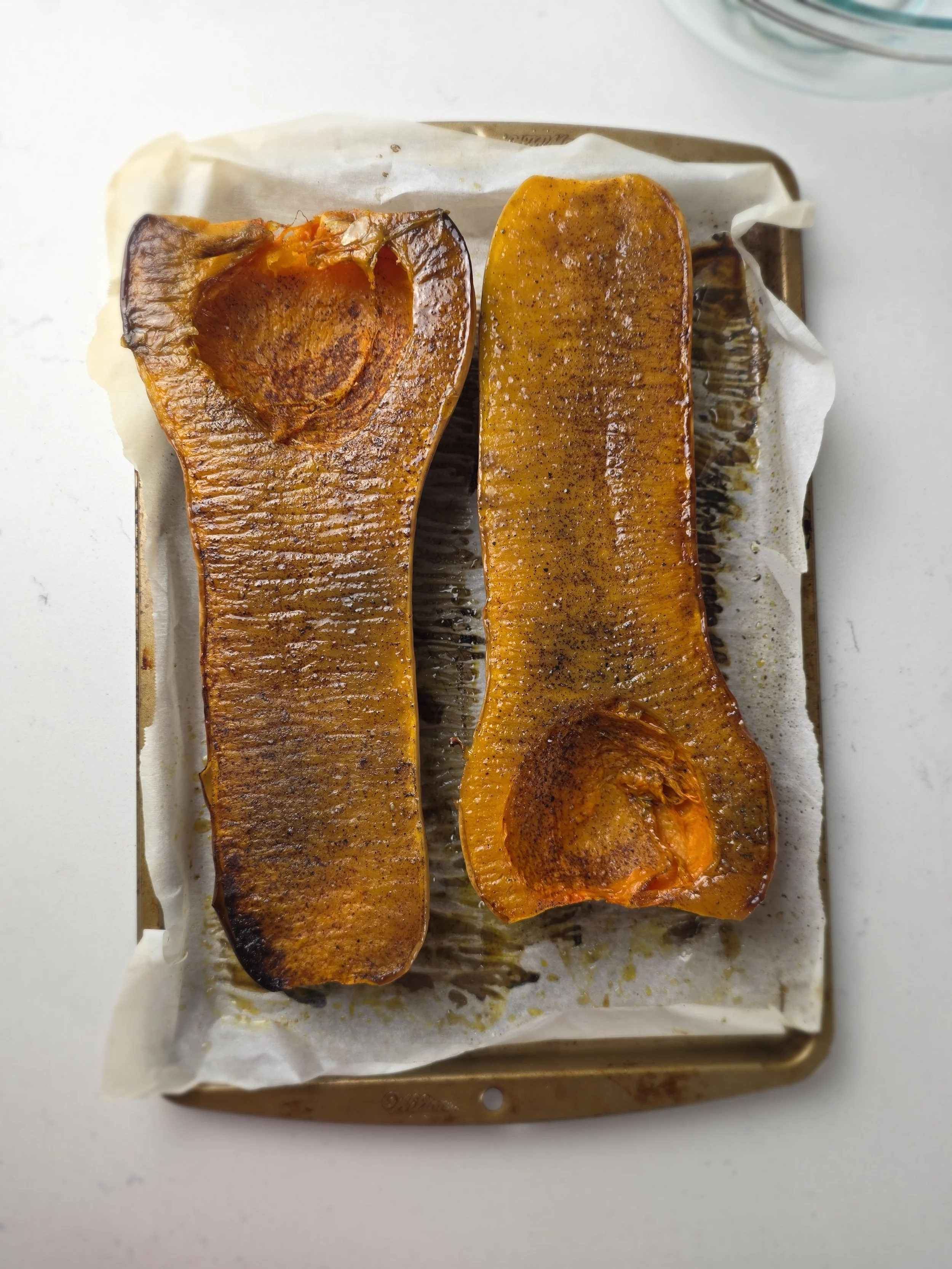
For the butternut squash, you can roast it beforehand for deeper flavor. Brush the squash with olive oil, then season with cinnamon, salt, and optionally a little brown sugar.
Place it cut-side down on a parchment-lined baking sheet and roast in a 400°F / 200°C oven for about 40 minutes, or until the flesh is soft enough to pierce easily with a fork.
Once all the ingredients are combined, adjust the consistency toward the end of the cooking process using milk as needed.
For a thicker, more nhopi-style texture:
- Use more butternut squash
- Use less milk
- Simmer longer for a denser consistency
For a looser Kenyan-style wheat porridge:
- Add more milk
- Use slightly less butternut squash
- Keep the texture smooth and pourable
Nutrition Facts
Calories
320Fat (grams)
13 gCarbs (grams)
42 gFiber (grams)
6 gSugar (grams)
9 gProtein (grams)
9 gI am not a certified nutritionist and any nutritional information on dontmissmyplate.com should only be used as a general guideline.
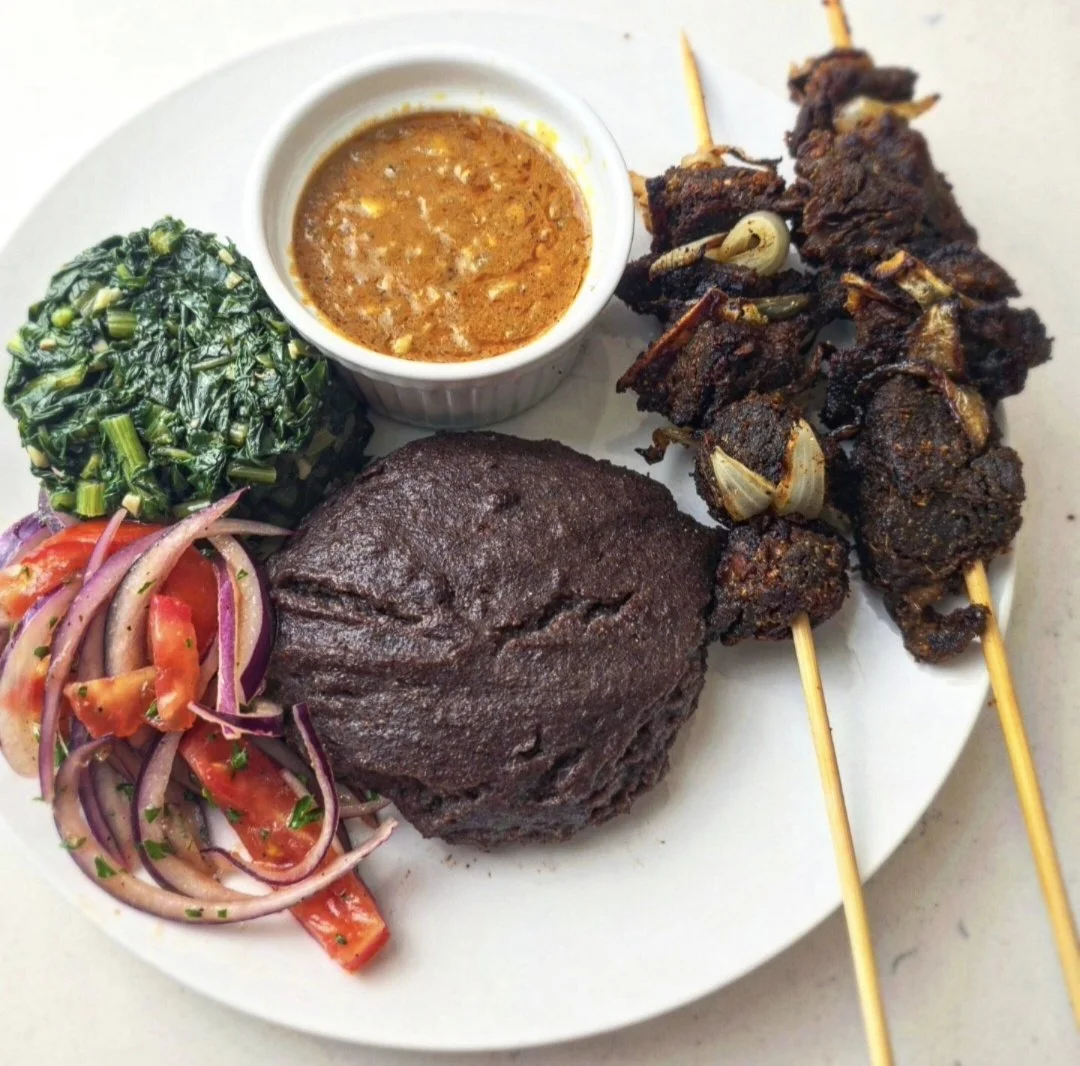
Goat “Kebab Style” With Coconut Curry Sauce
This goat kebab-style dish is inspired by the bold, communal flavors of East African cooking, where grilled meats, fresh salads, sautéed greens, and rich sauces come together on a single plate. Traditionally, dishes like nyama choma are cooked over open flames and served simply with onions, greens, and starches such as ugali, a thick, grain-based porridge.
This version brings those flavors into a more accessible, home-friendly format by using an air fryer, making it easier to recreate without sacrificing depth or character. The goat is first parboiled for tenderness, then marinated and cooked at high heat to achieve caramelized edges. It’s paired with a coconut curry sauce for richness, fresh kachumbari (a simple tomato-onion salad) for brightness, and sautéed greens for balance. The result is a complete, layered meal that feels both rooted in tradition and adaptable for everyday cooking.
This dish was also inspired by a trip to Nairobi, where I immersed myself in the local food culture and tried to experience as much as possible. I was struck by the similarities between Kenyan and Zimbabwean cuisine, which I found especially intriguing. The two countries share a number of culinary connections shaped by overlapping histories. Ugali in Kenya, for example, is very similar to sadza in Zimbabwe. In this recipe, I’ve used finger millet (zyiyo in Zimbabwe), which is also popular in Kenya (ugali wa wimbi).
I also made it in honour of my father, who was a massive ‘mbudzi’ (goat both in Swahili and Shona) fan and loved learning about travel and culture.
For greens, a variety of options can be used (everything from collard greens and spinach to pumpkin leaves) another shared thread between the cuisines, although I wanted somehting on the bitter side to balance the sweetness from the coconut sauce so when with dandelion greens. The fresh salad adds balance, acidity, and crunch, while the coconut sauce brings richness to complement the crispy goat. Coconut, in particular, reflects Kenya’s coastal influences and long history of trade, introducing spices and tropical elements that are less common in Zimbabwean cuisine.

Goat “Kebab Style” With Coconut Sauce
Tender, crispy marinated goat chunks, parboiled for tenderness and finished in the air fryer or grill, then served with grilled onions, coconut curry sauce, and classic East African-inspired sides.
Ingredients
- 2 lbs goat chunks
- 4 garlic cloves
- 1 medium onion, cut into wedges
- 2 bay leaves
- 1 tbsp fresh ginger, grated
- 1 tbsp vinegar
- 1 tsp salt
- 2 lbs goat, parboiled, drained, and dried
- 3 tbsp olive oil
- 2–3 garlic cloves, minced
- 2 medium onions, cut into wedges (reserve some for grilling)
- 2 bay leaves
- 2 tbsp fresh ginger, grated
- 1 tbsp vinegar
- 2 tsp cumin
- 2 tsp coriander
- 1 tsp onion powder
- 1 tsp paprika
- 1 tsp curry powder
- 1 tsp salt
- 1 tsp black pepper
- 1 tsp pilau masala (optional)
- 1 yellow onion, chopped
- 2 garlic cloves, minced
- 1 chili pepper, minced
- 2 tbsp fresh ginger, grated
- 1 tbsp curry powder
- 1 tbsp paprika
- 1 can coconut milk
- 2 tbsp tomato paste
- 1 tbsp tomato sauce
- 1-2 tbsp Worcestershire sauce
- 1 tsp chicken bouillon paste (optional)
- Salt and pepper, to taste
- 2 tomatoes, sliced
- ½ large red onion, sliced
- Juice of 1 lime
- Olive oil
- Fresh parsley
- Salt, to taste
- 1 bunch dandelion greens (or pumpkin leaves if available)
- 2–3 garlic cloves, minced
- Cooking oil
- Salt and pepper, to taste
- All-purpose seasoning (optional)
- 1 tsp chicken bouillon paste
- Lemon juice
- 2-3 cups dry finger millet flour
- 2-3 cups boiling water
- 1 cup cold water
- Salt,Goat & Coconut Sauce to taste
- All-purpose seasoning (optional)
Instructions
- Parboil the goat with the garlic, onion, bay leaves, ginger, vinegar, and salt for about 30 minutes, or until slightly tender. Drain and discard the aromatics, then pat the goat dry and let it sit for 5–10 minutes before transferring to a bowl.
- Mix the marinade ingredients with the goat until evenly coated. Cover and refrigerate for at least 6–8 hours, preferably overnight.
- Remove the goat from the fridge about 20 minutes before cooking to allow it to come closer to room temperature for more even cooking.
- Cook the goat in an air fryer, indoor grill, or grill-air fryer combo at 400°F / 200°C for about 15 minutes, turning halfway through. The edges should be crisp and caramelized while the inside stays tender.
- Add the onion wedges during the last 7–8 minutes of cooking so they soften and char slightly while still retaining some bite.
- For the coconut sauce, sauté the onion and garlic until fragrant and translucent. Add the ginger and chili pepper and cook for another 2–3 minutes.
- Stir in the bouillon paste, tomato paste, salt, paprika, curry powder, and black pepper, cooking for about 1 minute until fragrant. Add the coconut milk, tomato sauce, and Worcestershire sauce, then simmer gently for 10–15 minutes until slightly thickened.
- Skewer the goat chunks with the grilled onions if desired, then serve with the coconut sauce.
- Kachumbari: Combine the tomatoes and red onion with lime juice, olive oil, parsley, and salt to taste.
- Dandelion Greens: Sauté the garlic in oil until fragrant, then add the greens and cook until wilted and tender. Season with salt, pepper, bouillon paste, and a squeeze of lemon juice.
- Finger Millet Sadza/Ugali: Bring water and salt to a simmer, then gradually whisk in about ½ cup of the finger millet flour until a thick paste forms, ensuring lumps do not develop and removing any if needed.
- Gradually add more boiling water as needed until you reach the desired quantity and consistency of sadza/ugali. Reduce the heat to low and cook for about 20 minutes.
- Once cooked through, add the remaining flour and use a wooden spoon to fold and stir until smooth and thick. Turn off the heat, cover with a lid, and let it rest for 5 minutes before serving.
- Serve everything together while warm.
Notes
- Goat is parboiled first to ensure tenderness.
- Sauce should be simmered, not aggressively boiled. You may nitice fat coming to the surgace once it begins to cool, just skim that off the top.
- Serve sauce on the side to preserve texture and don;t straing is to keep it more tranditnoal.
Nutrition Facts
Calories
520Fat (grams)
32 gCarbs (grams)
18 gProtein (grams)
35 gI am not a certified nutritionist and any nutritional information on dontmissmyplate.com should only be used as a general guideline.
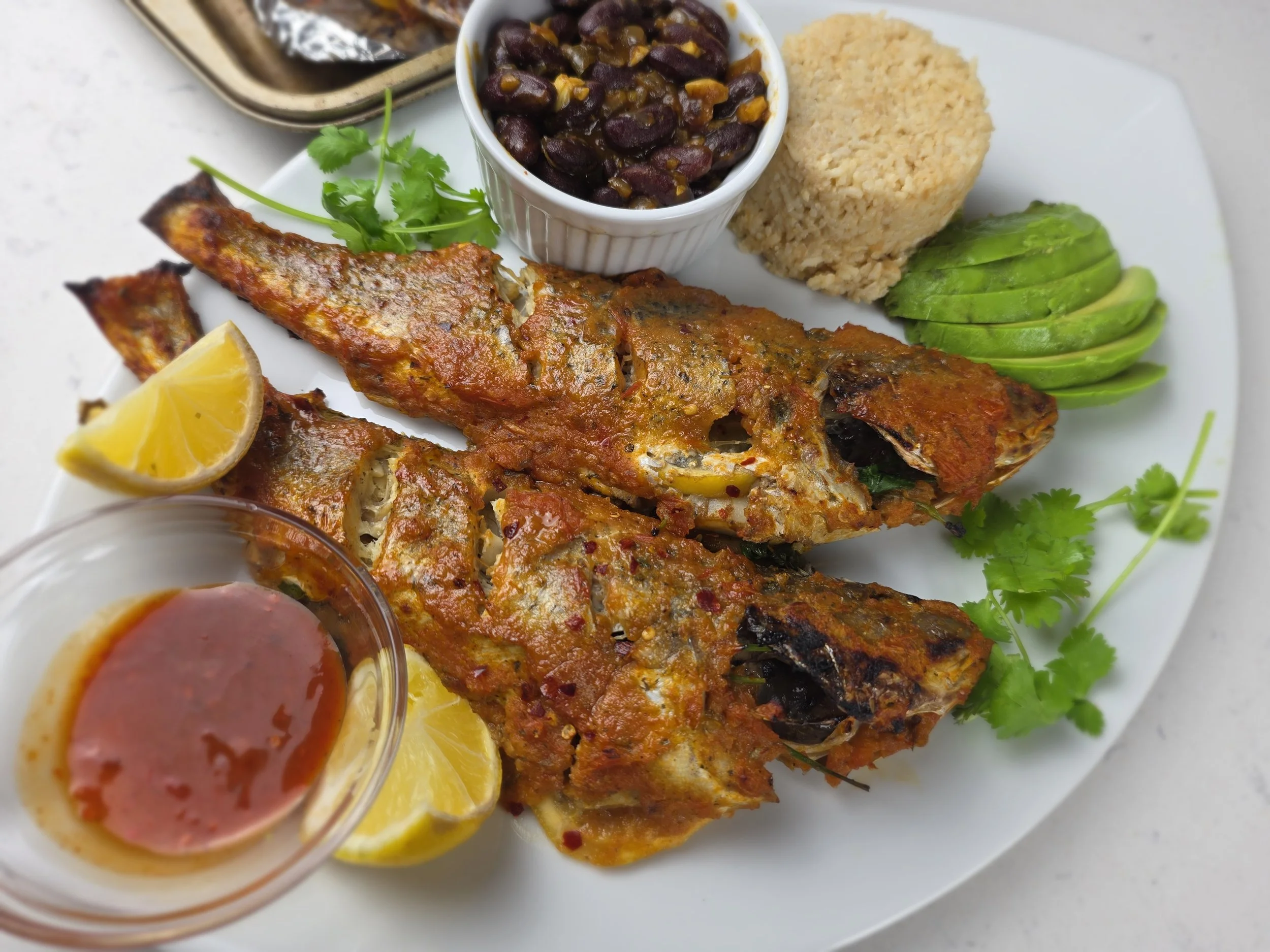
Roasted Croaker Fish with Muto Sauce (Zimbabwean-Style)
Whole fish has always been one of my favorite ways to cook and eat, and if you know my cooking, you know I’m known for it. There’s something about working with the fish in its entirety that feels more connected, more intentional, and ultimately more flavorful.
In Zimbabwe, fish is sometimes overlooked in everyday conversation around food, but it plays a significant role in many communities, especially in areas where access to freshwater lakes makes fish a regular and cherished part of the diet. Whether grilled, fried, or simmered in sauces, fish is a staple that deserves more attention.
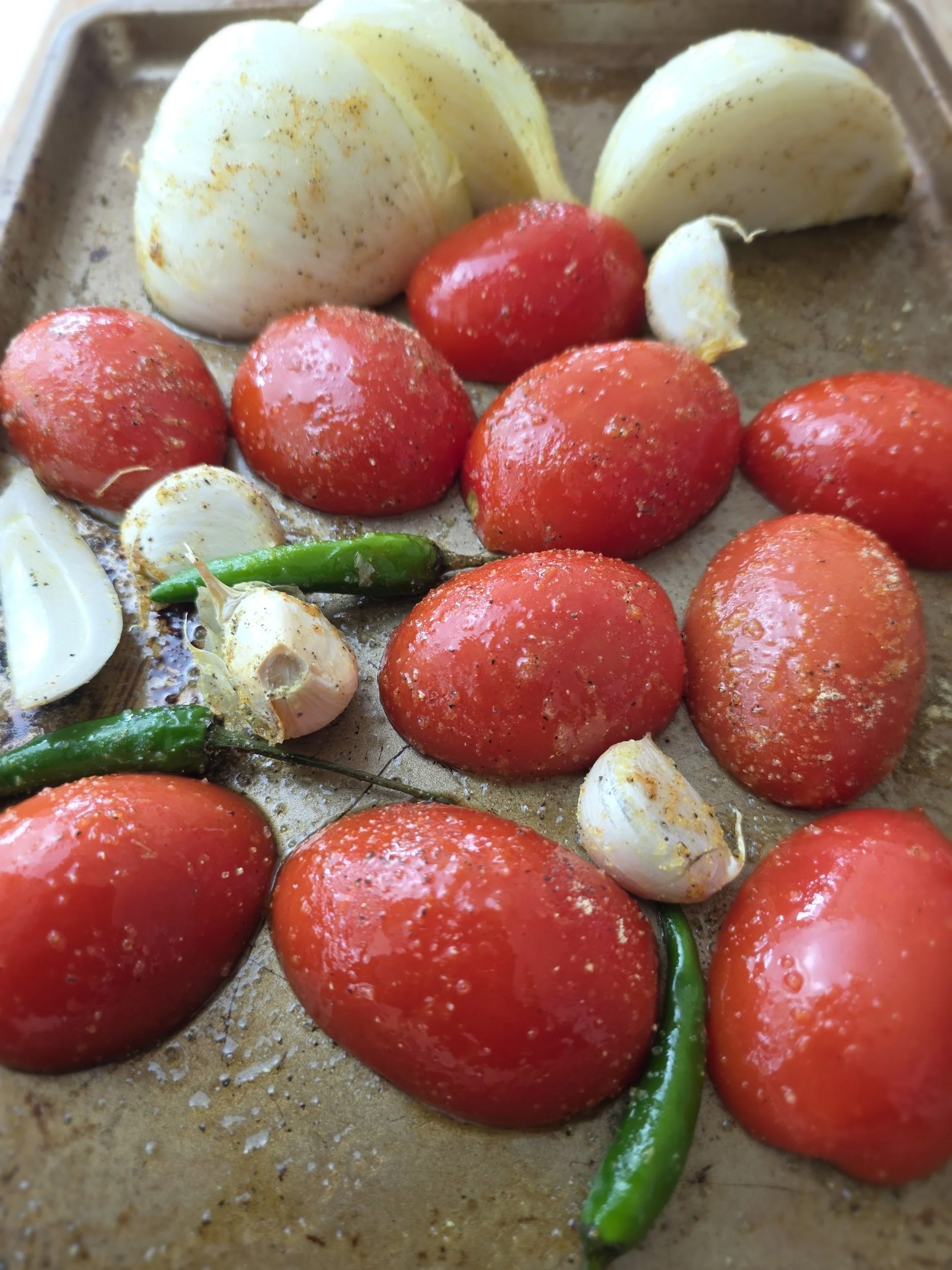
This dish brings that tradition into a slightly more modern, flexible approach. Instead of simply making a standard Zimbabwean tomato-based gravy (muto), where you roast the vegetable and aromatics base (tomatoes, onions, garlic, and chilies) to deepen their flavor, then blend them into what I call a muto-style sauce. It’s perfect for coating fish before finishing it in the oven.
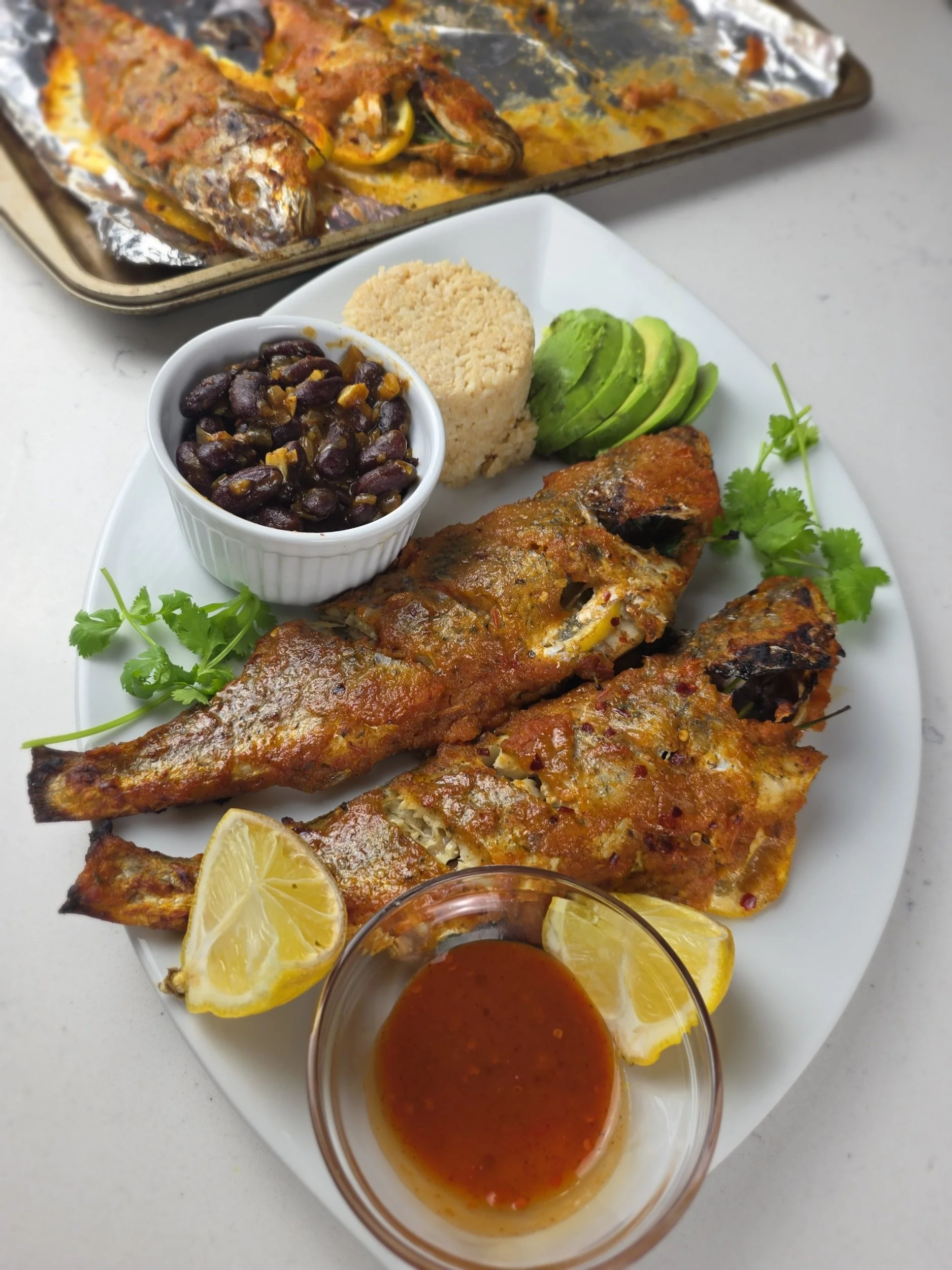
It’s served alongside peanut butter rice and sugar beans, a combination that reflects how Zimbabwean meals often come together: a strong protein, a starch, and something hearty and comforting on the side. The peanut butter rice (also known as mupunga unedovi) adds richness, while the beans bring balance and texture.
More than anything, this dish is about rethinking how we approach familiar flavors. Zimbabwean food doesn’t have to stay in one format, it can evolve and adapt.

Roasted Croaker Fish with Muto Sauce (Zimbabwean Style)
A flavorful roasted whole fish served with a rich roasted vegetable “muto” sauce, paired with optional peanut butter rice and beans for a hearty Zimbabwean-inspired meal.
Ingredients
- 4 small whole croaker fish (~8 inches each), cleaned
- 2–3 tbsp olive oil
- 2 tbsp fish spice
- 2 tsp paprika
- 2 tsp salt
- 2 tsp black pepper
- 4 garlic cloves, sliced or lightly crushed
- 4 slices lemon + juice of 1 lemon (optional)
- Fresh cilantro or parsley (for garnish)
- Chili flakes (optional)
- 1 large onion, cut into wedges
- 5 Roma tomatoes, halved
- 4 garlic cloves, skin on
- 3–4 hot chilies (Thai or similar)
- 2–3 tbsp oil
- 1 tbsp tomato paste
- 1 tbsp Worcestershire sauce
- 1 tbsp seasoned salt (or to taste)
- 1 tsp black pepper
- Splash of stock or water (for blending)
- 1 cup basmati rice
- 2 tbsp smooth peanut butter
- 4 tbsp hot water
- 2 bay leaves
- 1½ tbsp rice seasoning or stock powder
- 1 tsp salt
- 1½ cups cooked sugar or kidney beans (or 1 can, drained)
- 1/3 onion, chopped
- 1/3 shallot, chopped
- 2 tbsp tomato paste
- 1 hot chili pepper, chopped
- 1 cup chicken stock
- 1–2 tbsp oil
- 1 tsp salt (to taste)
Instructions
- Preheat the oven to 220°C / 425°F.
- Toss the onion, tomatoes, garlic, and chilies with oil and salt, then spread them on a baking tray. Roast for about 25 minutes, flipping half way, until everything is soft.
- Remove the garlic skins, then transfer everything to a blender. Add the tomato paste, Worcestershire sauce, black pepper, and a splash of water. Blend until smooth, or mash for a chunkier texture if preferred. Pour into a pan and simmer for about 10 minutes, adjusting seasoning as needed, then set aside.
- Optional (rice): Cook the rice in salted water with bay leaves and seasoning according to package instructions. Once done, keep it warm. Mix the peanut butter with hot water until smooth, then fold it into the cooked rice until evenly combined.
- Optional (sugar beans): Heat oil in a pan for the beans and sauté the onion and garlic until soft. Add chili, tomato paste, and seasoning, stirring well to combine. Add the beans and stock, then simmer for 5–8 minutes until slightly thickened and flavorful.
- Reduce oven temperature to 200°C / 400°F.
- Pat the fish dry and score both sides. Rub with olive oil, salt, pepper, paprika, and fish spice.
- Stuff each fish with garlic, lemon slices, and herbs, then set aside.
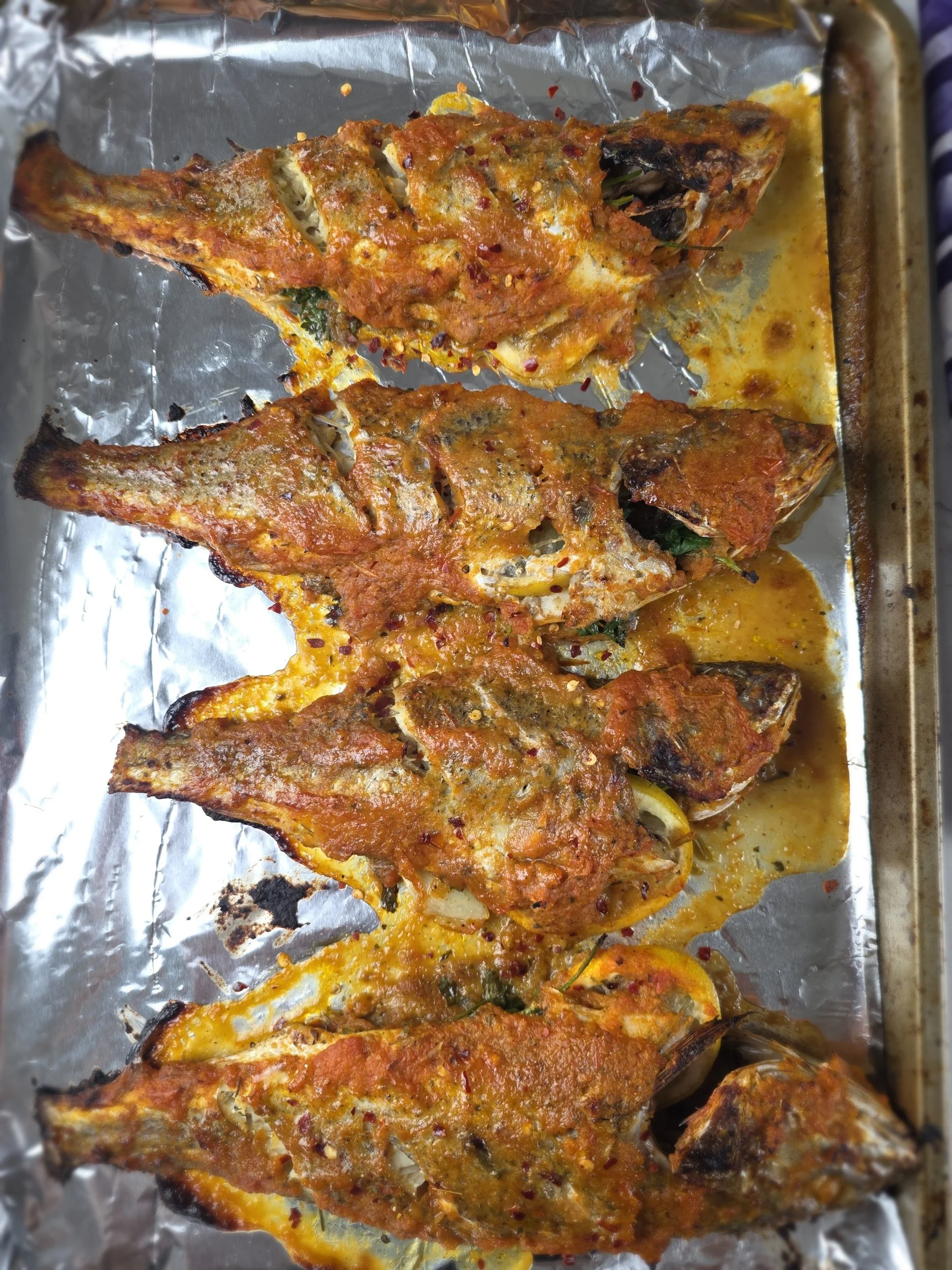
- Place the fish on a baking tray and spoon some of the muto sauce over the top. Cover loosely with foil and bake for 8–10 minutes. Remove the foil and cook for another 5 minutes.
- Brush with more muto sauce, season with chilli flakes, and broil for 2–3 minutes until slightly caramelized.
- Serve with extra sauce and your chosen sides, such as peanut butter rice, beans, avocado, or chili sauce.
Notes
- Roasting the vegetables is essential for deep flavor, don’t skip it.
- Blend for smooth sauce or mash for rustic texture.
- Avoid overcooking the fish; it cooks quickly and can dry out.
- Always mix peanut butter with hot water before adding to rice for smooth consistency.
Nutrition Facts
Calories
500Fat (grams)
25 gCarbs (grams)
40 gProtein (grams)
35 gI am not a certified nutritionist and any nutritional information on dontmissmyplate.com should only be used as a general guideline.
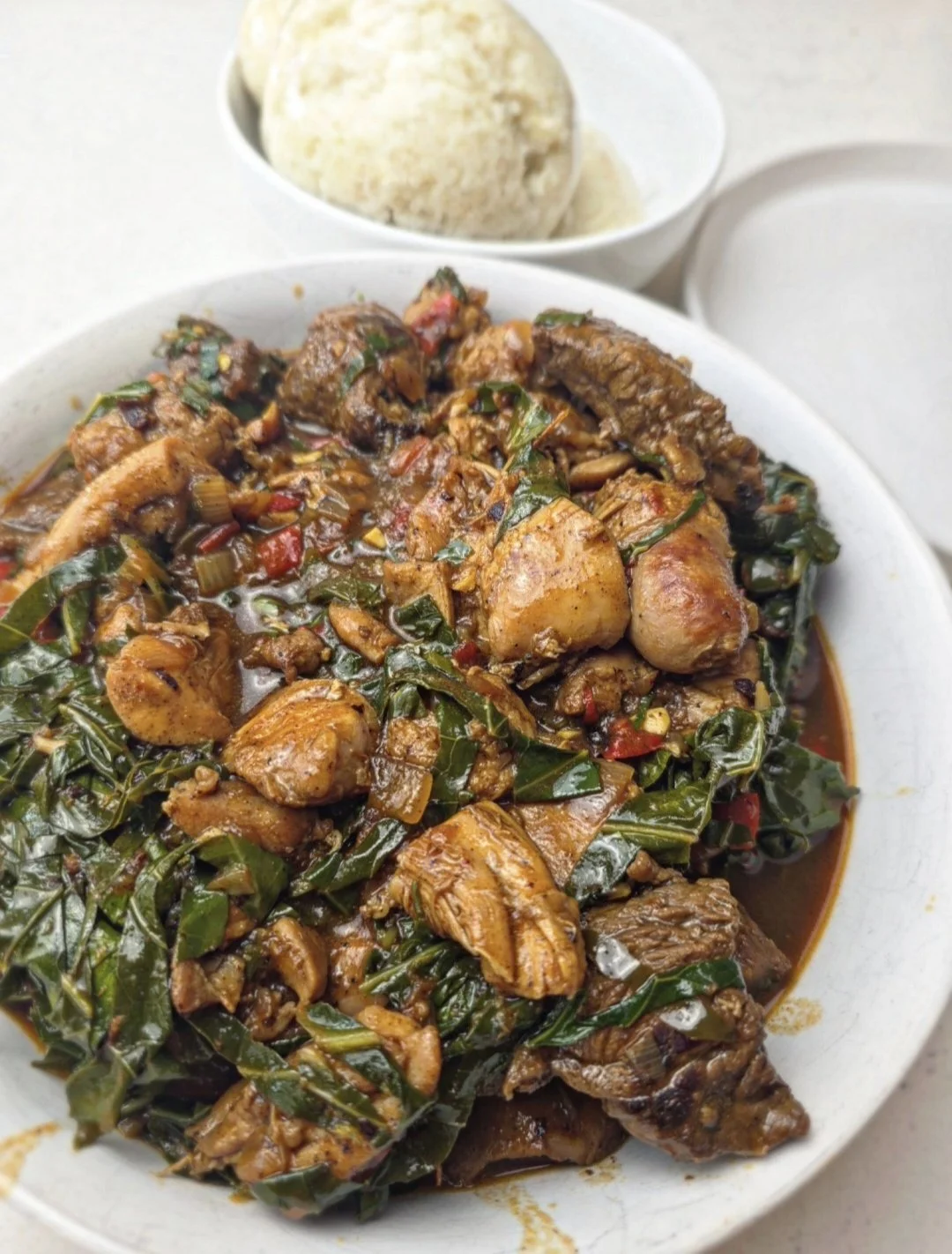
Zimbabwean Gango (Meat Medley and Greens)
Gango is a deeply comforting and richly layered Zimbabwean dish that brings together multiple meats, cooked in a savory onion and tomato base (also known as muto) with tender greens. Traditionally made with a combination of beef, chicken, and sausage, it’s the kind of meal that feels abundant, hearty, and deeply satisfying. It’s not an everyday dish for many households! Gango is often reserved for weekends, gatherings, or moments when you want to cook something special and filling. On the other hand, it is also a resourceful dish, a way to use different cuts of meat and turn them into something rich, comforting and full of flavour.
In Zimbabwe, meat has historically been a luxury for many families, particularly in the rural areas, which is why dishes like gango feel so intentional. Instead of relying on heavy seasoning, the flavor often comes from the quality of the meat itself, combined with simple aromatics like onion, garlic, and tomato, and sometimes peppers. When done right, the result is a dish that tastes full, balanced, and naturally rich without needing much intervention.
This version uses sirloin beef chunks, chicken thighs, and sausage, finished with collard greens for a slight bitterness that balances the richness. It’s best served with sadza (traditional cormeal side), rice, or any starch that can soak up the sauce. For those who enjoy heat, a chili sauce or a fresh chili relish works beautifully on the side.
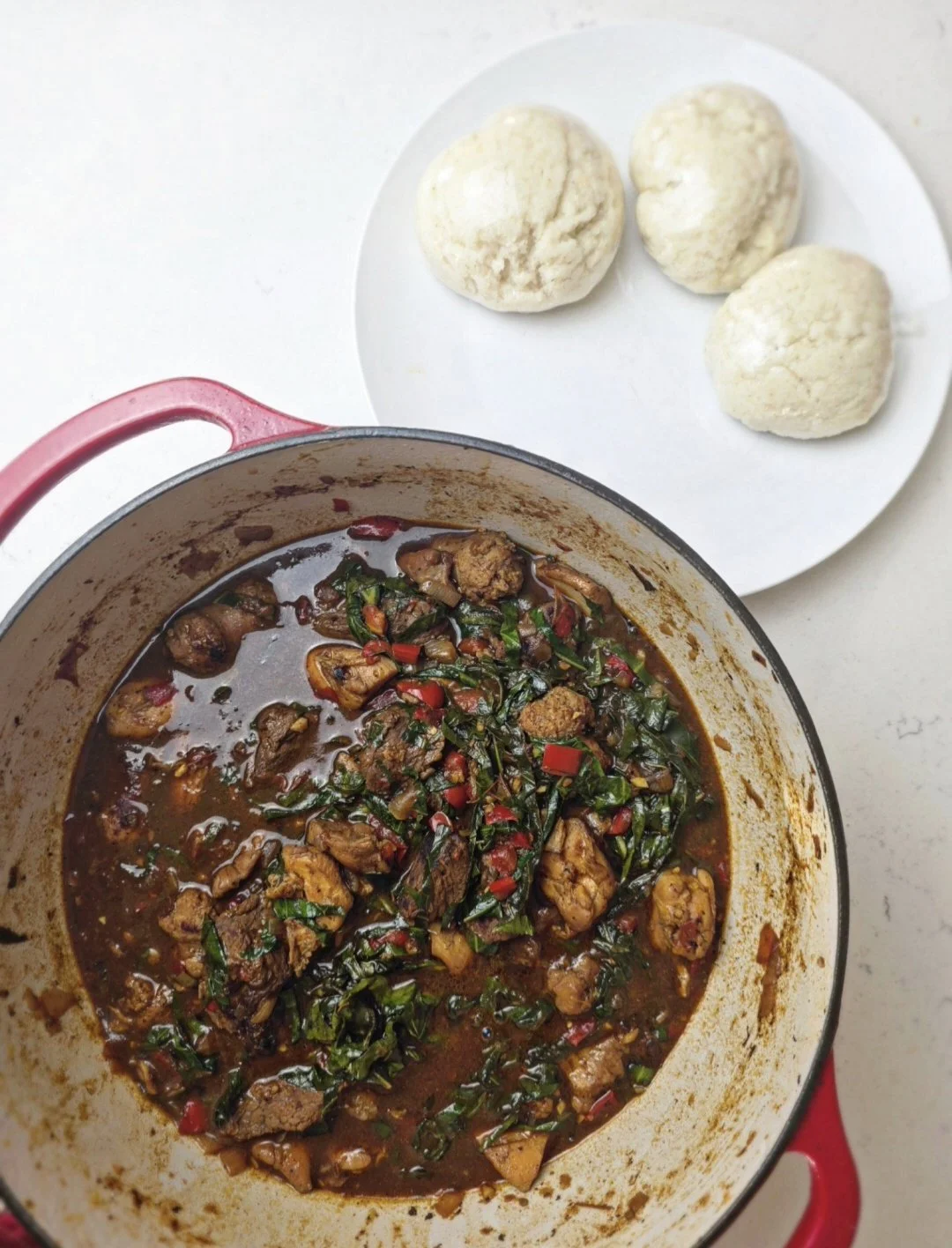
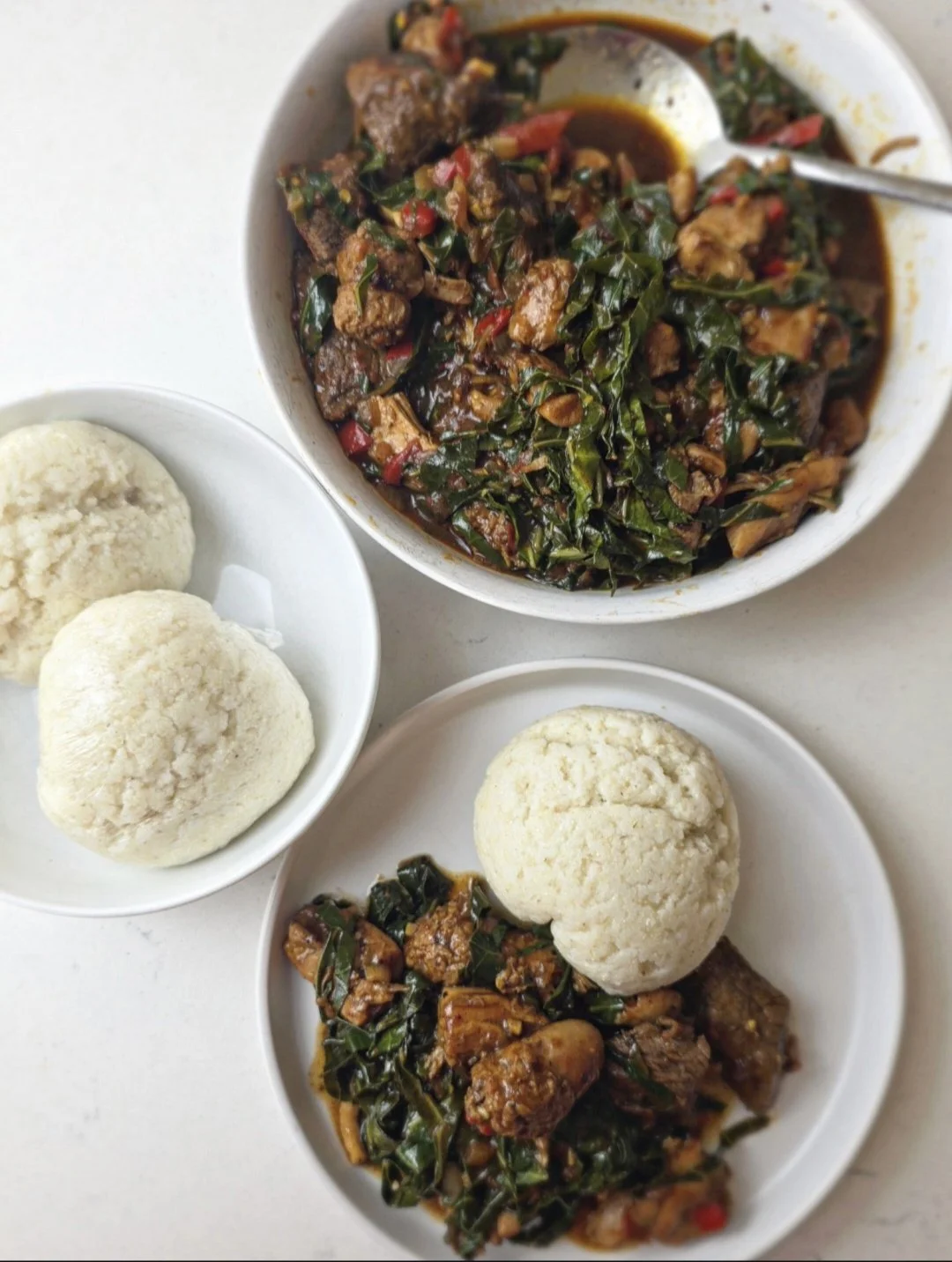
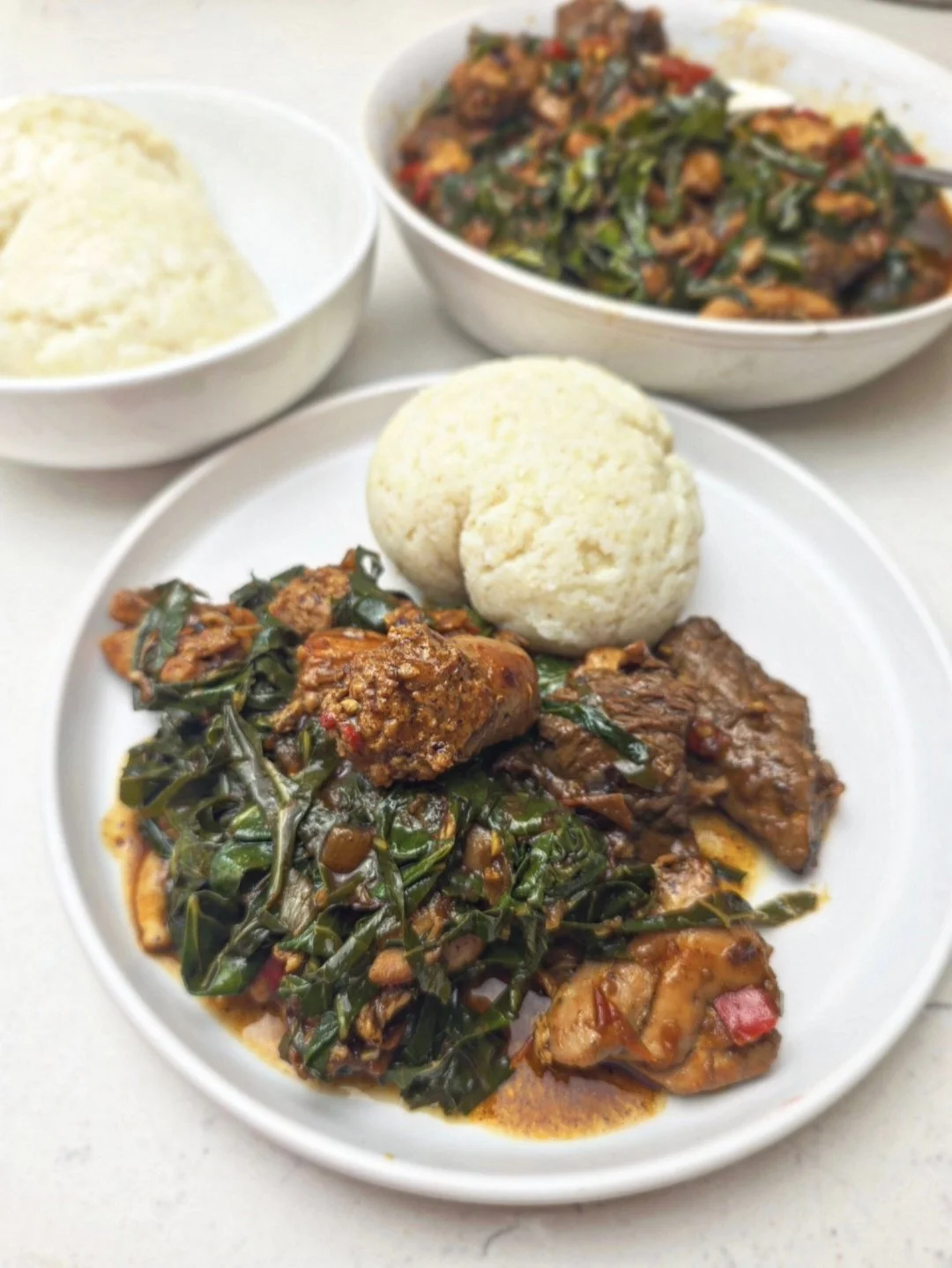

Zimbabwean Gango (Meat Medley with Greens)
A hearty Zimbabwean-style gango made with beef, chicken, sausage, and collard greens, simmered in a rich onion and tomato base. A comforting, special-occasion dish perfect with sadza or rice.
Ingredients
- 1–1.25 lbs chuck or sirloin beef (cut into chunks)
- 4 chicken thighs, skinless and boneless, chopped
- 2 sausages (boerwoers, bratwurst or similar), sliced
- 1 large onion, sliced
- 4 garlic cloves, minced
- 4 Roma tomatoes, chopped
- 2 tbsp tomato paste
- 1 red bell pepper, diced (optional)
- 1 chilli pepper, chopped (optional)
- 1 bunch collard greens, chopped
- 1 - 1 1/2 cups stock (or water + one 10g boullion cube)
- 1 beef stock cube (optional)
- 1 tsp curry powder
- 1 tsp paprika
- 1 tsp black pepper
- 2 tsp salt
- 1 tbsp Royco Usavi mix beef flavour (optional)
Instructions
- In a Dutch oven, sear the beef, chicken, and sausage in batches. Remove and set aside.
- In the same pot, cook onion and garlic until softened (3 min). Add the bell and chilli peppers, cook for 2-3 min.
- Add tomatoes and tomato paste. Cook until thick, glossy and slightly reduced (5 min).
- Add the stock cube, curry powder and spices. Cook 30–60 seconds and adjust as needed to taste.
- Return all meats to the pot. Add stock (do not fully submerge, you are not making a stew).
- Bring to a gentle simmer, cover slightly, and cook 30 minutes, removing the lid completely to reduce the liquid in the last 10 minutes.
- Stir in collard greens and cook for another 10–15 minutes until tender,
- Adjust seasoning again and reduce to desired consistency.
Notes
- Meat quality matters: If using supermarket beef, consider marinating lightly with salt, pepper, garlic and other spices beforehand.
- Stock matters: If flavor feels flat, use stronger stock or add a second cube sparingly.
- Don’t rush the reduction as flavor develops as liquid reduces.
- Best with sadza or rice.
Nutrition Facts
Calories
550Fat (grams)
35 gProtein (grams)
40 gI am not a certified nutritionist and any nutritional information on dontmissmyplate.com should only be used as a general guideline.

Stewed Pork Hocks with Sweet Potato (Mazondo)
If delicacies could walk… or rather, trot. Few cuts of meat are as humble yet deeply flavorful as pork hocks. Known for their tough skin, bone, and rich connective tissue, pork hocks have long been transformed by cultures that understand the value of slow cooking. In the American South, ham hocks brought deep, smoky flavor to pots of collard greens and beans, a survival food turned soulful cuisine. In Zimbabwe, they take on a new identity as mazondo, pig’s feet or ankles, revered as a delicacy. Often served in bars, homesteads, and special gatherings, mazondo is slow-cooked with onions, chilies, tomatoes, and spices until it’s meltingly tender.
In this recipe, I brought that tradition into the stew pot, giving the hocks a good sear to lock in flavor, then letting them braise low and slow with bold aromatics, rich seasoning, and an unexpected but powerful addition: sweet potato. While in Zimbabwe sweet potatoes (mbambaira) are typically enjoyed boiled or roasted as a standalone snack or side, they have an untapped potential when added to stews. Here, the sweet potato doesn’t just add subtle, earthy sweetness — it also brings nutrition and natural starch that gently thickens the broth as it cooks down, tying everything together in a rich, velvety texture.
Before cooking, I soak the hocks in red wine vinegar. This isn’t just for cleaning and tenderizing, but also to cut through the richness and add a subtle tang that balances the stew. It's a simple step, but it makes all the difference when working with fatty, collagen-rich cuts.
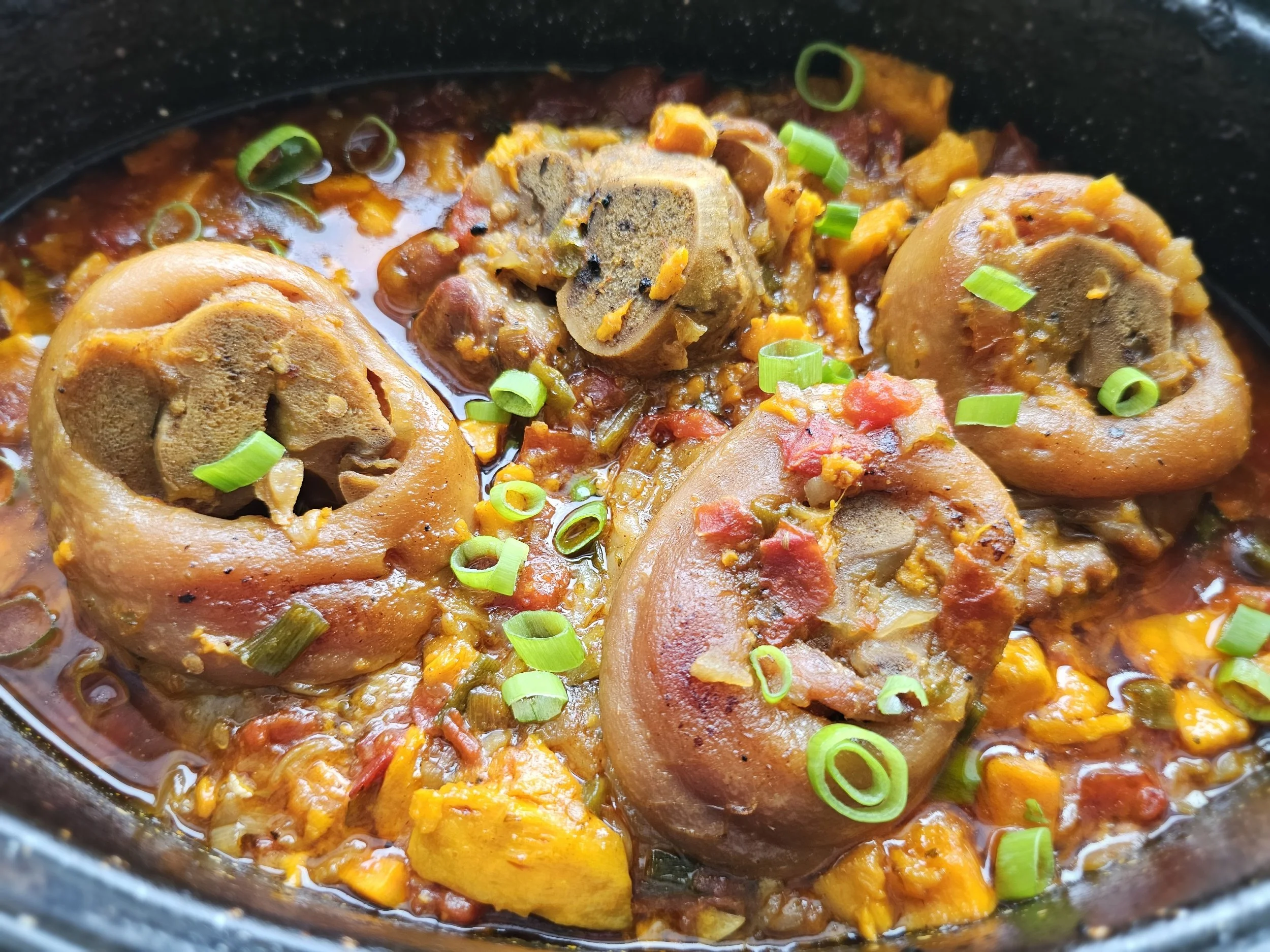
Prep and Cooking Tips for Mazondo
1. Soaking = Better Flavor and Cleaner Broth
Soaking pork hocks in vinegar and water helps clean the meat, neutralize strong odors, and tenderize it slightly. Rinse well after soaking to avoid excess acidity in the stew.
2. Sear for Maximum Flavor
Don’t skip the browning step, it adds deep, caramelized flavor that builds the base of your stew. Let the hocks sear undisturbed for a few minutes per side to get a good crust.
3. Low and Slow is Key
This stew rewards patience. Keep the heat low and let the hocks simmer gently for 2.5 to 3 hours. Rushing will result in chewy meat and thin broth.
4. Sweet Potato Choices Matter
Use a firm, orange-fleshed sweet potato or yam that holds up to long cooking. Softer varieties may break down too much, though that can also be desirable for thickening.
5. Customize the Heat
Adjust the chili to your preference. For mild stew, remove seeds from the chili or use a milder pepper. For more heat, add fresh chili near the end of cooking or include crushed chili flakes.
6. Make it Ahead
Like most stews, this tastes even better the next day. The flavors deepen and the texture improves after resting. Store in the fridge overnight and reheat gently.
7. Serving Suggestions
Traditionally served with sadza in Zimbabwe, but it's also excellent with rice, mashed potatoes, or crusty bread to soak up the broth. Try pairing it with sautéed greens for a full meal.
8. Skim the Fat (or Don’t)
Pork hocks release a good amount of fat. You can skim some off the top during or after cooking, or stir it back in for maximum richness, up to you.
9. Broth Boost
If you have homemade broth, use it! It gives the stew more body and complexity than water and bouillon alone.
10. Leftover Ideas
Leftover stew can be shredded and used in tacos, wraps, or even spooned over pap/sadza for a quick second-day meal.
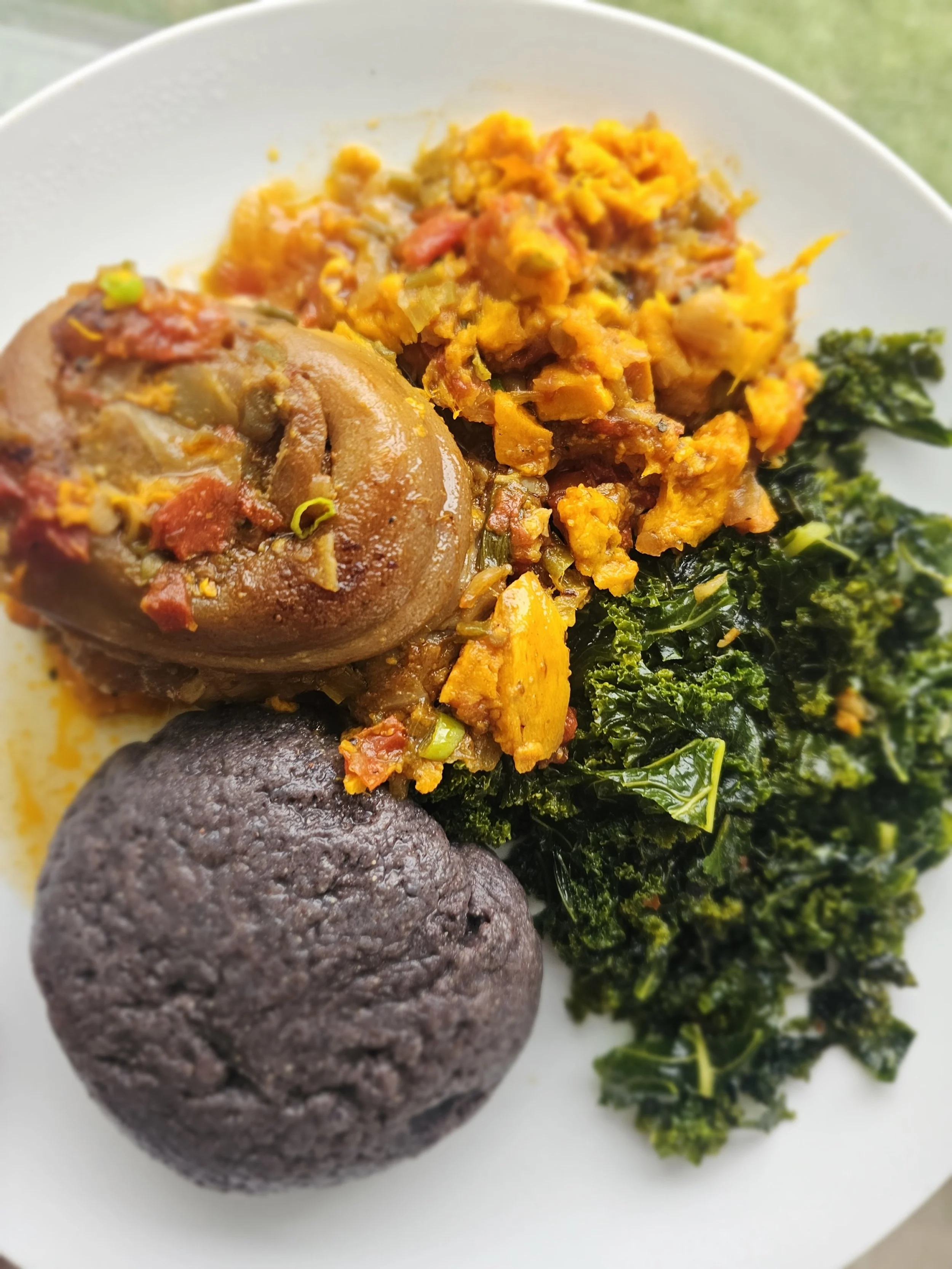
With each spoonful, you're tasting tradition, technique, and transformation. The vinegar, the hocks, the sweet potato, each element speaks to how simple ingredients, handled with care and patience, can deliver deeply rooted, unforgettable flavor.
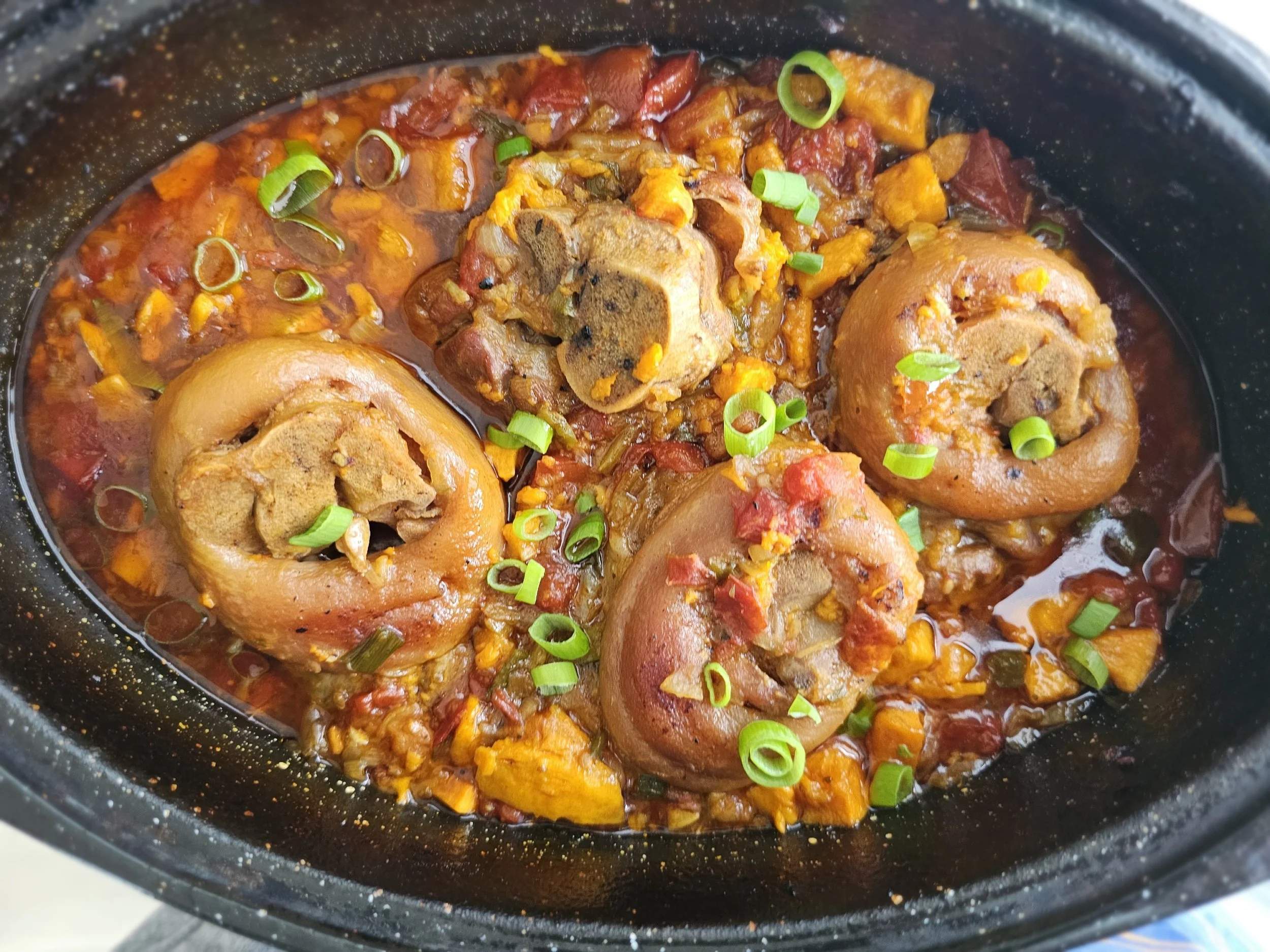
Stewed Pork Hocks with Sweet Potato (Mazondo)
Discover a rich, slow-cooked Pork Hock Stew (Mazondo) with sweet potato, inspired by Zimbabwean flavors and Southern soul food traditions. Tender pork hocks are soaked in vinegar, seared, and simmered with tomatoes, chili, and spices for a hearty, flavorful dish.
Ingredients
- 4 large pork hocks
- 1/3 cup red wine vinegar (for soaking)
- 1 tablespoon salt
- 1 tablespoon black pepper
- 1 large sweet potato or yam, peeled and cubed
- 1 large yellow onion, chopped
- 4 Roma tomatoes, chopped
- 1 chili pepper, finely chopped
- 2 large cloves garlic, minced
- 2 spring onions, sliced
- 2 bouillon cubes + 2 cups water (or homemade broth)
- 1/2 tablespoon Royco Usavi Mix (or your preferred all-purpose seasoning)
- 1/2 tablespoon Shishanyama spice (or BBQ meat rub)
- 2 tablespoons Worcestershire sauce
- 1 teaspoon cumin
- 1 teaspoon paprika
- 1 teaspoon oregano
- Cooking oil (coconut or olive oil)
- 2 tablespoons butter
Instructions
- Rinse the pork hocks under cold water. Place them in a large bowl and soak in red wine vinegar with enough water to cover. Let sit for 10 minutes, then drain and pat dry—very dry, so they brown nicely.
- Season the hocks with salt and pepper. In a large oven-proof pot roast dish or Dutch oven, heat a bit of oil over medium-high heat. Sear the hocks on all sides until golden and well browned. Remove and set aside.
- In the same pot, sauté the onion, garlic, chili, and spring onions until softened and fragrant. Add the Royco Usavi Mix, Shishanyama, and bouillon cubes. Cook for 1–2 minutes to bloom the spices, adding a bit more oil if needed. Stir in the tomatoes and Worcestershire sauce and cook for another 1–2 minutes.
- Add the cubed sweet potatoes, followed by the broth (or water), cumin, paprika, and oregano. Let everything simmer for 3–4 minutes to start developing the base of the stew.
- Transfer the pork hocks to a deep roasting pan or heavy pot. Pour the sweet potato and tomato mixture over the hocks, making sure they’re mostly submerged. The liquid will reduce and become the stew.
- Cover and simmer on low heat at 325°F for 2.5 to 3 hours, until the meat is fall-off-the-bone tender and the sweet potatoes are soft. When checking occasionally during cooking, avoid over-mixing to prevent the sweet potatoes from breaking down into a soup-like consistency.
- If there's more liquid than you'd prefer with about 30 minutes remaining, increase the temperature to 350°F.
- Finish with chopped fresh spring onions. Adjust seasoning with extra salt, pepper, or chili flakes if you like more heat. Serve hot with sadza, rice, or thick bread, and sautéed kale (muriwo) on the side.
I am not a certified nutritionist and any nutritional information on dontmissmyplate.com should only be used as a general guideline.