
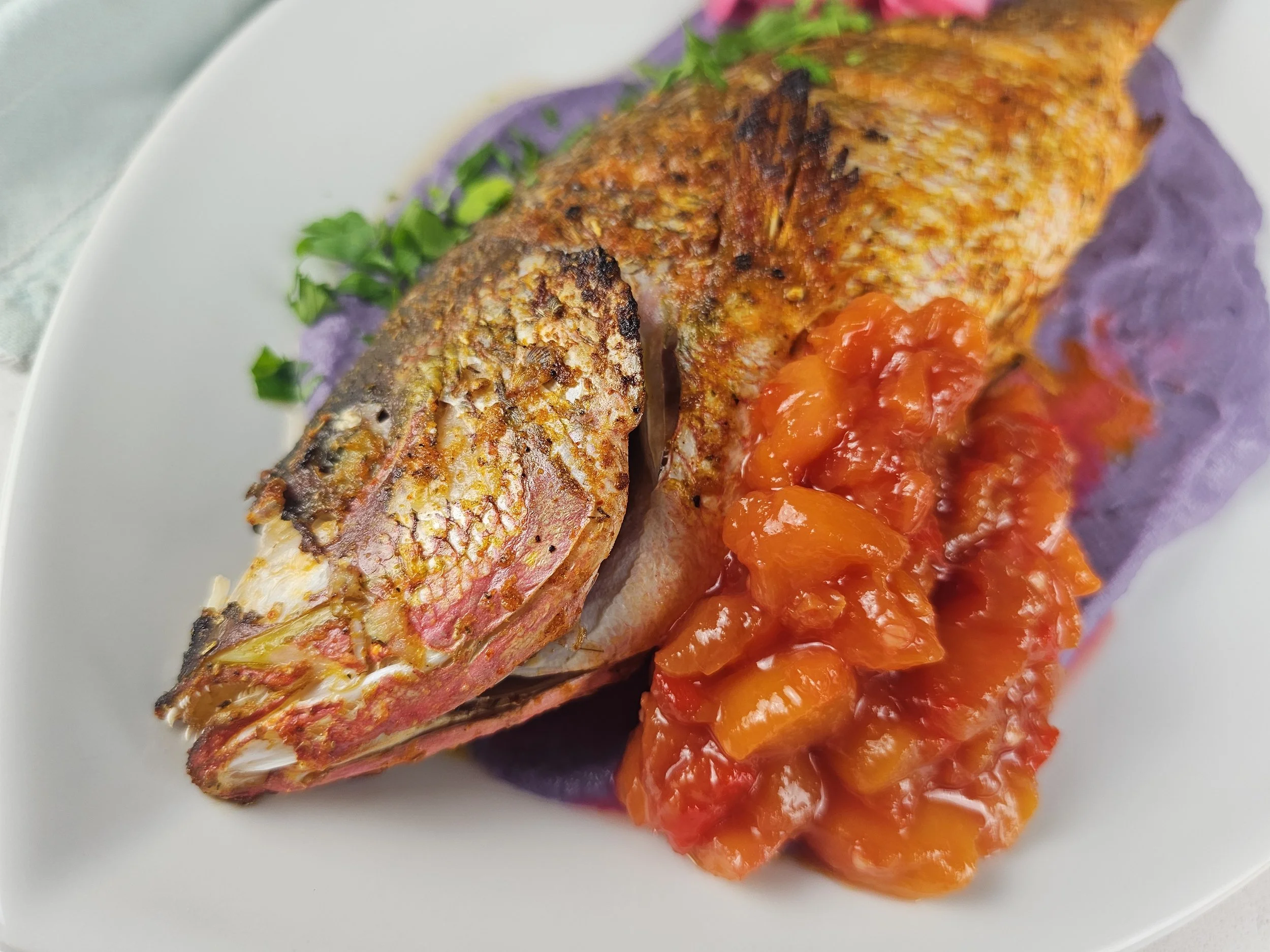
Yellowtail Snapper with Spicy Peach Chutney
This yellowtail snapper recipe is a vibrant, restaurant-style fish dish built around bold contrast, fresh acidity, and layered texture. The snapper is roasted until the skin turns golden and the flesh remains tender and flaky, then served over a smooth cauliflower purée that provides a creamy, neutral base to balance the sharper, brighter elements on top.
The dish is finished with a peach habanero chutney inspired by the broader use of chutneys in Zimbabwean and Southern African cooking culture, where chutneys are commonly served alongside grilled meats to add sweetness, acidity, and spice. While chutney traditions vary across regions, the idea of pairing fruit-based relishes with savoury proteins is a familiar and widely appreciated technique. In this version, ripe summer peaches bring natural sweetness and seasonal freshness, while habanero adds heat and intensity. Together they create a balanced sweet-spicy glaze that enhances rather than overwhelms the delicate fish.
Peaches are especially effective in summer cooking because they are naturally juicy and aromatic, and they pair beautifully with chillies like habanero when reduced into a chutney. This creates a condiment that sits between sauce and relish — thick enough to coat, but bright enough to cut through richness.
The snapper itself is a lighter, more delicate white fish, often used as a more accessible and affordable alternative to red snapper, which is traditionally popular in West African and Caribbean households and cooking styles. Yellowtail snapper offers a similar structure and versatility, with slightly softer, more subtle flesh that works well with bold accompaniments like chutney, pickled vegetables, and creamy purées.
To complete the dish, pickled red onions add acidity and crunch, while fresh parsley brings herbal brightness. The result is a layered plate that balances creamy, sweet, spicy, tangy, and savoury elements in every bite, designed for both flavour and visual impact.
This dish is inspired by coastal and tropical cooking traditions where fish is paired with fruit-based condiments and acidic components to enhance natural flavour. It is ideal for elevated home cooking, dinner parties, or visually driven food content where colour, contrast, and plating composition are just as important as taste.

Yellowtail Snapper with Peach Chutney and Cauliflower Purée
Yellowtail snapper served on cauliflower purée with a peach habanero chutney inspired by Zimbabwean-style chutney traditions, where fruit-based relishes are commonly paired with grilled meats to add sweetness, acidity, and heat. This version uses seasonal peaches for natural summer sweetness and habanero for controlled spice, creating a balanced condiment that enhances the delicate fish.
Ingredients
- 2–3 yellowtail snapper fillets (skin-on if possible)
- 1½ tsp salt
- 1 tsp black pepper
- 1 tsp paprika
- 1 tsp garlic powder
- 1 tbsp oil (for searing)
- Optional: squeeze of lime to finish
- 4 ripe peaches, peeled and diced
- 1 habanero (whole or minced, adjust to heat preference)
- 1 tbsp honey or sugar (adjust to taste)
- 2 tbsp lime juice
- 1 tbsp vinegar (apple cider or white)
- 1 tbsp water
- ¼ tsp salt
- 1 medium head cauliflower, cut into florets
- 2 tbsp butter
- 2–4 tbsp cream or milk (as needed)
- 1 garlic clove (optional)
- Salt to taste
I am not a certified nutritionist and any nutritional information on dontmissmyplate.com should only be used as a general guideline.
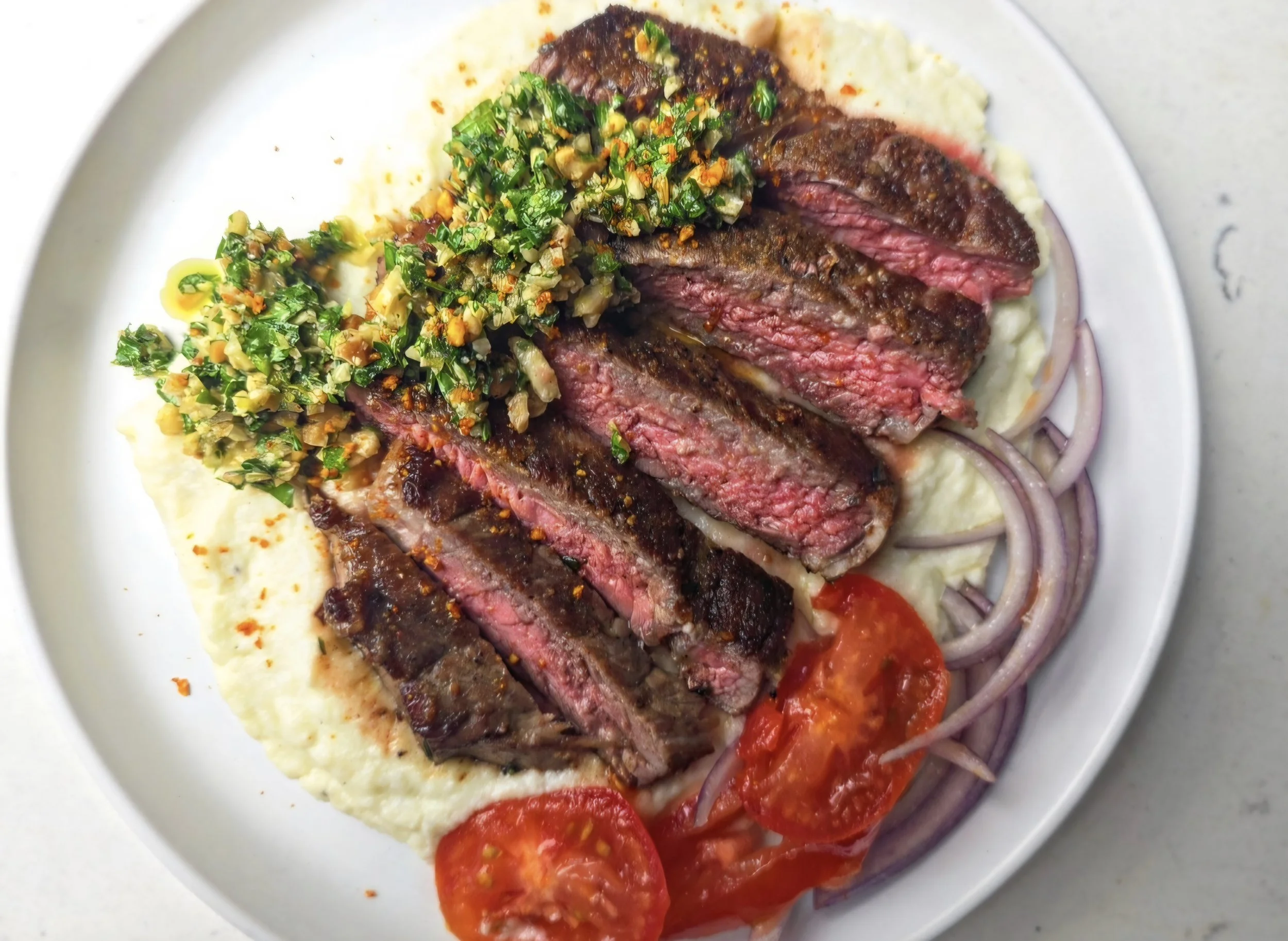
Spicy Suya Steak with Creamy Cauliflower Puree
I’ve traveled to Nigeria twice, and one thing that always stands out is suya, a spicy, nutty grilled meat you’ll find on nearly every street corner, late-night food stall, and even on restaurant menus. In formal dining settings, you’ll see it offered alongside fiery jollof rice, peppered fish, grilled snail, or sweet, flame-kissed plantains, each dish bold, vibrant, and packed with flavor.
Suya is more than just a quick bite; it’s a whole experience, from the smoky aroma of open flames to the bold, layered heat of the spice blend known as yaji.
Yaji is what gives suya its signature character, a deeply flavorful mix of ground peanuts, chili, ginger, garlic, and warming spices. It’s savory, slightly smoky, a little fiery, and unmistakably nutty. In many ways, it echoes the richness of peanut-based stews found across West and Southern Africa, but in a dry rub form that clings beautifully to grilled meat.
This recipe is inspired by those street food moments but reimagined for the home kitchen. It takes the essence of suya and brings it into a more composed, plated dish, pairing a suya-style steak with a fresh peanut gremolata and a silky cauliflower purée. It’s a bit of a fusion, street food meets steakhouse, bold spice meets subtle creaminess.
You can find pre-made suya powder, but I’ll also show you how to make it at home easily so you can bring those flavors into your own kitchen anytime.

Suya Steak with Cauliflower Puree and Peanut Gremolata
Turn any weeknight into steak night with this bold, Nigerian-inspired recipe. Tender steak gets a nutty, spicy suya crust, topped with a bright, crunchy peanut gremolata. Served alongside silky cauliflower purée, it’s a balanced, flavorful dinner that feels indulgent but is quick enough for a weekday.
Ingredients
- 3 tbsp roasted peanuts, finely ground
- 1 tsp smoked paprika
- 1 tsp cayenne pepper (adjust to taste)
- 1 tsp garlic powder
- 1 tsp onion powder
- ½ tsp ground ginger
- 1 small (Maggi) bouillon cube, crushed
- 1/2 tsp salt
- Optional (1/2 tsp black or white pepper)
- 2 thin steaks (~¾-inch thick)
- 4 tbsp neutral (or peanut) oil
- 2 tbsp butter
- 2 garlic cloves, smashed
- 2 thyme sprigs
- Salt and pepper (to rub on steaks before searing)
- 1 small head cauliflower, chopped
- 2 tbsp butter
- 1/3–1/2 cup cream
- 1 bay leaf
- 1 sprig thyme
- Salt and pepper to taste
- Optional for thinning (1/8 cup broth)
- 2 tbsp chopped roasted peanuts
- 1 tbsp fresh parsley, chopped
- 1 tbsp fresh cilantro, chopped
- 1 tsp lemon juice
- Pinch of salt
- Sliced tomato and red onion
- Light squeeze of lemon
- Pinch of salt
Instructions
- First, prepare the suya spice (yaji) mix. Combine ground peanuts, paprika, cayenne, garlic powder, onion powder, ginger, and salt.
- Season the steaks with salt and pepper, then rub the suya spice evenly over them. Place on a wire rack and let sit at room temperature for at least 30 minutes while you prepare everything else. This helps remove excess moisture for a better crust and deeper flavor.
- Chop and boil the cauliflower until tender (about 10 minutes). Drain well to prevent a watery purée.
- In a saucepan, warm the butter, cream, thyme, and bay leaf. Season with salt, pepper, and all-purpose seasoning.
- Remove the aromatics, then blend the cauliflower with the warm cream mixture until silky. For a smoother texture, add a splash of chicken broth if needed. You want it smooth and creamy, not soupy. Set aside and keep warm.
- Prepare the gremolata by mixing chopped peanuts, parsley, cilantro, lemon juice, and salt. Set aside.
- Slice the red onion and tomatoes, toss with lemon juice and salt, and set aside.
- Now cook the steak. Preheat a cast iron skillet over medium-high heat for 3–5 minutes until hot (you may see a little smoke). Add 2 tablespoons of oil per steak.
- If your steak is thin (about ¾ inch), sear the first side for 1 to 1¼ minutes. Flip and sear for at least 30 seconds, then pour off excess oil. Add butter, garlic, and thyme, and baste for about 30 seconds per side.
- Check the internal temperature with a thermometer — 130–132°F for medium. Continue flipping every 30 seconds until cooked to your preference.
- To plate, spoon the cauliflower purée onto a plate. Slice the steak against the grain and place over the purée.
- Top with peanut gremolata and finish with extra yaji seasoning. Serve with the tomato-onion salad on the side.
Nutrition Facts
Calories
450Fat (grams)
30 gCarbs (grams)
10 gFiber (grams)
3 gProtein (grams)
35 gI am not a certified nutritionist and any nutritional information on dontmissmyplate.com should only be used as a general guideline.