
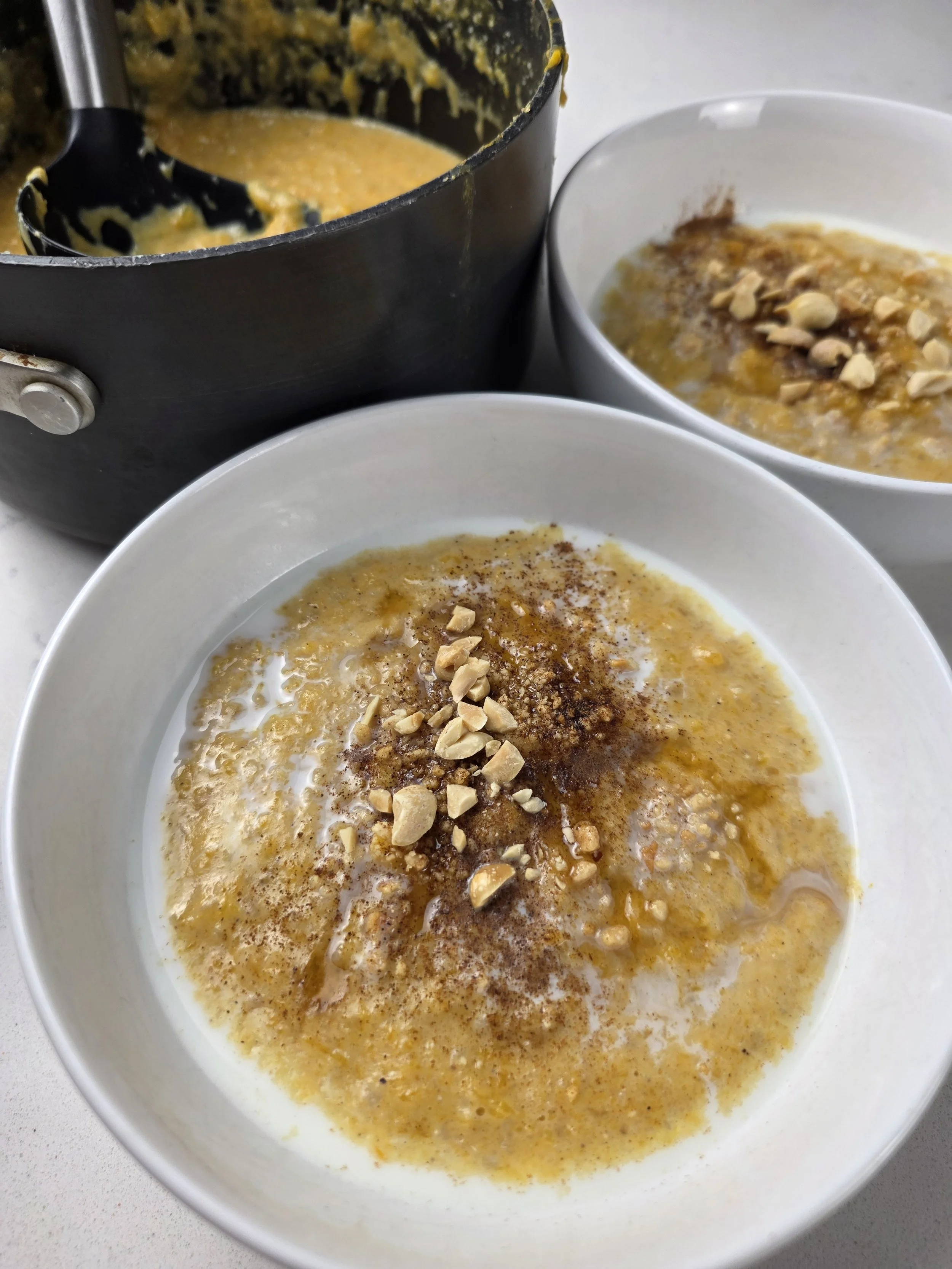
Pumpkin Peanut Wheat Porridge (Nhopi)
Inspired by Zimbabwean Nhopi and Kenyan Uji wa Ngano
There is something deeply comforting about warm porridge cultures across Africa. Whether it is maize-based, millet-based, sorghum-based, or wheat-based, many of us grew up with some version of a hot, nourishing bowl that anchored mornings, cold days, illness recovery, or simple moments of comfort.
During my recent trip to Kenya, I tried uji wa ngano, a creamy wheat porridge often served with plenty of hot milk. It immediately reminded me of the porridges I grew up eating in Zimbabwe. One of the most popular versions, alongside maize meal porridge served with butter or peanut butter, is nhopi — a pumpkin and peanut butter porridge, sometimes thickened with maize meal. Rich, lightly spiced, earthy, and deeply nostalgic, it remains a beloved comfort food across generations.
That experience made me curious about how these traditions could speak to each other.
This recipe became a fusion of both ideas. Instead of using pumpkin as the main base like traditional nhopi, I used creamy wheat as the foundation and allowed roasted butternut and peanut butter to layer warmth, sweetness, richness, and familiarity into the porridge.
The bulgur wheat adds texture and grain bite similar to Kenyan wheat porridge, while the cream of wheat and powdered milk helps create a smoother, creamier consistency. Cardamom, brown sugar and cinnamon bring warmth that ties the dish together beautifully.
The final result sits somewhere between the two traditions: creamy, comforting, lightly spiced, and deeply filling. It is the kind of breakfast that feels both grounding and exploratory at the same time.

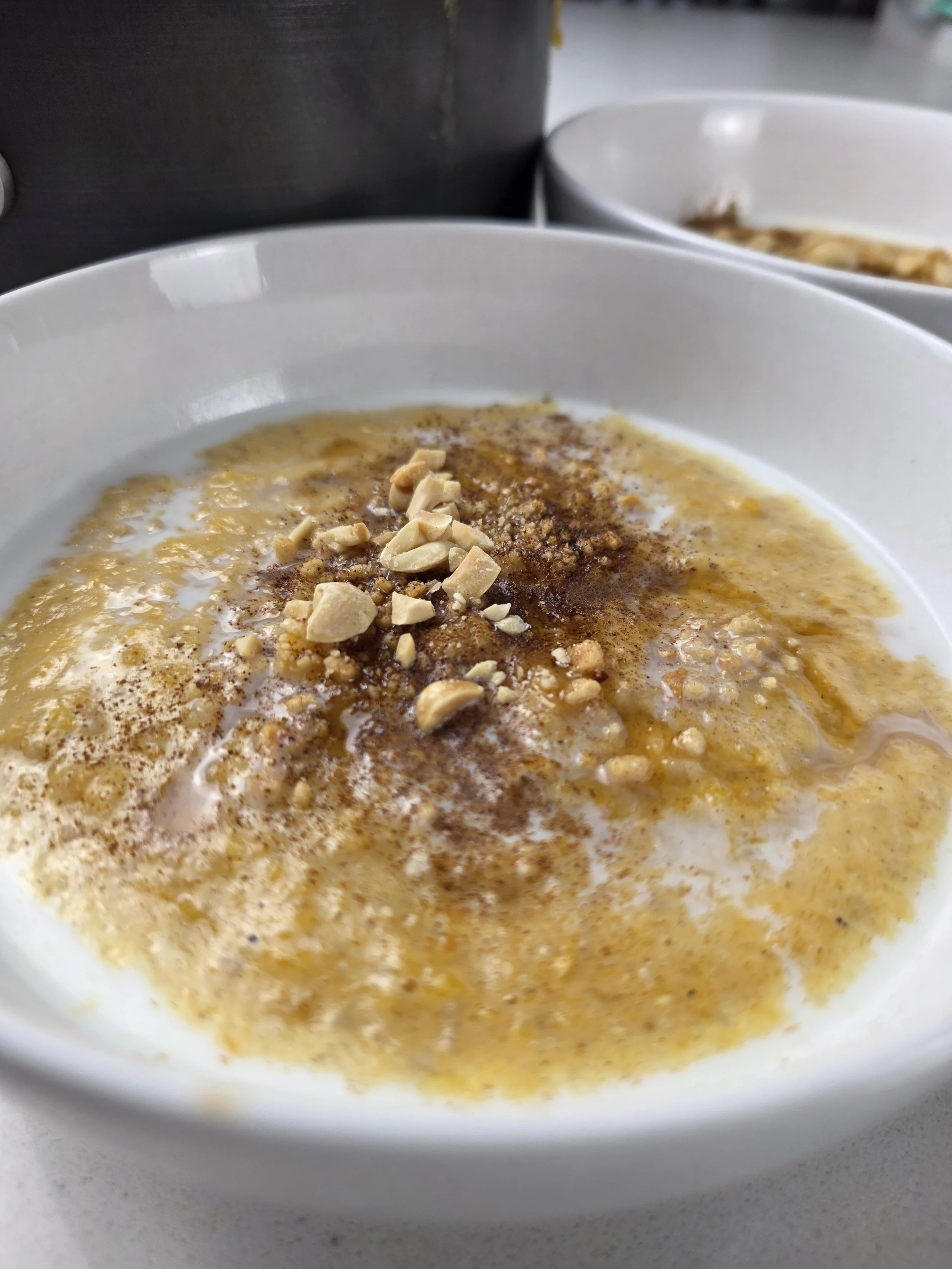

Pumpkin Peanut Wheat Porridge
A creamy wheat porridge with roasted butternut, peanut butter, and warm spices inspired by Zimbabwean and Kenyan breakfast traditions (nhopi and uji wa Ngano).
Ingredients
- ½ cup bulgur wheat
- ⅓ cup cream of wheat
- 2½ cups water
- 3–5 cups milk (adjust as needed)
- 2 to 2½ cups roasted butternut, mashed
- 2 tbsp peanut butter
- 2 tbsp brown sugar or honey (adjust to taste)
- ½ tsp cardamom
- ½ tsp cinnamon
- ½ tsp salt
Instructions
- Heat the water in a medium or large pot over medium-high heat. Add the bulgur wheat, reduce the heat to medium-low, and simmer for 10–12 minutes, or until softened.
- Stir in the Cream of Wheat and whisk continuously for about 3 minutes. If the mixture thickens too quickly, gradually add water, 1/4 cup at a time, until smooth.
- Add the cinnamon, cardamom, salt, and roasted butternut squash. Whisk well, adding a little milk as needed to create a smoother texture.
- Next, stir in the powdered milk for extra richness and creaminess. Add the brown sugar and peanut butter, then continue adding milk until the porridge reaches your desired consistency, simmering gently over low heat. Adjust seasoning to taste if needed.
- Serve warm with optional toppings such as crushed peanuts, honey, and a sprinkle of cinnamon.
Notes
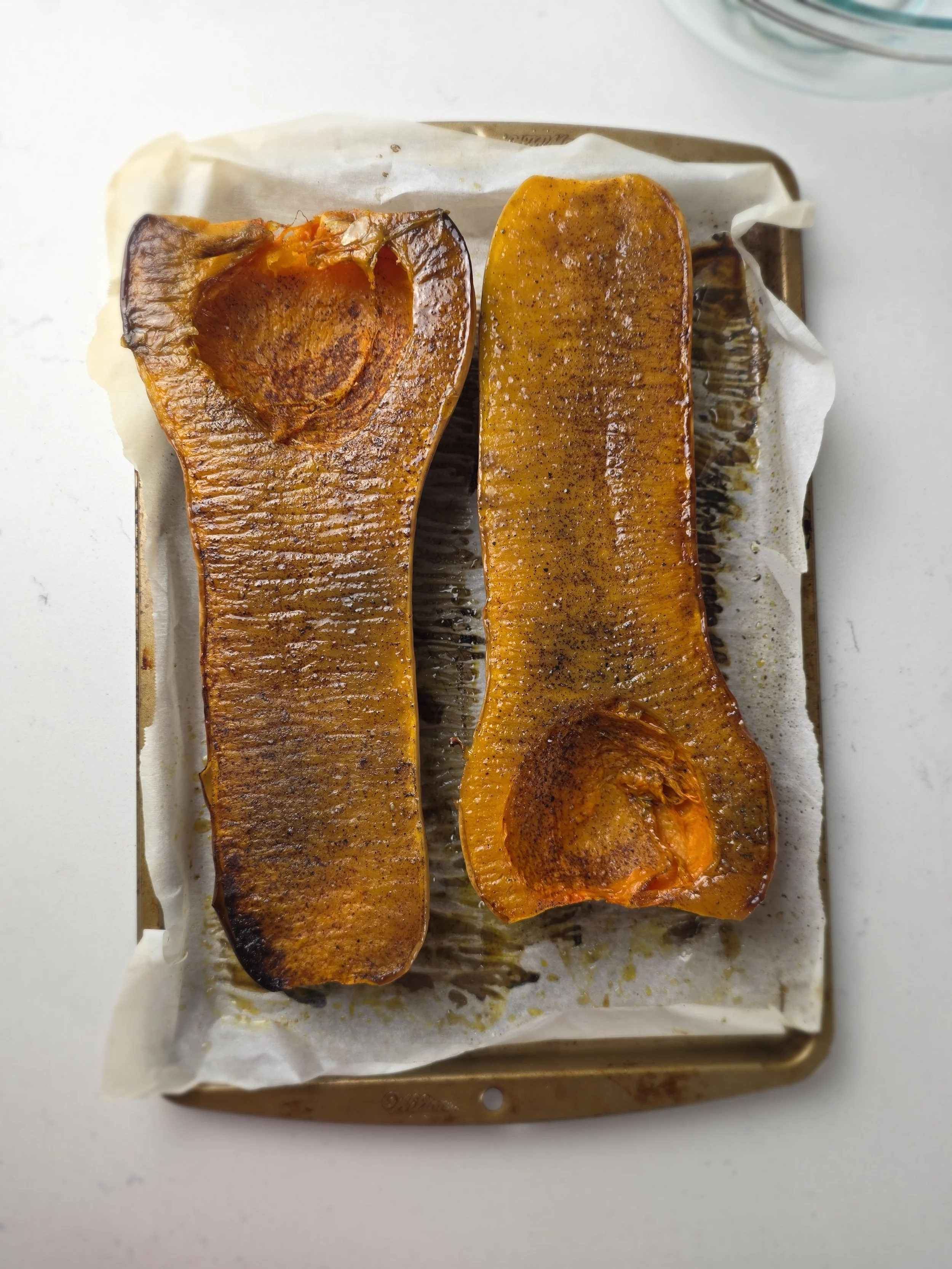
For the butternut squash, you can roast it beforehand for deeper flavor. Brush the squash with olive oil, then season with cinnamon, salt, and optionally a little brown sugar.
Place it cut-side down on a parchment-lined baking sheet and roast in a 400°F / 200°C oven for about 40 minutes, or until the flesh is soft enough to pierce easily with a fork.
Once all the ingredients are combined, adjust the consistency toward the end of the cooking process using milk as needed.
For a thicker, more nhopi-style texture:
- Use more butternut squash
- Use less milk
- Simmer longer for a denser consistency
For a looser Kenyan-style wheat porridge:
- Add more milk
- Use slightly less butternut squash
- Keep the texture smooth and pourable
Nutrition Facts
Calories
320Fat (grams)
13 gCarbs (grams)
42 gFiber (grams)
6 gSugar (grams)
9 gProtein (grams)
9 gI am not a certified nutritionist and any nutritional information on dontmissmyplate.com should only be used as a general guideline.
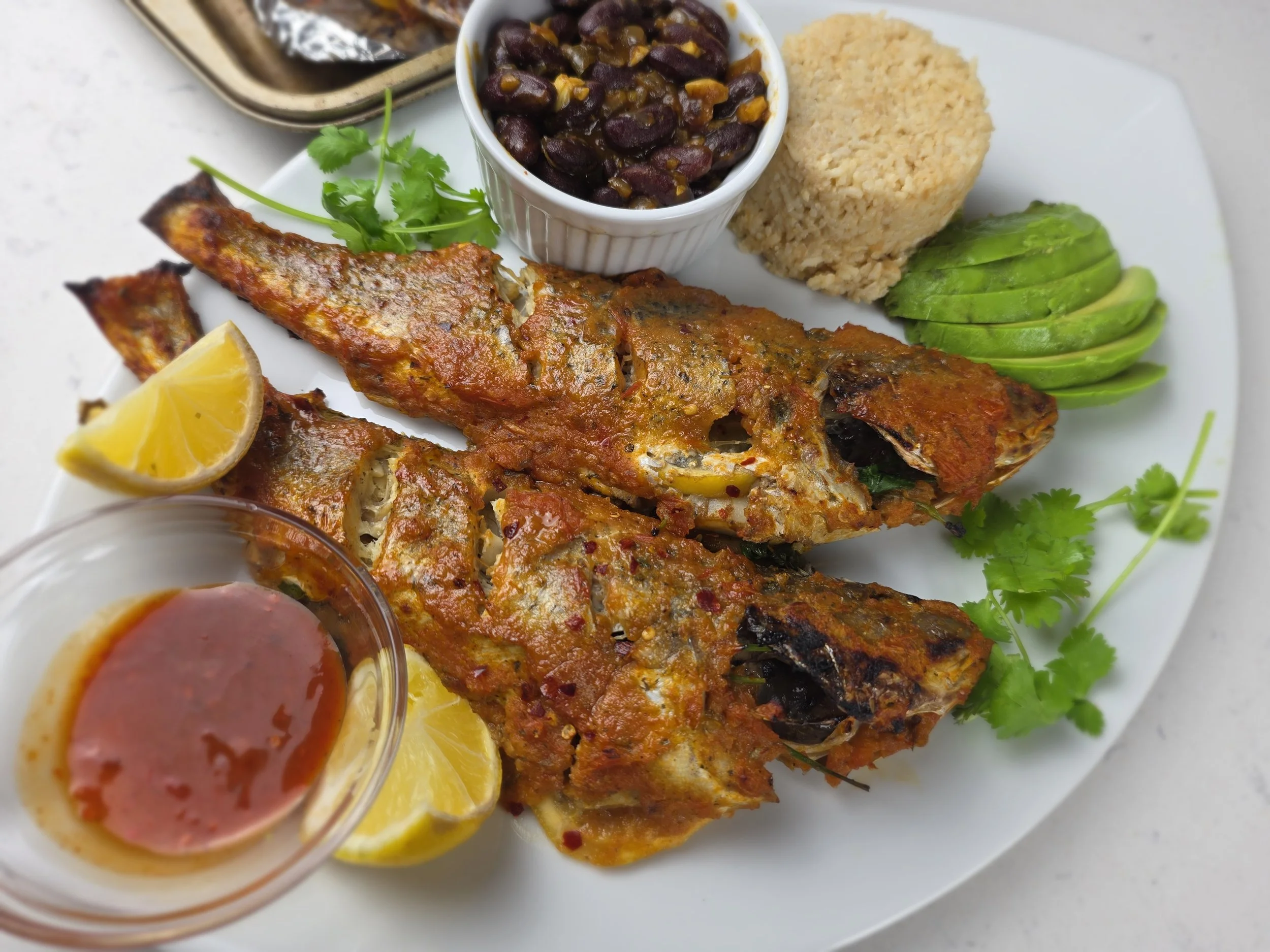
Roasted Croaker Fish with Muto Sauce (Zimbabwean-Style)
Whole fish has always been one of my favorite ways to cook and eat, and if you know my cooking, you know I’m known for it. There’s something about working with the fish in its entirety that feels more connected, more intentional, and ultimately more flavorful.
In Zimbabwe, fish is sometimes overlooked in everyday conversation around food, but it plays a significant role in many communities, especially in areas where access to freshwater lakes makes fish a regular and cherished part of the diet. Whether grilled, fried, or simmered in sauces, fish is a staple that deserves more attention.
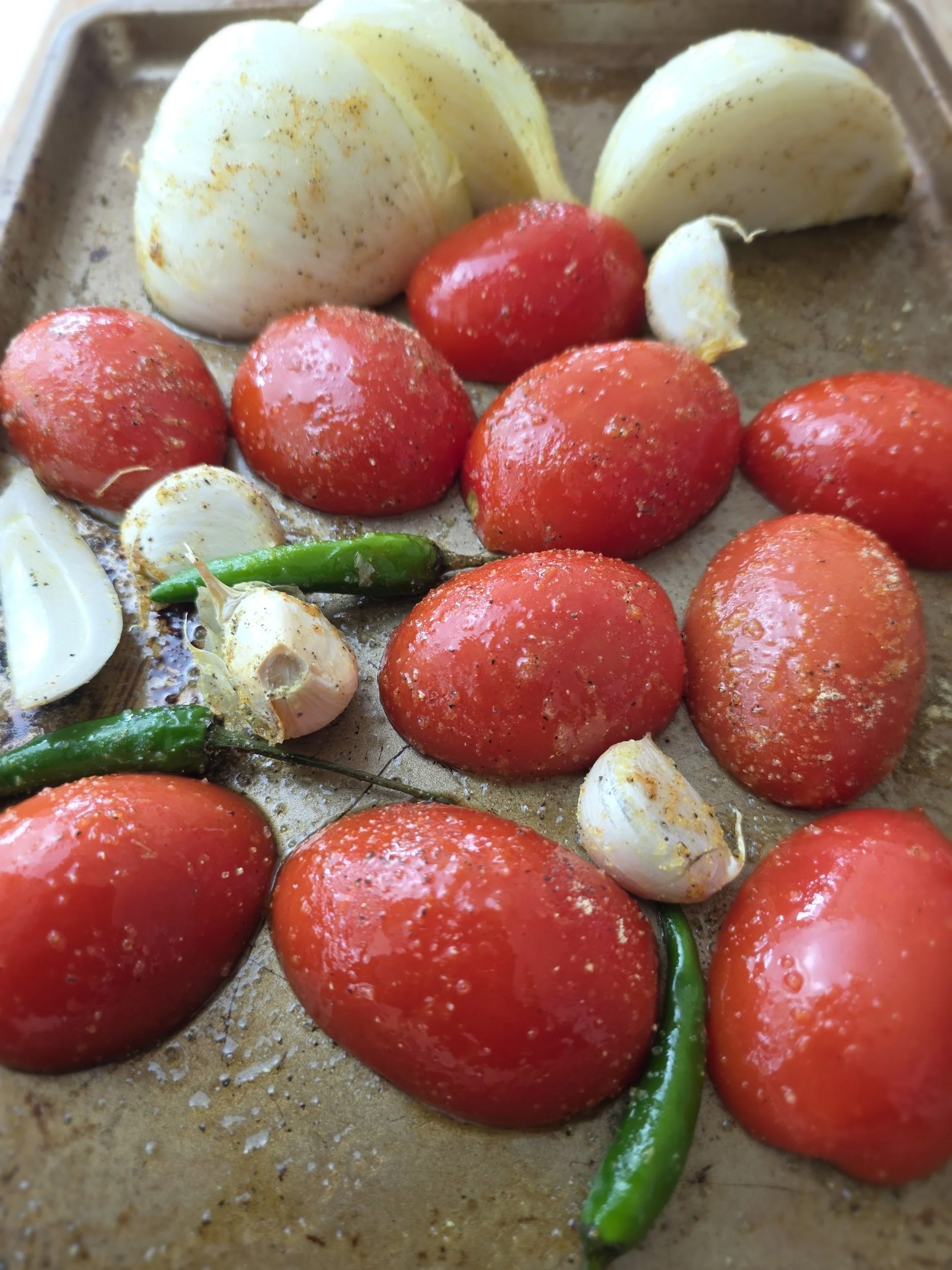
This dish brings that tradition into a slightly more modern, flexible approach. Instead of simply making a standard Zimbabwean tomato-based gravy (muto), where you roast the vegetable and aromatics base (tomatoes, onions, garlic, and chilies) to deepen their flavor, then blend them into what I call a muto-style sauce. It’s perfect for coating fish before finishing it in the oven.
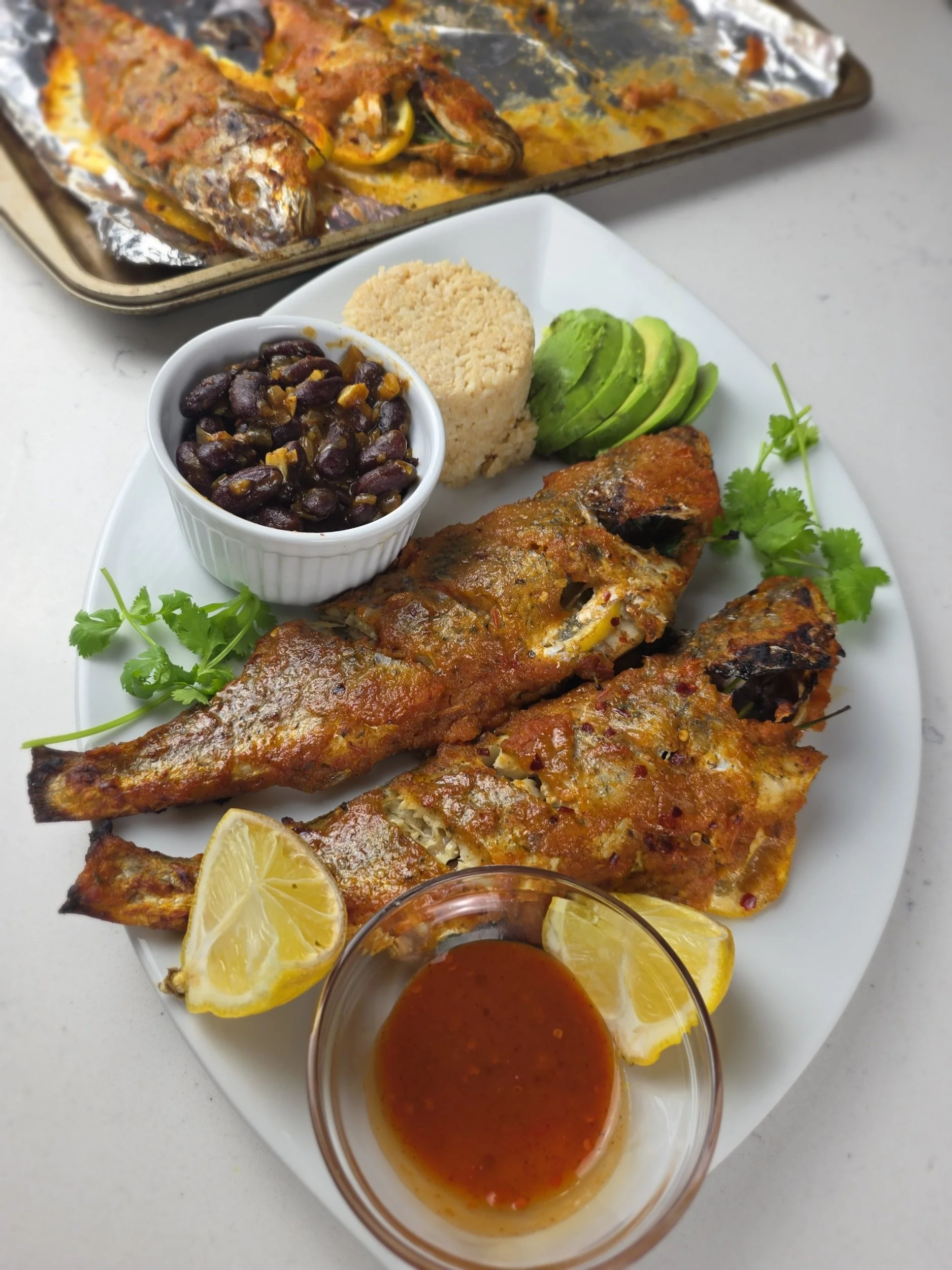
It’s served alongside peanut butter rice and sugar beans, a combination that reflects how Zimbabwean meals often come together: a strong protein, a starch, and something hearty and comforting on the side. The peanut butter rice (also known as mupunga unedovi) adds richness, while the beans bring balance and texture.
More than anything, this dish is about rethinking how we approach familiar flavors. Zimbabwean food doesn’t have to stay in one format, it can evolve and adapt.

Roasted Croaker Fish with Muto Sauce (Zimbabwean Style)
A flavorful roasted whole fish served with a rich roasted vegetable “muto” sauce, paired with optional peanut butter rice and beans for a hearty Zimbabwean-inspired meal.
Ingredients
- 4 small whole croaker fish (~8 inches each), cleaned
- 2–3 tbsp olive oil
- 2 tbsp fish spice
- 2 tsp paprika
- 2 tsp salt
- 2 tsp black pepper
- 4 garlic cloves, sliced or lightly crushed
- 4 slices lemon + juice of 1 lemon (optional)
- Fresh cilantro or parsley (for garnish)
- Chili flakes (optional)
- 1 large onion, cut into wedges
- 5 Roma tomatoes, halved
- 4 garlic cloves, skin on
- 3–4 hot chilies (Thai or similar)
- 2–3 tbsp oil
- 1 tbsp tomato paste
- 1 tbsp Worcestershire sauce
- 1 tbsp seasoned salt (or to taste)
- 1 tsp black pepper
- Splash of stock or water (for blending)
- 1 cup basmati rice
- 2 tbsp smooth peanut butter
- 4 tbsp hot water
- 2 bay leaves
- 1½ tbsp rice seasoning or stock powder
- 1 tsp salt
- 1½ cups cooked sugar or kidney beans (or 1 can, drained)
- 1/3 onion, chopped
- 1/3 shallot, chopped
- 2 tbsp tomato paste
- 1 hot chili pepper, chopped
- 1 cup chicken stock
- 1–2 tbsp oil
- 1 tsp salt (to taste)
Instructions
- Preheat the oven to 220°C / 425°F.
- Toss the onion, tomatoes, garlic, and chilies with oil and salt, then spread them on a baking tray. Roast for about 25 minutes, flipping half way, until everything is soft.
- Remove the garlic skins, then transfer everything to a blender. Add the tomato paste, Worcestershire sauce, black pepper, and a splash of water. Blend until smooth, or mash for a chunkier texture if preferred. Pour into a pan and simmer for about 10 minutes, adjusting seasoning as needed, then set aside.
- Optional (rice): Cook the rice in salted water with bay leaves and seasoning according to package instructions. Once done, keep it warm. Mix the peanut butter with hot water until smooth, then fold it into the cooked rice until evenly combined.
- Optional (sugar beans): Heat oil in a pan for the beans and sauté the onion and garlic until soft. Add chili, tomato paste, and seasoning, stirring well to combine. Add the beans and stock, then simmer for 5–8 minutes until slightly thickened and flavorful.
- Reduce oven temperature to 200°C / 400°F.
- Pat the fish dry and score both sides. Rub with olive oil, salt, pepper, paprika, and fish spice.
- Stuff each fish with garlic, lemon slices, and herbs, then set aside.
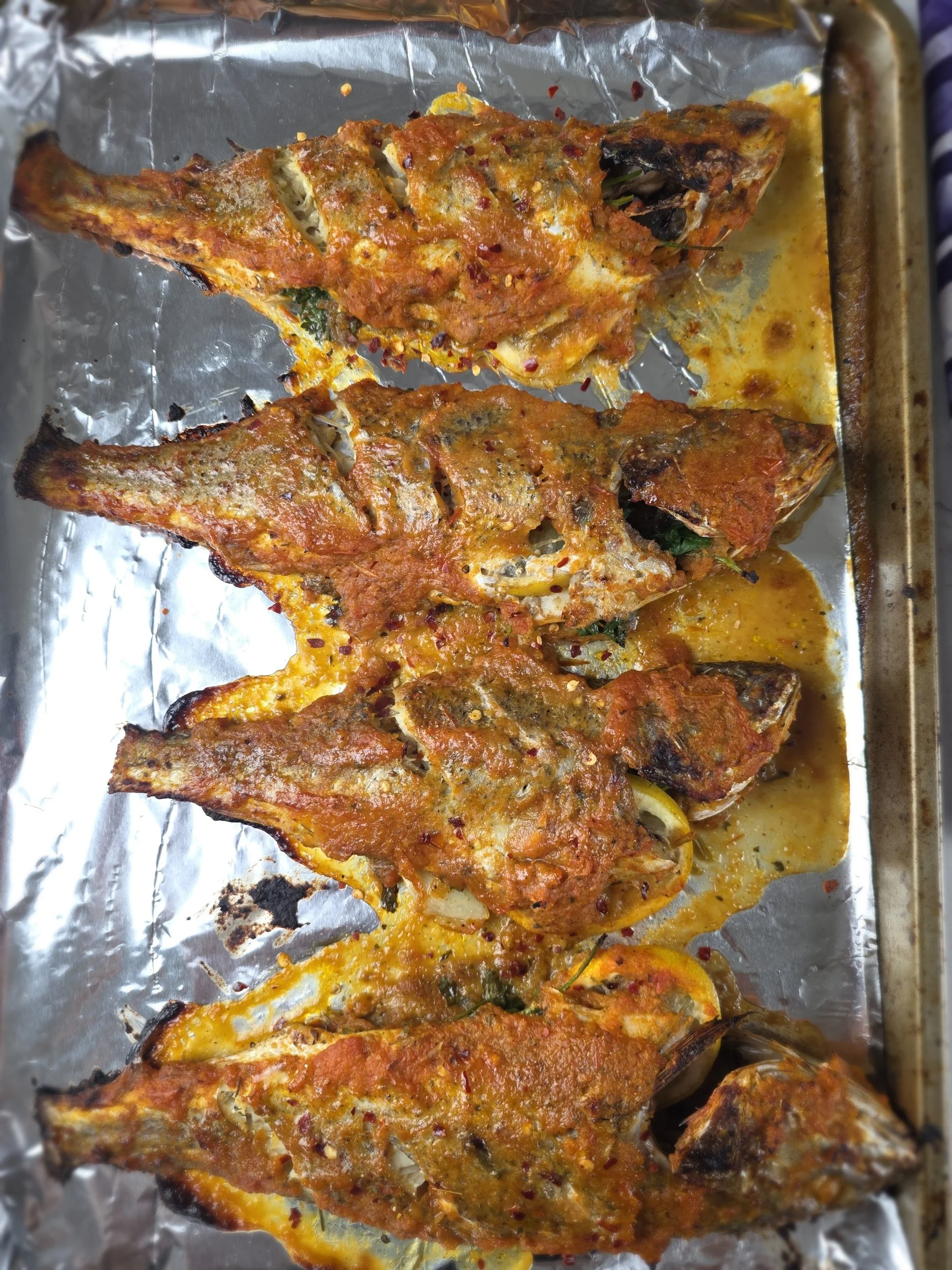
- Place the fish on a baking tray and spoon some of the muto sauce over the top. Cover loosely with foil and bake for 8–10 minutes. Remove the foil and cook for another 5 minutes.
- Brush with more muto sauce, season with chilli flakes, and broil for 2–3 minutes until slightly caramelized.
- Serve with extra sauce and your chosen sides, such as peanut butter rice, beans, avocado, or chili sauce.
Notes
- Roasting the vegetables is essential for deep flavor, don’t skip it.
- Blend for smooth sauce or mash for rustic texture.
- Avoid overcooking the fish; it cooks quickly and can dry out.
- Always mix peanut butter with hot water before adding to rice for smooth consistency.
Nutrition Facts
Calories
500Fat (grams)
25 gCarbs (grams)
40 gProtein (grams)
35 gI am not a certified nutritionist and any nutritional information on dontmissmyplate.com should only be used as a general guideline.

Huku ne Dovi (Zimbabwean Peanut Chicken Stew)
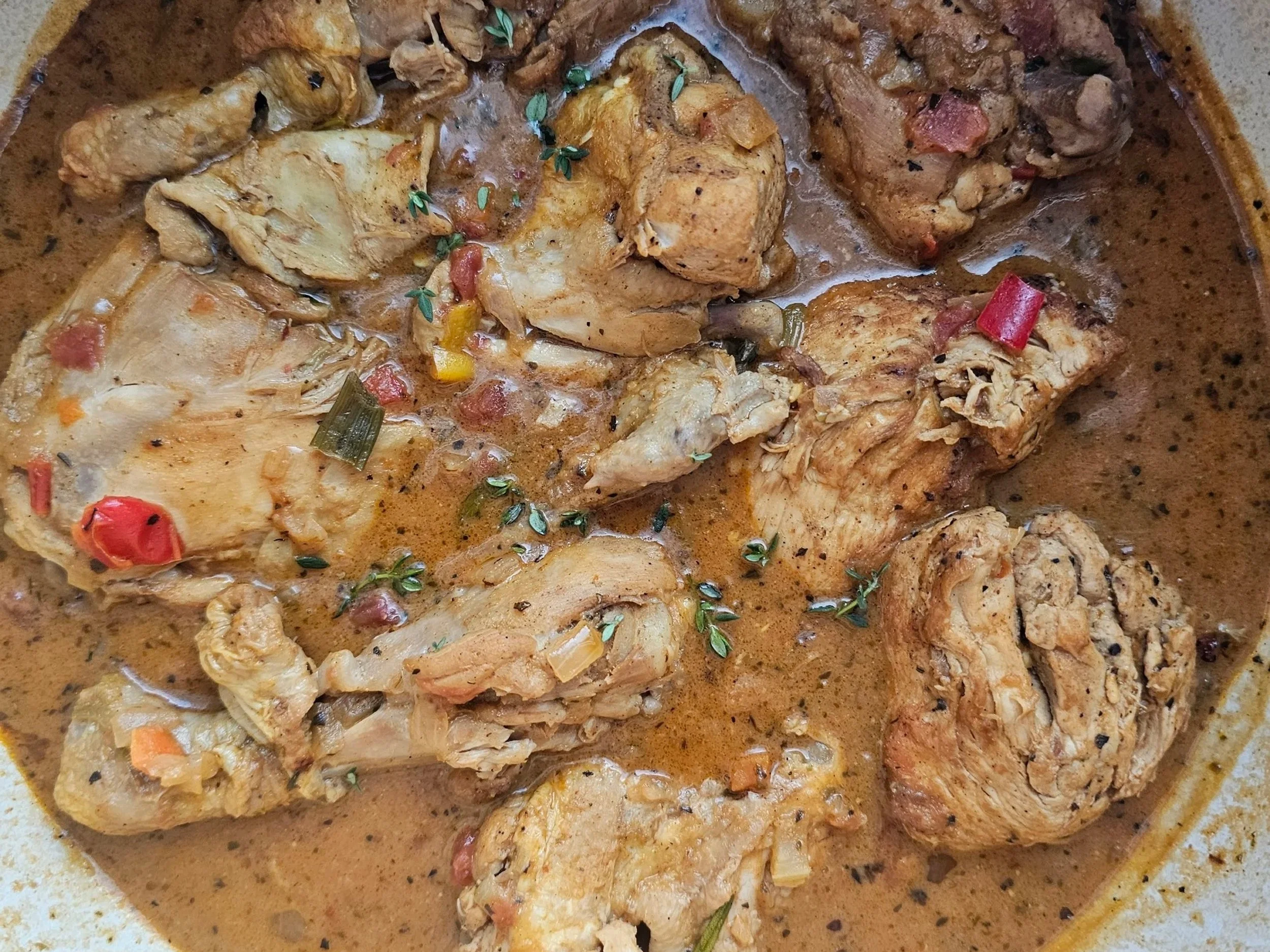
Huku ne dovi, or Zimbabwean peanut butter chicken stew, is a hearty dish made with chicken simmered in a rich peanut butter sauce alongside tomatoes, vegetables, hot chilies, and sometimes bell peppers. The result is a beautiful balance of savory, nutty, and mildly spicy flavors. While often served as a thick stew alongside sadza, rice, or bread, it can also be prepared more like a soup, with the addition of leafy greens, vegetables, and tubers.
For those unfamiliar with the combination of chicken and peanut butter, it may sound unusual at first. Yet throughout much of Africa, groundnuts (peanuts) are a staple ingredient used to enrich sauces, soups, and stews. Similar pairings can also be found in parts of Southeast Asia, where peanuts are used to add richness and depth to savory dishes. In Zimbabwe, peanut butter gives huku ne dovi its distinctive flavor and velvety texture, creating a sauce that coats each piece of chicken beautifully. Beyond its flavor, peanut butter is also an important source of protein and is often used to enrich vegetable dishes or provide nourishment when meat is scarce or unavailable.
Growing up, huku ne dovi was not an everyday meal in my household, which made it feel even more special whenever it appeared on the table. It was the kind of dish that brought warmth and comfort, especially during the cooler months, and one that was best enjoyed with a generous serving of sadza, rice, or fresh bread to soak up every last bit of sauce.
One of the secrets to a great peanut butter chicken stew is finding the right balance between the richness of the peanut butter and the heat of the chilies. Neither should overpower the other. Instead, the gentle sweetness of the peanuts softens the spice, creating layers of flavor that develop as the stew simmers. This recipe is also highly adaptable. Some people prefer the chicken simmered until it becomes tender and nearly falls off the bone, allowing it to absorb the flavors of the sauce. Others enjoy chicken with a firmer texture and crisp, browned skin. If you prefer the latter, simply roast or brown the chicken separately and add it back to the stew just before serving.
The consistency of the sauce can be adjusted to suit your preference as well. A slightly thinner sauce is wonderful spooned over rice, while a thicker stew pairs beautifully with sadza or bread, allowing the sauce to cling to every bite. For the best flavor, use bone-in chicken pieces whenever possible and take the time to brown them before simmering. This simple step adds depth and richness to the finished dish. Allow the stew to cook gently rather than rushing the process, giving the flavors time to meld together and the sauce time to develop its signature richness.
Whether you're discovering Zimbabwean cuisine for the first time or recreating a familiar favorite, this is a dish that showcases the comforting simplicity and bold flavors that make home cooking easy, and memorable.

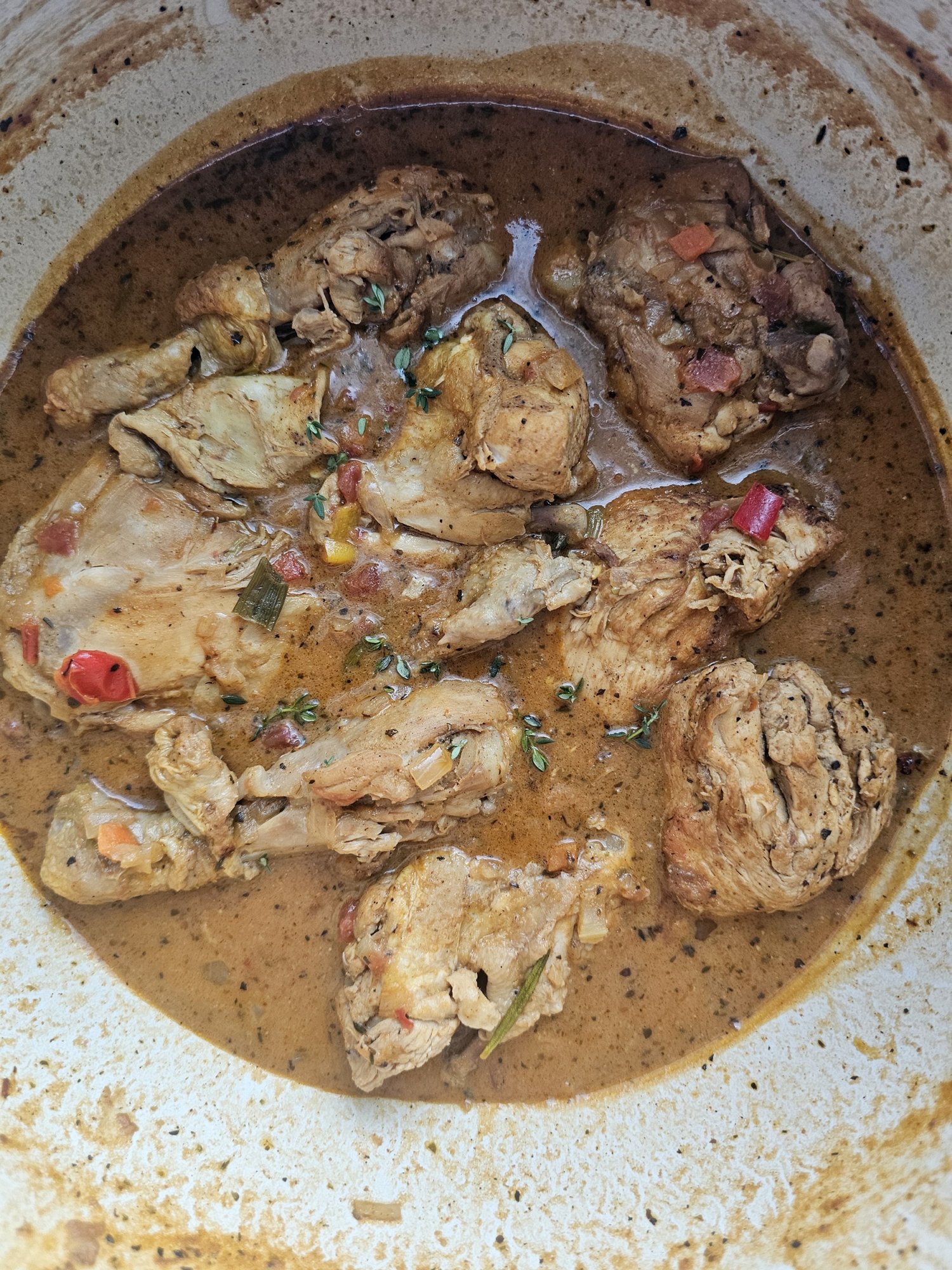
Huku ne Dovi (Spicy Zimbabwean Peanut Chicken Stew)
Zimbabwean Peanut Chicken Stew, or *huku ne dovi*, is a flavorful and comforting dish that combines tender chicken, smooth peanut butter, vibrant vegetables, spicy chilies, and fragrant spices.
Ingredients
- 1/4 cup olive oil
- 1 whole chicken, cleaned and cut into pieces
- 2 tablespoons chicken spice (I used Hind’s)
- 2 green onions
- 1 large hot chilli pepper
- 1/2 large yellow onion
- 1/2 cup mirepoix (chopped onion, carrots and celery)
- 1-2 tablespoons butter
- 1 tablespoon garlic powder
- 1 teaspoon black pepper
- 1 tablespoon paprika
- 1 tablespoon Royco Usavi Mix
- 3 chicken bouillon cubes
- 1/3 cup red wine
- 1 cup diced tomatoes
- 3 sweet bell peppers
- 1/3 cup peanut butter
- 2 tablespoons tomato paste
- 1 teaspoon ginger
- 1 teaspoon cumin
- 1 teaspoon coriander
- 1 teaspoon herb blend (I used basil and thyme)
- 3 cups water
- 3 bay leaves
- 2-3 tablespoons cornstarch or flour (optional)
Instructions
- Season the chicken with all-purpose chicken spice, then brown it in a Dutch oven or non-stick pan over medium to medium-high heat. Once browned, remove the chicken and set it aside.
- In the same pot, add the remaining oil and butter. Stir in the mirepoix, onions, bouillon cubes, garlic powder, black pepper, paprika, and Royco Usavi Mix. Sauté for 2-3 minutes until caramelized. Deglaze the pot with the wine, scraping up any browned bits to incorporate all the flavors.
- Next, add the tomatoes, peppers, chili peppers, cumin, ginger, and coriander. Cook for 1-2 minutes to allow the spices to bloom and the vegetables to soften.
- Return the chicken to the pot and pour in the water. Add more water if you prefer a thinner stew or soup-like consistency. Ensure as much of the chicken as possible is submerged to help it cook evenly. Simmer on low heat for 15-20 minutes.
- In a small bowl, mix the peanut butter with some of the hot stew liquid to thin it out. Stir in the tomato paste, then add the mixture to the pot, ensuring it is evenly distributed.
- Add the bay leaves and continue simmering for another 15-20 minutes.
- Optional: After 5-10 minutes, if you don’t want the chicken to fall off the bone, you can remove it and let the stew continue cooking separately to allow the flavors to come together.
- To thicken the sauce: Remove the chicken, then mix 2 tablespoons of cornstarch or flour with hot liquid from the pot to create a smooth slurry. Stir the slurry back into the pot, mixing well to activate the thickening. Continue cooking until the desired consistency is achieved.
- Season to taste, return the chicken to the pot, and serve hot with yellow rice or your preferred starch.
Nutrition Facts
Calories
438Fat (grams)
20.3 gSat. Fat (grams)
4.8 gCarbs (grams)
62.1 gFiber (grams)
18.5 gProtein (grams)
15.6 gI am not a certified nutritionist and any nutritional information on dontmissmyplate.com should only be used as a general guideline.