
Red Velvet Sheet Cake Recipe
Red velvet cake has always sat in a strange but beautiful space in baking, somewhere between chocolate cake, vanilla cake, and something entirely its own. It is not defined just by its colour but by its texture: soft, velvety, slightly tangy, and incredibly moist. That signature crumb comes from a quiet chemical balance between cocoa, acidity, and fat. Buttermilk and a small amount of vinegar work together with baking soda to create lift, tenderness, and a fine, delicate crumb. For this version, I baked it as a 9x13 sheet cake designed for ease, sharing, and celebration.
This cake leans into a brighter red aesthetic, chosen intentionally for a more festive visual moment. Traditionally, red velvet ranges from a deep reddish-brown with more cocoa and less colouring to a vivid red depending on how much food colouring is used. Here, I leaned into the brighter version for impact and presentation.
If you prefer a more natural tone, you can reduce the food colouring and allow the cocoa and acidity to create a deeper, muted red-brown hue. Some bakers also use beetroot as a natural alternative.
At its core, red velvet is not about perfection, it is about balance. A soft crumb, a gentle cocoa note, and that unmistakable cream cheese frosting that brings everything together. Because honestly, red velvet without cream cheese frosting just does not feel complete.
Why This Cake Works
What makes red velvet so iconic is not intensity, it is chemistry-driven contrast.
The reaction between vinegar and baking soda produces carbon dioxide. This helps the cake rise while keeping the crumb light, soft, and tender instead of dense.
Oil is used instead of butter because it stays liquid at room temperature. This keeps the cake moist for days, even after refrigeration.
Cocoa is used in a small amount on purpose. It adds depth and warmth without turning the cake into a full chocolate cake, allowing the tang and vanilla notes to stand out.
Cream cheese frosting is more than decoration. Its tanginess cuts through the sweetness and richness of the cake, reinforcing the balance that defines red velvet.
Together, these elements are not just flavour choices, they are controlled chemistry working in harmony to create one of the most recognizable celebration cakes.
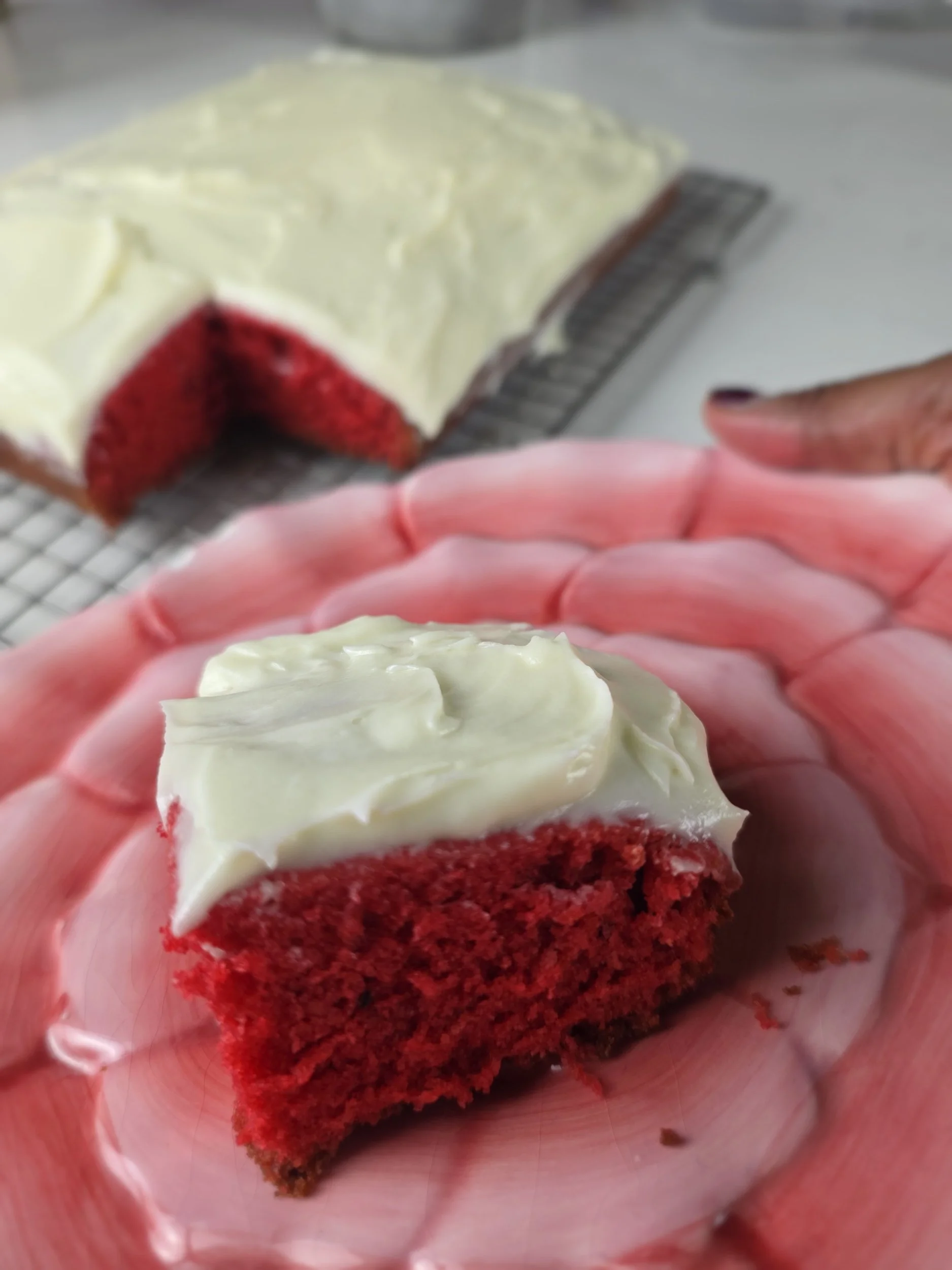
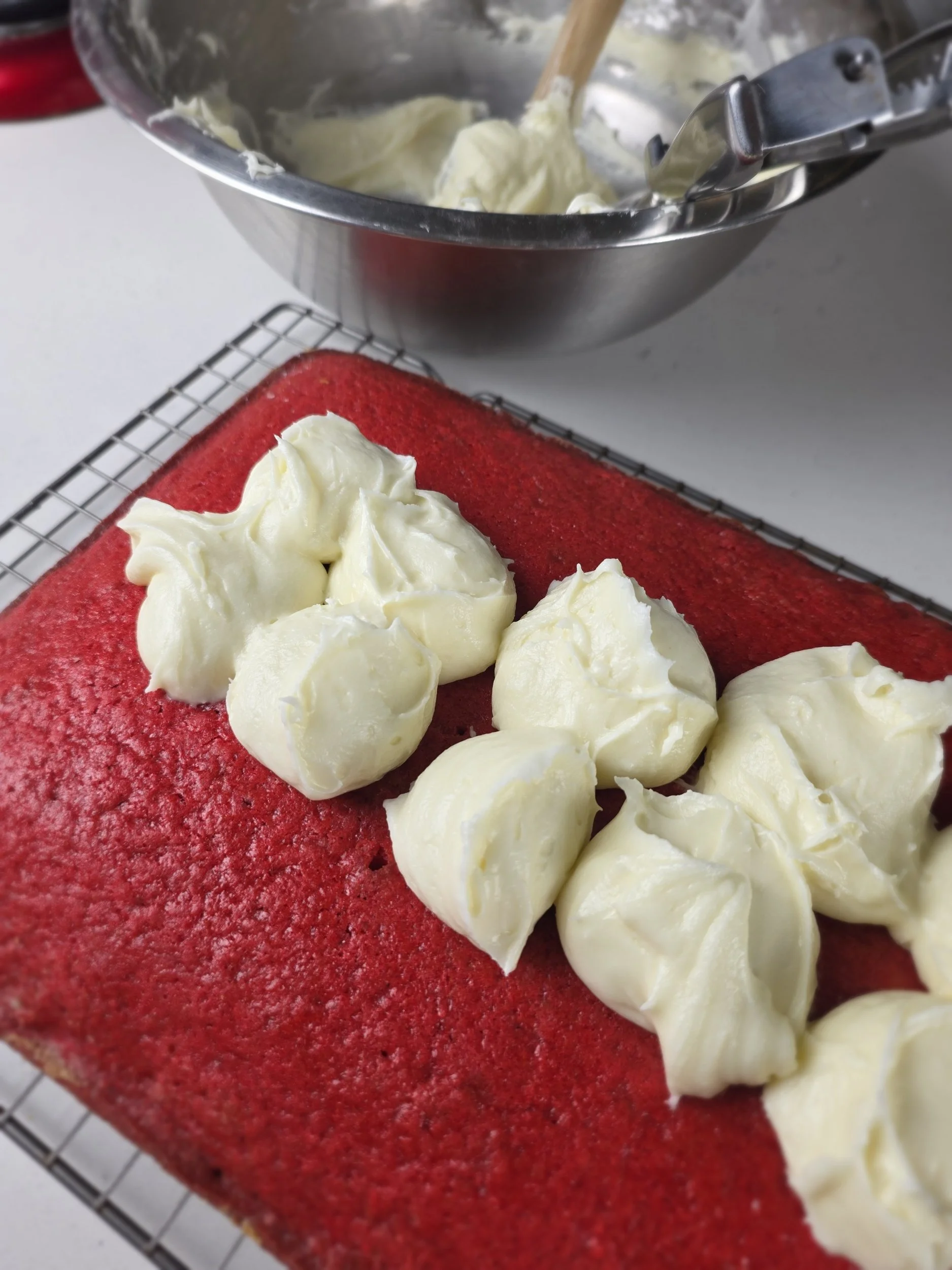

Red Velvet Sheet Cake (9x13)
This red velvet sheet cake is soft, moist, and perfectly tangy with a fine, velvety crumb. Baked in a 9x13 pan for easy serving, it uses simple pantry ingredients like buttermilk, cocoa, and oil to create its signature texture. Finished with a rich cream cheese frosting, this cake is ideal for celebrations, gatherings, or anytime you want a classic dessert with a tender, bakery-style finish.
Ingredients
- 2½ cups cake flour
- 1½ cups granulated sugar
- 1 tsp baking soda
- 1 tsp salt
- 1 tsp cocoa powder*
- 1½ cups peanut oil (or neutral oil)
- 2 large eggs
- 1 cup buttermilk (or 1milk + 1 tbsp white vinegar (rested 5–10 min)
- *2 tbsp red food colouring (use less for a more muted colour and increase cocoa powder slightly if needed)
- 1 tsp vanilla extract
- 1 tsp white vinegar
- 8oz (225g) cream cheese (softened)
- 115g unsalted butter (softened)
- 4 cups powdered sugar
- 1 tsp vanilla extract
- Pinch of salt
Instructions
- Preheat oven to 175°C (350°F). Grease and line a 9x13 pan.
- If you don't have buttermilk, mix milk and vinegar and let it sit until slightly curdled.
- Whisk dry ingredients together in one bowl.
- In another bowl, mix oil, eggs, vanilla, colouring, and buttermilk mixture.
- Combine wet and dry ingredients until just mixed, but do not overwork.
- Add the vinegar and fold gently.
- Pour into pan and bake 35–40 minutes or until a toothpick comes out clean.
- Cool completely before frosting.
- Beat frosting ingredients until fluffy and spread over cooled cake.
Nutrition Facts
Calories
420Fat (grams)
22 gCarbs (grams)
52 gSugar (grams)
38 gProtein (grams)
4 gI am not a certified nutritionist and any nutritional information on dontmissmyplate.com should only be used as a general guideline.