
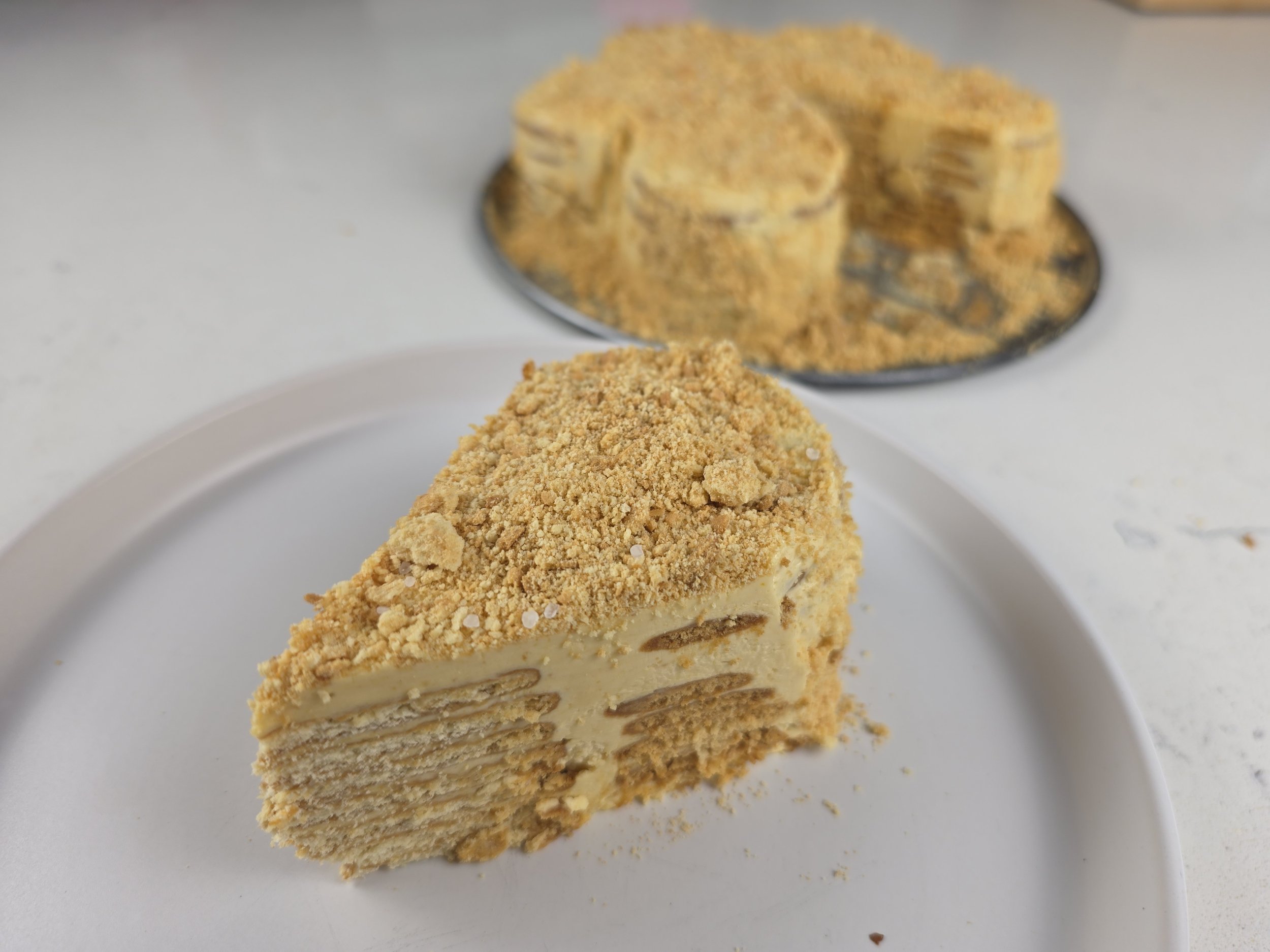
Salted Caramel Bola de Bolacha (Portuguese Biscuit Cake)
A rich Portuguese-inspired biscuit cake made with espresso-dipped Maria biscuits, salted caramel buttercream, and homemade dulce de leche.
Bola de Bolacha is one of my favorite desserts from Portugal, so naturally, I had to try it more than once. During my trips, I tasted three different versions, and each one gave me a completely different impression of this classic Portuguese biscuit cake.
The first was moist, luscious, and creamy without being overwhelming, with a distinctly caramel-forward flavor and a light caramel drizzle. This was by far my favorite. The second had a much stronger coffee flavor that reminded me more of tiramisu than the dessert I had been expecting. It was well-made, but the coffee was definitely the dominant flavor. The third was the least memorable. It was dry and flat, and if I had to identify a flavor, I'd say condensed milk and slightly stale biscuits.
So, quite a range—but between a restaurant, a high-end bakery, and a beach café, perhaps the variety isn't all that surprising.
I decided to take matters into my own hands. After testing and researching different approaches, I landed on my own version, with one priority above everything else: bringing the caramel flavor forward.
My Salted Caramel Bola de Bolacha keeps the recognizable structure of the Portuguese classic—coffee-dipped Maria biscuits layered into a flower-shaped cake—but uses a salted caramel buttercream made with homemade dulce de leche, egg yolks, and butter.
The result is rich, creamy, coffee-infused, and deeply caramel-forward, with just enough salt to balance the sweetness.
This isn't meant to be a traditional Portuguese recipe. It's my interpretation of a dessert I loved discovering in Portugal.

Salted Caramel Bola de Bolacha
A rich, coffee-soaked Portuguese biscuit cake layered with salted caramel buttercream, plain Maria biscuits and caramel Maria biscuits. Inspired by three Bola de Bolacha I tasted in Portugal, this version puts caramel at the center of every bite.
Ingredients
- 1 cup strong brewed coffee
- 1 tbsp granulated sugar
- 8 oz (227 g) unsalted butter, softened
- 7 oz (198 g) dulce de leche (½ cup + 1 tbsp)
- 2 large egg yolks
- 2 tbsp granulated sugar
- ½ tsp vanilla extract
- ¼ tsp course or fine sea salt
- 1½ packets Maria biscuits (approximately 49 biscuits)
- 4-6 additional biscuits, crushed for topping and sides (optional)
Instructions
- Brew 1 cup of strong coffee, then stir in 1 tablespoon sugar while it's still hot.
- Pour the coffee into a shallow bowl and allow it to cool completely.
- Place the 2 egg yolks and 2 tablespoons sugar in a heatproof bowl.
- Set the bowl over a saucepan of gently simmering water, making sure the bottom of the bowl does not touch the water. Whisk continuously until the mixture reaches 160°F (71°C). Remove from the heat and continue whisking for about 1 minute.
- Allow the egg mixture to cool to room temperature.
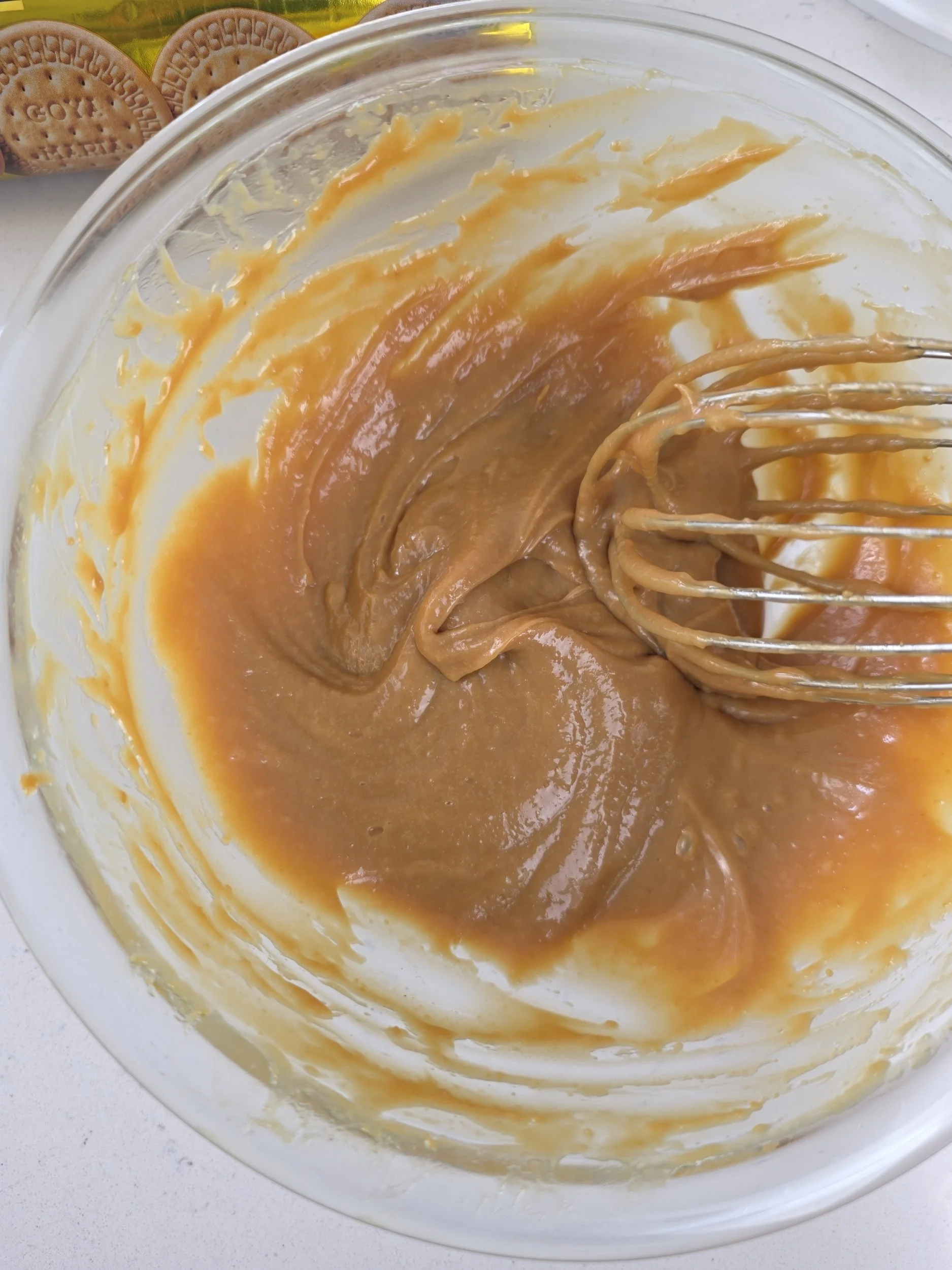
- Place the 7 oz dulce de leche in a bowl. Add the ½ teaspoon vanilla and ¼ teaspoon salt. Stir with a spatula until smooth.
- Add the cooled egg-yolk mixture and stir with a spatula until completely incorporated.
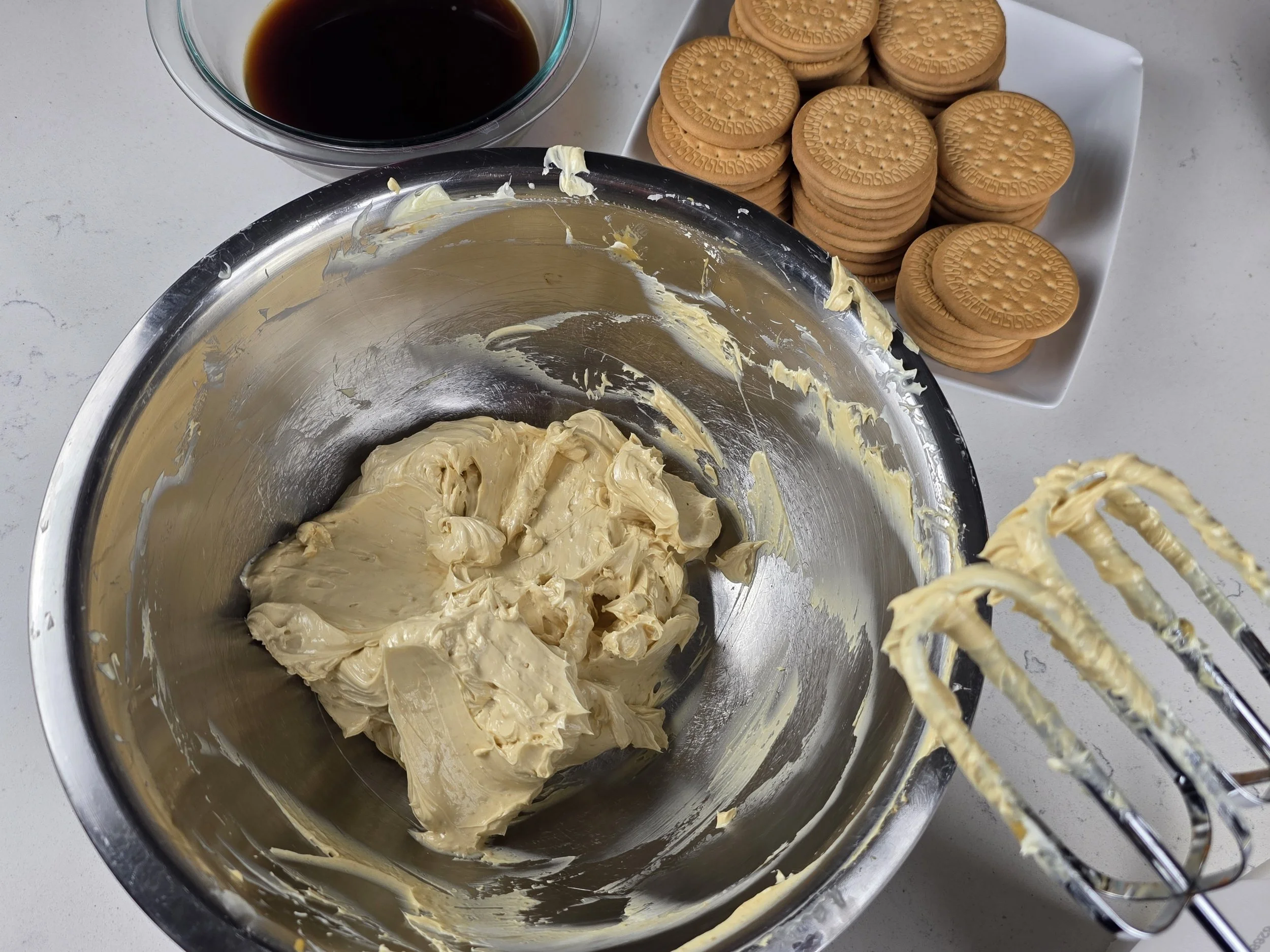
- Place the softened butter in a mixing bowl. Beat with an electric mixer for 3–4 minutes, until light and creamy.
- Gradually add the dulce de leche mixture, about 3 tablespoons at a time, beating after each addition for about 15 seconds, or just until incorporated.
- Continue until all of the caramel mixture has been incorporated and the buttercream is smooth and spreadable. If the buttercream is too soft to spread cleanly, refrigerate it for 15–20 minutes before assembling.
- Place a springform pan or removable-bottom cake pan on a flat tray.
- Spread about 1 tablespoon of buttercream in the center of the base to help hold the first biscuits in place.
- Quickly dip one Maria biscuit at a time into the cooled coffee. Do not soak.
- Arrange 7 biscuits in a flower pattern: 1 in the center with 6 surrounding it. Spread a thin, even layer of buttercream over the biscuits.
- Repeat with another 7 biscuits, alternating between plain and caramel Maria biscuits. Continue until you have 7 biscuit layers.
- Spread the remaining buttercream over the top, then sprinkle the crushed biscuits over the top and sides.
- Cover and refrigerate for at least 4 hours, preferably overnight. The biscuits will soften as they absorb the coffee and the buttercream will firm as it chills.
- Remove the cake from the refrigerator and allow it to sit at room temperature for approximately 5–10 minutes before slicing.
- Release the sides of the springform pan and keep the cake on its removable base for serving.
Notes
- Eggs: If using regular (non-pasteurized) eggs, cook the egg yolks and sugar to 160°F (71°C) as directed. If using pasteurized eggs, you can skip this cooking step and use the yolks according to the manufacturer's guidance.
- Dulce de leche: Store-bought dulce de leche works perfectly. If you can't find it, you can make your own by slowly cooking sweetened condensed milk until thick and caramelized.
- Maria biscuits: Traditional Bola de Bolacha uses Maria biscuits. I use a combination of plain and caramel Maria biscuits for extra caramel flavor. If caramel Maria biscuits aren't available, use plain Maria biscuits throughout.
- Storage: Keep the finished cake covered and refrigerated for up to 4 days. The biscuits will continue to soften as it rests.
- Freezing: The assembled cake can be frozen for up to 1 month. Wrap it tightly before freezing. Thaw overnight in the refrigerator before serving, then allow it to sit at room temperature for 5–10 minutes before slicing.
- Serving: For the cleanest slices, make the cake at least 4 hours ahead; overnight is even better. Let it sit at room temperature for 5–10 minutes before serving.
Nutrition Facts
Calories
465Fat (grams)
28 gSat. Fat (grams)
17 gCarbs (grams)
42 gFiber (grams)
1 gSugar (grams)
29 gProtein (grams)
5 gSodium (milligrams)
220 mgI am not a certified nutritionist and any nutritional information on dontmissmyplate.com should only be used as a general guideline.
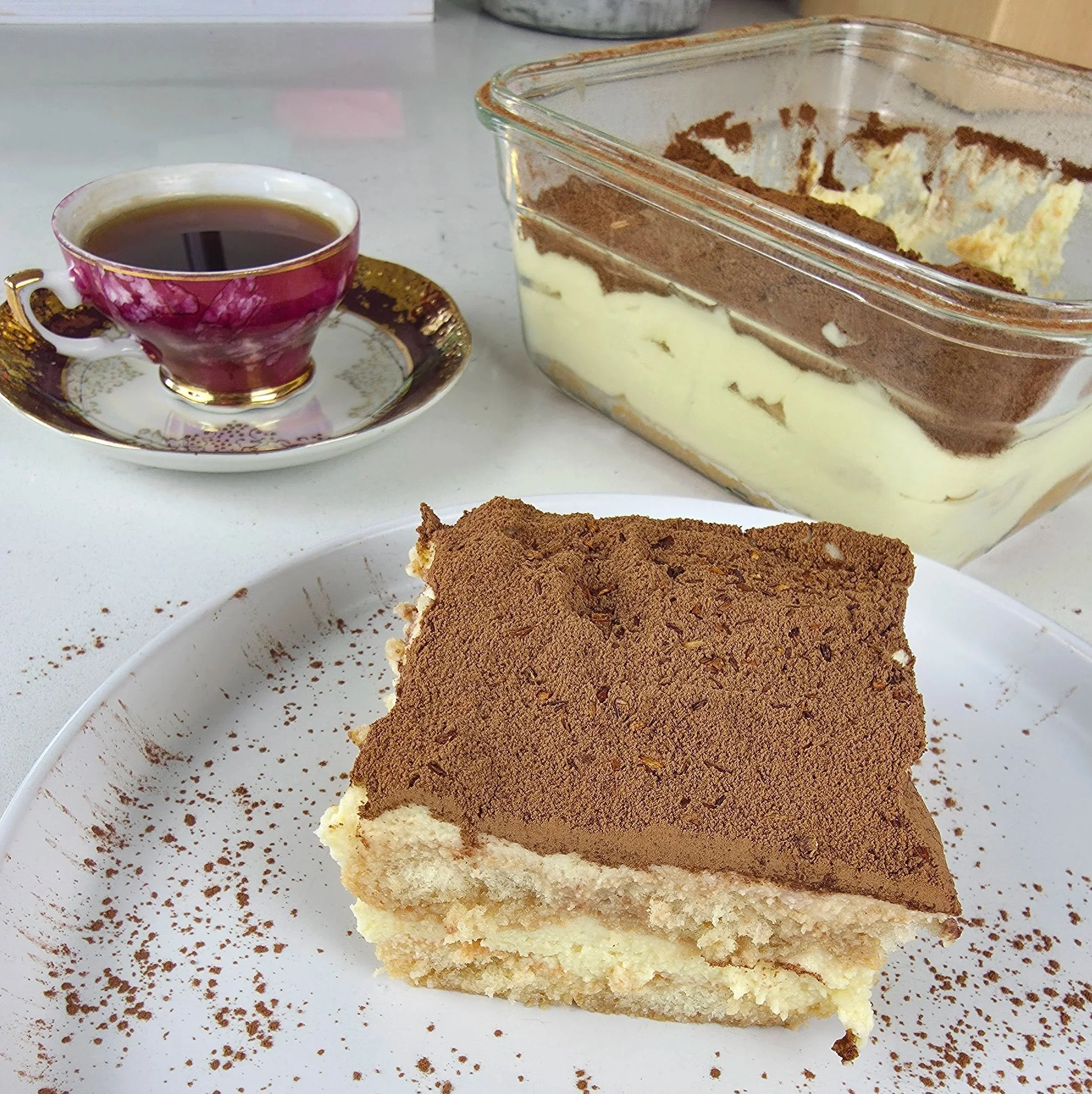
Rooibos Tiramisu
A Southern African-inspired take on Italian tiramisu, this Rooibos Tiramisu replaces the traditional coffee soak with strong rooibos tea, masala wine and vanilla for a creamy, aromatic dessert that's perfect for tea lovers.
Tiramisu is one of those desserts that doesn't really need an introduction. Creamy mascarpone, delicate ladyfingers, cocoa and that unmistakable coffee-soaked bite make it a classic for a reason. But what happens when you're a tea lover who wants to experience tiramisu without making coffee the star?
I first fell in love with making tiramisu during a cooking class in Italy, where I had the chance to make the classic version from scratch. There's something special about preparing a dish in the place where it originated—or at least, in the country that made it famous around the world. Working with mascarpone, egg yolks, sugar and those delicate Italian ladyfingers gave me a much better appreciation for why the dessert works so well. But when I started thinking about putting my own spin on it, I didn't want to simply swap one ingredient for another and call it a new recipe. I wanted the twist to actually make sense, and for me, that meant rooibos.
Rooibos is naturally caffeine-free, with a mellow, nutty, earthy sweetness and subtle notes that can lean toward vanilla, honey and even cocoa depending on the blend. It also happens to be one of those ingredients that immediately brings a South African connection to a dessert that is otherwise unmistakably Italian.
Instead of soaking the ladyfingers in coffee, they're dipped in a strong rooibos infusion, finished with a little marsala wine and vanilla. The result isn't supposed to taste like coffee tiramisu with tea substituted for the coffee. The goal is something different: a tiramisu where rooibos has its own identity.
I also wanted to keep the dessert approachable for people who simply aren't coffee drinkers. If you love tea, don't drink caffeine, or just want something unexpected for dessert, this version gives you the creamy, cocoa-dusted experience of tiramisu while taking it in a completely different direction.
The mascarpone cream remains rich and airy, while the rooibos brings warmth and depth. A small amount of espresso powder in the cocoa topping is there only to deepen the chocolate notes—not to turn the dessert back into a coffee tiramisu.
It's a little bit Italy, a little bit Southern Africa, and very much my kind of fusion.
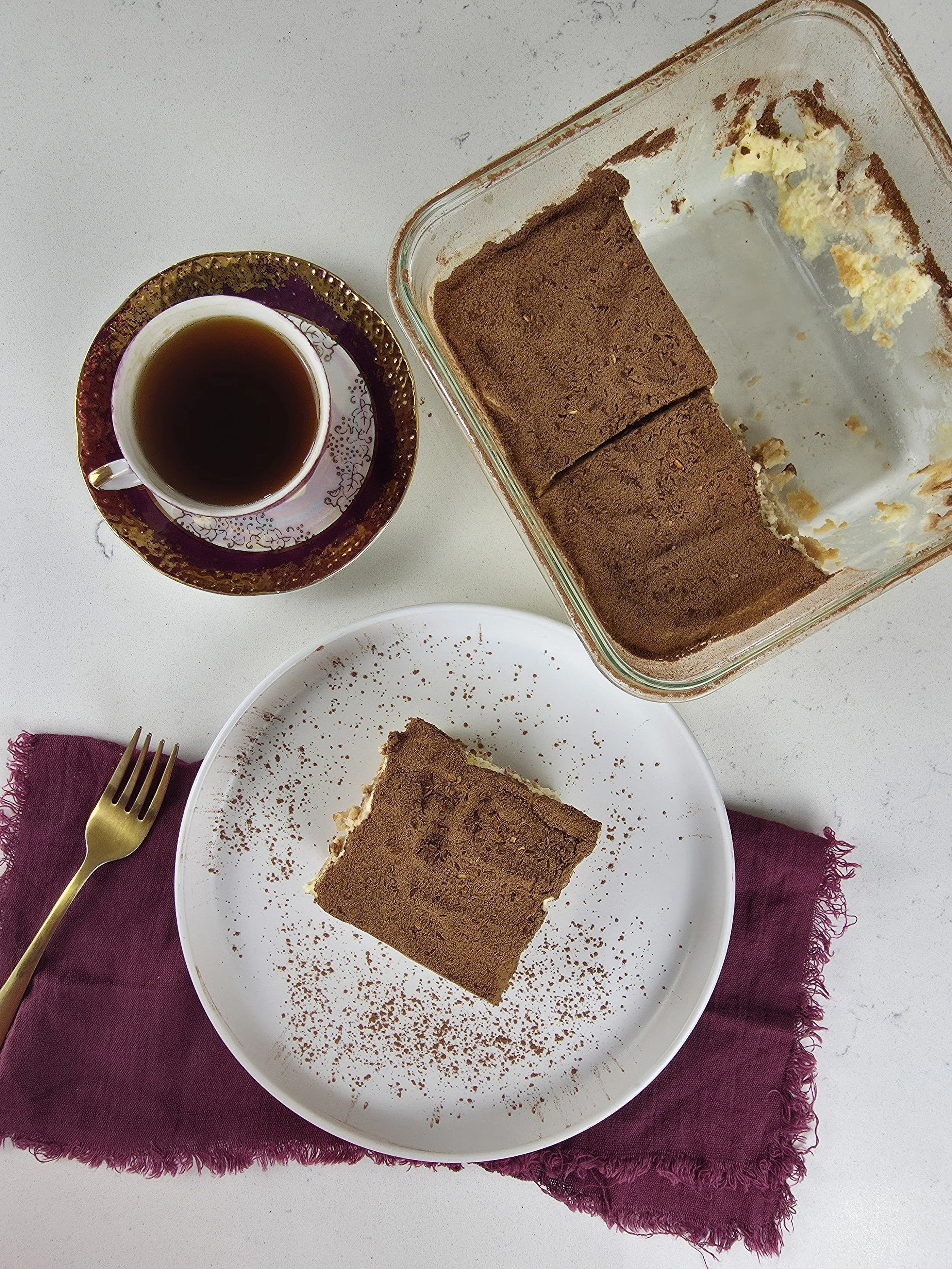
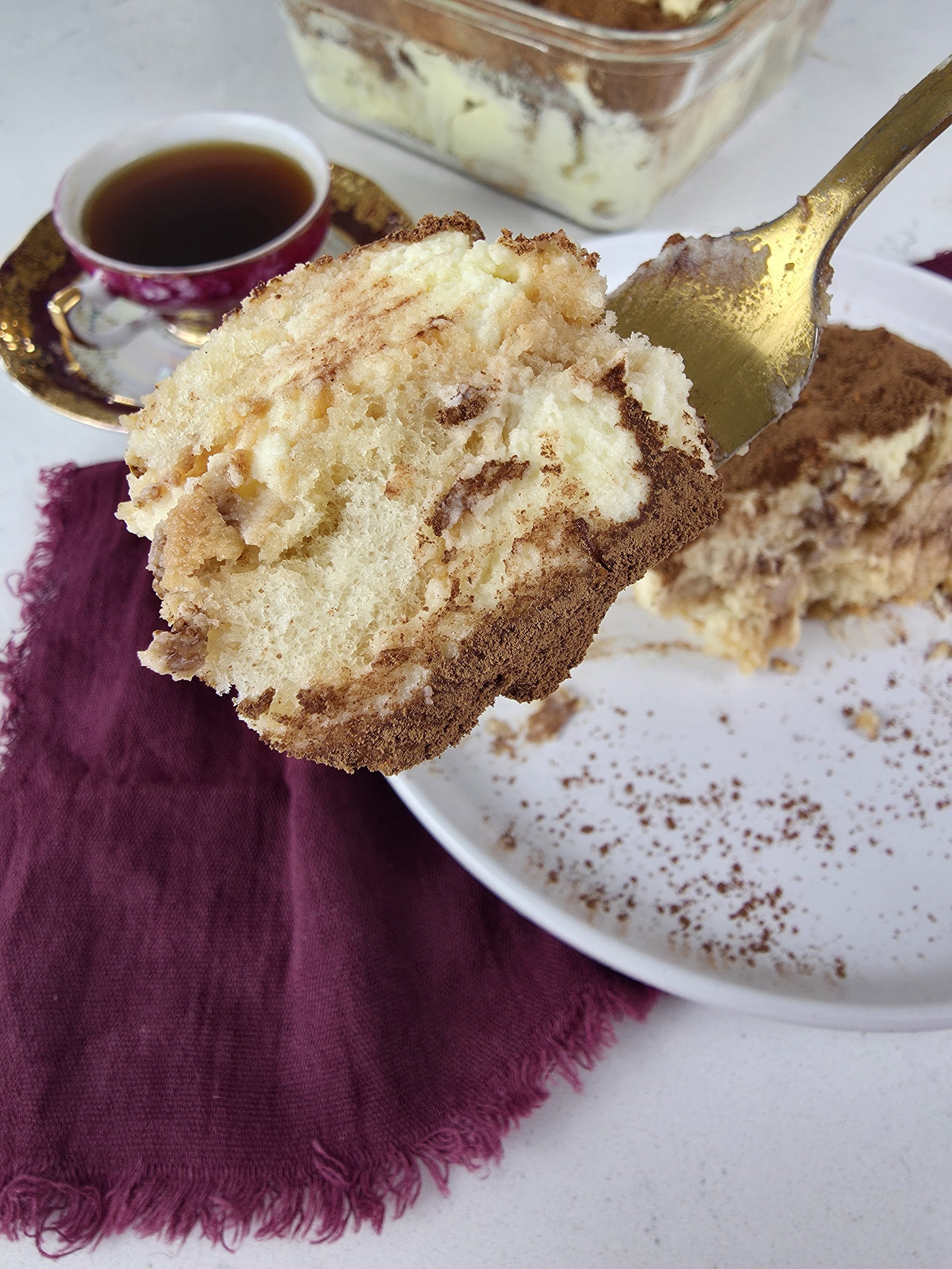

Rooibos Tiramisu
A Southern African-inspired twist on classic Italian tiramisu, made with bold rooibos tea, masala wine, mascarpone and a cocoa-espresso finish.
Ingredients
- 1 cup water
- 2 teaspoons loose-leaf rooibos
- 1 tablespoon granulated sugar
- 2 tablespoons masala wine
- ½ teaspoon vanilla extract
- 2 large egg yolks
- ¼ cup (50g) granulated sugar
- 1 tablespoon masala wine
- 8 ounces (225g) mascarpone, slightly softened
- ⅔ cup (160ml) heavy whipping cream, cold
- ½ teaspoon vanilla extract
- Pinch of salt
- 12–14 Savoiardi ladyfingers
- Topping
- 1 tablespoon unsweetened cocoa powder
- ¼ teaspoon espresso powder
- Optional: a tiny pinch of very finely crushed rooibos leaves for visual garnish
Instructions
- Bring 1 cup of water to a boil. Add the rooibos and steep for 8–12 minutes, or until very strong. If needed, add a little more water and additional loose-leaf rooibos to account for evaporation and maintain enough liquid for dipping the ladyfingers. Remove the tea bags or strain the loose tea once the rooibos is ready. You can prepare the remaining components while the tea steeps.
- While the tea is still hot, stir in the sugar until dissolved. Allow the tea to cool to warm or room temperature, then stir in the masala wine and vanilla. Set aside.
- In a heatproof bowl, whisk together the egg yolks, sugar, and 1 tablespoon of masala wine. Place the bowl over a saucepan of gently simmering water, making sure the bottom of the bowl does not touch the water. Whisk constantly until the mixture reaches 160°F. Remove from the heat and let cool for about 5 minutes.
- Transfer the cooked yolk mixture to a large bowl. Add the mascarpone, vanilla, and salt, and whisk until smooth.
- In a separate bowl, whip the cold heavy cream to medium-stiff peaks. Gently fold half of the whipped cream into the mascarpone mixture, then fold in the remaining cream just until combined. Do not overmix.
- Pour the rooibos soak into a shallow dish. Dip each ladyfinger very briefly, about 1 second per side, until moistened but not saturated.
- Arrange the dipped ladyfingers in a single layer across the bottom of a 6 × 6-inch dish, breaking them as needed to fit. Spread half of the mascarpone cream evenly over the ladyfingers. Add a second layer of dipped ladyfingers, followed by the remaining mascarpone cream. Smooth the top.
- Combine the cocoa powder and espresso powder, then sift the mixture evenly over the tiramisu. If desired, finish with a tiny pinch of finely crushed rooibos leaves for visual contrast.
- Cover and refrigerate for at least 4 hours, preferably overnight. Serve chilled.
Notes
- Strong rooibos matters. The tea should taste more concentrated than a normal cup because the mascarpone and ladyfingers will mellow it.
- Don't oversoak the ladyfingers. A very quick dip keeps the tiramisu structured rather than soggy.
- The espresso powder is subtle. It deepens the cocoa flavor without turning this into coffee tiramisu.
- Masala wine: The small amount adds warmth and spice without overpowering the rooibos.
- Egg safety: The yolk mixture is heated to 160°F before being incorporated into the cream.
Nutrition Facts
Calories
580Fat (grams)
37 gSat. Fat (grams)
22 gCarbs (grams)
56 gSugar (grams)
29 gProtein (grams)
9 gI am not a certified nutritionist and any nutritional information on dontmissmyplate.com should only be used as a general guideline.