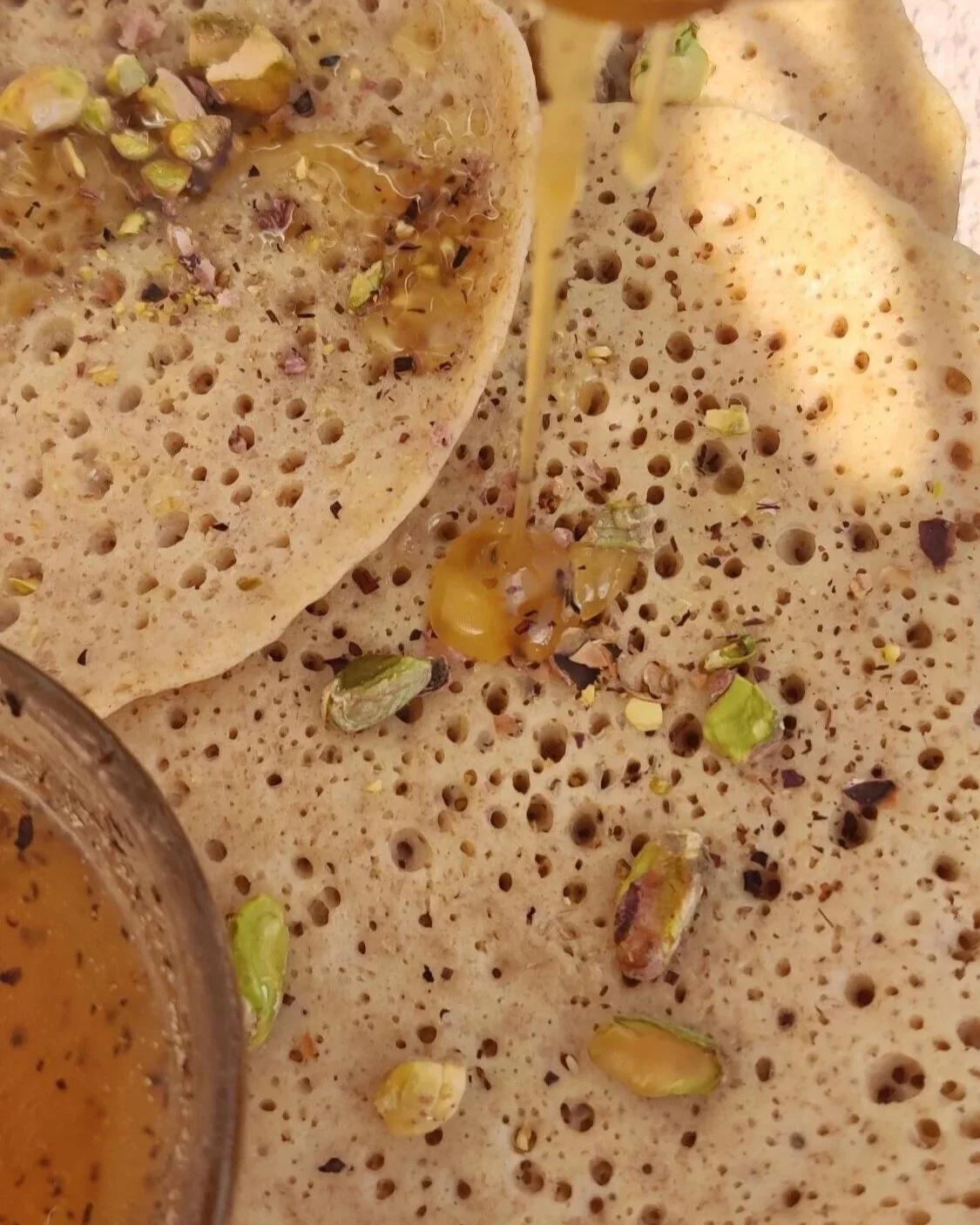
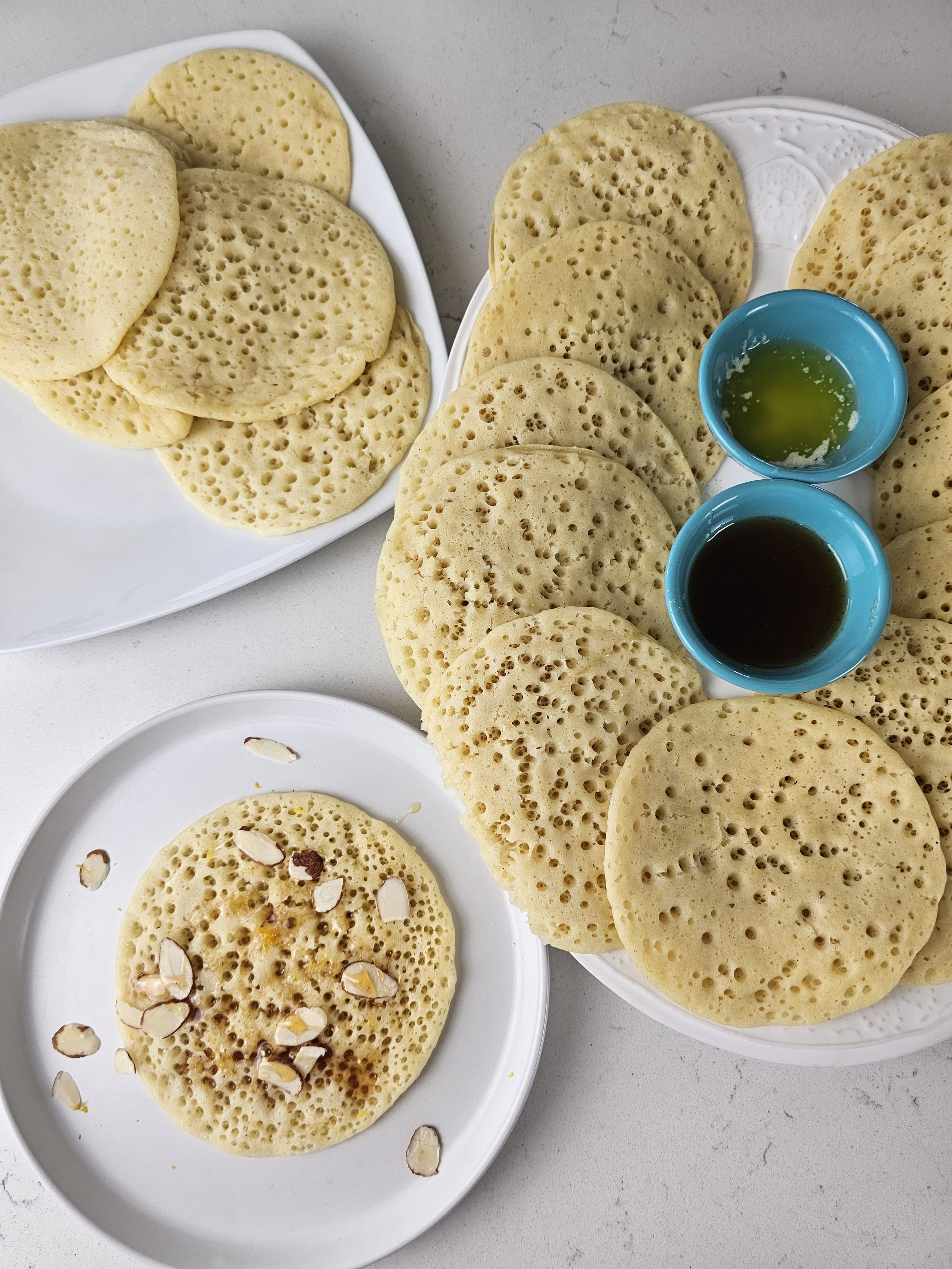
Baghrir (Thousand-Hole Moroccan Pancakes) – with Orange-Chai Honey Syrup
Baghrir are one of the most distinctive traditional breakfast foods in Moroccan and broader North African cuisine. Often called “thousand-hole pancakes,” they are instantly recognizable by their porous, sponge-like surface that forms as the batter cooks. These tiny holes are not just visually striking, they are functional, allowing the pancakes to absorb honey, melted butter, or syrup in a way few other flatbreads can. That is part of what made them so exciting for me to discover years ago because the pancakes can be completely transformed through different syrups and toppings in a way that regular pancakes simply cannot.
Unlike Western-style pancakes, Baghrir are made from a yeast-leavened semolina batter that is blended until completely smooth and then left to rest until light and airy. They are cooked on only one side, typically in a dry nonstick pan, which encourages the characteristic holes to form across the surface as steam rises through the batter. The result is a soft, tender pancake with a delicate structure specifically designed to soak up flavor.
Baghrir exist within a much larger North African breakfast tradition centered around bread-like and yeast-risen foods. In Morocco, mornings often revolve around shared plates of flatbreads such as msemen, harcha, and other semolina-based preparations. These are commonly served with honey, butter, olive oil, jams, or syrups alongside mint tea or coffee. Rather than being a quick individual meal, breakfast is often a slower, communal experience where breads and spreads are placed at the center of the table to be shared.
This recipe offers a modern take on the traditional preparation by pairing the pancakes with a lightly spiced orange and chai-infused honey syrup. The combination highlights both the North African foundation of the dish and a contemporary flavor profile that complements Baghrir’s naturally soft, absorbent texture.
I also like to garnish mine with nuts, usually pistachios or almonds, and experiment with different teas to flavor the honey syrup, most often rooibos or chai.
Looking for a more modern or alternative variation? I also created a Baghrir-inspired Pistachio and Orange Pancake recipe.

Baghrir (Moroccan Thousand-Hole Pancakes)
Light, spongy semolina pancakes with signature honeycomb holes, traditionally served warm with honey syrup with tea flavour.
Ingredients
- 2 cups fine semolina
- 1/2 cup all-purpose flour
- 1 tsp active dry yeast
- 1 tsp sugar
- 1/2 tsp salt
- 3 cups lukewarm water
- Serving of melted butter
- 1/2 cup wild honey
- 3 tbsp water
- Zest of 1/2 orange
- 1 tbsp orange juice
- 1/4 tsp tea chai spice
- Pinch of salt
- 1/4 tsp almond extract (added off heat)
Instructions
- Combine semolina, flour, yeast, sugar, salt, and warm water in a larg bowl. Use an immersion blender on medium to comnbines for 30 seconds then conitnue mixing at medium-high speed until the mixture is completely smooth and free of lumps.
- Cover the batter with a clean kitchn cloth and let it rest at room temperature for at least 30 minutes, until it becomes frothy and slightly airy.
- Before cooking, stir the batter gently. The texture should be thin and pourable, similar to heavy cream.
- Heat a nonstick pan over medium heat. Do not add oil or butter!
- Pour about 1/4 cup of batter into the pan and allow it to spread naturally into a circle. Cook on one side only.
- The pancake is ready when bubbles form across the entire surface and the top looks dry and set, usually after 1.5 to 3 minutes. Do not flip.
- Repeat with remaining batter, stirring occasionally.
- In a small pot, combine honey, water, orange zest, orange juice, masala chai spice, and salt. Warm over low heat for 2 to 3 minutes. Do not boil vigorously.
- Remove from heat and stir in almond extract.
- Pour warm syrup over the pancakes while they are still warm, or set aside with melted butter for serving immediately. Top with sliced almonds if desired.
Notes
- Baghrir is cooked only on one side to preserve its signature porous surface.
- First pancakes are often the most visually perfect.
- A dry nonstick pan is essential for proper hole formation, as well as resting time for the batter.
- These pancakes are best eaten fresh but can be reheated or frozen once cooked.
- Traditional Moroccan breakfasts often pair Baghrir with honey, butter, olive oil, or preserved jams, alongside mint tea or coffee.
Nutrition Facts
Calories
240Fat (grams)
3 gCarbs (grams)
42 gFiber (grams)
3 gSugar (grams)
15 gProtein (grams)
6 gI am not a certified nutritionist and any nutritional information on dontmissmyplate.com should only be used as a general guideline.
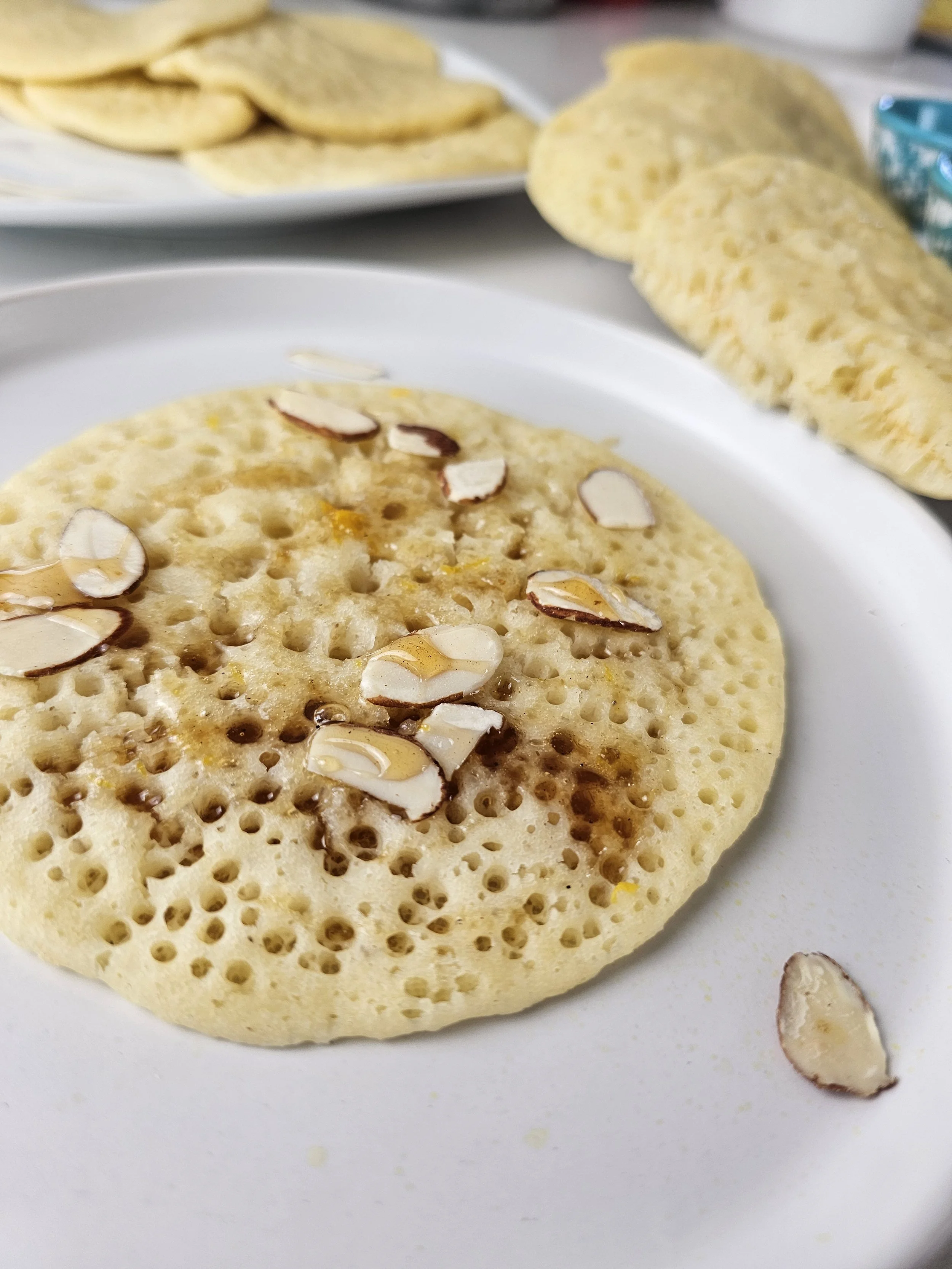
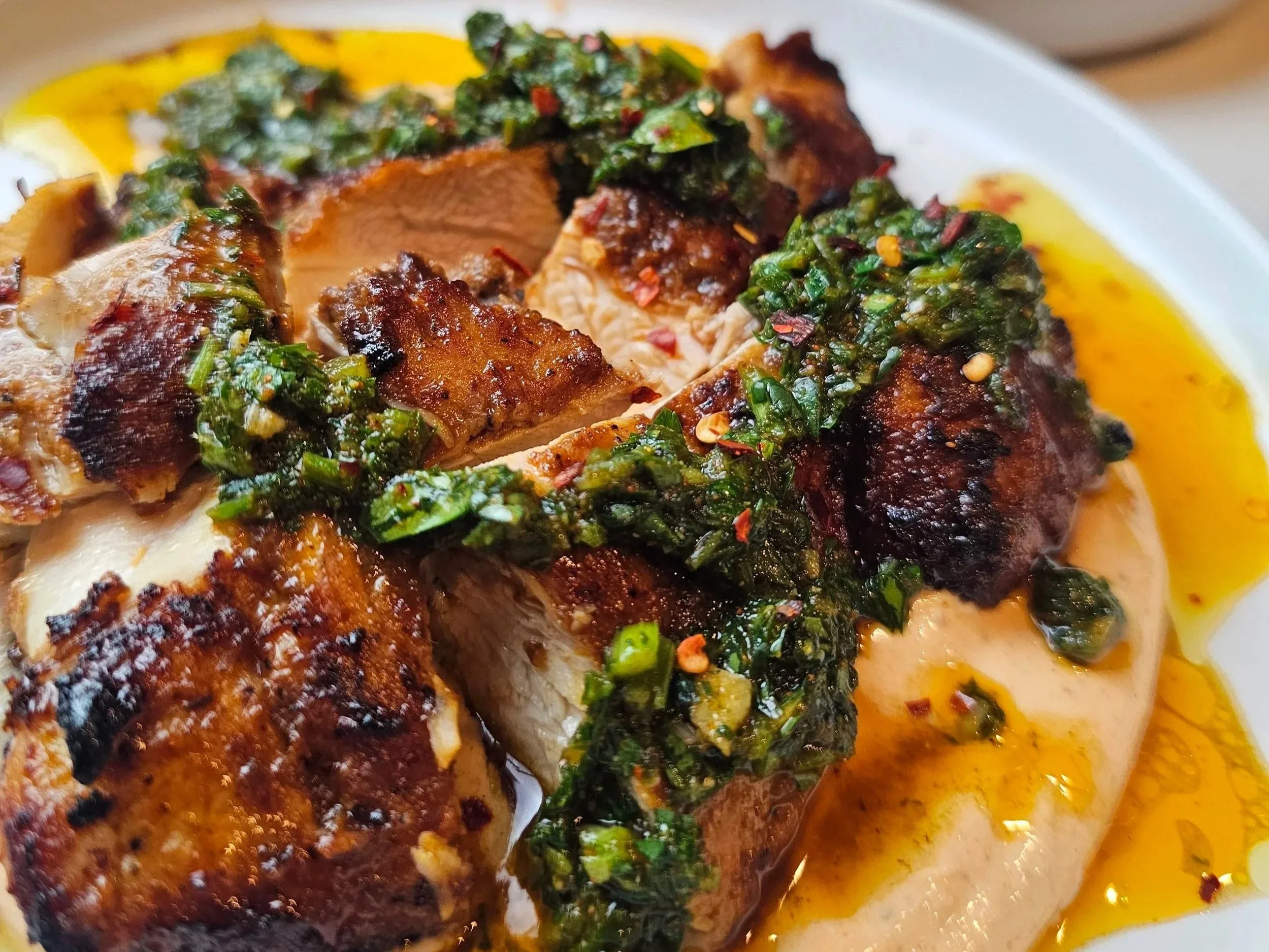
Harissa Chicken with Chermoula Sauce
Some recipes are born in your kitchen. Others follow you home from a restaurant and refuse to leave your mind.
I was inspired to make this after trying an unforgettable appetizer at Cordelia Fishbar on Valentine’s Day in DC. The chicken was extremely succulent, with perfectly crisped with skin-on goodness (breast? thigh? still debating), deeply savory, and served over a harissa-kissed yogurt that tied everything together. It didn’t taste marinated in harissa, but the warmth was there, subtle, layered, intentional.
So naturally, I did what any home cook on a flavor mission would do: I made it my own.
In my version, the chicken is marinated in harissa for bold depth. I used my often-neglected Ninja indoor grill and air fryer, and it delivered that perfect char and gentle smokiness that feels like summer, even when it’s not. And the real star? Chermoula.
If you’ve been following my kitchen journey, you already know: I’ve been championing chermoula for a while now. Think of it as North Africa’s answer to chimichurri—bright, herbaceous, alive. It reflects the Afro-fusion influences and close-to-my-roots flavors that continue shaping my evolution as a home cook. I’ve used it with croaker fish alongside peri peri and harissa, and it never disappoints.
This dish is smoky, herbaceous, creamy, spicy, and fresh all at once. The kind of layered flavor that tastes like you planned ahead—even if you just wanted something impressive for dinner.

Harissa Chicken with Chermoula Sauce
Smoky grilled Harissa Chicken with creamy harissa yogurt and vibrant chermoula. Juicy, bold, and herb-forward, this North African–inspired dish serves 4 and is perfect for weeknight dinners or entertaining.
Ingredients
- 1 cup parsley, finely chopped
- ½ cup cilantro, finely chopped
- 3 garlic cloves, minced
- 1 jalapeño, finely diced
- ½ tsp smoked paprika
- ½ tsp ground coriander
- ½ tsp cumin
- ½ tsp salt
- ¼ tsp black pepper
- 2–4 tbsp olive oil
- 4 large chicken thighs (skinless, bone-in)
- 1.5 tbsp harissa
- 3–4 tbsp olive oil
- ½ tsp garlic powder
- ½ tsp oregano
- ½ tsp cumin
- 1 tsp chicken seasoning
- ½ tsp smoked paprika
- ½ tsp black pepper
- ½ tsp onion powder
- Juice of ½ lemon
- 1 tbsp sesame oil
- 2/3 cup plain Greek yogurt
- Chilli flakes (optional)
Instructions
- Chermoula: Mix parsley, cilantro, garlic, jalapeño, spices, and olive oil. Set aside. Optional: warm slightly before serving.
- Harissa Marinade and Yogurt: In a bowl, combine harissa, olive oil, garlic powder, oregano, chicken seasoning, smoked paprika, black pepper, onion powder, lemon juice, and sesame oil. Reserve 1–2 tbsp and stir into Greek yogurt; refrigerate for yogurt sauce. Coat the chicken in the remaining marinade and refrigerate for at least 1 hour. If you are pressed for time, 30 minutes works, and overnight will give the deepest flavor.
- Grill Chicken: Preheat grill to medium. Pat chicken dry. Grill 7 minutes per side (14 minutes total) until internal temperature reaches 165°F. Rest 5 minutes, then cut into squares.
- Assemble: Spoon harissa yogurt on plates, add grilled chicken, top with chermoula, and sprinkle chili flakes if desired.
Notes
- Pat chicken dry for better char; fresh lemon brightens the dish; chermoula can be extra sauce.
Nutrition Facts
Calories
460Fat (grams)
32 gCarbs (grams)
6 gFiber (grams)
1 gSugar (grams)
2 gProtein (grams)
38 gI am not a certified nutritionist and any nutritional information on dontmissmyplate.com should only be used as a general guideline.

Homemade Falafel Salad with Sesame Tahini Dressing
I love chickpeas in every shape and form, but falafel makes the top of the list! Most people wait to enjoy falafels at the store, but they are pretty simple to make in the comfort of your own home. All you need are dried chickpeas, fresh herbs and some spices. A food processor for appliances will make this a lot easier. I used this one from Hamilton Beach.

I'm not going to assume everyone reading this knows what falafel is or where it originated! As a Southern African, I was introduced as a young adult on the streets of New York, from one of the many mouthwatering Halal trucks parked on the side of the road or one of the shawarma stores littered throughout Lower Manhattan. Falafel balls are deep-fried fritters that came out of the Middle-East, and can also be made using fava or broad beans. They can be eaten as they are, on top of a salad or bed of vegetables, but typically stuffed in a pita or flatbread pocket.
Served with what you may ask? Tahini-based sauces, derived from sesame seeds.
This small women-owned business makes natural vinaigrettes and dressings. Their Sesame Tahini is not only one of my favourites but goes perfectly with my homemade version of falafel; I recommend giving it a try; it will give a lot of other dishes a toasty tang. It has two awards for a reason: a 2018 Good Food Award and a 2018 SOFI Award! No junk, just delicious flavour to compliment the food! This recipe calls for a condiment you can find at your local grocery store or online at dressitupdressing.com.

Ingredients
2 cups dried and (soaked overnight) chickpeas--don't use canned!
1/2 teaspoon baking soda (to help soften the chickpeas)
1/2 cup fresh dill
1 cup fresh parsley
6 fresh garlic cloves
1/2 medium yellow onion
1 tablespoon salt
1 tablespoon black pepper
1 teaspoon cayenne
1/2 jalapeno
2 tablespoons toasted sriracha sesame seeds
1/2 teaspoon ground cardamom
1 tablespoon smoked paprika
1/2 teaspoon baking powder
1/2 teaspoon fenugreek powder
1 tablespoon cumin
1 tablespoon coriander
Peanut oil for frying
Salad:
1/2 bag arugula
1 cup purple cabbage, shredded
1/2 cup cherry tomatoes
1/2 large seedless cucumber
Sesame oil
2-4 scoops roasted red pepper hummus
1-2 avocadoes
Sriracha mayo
Wasabi sauce
Sesame tahini vinaigrette


Instructions
You'll need to start this recipe the day before to soften the pulses. Soak the dried chickpeas by submerging them in water with baking soda. Drain when ready to use.
Combine the chickpeas, dill, parsley, garlic, onion, sesame seeds, jalapeno, spices, salt, and pepper in a bowl. Transfer to a food processor, then pulse or blend ib high until thick paste forms.
Heat the oil in a frying pot—mix in the baking powder then cook the falafel in batches at 350F until brown and crunchy. Use a cookie dough scooper for uniform balls. To freeze the remaining dough, allow scoops to harden, then transfer to a zip lock bag for up to 3 months.
In a large serving bowl for the salad, combine the cabbage and arugula, drizzle lightly with sesame oil and toss. Slice and overlay the tomatoes, avocado, hummus, and falafel, then drizzle with the sesame tahini dressing and a bit of sriracha drizzle. Serve!
The recipe makes about 24 falafel balls; salad serves 3-4. Freeze the falafel dough once scooped into balls to fry another time.

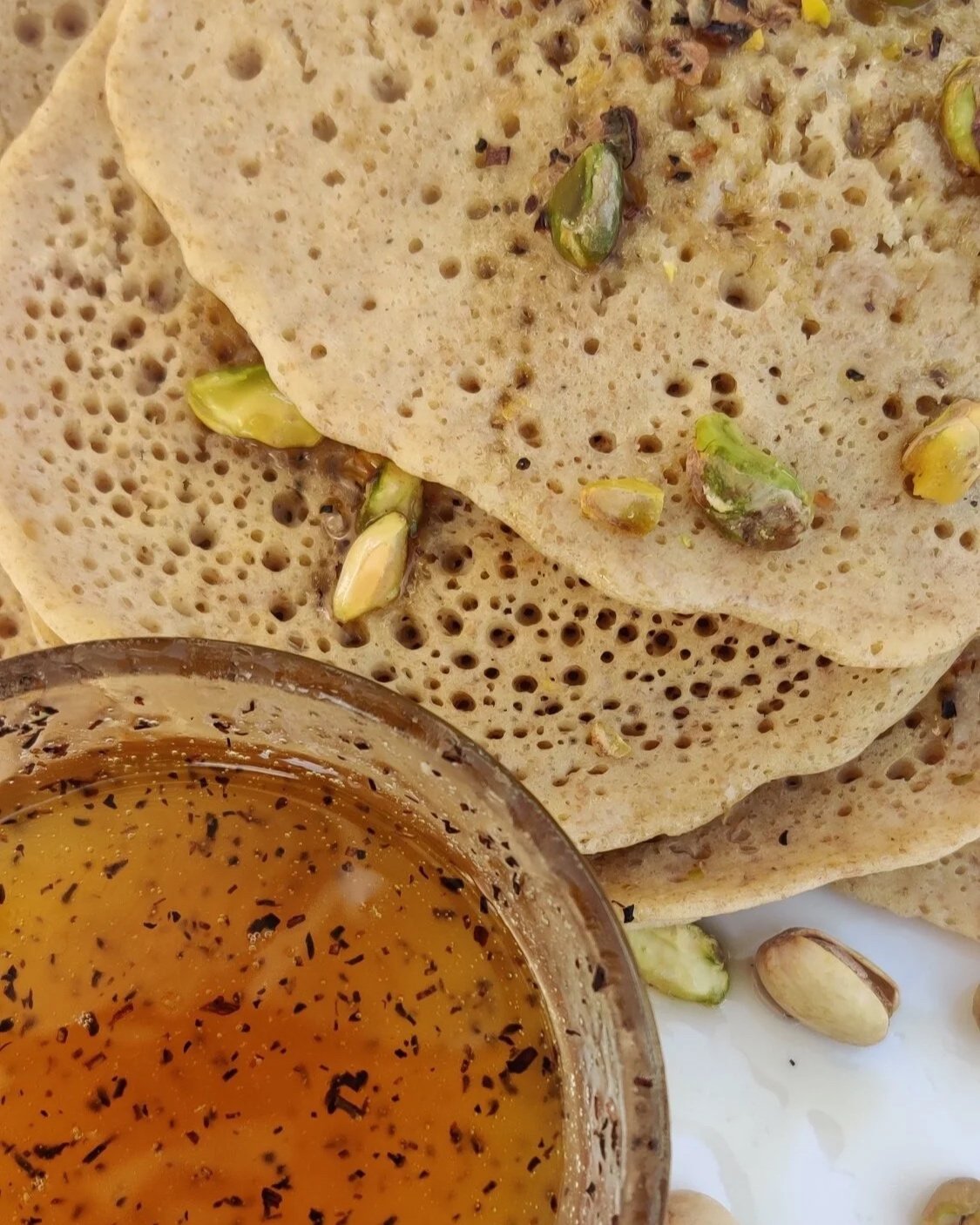
Pistachio and Orange Pancakes (Inspired by North African Baghrir)
Breakfast across North Africa often feels celebratory. Tables are filled with yeast-risen breads and delicate pancakes, drizzled with honey, scattered with nuts, and paired with fragrant mint tea or coffee. The flavors are warm, aromatic, and deeply comforting, meant to be enjoyed slowly rather than rushed through.
In much of Southern Africa, breakfast traditions tend to be simpler and more grounding, often centered around porridges or grain-based staples like sadza. These meals are hearty and sustaining, but typically less sweet or airy than their North African counterparts. Exploring the contrast between these breakfast cultures inspired this recipe.
This recipe draws inspiration from Moroccan baghrir, the famous “thousand-hole” pancakes known for their soft, sponge-like texture and ability to absorb syrup beautifully. I had pistachios on hand and wanted to lean into the citrus and honey flavors often found in North African cuisine. The result is a pancake that feels both familiar and distinctive: light, fluffy, fragrant, and layered with texture.
Unlike traditional baghrir, which is typically made with semolina and yeast, this version uses whole wheat flour for a more approachable everyday pancake while still maintaining an airy texture. Chopped pistachios add crunch and richness, while orange zest and honey bring brightness and warmth. A simple honey-orange glaze ties everything together beautifully.
These pancakes work just as well for a slow weekend breakfast as they do for brunch, afternoon tea, or even dessert. Optional whipped ricotta adds a creamy contrast, though the pancakes are just as delicious served simply with syrup and nuts.
What sets these apart from regular pancakes is their balance of texture and flavor. The combination of citrus, honey, and pistachios gives them a depth that feels a little more special, while the North African inspiration adds warmth and character to every bite.
If you want a texture closer to traditional Moroccan baghrir, check out this recipe.

Pistachio and Orange Pancakes – Moroccan-Inspired
Light, spongy pancakes inspired by Moroccan baghrirs, topped with crunchy pistachios and a fragrant honey-orange glaze. Perfect for breakfast, brunch, teatime, or dessert!
Ingredients
- 1 cup all-purpose flour
- 1 cup whole wheat flour (or semolina for traditional texture)
- 2 tsp baking powder
- 1/2 tsp fast-acting dry yeast
- 1/2 tsp salt
- 1/2 tsp sugar (optional)
- 2 eggs
- 1 cup warm milk
- 1 cup warm water
- 1 tsp orange zest
- 1 tsp orange juice
- 1/4 tsp vanilla extract
- 1/4 cup crushed pistachios (plus extra for garnish)
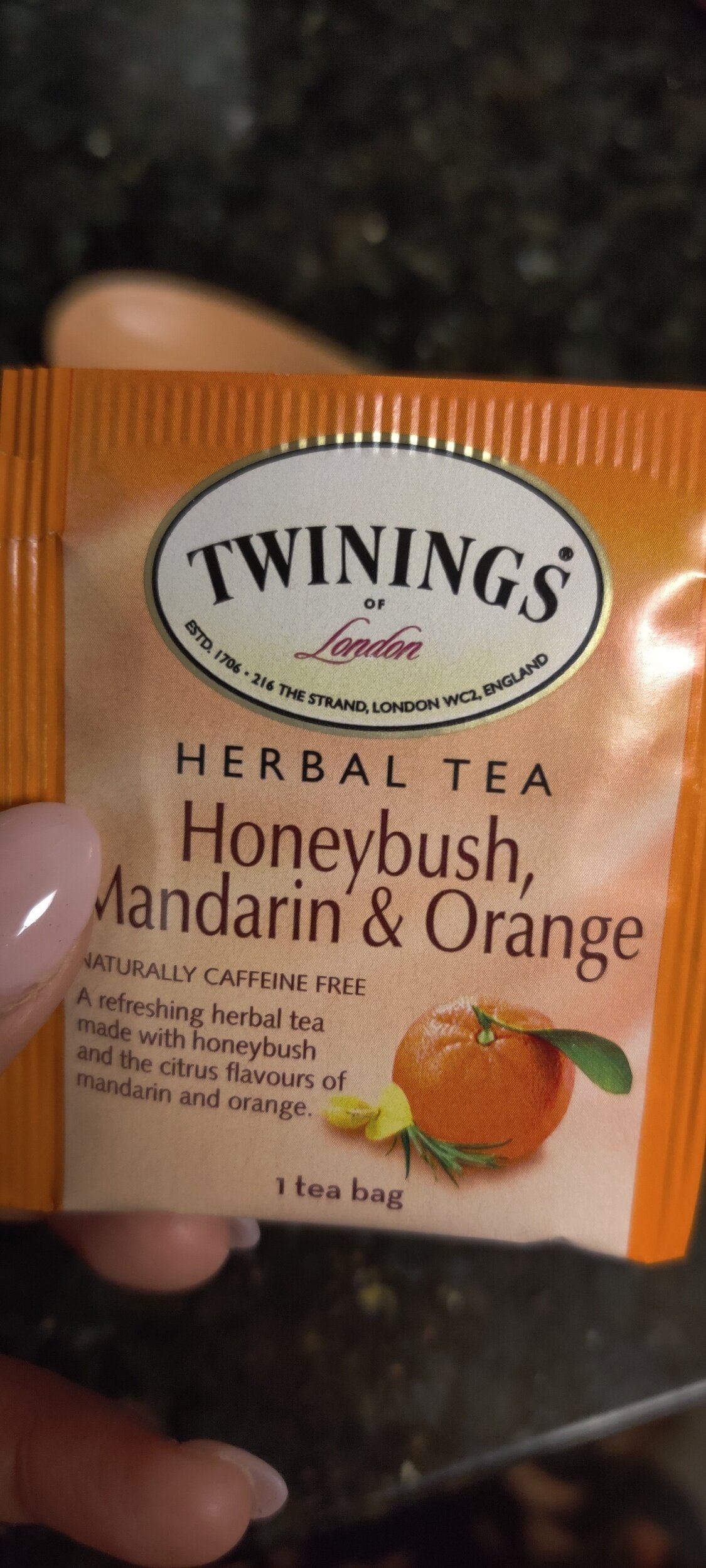
- 1/2 orange herbal tea bag (or 1 tsp loose orange tea)
- 1/2 cup honey
- 4 tbsp butter
- 1 tsp orange zest
- 1 tsp orange juice
- 1/8 tsp almond extract
- Contents of brewed orange tea (see above)
- 1 tsp orange blossom syrup (optional)
- Ricotta cheese
- Orange zest and juice
- Pinch of salt
- Sugar to taste
- Few drops of orange syrup
Instructions
- Mix warm water, sugar, and yeast. Let sit 5–10 min until foamy.
- Add flours, milk, baking powder, salt, vanilla, eggs, orange zest & juice, and tea to yeast mixture.
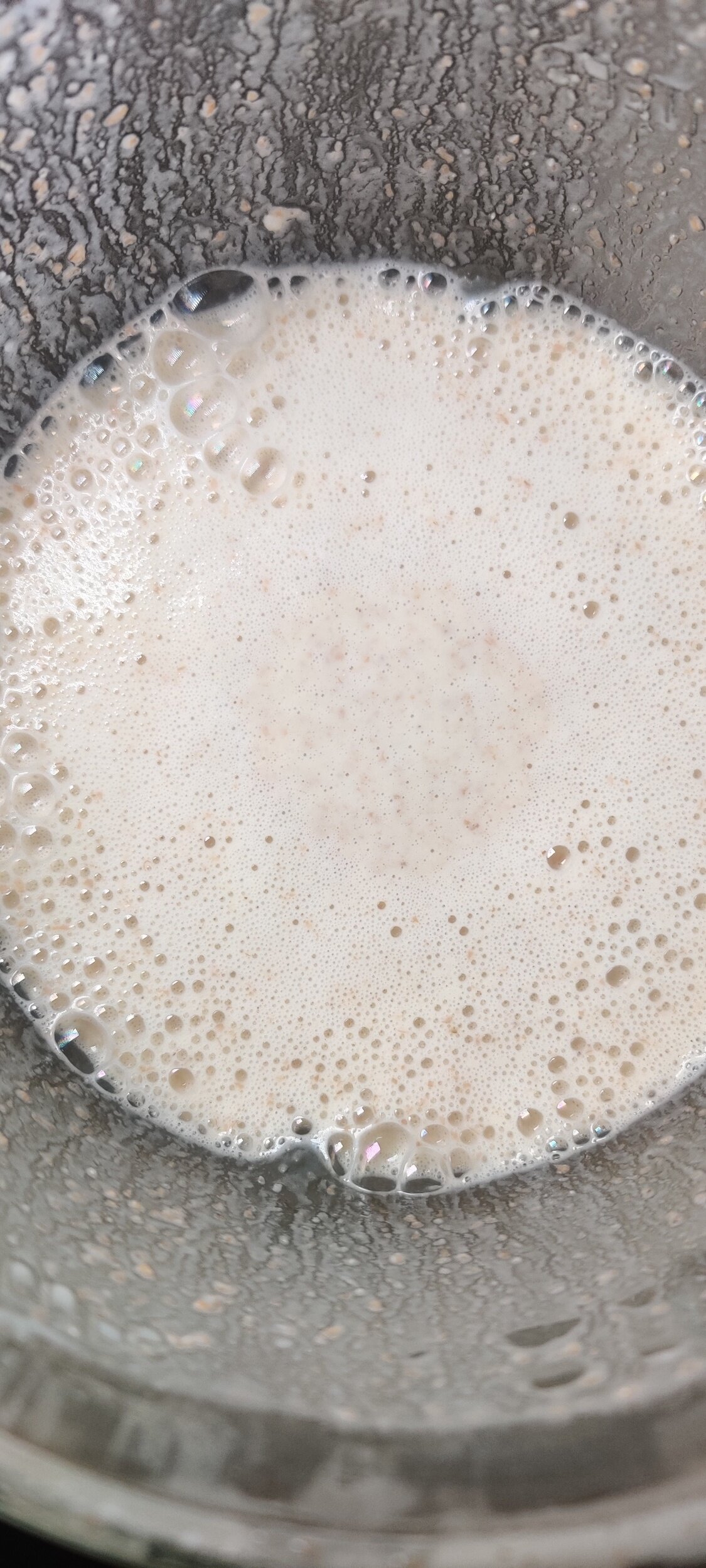
- Blend or whisk until smooth. Let rest 35 min to develop bubbles.
- Heat non-stick pan over medium. Scoop 1/4 cup batter per pancake.
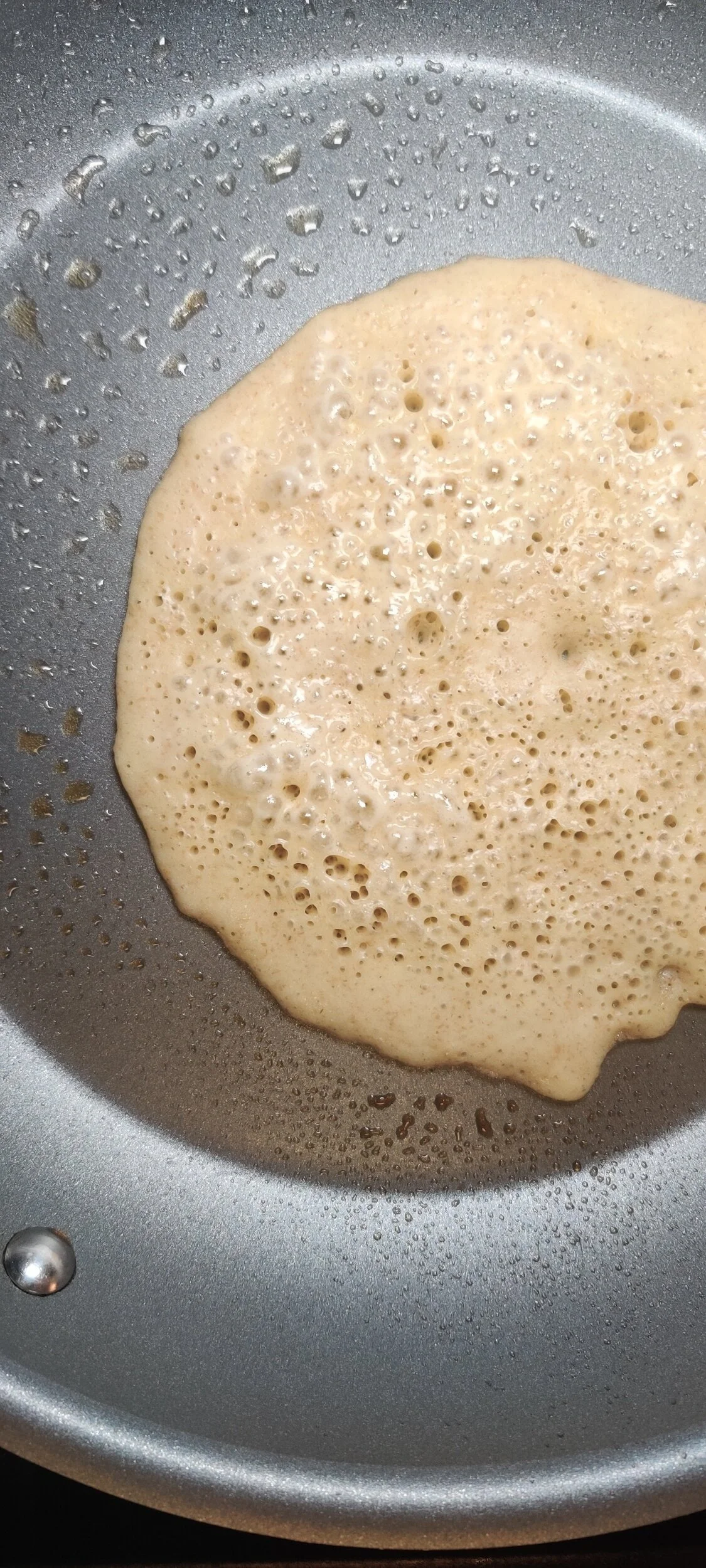
- Cook without flipping until bubbles form and burst on the surface, bottom golden. Remove and repeat.
- Heat butter, honey, orange zest & juice, almond extract, and brewed tea in a saucepan or microwave until combined.
- Pour glaze over pancakes, sprinkle pistachios, add candied peel if desired.
- Optional: top with whipped ricotta.
Notes
- Toasting pistachios: Toast in a dry pan over medium heat for 2–3 minutes, stirring frequently, to enhance flavor and crunch.
- Candied orange peel: Adds a beautiful garnish and little bursts of citrus sweetness.
- Texture: Resting the batter allows the yeast to create the signature spongy texture with holes that soak up the glaze.
- Make ahead: Batter can rest up to 1 hour before cooking; the glaze can be prepared ahead and warmed before serving.
Optional: Semolina Variation (More Traditional)
- Use 2 cups semolina flour + 1/2 cup all-purpose flour instead of the flours in the main recipe.
- Increase sugar to 1 tbsp and salt to 1/2 tsp.
- Add 1/2 tsp cinnamon for warmth.
- Use 1 tsp instant yeast.
- For the glaze, reduce honey to 1/4 cup, brewed tea to 2 tbsp, and add 1 tsp orange blossom honey.
- Optional whipped ricotta topping: mix orange zest, juice, salt, sugar, and a few drops of orange syrup.
Serving: Same as main recipe — ~4 servings.
Nutrition Facts
Calories
290Fat (grams)
10 gCarbs (grams)
42 gSugar (grams)
18 gProtein (grams)
6 gI am not a certified nutritionist and any nutritional information on dontmissmyplate.com should only be used as a general guideline.