Oxtail Bunny Chow
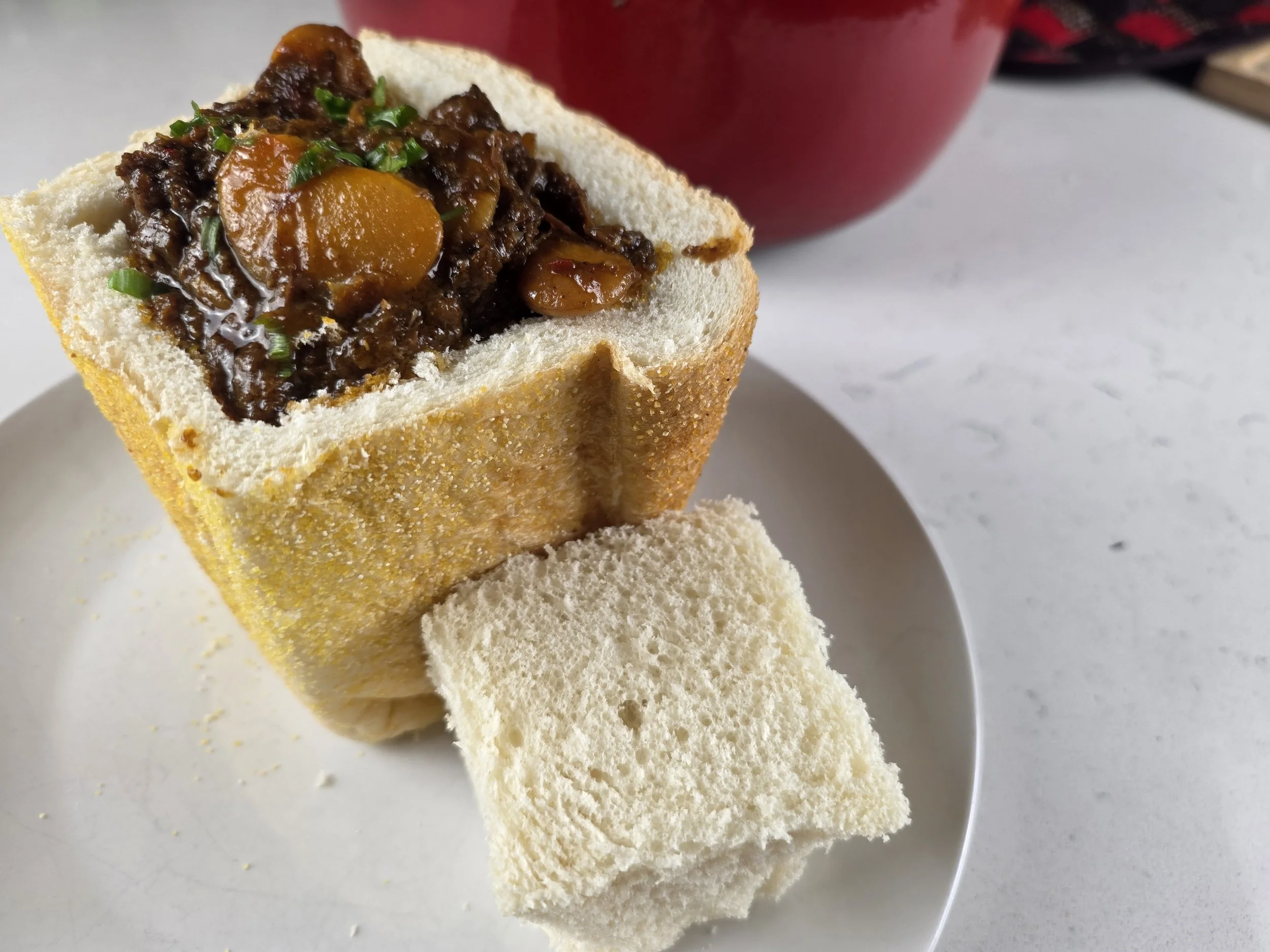
This Oxtail Bunny Chow features slow-braised oxtail, tender white beans, and rich, flavorful tomato gravy nestled inside a hollowed-out loaf of bread for the ultimate hearty, comforting meal.
Growing up in Zimbabwe, I remember seeing people eating food stuffed inside loaves of bread, particularly around construction sites and at outdoor restaurants during lunchtime in the central business district. I remember the bread, the filling, and even the Coca-Cola or Fanta that often accompanied the meal. At the time, I thought it was simply a practical way to eat when you were in a hurry. Years later, I learned about Bunny Chow, the South African dish made by hollowing out a loaf of bread and filling it with curry. Suddenly, that childhood memory felt connected to a wider Southern African food story.
For the first recipe in my African Comfort Food series, I'm making my own version: Oxtail Bunny Chow, filled with slow-braised oxtail, white beans, and a rich tomato gravy.
Oxtail was one of my favorite indulgent meals growing up. It was something we enjoyed occasionally, which made it all the more exciting when it appeared on the dinner table. I loved the tender meat and the rich, gelatinous texture that develops when oxtail is cooked slowly. Here, I'm bringing those familiar flavors together with the bread-bowl idea of Bunny Chow. The result is hearty, saucy, and made for tearing off pieces of bread to scoop up every last bit of gravy.
Bunny Chow is a South African dish most closely associated with Durban, in KwaZulu-Natal. It consists of a hollowed-out loaf of bread filled with curry, with the bread serving as both the container and part of the meal. The dish developed within Durban's Indian South African community. Its precise origins remain debated, but commonly told accounts connect it to the city's Indian food culture and the need for convenient takeaway meals. Early versions included bean curry, while meat-filled versions became popular later. Although Bunny Chow is distinctly associated with South Africa, its history isn't confined to modern-day South African borders. Historical accounts report that the dish was sold in Gwelo, now Gweru, in what was then Rhodesia during the Second World War.
That history resonates with my own memories of seeing people eat food stuffed into loaves of bread in Zimbabwe. I can't say that every bread-filled meal I saw was Bunny Chow, but the memory reminds me of how practical, portable meals can resemble one another across places and communities.
The filling is inspired by the simple oxtail stews I grew up enjoying. I brown the oxtail, build a flavorful base with onions, garlic, fresh ginger, chili, and grated tomatoes, then add curry powder, other warm spices, and broth before slow-braising the meat in the oven. I also add white beans, which make the stew heartier and complement the rich gravy. Beans are a familiar addition to many Caribbean oxtail preparations, including Jamaican-style stewed oxtail with butter beans, another food tradition I enjoy exploring.
Once the oxtail and beans are tender, I carefully remove the bones and return the meat to the gravy. The stew is then spooned into hollowed-out bread, creating a hearty filling that can be enjoyed with the bread itself. This dish is perfect for making ahead, allowing the flavors to develop, and serving during the colder months when a rich, comforting meal is especially welcome.
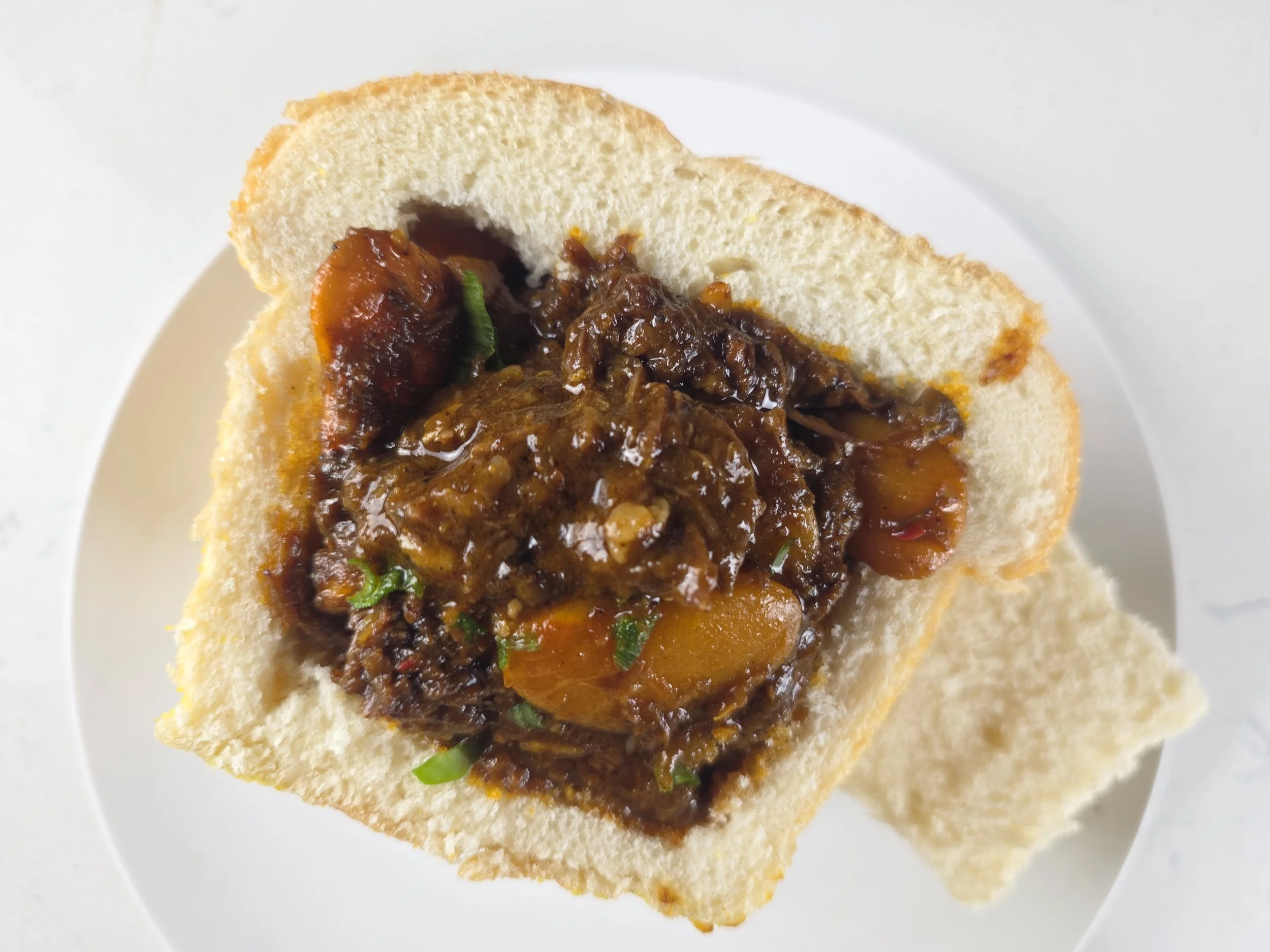
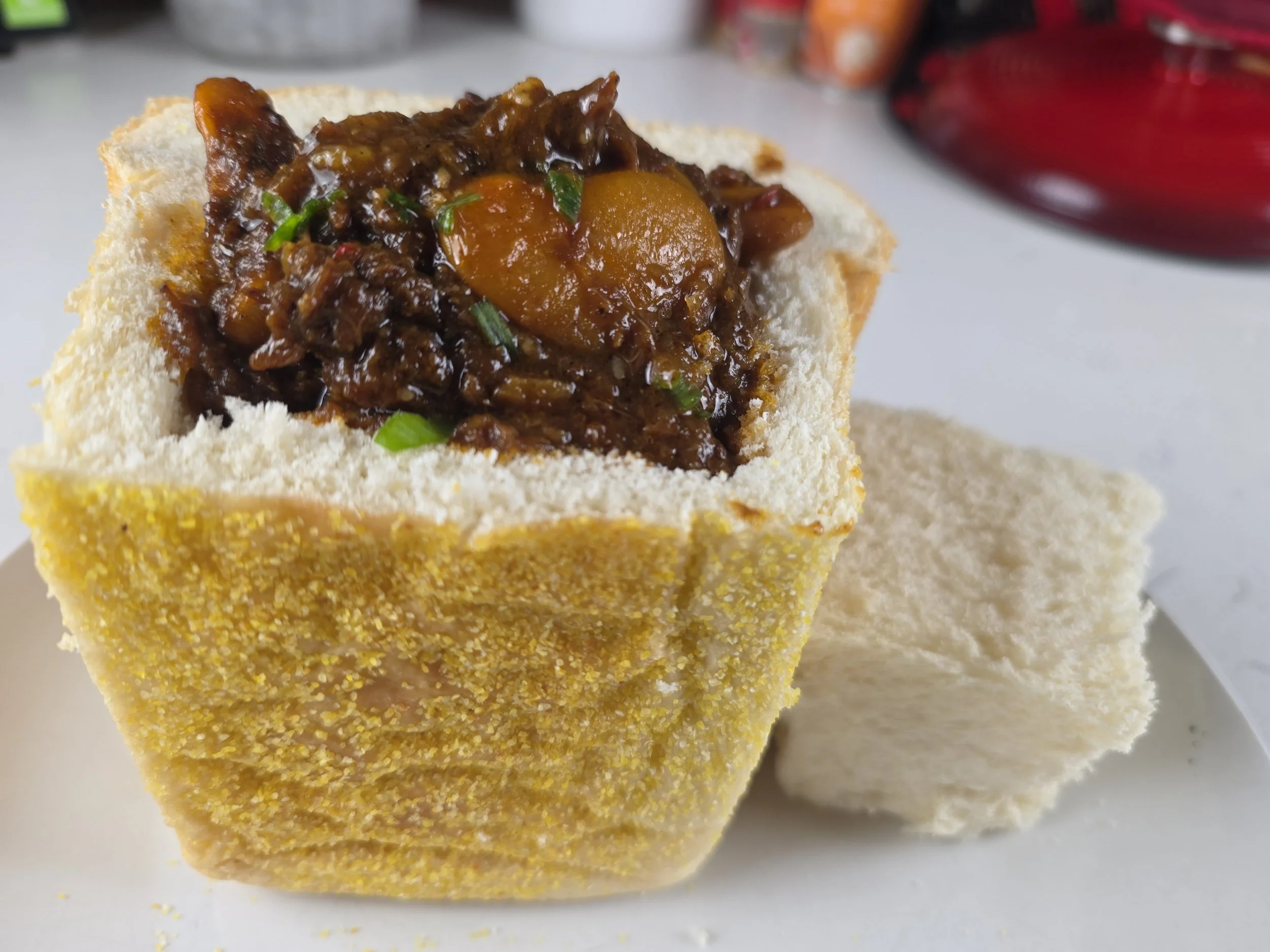

Oxtail Bunny Chow
This Oxtail Bunny Chow is a hearty, comforting twist on the South African bread-bowl dish, featuring slow-braised oxtail, tender white beans, and rich tomato gravy infused with garlic, fresh ginger, chili, and warming spices. Served in a hollowed-out loaf of bread, it’s a satisfying meal made for soaking up every last drop of gravy.
Ingredients
- 2 lb oxtail, trimmed of excess visible fat
- 2 tbsp olive oil
- 1 large yellow onion, diced
- 2–3 green onions, sliced
- 3 garlic cloves, minced
- 1 tbsp freshly grated ginger
- 1 red chili, finely chopped
- 1½–2 cups grated fresh or frozen tomatoes
- 2 tbsp tomato paste (confirm quantity)
- 1–2 tbsp curry powder, to taste
- 1 tsp paprika
- ½ tsp black pepper
- 4 sprigs fresh thyme (confirm quantity)
- 1 tbsp Worcestershire sauce (confirm quantity)
- 1 tbsp all-purpose seasoning or Reiko Usavi mix (confirm quantity)
- 1–2 beef bouillon cubes
- 1 cup dried white beans, soaked overnight and drained
- 4–5 cups beef broth, plus extra hot water or broth as needed
- Salt, to taste
- 1 sturdy loaf of English muffin bread, for serving
Instructions
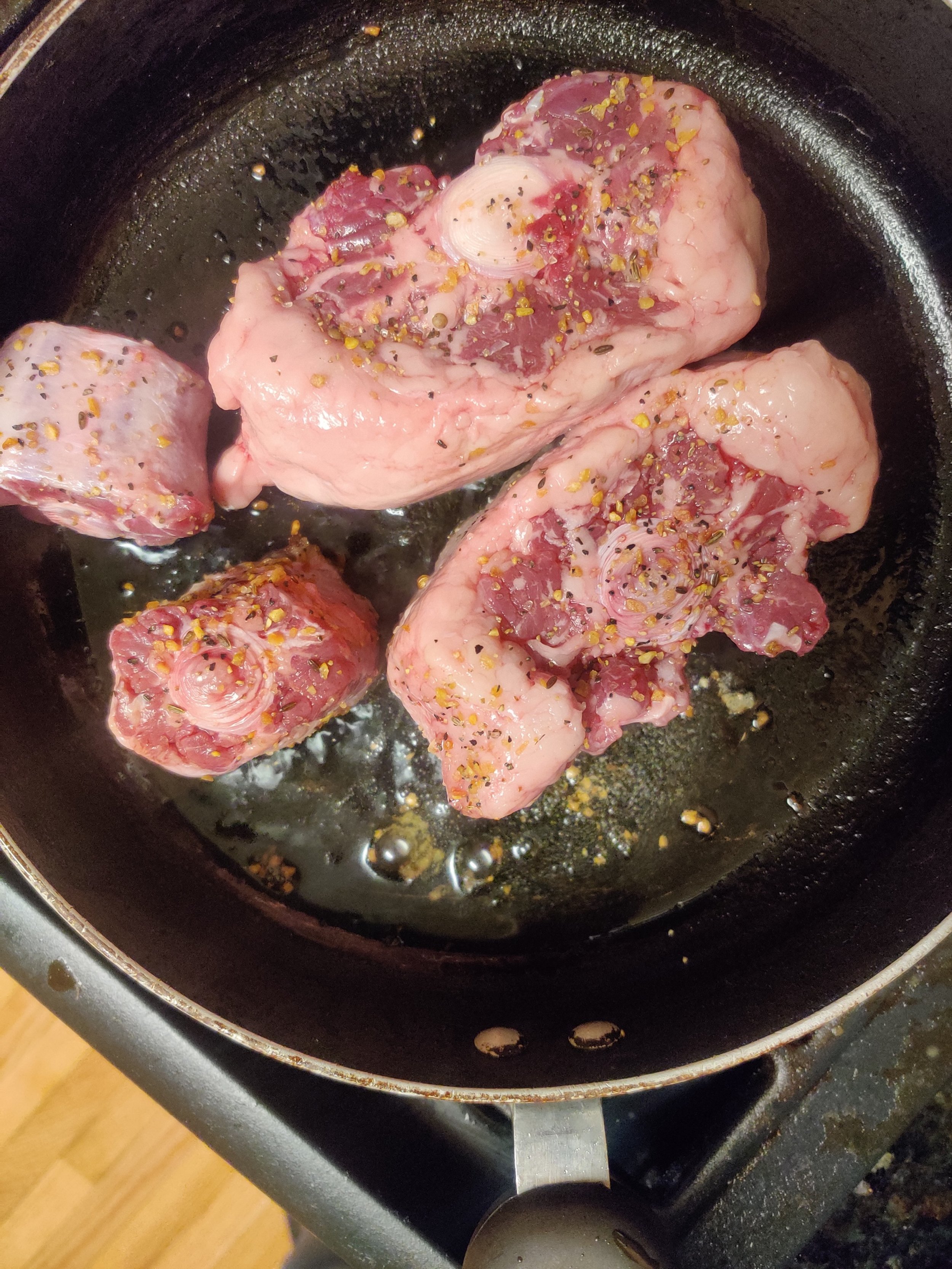
- Preheat the oven to 325°F (165°C). Pat the oxtail dry and season lightly with salt and black pepper. Heat the olive oil in a large, oven-safe Dutch oven over medium-high heat. Brown the oxtail in batches on all sides, then transfer to a plate.
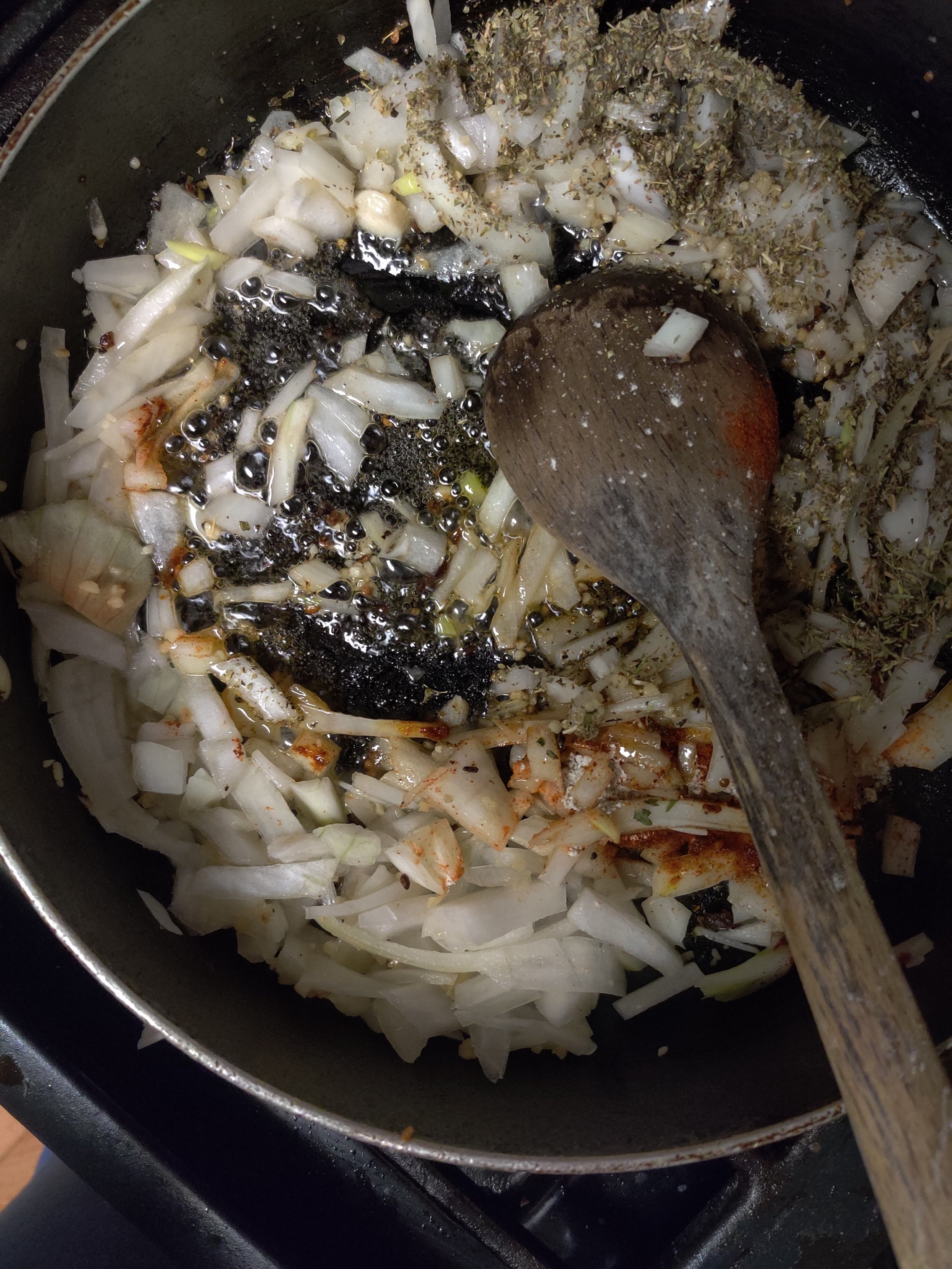
- Add the diced onion to the same pot and cook until softened, scraping up the browned bits from the bottom. Add the green onions, garlic, ginger, and chili. Cook for another 1–2 minutes until fragrant.
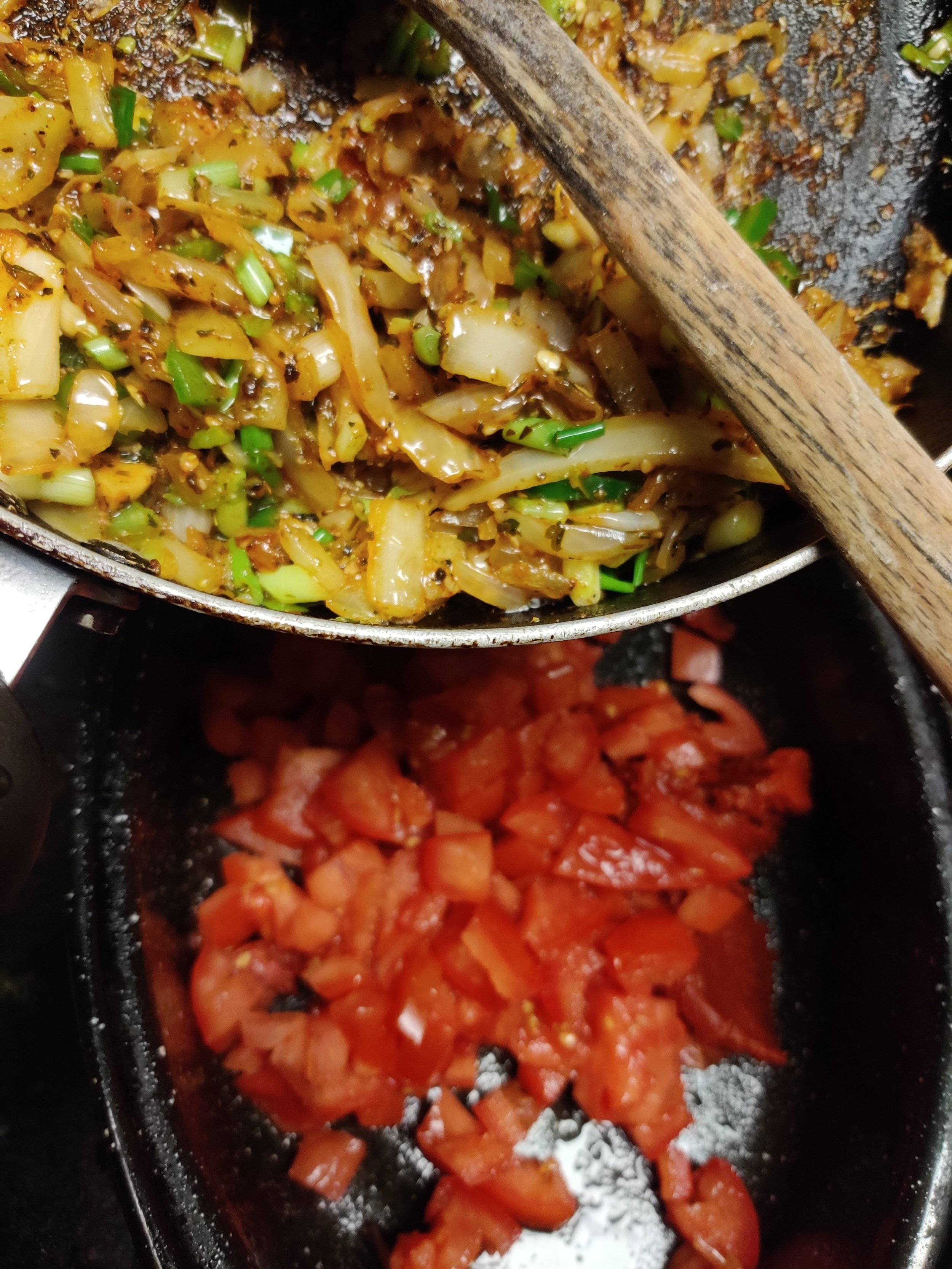
- Stir in the curry powder and paprika, allowing the spices to bloom for about 30–60 seconds. Add the tomato paste and grated tomatoes. Cook for 10–15 minutes, stirring occasionally, until the tomatoes have reduced and the mixture has deepened in color.
- Return the browned oxtail to the pot. Add the thyme, Worcestershire sauce, all-purpose seasoning, bouillon cubes, and enough beef broth to mostly surround the meat. Bring to a gentle simmer.
- Cover the pot and transfer it to the oven. Cook for approximately 2 hours, checking occasionally to ensure there is enough liquid. Add more hot broth or water if needed.
- Stir in the soaked, drained white beans. Cover and return the pot to the oven for another 1–1½ hours, or until the oxtail and beans are tender. Check periodically and add hot liquid in small amounts if the pot becomes too dry.
- If the meat and beans are tender but the gravy is too thin, uncover the pot and continue cooking for about 30–40 minutes, checking regularly. The finished gravy should be rich and thick enough to spoon into the bread.
- Carefully transfer the oxtail to a plate. Remove the bones, hard cartilage, and any small bone fragments, keeping the meat in generous pieces. Return the meat to the pot and stir it into the gravy. Taste and adjust the salt and seasoning as needed.
- Cut a generous portion from the loaf and hollow out the center, leaving enough bread around the sides and base to hold the filling. Reserve the removed bread for dipping into the gravy.
- Spoon the hot oxtail and white bean stew into the hollowed-out bread. Serve immediately, with extra gravy and the reserved bread for dipping.
Notes
- Soak the beans: Soak the dried white beans overnight and drain before cooking. Cooking time can vary depending on the age and type of beans.
- Allow enough time: Oxtail needs slow cooking to become tender. Continue braising until both the meat and beans are fully tender.
- Adjust the liquid: Add hot broth or water as needed during cooking. Reduce the gravy uncovered at the end if it needs thickening.
- Choose sturdy bread: English muffin bread worked well for this version. The bread primarily serves as the vessel for the stew rather than something you need to eat in its entirety. You can pull out some of the soft interior and use it to dip into the rich gravy.
- Make ahead: The stew can be prepared ahead of time and refrigerated. Reheat gently, adding a splash of broth or water if needed, and fill the bread just before serving.
Nutrition Facts
Calories
600Fat (grams)
35 gSat. Fat (grams)
12 gCarbs (grams)
25 gFiber (grams)
5 gSugar (grams)
5 gProtein (grams)
35 g
Oven-Braised African Oxtail Stew
Cooking Oven-Braised Oxtail Stew Recipe African-Style
Oxtail is a beloved delicacy across many African cuisines, known for its rich flavor, tender texture, and deep, comforting stews. Slow-cooked to perfection, oxtail transforms into a melt-in-your-mouth dish infused with aromatic spices, herbs, and hearty ingredients. From the peppery, tomato-based oxtail stew of West Africa to the deeply savory, slow-braised variations of South Africa, this dish is a true celebration of bold flavors and traditional cooking techniques.
Whether served with rice, dumplings, fufu, Sadza, or pap, African oxtail dishes bring warmth and nostalgia to every bite. Its gelatinous richness makes for an irresistibly silky sauce, perfect for soaking up with your favorite side. If you’re looking for a meal that embodies comfort and tradition, African oxtail is a must-try!
Coming from Zimbabwe, I regarded oxtail as a special treat, typically reserved for special occasions. However, from time to time, we would get it as a surprise on a random winter weeknight for dinner. Honestly, though, this dish can be enjoyed all year round.
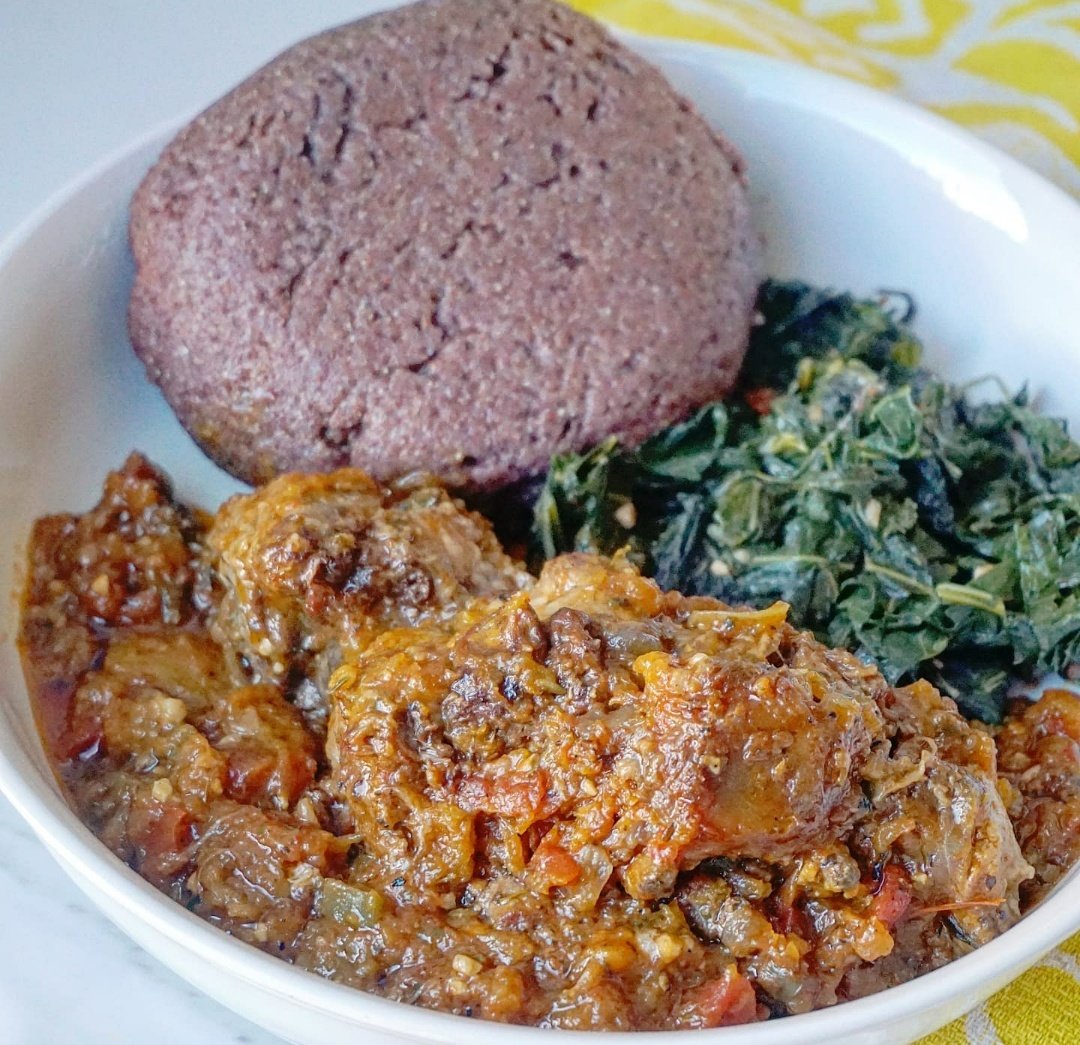
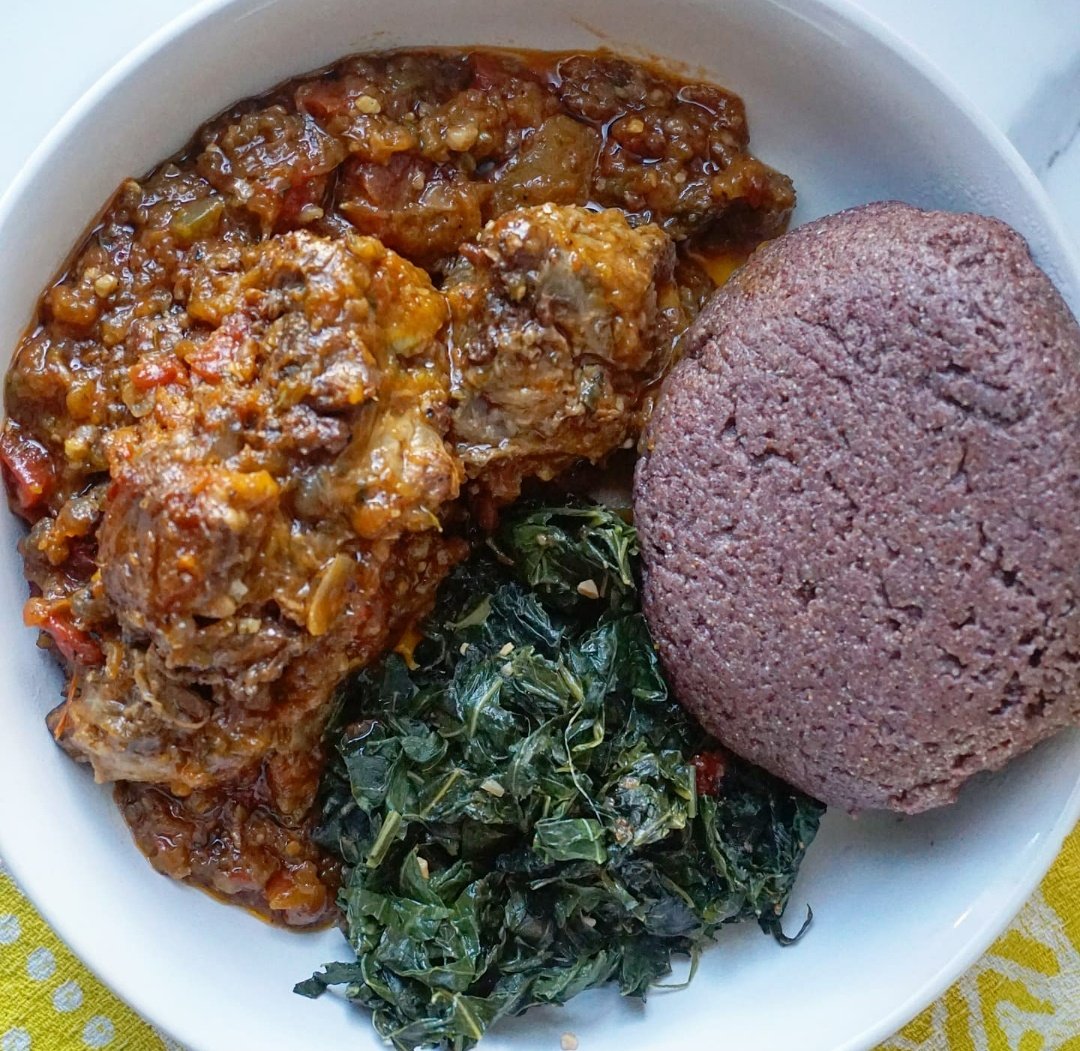
My mother kept it simple, using a combination of yellow onions, green onions, tomatoes, chili peppers, salt, and pepper—and the result was perfection. The dish was perfectly balanced: not too greasy, not dry, spicy yet slightly sweet, and incredibly satisfying, especially when served with sadza (Zimbabwean cornmeal) and muriwo (sautéed kale).
Living in the United States exposed me to various oxtail preparations I had never encountered before, from Vietnamese oxtail pho (Phở Đuôi Bò), a traditional broth-based soup, to Caribbean-style oxtail with browning sauce and white beans.
This recipe is relatively simple but can be elevated by using high-quality ingredients, such as locally sourced meat from the butcher. It also benefits from leaning into the bold spices commonly used in African cuisine—masala curry powder, cardamom, nutmeg, and cumin—all of which enhance the depth of flavor in oxtail stews.
Does rendered fat make stew taste better?
Also known as liquid gold, oxtail preparation is a matter of personal preference and may be influenced by health goals or the dish you plan to pair it with. If you're committed to reducing animal fats, feel free to trim away! However, keep in mind that some fat contributes to the rich flavor, signature color, texture, and moisture that make oxtail so special.
You can also leave the fat intact while cooking, then simply skim off the rendered fat that rises to the top once it's done. In general, oxtail is a fattier cut of meat compared to others, but that’s part of what makes it so delicious!
Some points to consider:
In addition to adding flavor, richness, and moisture to the dish, fat acts as a flavor carrier, helping to coat the ingredients and intensify their taste. Essentially, it enhances the overall mouthfeel and depth of the stew. Key benefits include:
Flavor Enhancement: Rendered fat releases flavorful compounds that infuse the stew with a deeper, richer taste.
Moisture Retention: Fat helps keep the meat and vegetables moist during cooking, preventing them from drying out.
Browning Potential: Cooking meat in rendered fat creates a delicious caramelized crust, adding another layer of flavor.
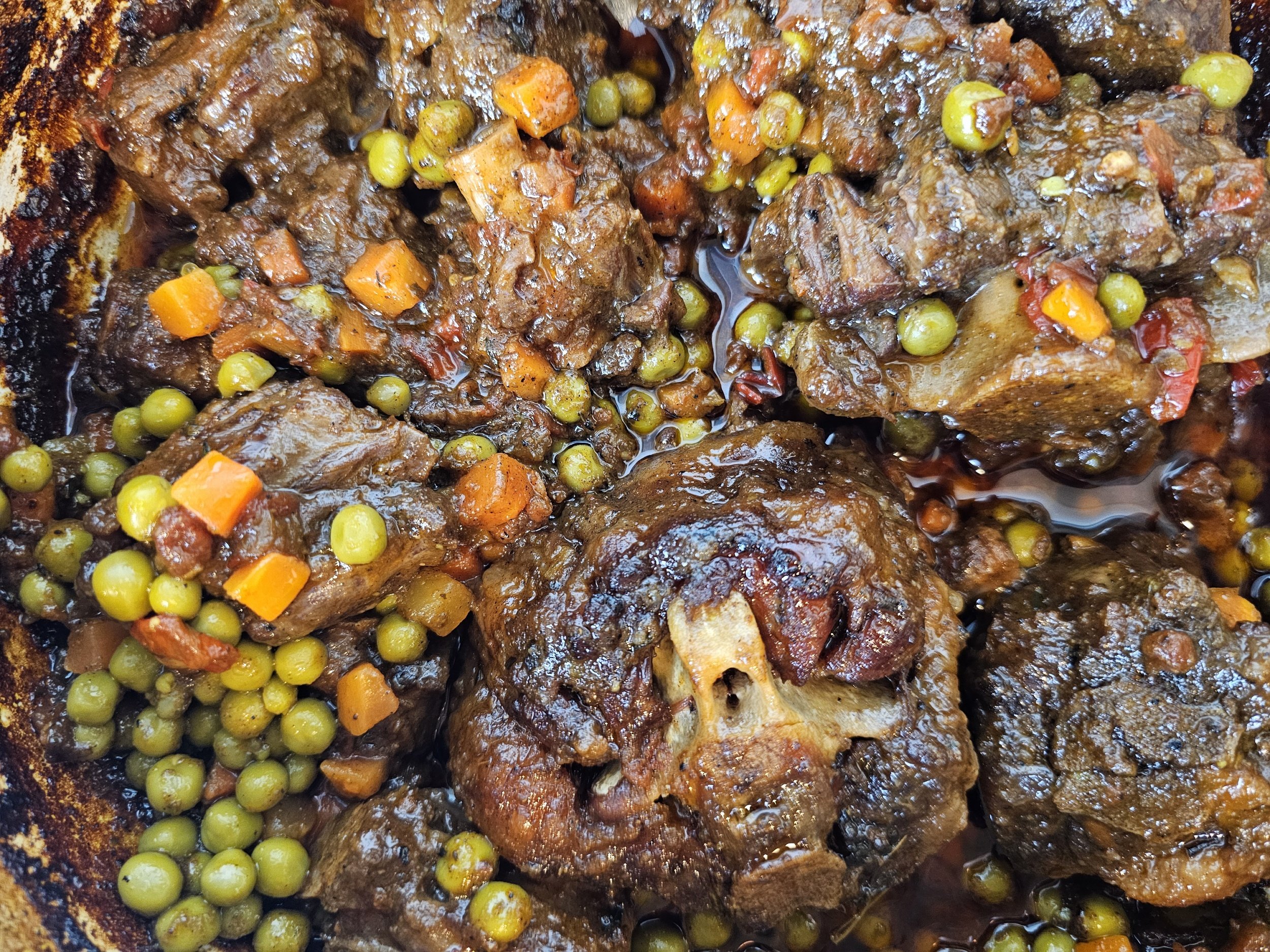
Oven-Braised African Oxtail Stew
Ingredients
- 3 tablespoons olive oil
- 1.5 lbs oxtail
- 1 tablespoon seasoned salt
- 1 tablespoon black pepper
- 1 tablesppon dark brown sugar
- 1 cup mirepoix (carrots, onion and celery)
- 1/3 cup green onions/scallions (optional)
- 1/2 cup red bell peppers
- 1/2 cup diced tomatoes (frozen or fresh)
- 3 garlic cloves
- 1 tablespoon Masala curry powder
- 1 tablespoon Royco Usavi Mix or all-purpose seasoning
- 1 tablespoon flour or cornstarch (optional)
- 1 tablespoon onion powder
- 1 teaspoon cayenne pepper
- 1 teaspoon smoked paprika
- 1 tablespoon oregano
- 1 teaspoon cumin
- 1 tablespoon garlic powder
- 4 beef bouillon cubes
- 1/4 cup red cooking wine
- 4 cups water
- 1/2 lime juice
- 1/2 teaspoon ground ginger
- 1/4 teaspoon cardamon
- 1/4 teaspoon cloves
- 1/4 teaspoon nutmeg
- 2 tablespoons Worcestershire sauce
- 2 tablespoons tomato paste
- 1 thyme spring
- 1 habanero pepper
- 3 bay leaves
- 2 cups carrots and peas, cooked
Instructions
- Preheat the oven** to 350°F (175°C).
- Prepare the oxtail: Wash the oxtail in cold water, vinegar, and lime juice, then pat dry. Depending on your preference and the leanness of the cuts, trim any excess fat or leave the bones as they are.
- Brown the oxtail. In a Dutch oven, heat some oil over medium to medium-low heat. Add the oxtail pieces, then season with sugar, salt, and pepper, mixing to coat evenly. Sear until browned on all sides, ensuring even color. Remove the oxtail from the pot, keeping the oil in the pan.
- Sauté the vegetables. Add the mirepoix (onions, carrots, and celery) and cook for 1–2 minutes. Add the peppers and cook for another 1–2 minutes.
- Stir in the tomatoes (if using frozen, cook down for 2–3 minutes). Add the garlic and cook for another minute.
- Reduce the heat to low to prevent burning. Stir in curry powder, Royco Usavi mix, onion powder, cayenne pepper, smoked paprika, oregano, cumin, and garlic powder. Mix gently to incorporate and bloom the spices.
- Add the bouillon cubes, followed by cooking wine to deglaze the pot. Stir well, crushing the bouillon cubes as they dissolve.
- Return the oxtail to the pot: Stir to coat the meat in the aromatics and seasonings.
- Pour in water and stir, then add lime juice.
- Stir in ginger, cardamom, cloves, nutmeg, and Worcestershire sauce.
- Add tomato paste, thyme, bay leaves, and habanero. Mix thoroughly, ensuring the tomato paste is well incorporated.
- Cover and place the pot in the oven for 2 ½ hours. Halfway through cooking, reduce the oven temperature to 325°F (163°C) and give the stew a stir.
- Remove from the oven and stir in peas and carrots. Let the stew rest for 10 minutes before serving.
I am not a certified nutritionist and any nutritional information on dontmissmyplate.com should only be used as a general guideline.

Oxtail and Butternut Stew
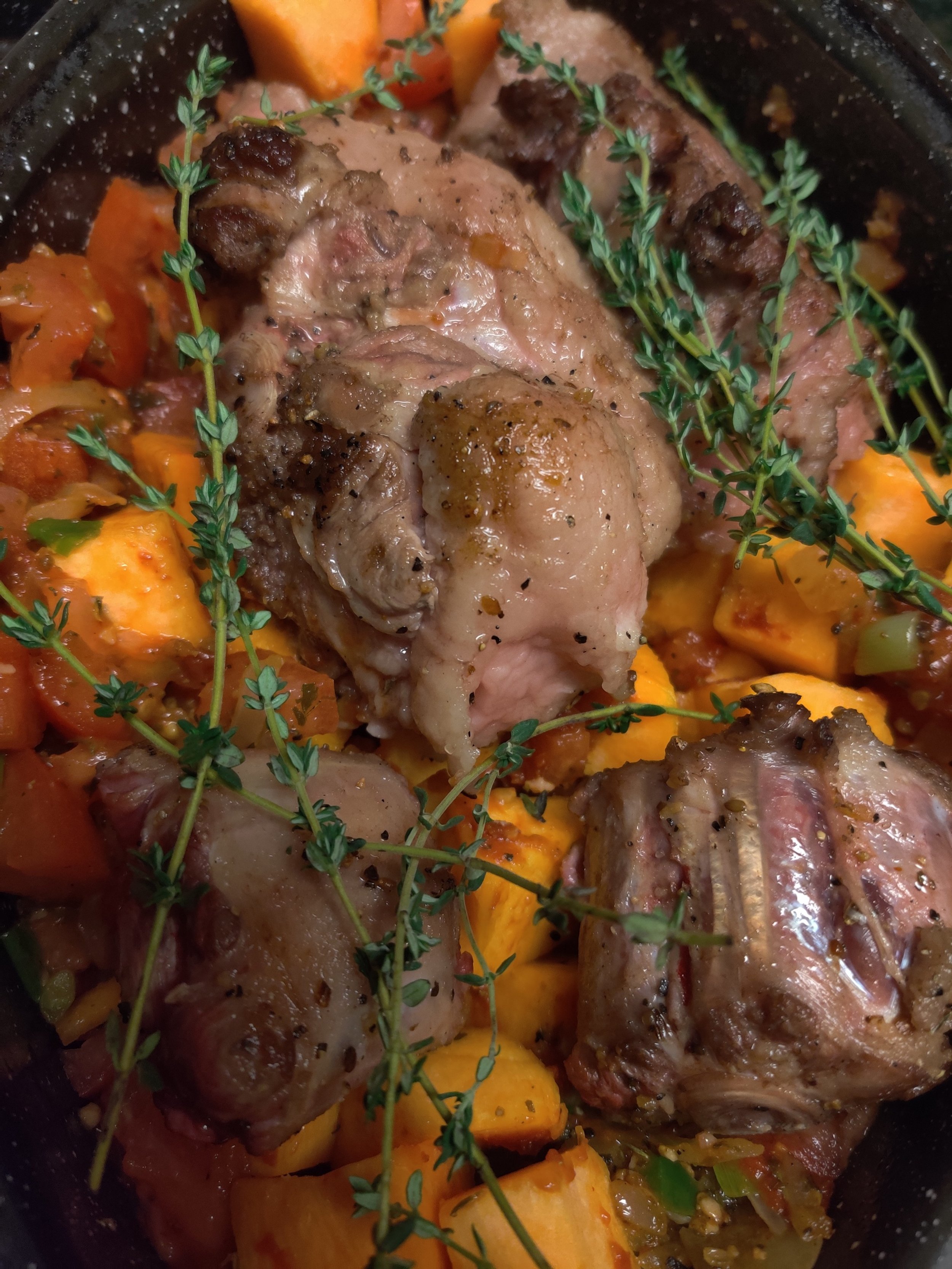
Oxtail. A delicacy set aside for special occasions (at least for me growing up in Zimbabwe). Whenever I saw my mother preparing the bones for the pressure cooker, I would get so excited. Nothing delighted me more than watching every part, from the chopping of the green onions to the constant check-ups and stirs. I've tried oxtail in various cuisines, from Vietnamese oxtail pho to Jamaican jerk oxtail with white beans. I appreciated both, but this simple version of slow cooking the bones with tomatoes and onions many Zimbabwes tend to go for is ideal, in my opinion!
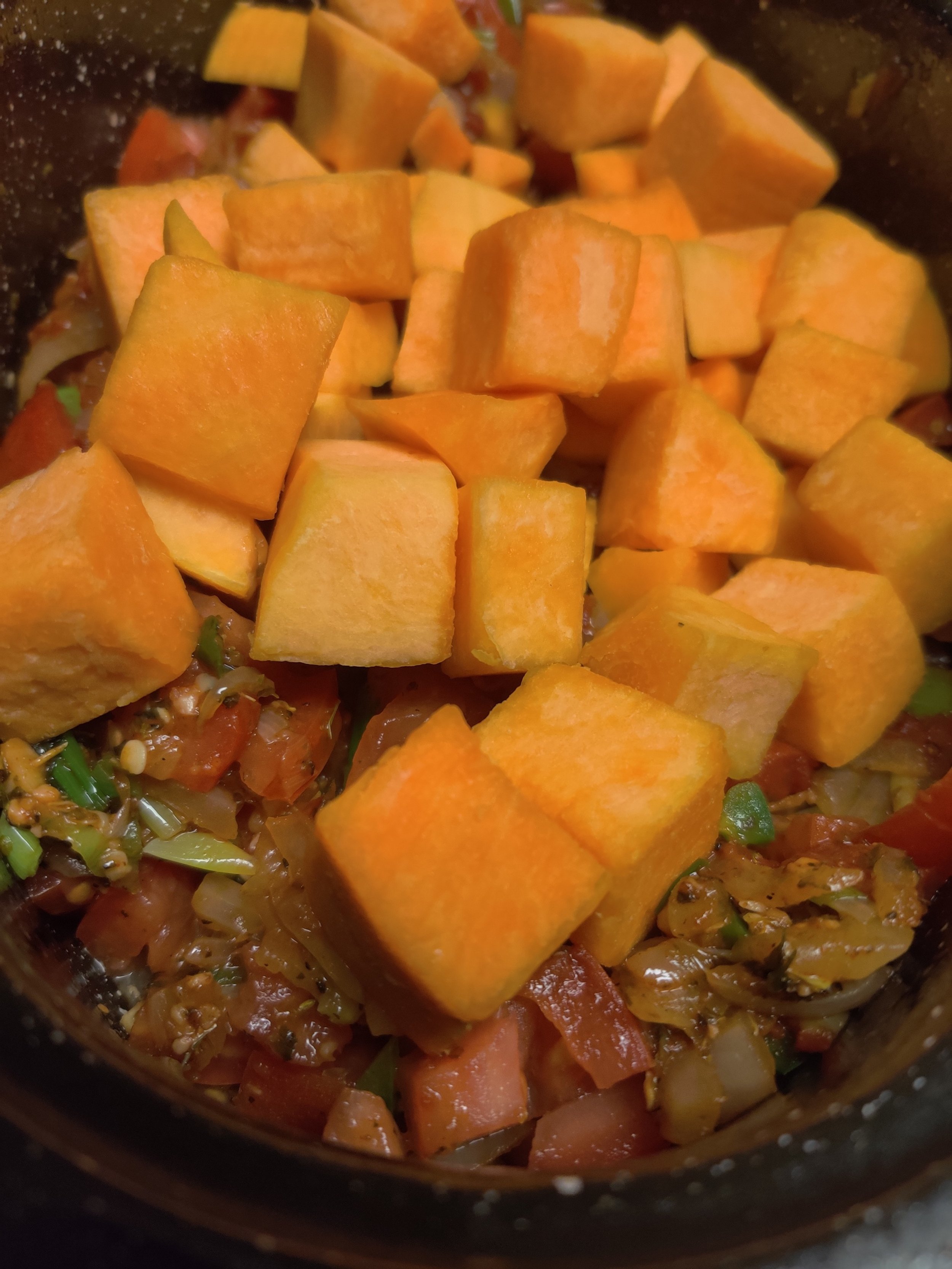
Southern African potjiekos inspired this recipe. Potjiekos are stews left untouched in cast-iron three-legged pots over hot coals, often a mixture of meat, bones and vegetables. With this method in mind and to add some substance, I used butternut.
Oxtail is something to indulge in once in a while, but it's worth it every time. Check out this recipe if you need instructions for the sadza (traditional Zimbabwean starch made of mealie/cornmeal cooked into a soft, thick porridge), although in this case I used finger millet (zviyo).