
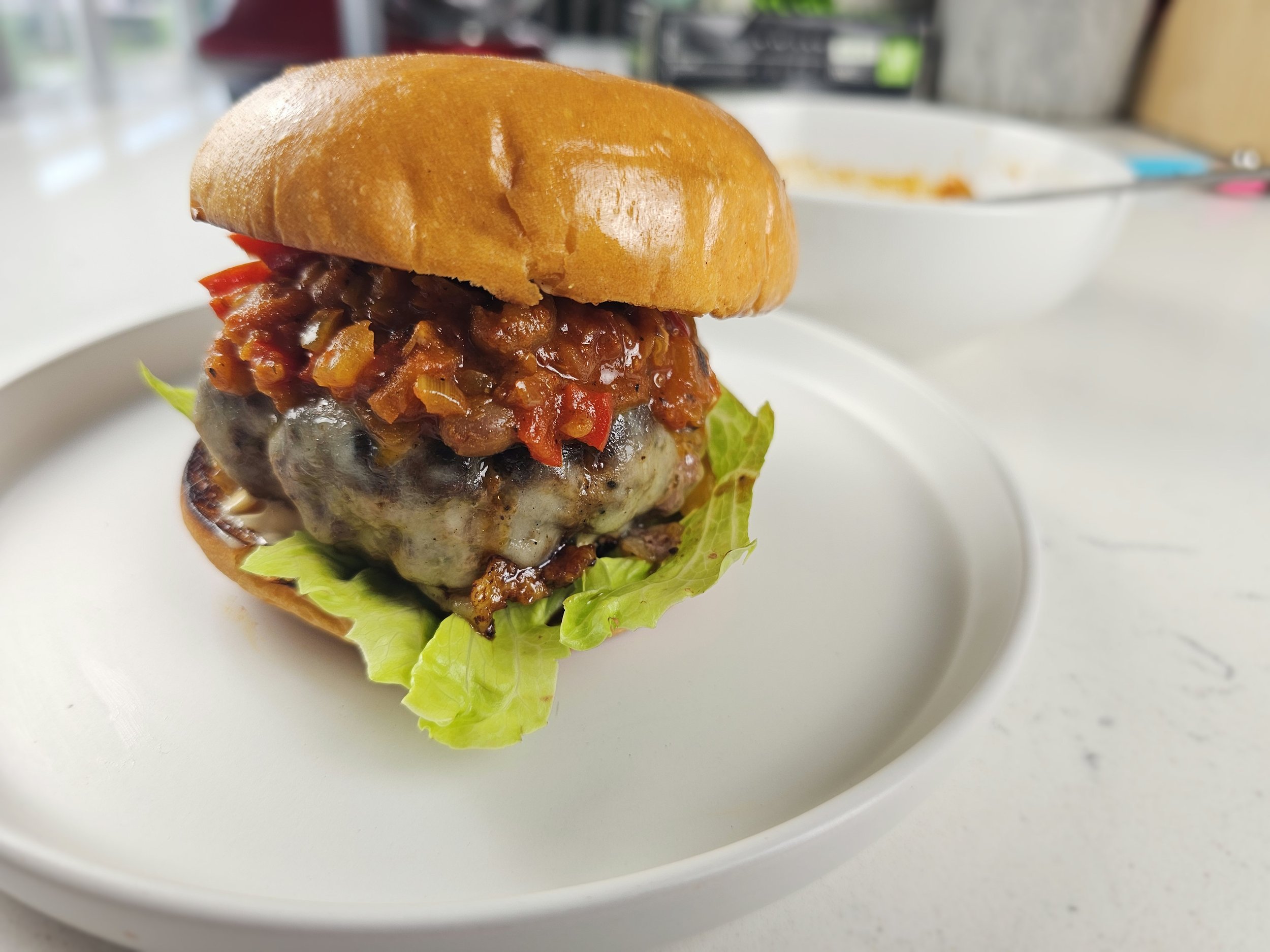
Boerewors-Inspired Burger with Chakalaka
This Boerewors-Inspired Burger with Chakalaka started with a simple question: What would happen if I took everything I love about traditional boerewors and turned it into a cheeseburger?
Boerewors is one of Southern Africa's most iconic sausages, enjoyed across countries including South Africa and Zimbabwe. Traditionally made with beef, pork, toasted coriander, black pepper, warm spices, and a touch of vinegar, it's known for a flavor that's bold, aromatic, and instantly recognizable. Instead of stuffing those flavors into a sausage casing, I wanted to see how they'd translate into a thick, juicy burger.
After several rounds of testing, I landed on a blend of beef and pork that stays tender and juicy while letting the boerewors-inspired seasoning shine. Toasted coriander and freshly cracked black pepper provide the familiar aroma, while allspice, garlic, cloves, nutmeg, and a splash of red wine vinegar add depth without overwhelming the meat.
Once the burger was where I wanted it, the toppings became the next challenge. Rich, well-seasoned beef needs something bright to balance it, and chakalaka does exactly that. This classic vegetable relish brings sweetness, acidity, gentle heat, and plenty of texture. Add melted cheese, crisp lettuce, spicy mayo, and a toasted brioche bun, and every bite feels balanced instead of heavy.
This recipe is also a little personal. Chakalaka featured in one of my television cooking challenges (100 Cooks), and while developing this burger I kept wondering how I'd approach that challenge today. Burgers have always been one of my favorite things to cook because they're won or lost in the details. A good meat blend, thoughtful seasoning, a proper crust, perfectly melted cheese, and toppings that complement the patty all matter.
The finished burger feels familiar if you've grown up eating boerewors, but it's just as enjoyable if these flavors are completely new to you. My goal wasn't to recreate the sausage—it was to capture its character in a different form. I hope it gives you a delicious introduction to one of Southern Africa's most iconic flavor combinations.
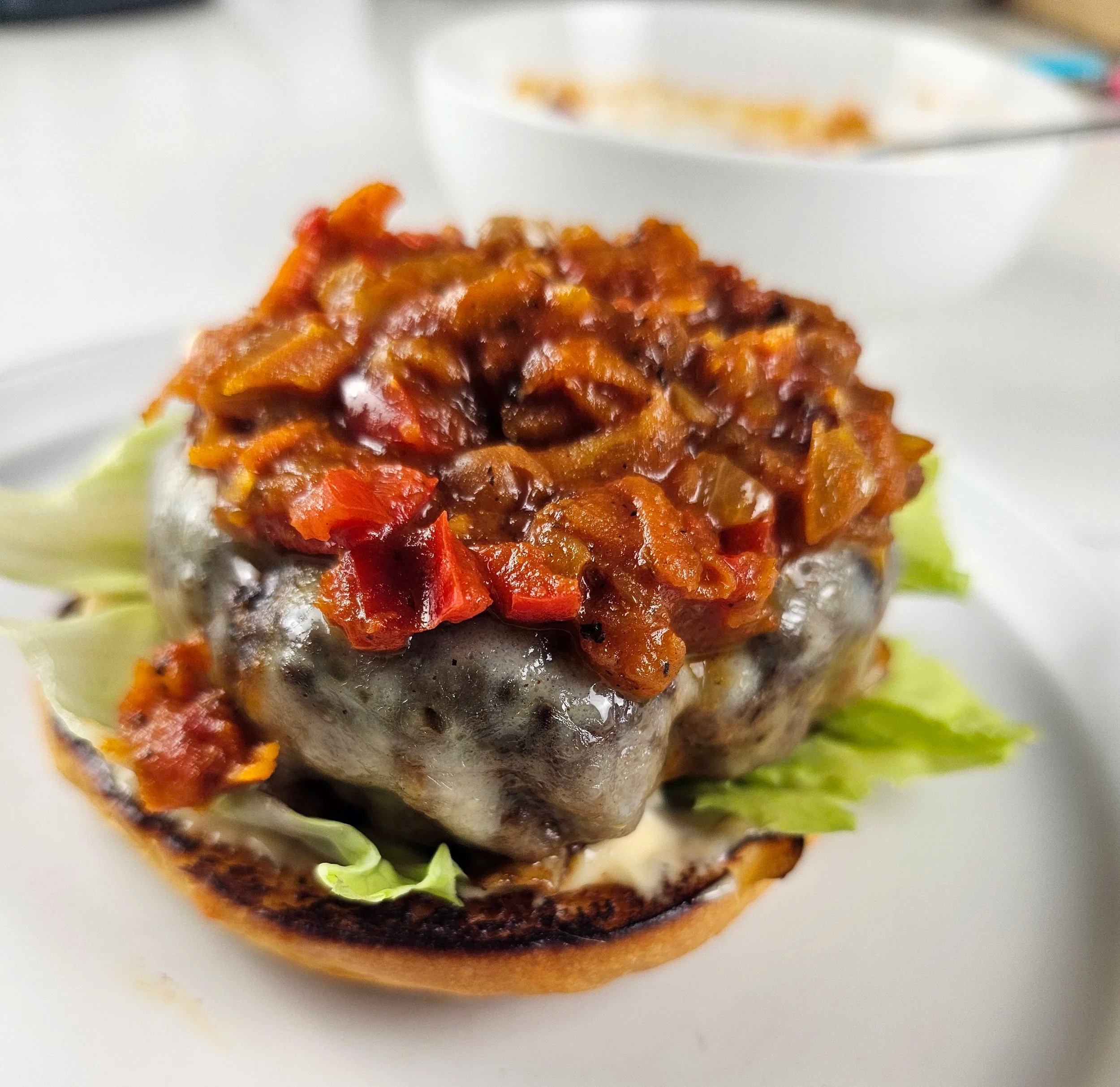
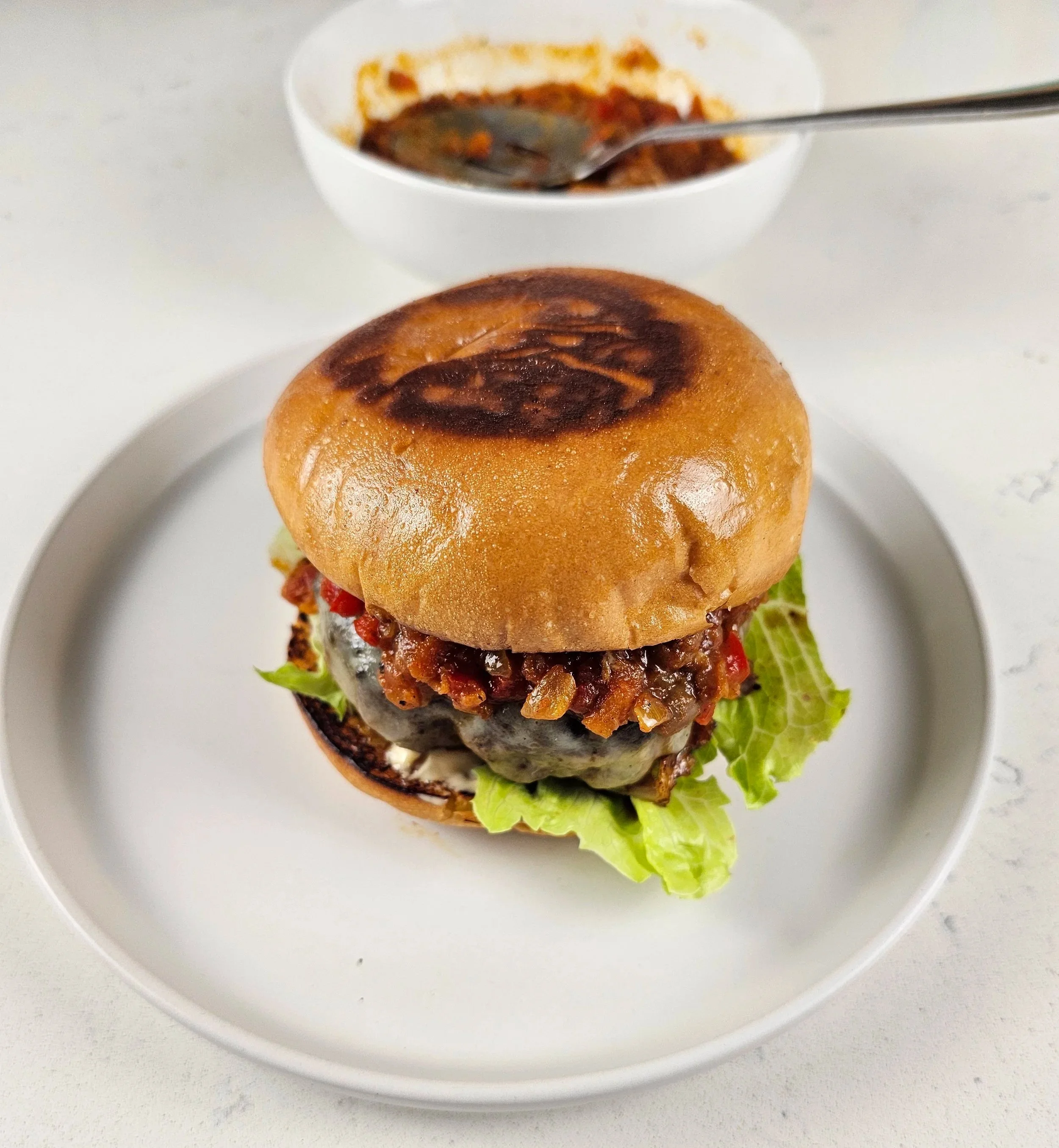

Boerewors-Inspired Burger with Chakalaka
Inspired by the bold flavors of traditional boerewors sausage, this juicy burger combines ground beef and pork with toasted coriander, black pepper, warm spices, and a splash of red wine vinegar. Topped with homemade chakalaka, melted provolone or American cheese, crisp lettuce, and served on a toasted brioche bun, it's a hearty Southern African-inspired burger packed with flavor.
Ingredients
- 10.4 oz ground beef
- 4 oz ground pork
- 3 tsp boerewors seasoning mix
- 1¼ tsp red wine vinegar
- 2 tsp salt
- 1 tsp whole black peppercorns
- 2 tbsp whole coriander seeds
- ½ tsp whole allspice berries
- 1 tsp smoked paprika
- 1 tsp garlic powder
- ⅛ tsp ground cloves
- ⅛ tsp ground nutmeg
- 1 tbsp neutral oil
- ½ onion, diced
- 1 carrot, grated
- 1 bell pepper, diced
- 2 cloves garlic, minced
- 1 tsp curry powder
- ½ tsp smoked paprika
- ½ tsp ground cumin
- ½ tsp chili flakes (optional)
- ½ can diced tomatoes
- Salt and pepper, to taste
- 2 brioche buns, toasted
- 2 slices provolone or American cheese
- Lettuce
- 2–4 tbsp chakalaka
- Spicy mayo (2 tbsp mayonnaise + 1–2 tsp hot sauce)
Instructions
- 1. Prepare the seasoning
- Toast the coriander seeds, peppercorns, and allspice until fragrant. Crush them and combine with the remaining spices. Store the extra seasoning in an airtight jar.
- 2. Make the patties
- In a bowl, combine:
- 10.4 oz beef
- 4 oz pork
- 3 tsp boerewors seasoning
- 1¼ tsp red wine vinegar
- Mix gently until just combined.
- Divide into two equal patties (about 7.2 oz each).
- Shape each patty ½–1 inch wider than your brioche buns and make a shallow thumb indent in the center.
- ---
- 3. Make the chakalaka
- Heat the oil over medium heat. Cook the onion until softened. Add the carrot, bell pepper, and garlic. Stir in the spices, then the tomatoes. Simmer until thick and well combined. Season to taste.
- ---
- 4. Cook the burgers
- 1. Heat a cast-iron skillet over medium-high for about 5 minutes.
- 2. Add a small amount of ghee.
- 3. Place the burgers in the pan and cook 4 minutes without moving them.
- 4. Flip the burgers and reduce the heat to medium.
- 5. Cook for another 3½–4 minutes, checking the internal temperature.
- 6. Add the cheese during the last minute.
- 7. Add 1–2 teaspoons water to an empty part of the skillet and immediately cover with a lid for 30–60 seconds to melt the cheese.
- 8. Cook until the burgers reach 160–165°F (71–74°C).
- 9. Rest for 3 minutes.
- ---
- 5. Toast the buns
- Toast the brioche buns in a little butter or ghee until golden.
- ---
- 6. Assemble
- Bottom bun
- Spicy mayo
- Lettuce
- Burger with melted cheese
- Spoonful of chakalaka
- Top bun
Notes
- This recipe was developed using 7.2 oz patties, which provided the best balance of juiciness, burger-to-bun ratio, and presentation.
- Shape the patties wider than the buns to account for shrinkage during cooking. You can also press your thumb gently in the center to create a dimple in each to help this.
- Mix the meat gently to maintain a tender texture.
- Toasting the whole spices before grinding makes a noticeable difference in flavor.
- If your chakalaka is too loose, simmer it uncovered for a few extra minutes before serving.
I am not a certified nutritionist and any nutritional information on dontmissmyplate.com should only be used as a general guideline.
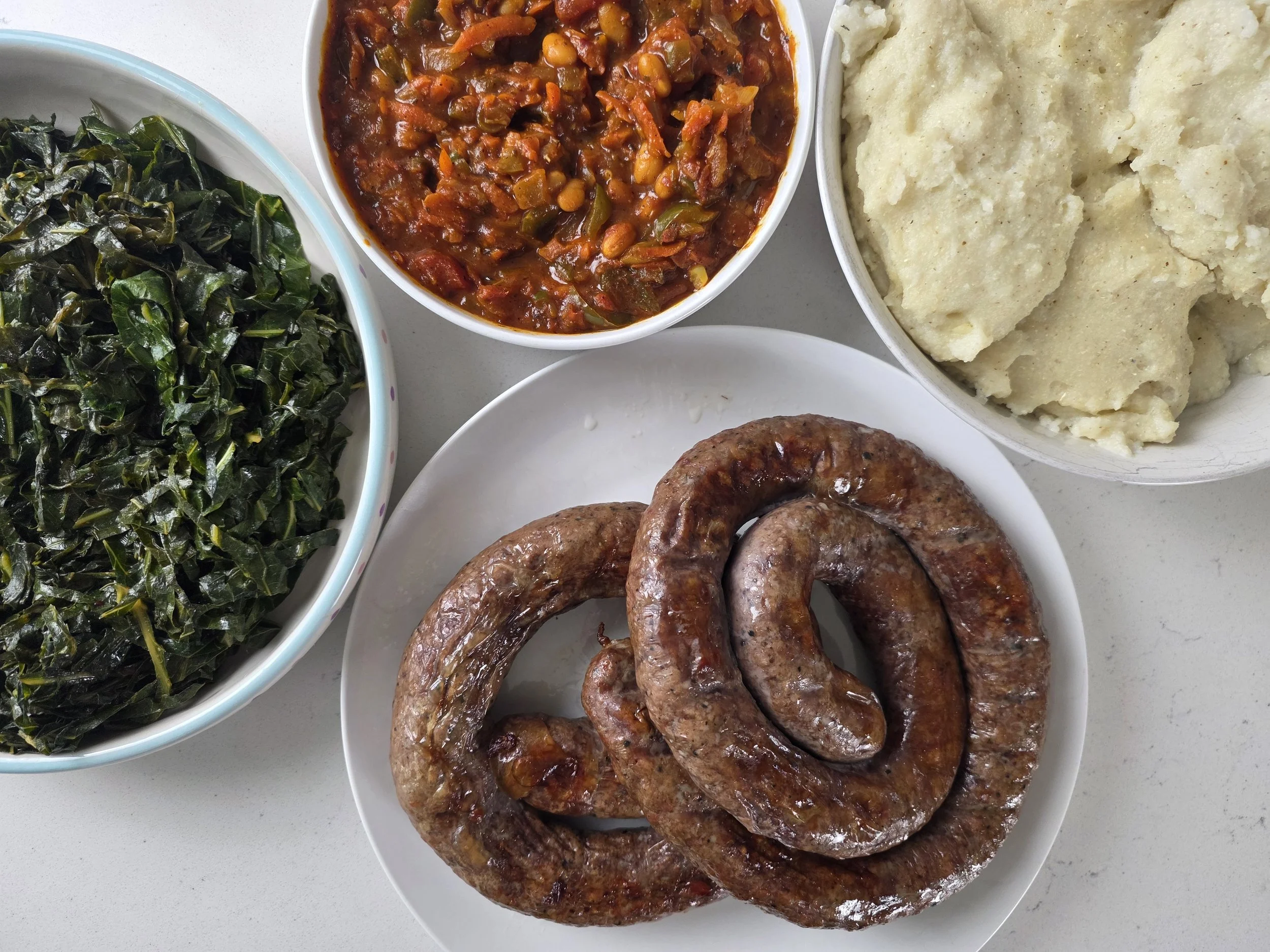
Braai-Style Homemade Boerewors Sausage with Cherry Plum
This is Part 3 of my braai-inspired series, and the final plate brings everything full circle with one of the most iconic elements of Southern African food culture: boerewors.
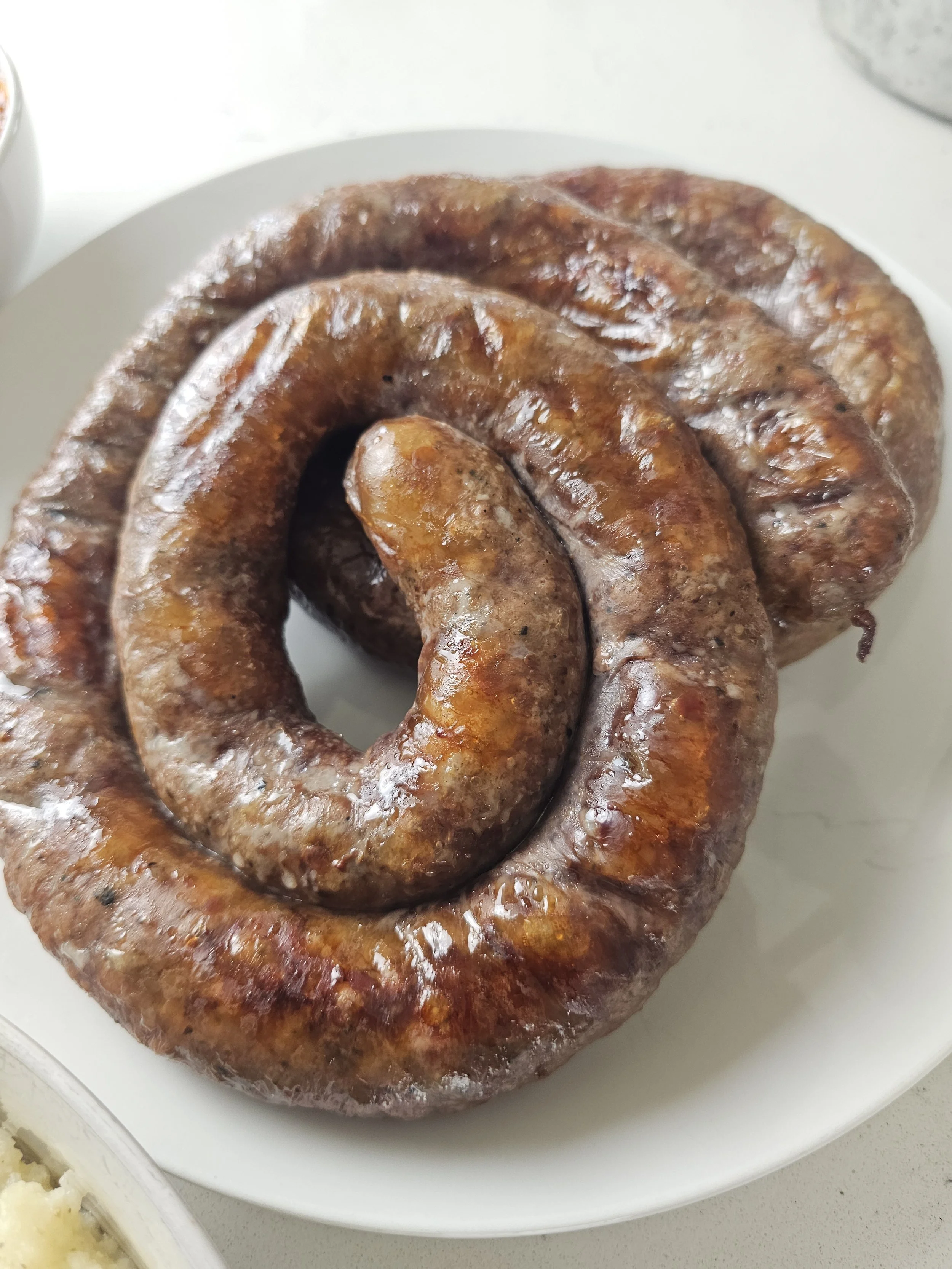
After exploring peri-peri chicken in Part 1 and BBQ- and curry-spiced lamb in Part 2, this final installment shifts focus to the centerpiece of many braai gatherings: sausage. In many Southern African homes, boerewors is not just another protein on the grill; it is often the anchor around which everything else is built. From the fire itself to the sides and conversations shared around the table, it holds a central place in the braai experience.
Traditional boerewors is typically made with a higher fat content (often around a 70/30 lean-to-fat ratio), which is key to its signature juiciness and flavour when grilled over open heat. That balance of fat is what gives it its distinctive texture and keeps it from drying out during the braai process.
For this final plate, I also followed through on the community vote, which leaned heavily toward sausage over fish. That result raised an interesting reflection on how different proteins fit into braai culture. While fish certainly plays an important role in some coastal traditions and regions, sausage remains one of the most recognizable and widely enjoyed staples of everyday braai cooking.
Rather than overcomplicating the process, I kept this recipe grounded and accessible. The sausage is made using seasoned ground meat, which can easily be prepared at home and stuffed into casings for full control over flavour and texture. It also serves as a practical introduction for anyone interested in trying homemade boerewors without needing specialized cuts or advanced butchery skills. I used a sausage-stuffing attachment for a KitchenAid mixer, though standalone sausage stuffers work just as well.
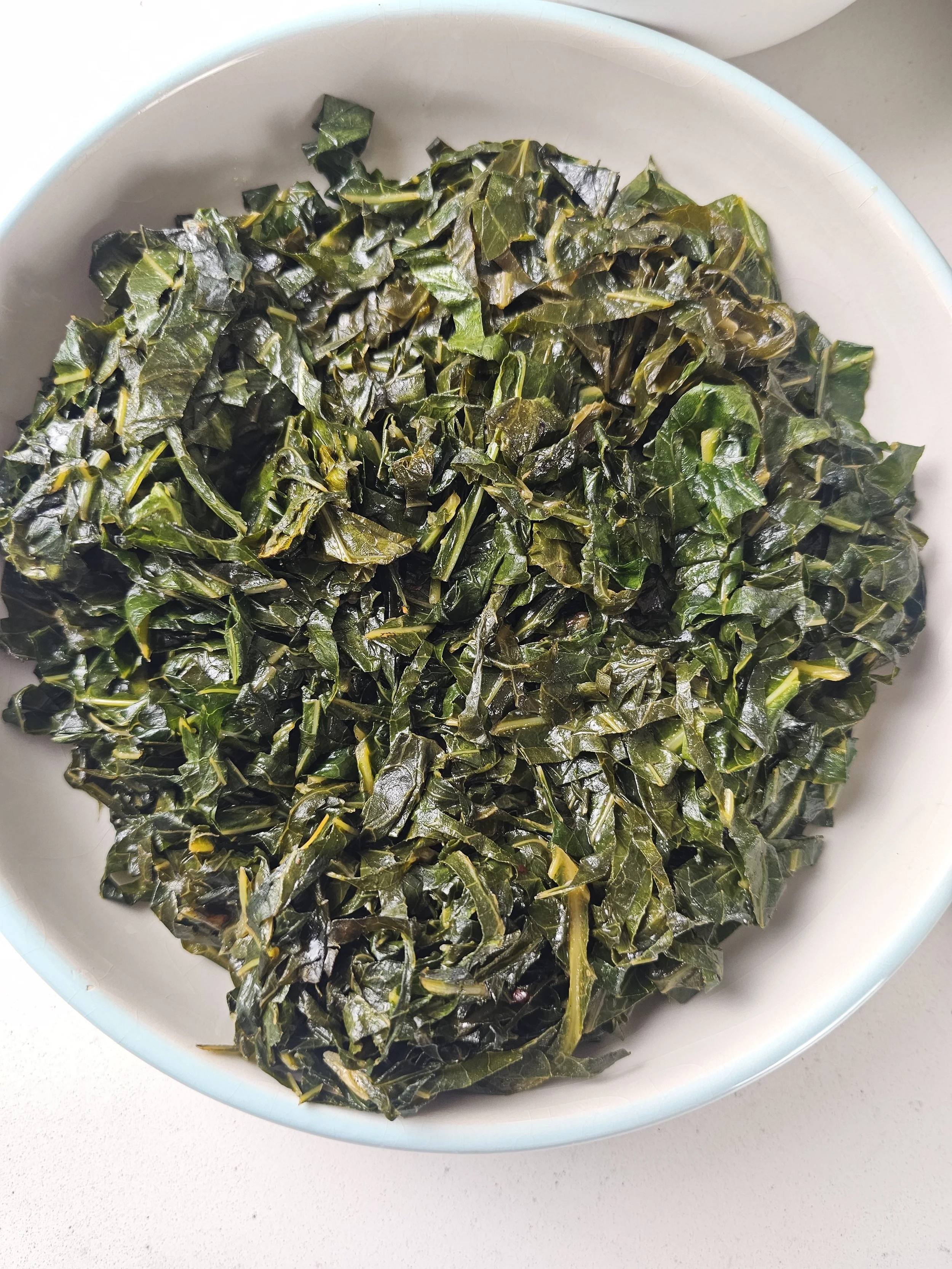
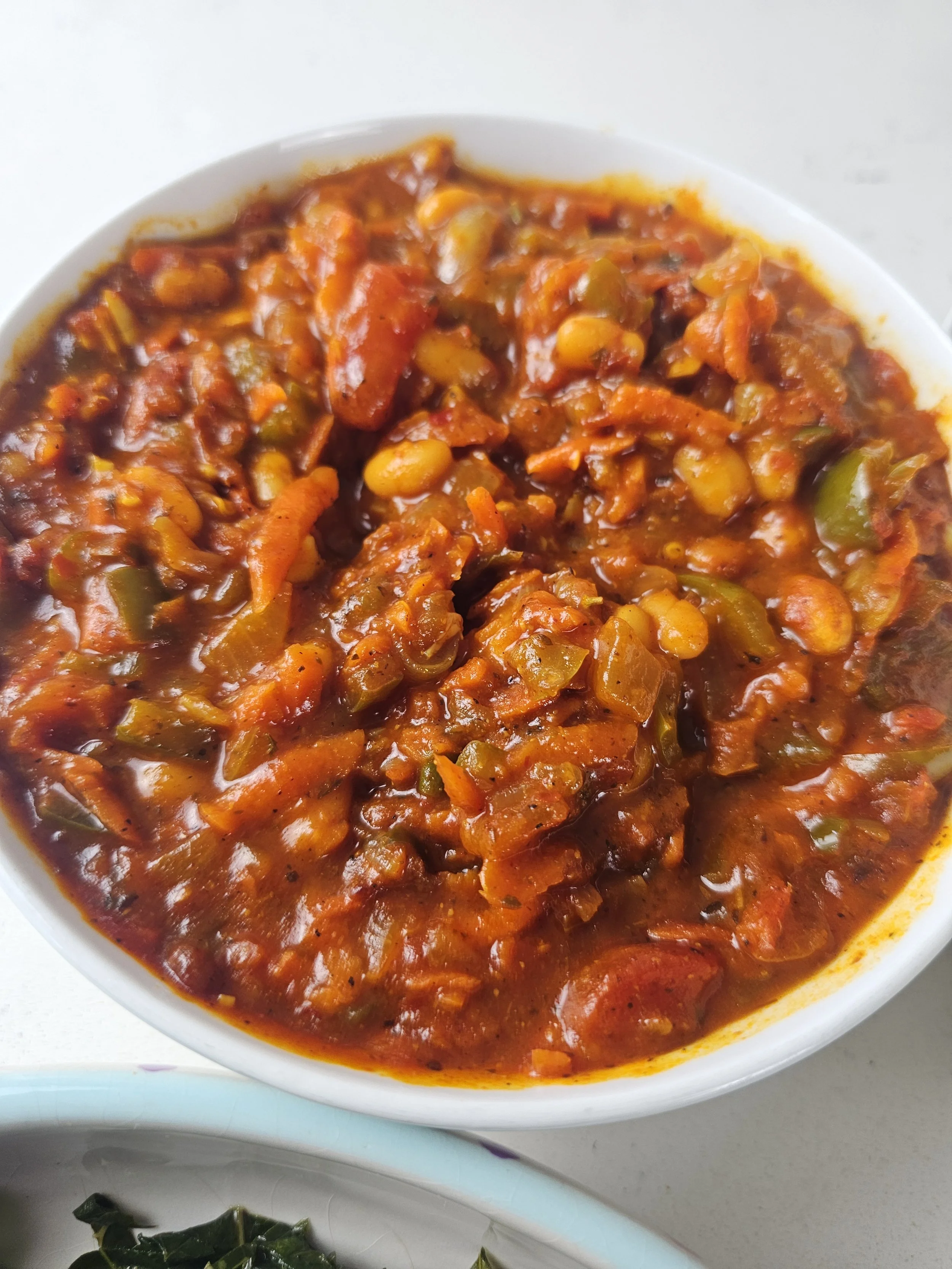
The plate is completed with classic sides: pap/sadza, chakalaka, and collard greens. These are not simply additions to the meal; they create balance. Pap/sadza provides the foundation, chakalaka brings heat and spice, and the greens add freshness and contrast. Together, they complete the structure of a proper braai plate.
To close the series, I paired the meal with a cherry plum drink, another choice inspired by the community vote. Throughout this series, drinks have played a subtle but important role in reflecting how braai culture extends beyond food alone. The drink adds brightness and balance, complementing the plate rather than competing with it.
This final recipe is less about complexity and more about completeness: a full braai experience that brings together fire, food, sides, and shared culture on one plate.
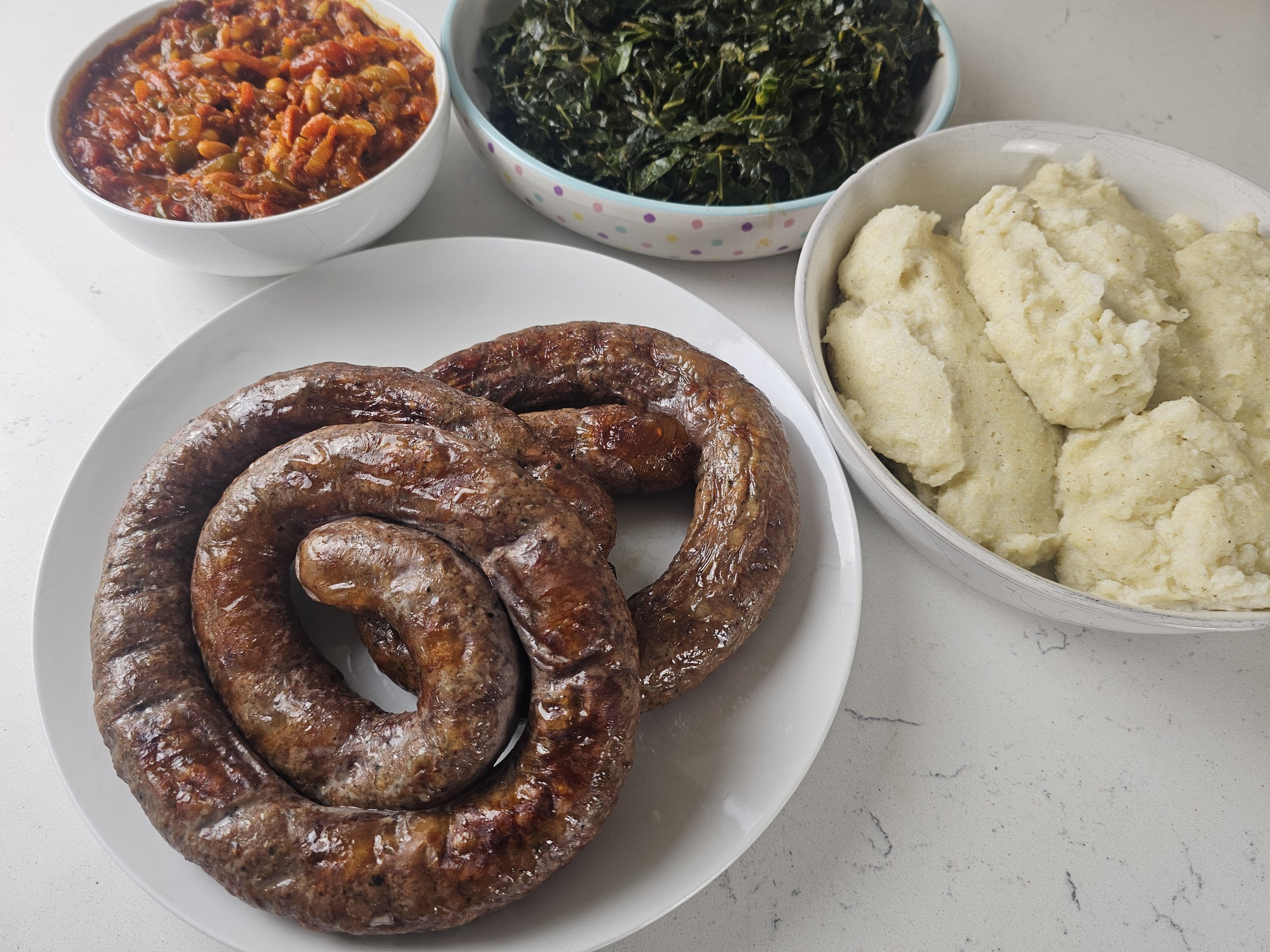

Braai-Style Boerewors Sausage with Pap, Chakalaka, and Collard Greens
A traditional boerewors-style sausage made from seasoned ground meat, stuffed and grilled for a classic Southern African braai plate. Served with soft pap, rich chakalaka (vegetable relish), and collard greens, and paired with a refreshing cherry plum drink.
Ingredients
- 2.4 lb ground beef (not too lean)
- 1 lb ground pork
- 2 tsp salt
- 1 tsp whole black peppercorns
- 2 tbsp whole coriander seeds
- 1/2 tsp whole allspice berries
- 1 tsp smoked paprika
- 1 tsp garlic powder
- 1/8 tsp ground cloves
- 1/8 tsp ground nutmeg
- 1 tbsp red wine vinegar
- 1 packet sausage casings (standard pack; amount used will vary depending on stuffing size for 3.4 lb meat)
- 2 cups maize meal
- 3 cups hot water (add gradually)
- 1 to 1½ cups cold water
- 1 tsp salt
- 1 tbsp butter
- 1 onion, chopped
- 2–3 carrots, grated
- 1 chilli pepper, minced (optional)
- 2–3 garlic cloves, minced
- 1 inch ginger, grated (optional)
- 1/2 cup roasted tomatoes, diced
- 1/2 green bell pepper, chopped
- 1/2 cup baked beans
- 1 tbsp curry powder
- 1 tsp coriander spice
- 1 tsp smoked paprika
- 1 tbsp tomato paste
- 2 tbsp cooking oil
- 1 cup water
- 2 tbsp Worcestershire sauce
- Salt and pepper to taste
- 4–5 cups collard greens
- 2 tbsp oil or butter
- 1 tbsp garlic powder
- Salt to taste
- Splash of water or stock
- Splash of vinegar
Instructions
- Toast coriander seeds, peppercorns, and allspice berries until fragrant, then crush.
- Mix spices with ground beef, pork, salt, paprika, garlic powder, cloves, nutmeg, and vinegar until just combined.
- Let the mixture rest for 20–30 minutes before stuffing.
- Stuff into casings, then loosely cover and refrigerate for 1–12 hours (overnight recommended).
- Before cooking, remove from fridge for 10–15 minutes.
- Grill over medium heat or bake at 325°F (160°C) for about 30 minutes, turning halfway, until browned and cooked through. Do not pierce sausages while cooking.
- Mix maize meal with cold water to form a smooth paste.
- Gradually add hot water while stirring to avoid lumps.
- Cook on low heat for about 15 minutes, stirring occasionally.
- Add more maize meal if needed to adjust thickness.
- Beat with a wooden spoon until smooth, then cover and let rest.
- Heat oil in a pan.
- Sauté onion, carrot, green pepper, chilli, garlic, and ginger until soft.
- Add curry powder, coriander, and smoked paprika and cook briefly.
- Add roasted tomatoes, tomato paste, baked beans, and water.
- Simmer 10–15 minutes until thick.
- Stir in Worcestershire sauce at the end and season.
- Sauté greens in oil or butter until wilted.
- Add a splash of water or stock, cover, and simmer until tender.
- Finish with salt and vinegar
Notes
- Always wash sausage casings properly according to packet instructions before use.
- Resting the sausage mixture before stuffing improves texture and handling.
- Do not cook sausages on high heat; low to medium heat prevents splitting.
- Pap texture can be adjusted by adding more maize meal or water depending on preference.
- Stuffing sausages takes practice; small tears or uneven lengths are normal for first attempts.
Nutrition Facts
Calories
650Fat (grams)
40 gCarbs (grams)
55 gProtein (grams)
30 gI am not a certified nutritionist and any nutritional information on dontmissmyplate.com should only be used as a general guideline.


Deviled Eggs with Chakalaka
When the weather begins to warm after a harsh winter, nothing kicks off a celebration of the new season like a colorful, flavorful appetizer. Enter Chakalaka Deviled Eggs, a South African twist on a classic seasonal party favorite.
Deviled eggs have long been associated with springtime, symbolizing rebirth and renewal, historically aligned with the end of Lent, when eggs were restricted.
This recipe combines a creamy, tangy yolk filling with the vibrant, spicy flavors of chakalaka, a beloved vegetable relish made from peppers, onions, carrots, and tomatoes, seasoned with curry and warm spices. Chakalaka is traditionally served alongside grilled meats and starchy sides like pap or sadza, making it a familiar and festive flavor profile.
These eggs are perfect for a wide range of events, from braais and cookouts to picnic spreads and upscale cocktail gatherings. They bring a pop of color, a touch of heat, and a playful nod to South African flavors, making them a springtime appetizer that’s as delicious as it is eye-catching.

Deviled Eggs with Chakalaka
Bright, flavorful, and a little spicy, these Chakalaka Deviled Eggs combine creamy yolks with the vibrant South African relish chakalaka. Perfect for spring gatherings, braais, picnics, or cocktail parties, they bring color, heat, and bold flavor to any appetizer spread.
Ingredients
- 1/2 medium onion, diced
- 1/2 large red bell pepper, diced
- 1 large garlic clove, minced
- 1 Thai chili, finely chopped
- 1 medium carrot, diced
- 1/4 cup baked beans in tomato sauce
- 1/4 cup fire-roasted diced tomatoes
- 1/4 tsp cayenne
- 1/2 tsp smoked paprika
- 1 tsp curry powder
- 1/4 tsp Royco Usavi beef seasoning
- 1/4 tsp salt
- 1/4 tsp black pepper
- 1/4 tsp ground coriander
- 1/4 tsp ground ginger
- 1 tsp chicken bouillon concentrate
- 1 cup water
- 1/4 cup ketchup/tomato sauce
- 1 tbsp tomato paste
- 1–2 tbsp Worcestershire sauce
- 1–2 tsp rice vinegar
- 1 tbsp chutney
- Ghee or oil, for cooking
- 6 large eggs
- 3 tbsp mayonnaise
- 1 tsp Dijon mustard
- 1 tsp lemon juice
- 2–3 tbsp prepared chakalaka (from above)
- 2 tbsp plain yogurt or sour cream (optional)
- Salt and pepper, to taste
- Optional garnish: smoked paprika, chopped parsley
Instructions
- Cook the eggs: Place the eggs in a pot and cover with 1 inch of cold water. Bring to a boil, then cover, turn off the heat, and let sit 10 minutes.
- Transfer to an ice bath for 5 minutes, then drain. Place in the fridge.
- Prepare chakalaka: Assemble your spices and chop your vegetables. Heat some ghee or oil in a pan and sauté the onions and garlic until soft. Add spices and bouillon; cook for at least 30 seconds.
- Add the bell pepper and chili pepper then cook 1–2 minutes. Stir in the tomato paste, Worcestershire sauce and ketchup to deglaze.
- Simmer vegetables: Add the carrots, diced tomatoes, baked beans, and water. Simmer for 15 minutes until thickened, stirring occasionally.
- Stir in the chutney, and vinegar, then season to taste. Set aside to cool, then add at least 1/2 cup to a bowl and use an immersion blender to smoothen slightly. Be sure to keep the texture and don't make soup!
- Make filling: Peel and halve the eggs and remove the yolks gently to a bowl.
- Mash the yolks, then mix in the mayonnaise, mustard, lemon juice, yogurt (if using), salt, and pepper. Stir in 2–3 tbsp chakalaka.
- Use an immersion blender to make it smoother if desired, but keep a few chunks for texture.
- Assemble eggs: Spoon or pipe yolk mixture into the egg whites.
- Garnish with smoked paprika, a little reserved chakalaka, and parsley.
- Chill until serving.
Notes
- Storage: These are best fresh! Refrigerate up to 24 hours.
- Yogurt or sour cream is optional. It adds extra creaminess and a subtle tang to the filling, which can mellow the spice from the chakalaka. Omit it if you prefer a firmer, more traditional deviled egg texture.
Nutrition Facts
Calories
82Fat (grams)
6.3 gSat. Fat (grams)
1.2 gCarbs (grams)
2.5 gFiber (grams)
0.7 gProtein (grams)
4.5 gI am not a certified nutritionist and any nutritional information on dontmissmyplate.com should only be used as a general guideline.