
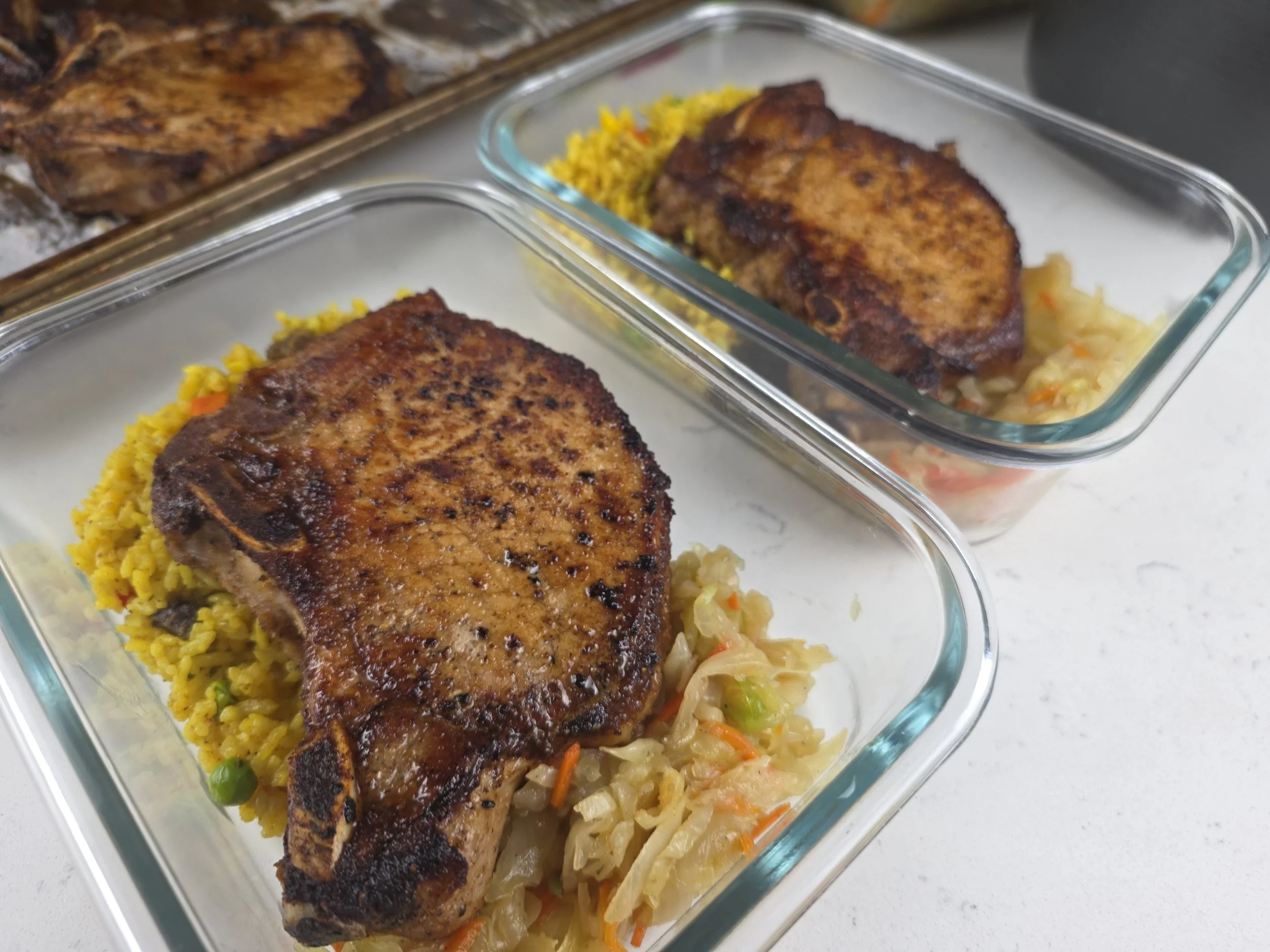
Meal Prep: Nigerian Fried Rice with Pork Chops
A hearty dinner meal prep featuring seasoned pork chops, colorful Nigerian fried rice with chicken liver, and savory sautéed cabbage and carrots.
A good meal prep should give you something to look forward to at lunchtime and dinnertime. That's the idea behind my Lunch + Dinner Duo series, where I prepare two different meals to make the week a little easier. For this dinner edition, I'm pairing seasoned pork chops with Nigerian fried rice and sautéed cabbage and carrots.
The pork chops are marinated in a flavorful blend of pickled jalapeño juice, Worcestershire sauce, soy sauce, and seasonings before being seared in a hot skillet and finished in the oven. Searing gives the chops a beautifully browned exterior, while finishing them in the oven helps cook the center evenly. The trick is not to overcook them. Pork chops can dry out quickly, so I recommend using an instant-read thermometer rather than relying entirely on cooking time. A good-quality cut with some marbling also makes a difference.
Nigerian fried rice is a popular West African dish made with long-grain rice, mixed vegetables, and a distinctive blend of seasonings, including curry and thyme. Unlike some other styles of fried rice, which are often prepared by stir-frying cooked rice and vegetables together, Nigerian fried rice is commonly cooked with seasoned stock or liquid, aromatics, and vegetables. Beef liver is a familiar addition that brings a savory depth to the dish. I used chicken liver in this version because I enjoy its milder flavor and softer texture, but beef liver works just as well. You can also leave the liver out if you prefer.
To round out the meal, I added sautéed cabbage and carrots. The vegetables bring a little sweetness and freshness to the plate, balancing the richness of the pork and the seasoned rice. It's a simple side, but it makes the meal feel complete.
This dinner is the companion to my Pan-Seared Salmon with Creamy Pepper Sauce Pasta, the lunch edition of this Lunch + Dinner Duo series. Together, they give you two different meals to prepare ahead and enjoy throughout the week!
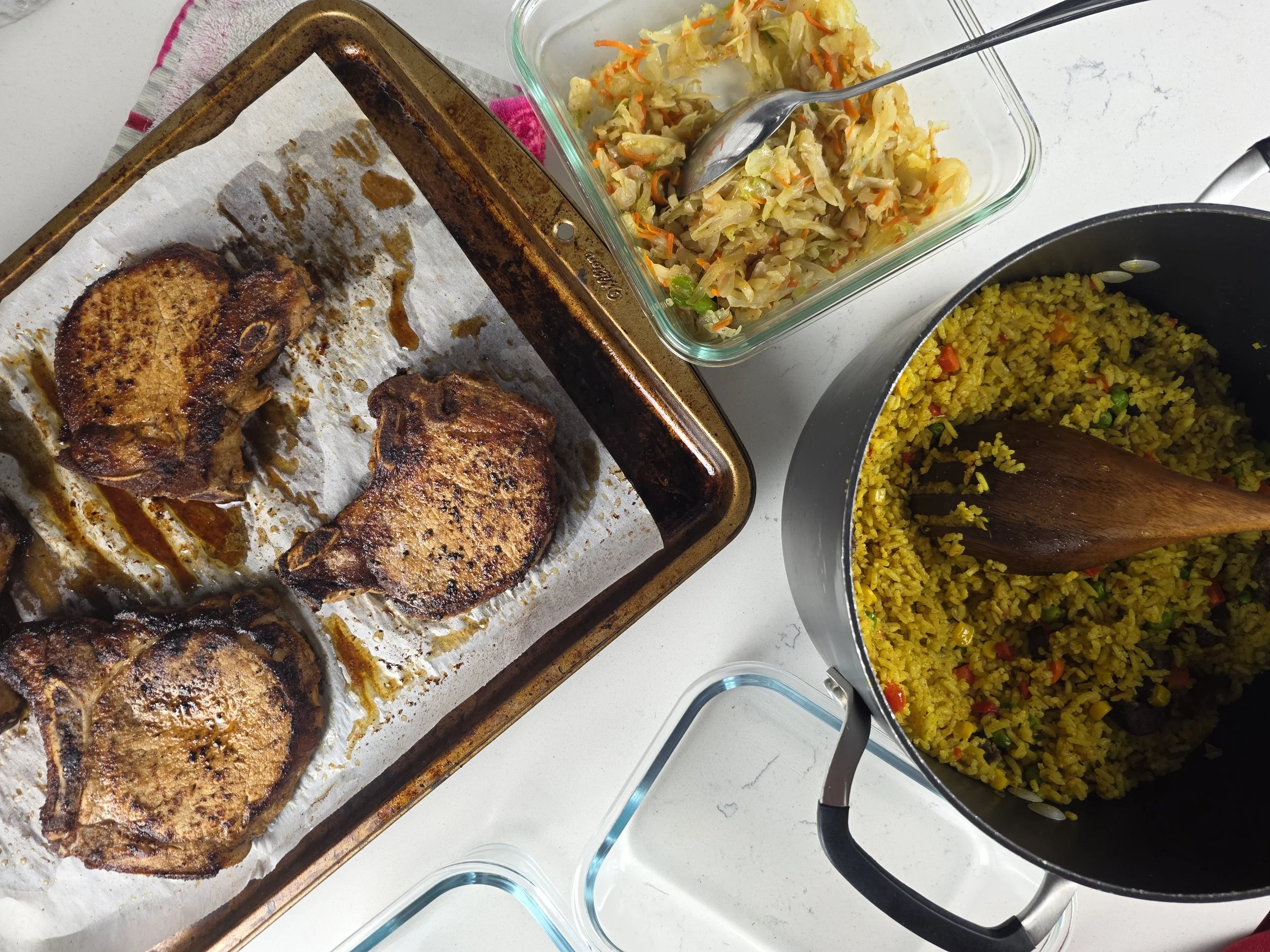
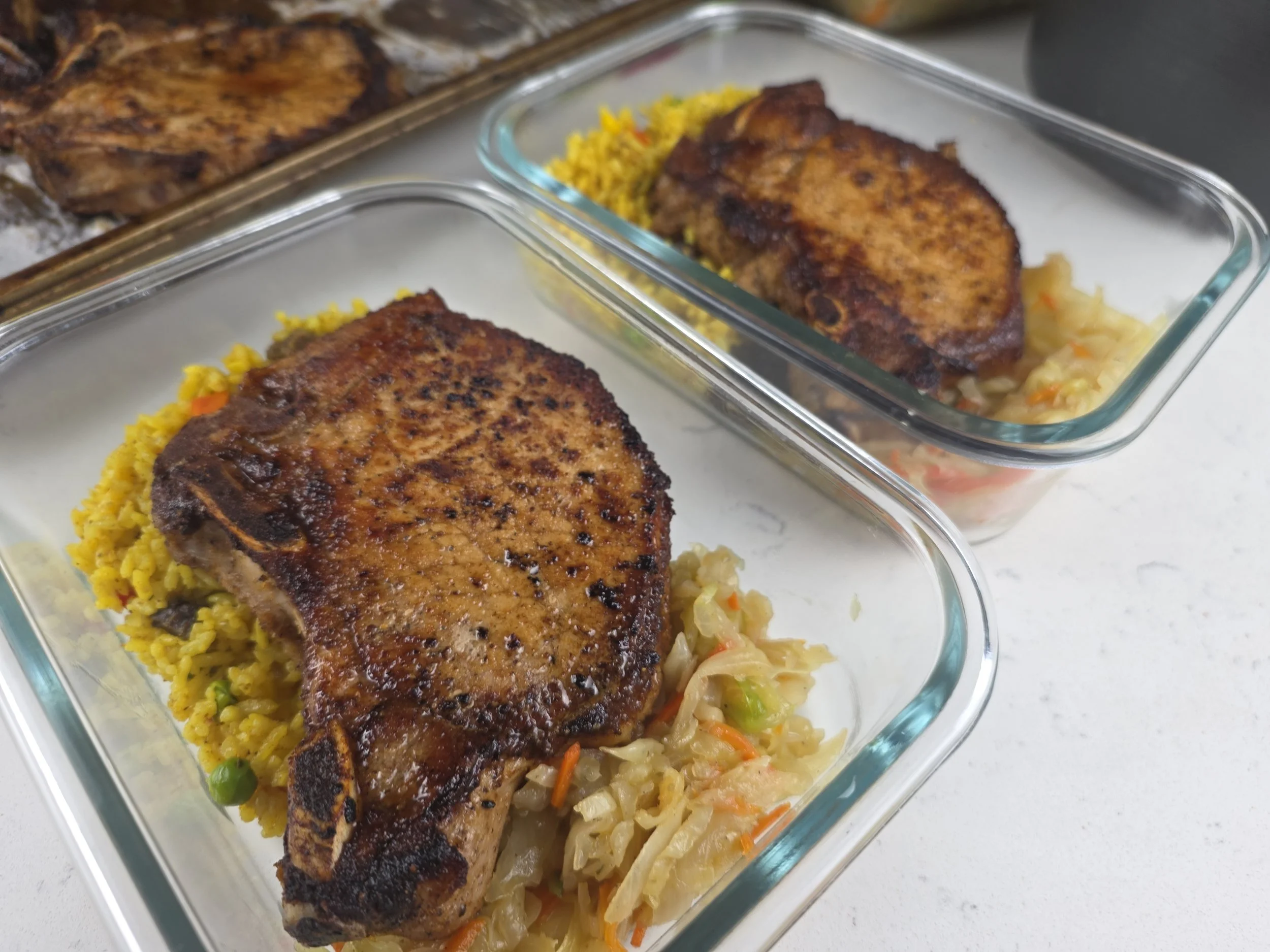

Nigerian Fried Rice with Pork Chops
Seasoned pork chops seared until golden and finished in the oven, served with Nigerian-inspired fried rice with chicken liver and vegetables, plus sautéed cabbage and carrots.
Ingredients
- 4 large, thick-cut pork chops
- ¼ cup pickled jalapeño juice
- 1 tbsp soy sauce
- 1 tbsp Worcestershire sauce
- 2–4 tbsp olive oil
- 1 tsp seasoned salt
- 1 tsp black pepper
- 1 tsp ground cumin
- 1 tbsp all-purpose grilled meat seasoning (shishanyama)
- 1 tsp onion powder
- 1 tsp garlic powder
- Olive oil or ghee for searing
- 2 cups long-grain white rice, rinsed
- 9 oz chicken liver, cooked and pan-fried
- ½ medium onion, diced
- 2 cloves garlic, minced
- ½ diced red bell pepper, diced
- ½ cup frozen carrots and peas
- ½ cup frozen corn
- 2½ cups water or unsalted chicken stock
- 1½ tsp curry powder
- 1 tsp dried thyme or oregano
- 1 tsp chicken bouillon powder
- 1 tsp rice spice seasoning
- ½ tsp black pepper
- 1 tbsp olive oil or butter
- Seasoned flour, for coating the liver
- 1 bag shredded coleslaw mix (cabbage and carrots)
- - ½ onion, sliced or diced
- - 1 tbsp ghee
- - Chicken bouillon powder, to taste
- - 1–2 bay leaves
- - Black pepper, to taste
- - Coarse salt, to taste
- - A splash of water, as needed
Instructions
- #### 1. Marinate the pork chops
- Combine the pickled jalapeño juice, soy sauce, Worcestershire sauce, olive oil, salt, black pepper, cumin, shishanyama seasoning, and onion powder. Coat the pork chops in the marinade, cover, and refrigerate for 30–60 minutes. Brining beforehand is optional, but it can be worthwhile if you want additional moisture and seasoning throughout the meat.
- #### 2. Prepare the cabbage
- Melt the ghee in a large skillet over medium heat. Add the onion and cook until softened. Add the coleslaw mix and toss to combine. Season with chicken bouillon, black pepper, and coarse salt, then add the bay leaves and a splash of water. Cover and cook until the cabbage and carrots are tender, stirring occasionally. Adjust the seasoning to taste. Remove the bay leaves before serving.
- #### 3. Prepare the chicken liver
- Trim the chicken liver and cut it into manageable, similarly sized pieces. Pat dry, then lightly coat in seasoned flour. Heat olive oil in a skillet over medium heat and pan-fry the liver until browned and cooked through. Check that the thickest pieces reach an internal temperature of 165°F. Set aside.
- #### 4. Cook the Nigerian fried rice
- Heat olive oil in a large pot over medium heat. Add the onion and bell peppers and sauté until softened. Add the garlic, if using, followed by the curry powder, thyme, chicken bouillon, rice spice seasoning, and black pepper. Stir to combine.
- Add the rinsed rice and stir to coat it in the seasonings. Pour in the water or stock and bring to a boil. Cover, reduce the heat to low, and cook until the rice is partially tender and most of the liquid has been absorbed.
- Add the frozen carrots, peas, and corn. Fold them into the rice, cover, and continue cooking on low until the rice is tender and the vegetables are heated through. Avoid adding extra liquid unless the rice genuinely needs it. Once cooked, turn off the heat and allow the rice to rest, covered, for a few minutes.
- Fold in the cooked chicken liver near the end, distributing it throughout the rice.
- #### 5. Sear the pork chops
- Remove the pork chops from the marinade and allow excess marinade to drip off. Heat a little olive oil in an oven-safe skillet over medium-high heat. Sear the chops on both sides until nicely browned. Work in batches if necessary so the skillet isn't overcrowded.
- #### 6. Finish the pork chops in the oven
- Transfer the skillet to a preheated 400°F oven. Begin checking the internal temperature after approximately 8–10 minutes, particularly if the chops are thick. Cooking time will vary depending on their thickness and how much they cooked during searing. Remove them when the center reaches 145°F, then let them rest for at least 3 minutes before serving. Avoid leaving them in the oven longer than necessary, as pork chops can dry out quickly.
- #### 7. Assemble and serve
- Divide the Nigerian fried rice and sautéed cabbage among four meal-prep containers. Add a pork chop to each container, arranging it at an angle if needed to make room for all three components. Allow the food to cool appropriately before covering and refrigerating.
Notes
**Choosing your pork chops:** A good-quality, evenly thick cut makes a difference. Look for chops with some marbling and avoid very thin cuts if you plan to sear and finish them in the oven. Thick chops are forgiving in some ways, but they still need careful temperature monitoring.
**Brining and marinating:** Brining is optional, but it can help with moisture retention. The jalapeño juice, Worcestershire sauce, and soy sauce in this marinade add flavor and seasoning. Even a short 30-minute marinade is useful, although longer marinating gives the flavors more time to develop.
**Don't overcook the pork:** The 400°F oven finish is intended to bring the center of the chops to temperature after searing. Start checking early rather than automatically leaving them in for 12 minutes. An instant-read thermometer is the most reliable way to avoid dry pork.
**Beef liver or chicken liver?** Beef liver is a common choice for Nigerian fried rice. Chicken liver is a good alternative if you prefer its milder flavor and softer texture. Both can be used, provided they are cooked thoroughly before being added to the rice.
**Adjust the vegetables:** Frozen mixed vegetables make this rice convenient for meal prep. Add them toward the end of cooking so they heat through without releasing too much moisture into the rice.
**Storage:** Refrigerate the pork chops, rice, and cabbage in airtight containers within 2 hours of cooking. Store for up to 3–4 days in the refrigerator. Reheat leftovers until they reach 165°F. For longer storage, freeze portions in freezer-safe containers. Thaw overnight in the refrigerator before reheating.
**Reheating:** Add a small splash of water to the rice before reheating to help loosen the grains. Reheat the pork gently to help prevent it from drying out. The cabbage can be reheated alongside the other components.

Egusi Spinach-Artichoke Dip
A creamy, spinach-artichoke dip with egusi and powdered crayfish, bringing savory West African flavours to a familiar game day favourite.
Spinach-artichoke dip has always been one of those appetizers I can never resist and is popular for a reason. It is creamy, cheesy, savory, and the kind of dish that like its cousin, crab dip, disappears quickly once it hits the table. For this version, I wanted to take that familiar favorite and give it a little more depth using ingredients that are familiar in West African cooking.
I stirred ground egusi and powdered crayfish into the creamy spinach-artichoke base, adding layers of nuttiness and savory umami without changing the character of the dish completely. This is not meant to be a traditional egusi preparation or a recreation of egusi soup. Instead, it is an example of how I like to cook: taking ingredients and flavors that I know and love and finding unexpected ways to bring them into dishes you already enjoy.
The result is rich, creamy spinach-artichoke dip with a distinctly savory flavor from the egusi and crayfish. I serve it with golden fried yellow plantains, whose natural sweetness makes a really nice contrast to the richness of the dip. It is an easy appetizer for game day, parties, or any time you want something a little different from the usual spinach-artichoke dip.
If you love spinach-artichoke dip but want to try something with a little more flavor and personality, this is a fun one to add to the spread.
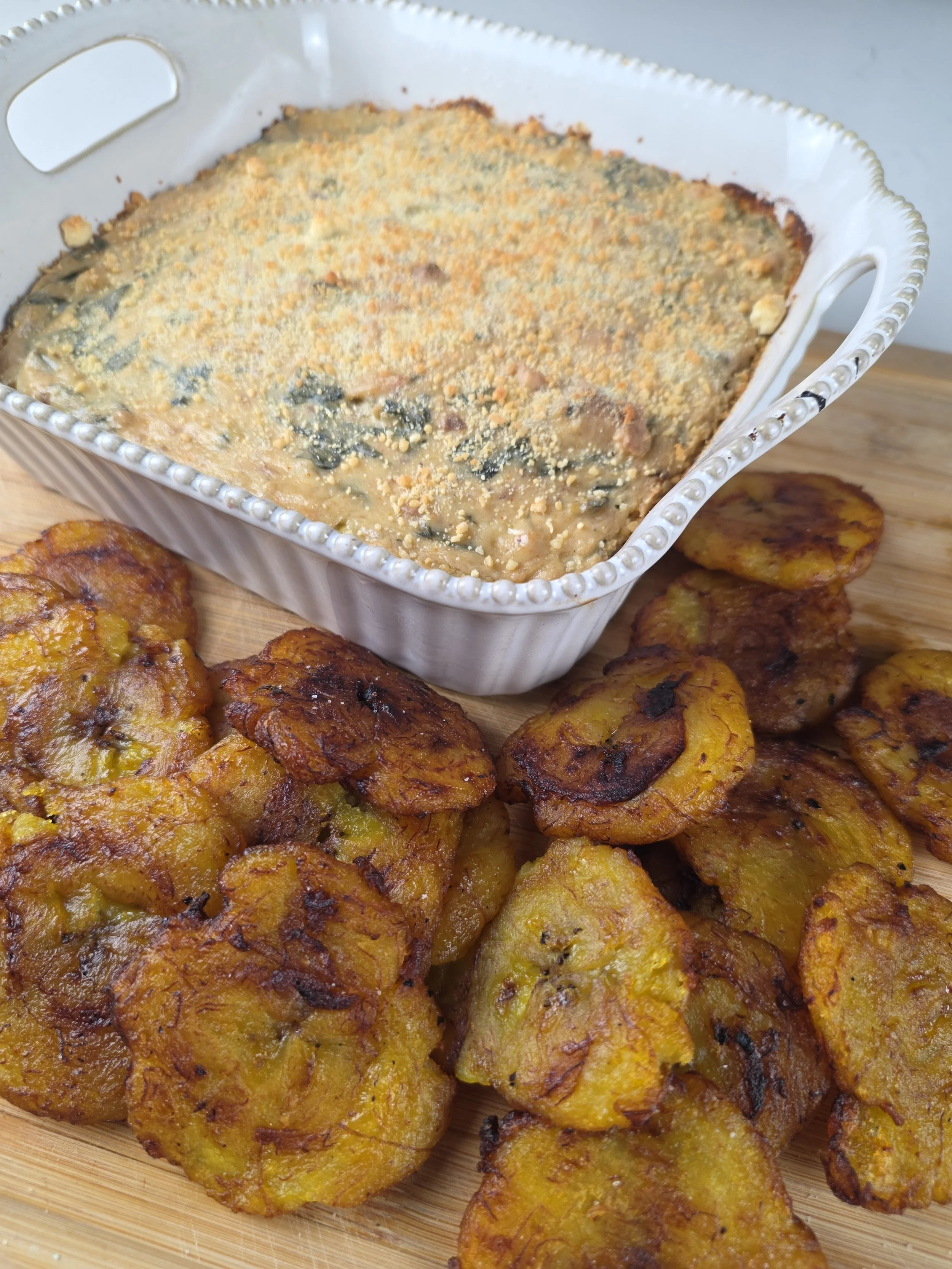
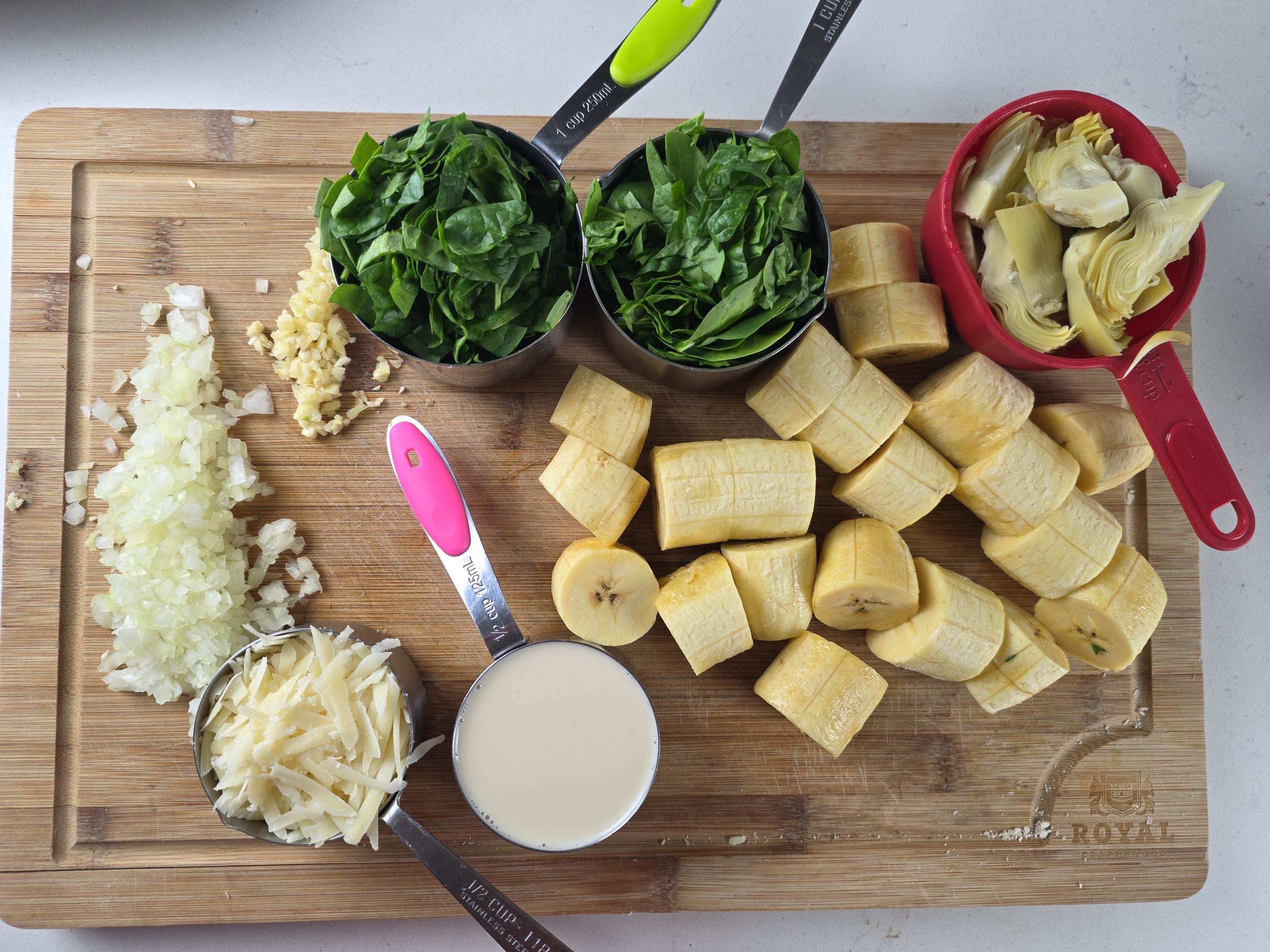

Egusi Spinach-Artichoke Dip
A creamy spinach-artichoke dip with egusi and powdered crayfish for extra savory depth, served with golden fried yellow plantains for dipping. A flavorful addition to any game-day spread.
Ingredients
- 8 oz cream cheese, softened
- 2 tbsp unsalted butter
- 2 tbsp all-purpose flour
- Approximately 8 oz evaporated milk, plus more as needed
- 3 tbsp egusi
- 2 tsp powdered crayfish
- 2 cups fresh spinach, roughly chopped
- 1 cup artichoke hearts
- ½ small yellow onion, finely chopped
- 2 garlic cloves, minced
- ½ cup grated Parmesan cheese (extra for topping, optional)
- ¼ tsp black pepper
- ¼ tsp cayenne pepper, optional
- Salt, to taste
Instructions
- Preheat the oven to 375°F.
- Melt the butter in a skillet over medium heat. Add the onion and cook for 2–3 minutes, until softened. Add the garlic and cook for about 30 seconds.
- Sprinkle in the flour and stir continuously for about 1 minute.
- Gradually whisk in the evaporated milk, starting with about ½ cup. Add more as needed until you have a smooth, creamy, but thick sauce.
- Add the softened cream cheese and stir until completely incorporated and smooth.
- Stir in the egusi, powdered crayfish, black pepper, cayenne, and a small amount of salt. Cook for 3–4 minutes, stirring occasionally. Taste and adjust the seasoning as needed.
- Add the spinach and artichokes. Cook for 2–3 minutes, stirring until the spinach wilts and everything is well combined.
- Stir in the Parmesan and taste again for seasoning. The mixture should be creamy and spoonable. If it is too thick, add another splash of evaporated milk.
- Transfer the dip to an 8x8-inch baking dish.
- Bake for approximately 15 minutes, just until heated through and lightly browned around the edges. For more color, sprinkle additional melting cheese over the top before baking.
Notes
- Plantain options: You can use green or yellow plantains. The process is the same, but green plantains are firmer and work best for making tostones that can be used as scoops, while yellow plantains are softer and sweeter and are best served as fried plantains. Use whichever you prefer or have on hand.
- Don't overbake the dip: The dip is best when it remains creamy. A short bake is enough to heat everything through and bring the flavors together.
- Adjust the consistency: Add evaporated milk a little at a time if the dip becomes too thick while cooking.
- Adjust the egusi and crayfish: These ingredients are intentionally prominent in this version so their savory flavor remains noticeable after baking.
- Serve immediately: The dip thickens as it cools. If needed, loosen it with a small splash of warm milk before serving.
- Storage: Refrigerate leftover dip in an airtight container for up to 3–4 days. Reheat gently in the microwave or on the stovetop, adding a splash of milk if needed to restore the creamy consistency. Fried plantains are best eaten fresh, but leftovers can be refrigerated and reheated in an air fryer or oven.
Nutrition Facts
Calories
410Fat (grams)
34 gCarbs (grams)
21 gFiber (grams)
3 gProtein (grams)
17 gSodium (milligrams)
540 mg
Spicy Suya Steak with Creamy Cauliflower Puree
I’ve traveled to Nigeria twice, and one thing that always stands out is suya, a spicy, nutty grilled meat you’ll find on nearly every street corner, late-night food stall, and even on restaurant menus. In formal dining settings, you’ll see it offered alongside fiery jollof rice, peppered fish, grilled snail, or sweet, flame-kissed plantains, each dish bold, vibrant, and packed with flavor.
Suya is more than just a quick bite; it’s a whole experience, from the smoky aroma of open flames to the bold, layered heat of the spice blend known as yaji.
Yaji is what gives suya its signature character, a deeply flavorful mix of ground peanuts, chili, ginger, garlic, and warming spices. It’s savory, slightly smoky, a little fiery, and unmistakably nutty. In many ways, it echoes the richness of peanut-based stews found across West and Southern Africa, but in a dry rub form that clings beautifully to grilled meat.
This recipe is inspired by those street food moments but reimagined for the home kitchen. It takes the essence of suya and brings it into a more composed, plated dish, pairing a suya-style steak with a fresh peanut gremolata and a silky cauliflower purée. It’s a bit of a fusion, street food meets steakhouse, bold spice meets subtle creaminess.
You can find pre-made suya powder, but I’ll also show you how to make it at home easily so you can bring those flavors into your own kitchen anytime.

Suya Steak with Cauliflower Puree and Peanut Gremolata
Turn any weeknight into steak night with this bold, Nigerian-inspired recipe. Tender steak gets a nutty, spicy suya crust, topped with a bright, crunchy peanut gremolata. Served alongside silky cauliflower purée, it’s a balanced, flavorful dinner that feels indulgent but is quick enough for a weekday.
Ingredients
- 3 tbsp roasted peanuts, finely ground
- 1 tsp smoked paprika
- 1 tsp cayenne pepper (adjust to taste)
- 1 tsp garlic powder
- 1 tsp onion powder
- ½ tsp ground ginger
- 1 small (Maggi) bouillon cube, crushed
- 1/2 tsp salt
- Optional (1/2 tsp black or white pepper)
- 2 thin steaks (~¾-inch thick)
- 4 tbsp neutral (or peanut) oil
- 2 tbsp butter
- 2 garlic cloves, smashed
- 2 thyme sprigs
- Salt and pepper (to rub on steaks before searing)
- 1 small head cauliflower, chopped
- 2 tbsp butter
- 1/3–1/2 cup cream
- 1 bay leaf
- 1 sprig thyme
- Salt and pepper to taste
- Optional for thinning (1/8 cup broth)
- 2 tbsp chopped roasted peanuts
- 1 tbsp fresh parsley, chopped
- 1 tbsp fresh cilantro, chopped
- 1 tsp lemon juice
- Pinch of salt
- Sliced tomato and red onion
- Light squeeze of lemon
- Pinch of salt
Instructions
- First, prepare the suya spice (yaji) mix. Combine ground peanuts, paprika, cayenne, garlic powder, onion powder, ginger, and salt.
- Season the steaks with salt and pepper, then rub the suya spice evenly over them. Place on a wire rack and let sit at room temperature for at least 30 minutes while you prepare everything else. This helps remove excess moisture for a better crust and deeper flavor.
- Chop and boil the cauliflower until tender (about 10 minutes). Drain well to prevent a watery purée.
- In a saucepan, warm the butter, cream, thyme, and bay leaf. Season with salt, pepper, and all-purpose seasoning.
- Remove the aromatics, then blend the cauliflower with the warm cream mixture until silky. For a smoother texture, add a splash of chicken broth if needed. You want it smooth and creamy, not soupy. Set aside and keep warm.
- Prepare the gremolata by mixing chopped peanuts, parsley, cilantro, lemon juice, and salt. Set aside.
- Slice the red onion and tomatoes, toss with lemon juice and salt, and set aside.
- Now cook the steak. Preheat a cast iron skillet over medium-high heat for 3–5 minutes until hot (you may see a little smoke). Add 2 tablespoons of oil per steak.
- If your steak is thin (about ¾ inch), sear the first side for 1 to 1¼ minutes. Flip and sear for at least 30 seconds, then pour off excess oil. Add butter, garlic, and thyme, and baste for about 30 seconds per side.
- Check the internal temperature with a thermometer — 130–132°F for medium. Continue flipping every 30 seconds until cooked to your preference.
- To plate, spoon the cauliflower purée onto a plate. Slice the steak against the grain and place over the purée.
- Top with peanut gremolata and finish with extra yaji seasoning. Serve with the tomato-onion salad on the side.
Nutrition Facts
Calories
450Fat (grams)
30 gCarbs (grams)
10 gFiber (grams)
3 gProtein (grams)
35 gI am not a certified nutritionist and any nutritional information on dontmissmyplate.com should only be used as a general guideline.