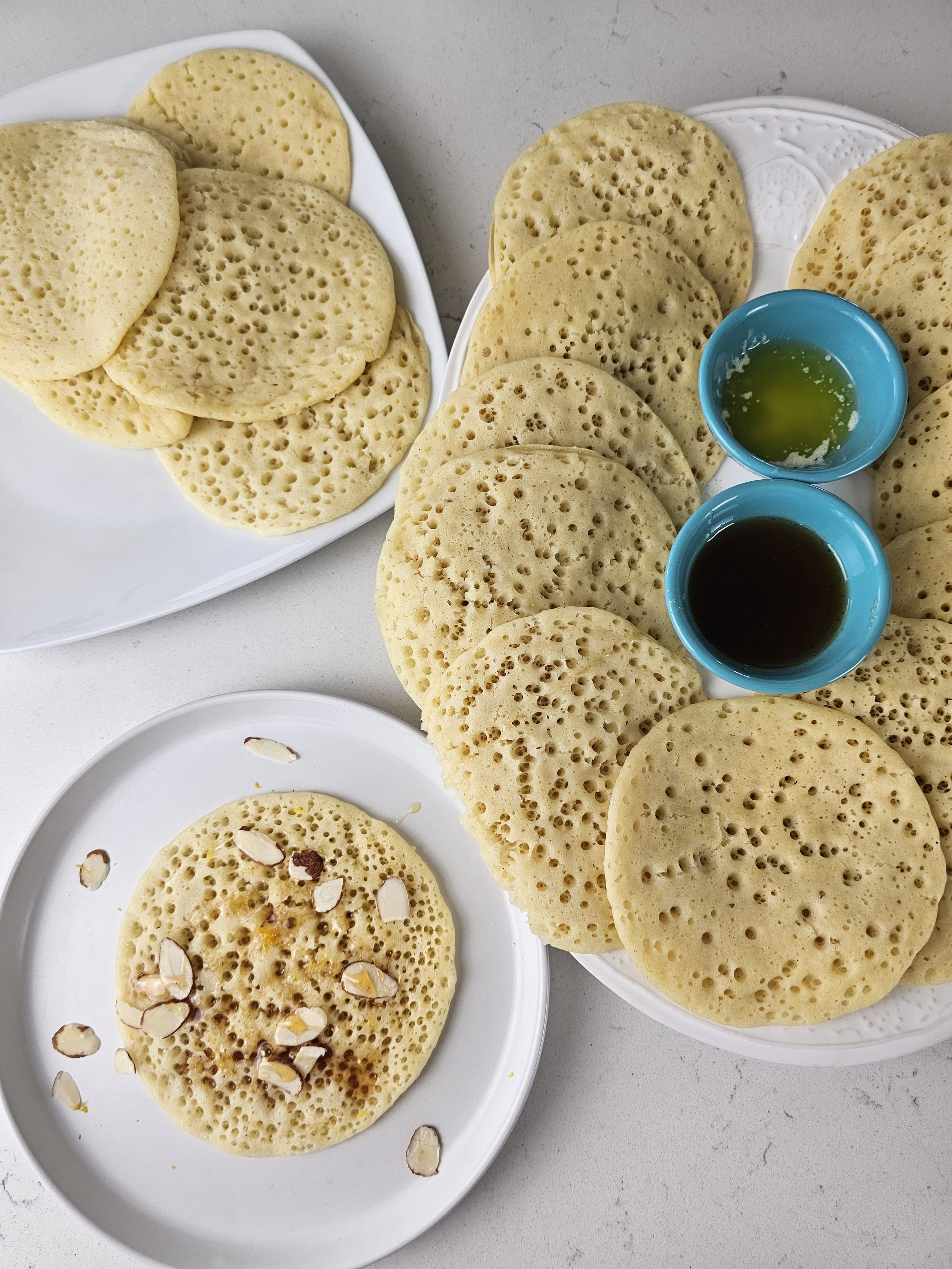
Baghrir (Thousand-Hole Moroccan Pancakes) – with Orange-Chai Honey Syrup
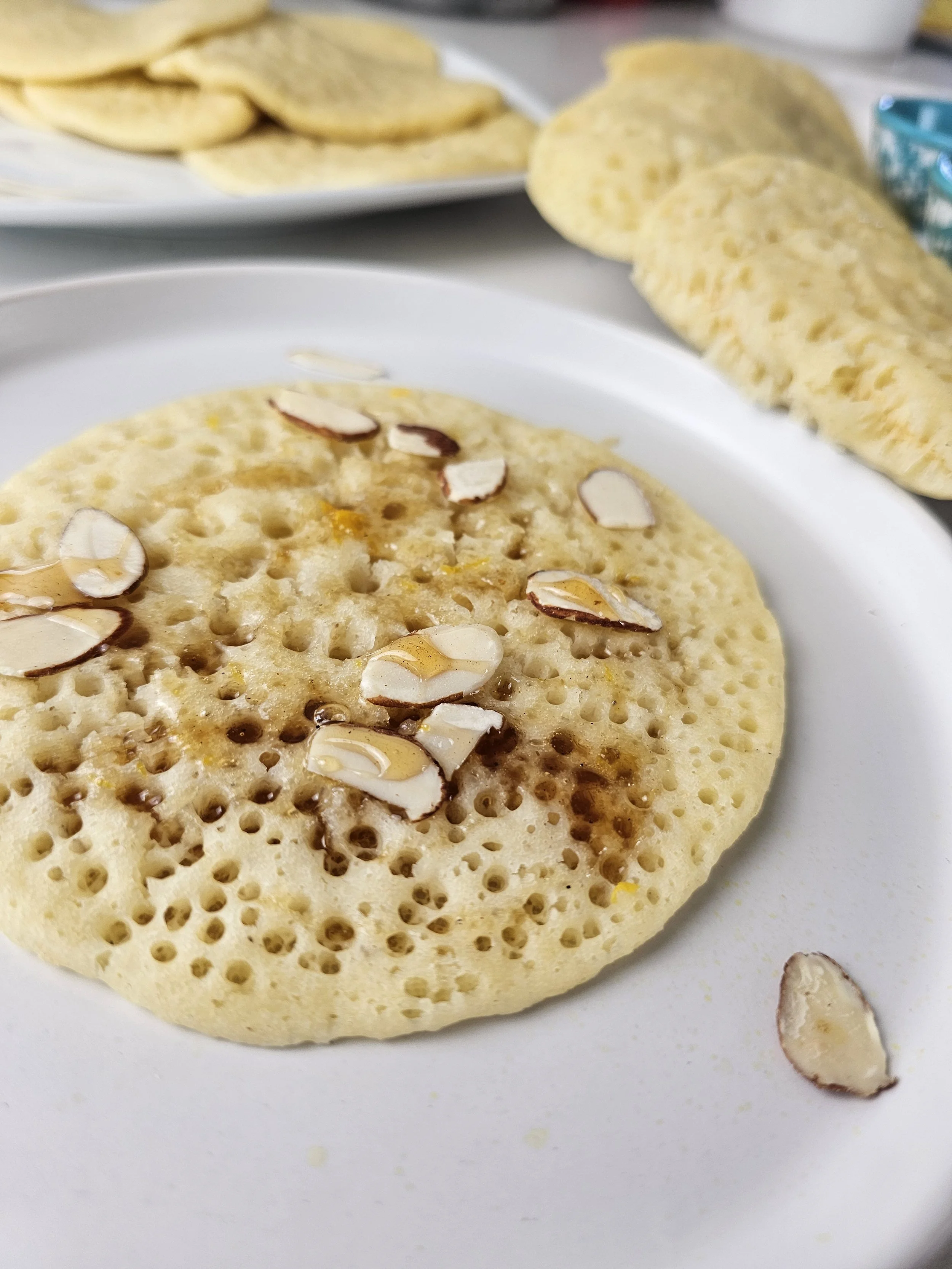
Baghrir are one of the most distinctive traditional breakfast foods in Moroccan and broader North African cuisine. Often called “thousand-hole pancakes,” they are instantly recognizable by their porous, sponge-like surface that forms as the batter cooks. These tiny holes are not just visually striking, they are functional, allowing the pancakes to absorb honey, melted butter, or syrup in a way few other flatbreads can. That is part of what made them so exciting for me to discover years ago because the pancakes can be completely transformed through different syrups and toppings in a way that regular pancakes simply cannot.
Unlike Western-style pancakes, Baghrir are made from a yeast-leavened semolina batter that is blended until completely smooth and then left to rest until light and airy. They are cooked on only one side, typically in a dry nonstick pan, which encourages the characteristic holes to form across the surface as steam rises through the batter. The result is a soft, tender pancake with a delicate structure specifically designed to soak up flavor.
Baghrir exist within a much larger North African breakfast tradition centered around bread-like and yeast-risen foods. In Morocco, mornings often revolve around shared plates of flatbreads such as msemen, harcha, and other semolina-based preparations. These are commonly served with honey, butter, olive oil, jams, or syrups alongside mint tea or coffee. Rather than being a quick individual meal, breakfast is often a slower, communal experience where breads and spreads are placed at the center of the table to be shared.
This recipe offers a modern take on the traditional preparation by pairing the pancakes with a lightly spiced orange and chai-infused honey syrup. The combination highlights both the North African foundation of the dish and a contemporary flavor profile that complements Baghrir’s naturally soft, absorbent texture.
I also like to garnish mine with nuts, usually pistachios or almonds, and experiment with different teas to flavor the honey syrup, most often rooibos or chai.
Looking for a more modern or alternative variation? I also created a Baghrir-inspired Pistachio and Orange Pancake recipe.

Baghrir (Moroccan Thousand-Hole Pancakes)
Light, spongy semolina pancakes with signature honeycomb holes, traditionally served warm with honey syrup with tea flavour.
Ingredients
- 2 cups fine semolina
- 1/2 cup all-purpose flour
- 1 tsp active dry yeast
- 1 tsp sugar
- 1/2 tsp salt
- 3 cups lukewarm water
- Serving of melted butter
- 1/2 cup wild honey
- 3 tbsp water
- Zest of 1/2 orange
- 1 tbsp orange juice
- 1/4 tsp tea chai spice
- Pinch of salt
- 1/4 tsp almond extract (added off heat)
Instructions
- Combine semolina, flour, yeast, sugar, salt, and warm water in a larg bowl. Use an immersion blender on medium to comnbines for 30 seconds then conitnue mixing at medium-high speed until the mixture is completely smooth and free of lumps.
- Cover the batter with a clean kitchn cloth and let it rest at room temperature for at least 30 minutes, until it becomes frothy and slightly airy.
- Before cooking, stir the batter gently. The texture should be thin and pourable, similar to heavy cream.
- Heat a nonstick pan over medium heat. Do not add oil or butter!
- Pour about 1/4 cup of batter into the pan and allow it to spread naturally into a circle. Cook on one side only.
- The pancake is ready when bubbles form across the entire surface and the top looks dry and set, usually after 1.5 to 3 minutes. Do not flip.
- Repeat with remaining batter, stirring occasionally.
- In a small pot, combine honey, water, orange zest, orange juice, masala chai spice, and salt. Warm over low heat for 2 to 3 minutes. Do not boil vigorously.
- Remove from heat and stir in almond extract.
- Pour warm syrup over the pancakes while they are still warm, or set aside with melted butter for serving immediately. Top with sliced almonds if desired.
Notes
- Baghrir is cooked only on one side to preserve its signature porous surface.
- First pancakes are often the most visually perfect.
- A dry nonstick pan is essential for proper hole formation, as well as resting time for the batter.
- These pancakes are best eaten fresh but can be reheated or frozen once cooked.
- Traditional Moroccan breakfasts often pair Baghrir with honey, butter, olive oil, or preserved jams, alongside mint tea or coffee.
Nutrition Facts
Calories
240Fat (grams)
3 gCarbs (grams)
42 gFiber (grams)
3 gSugar (grams)
15 gProtein (grams)
6 gI am not a certified nutritionist and any nutritional information on dontmissmyplate.com should only be used as a general guideline.
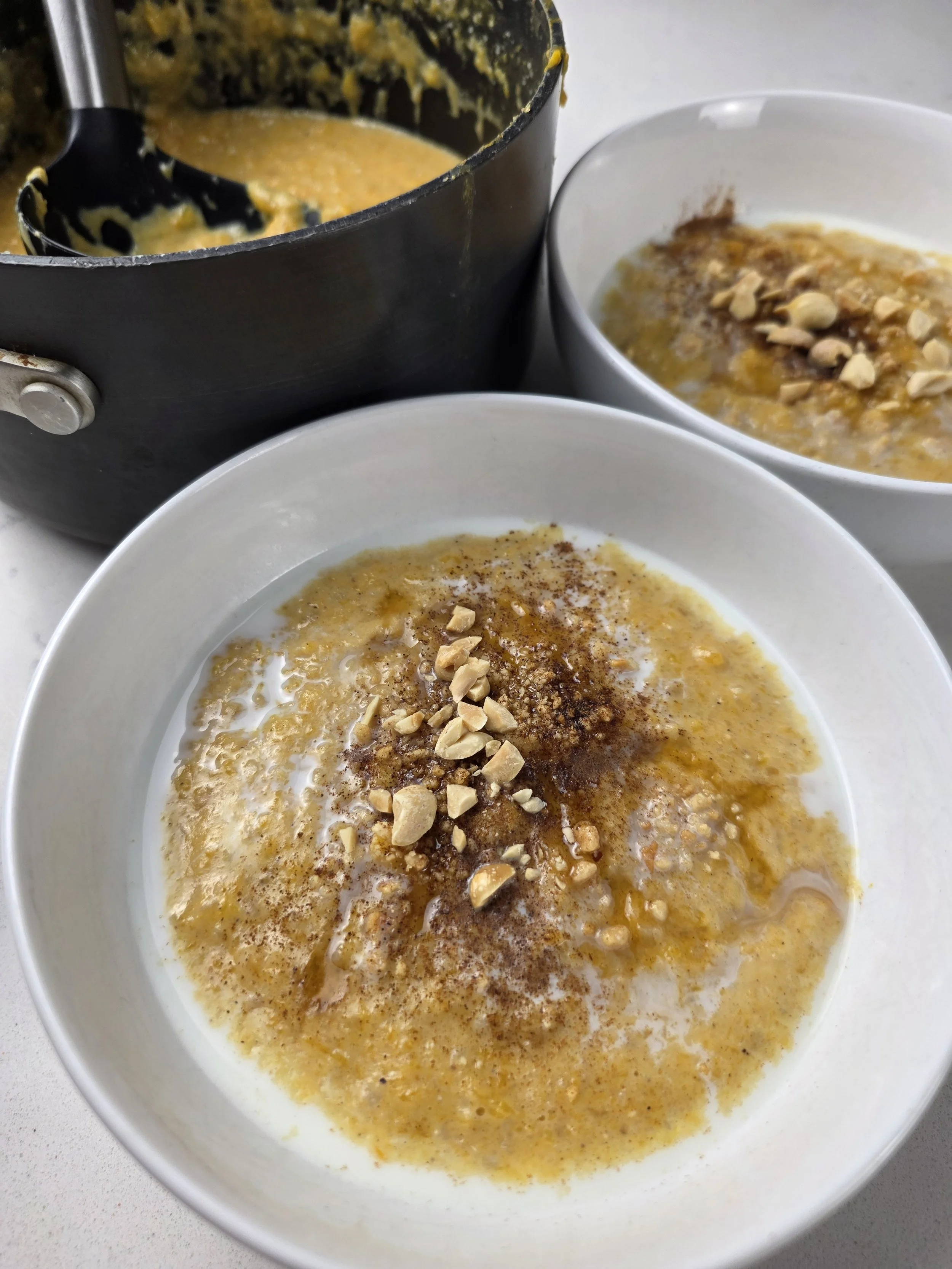
Pumpkin Peanut Wheat Porridge (Nhopi)
Inspired by Zimbabwean Nhopi and Kenyan Uji wa Ngano
There is something deeply comforting about warm porridge cultures across Africa. Whether it is maize-based, millet-based, sorghum-based, or wheat-based, many of us grew up with some version of a hot, nourishing bowl that anchored mornings, cold days, illness recovery, or simple moments of comfort.
During my recent trip to Kenya, I tried uji wa ngano, a creamy wheat porridge often served with plenty of hot milk. It immediately reminded me of the porridges I grew up eating in Zimbabwe. One of the most popular versions, alongside maize meal porridge served with butter or peanut butter, is nhopi — a pumpkin and peanut butter porridge, sometimes thickened with maize meal. Rich, lightly spiced, earthy, and deeply nostalgic, it remains a beloved comfort food across generations.
That experience made me curious about how these traditions could speak to each other.
This recipe became a fusion of both ideas. Instead of using pumpkin as the main base like traditional nhopi, I used creamy wheat as the foundation and allowed roasted butternut and peanut butter to layer warmth, sweetness, richness, and familiarity into the porridge.
The bulgur wheat adds texture and grain bite similar to Kenyan wheat porridge, while the cream of wheat and powdered milk helps create a smoother, creamier consistency. Cardamom, brown sugar and cinnamon bring warmth that ties the dish together beautifully.
The final result sits somewhere between the two traditions: creamy, comforting, lightly spiced, and deeply filling. It is the kind of breakfast that feels both grounding and exploratory at the same time.

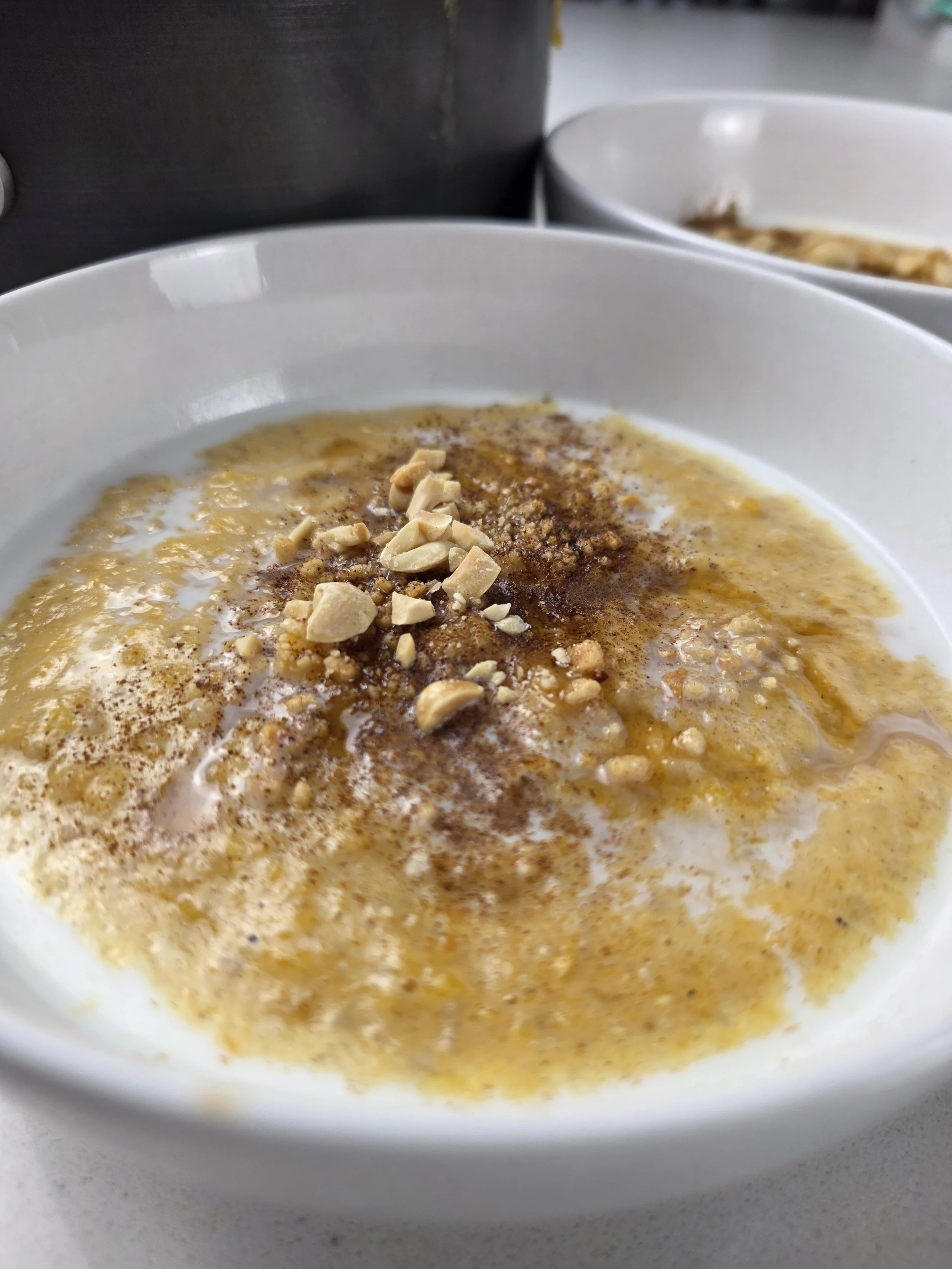

Pumpkin Peanut Wheat Porridge
A creamy wheat porridge with roasted butternut, peanut butter, and warm spices inspired by Zimbabwean and Kenyan breakfast traditions (nhopi and uji wa Ngano).
Ingredients
- ½ cup bulgur wheat
- ⅓ cup cream of wheat
- 2½ cups water
- 3–5 cups milk (adjust as needed)
- 2 to 2½ cups roasted butternut, mashed
- 2 tbsp peanut butter
- 2 tbsp brown sugar or honey (adjust to taste)
- ½ tsp cardamom
- ½ tsp cinnamon
- ½ tsp salt
Instructions
- Heat the water in a medium or large pot over medium-high heat. Add the bulgur wheat, reduce the heat to medium-low, and simmer for 10–12 minutes, or until softened.
- Stir in the Cream of Wheat and whisk continuously for about 3 minutes. If the mixture thickens too quickly, gradually add water, 1/4 cup at a time, until smooth.
- Add the cinnamon, cardamom, salt, and roasted butternut squash. Whisk well, adding a little milk as needed to create a smoother texture.
- Next, stir in the powdered milk for extra richness and creaminess. Add the brown sugar and peanut butter, then continue adding milk until the porridge reaches your desired consistency, simmering gently over low heat. Adjust seasoning to taste if needed.
- Serve warm with optional toppings such as crushed peanuts, honey, and a sprinkle of cinnamon.
Notes
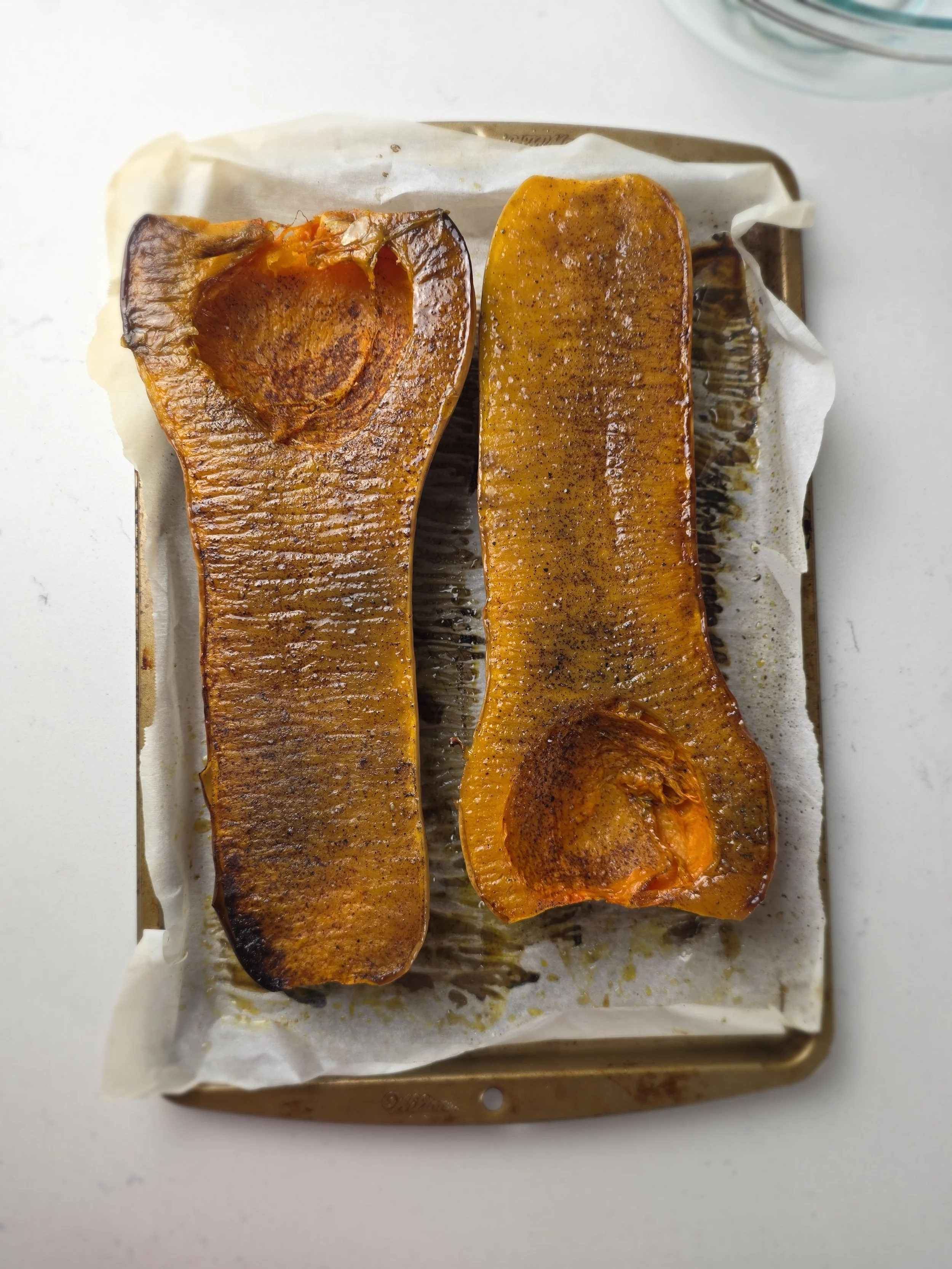
For the butternut squash, you can roast it beforehand for deeper flavor. Brush the squash with olive oil, then season with cinnamon, salt, and optionally a little brown sugar.
Place it cut-side down on a parchment-lined baking sheet and roast in a 400°F / 200°C oven for about 40 minutes, or until the flesh is soft enough to pierce easily with a fork.
Once all the ingredients are combined, adjust the consistency toward the end of the cooking process using milk as needed.
For a thicker, more nhopi-style texture:
- Use more butternut squash
- Use less milk
- Simmer longer for a denser consistency
For a looser Kenyan-style wheat porridge:
- Add more milk
- Use slightly less butternut squash
- Keep the texture smooth and pourable
Nutrition Facts
Calories
320Fat (grams)
13 gCarbs (grams)
42 gFiber (grams)
6 gSugar (grams)
9 gProtein (grams)
9 gI am not a certified nutritionist and any nutritional information on dontmissmyplate.com should only be used as a general guideline.