
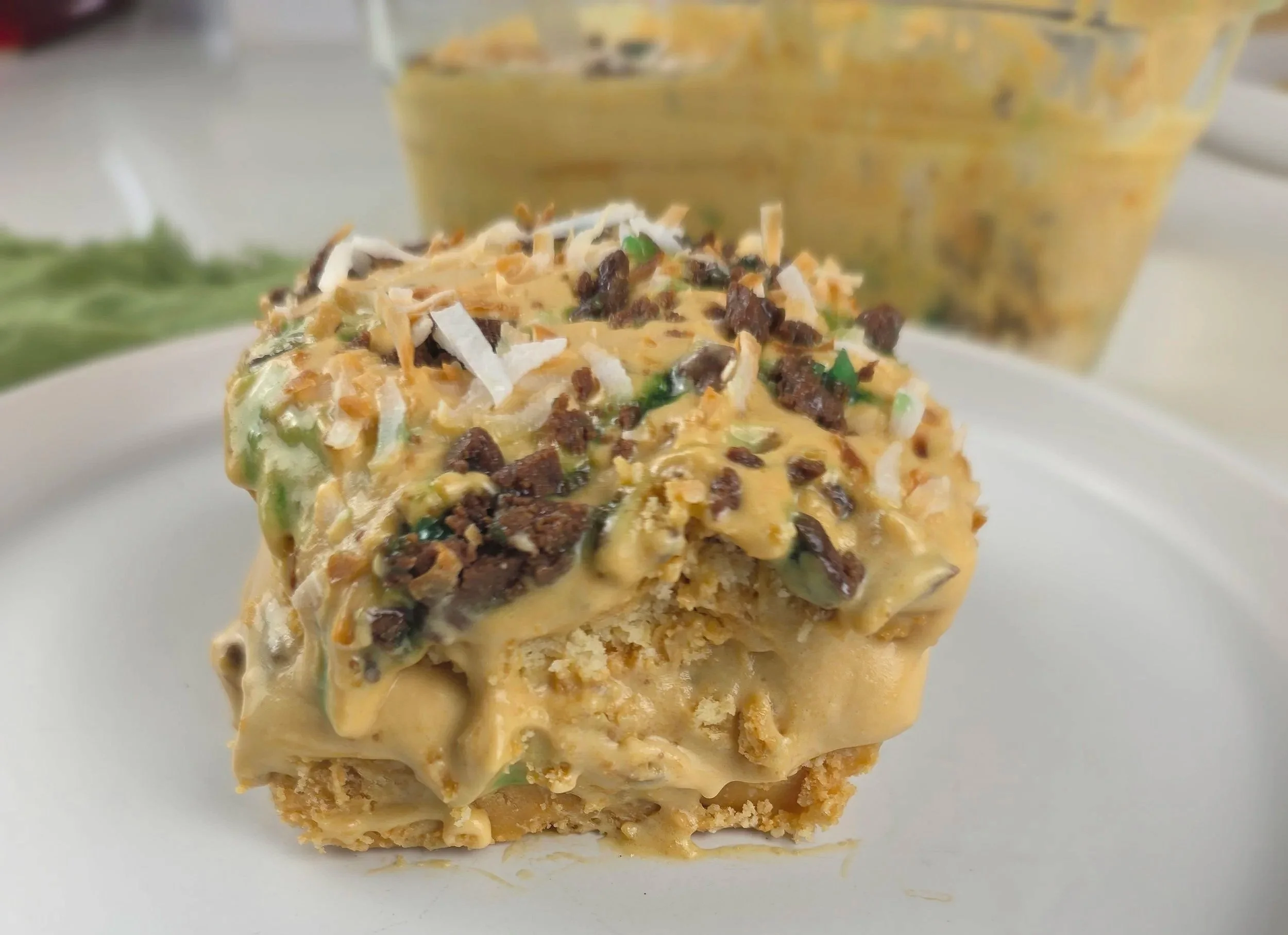
Peppermint Crisp Tart with Coconut
A no-bake South African classic of Tennis biscuits, whipped cream, and caramel, topped with Peppermint Crisp chocolate. My version adds coconut throughout for a tropical twist, no oven needed, just fridge time.
If you didn't grow up in Southern Africa, there's a good chance you've never heard of Peppermint Crisp Tart, but it's one of the most beloved desserts in the country, the kind of thing that shows up at every family gathering, Christmas, and braai. It's a no-bake tart built from layers of crushed Tennis biscuits, whipped cream, and a caramel sauce, all finished with grated Peppermint Crisp, a chocolate bar that's equal parts sweet and crunchy. The biscuits soften just enough in the fridge to turn almost cake-like, while the caramel and cream stay rich and smooth underneath.
For my version, I wanted to keep everything that makes the original so good while putting my own spin on it. I folded coconut cream into the caramel layer, topped it all with toasted coconut, and turned the Tennis biscuits into a buttery coconut crumb crust instead of the usual straight biscuit layer. It's still unmistakably Peppermint Crisp Tart at heart, but there's a subtle coconut flavor running through every layer now.
It's creamy, minty, rich with caramel, and about as easy as dessert gets, no oven required. Honestly that's part of the charm of this one. You assemble it, slide it into the fridge, and let time do the rest of the work for you.
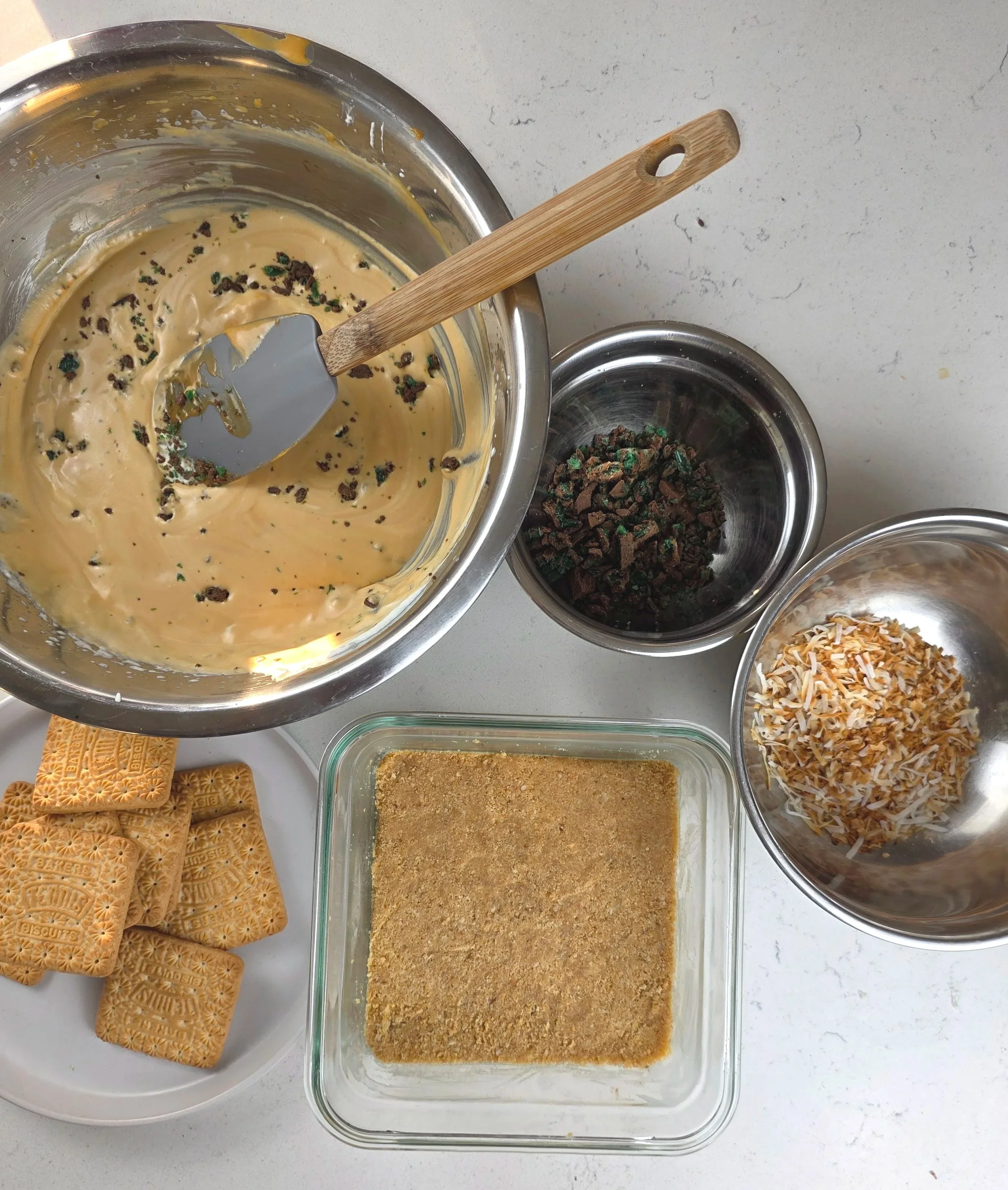
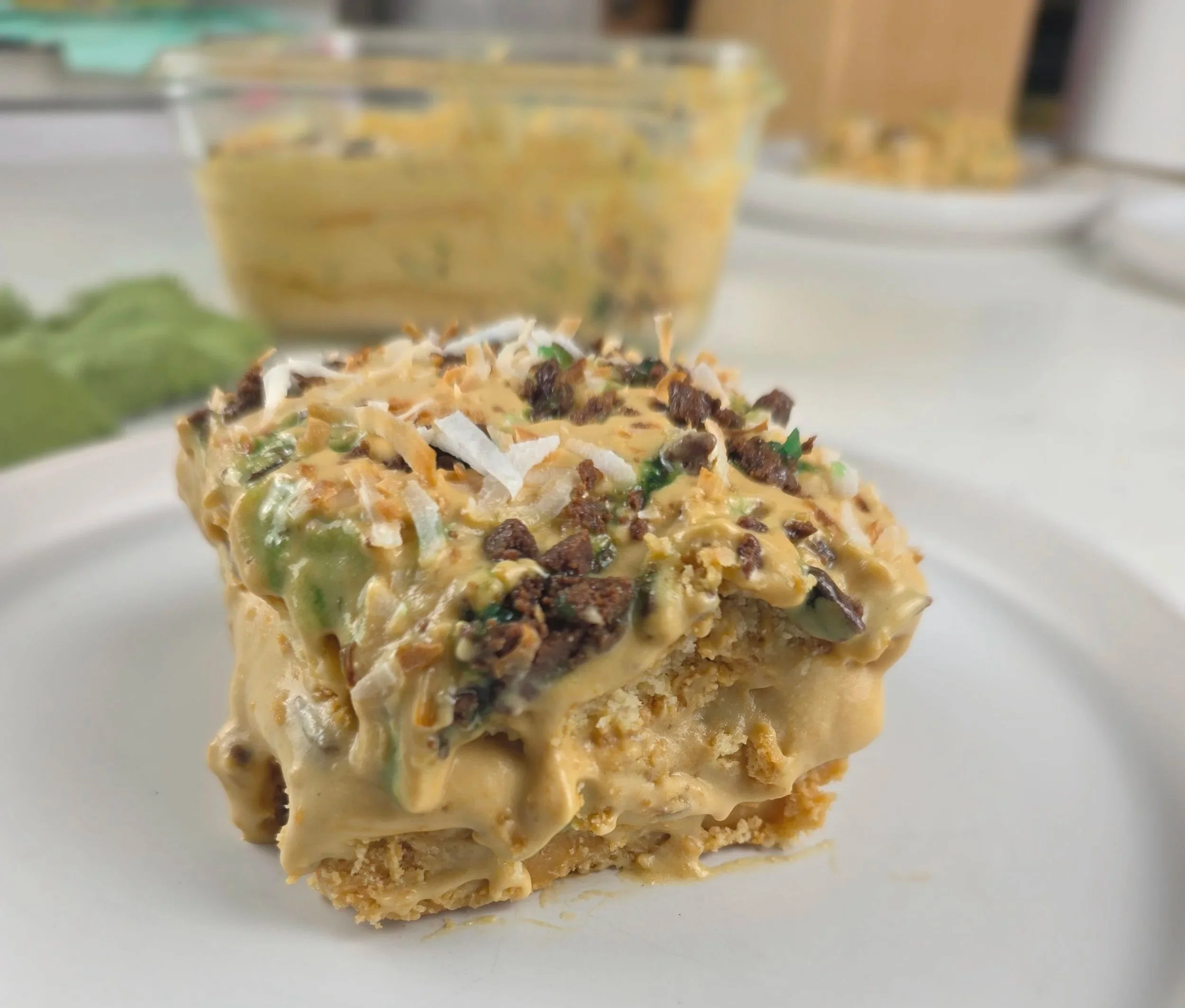

Peppermint Crisp Tart with Coconut
A no-bake South African classic of Tennis biscuits, whipped cream, and coconut caramel, topped with toasted coconut and grated Peppermint Crisp chocolate. No oven needed, just fridge time to set.
Ingredients
- 16-18 Tennis biscuits
- 4-6 tbsp unsalted butter, melted
- 3 tbsp unsweetened coconut flakes
- 7 oz (198 g) dulce de leche or Caramel Treat
- ¼ cup (60 ml) coconut cream, chilled
- 1 cup (240 ml) cold heavy whipping cream
- 2 tbsp granulated sugar
- ½ tsp vanilla extract
- Pinch of salt
- 2 Peppermint Crisp bars, chopped
- About ½ Peppermint Crisp bar, finely chopped
- 1-2 tbsp toasted coconut flakes
Instructions
- First make the crust. Add the Tennis biscuits and coconut flakes to a food processor and pulse into fine crumbs. Add the melted butter gradually, pulsing after each addition, until the crumbs resemble wet sand and hold together firmly when pressed. You may not need all 6 tablespoons. You can also transfer the crumbs to a bowl before adding the butter and mix with a spatula instead.
- Press the crumb mixture firmly and evenly into the bottom of a 6 × 6-inch dish in a layer about ⅓ inch thick, substantial enough to hold together when cut but not so thick it's hard to cut through. Cover and chill while preparing the filling.
- In a bowl, combine the dulce de leche, coconut cream, vanilla and salt. Stir with a spatula until completely smooth.
- In a separate bowl, beat the cold heavy cream and granulated sugar until medium-stiff peaks form. Do not overwhip!
- Fold about one-third of the whipped cream into the caramel mixture to loosen it. Then gently fold the loosened caramel mixture into the remaining whipped cream until smooth and fluffy.
- Chop 2 Peppermint Crisp bars, reserving approximately ½ bar for the topping. Gently fold the remaining chopped Peppermint Crisp into the filling. Spread half of the filling over the chilled biscuit crust.
- Arrange a single layer of whole Tennis biscuits over the filling, breaking them as necessary to fit. Spread the remaining filling over the biscuits and smooth the top.
- Sprinkle with the reserved chopped Peppermint Crisp and toasted coconut flakes.
- Cover and refrigerate for at least 4 hours, preferably overnight, until thoroughly chilled and set. Serve chilled.
Notes
- Chocolate: If Nestlé Peppermint Crisp isn't available, substitute an equivalent amount of peppermint chocolate, such as peppermint Aero.
- Dulce de leche: Traditional South African Peppermint Crisp Tart uses Nestlé Caramel Treat. Dulce de leche works as a readily available U.S. substitute, either works in this recipe.
- Tennis Biscuits: Tennis biscuits are the classic South African coconut biscuits traditionally used in this tart. If unavailable in the U.S., substitute Voortman Coconut Cookies or another thin, crisp coconut biscuit. Leibniz Butter Biscuits or a similar crisp tea biscuit also work, though the coconut flavor will be less pronounced.
- Coconut Cream: Use canned coconut cream. It's mixed directly into the caramel and doesn't need to be whipped.
- Crust Note: For the best texture, press the biscuit mixture into a firm, even layer about ⅓ inch thick. You want a substantial crust that holds together when cut but isn't so thick that it becomes difficult to cut through.
Nutrition Facts
Calories
690Fat (grams)
41 gSat. Fat (grams)
27 gCarbs (grams)
52 gSugar (grams)
37 gProtein (grams)
6 gSodium (milligrams)
167 mgI am not a certified nutritionist and any nutritional information on dontmissmyplate.com should only be used as a general guideline.
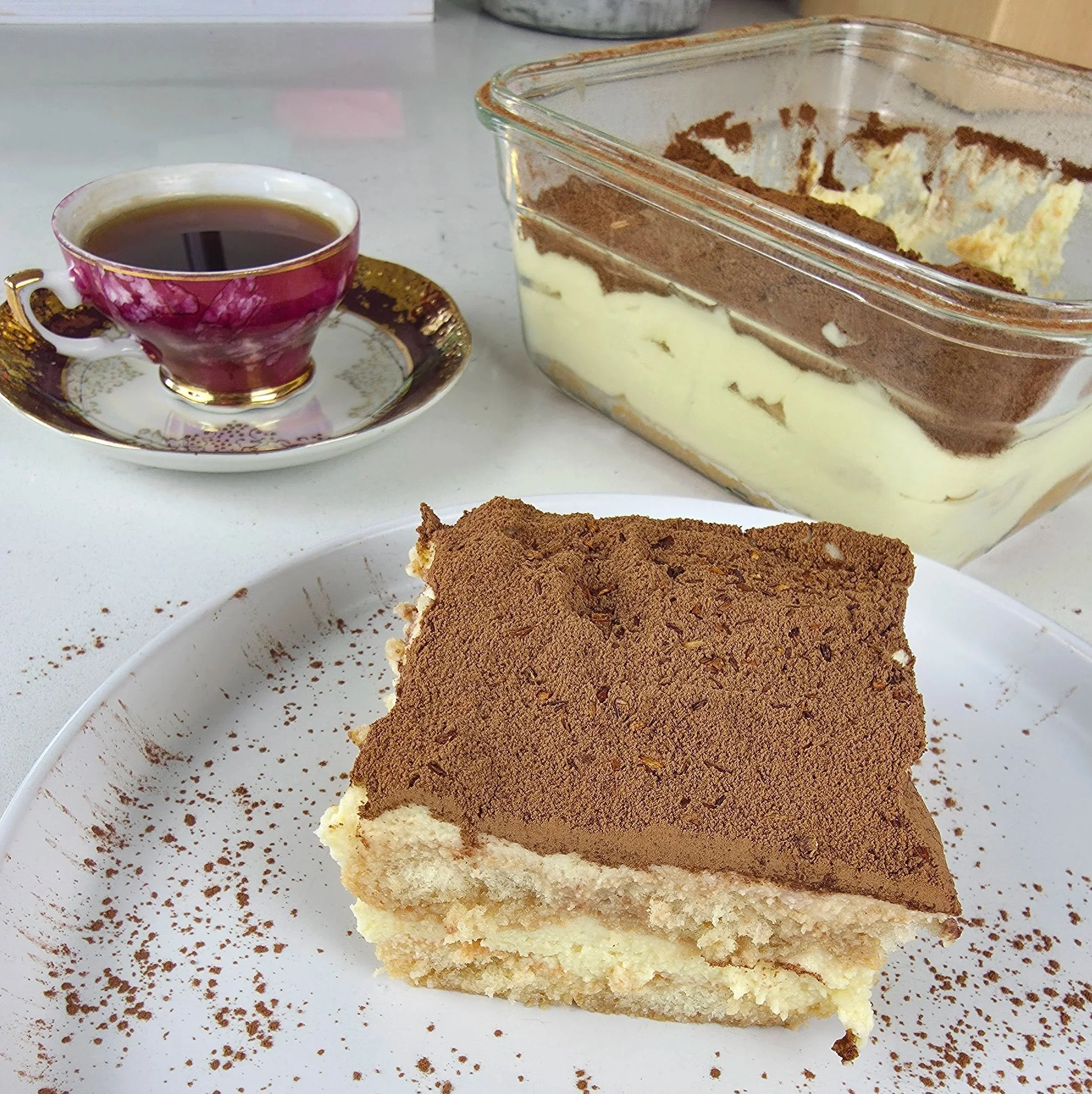
Rooibos Tiramisu
A Southern African-inspired take on Italian tiramisu, this Rooibos Tiramisu replaces the traditional coffee soak with strong rooibos tea, masala wine and vanilla for a creamy, aromatic dessert that's perfect for tea lovers.
Tiramisu is one of those desserts that doesn't really need an introduction. Creamy mascarpone, delicate ladyfingers, cocoa and that unmistakable coffee-soaked bite make it a classic for a reason. But what happens when you're a tea lover who wants to experience tiramisu without making coffee the star?
I first fell in love with making tiramisu during a cooking class in Italy, where I had the chance to make the classic version from scratch. There's something special about preparing a dish in the place where it originated—or at least, in the country that made it famous around the world. Working with mascarpone, egg yolks, sugar and those delicate Italian ladyfingers gave me a much better appreciation for why the dessert works so well. But when I started thinking about putting my own spin on it, I didn't want to simply swap one ingredient for another and call it a new recipe. I wanted the twist to actually make sense, and for me, that meant rooibos.
Rooibos is naturally caffeine-free, with a mellow, nutty, earthy sweetness and subtle notes that can lean toward vanilla, honey and even cocoa depending on the blend. It also happens to be one of those ingredients that immediately brings a South African connection to a dessert that is otherwise unmistakably Italian.
Instead of soaking the ladyfingers in coffee, they're dipped in a strong rooibos infusion, finished with a little marsala wine and vanilla. The result isn't supposed to taste like coffee tiramisu with tea substituted for the coffee. The goal is something different: a tiramisu where rooibos has its own identity.
I also wanted to keep the dessert approachable for people who simply aren't coffee drinkers. If you love tea, don't drink caffeine, or just want something unexpected for dessert, this version gives you the creamy, cocoa-dusted experience of tiramisu while taking it in a completely different direction.
The mascarpone cream remains rich and airy, while the rooibos brings warmth and depth. A small amount of espresso powder in the cocoa topping is there only to deepen the chocolate notes—not to turn the dessert back into a coffee tiramisu.
It's a little bit Italy, a little bit Southern Africa, and very much my kind of fusion.
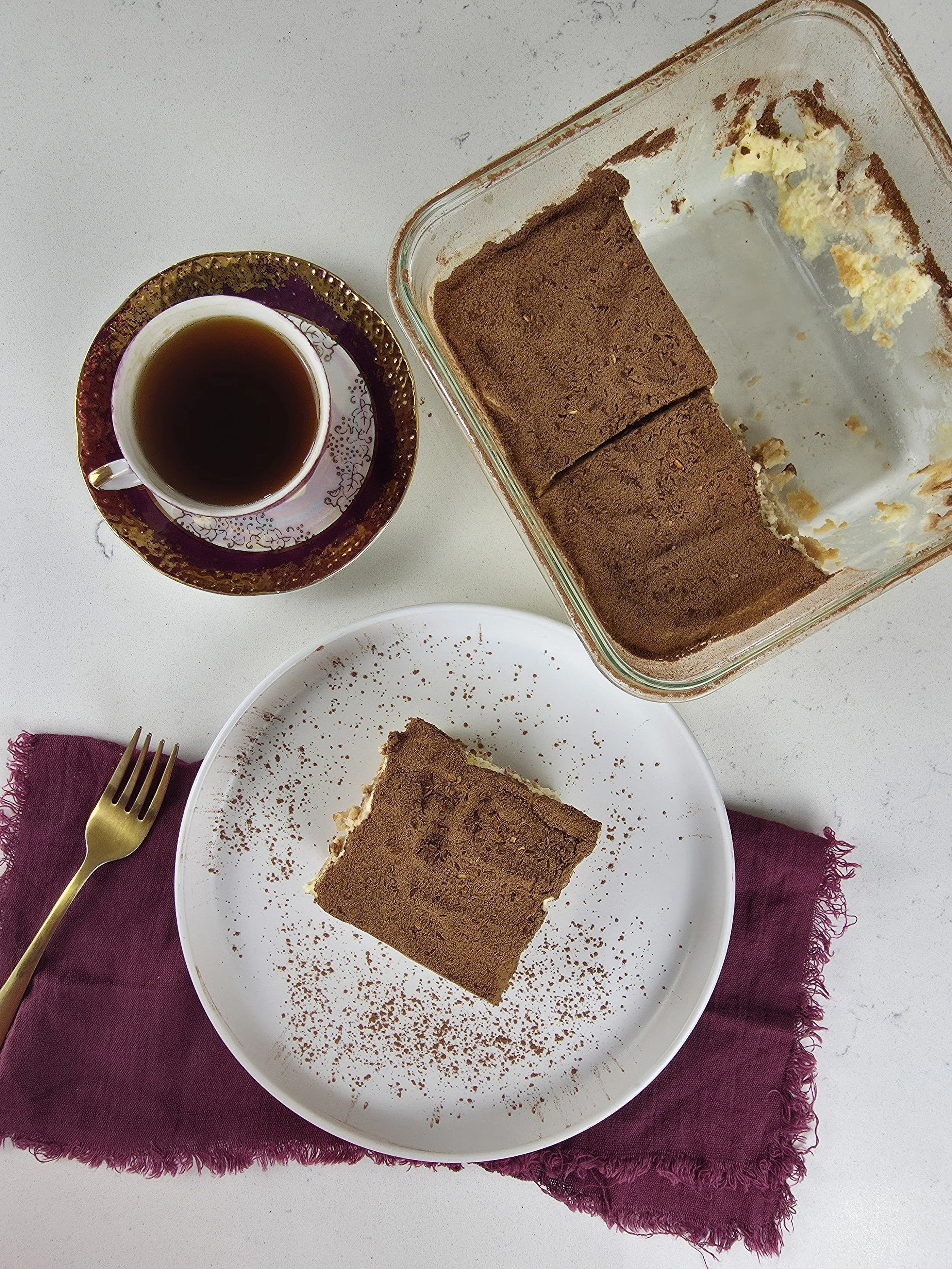
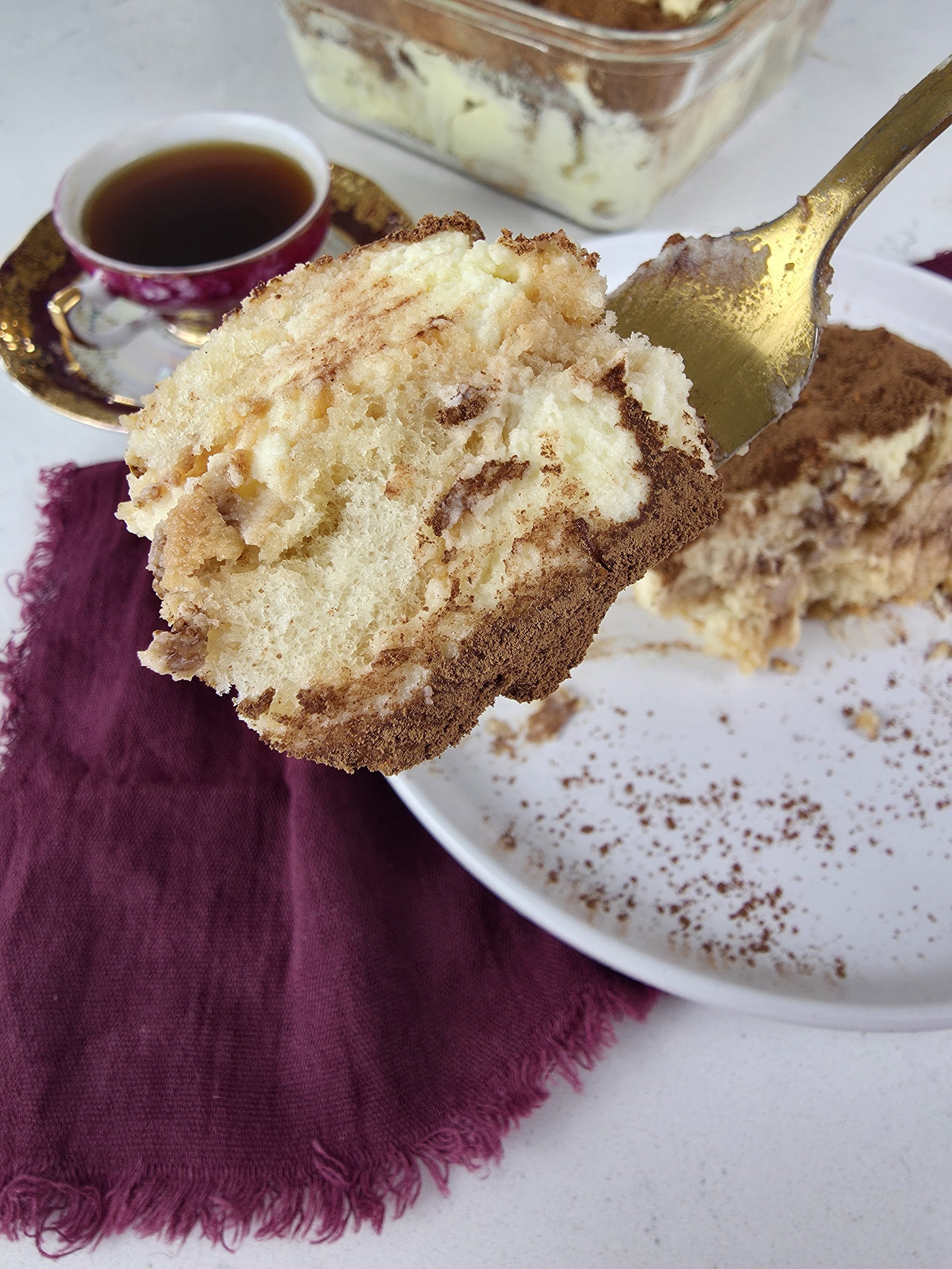

Rooibos Tiramisu
A Southern African-inspired twist on classic Italian tiramisu, made with bold rooibos tea, masala wine, mascarpone and a cocoa-espresso finish.
Ingredients
- 1 cup water
- 2 teaspoons loose-leaf rooibos
- 1 tablespoon granulated sugar
- 2 tablespoons masala wine
- ½ teaspoon vanilla extract
- 2 large egg yolks
- ¼ cup (50g) granulated sugar
- 1 tablespoon masala wine
- 8 ounces (225g) mascarpone, slightly softened
- ⅔ cup (160ml) heavy whipping cream, cold
- ½ teaspoon vanilla extract
- Pinch of salt
- 12–14 Savoiardi ladyfingers
- Topping
- 1 tablespoon unsweetened cocoa powder
- ¼ teaspoon espresso powder
- Optional: a tiny pinch of very finely crushed rooibos leaves for visual garnish
Instructions
- Bring 1 cup of water to a boil. Add the rooibos and steep for 8–12 minutes, or until very strong. If needed, add a little more water and additional loose-leaf rooibos to account for evaporation and maintain enough liquid for dipping the ladyfingers. Remove the tea bags or strain the loose tea once the rooibos is ready. You can prepare the remaining components while the tea steeps.
- While the tea is still hot, stir in the sugar until dissolved. Allow the tea to cool to warm or room temperature, then stir in the masala wine and vanilla. Set aside.
- In a heatproof bowl, whisk together the egg yolks, sugar, and 1 tablespoon of masala wine. Place the bowl over a saucepan of gently simmering water, making sure the bottom of the bowl does not touch the water. Whisk constantly until the mixture reaches 160°F. Remove from the heat and let cool for about 5 minutes.
- Transfer the cooked yolk mixture to a large bowl. Add the mascarpone, vanilla, and salt, and whisk until smooth.
- In a separate bowl, whip the cold heavy cream to medium-stiff peaks. Gently fold half of the whipped cream into the mascarpone mixture, then fold in the remaining cream just until combined. Do not overmix.
- Pour the rooibos soak into a shallow dish. Dip each ladyfinger very briefly, about 1 second per side, until moistened but not saturated.
- Arrange the dipped ladyfingers in a single layer across the bottom of a 6 × 6-inch dish, breaking them as needed to fit. Spread half of the mascarpone cream evenly over the ladyfingers. Add a second layer of dipped ladyfingers, followed by the remaining mascarpone cream. Smooth the top.
- Combine the cocoa powder and espresso powder, then sift the mixture evenly over the tiramisu. If desired, finish with a tiny pinch of finely crushed rooibos leaves for visual contrast.
- Cover and refrigerate for at least 4 hours, preferably overnight. Serve chilled.
Notes
- Strong rooibos matters. The tea should taste more concentrated than a normal cup because the mascarpone and ladyfingers will mellow it.
- Don't oversoak the ladyfingers. A very quick dip keeps the tiramisu structured rather than soggy.
- The espresso powder is subtle. It deepens the cocoa flavor without turning this into coffee tiramisu.
- Masala wine: The small amount adds warmth and spice without overpowering the rooibos.
- Egg safety: The yolk mixture is heated to 160°F before being incorporated into the cream.
Nutrition Facts
Calories
580Fat (grams)
37 gSat. Fat (grams)
22 gCarbs (grams)
56 gSugar (grams)
29 gProtein (grams)
9 gI am not a certified nutritionist and any nutritional information on dontmissmyplate.com should only be used as a general guideline.
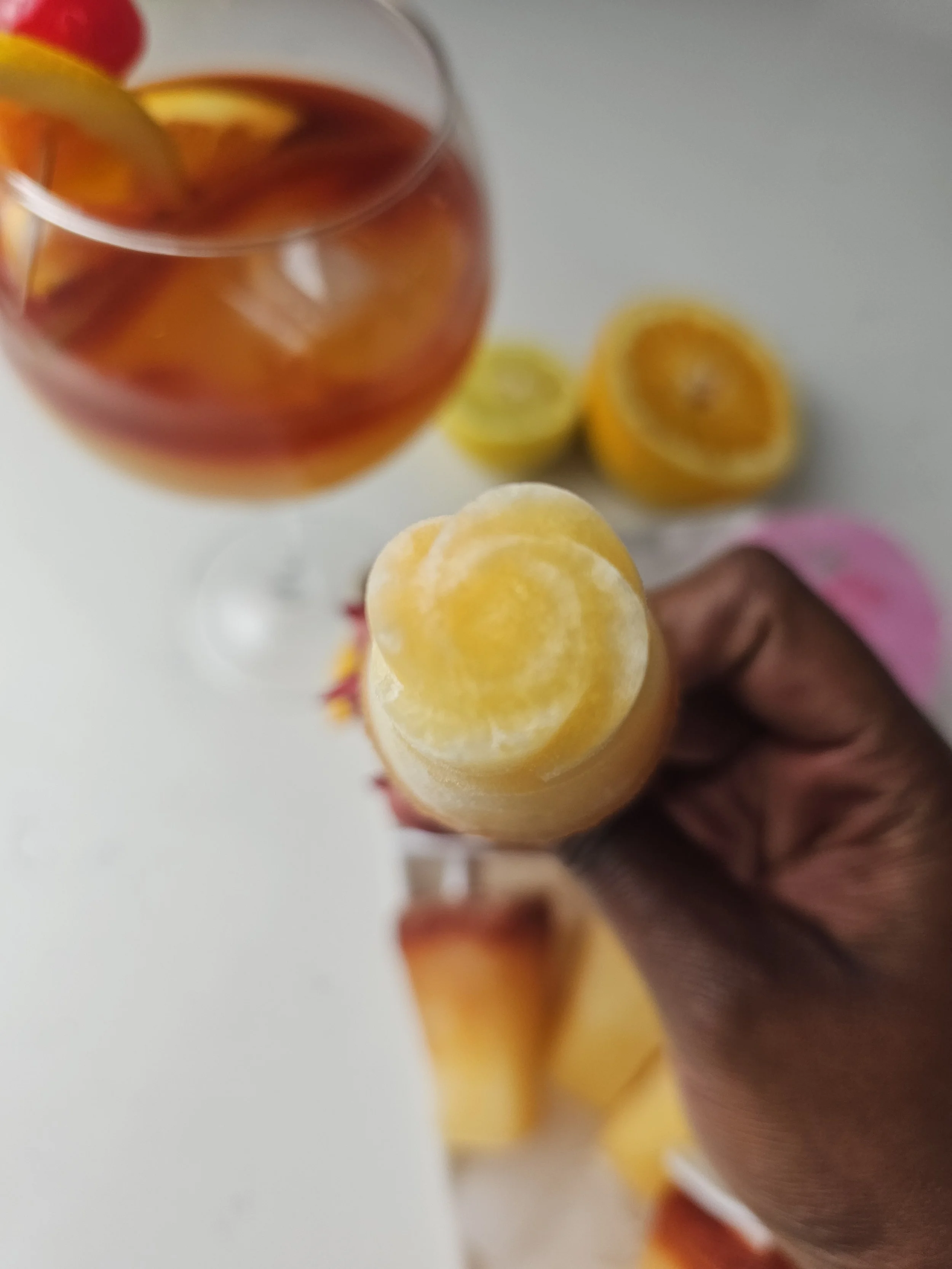
Malawi Shandy Ice Lollies (Popsicles)
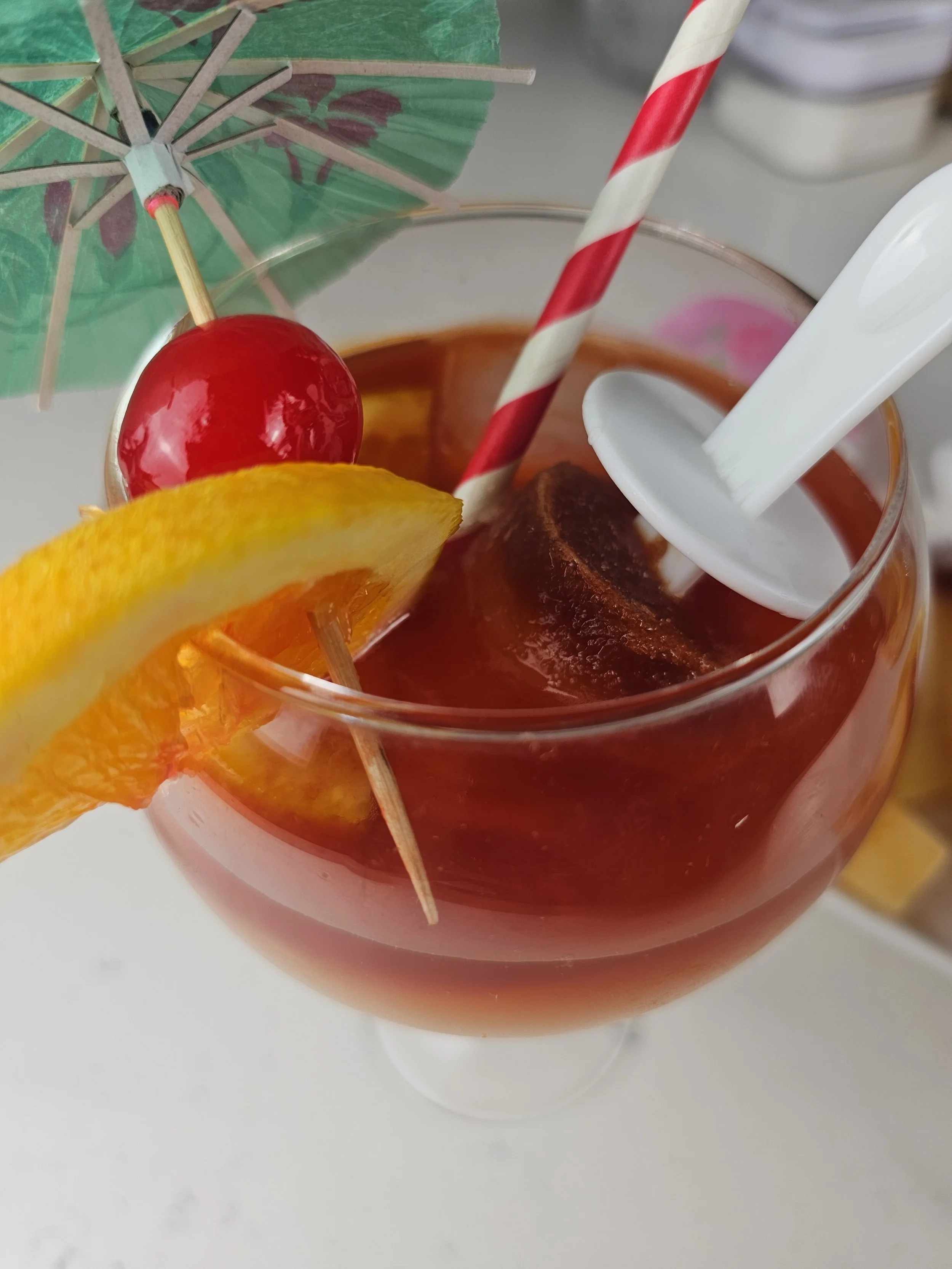
The Malawi Shandy is one of those drinks that instantly takes me back to Zimbabwe.
I remember drinking it on houseboat holidays in Kariba and during trips to Victoria Falls—two destinations known for sunshine, adventure, and escaping everyday life. In both places, an ice-cold Malawi Shandy always seemed to taste better in the heat. Bright, citrusy, and finished with a few dashes of bitters, it was the kind of drink that felt synonymous with holidays, road trips, and long afternoons spent outdoors.
For most of my life, I never questioned the name. It wasn't until recently that I learned the word "shandy" likely traces its roots to the British shandygaff, a drink traditionally made by mixing beer with lemonade or ginger beer. Over time, however, the drink evolved into something distinctly Southern African. Today, Malawi Shandy is enjoyed far beyond Malawi itself and can be found throughout the region, where it is typically served as a refreshing non-alcoholic drink, though some people add vodka or rum for a simple cocktail.
Part of what makes Malawi Shandy so memorable is its appearance. The combination of citrus and bitters creates a beautiful amber-red gradient that is instantly recognizable to many Southern Africans. For some, it's a nostalgic reminder of family gatherings, holidays, and summer afternoons. For me, it's one of those flavors that immediately transports me back to some of Zimbabwe's most memorable warm-weather destinations.
For this recipe, I wanted to preserve both the flavor and the visual identity of the original by transforming it into an ice lolly. The result captures everything I love about Malawi Shandy: bright citrus, gentle spice, bittersweet complexity, and the sunset-like gradient that made me fall in love with the drink in the first place.
More than just a frozen treat, these ice lollies are a tribute to one of Southern Africa's most beloved warm-weather drinks and the memories attached to it.
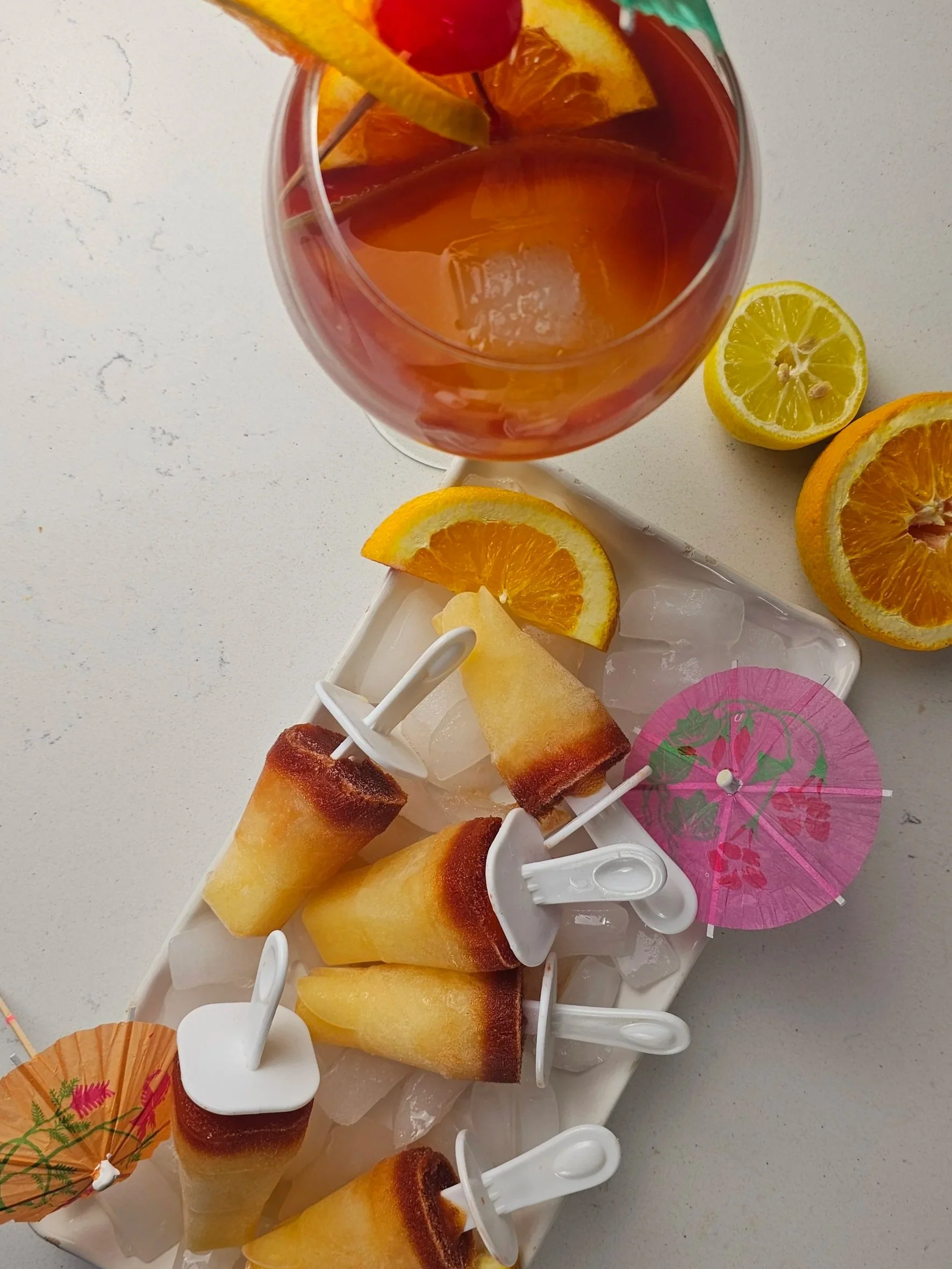

Malawi Shandy Ice Lollies (Popsicles)
These Malawi Shandy Ice Lollies transform one of Southern Africa's most beloved citrus drinks into a refreshing frozen treat. Made with fresh orange juice, lemon, ginger ale, Sprite, and Angostura bitters, they capture the bright, bittersweet flavor and signature amber-red gradient of the original drink.
Ingredients
- 1 cup (240ml) freshly squeezed orange juice (about 4 oranges)
- 1 cup (240ml) Sprite
- ½ cup (120ml) ginger ale
- Juice of ½ lemon
- 2 tsp Angostura bitters
- 2 tsp prepared citrus base mixture
Instructions
- In a jug or bowl, combine the orange juice, Sprite, ginger ale, and lemon juice. Stir gently to combine, taking care not to remove too much carbonation.
- Pour the mixture into six ice lolly moulds, filling each mould approximately 90% full.
- Transfer the moulds to the freezer and chill for 35–45 minutes, or until the edges begin to freeze while the centre remains slushy.
- In a small bowl, combine the Angostura bitters with 2 teaspoons of the citrus base. Stir until evenly mixed.
- Remove the moulds from the freezer. Carefully pour approximately 1 teaspoon of the bitters mixture into each mould over the semi-frozen base. Do not stir or swirl! Allow the bitters mixture to settle naturally.
- Gently insert the mould lids or sticks without pressing down aggressively.
- Return the moulds to the freezer and freeze for 6–8 hours or overnight.
- To release the ice lollies, briefly run the outside of the mould under warm water for 2–3 seconds before gently pulling.
Notes
- Freshly squeezed orange juice produces the brightest flavour and colour.
- Do not over-stir after adding the bitters mixture, as this will disrupt the natural gradient effect.
- Each ice lolly will develop a slightly different pattern, making every one unique.
- For an adult version, serve alongside a Malawi Shandy spiked with vodka or rum.
- If using larger moulds, freezing times may increase.
- Store in an airtight container or in the moulds for up to 2 months. For best flavour and texture, enjoy within 3 weeks.
Serving Suggestion:
<span>• Garnish with orange slices and maraschino cherries.</span><br><span>• Serve alongside a chilled Malawi Shandy.</span><br><span>• Perfect for summer gatherings, braais, picnics, and poolside entertaining.</span><br><span>• Pair with tropical fruit platters or citrus-forward desserts.</span>
Nutrition Facts
Calories
45Carbs (grams)
11 gFiber (grams)
.2 gSugar (grams)
9 gProtein (grams)
.3 gI am not a certified nutritionist and any nutritional information on dontmissmyplate.com should only be used as a general guideline.