
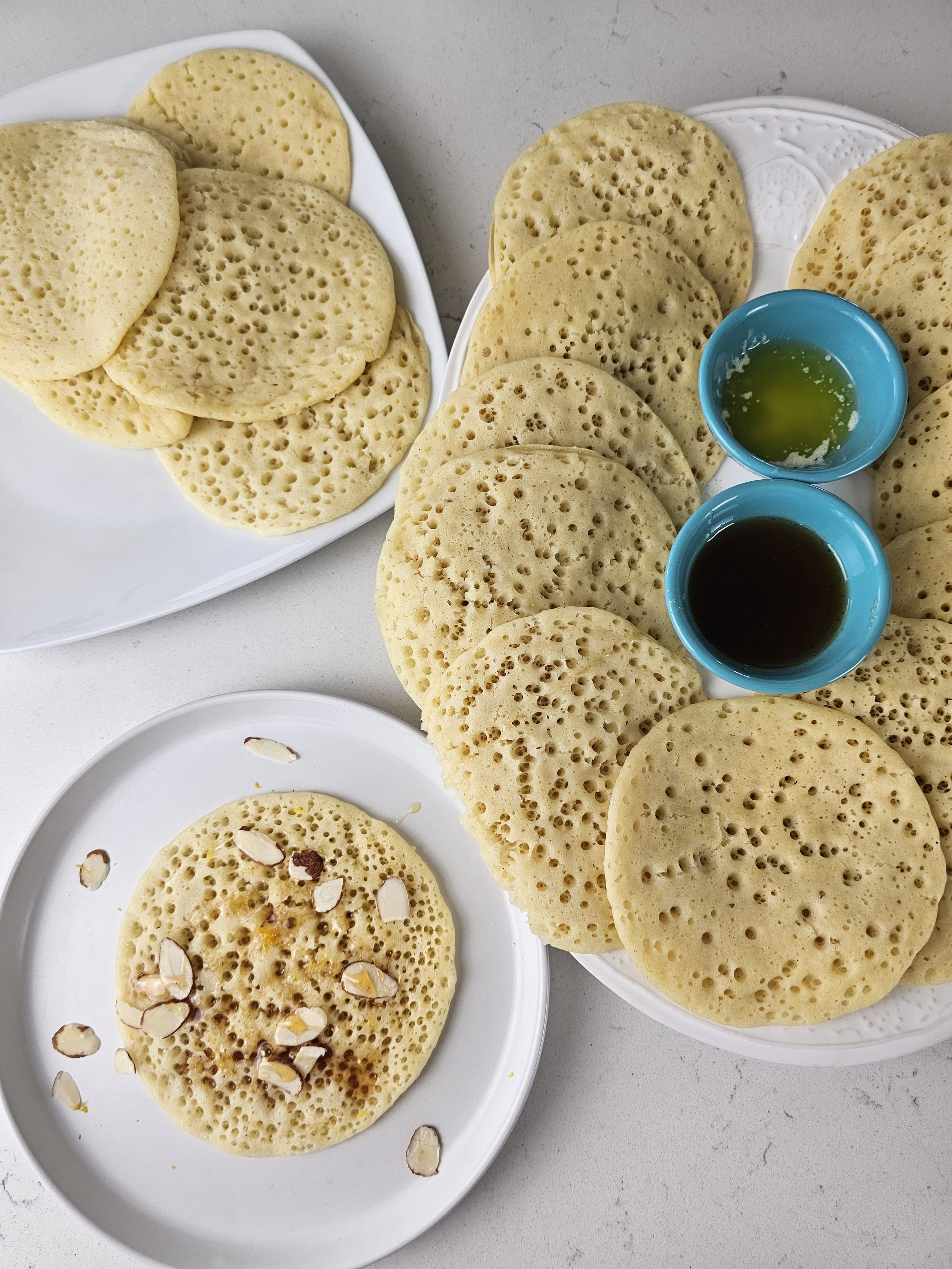
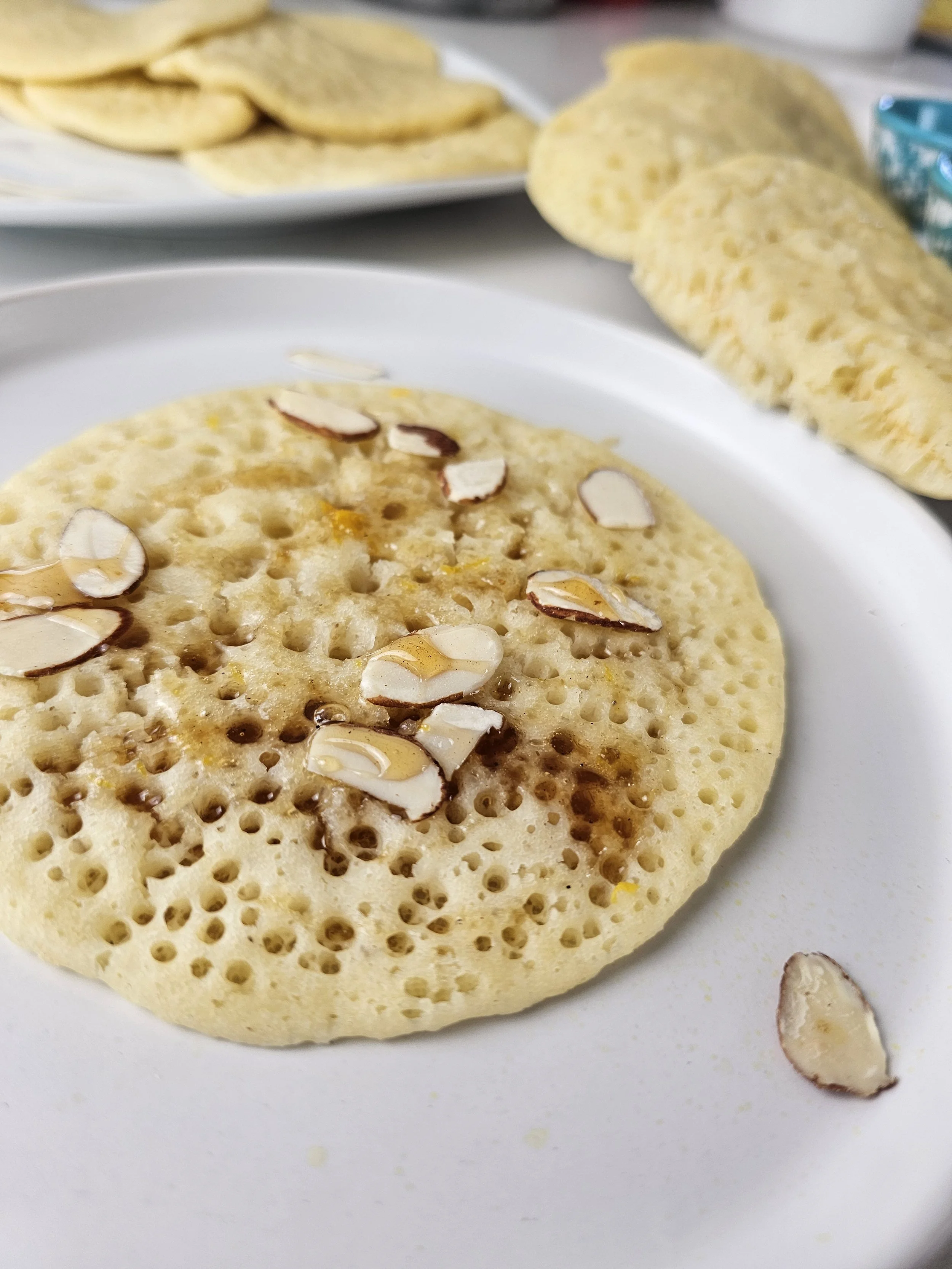
Baghrir (Thousand-Hole Moroccan Pancakes) – with Orange-Chai Honey Syrup
Baghrir are one of the most distinctive traditional breakfast foods in Moroccan and broader North African cuisine. Often called “thousand-hole pancakes,” they are instantly recognizable by their porous, sponge-like surface that forms as the batter cooks. These tiny holes are not just visually striking, they are functional, allowing the pancakes to absorb honey, melted butter, or syrup in a way few other flatbreads can. That is part of what made them so exciting for me to discover years ago because the pancakes can be completely transformed through different syrups and toppings in a way that regular pancakes simply cannot.
Unlike Western-style pancakes, Baghrir are made from a yeast-leavened semolina batter that is blended until completely smooth and then left to rest until light and airy. They are cooked on only one side, typically in a dry nonstick pan, which encourages the characteristic holes to form across the surface as steam rises through the batter. The result is a soft, tender pancake with a delicate structure specifically designed to soak up flavor.
Baghrir exist within a much larger North African breakfast tradition centered around bread-like and yeast-risen foods. In Morocco, mornings often revolve around shared plates of flatbreads such as msemen, harcha, and other semolina-based preparations. These are commonly served with honey, butter, olive oil, jams, or syrups alongside mint tea or coffee. Rather than being a quick individual meal, breakfast is often a slower, communal experience where breads and spreads are placed at the center of the table to be shared.
This recipe offers a modern take on the traditional preparation by pairing the pancakes with a lightly spiced orange and chai-infused honey syrup. The combination highlights both the North African foundation of the dish and a contemporary flavor profile that complements Baghrir’s naturally soft, absorbent texture.
I also like to garnish mine with nuts, usually pistachios or almonds, and experiment with different teas to flavor the honey syrup, most often rooibos or chai.
Looking for a more modern or alternative variation? I also created a Baghrir-inspired Pistachio and Orange Pancake recipe.

Baghrir (Moroccan Thousand-Hole Pancakes)
Light, spongy semolina pancakes with signature honeycomb holes, traditionally served warm with honey syrup with tea flavour.
Ingredients
- 2 cups fine semolina
- 1/2 cup all-purpose flour
- 1 tsp active dry yeast
- 1 tsp sugar
- 1/2 tsp salt
- 3 cups lukewarm water
- Serving of melted butter
- 1/2 cup wild honey
- 3 tbsp water
- Zest of 1/2 orange
- 1 tbsp orange juice
- 1/4 tsp tea chai spice
- Pinch of salt
- 1/4 tsp almond extract (added off heat)
Instructions
- Combine semolina, flour, yeast, sugar, salt, and warm water in a larg bowl. Use an immersion blender on medium to comnbines for 30 seconds then conitnue mixing at medium-high speed until the mixture is completely smooth and free of lumps.
- Cover the batter with a clean kitchn cloth and let it rest at room temperature for at least 30 minutes, until it becomes frothy and slightly airy.
- Before cooking, stir the batter gently. The texture should be thin and pourable, similar to heavy cream.
- Heat a nonstick pan over medium heat. Do not add oil or butter!
- Pour about 1/4 cup of batter into the pan and allow it to spread naturally into a circle. Cook on one side only.
- The pancake is ready when bubbles form across the entire surface and the top looks dry and set, usually after 1.5 to 3 minutes. Do not flip.
- Repeat with remaining batter, stirring occasionally.
- In a small pot, combine honey, water, orange zest, orange juice, masala chai spice, and salt. Warm over low heat for 2 to 3 minutes. Do not boil vigorously.
- Remove from heat and stir in almond extract.
- Pour warm syrup over the pancakes while they are still warm, or set aside with melted butter for serving immediately. Top with sliced almonds if desired.
Notes
- Baghrir is cooked only on one side to preserve its signature porous surface.
- First pancakes are often the most visually perfect.
- A dry nonstick pan is essential for proper hole formation, as well as resting time for the batter.
- These pancakes are best eaten fresh but can be reheated or frozen once cooked.
- Traditional Moroccan breakfasts often pair Baghrir with honey, butter, olive oil, or preserved jams, alongside mint tea or coffee.
Nutrition Facts
Calories
240Fat (grams)
3 gCarbs (grams)
42 gFiber (grams)
3 gSugar (grams)
15 gProtein (grams)
6 gI am not a certified nutritionist and any nutritional information on dontmissmyplate.com should only be used as a general guideline.
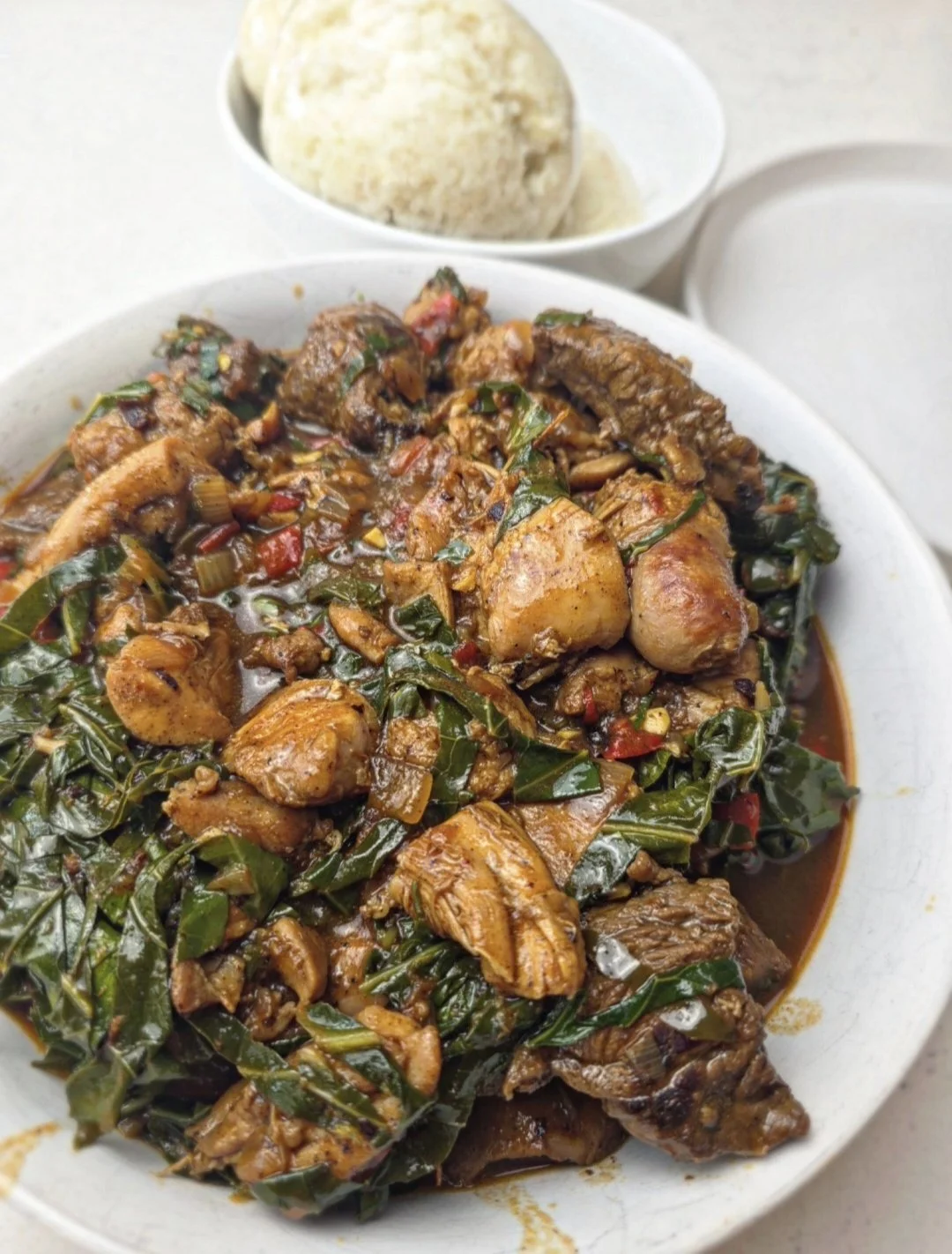
Zimbabwean Gango (Meat Medley and Greens)
Gango is a deeply comforting and richly layered Zimbabwean dish that brings together multiple meats, cooked in a savory onion and tomato base (also known as muto) with tender greens. Traditionally made with a combination of beef, chicken, and sausage, it’s the kind of meal that feels abundant, hearty, and deeply satisfying. It’s not an everyday dish for many households! Gango is often reserved for weekends, gatherings, or moments when you want to cook something special and filling. On the other hand, it is also a resourceful dish, a way to use different cuts of meat and turn them into something rich, comforting and full of flavour.
In Zimbabwe, meat has historically been a luxury for many families, particularly in the rural areas, which is why dishes like gango feel so intentional. Instead of relying on heavy seasoning, the flavor often comes from the quality of the meat itself, combined with simple aromatics like onion, garlic, and tomato, and sometimes peppers. When done right, the result is a dish that tastes full, balanced, and naturally rich without needing much intervention.
This version uses sirloin beef chunks, chicken thighs, and sausage, finished with collard greens for a slight bitterness that balances the richness. It’s best served with sadza (traditional cormeal side), rice, or any starch that can soak up the sauce. For those who enjoy heat, a chili sauce or a fresh chili relish works beautifully on the side.
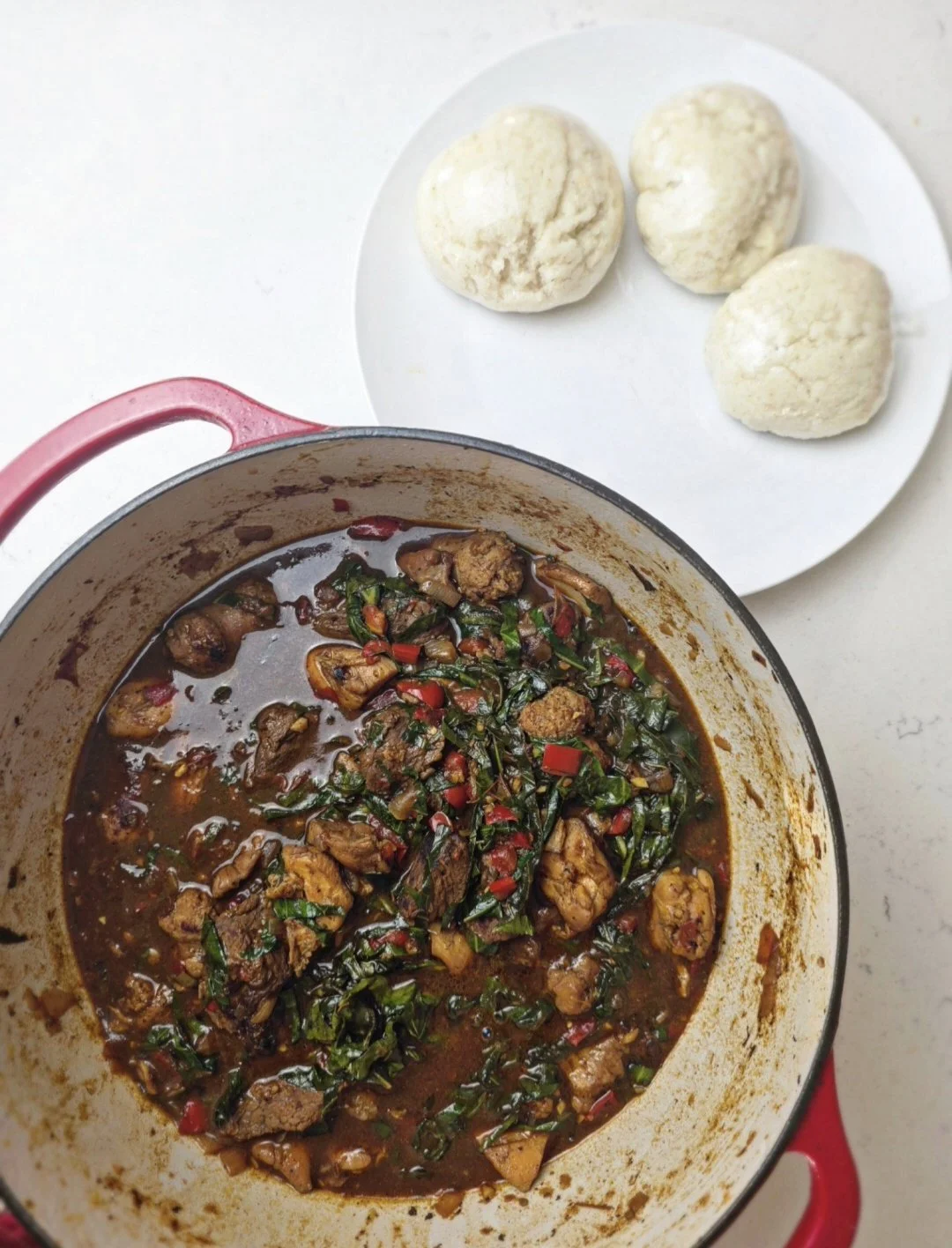
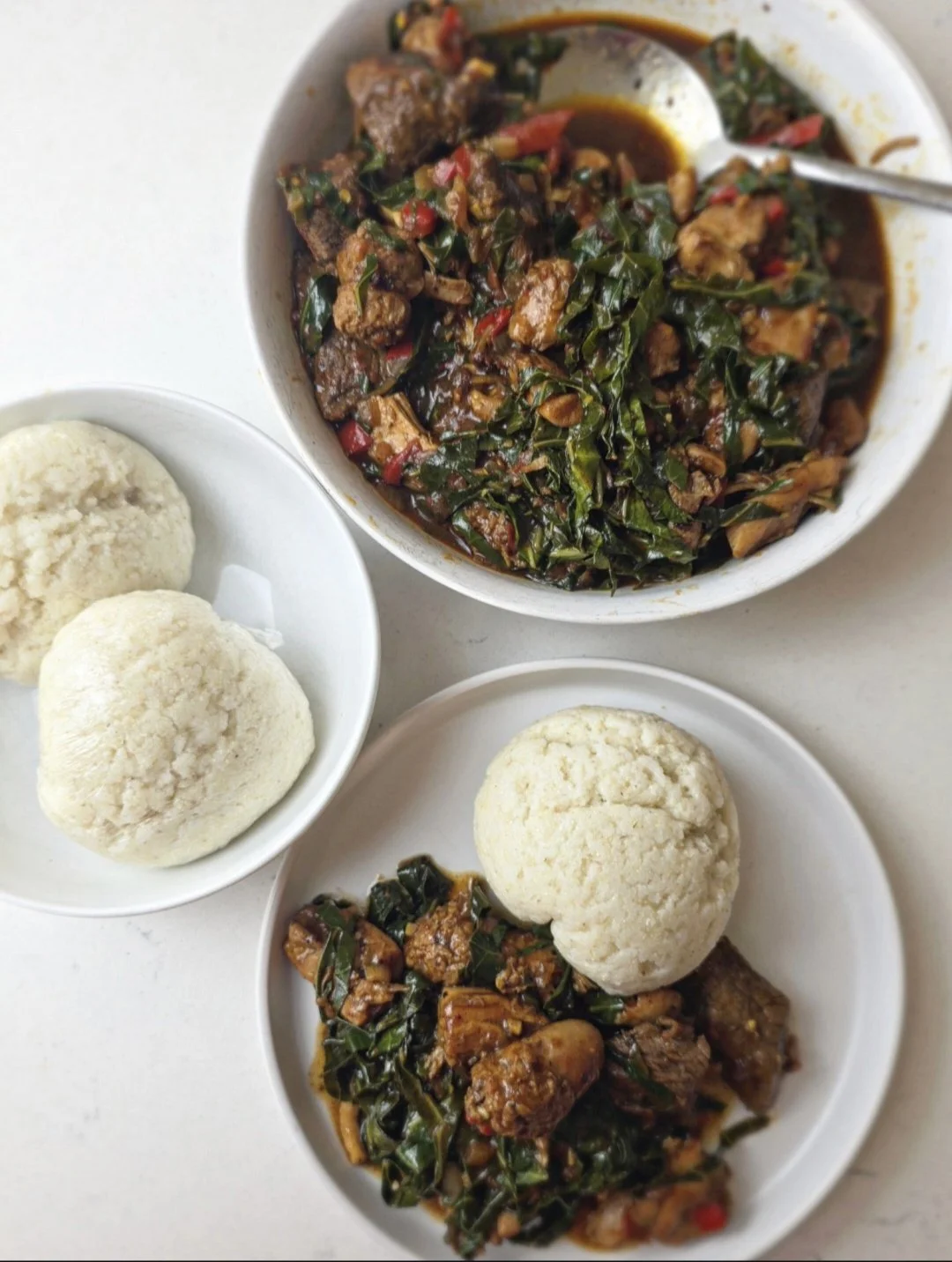
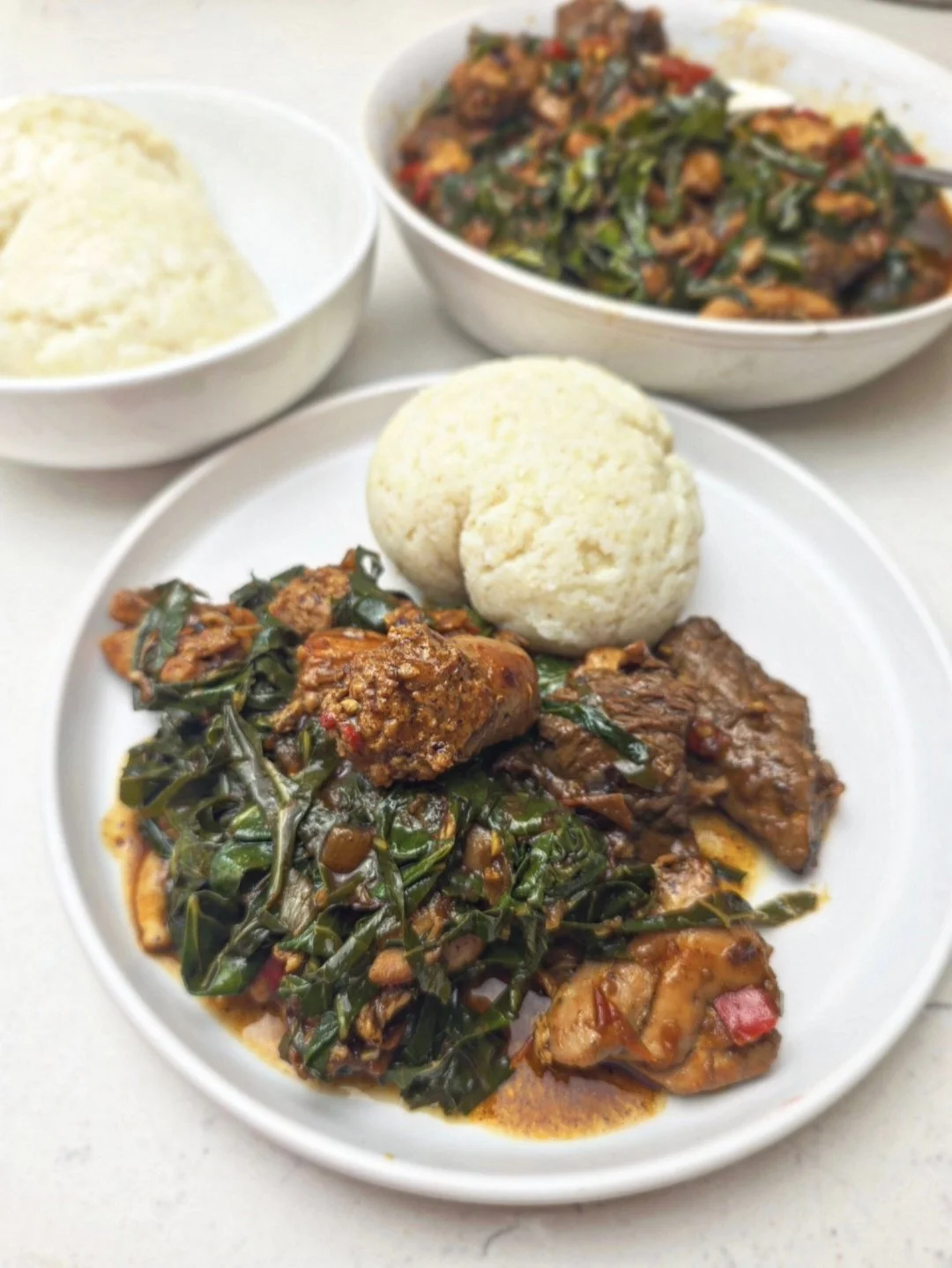

Zimbabwean Gango (Meat Medley with Greens)
A hearty Zimbabwean-style gango made with beef, chicken, sausage, and collard greens, simmered in a rich onion and tomato base. A comforting, special-occasion dish perfect with sadza or rice.
Ingredients
- 1–1.25 lbs chuck or sirloin beef (cut into chunks)
- 4 chicken thighs, skinless and boneless, chopped
- 2 sausages (boerwoers, bratwurst or similar), sliced
- 1 large onion, sliced
- 4 garlic cloves, minced
- 4 Roma tomatoes, chopped
- 2 tbsp tomato paste
- 1 red bell pepper, diced (optional)
- 1 chilli pepper, chopped (optional)
- 1 bunch collard greens, chopped
- 1 - 1 1/2 cups stock (or water + one 10g boullion cube)
- 1 beef stock cube (optional)
- 1 tsp curry powder
- 1 tsp paprika
- 1 tsp black pepper
- 2 tsp salt
- 1 tbsp Royco Usavi mix beef flavour (optional)
Instructions
- In a Dutch oven, sear the beef, chicken, and sausage in batches. Remove and set aside.
- In the same pot, cook onion and garlic until softened (3 min). Add the bell and chilli peppers, cook for 2-3 min.
- Add tomatoes and tomato paste. Cook until thick, glossy and slightly reduced (5 min).
- Add the stock cube, curry powder and spices. Cook 30–60 seconds and adjust as needed to taste.
- Return all meats to the pot. Add stock (do not fully submerge, you are not making a stew).
- Bring to a gentle simmer, cover slightly, and cook 30 minutes, removing the lid completely to reduce the liquid in the last 10 minutes.
- Stir in collard greens and cook for another 10–15 minutes until tender,
- Adjust seasoning again and reduce to desired consistency.
Notes
- Meat quality matters: If using supermarket beef, consider marinating lightly with salt, pepper, garlic and other spices beforehand.
- Stock matters: If flavor feels flat, use stronger stock or add a second cube sparingly.
- Don’t rush the reduction as flavor develops as liquid reduces.
- Best with sadza or rice.
Nutrition Facts
Calories
550Fat (grams)
35 gProtein (grams)
40 gI am not a certified nutritionist and any nutritional information on dontmissmyplate.com should only be used as a general guideline.

Baked Snapper with a Quick African Pepper Sauce
At least in its authentic glory, African pepper sauce is commonly served as a condiment, dip or cooking sauce to pair with grilled meats and vegetables or used in stews, giving your dish a perfect balance of heat and depth of flavour. It's most popular in West Africa, but you see other versions of this with other peppers taking centre stage across the Continent. The combination of peppers, herbs, and spices can enhance or top off almost any dish, and it is extremely versatile. I pick this over conventional hot sauce any day because it uses fresh vegetables, and you can make batches to freeze for future use.
This version provides a quick, easy and convenient way to add flavour to your fish. I used red snapper in this recipe, but you can also use halibut, sea bass, bream, tilapia, or any fish with a mild taste that will absorb all the flavours. For the pepper sauce, instead of cooking down and frying the blended vegetables on the stovetop as is typically done, I roasted the vegetables to bring the flavours out before blending them, then used the pepper mix to coat the fish while it baked.
One great thing about this sauce is that you can tailor it to your tastes and tolerance by adding more or fewer tomatoes and peppers. You can also remove the seeds from the hot peppers to take the heat down a notch. I prefer habanero peppers in terms of the heat and flavour, but you can use a range of peppers, from jalapenos to scotch bonnet. In any case, I recommend using the freshest ingredients possible. In addition, especially since peppers are part of the Dirty Dozen, try using organic peppers if you can afford them.

Baked Red Snapper with Quick African Pepper Sauce

Ingredients
- 1 large red snapper
- 1 tablespoon garlic powder
- 2-3 garlic cloves
- 2 lemon slices (optional)
- 1 sprig fresh thyme
- 1 sprig fresh parsley
- 2 teaspoons salt
- 2 teaspoons black pepper
- 2 teaspoon Royco Usavi Mix (optional)
- 2 teaspoons oregano
- 2 teaspoons basil
- 1/2 cup olive oil, and extra for roasting the peppers
- 1 teaspoon salt
- 1/2 teaspoon black pepper
- 1 chicken bouillon cube
- 1/4 cup parsley, stems removed
- 5 large basil leaves
- 1/3 large yellow onion
- 3-4 mini sweet peppers
- 2 small habanero peppers
- 1 1/2 - 2 Roma tomatoes
- 1 inch piece fresh ginger
- Salt and pepper to taste
Instructions
- Place your peppers, onion, tomato, and garlic on a baking sheet with parchment paper—season with salt and pepper to taste.
- Roast the vegetables for 25 minutes at 400F or until roasted to your desired doneness.
- Remove from the oven and allow to cool for 15 minutes, then transfer to a food processor or blender. Add the ginger, parsley, basil, bouillon cube, salt, and pepper. Blend until combined, and a paste forms. Add the olive oil during this process to help smoothen the mixture.
- Set aside while you prepare the fish.
- Make sure your fish is clean, and then pat it dry with paper towels. Add the salt, pepper, garlic, herbs, and optional Royco/all-purpose seasoning.
- Stuff the inside of the fish with the thyme, parsley, lemon and garlic.
- Place the fish inside some foil and place it on a baking tray. Spoon the pepper sauce over both sides of the fish, ensuring it is fully coated.
- Place the fish in the oven and bake at 350F for 30 minutes. After 15-20 minutes, remove the fish, open the foil (without burning yourself with the hot air) and baste the sauce over the fish.
- Leave the foil open and allow the cause to continue cooking. This will help thicken and caramelize the sauce, developing the flavours further.
- Remove from the oven and spoon some sauce into the serving dish, placing the fish on top and adding the rest of the sauce on top. Garnish with fresh parsley and serve!
Notes
- To avoid overcooking the fish, check the internal temperature after 15-20 minutes and use that to determine how much more time you need.
- If you want a thicker sauce, you can place it on the stovetop before covering the fish with it and baking.
- If you get fresh fish from the market, ensure it is cleaned and descaled.
Nutrition Facts
Calories
237Fat (grams)
13.3 gSat. Fat (grams)
1.9 gCarbs (grams)
24.9 gFiber (grams)
6 gProtein (grams)
10.9 gI am not a certified nutritionist and any nutritional information on dontmissmyplate.com should only be used as a general guideline.