
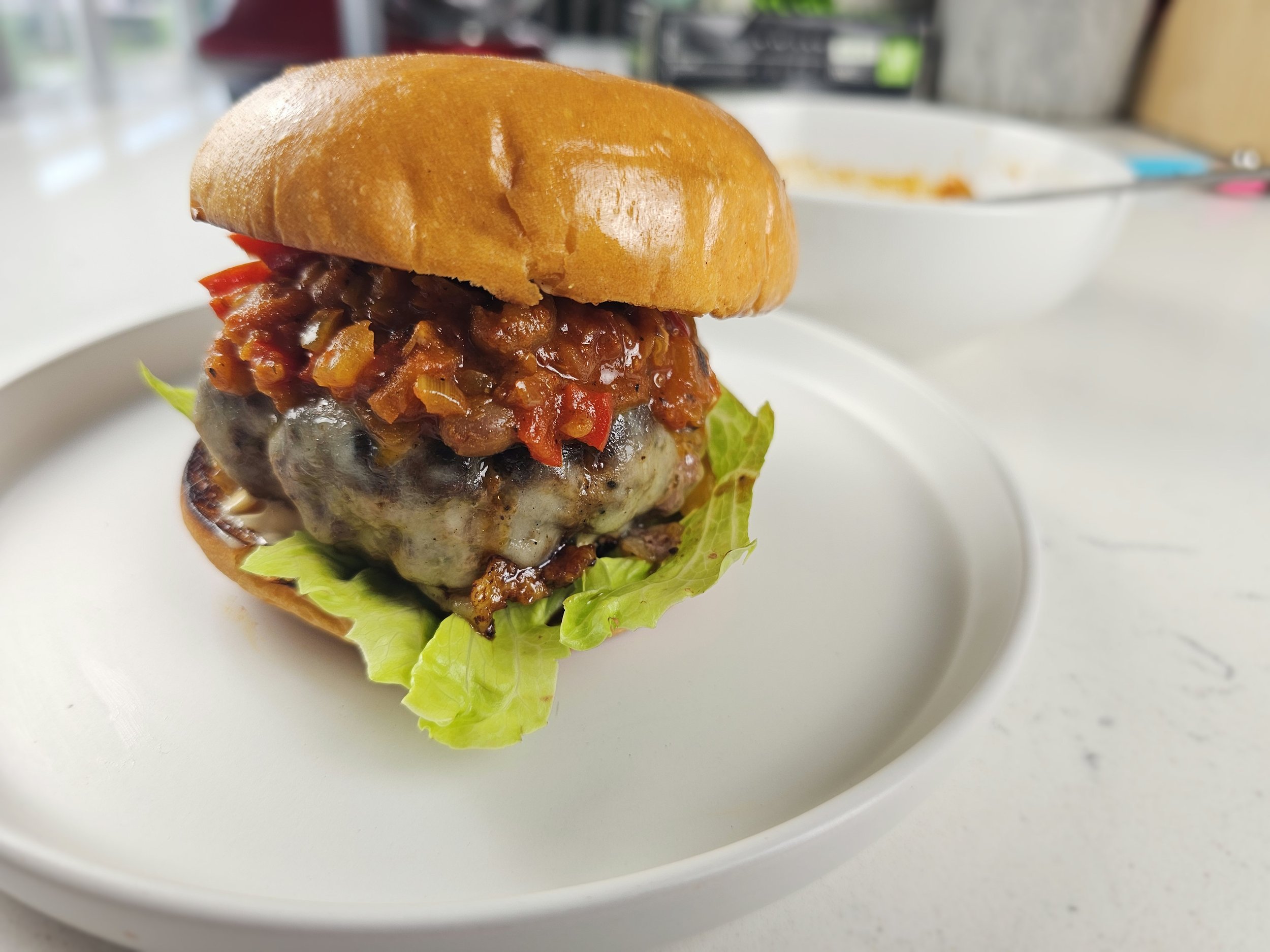
Boerewors-Inspired Burger with Chakalaka
This Boerewors-Inspired Burger with Chakalaka started with a simple question: What would happen if I took everything I love about traditional boerewors and turned it into a cheeseburger?
Boerewors is one of Southern Africa's most iconic sausages, enjoyed across countries including South Africa and Zimbabwe. Traditionally made with beef, pork, toasted coriander, black pepper, warm spices, and a touch of vinegar, it's known for a flavor that's bold, aromatic, and instantly recognizable. Instead of stuffing those flavors into a sausage casing, I wanted to see how they'd translate into a thick, juicy burger.
After several rounds of testing, I landed on a blend of beef and pork that stays tender and juicy while letting the boerewors-inspired seasoning shine. Toasted coriander and freshly cracked black pepper provide the familiar aroma, while allspice, garlic, cloves, nutmeg, and a splash of red wine vinegar add depth without overwhelming the meat.
Once the burger was where I wanted it, the toppings became the next challenge. Rich, well-seasoned beef needs something bright to balance it, and chakalaka does exactly that. This classic vegetable relish brings sweetness, acidity, gentle heat, and plenty of texture. Add melted cheese, crisp lettuce, spicy mayo, and a toasted brioche bun, and every bite feels balanced instead of heavy.
This recipe is also a little personal. Chakalaka featured in one of my television cooking challenges (100 Cooks), and while developing this burger I kept wondering how I'd approach that challenge today. Burgers have always been one of my favorite things to cook because they're won or lost in the details. A good meat blend, thoughtful seasoning, a proper crust, perfectly melted cheese, and toppings that complement the patty all matter.
The finished burger feels familiar if you've grown up eating boerewors, but it's just as enjoyable if these flavors are completely new to you. My goal wasn't to recreate the sausage—it was to capture its character in a different form. I hope it gives you a delicious introduction to one of Southern Africa's most iconic flavor combinations.
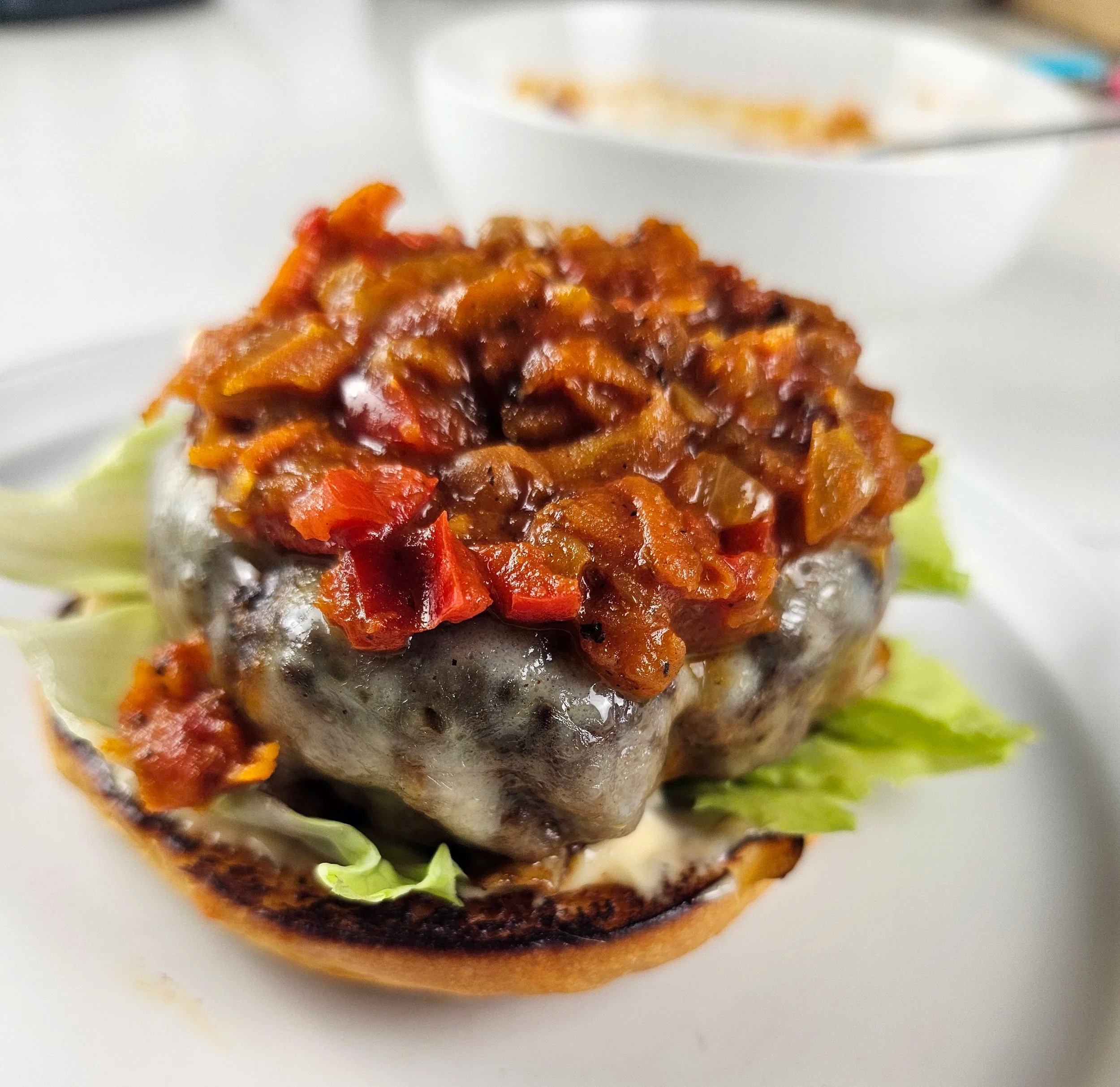
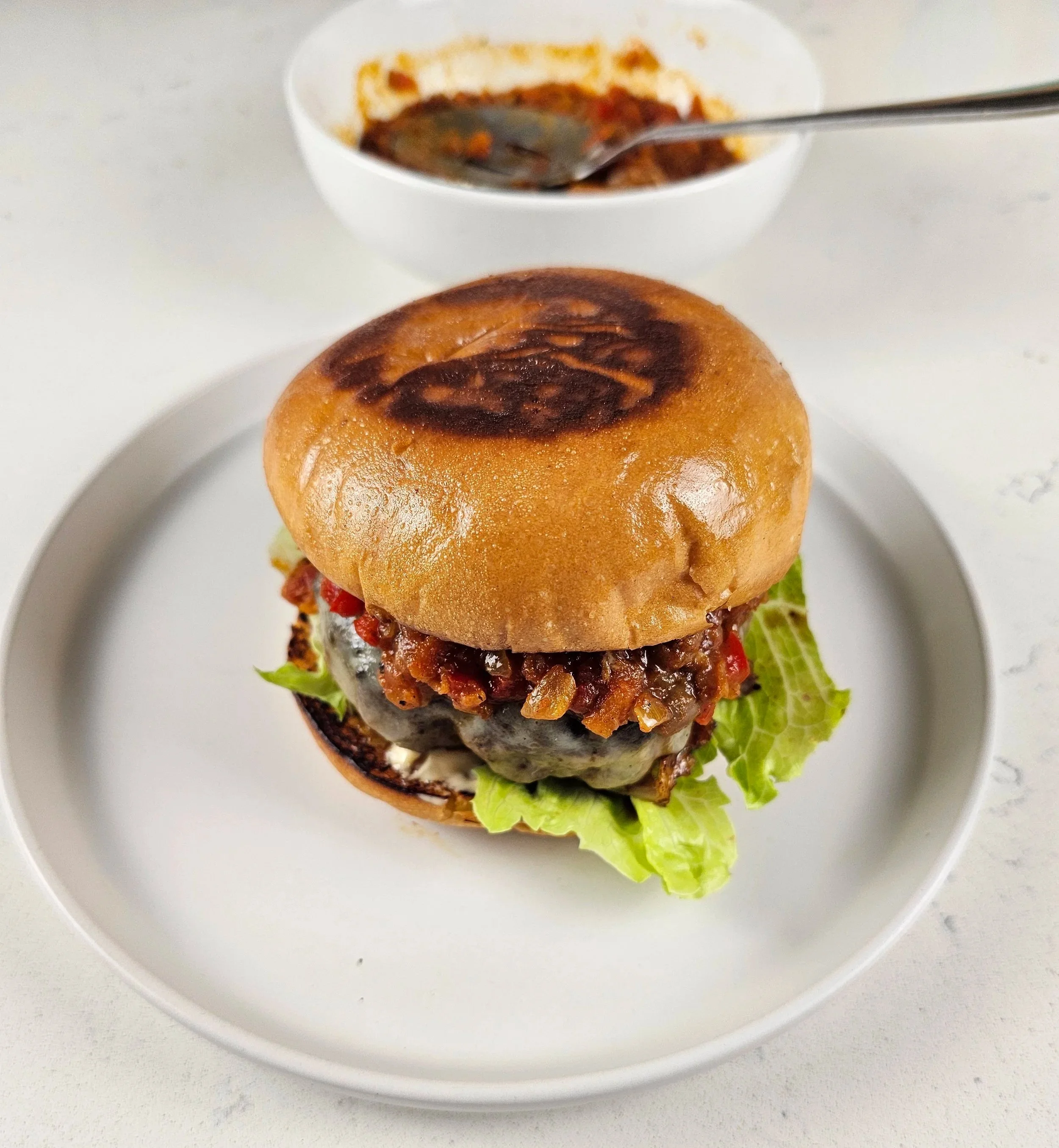

Boerewors-Inspired Burger with Chakalaka
Inspired by the bold flavors of traditional boerewors sausage, this juicy burger combines ground beef and pork with toasted coriander, black pepper, warm spices, and a splash of red wine vinegar. Topped with homemade chakalaka, melted provolone or American cheese, crisp lettuce, and served on a toasted brioche bun, it's a hearty Southern African-inspired burger packed with flavor.
Ingredients
- 10.4 oz ground beef
- 4 oz ground pork
- 3 tsp boerewors seasoning mix
- 1¼ tsp red wine vinegar
- 2 tsp salt
- 1 tsp whole black peppercorns
- 2 tbsp whole coriander seeds
- ½ tsp whole allspice berries
- 1 tsp smoked paprika
- 1 tsp garlic powder
- ⅛ tsp ground cloves
- ⅛ tsp ground nutmeg
- 1 tbsp neutral oil
- ½ onion, diced
- 1 carrot, grated
- 1 bell pepper, diced
- 2 cloves garlic, minced
- 1 tsp curry powder
- ½ tsp smoked paprika
- ½ tsp ground cumin
- ½ tsp chili flakes (optional)
- ½ can diced tomatoes
- Salt and pepper, to taste
- 2 brioche buns, toasted
- 2 slices provolone or American cheese
- Lettuce
- 2–4 tbsp chakalaka
- Spicy mayo (2 tbsp mayonnaise + 1–2 tsp hot sauce)
Instructions
- 1. Prepare the seasoning
- Toast the coriander seeds, peppercorns, and allspice until fragrant. Crush them and combine with the remaining spices. Store the extra seasoning in an airtight jar.
- 2. Make the patties
- In a bowl, combine:
- 10.4 oz beef
- 4 oz pork
- 3 tsp boerewors seasoning
- 1¼ tsp red wine vinegar
- Mix gently until just combined.
- Divide into two equal patties (about 7.2 oz each).
- Shape each patty ½–1 inch wider than your brioche buns and make a shallow thumb indent in the center.
- ---
- 3. Make the chakalaka
- Heat the oil over medium heat. Cook the onion until softened. Add the carrot, bell pepper, and garlic. Stir in the spices, then the tomatoes. Simmer until thick and well combined. Season to taste.
- ---
- 4. Cook the burgers
- 1. Heat a cast-iron skillet over medium-high for about 5 minutes.
- 2. Add a small amount of ghee.
- 3. Place the burgers in the pan and cook 4 minutes without moving them.
- 4. Flip the burgers and reduce the heat to medium.
- 5. Cook for another 3½–4 minutes, checking the internal temperature.
- 6. Add the cheese during the last minute.
- 7. Add 1–2 teaspoons water to an empty part of the skillet and immediately cover with a lid for 30–60 seconds to melt the cheese.
- 8. Cook until the burgers reach 160–165°F (71–74°C).
- 9. Rest for 3 minutes.
- ---
- 5. Toast the buns
- Toast the brioche buns in a little butter or ghee until golden.
- ---
- 6. Assemble
- Bottom bun
- Spicy mayo
- Lettuce
- Burger with melted cheese
- Spoonful of chakalaka
- Top bun
Notes
- This recipe was developed using 7.2 oz patties, which provided the best balance of juiciness, burger-to-bun ratio, and presentation.
- Shape the patties wider than the buns to account for shrinkage during cooking. You can also press your thumb gently in the center to create a dimple in each to help this.
- Mix the meat gently to maintain a tender texture.
- Toasting the whole spices before grinding makes a noticeable difference in flavor.
- If your chakalaka is too loose, simmer it uncovered for a few extra minutes before serving.
I am not a certified nutritionist and any nutritional information on dontmissmyplate.com should only be used as a general guideline.
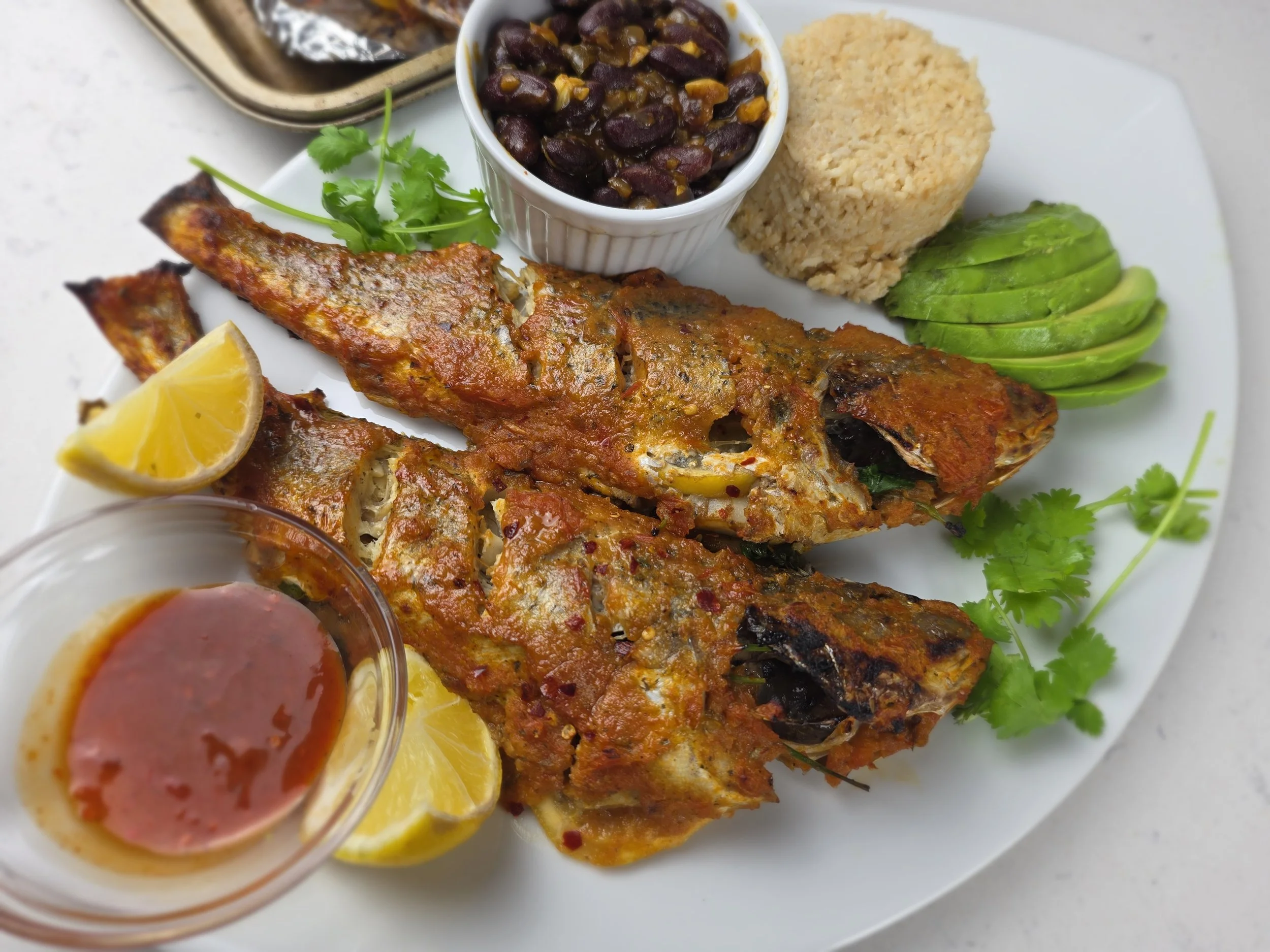
Roasted Croaker Fish with Muto Sauce (Zimbabwean-Style)
Whole fish has always been one of my favorite ways to cook and eat, and if you know my cooking, you know I’m known for it. There’s something about working with the fish in its entirety that feels more connected, more intentional, and ultimately more flavorful.
In Zimbabwe, fish is sometimes overlooked in everyday conversation around food, but it plays a significant role in many communities, especially in areas where access to freshwater lakes makes fish a regular and cherished part of the diet. Whether grilled, fried, or simmered in sauces, fish is a staple that deserves more attention.
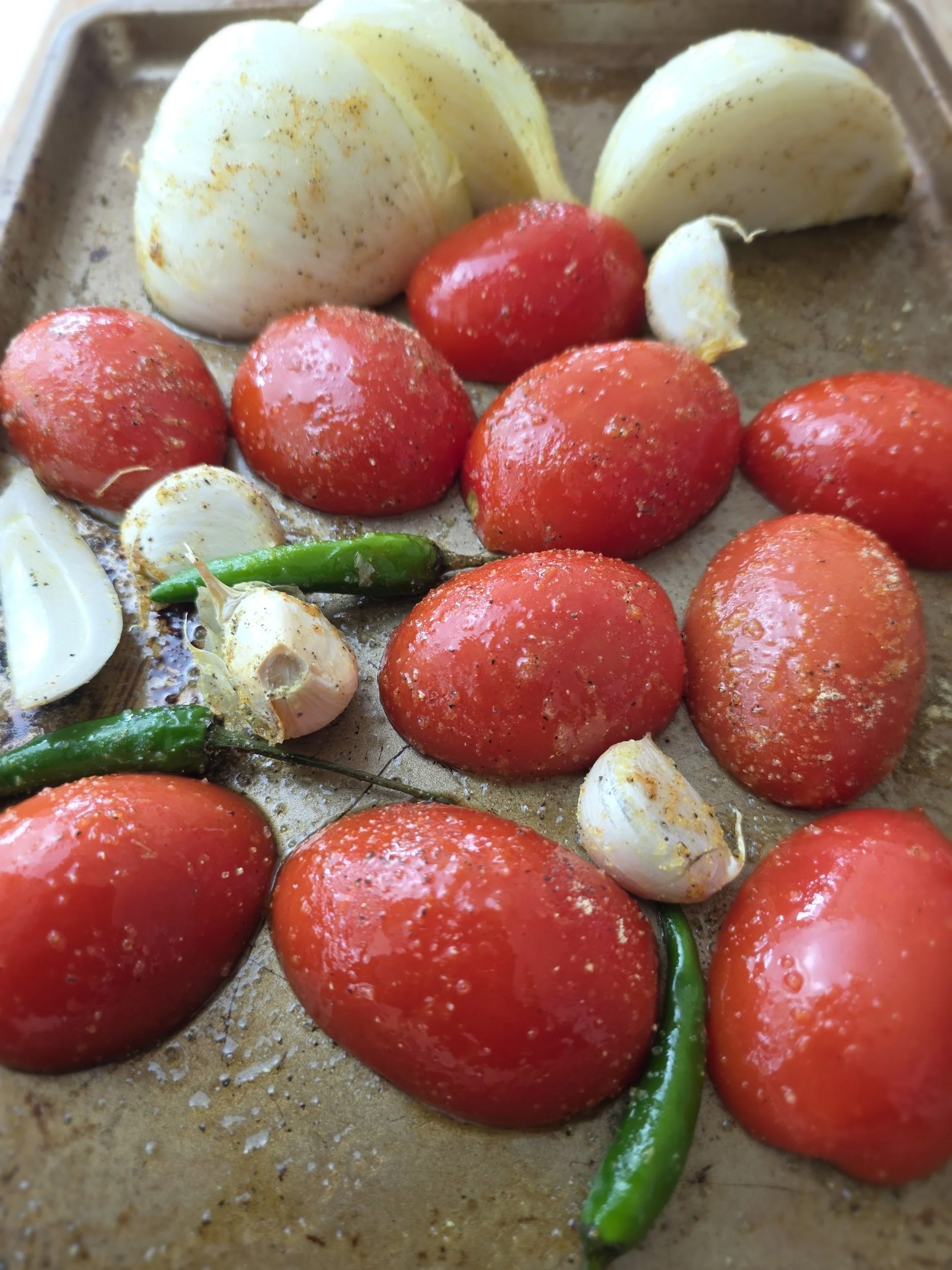
This dish brings that tradition into a slightly more modern, flexible approach. Instead of simply making a standard Zimbabwean tomato-based gravy (muto), where you roast the vegetable and aromatics base (tomatoes, onions, garlic, and chilies) to deepen their flavor, then blend them into what I call a muto-style sauce. It’s perfect for coating fish before finishing it in the oven.
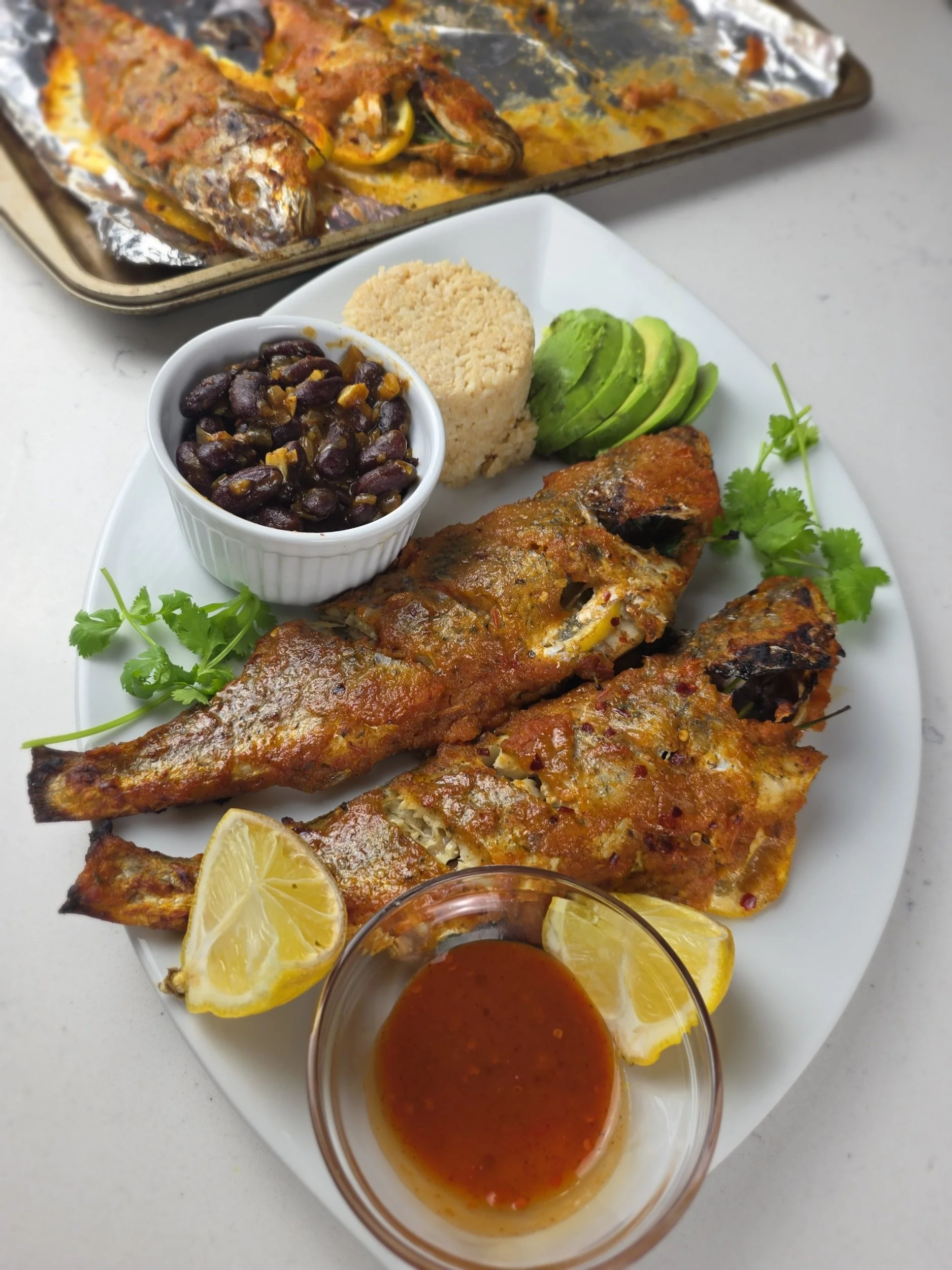
It’s served alongside peanut butter rice and sugar beans, a combination that reflects how Zimbabwean meals often come together: a strong protein, a starch, and something hearty and comforting on the side. The peanut butter rice (also known as mupunga unedovi) adds richness, while the beans bring balance and texture.
More than anything, this dish is about rethinking how we approach familiar flavors. Zimbabwean food doesn’t have to stay in one format, it can evolve and adapt.

Roasted Croaker Fish with Muto Sauce (Zimbabwean Style)
A flavorful roasted whole fish served with a rich roasted vegetable “muto” sauce, paired with optional peanut butter rice and beans for a hearty Zimbabwean-inspired meal.
Ingredients
- 4 small whole croaker fish (~8 inches each), cleaned
- 2–3 tbsp olive oil
- 2 tbsp fish spice
- 2 tsp paprika
- 2 tsp salt
- 2 tsp black pepper
- 4 garlic cloves, sliced or lightly crushed
- 4 slices lemon + juice of 1 lemon (optional)
- Fresh cilantro or parsley (for garnish)
- Chili flakes (optional)
- 1 large onion, cut into wedges
- 5 Roma tomatoes, halved
- 4 garlic cloves, skin on
- 3–4 hot chilies (Thai or similar)
- 2–3 tbsp oil
- 1 tbsp tomato paste
- 1 tbsp Worcestershire sauce
- 1 tbsp seasoned salt (or to taste)
- 1 tsp black pepper
- Splash of stock or water (for blending)
- 1 cup basmati rice
- 2 tbsp smooth peanut butter
- 4 tbsp hot water
- 2 bay leaves
- 1½ tbsp rice seasoning or stock powder
- 1 tsp salt
- 1½ cups cooked sugar or kidney beans (or 1 can, drained)
- 1/3 onion, chopped
- 1/3 shallot, chopped
- 2 tbsp tomato paste
- 1 hot chili pepper, chopped
- 1 cup chicken stock
- 1–2 tbsp oil
- 1 tsp salt (to taste)
Instructions
- Preheat the oven to 220°C / 425°F.
- Toss the onion, tomatoes, garlic, and chilies with oil and salt, then spread them on a baking tray. Roast for about 25 minutes, flipping half way, until everything is soft.
- Remove the garlic skins, then transfer everything to a blender. Add the tomato paste, Worcestershire sauce, black pepper, and a splash of water. Blend until smooth, or mash for a chunkier texture if preferred. Pour into a pan and simmer for about 10 minutes, adjusting seasoning as needed, then set aside.
- Optional (rice): Cook the rice in salted water with bay leaves and seasoning according to package instructions. Once done, keep it warm. Mix the peanut butter with hot water until smooth, then fold it into the cooked rice until evenly combined.
- Optional (sugar beans): Heat oil in a pan for the beans and sauté the onion and garlic until soft. Add chili, tomato paste, and seasoning, stirring well to combine. Add the beans and stock, then simmer for 5–8 minutes until slightly thickened and flavorful.
- Reduce oven temperature to 200°C / 400°F.
- Pat the fish dry and score both sides. Rub with olive oil, salt, pepper, paprika, and fish spice.
- Stuff each fish with garlic, lemon slices, and herbs, then set aside.
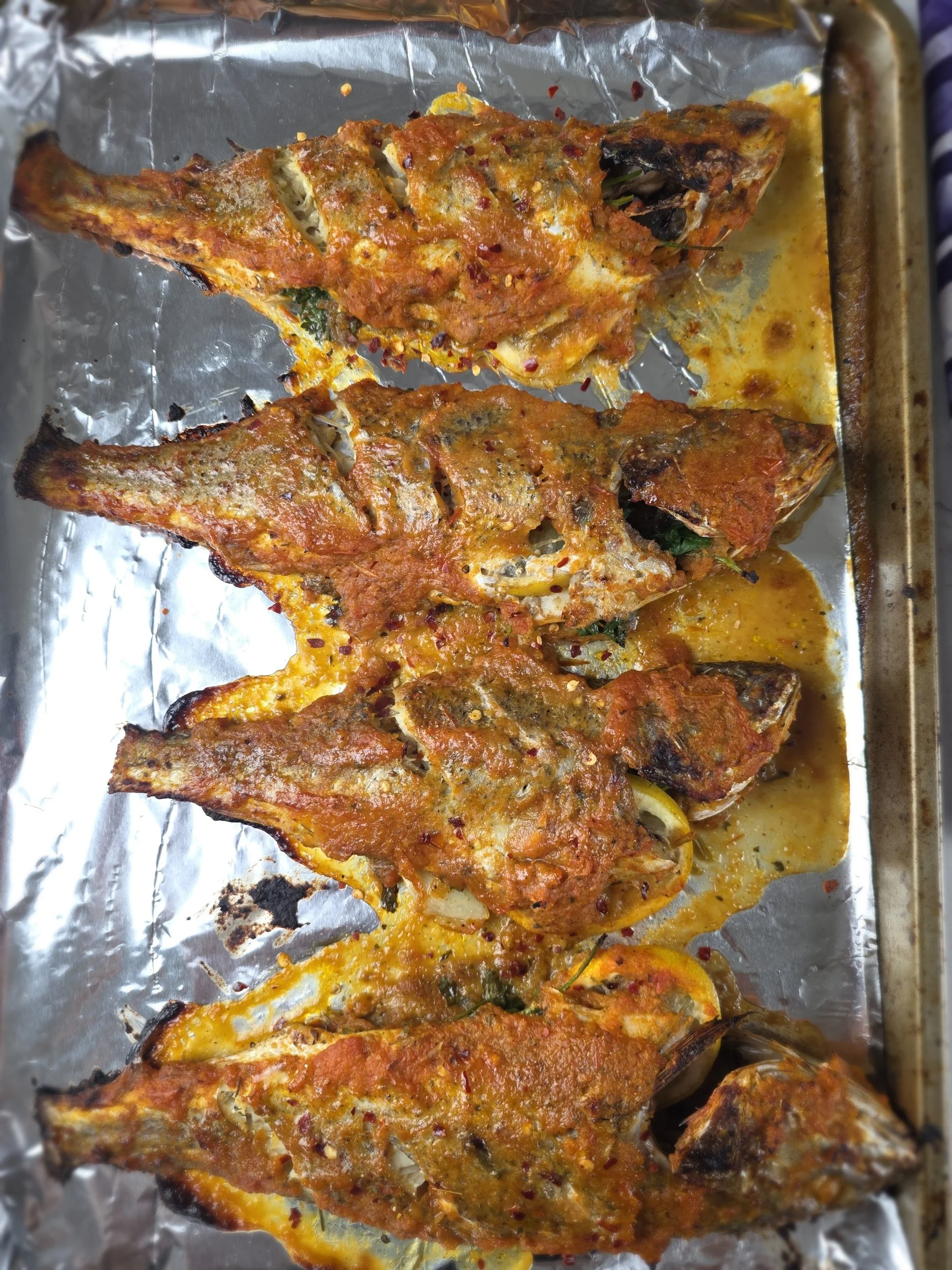
- Place the fish on a baking tray and spoon some of the muto sauce over the top. Cover loosely with foil and bake for 8–10 minutes. Remove the foil and cook for another 5 minutes.
- Brush with more muto sauce, season with chilli flakes, and broil for 2–3 minutes until slightly caramelized.
- Serve with extra sauce and your chosen sides, such as peanut butter rice, beans, avocado, or chili sauce.
Notes
- Roasting the vegetables is essential for deep flavor, don’t skip it.
- Blend for smooth sauce or mash for rustic texture.
- Avoid overcooking the fish; it cooks quickly and can dry out.
- Always mix peanut butter with hot water before adding to rice for smooth consistency.
Nutrition Facts
Calories
500Fat (grams)
25 gCarbs (grams)
40 gProtein (grams)
35 gI am not a certified nutritionist and any nutritional information on dontmissmyplate.com should only be used as a general guideline.
Zimbabwean Gango (Meat Medley and Greens)
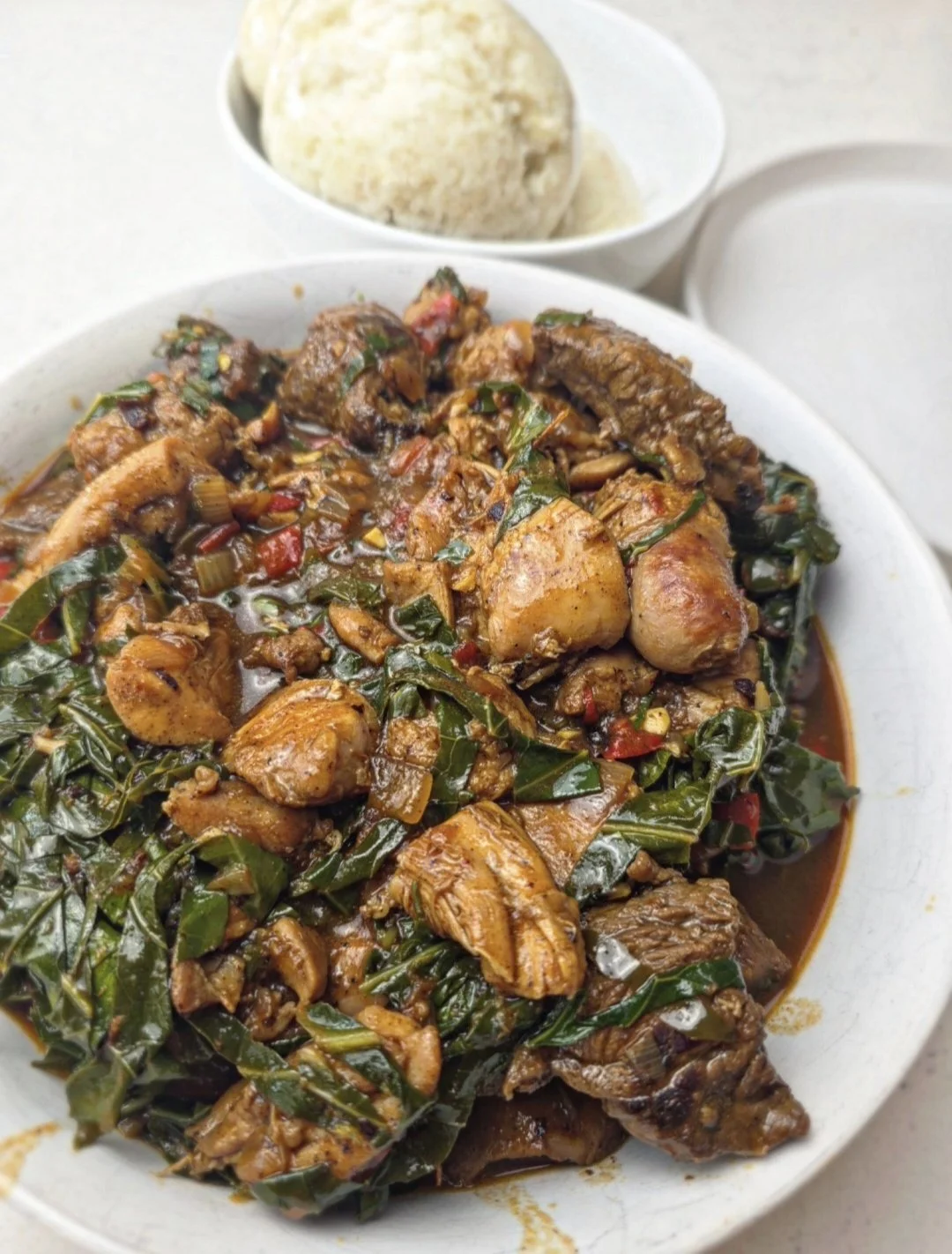
Gango is a deeply comforting and richly layered Zimbabwean dish that brings together multiple meats, cooked in a savory onion and tomato base (also known as muto) with tender greens. Traditionally made with a combination of beef, chicken, and sausage, it’s the kind of meal that feels abundant, hearty, and deeply satisfying. It’s not an everyday dish for many households! Gango is often reserved for weekends, gatherings, or moments when you want to cook something special and filling. On the other hand, it is also a resourceful dish, a way to use different cuts of meat and turn them into something rich, comforting and full of flavour.
In Zimbabwe, meat has historically been a luxury for many families, particularly in the rural areas, which is why dishes like gango feel so intentional. Instead of relying on heavy seasoning, the flavor often comes from the quality of the meat itself, combined with simple aromatics like onion, garlic, and tomato, and sometimes peppers. When done right, the result is a dish that tastes full, balanced, and naturally rich without needing much intervention.
This version uses sirloin beef chunks, chicken thighs, and sausage, finished with collard greens for a slight bitterness that balances the richness. It’s best served with sadza (traditional cormeal side), rice, or any starch that can soak up the sauce. For those who enjoy heat, a chili sauce or a fresh chili relish works beautifully on the side.
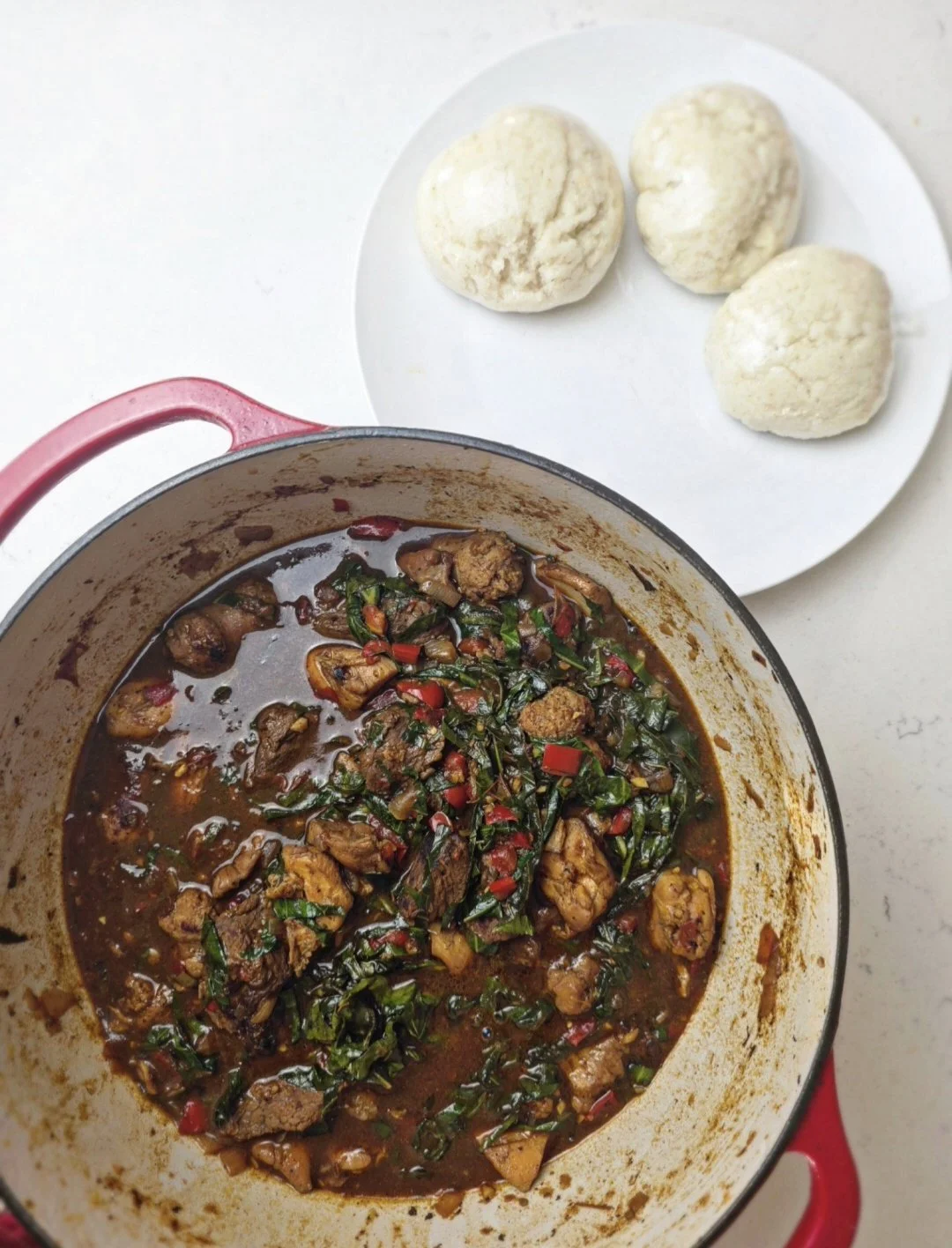
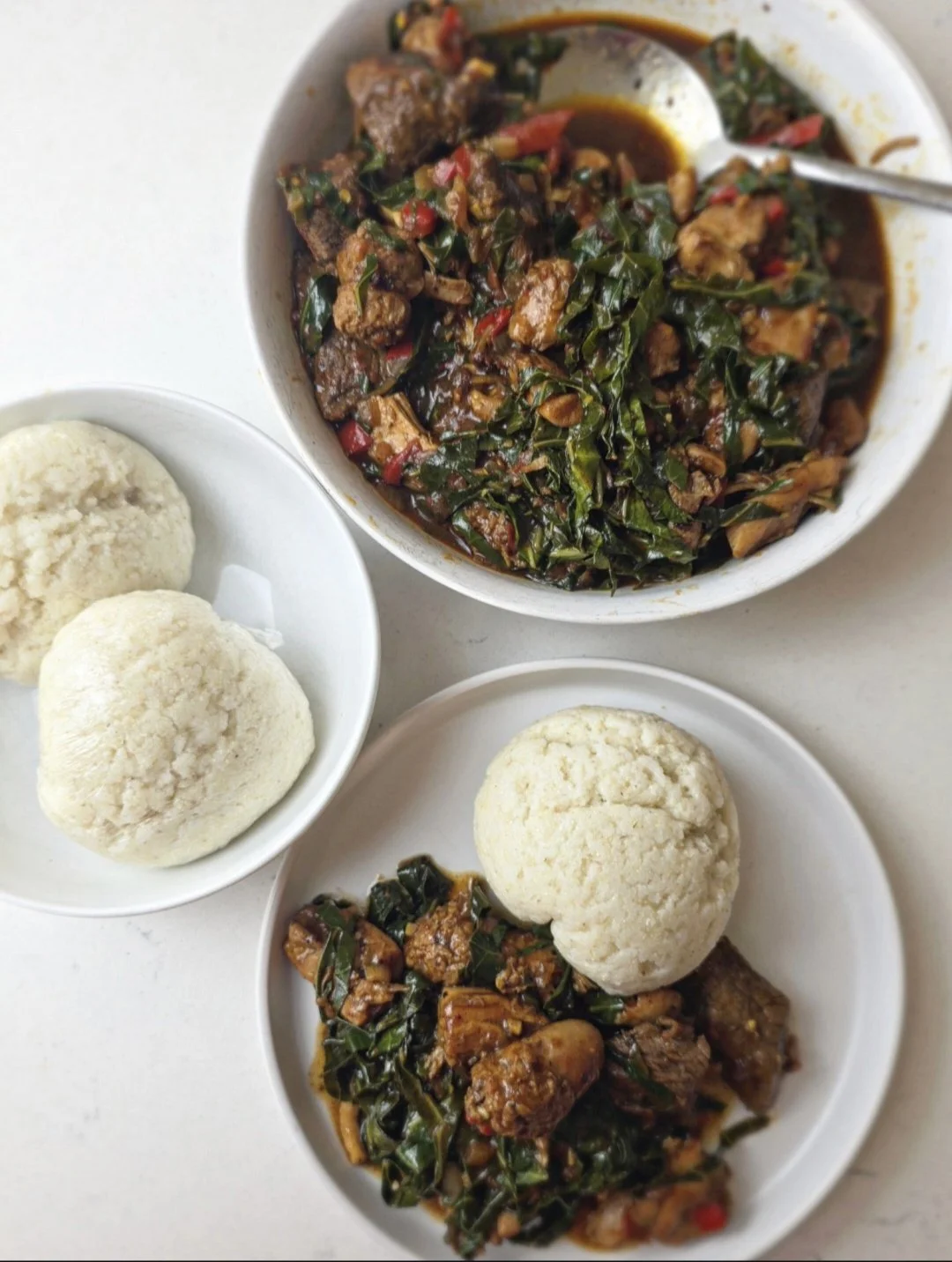
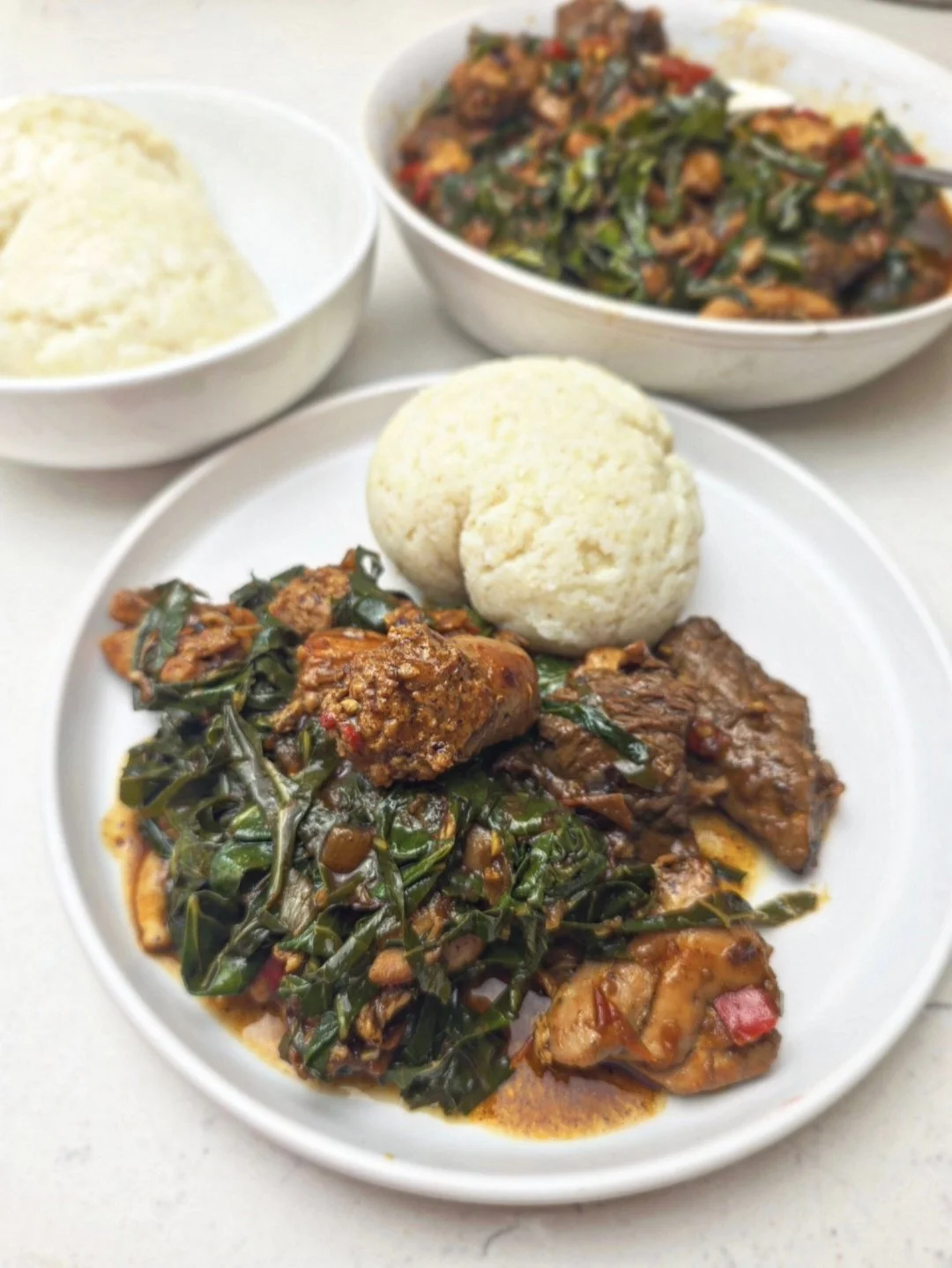

Zimbabwean Gango (Meat Medley with Greens)
A hearty Zimbabwean-style gango made with beef, chicken, sausage, and collard greens, simmered in a rich onion and tomato base. A comforting, special-occasion dish perfect with sadza or rice.
Ingredients
- 1–1.25 lbs chuck or sirloin beef (cut into chunks)
- 4 chicken thighs, skinless and boneless, chopped
- 2 sausages (boerwoers, bratwurst or similar), sliced
- 1 large onion, sliced
- 4 garlic cloves, minced
- 4 Roma tomatoes, chopped
- 2 tbsp tomato paste
- 1 red bell pepper, diced (optional)
- 1 chilli pepper, chopped (optional)
- 1 bunch collard greens, chopped
- 1 - 1 1/2 cups stock (or water + one 10g boullion cube)
- 1 beef stock cube (optional)
- 1 tsp curry powder
- 1 tsp paprika
- 1 tsp black pepper
- 2 tsp salt
- 1 tbsp Royco Usavi mix beef flavour (optional)
Instructions
- In a Dutch oven, sear the beef, chicken, and sausage in batches. Remove and set aside.
- In the same pot, cook onion and garlic until softened (3 min). Add the bell and chilli peppers, cook for 2-3 min.
- Add tomatoes and tomato paste. Cook until thick, glossy and slightly reduced (5 min).
- Add the stock cube, curry powder and spices. Cook 30–60 seconds and adjust as needed to taste.
- Return all meats to the pot. Add stock (do not fully submerge, you are not making a stew).
- Bring to a gentle simmer, cover slightly, and cook 30 minutes, removing the lid completely to reduce the liquid in the last 10 minutes.
- Stir in collard greens and cook for another 10–15 minutes until tender,
- Adjust seasoning again and reduce to desired consistency.
Notes
- Meat quality matters: If using supermarket beef, consider marinating lightly with salt, pepper, garlic and other spices beforehand.
- Stock matters: If flavor feels flat, use stronger stock or add a second cube sparingly.
- Don’t rush the reduction as flavor develops as liquid reduces.
- Best with sadza or rice.
Nutrition Facts
Calories
550Fat (grams)
35 gProtein (grams)
40 gI am not a certified nutritionist and any nutritional information on dontmissmyplate.com should only be used as a general guideline.

Sadza ReZviyo (Finger Millet Sadza) with Beef Stew
In Zimbabwean cuisine, sadza rezviyo (finger millet porridge) is a beloved staple, cherished for its deep, earthy flavor and rich nutritional benefits. Unlike traditional maize-based sadza, this version is made with finger millet (zviyo), an ancient grain packed with fiber, iron, and a nutty taste that pairs beautifully with hearty stews.
To complete this comforting meal, we’re serving it with nyama (beef stew)—slow-cooked to perfection with aromatic spices, tomatoes, and onions. The result is a wholesome, satisfying dish that embodies the warmth of Zimbabwean home cooking. Whether you’re reconnecting with your roots or exploring African flavors for the first time, this recipe is a must-try!

Zimbabwean beef stew, or nyama, is a comforting and flavorful dish that brings together tender beef, aromatic spices, and rich, savory gravy. Slow-cooked to perfection, this hearty stew features ingredients like tomatoes, onions, garlic, and fragrant herbs, creating a depth of flavor that pairs beautifully with traditional sides. Whether served with sadza rezviyo (finger millet porridge), rice, or dumplings, this dish is a staple in Zimbabwean households, offering warmth and nourishment in every bite. Perfect for family meals or special gatherings, this beef stew is a true celebration of Zimbabwean home cooking.


White Sadza vs. Zviyo (Finger Millet Sadza)
Both white sadza and zviyo (finger millet sadza) are popular staples in Zimbabwean cuisine, but they differ in terms of their base ingredients, texture, nutritional content, and cultural significance.
1.. Base Ingredient
White Sadza: Made from maize (corn) meal, white sadza is the most common form of sadza in Zimbabwe. The maize is ground into a fine powder, which is then cooked into a thick, smooth porridge.
Zviyo (Finger Millet Sadza): Made from finger millet, zviyo is a gluten-free grain that is milled into a finer flour. Finger millet is often used in traditional African dishes due to its rich nutritional profile and slightly nutty flavor.
2. Nutritional Content
White Sadza: While maize sadza provides a good source of carbohydrates, it is lower in nutritional value compared to finger millet. It lacks the higher levels of iron, calcium, and fiber found in finger millet.
Zviyo (Finger Millet Sadza): This is a highly nutritious alternative, packed with iron, calcium, magnesium, and dietary fiber. Finger millet is also considered to be more digestible and easier on the stomach, making it a great choice for individuals looking to boost their nutrient intake.
3. Texture and Flavor
White Sadza: The texture is typically smooth, firm, and dense, with a mild, neutral flavor that easily complements rich stews and vegetables.
Zviyo (Finger Millet Sadza): The texture is often a bit more grainy and hearty than white sadza. Its flavor is slightly **earthy and nutty**, offering a more complex taste that pairs well with savory dishes, especially those rich in spices.
4. Cultural and Regional Significance
White Sadza: As the more commonly consumed form of sadza in Zimbabwe, white sadza is seen as a symbol of comfort and is typically served with a variety of meats, vegetables, and stews.
Zviyo (Finger Millet Sadza): Traditionally consumed in rural areas, finger millet sadza is often considered a healthier option, especially for those with dietary restrictions or seeking to add more nutrients to their diet. In some regions, it’s also regarded as a more traditional meal.
Both types of sadza have their place in Zimbabwean cuisine, and the choice between them largely depends on personal preference and health considerations. Whether you enjoy the smooth comfort of white sadza or the nutrient-packed punch of zviyo, each offers a delicious base for a variety of flavorful dishes!
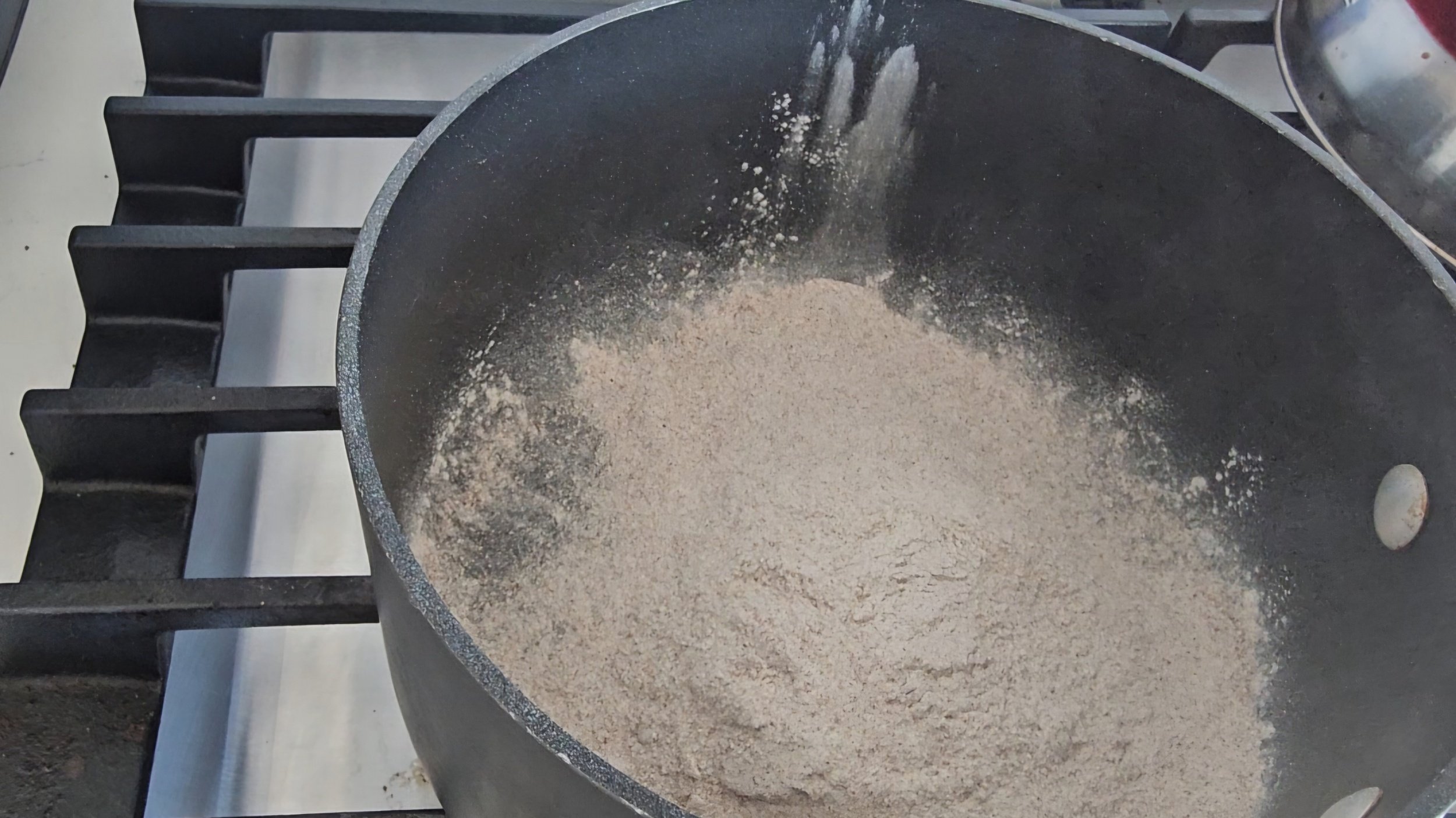




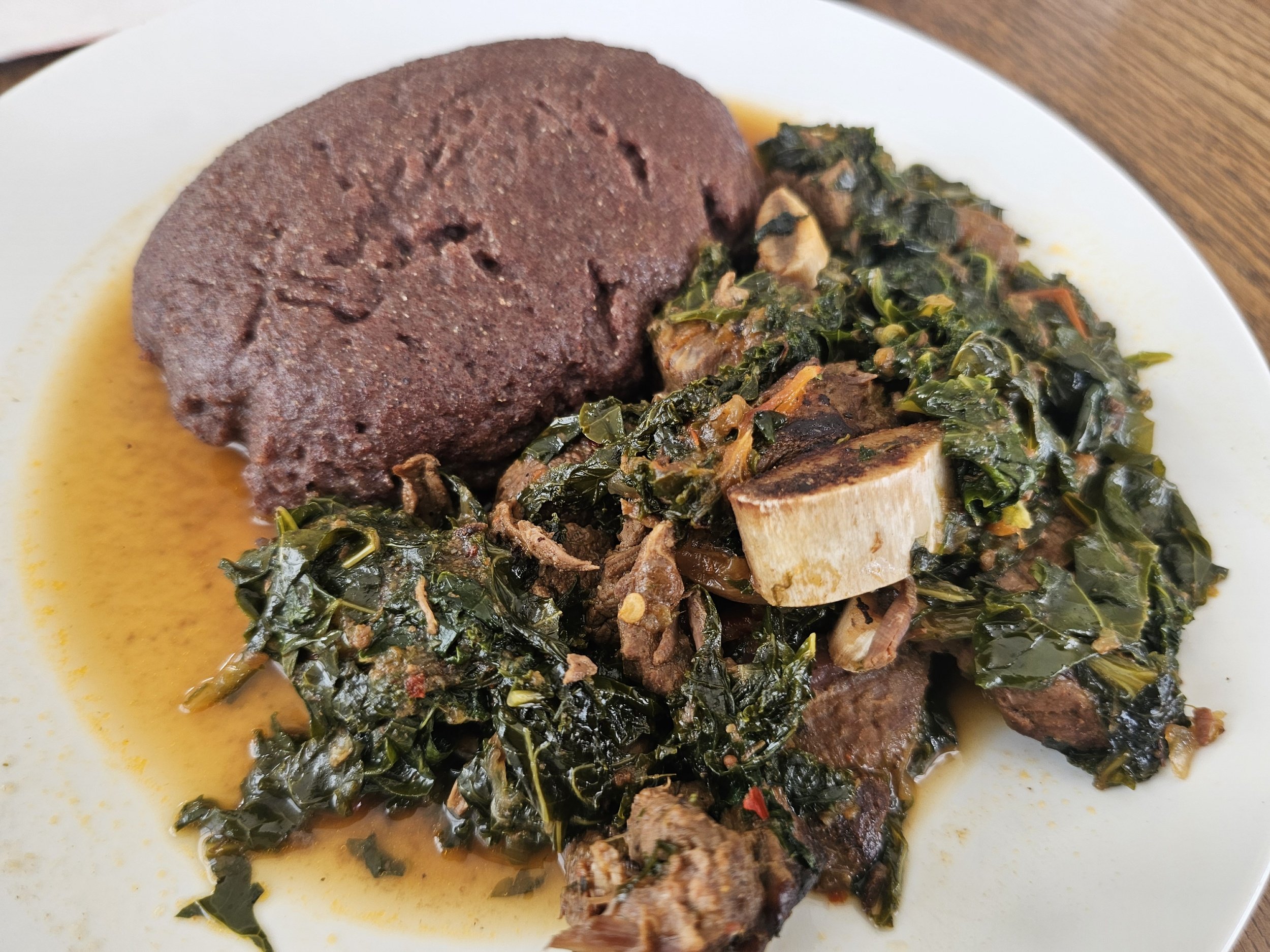
Zimbabwean Finger Millet Porridge (Sadza reZviyo) with Beef Stew
Sadza rezviyo (finger millet porridge) is a Zimbabwean staple with a deep, earthy flavor and rich nutrients. Paired with nyama—a slow-cooked beef stew with aromatic spices, tomatoes, and tender short ribs—this dish is comforting and flavorful. Simmered with herbs, chili, and a touch of red wine, the stew’s bold flavors perfectly complement the wholesome, nutty taste of sadza rezviyo. A must-try for those reconnecting with their roots or exploring African cuisine!
Ingredients
- 1 ½ lbs beef stew cubes
- 1 ½ lbs chuck short ribs
- 4 beef bouillon cubes
- 3–4 cups water
- 1/8 cup Worcestershire sauce
- 1/8 cup red wine or cooking wine
- 1 bunch kale, chopped
- 1 ½ yellow onions, diced
- 2 tomatoes, chopped
- 1 chili pepper, finely chopped
- 3 spring onions, chopped
- 2 garlic cloves, minced
- 2 tablespoons fresh thyme
- 2 tablespoons butter
- 2 tablespoons olive oil (more if needed)
- 1 tablespoon Royco Usavi Mix Beef (optional, all-purpose soup seasoning)
- 1 tablespoon dried oregano
- 1 tablespoon black pepper
- 1 tablespoon seasoning salt
- 1 tablespoon smoked paprika
- 1 tablespoon chilli flakes
- 1- 1 1/2 cups toasted rapoko (finger millet), millet, or sorghum meal (adjust as needed)
- ½ cup cold water
- 1 tsp seasoned salt
- 2 cups hot water (adjust as needed)
Instructions
- Prepare your vegetables by chopping the onions, tomatoes, garlic, and kale, and measure out your ingredients.
- Heat your Dutch oven or large pot, and melt your fats. Add the beef and cook until browned on both sides, then remove and set aside.
- Add the onions and cook for 1–2 minutes until translucent. Follow with the garlic and cook for another minute.
- Add the seasonings and spices, cooking for another 1–2 minutes to activate the flavors. Add a little extra oil if needed. Deglaze the pot by adding your liquids, scraping up the browned bits.
- Add the tomatoes and cook for another 2–3 minutes, then stir in the bouillon cubes.
- Return the beef to the pot, then add water in proportion to the bouillon cubes.
- Bring to a boil, then reduce to a simmer for 1 ½ – 2 hours, or until the meat is tender.
- Season with salt and pepper to taste, then add the kale. Stir and allow it to wilt. You can also add more chili flakes if desired.
- Simmer for 5 minutes, then remove from heat. Turn your attention to the Sadza.
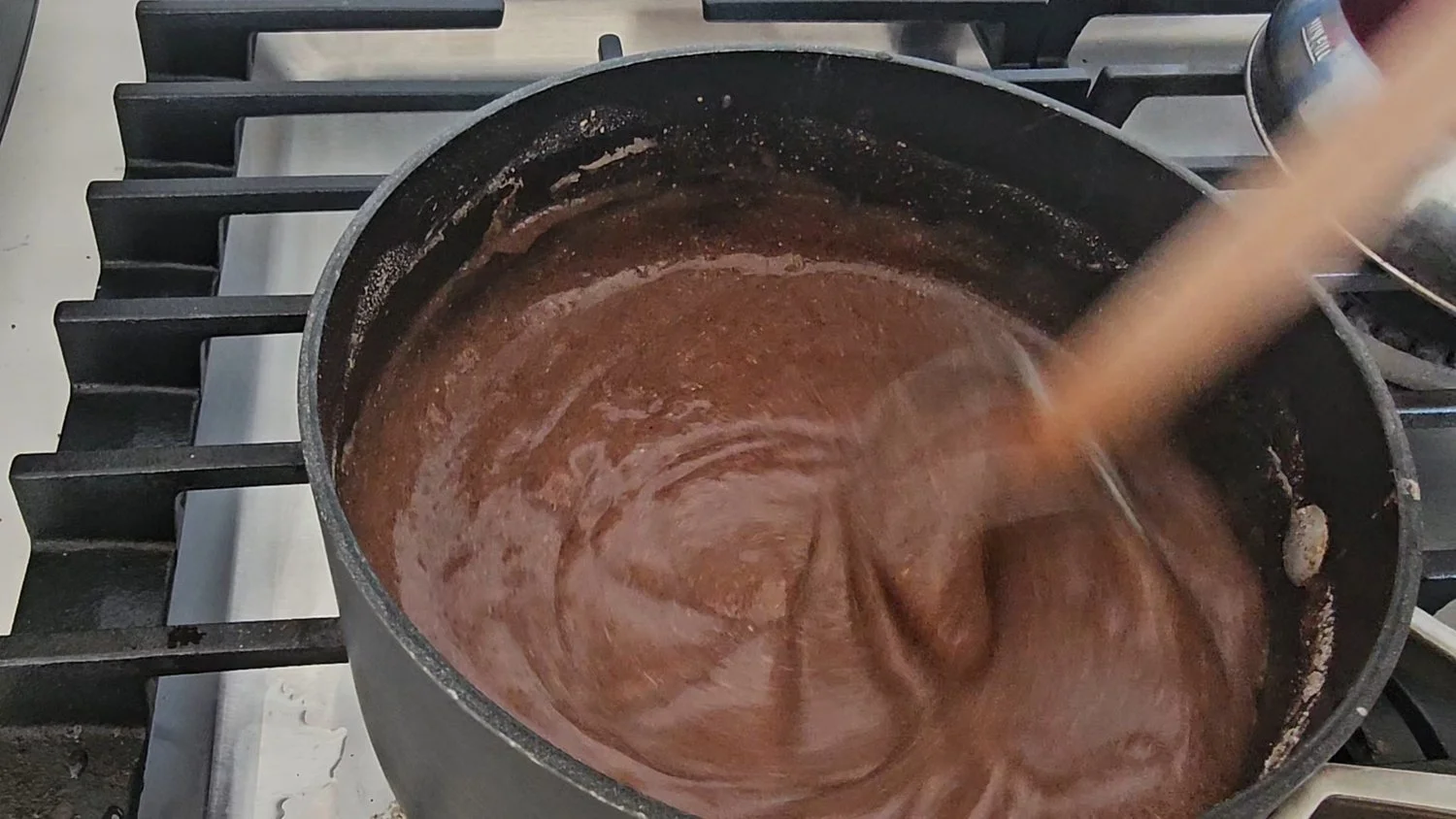
- In a non-stick or steel pot, use a wooden spoon or mugoti to mix the cold water with 1/2 cup of millet until a smooth paste forms. Add your seasoning.
- On medium to medium-high heat, gradually add water in 1/2-cup increments while stirring constantly until the porridge begins to simmer violently, or kwata. As the porridge thickens, switch to a whisk or musika to remove or prevent lumps—smoother porridge results in smoother sadza and a better eating experience!
- Cover the pot with a lid and let the porridge cook for 15–20 minutes on low-medium heat.
- Once the porridge is cooked, gradually add the remaining millet, 1/2 cup at a time, using the whisk or musika to incorporate the dry meal into the dough. Stop when you reach your preferred consistency—thick but not overly dry. For a softer texture, add less millet.
- Once fully combined, switch to the wooden spoon or mugoti. Using a figure-eight motion (kumona), aerate and knead the dough until it becomes smooth, slightly sticky, and clings to the spoon.
- Reduce the heat to low, partially cover the pot, and let it rest for about 5 minutes before serving.
- For an extra step, use cling wrap to shape the sadza into a smooth ball or oval before serving.
I am not a certified nutritionist and any nutritional information on dontmissmyplate.com should only be used as a general guideline.