
This pumpkin butter chocolate babka combines soft, buttery yeast dough with spiced pumpkin butter and rich chocolate, twisted into a beautiful loaf perfect for fall baking, weekend brunch, or holiday gatherings.
There is something special about pulling a beautifully twisted loaf of homemade babka out of the oven. With its golden crust, delicate layers and ribbons of filling running through the dough, babka looks like the kind of bake reserved for a professional bakery. But while it takes a little patience, making babka at home is more approachable than it might seem—and once you learn the basic technique, you can adapt it with all kinds of flavors. This Pumpkin Butter Chocolate Babka brings together two favorites for fall: warmly spiced pumpkin butter and rich chocolate. The pumpkin butter adds a concentrated pumpkin flavor with notes of cinnamon, ginger and nutmeg, while chocolate brings just the right amount of richness. All of it is wrapped in a soft, buttery yeast dough and shaped into a twisted loaf that looks impressive when sliced.
Unlike a quick bread, babka starts with an enriched yeast dough made with milk, eggs, sugar and butter. That means it needs time to rise, but the process is also what gives the bread its tender texture. After the dough is rolled out, the filling is spread over the surface, chocolate is added, and the dough is rolled, cut lengthwise and twisted together to create those signature swirls. If you've never made babka before, think of this as an intermediate baking project rather than an impossibly difficult one. The technique might look intimidating at first, but the individual steps are manageable. Your first loaf is a chance to learn how the dough feels, how tightly to roll it and how to shape the twist. Once you've made babka once or twice, the method becomes much more familiar—and you can start experimenting with your own fillings.
This pumpkin and chocolate version is lovely for a fall weekend baking project, a holiday breakfast or brunch, an edible gift, or a sweet addition to a dessert spread. You can bake it in a loaf pan for a taller, more structured shape, or shape it as a free-form twist on a lined baking sheet. The loaf-pan method is especially helpful for beginners because the pan supports the dough as it rises and bakes. And the flavor combinations don't have to stop here. For the holidays, try chocolate and pistachio, cinnamon sugar, or another thick fruit or nut-based filling. Once you understand the basic babka technique, there are plenty of ways to make it your own.
The most important things to remember are to give the dough enough time to rise, use a relatively thin layer of filling, and allow the loaf to bake all the way through before slicing. Babka is a project worth slowing down for: the twist makes it beautiful, but the combination of soft bread, spiced pumpkin and chocolate is what makes every slice worth it.
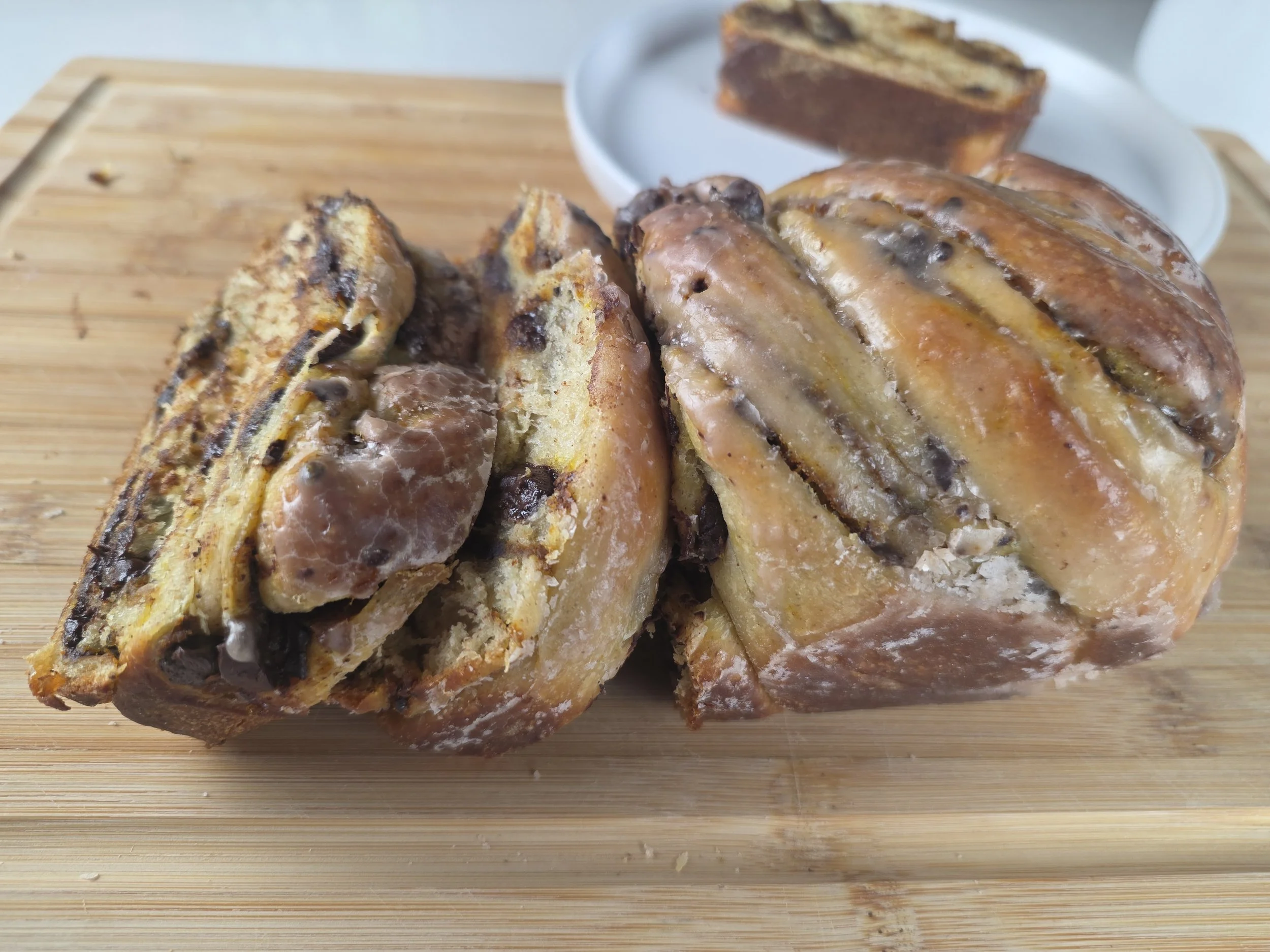

Pumpkin Butter Chocolate Babka
A buttery homemade yeast bread twisted with spiced pumpkin butter and chocolate. This fall-inspired babka makes a beautiful centerpiece for brunch, dessert or holiday baking.
Ingredients
- 1 (15-ounce) can plain pumpkin purée
- ⅓ cup packed light brown sugar
- 2 tablespoons granulated sugar
- 1 teaspoon ground cinnamon
- ¼ teaspoon ground ginger
- ⅛ teaspoon ground nutmeg
- Pinch of salt
- 1 teaspoon vanilla extract
- Water, only if needed to prevent sticking during cooking
- 2 cups (240 g) all-purpose flour, spooned and leveled
- 1¼ teaspoons instant yeast
- ¼ cup granulated sugar
- ½ teaspoon salt
- ½ teaspoon ground cinnamon
- ⅛ teaspoon ground nutmeg
- 1 large egg, room temperature
- 1 large egg yolk, room temperature
- ½ cup whole milk, lukewarm
- 5 tablespoons unsalted butter, softened
- 1 teaspoon vanilla extract
- About ½ cup cooled pumpkin butter, spread in a thin layer
- ⅓–½ cup chopped chocolate or chocolate chips (approximately 55–85 g, depending on the chocolate and how generously you fill it)
- 2 tablespoons granulated sugar
- 2 tablespoons water
- 3–4 green cardamom pods, lightly crushed
Instructions
- ### 1. Make the pumpkin butter
- Add the pumpkin purée, brown sugar, granulated sugar, cinnamon, ginger, nutmeg and salt to a saucepan. Cook uncovered over low heat, stirring frequently, until thickened and spreadable. If the mixture begins sticking before it has thickened, add a small splash of water as needed. Stir in the vanilla at the end. Cool completely before using in the dough.
- ### 2. Make the dough
- Combine the flour, instant yeast, sugar, salt, cinnamon and nutmeg in the bowl of a stand mixer. Add the egg, egg yolk, lukewarm milk and vanilla. Mix with the dough hook until a rough dough forms.
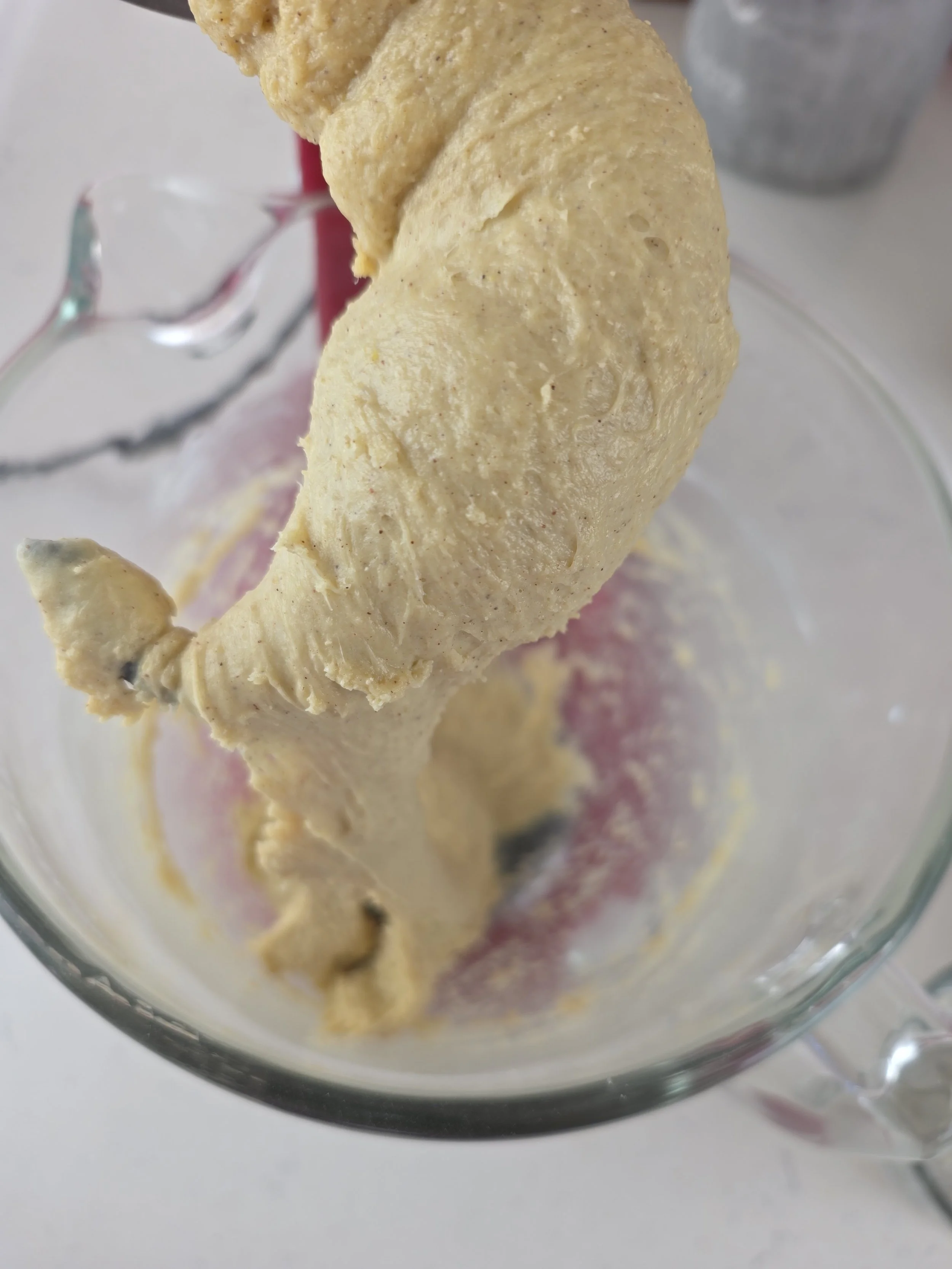
- Add the softened butter gradually, mixing until incorporated. Knead until the dough is smooth, stretchy and elastic. It should feel soft and slightly tacky, not wet like batter. Avoid adding extra flour too quickly; a soft enriched dough is normal.
- ### 3. Let the dough rise
- Transfer the dough to a lightly greased bowl, cover and leave in a comfortably warm, draft-free place until visibly expanded and approximately doubled in size. This may take longer in a cool kitchen. Use the dough's appearance and expansion, rather than the clock alone, to judge the rise.
- The environment should be gently warm, not hot. Avoid putting the bowl somewhere that heats the dough excessively; excessive heat can damage yeast and soften the butter.
- ### 4. Fill and shape the babka
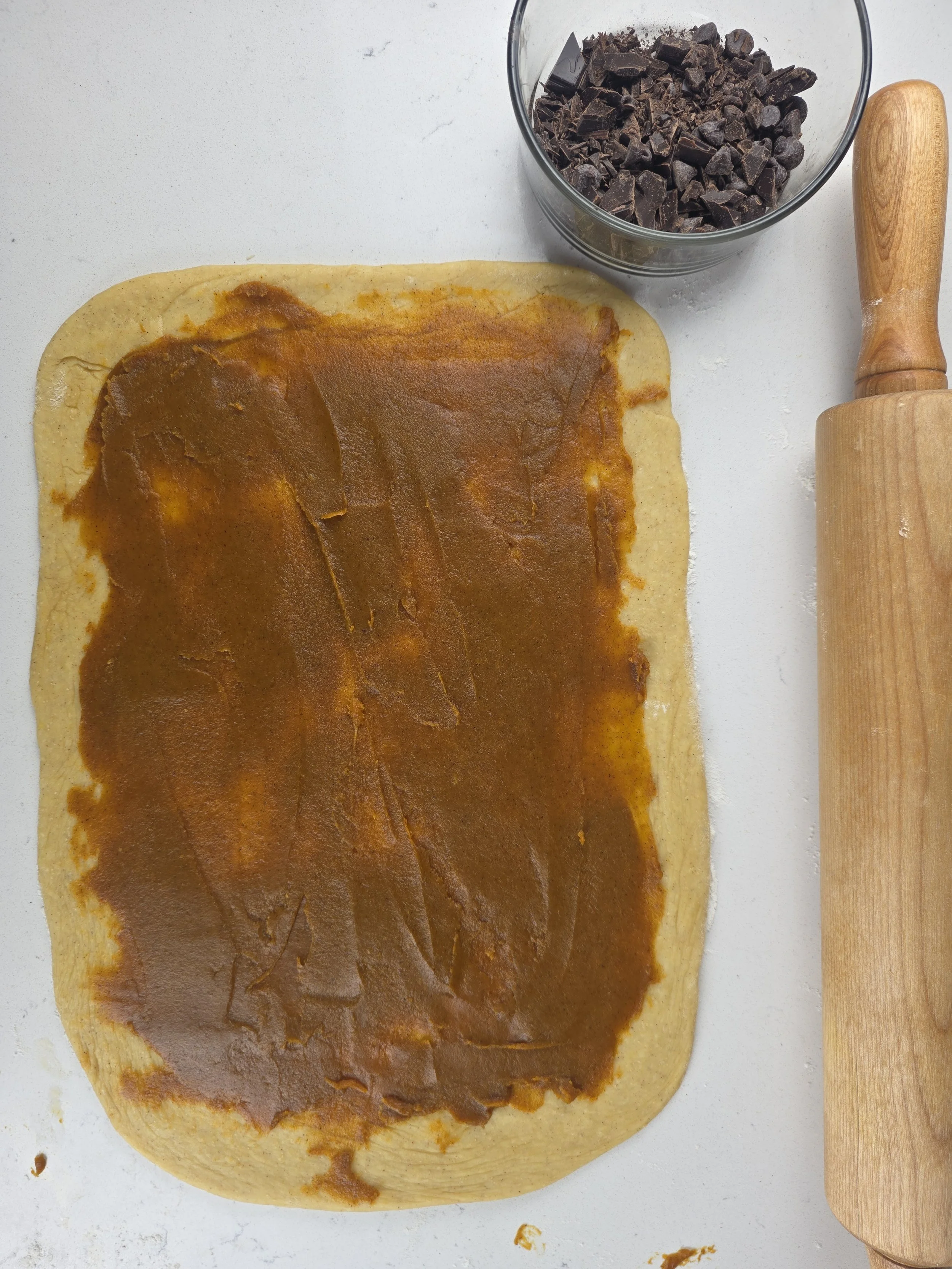
- Lightly flour the work surface and roll the dough into a rectangle approximately 10 × 14 inches. Spread a thin, even layer of completely cooled pumpkin butter over the dough, leaving a small border around the edges. Scatter the chocolate evenly over the filling.
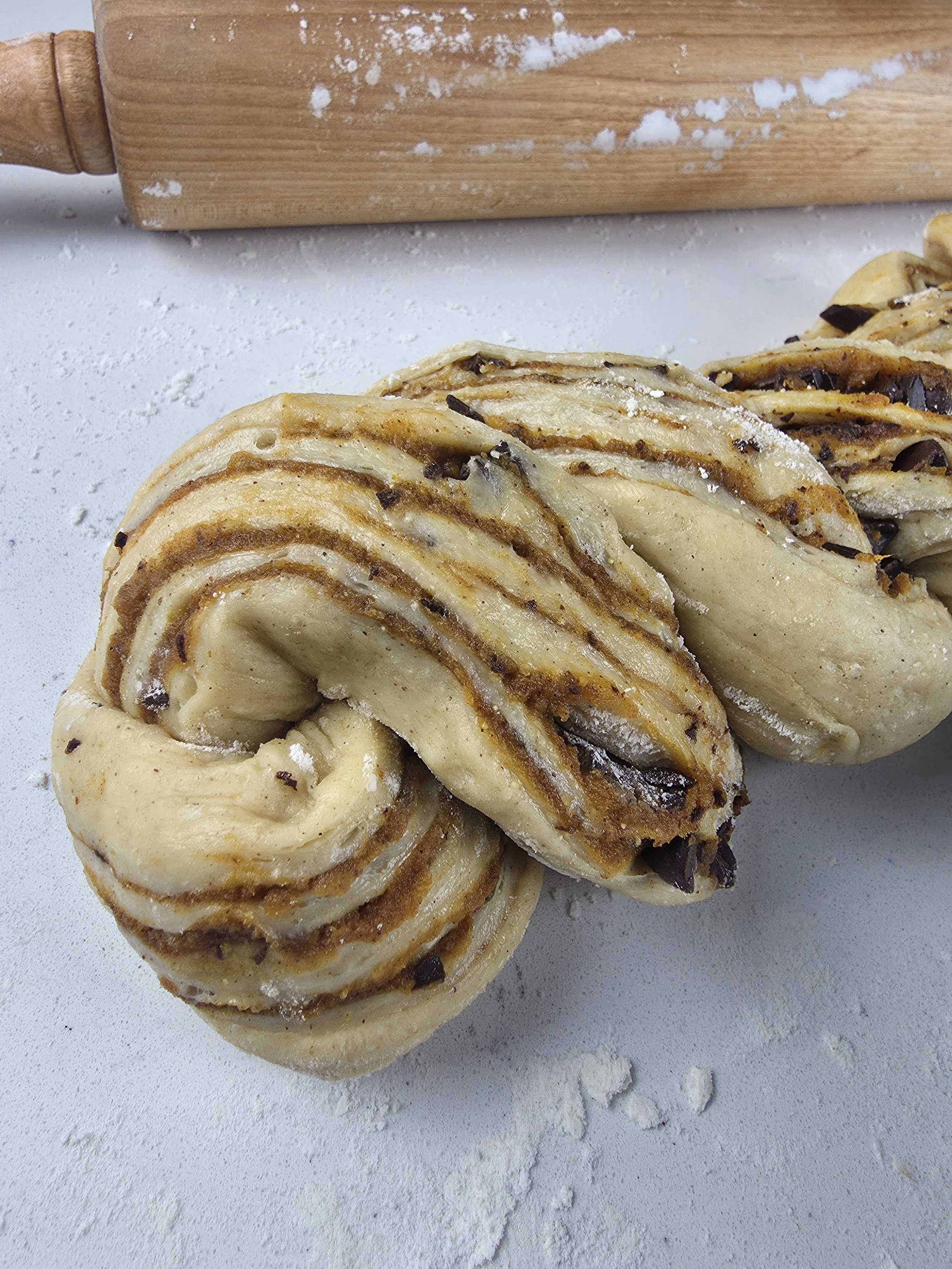
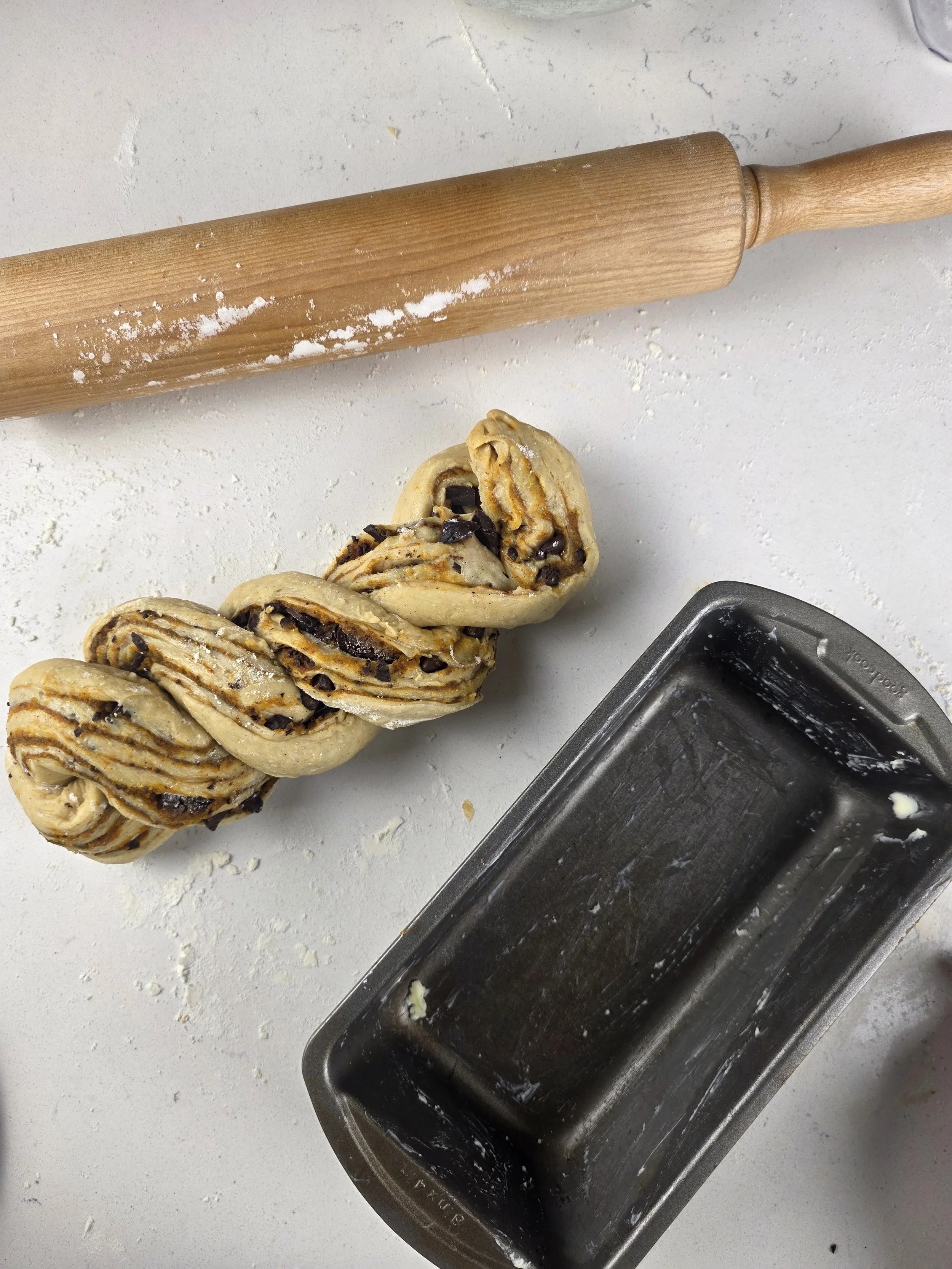
- Roll the dough tightly from one long edge into a log. Pinch the seam closed. With a sharp knife, cut the log lengthwise into two long strands, exposing the layers. Place the cut sides facing upward and twist the strands around one another, keeping the exposed layers facing up as much as possible. Tuck the ends underneath.
- Transfer to a greased or parchment-lined 9 × 5-inch loaf pan. Do not overfill the pan.
- ### 5. Proof the shaped loaf
- Cover loosely and let the shaped loaf rise in a comfortably warm place until noticeably puffy. The strands should look expanded and relaxed, rather than dense and rigid. Depending on room temperature and yeast activity, this may take 45–90 minutes or longer. Do not rely on a fixed time if the loaf has not visibly expanded.
- ### 6. Bake — timing requires verification
- Preheat the oven to 350°F (175°C). Place the loaf on the center rack.
- The expected bake may be around 45–60 minutes, but this range has not been confirmed for this exact recipe. Start checking the loaf after about 35–40 minutes. If the top is already deeply golden while the middle still needs time, tent it loosely with aluminum foil and continue baking.
- Do not remove the loaf just because the crust is browned or a skewer comes out clean near a pocket of chocolate. Check the bread itself in more than one central spot, avoiding obvious chocolate or pumpkin filling. An instant-read thermometer can help when placed in the bread dough rather than the filling; a reading around 190–200°F (88–93°C) is a useful indicator for enriched bread, but it must be combined with other doneness cues.
- Look for a well-set loaf that feels baked rather than soft and compressed in the center. If the center still looks wet, pasty or dough-like, continue baking with the top tented as needed. Let the loaf cool before cutting so the crumb has time to set.
- ### 7. Make the cardamom syrup
- While the babka bakes, combine the sugar, water and crushed cardamom pods in a small saucepan. Bring to a gentle simmer for 1–2 minutes, then remove from the heat and let steep for 5–10 minutes. Strain out the pods.
- ### 8. Finish and cool
- Brush the syrup over the loaf while it is still hot. Let the babka cool in the pan briefly, then transfer it to a wire rack to cool completely before slicing. The filling can remain soft while warm, so allow the loaf to set before judging the final texture.
Notes
- Temperature: Cool the pumpkin butter completely before spreading it over the dough. A warm filling can soften the butter in the dough and make shaping more difficult.
- Filling: Use a thin, even layer of filling. Too much pumpkin butter can make the center damp and the strands slippery. Distribute the chocolate evenly.
- Proofing: Allow enough time for both rises. Rising times vary with room temperature. Look for visible expansion and a puffy dough rather than relying on the clock alone.
- Baking: Watch the loaf as it bakes. If the top browns before the center is baked, loosely tent it with foil and continue baking. Check the bread itself in multiple spots, avoiding pockets of chocolate or pumpkin filling. A thermometer reading alone may be misleading if it lands in the filling.
- Cooling: Cutting while the babka is hot can make the crumb appear gummy. Cooling will not, however, fix genuinely underbaked dough.
- Storage:
- Room temperature: Once completely cool, wrap tightly and store for up to 2 days.
- Refrigerator: Store tightly wrapped for a few additional days if needed, although refrigeration may make the bread firmer and drier.
- Freezer: Wrap the cooled loaf or individual slices well and freeze for up to 2 months for best quality. Thaw before serving and warm gently if desired.
- Leftover pumpkin butter: Refrigerate promptly in a clean, covered container and use within 3 to 4 days, or freeze for longer storage. Homemade pumpkin butter is not shelf-stable and should not be stored at room temperature in a sealed jar.
Nutrition Facts
Calories
300Fat (grams)
12 gCarbs (grams)
42 gSugar (grams)
19 gProtein (grams)
5 gSodium (milligrams)
160 mg