
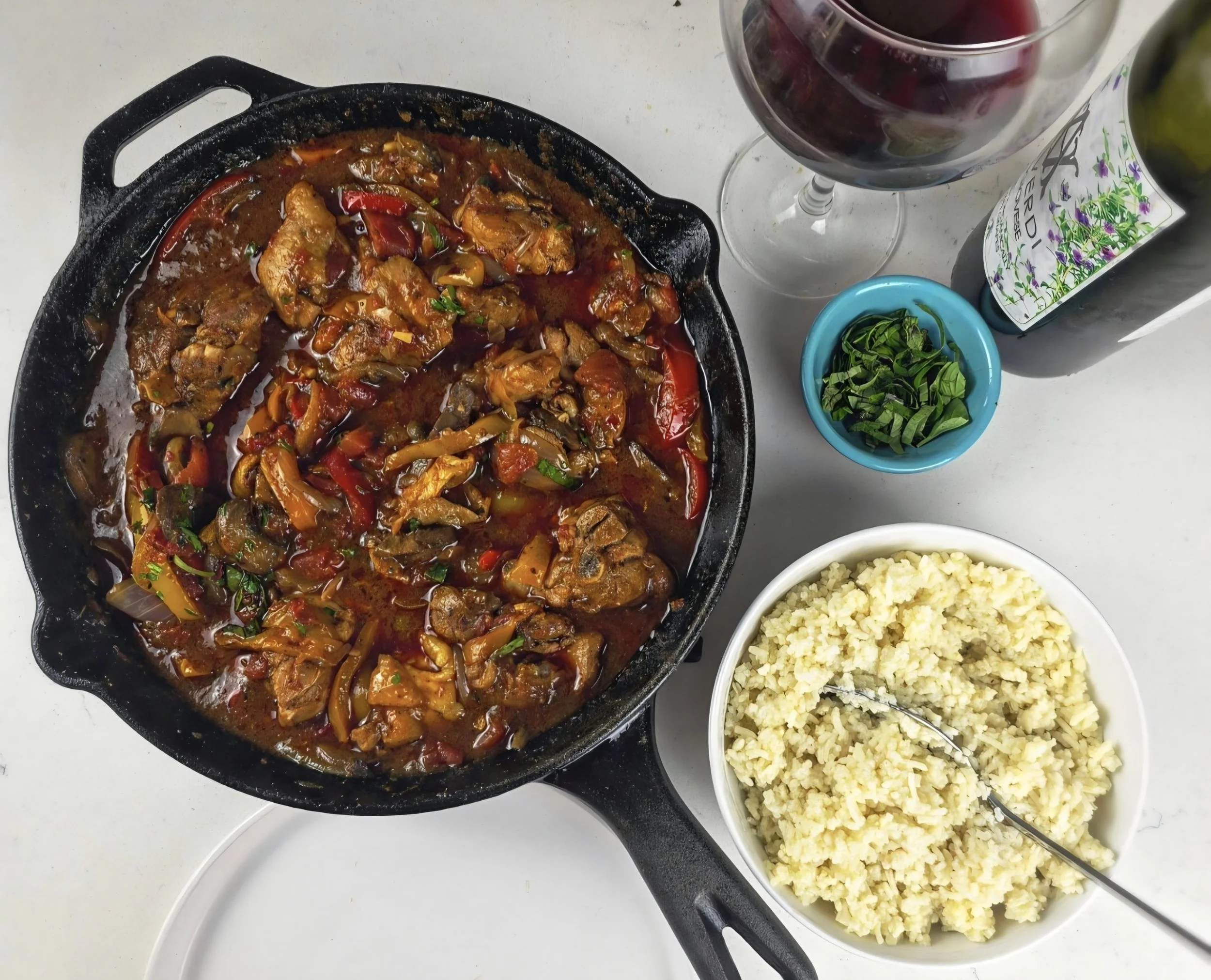
Mum's Chicken Cacciatore
Cacciatore means "hunter's style" in Italian — a rustic, slow-cooked braise that has fed Italian families for generations. The classic version varies by region: in Rome it's white wine and rosemary, in the north you'll find olives and capers, and in the south tomatoes take center stage. It's the kind of dish that belongs to whoever is making it, which is probably why it traveled so well.
I grew up eating my mum's version on Sunday evenings, occasionally and always memorably. Bell peppers, tomatoes, juicy cuts of bone-in chicken, a rich deeply spiced sauce served over rice. It was bold and comforting and unlike anything else she made. Looking back, I realize she was introducing me to global flavors before I had any language for it. I just knew it tasted different in the best way.
Years later I ate cacciatore stuffed inside a trapizzino in Rome, the iconic Roman street food that folds thick crispy triangular bread around slow-cooked fillings. The Roman version was white wine, rosemary, no tomato. I came home thinking about it and immediately called my mom. Her version is nothing like what I ate in Rome, and that's exactly the point. Some dishes don't need to be reinvented. They just need to be made.
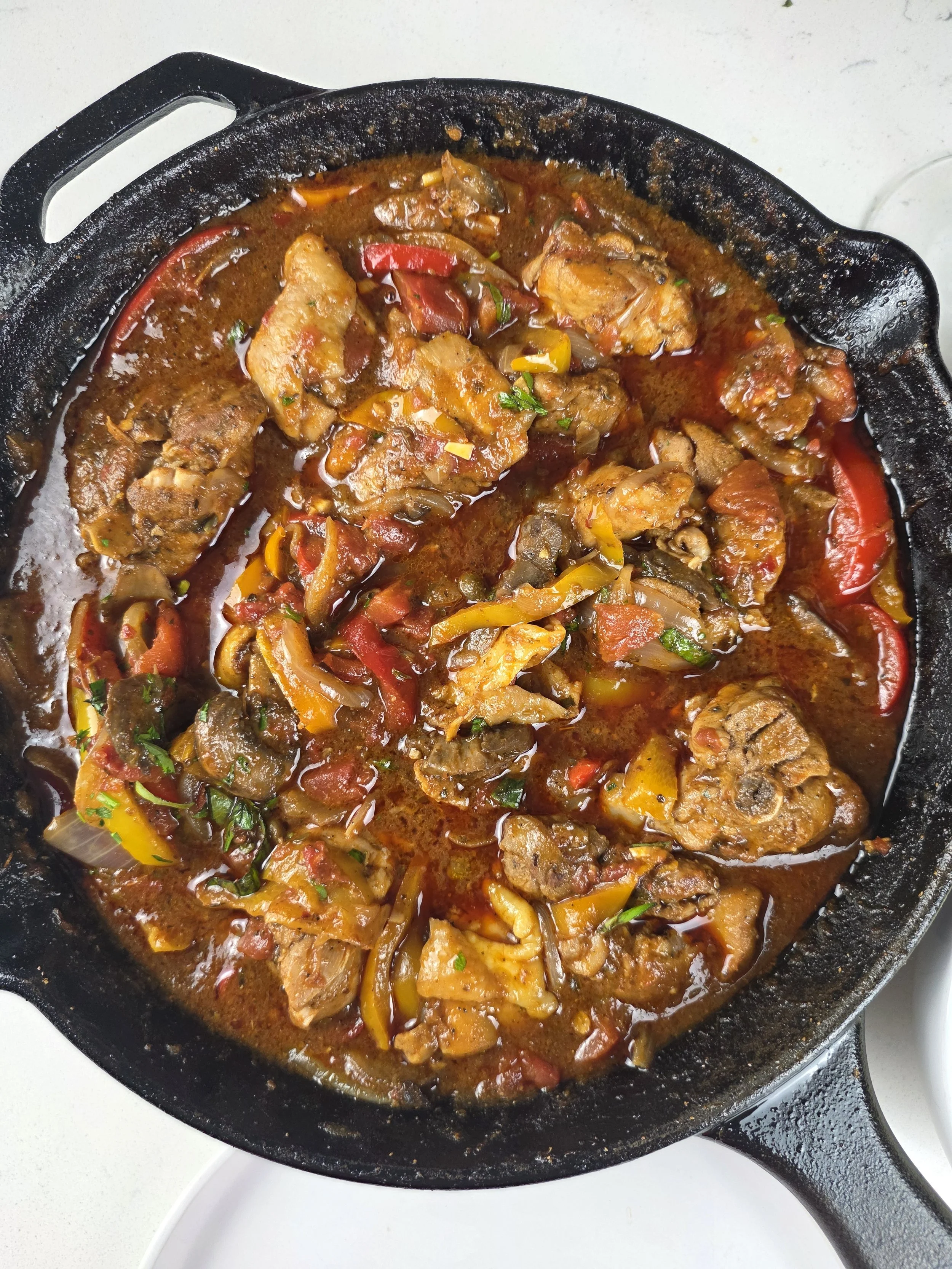
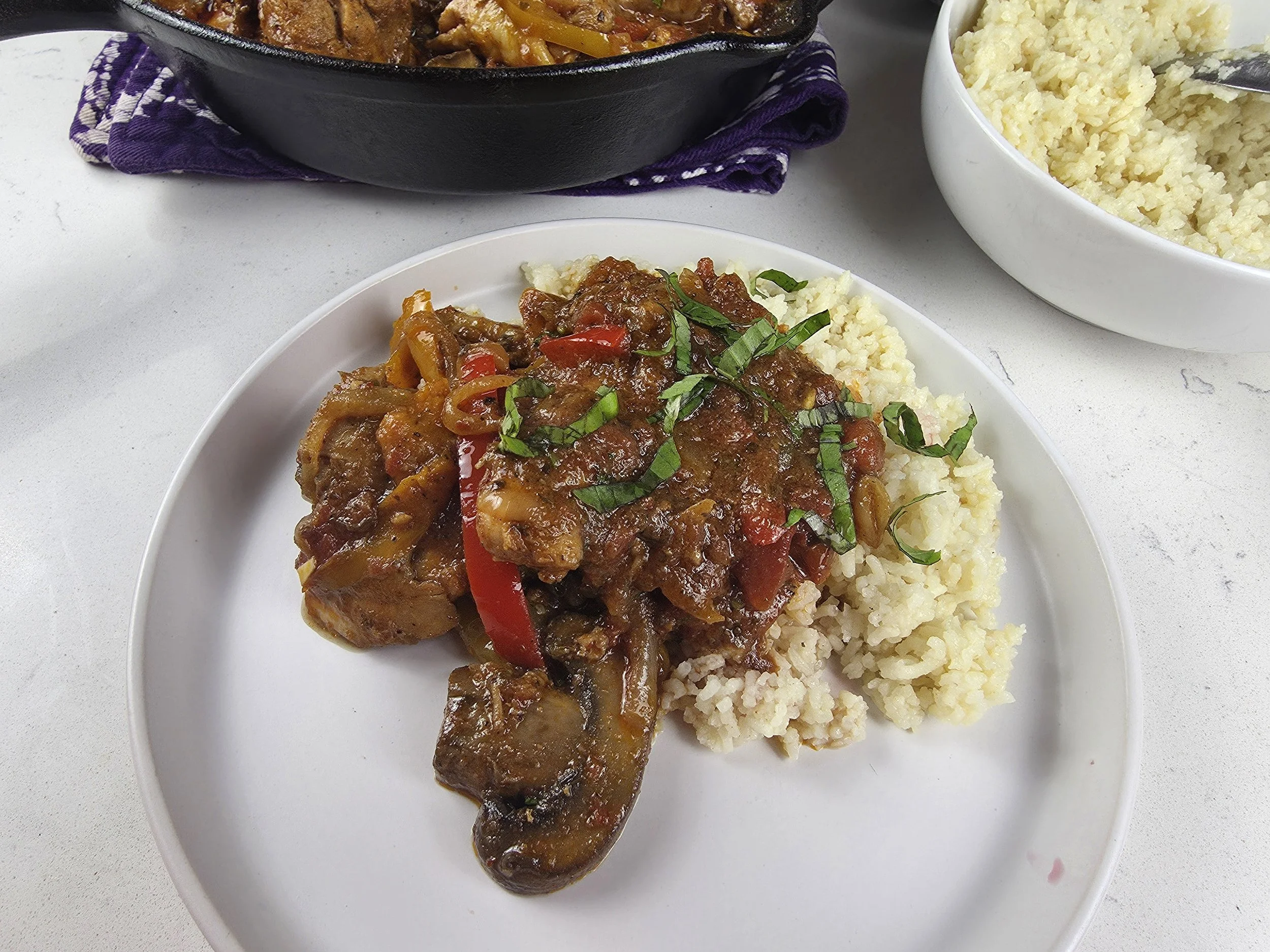

Mom's Chicken Cacciatore
Bone-in chicken thighs braised in a spiced tomato and bell pepper sauce with mushrooms, capers, and a splash of red wine. My mom's version of cacciatore — bold, simple, and served over rice.
Ingredients
- 4 large bone-in, skin-on chicken thighs
- 1 teaspoon chicken spice
- 1 teaspoon salt
- 1 teaspoon black pepper
- 1 teaspoon garlic powder
- 1 teaspoon onion powder
- 1 teaspoon dried oregano
- 1 teaspoon paprika
- 1 tablespoon butter
- 1 tablespoon olive oil
- 1 medium yellow onion, sliced into half moons
- 3 garlic cloves, finely minced
- 1 tablespoon tomato paste
- 1/2 red bell pepper, sliced
- 1/2 green bell pepper, sliced
- 1/2 orange bell pepper, sliced
- 1 cup button mushrooms, sliced
- 1 can (14 ounces) diced tomatoes with oregano and basil
- 1/2 cup red wine
- 1 cup chicken broth (or 1 cup water plus 1 teaspoon bouillon paste)
- 1 teaspoon dried oregano
- Fresh basil leaves, to finish
- Salt and black pepper, to taste
- Cooked rice, for serving
Instructions
- Combine chicken spice, salt, black pepper, garlic powder, onion powder, oregano, and paprika in a small bowl. Divide in half, and use one half to season the quartered chicken thighs and reserve the other half for later. Let chicken sit at room temperature for at least 5 minutes while you prep remaining ingredients.
- Heat 1 tablespoon butter and 1 tablespoon olive oil in a large Dutch oven or heavy-bottomed pot over medium-high heat until the butter is foaming. Add chicken skin-side down and cook, undisturbed, until deeply golden brown, 4–5 minutes. Flip and cook the other side until lightly browned, 2–3 minutes. Transfer to a plate and set aside.
- In the same pot over medium heat, add onion and garlic. Cook, stirring occasionally, until softened and translucent, 2–3 minutes.
- Add the reserved spice blend and tomato paste. Cook, stirring constantly, until slightly darkened and fragrant, 1–2 minutes.
- Add bell peppers and mushrooms. Cook, stirring occasionally, until peppers are just softened, 3–4 minutes.
- Pour in drained canned tomatoes, red wine, and water with bouillon paste. Add capers. Stir to combine, scraping up any browned bits from the bottom of the pot. Bring to a gentle boil over medium-high heat.
- Return chicken to the pot skin-side up, nestling it into the sauce. The liquid should come at least about halfway up the chicken — add a small splash more water if needed. Add dried oregano.
- Reduce heat to low, partially cover, and simmer until chicken is cooked through and reaches an internal temperature of 165°F, 30–35 minutes.
- If the sauce is still too thin once chicken is cooked through, remove chicken and set aside. Increase heat to medium-high and reduce sauce uncovered for 5–10 minutes until thickened to your liking. Return chicken to the pot and warm through for 2 minutes.
- Squeeze fresh lemon over the top, scatter fresh basil, adjust seasoning with salt and pepper, and serve hot over rice.
Nutrition Facts
Calories
480Fat (grams)
24 gCarbs (grams)
18 gFiber (grams)
4 gProtein (grams)
38 gI am not a certified nutritionist and any nutritional information on dontmissmyplate.com should only be used as a general guideline.
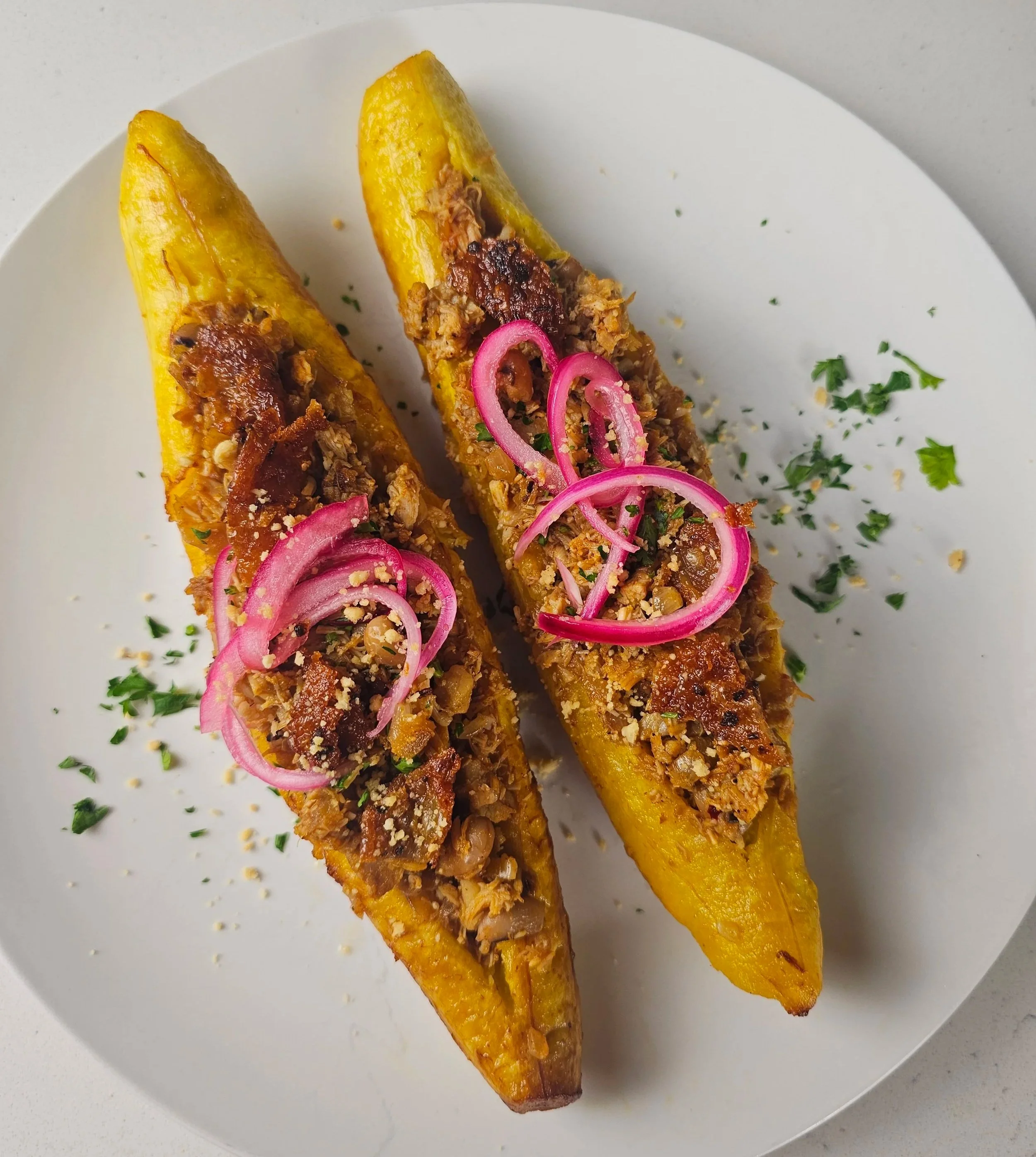
Suya-Spiced Chicken Plantain Boats
I am obsessed with plantains. They are incredibly versatile, and having a few on hand is never a bad idea. Whether they're fried, baked, mashed, or stuffed, plantains can easily become the foundation of a quick meal or a show-stopping dish.
Plantain boats are one of those recipes that naturally invite creativity. A simple base of ripe plantains is transformed into something bold, layered, and deeply satisfying. In this version, leftover rotisserie chicken is reimagined into a 30-minute dish that draws inspiration from Caribbean plantain traditions and the peanut-forward, spice-driven flavors found across parts of Africa.
As a Zimbabwean, I grew up with dishes like huku nedovi, where peanuts play a central role in creating richness and depth. While this recipe is not a traditional Zimbabwean dish, the combination of peanuts and warming spices immediately feels familiar to me. That same appreciation for nutty, savory flavors is part of what drew me to suya (yaji) seasoning, a West African spice blend known for its smoky, bold character and use of ground peanuts.
Across the Caribbean and Latin America, plantains are a foundational ingredient used in both sweet and savory preparations. Their natural sweetness makes them ideal for balancing spice, acidity, and richness. Plantains are also enjoyed throughout many African countries, often fried, roasted, or served alongside stews and grilled meats, making them a natural bridge between the influences behind this dish.
The filling combines shredded rotisserie chicken with suya seasoning, tomato paste, Worcestershire sauce, and aromatics, then is lightly bound with peanut butter for texture and cohesion. Quick-pickled red onions provide brightness and acidity, while crispy chicken skin is repurposed as a crunchy topping that reinforces the roasted flavor of the bird. A final sprinkle of crushed peanuts echoes the nutty notes in the seasoning and ties the dish together.
Designed for speed, flexibility, and maximum flavor, these Suya-Spiced Chicken Stuffed Plantain Boats show how a handful of pantry ingredients and leftovers can be transformed into something vibrant, visually striking, and deeply satisfying in under 30 minutes.

Suya-Spiced. Chicken Plantain Boats
Sweet fried plantains stuffed with suya-spiced rotisserie chicken, crunchy peanuts, crispy chicken skin, and tangy quick-pickled red onions. This easy 30-minute recipe brings together bold flavors, contrasting textures, and a creative use for leftover chicken.
Ingredients
- 4 ripe yellow plantains with black spots (not overly ripe to hold structure)
- Peanut oil, for frying (shallow fry)
- Crispy chicken skin, from rotisserie chicken
- 2 cups shredded rotisserie chicken (mostly thigh/leg meat, some breast)
- 1 small yellow onion, finely diced
- 2 garlic cloves, minced
- 1 tbsp suya spice
- 1 tsp smoked paprika
- 2 tsp tomato paste
- ½ tsp chicken boullion paste
- 1 tbsp Worcestershire sauce
- 1-2 tbsp peanut butter
- 2–3 tbsp to ½ cup water (adjust if chicken is more or less dry)
- Salt and black pepper, to taste
- 1 tsp chili flakes, to taste (optional)
- 2 tbsp crushed roasted peanuts (optional garnish)
- Fresh parsley, chopped (optional garnish)
- Pickled red onions (store bought or homemade, optional garnish)
- ½ large red onion
- ½ cup vinegar
- ½ cup hot water
- ½ tsp salt
- 1 tsp sugar
- 1-2 bay leaves
- 1 tsp black peppercorns
- 1 tbsp grenadine
Instructions
- In a bowl or jar, combine the vinegar, hot water, sugar, salt, bay leaf, peppercorns, and grenadine. Add the sliced red onion and stir well. Set aside while you prepare the remaining ingredients.
- Place the chicken skin in a cold skillet and set over medium heat. Cook for 5–8 minutes, turning occasionally, until crisp and golden brown. Transfer to a plate and set aside. You can chop finely or into shards.
- Heat at least 1 inch of peanut oil in a skillet over medium to medium-low heat. Fry the peeled plantains for 2–3 minutes, turning occasionally, until golden and softened. Remove from the oil and let rest for 3–5 minutes.
- Using a sharp knife, cut a lengthwise slit down the center of each plantain, being careful not to cut all the way through.
- Using the back of a spoon, gently press and widen the opening to create a deep cavity for the filling. If necessary, trim a thin slice from the bottom so the plantains sit flat.
- Heat a skillet over medium heat. Add the diced onion and cook for about 2 minutes, until softened.
- Add the garlic and cook for 30 seconds more.
- Stir in the tomato paste and boullion paste. Cook for 1–2 minutes, until the mixture darkens slightly and becomes fragrant.
- Add the shredded chicken, suya spice, paprika, chili flakes, salt, and black pepper. Stir to combine.
- Add the peanut butter and 2–3 tablespoons, or up to half a cup of water. Mix until evenly coated. Cook for 2–3 minutes, until thick, moist, and slightly sticky.
- Add the beans and Worcestershire sauce, and finish for another 1–2 minutes.
- Spoon the chicken filling generously into each plantain boat, in portions.
- Top with the pickled red onions, crispy chicken skin, crushed roasted peanuts, and chopped parsley.
- Serve warm.
Notes
- If filling looks dry: add 1 tbsp water at a time until glossy
- Plantains must be ripe (yellow with black spots) for softness
- Don’t overfill peanut butter, it should bind, not dominate
- Worcestershire replaces soy sauce in this version for deeper, rounder umami
- The final dish should look layered, not saucy
- Texture contrast is essential: crispy skin + soft plantain + acidic onions
I am not a certified nutritionist and any nutritional information on dontmissmyplate.com should only be used as a general guideline.
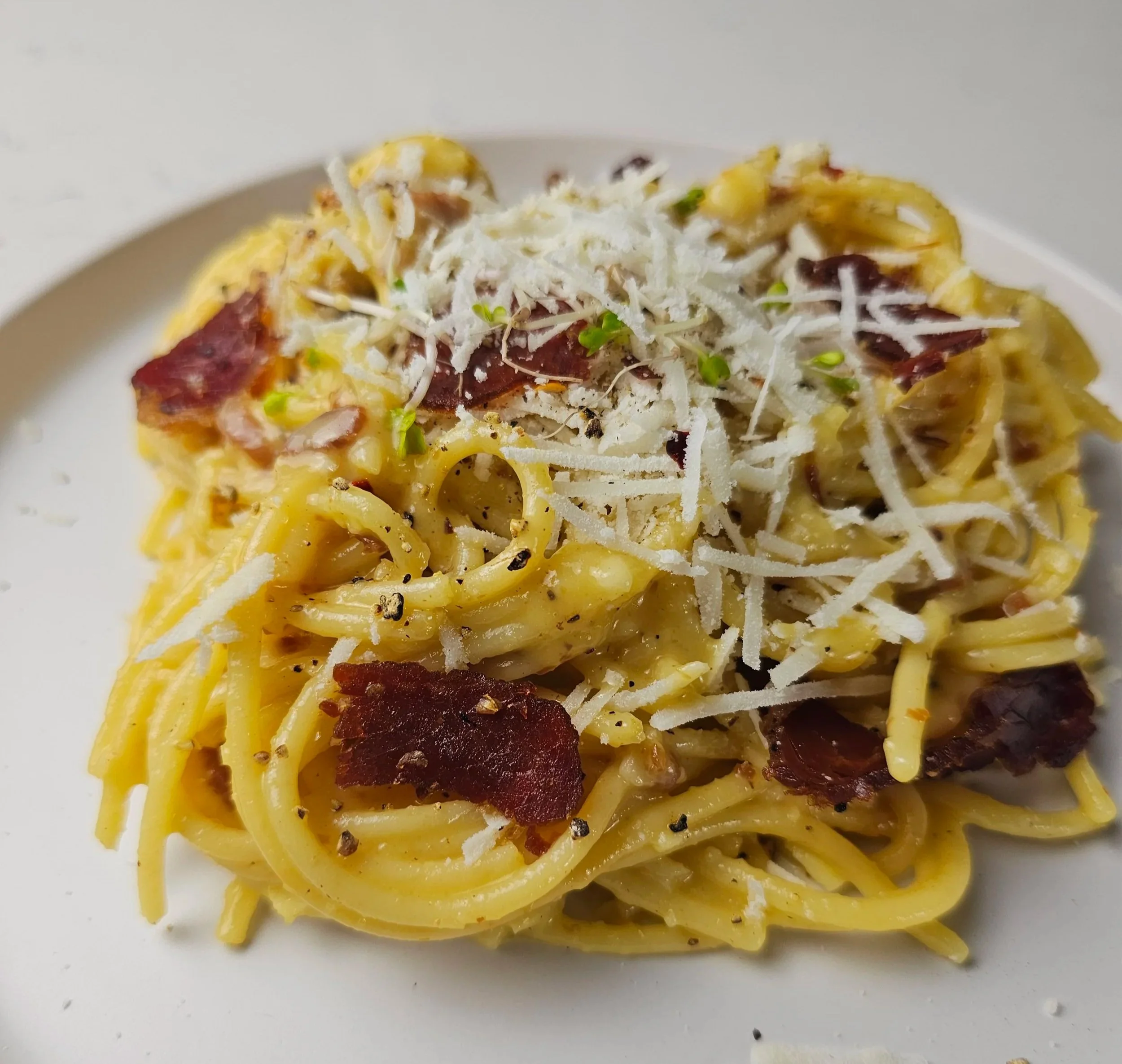
Biltong Carbonara
Carbonara is one of the most iconic Roman pasta dishes in the world, traditionally built around cured pork, pecorino cheese, eggs, black pepper, and pasta water to create a silky emulsion without cream. In this version, I wanted to reinterpret that structure through a Southern African lens using one of the region’s most beloved ingredients: biltong.
Biltong is a cured and air-dried beef commonly enjoyed across Zimbabwe, South Africa, Botswana, and Namibia. While many people compare it to jerky, the flavor and texture are completely different. Biltong is richer, more tender, and deeply savory, with concentrated beef flavor from the curing and drying process. It is not just a snack where I come from, it is part of the culture.
For this dish, I wanted to respect the foundation of a traditional carbonara while introducing the bold identity of biltong in a way that still feels intentional and balanced. Instead of replacing the classic smoky pork notes entirely, I use rendered bacon fat to preserve that familiar carbonara backbone while allowing the cured beef flavor of the biltong to take center stage.
The result is a fusion dish that feels both comforting and personal. Silky pasta coated in a glossy pecorino and egg sauce, layered with black pepper, smoky bacon fat, and the deep umami of biltong.
This recipe reflects the kind of cooking I love most, honoring classic techniques while telling my own story through flavor.

Biltong Carbonara
A Southern African-inspired twist on classic Roman carbonara made with biltong, pecorino, eggs, and smoky bacon fat for a rich, savory pasta with bold cured beef flavor.
Ingredients
- 8 oz (225g) dry spaghetti noodles
- 3 strips thick bacon (for rendered fat)
- 1 cup (black pepper) biltong, divided into two portions (½ cup finely chopped and ½ cup sliced for garnish)
- 2 whole eggs
- 1 egg yelp
- 1 1/4 cup grated pecorino cheese
- 1½ teaspoon freshly cracked black pepper
- 1 large garlic clove, smashed
- 1–1½ cups reserved pasta water
- Chilli flakes (optional)
Instructions
- In a large mixing bowl, combine the egg, yolk, pecorino, ½ teaspoon of the black pepper, and 1/2 the biltong, finely chopped. Mix thoroughly with a fork until fully combined then set aside.
- Bring a large pot of salted water to a boil. Cook the spaghetti noodles until 1 minute before al dente according to package instructions.
- Reserve 1–1½ cups pasta water before draining.
- Place bacon strips into a cold pan. Turn heat to medium-low and cook until crispy and the fat has rendered, about 6–8 minutes. Remove bacon (use for another reicepe) and set the oil aside. Keep rendered fat in the pan.
- Lower heat to low-medium then add smashed garlic clove and a small pinch of black pepper to the bacon fat. Cook for 20–30 seconds until fragrant, then remove garlic.
- Add drained pasta into the pan and toss in the bacon fat, follwoed by add a small splash of reserved pasta water and toss again.
- Transfer the pasta to the mixing bowl with the egg mixture.
- Wait about 10 seconds so the pasta is hot but not scorching.
- Toss aggressively until the sauce begins coating the pasta.
- Add reserved warm pasta water gradually, 1 tablespoon at a time, until the sauce becomes glossy and silky. Be patirnet, it's can take a few mintue!
- Twirl pasta onto serving plates and top servings with sliced biltong, extra pecorino, freshly cracked black pepper and chilli flakes.
- Serve immediately.
Nutrition Facts
Calories
640Fat (grams)
34 gSat. Fat (grams)
14 gCarbs (grams)
38 gFiber (grams)
2 gProtein (grams)
32 gI am not a certified nutritionist and any nutritional information on dontmissmyplate.com should only be used as a general guideline.
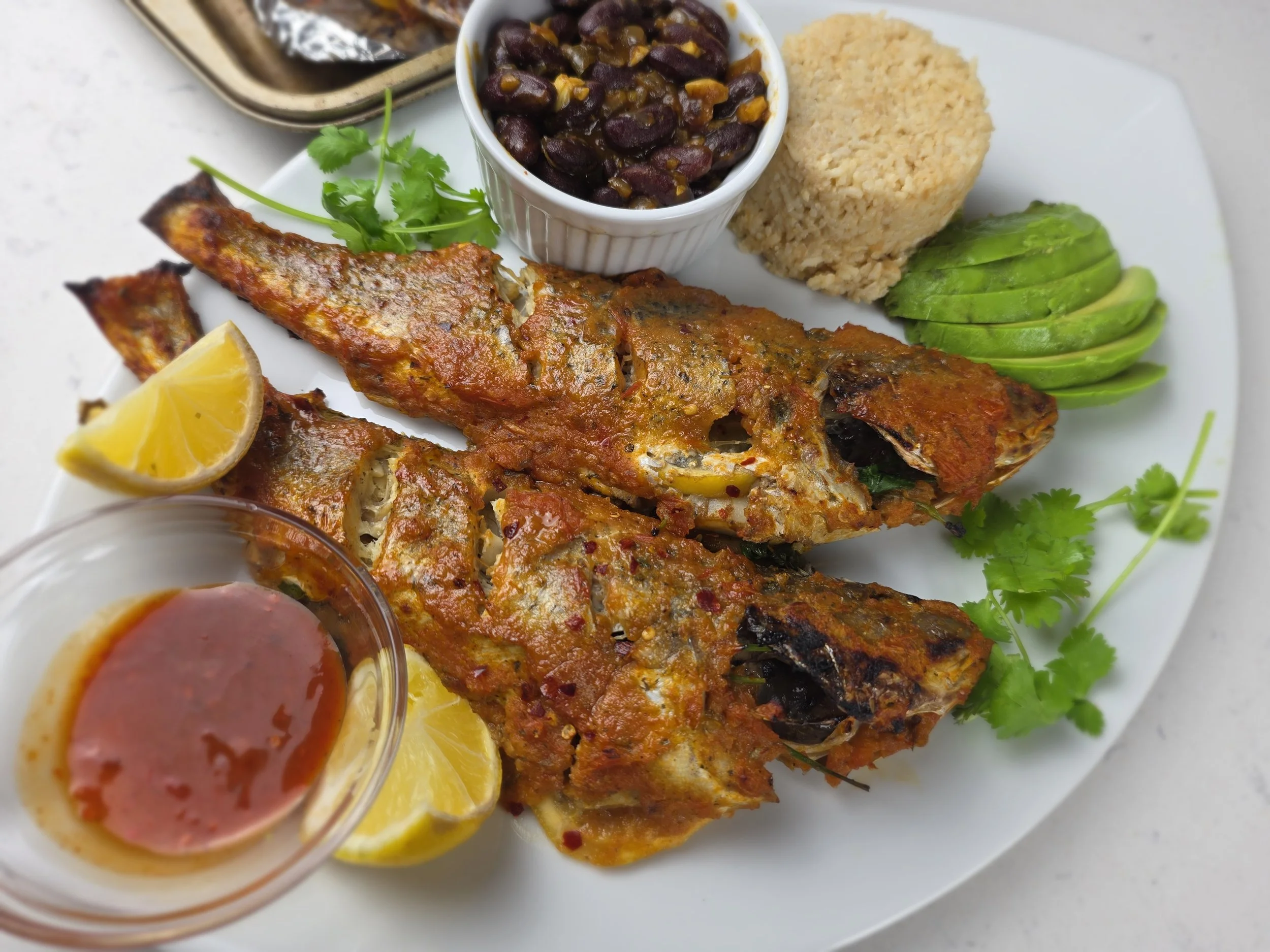
Roasted Croacker Fish with Muto Sauce (Zimbabwean-Style)
Whole fish has always been one of my favorite ways to cook and eat, and if you know my cooking, you know I’m known for it. There’s something about working with the fish in its entirety that feels more connected, more intentional, and ultimately more flavorful.
In Zimbabwe, fish is sometimes overlooked in everyday conversation around food, but it plays a significant role in many communities, especially in areas where access to freshwater lakes makes fish a regular and cherished part of the diet. Whether grilled, fried, or simmered in sauces, fish is a staple that deserves more attention.
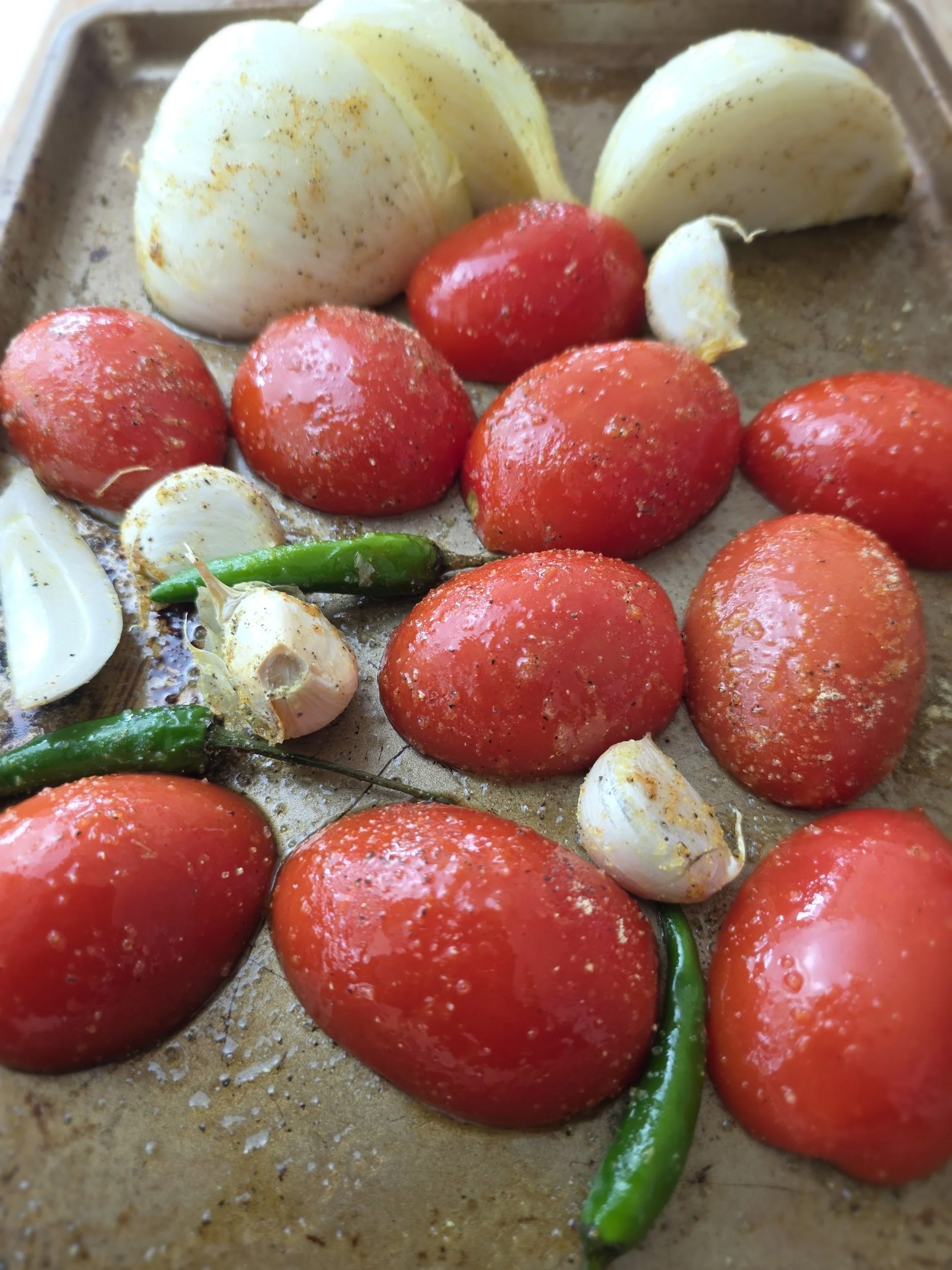
This dish brings that tradition into a slightly more modern, flexible approach. Instead of simply making a standard Zimbabwean tomato-based gravy (muto), where you roast the vegetable and aromatics base (tomatoes, onions, garlic, and chilies) to deepen their flavor, then blend them into what I call a muto-style sauce. It’s perfect for coating fish before finishing it in the oven.
It’s served alongside peanut butter rice and sugar beans, a combination that reflects how Zimbabwean meals often come together: a strong protein, a starch, and something hearty and comforting on the side. The peanut butter rice (also known as mupunga unedovi) adds richness, while the beans bring balance and texture.
More than anything, this dish is about rethinking how we approach familiar flavors. Zimbabwean food doesn’t have to stay in one format, it can evolve and adapt.
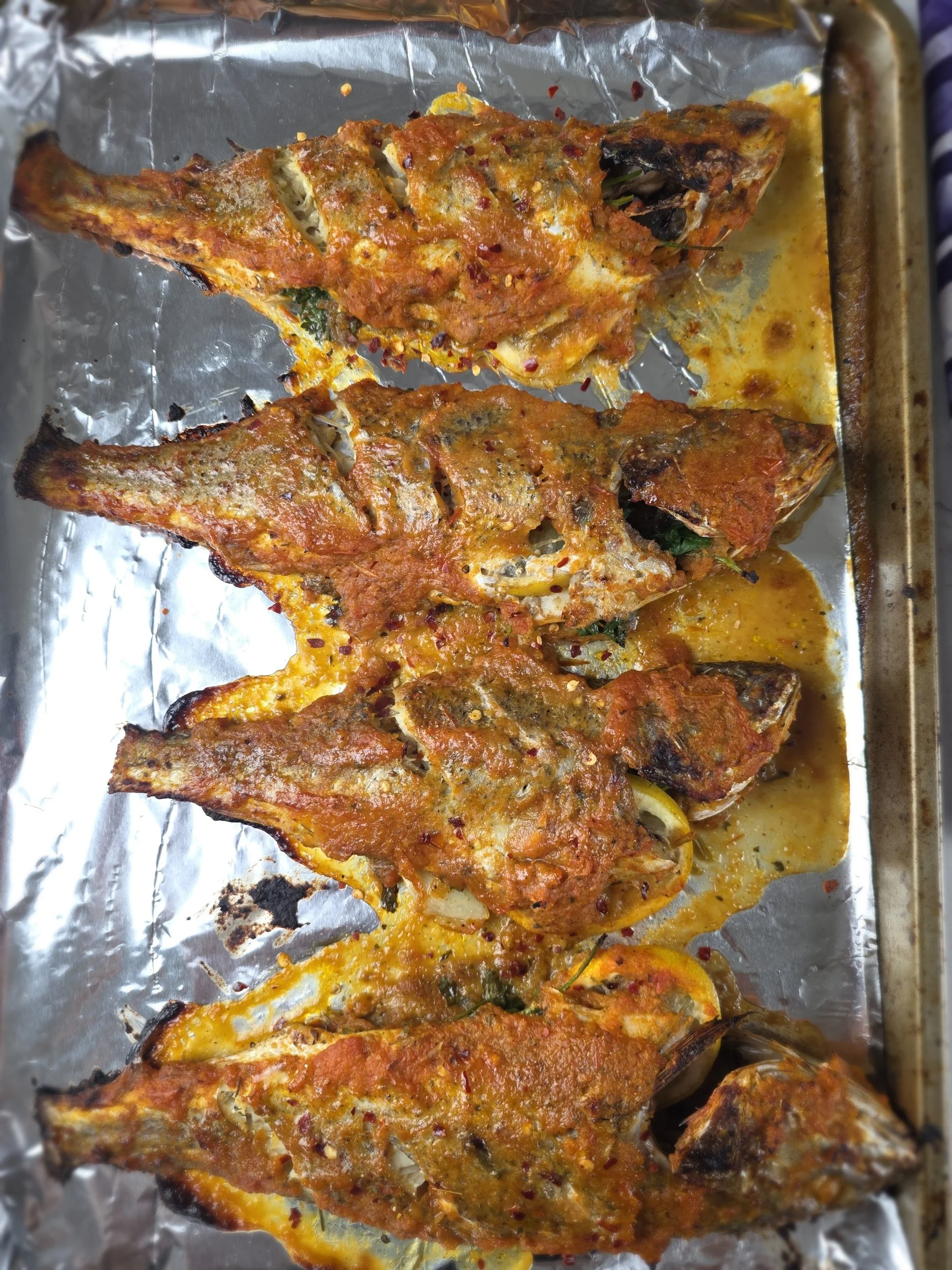
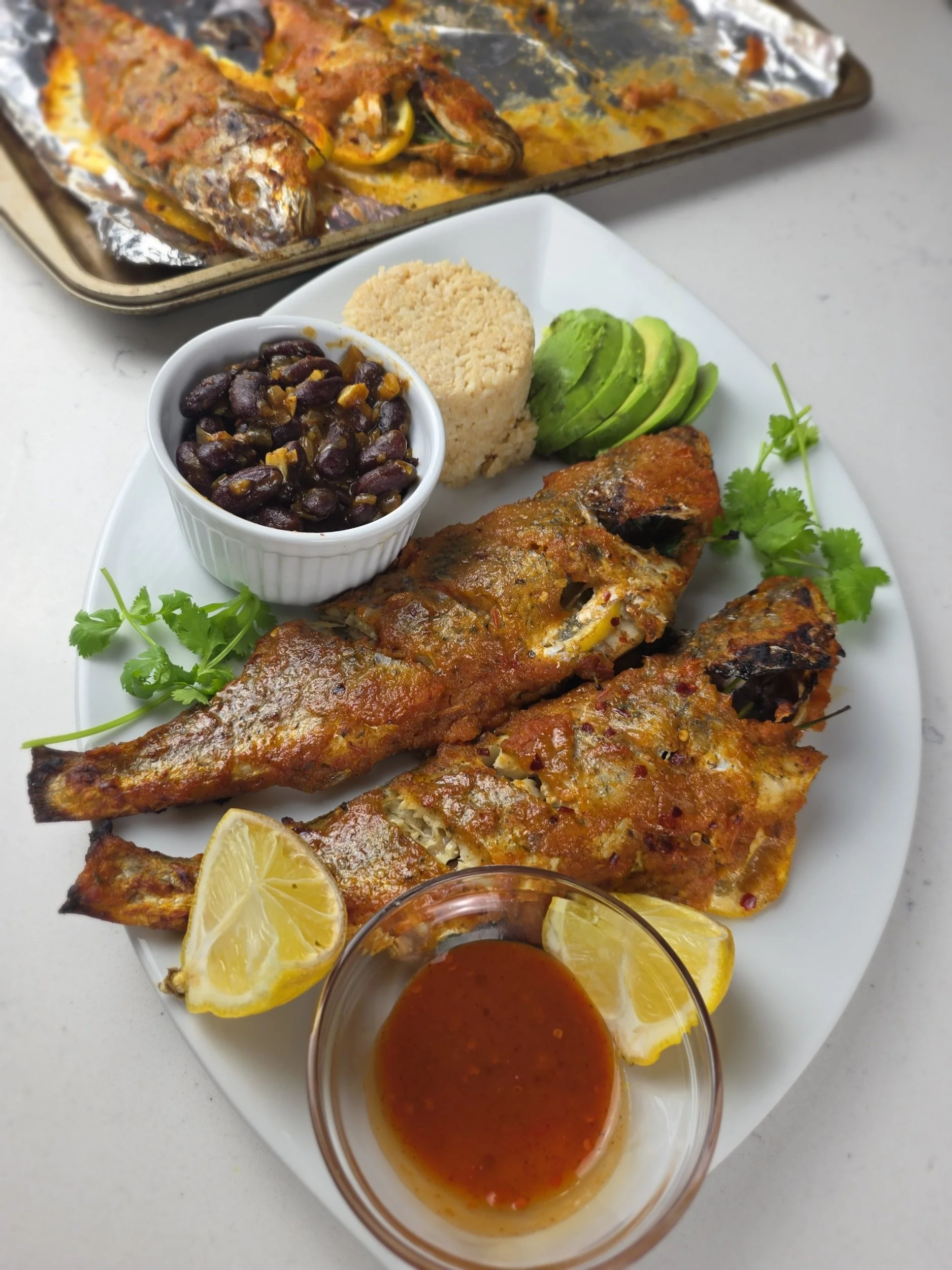

Roasted Croaker Fish with Muto Sauce (Zimbabwean Style)
A flavorful roasted whole fish served with a rich roasted vegetable “muto” sauce, paired with optional peanut butter rice and beans for a hearty Zimbabwean-inspired meal.
Ingredients
- 4 small whole croaker fish (~8 inches each), cleaned
- 2–3 tbsp olive oil
- 2 tbsp fish spice
- 2 tsp paprika
- 2 tsp salt
- 2 tsp black pepper
- 4 garlic cloves, sliced or lightly crushed
- 4 slices lemon + juice of 1 lemon (optional)
- Fresh cilantro or parsley (for garnish)
- Chili flakes (optional)
- 1 large onion, cut into wedges
- 5 Roma tomatoes, halved
- 4 garlic cloves, skin on
- 3–4 hot chilies (Thai or similar)
- 2–3 tbsp oil
- 1 tbsp tomato paste
- 1 tbsp Worcestershire sauce
- 1 tbsp seasoned salt (or to taste)
- 1 tsp black pepper
- Splash of stock or water (for blending)
- 1 cup basmati rice
- 2 tbsp smooth peanut butter
- 4 tbsp hot water
- 2 bay leaves
- 1½ tbsp rice seasoning or stock powder
- 1 tsp salt
- 1½ cups cooked sugar or kidney beans (or 1 can, drained)
- 1/3 onion, chopped
- 1/3 shallot, chopped
- 2 tbsp tomato paste
- 1 hot chili pepper, chopped
- 1 cup chicken stock
- 1–2 tbsp oil
- 1 tsp salt (to taste)
Instructions
- Preheat the oven to 220°C / 425°F.
- Toss the onion, tomatoes, garlic, and chilies with oil and salt, then spread them on a baking tray. Roast for about 25 minutes, flipping half way, until everything is soft.
- Remove the garlic skins, then transfer everything to a blender. Add the tomato paste, Worcestershire sauce, black pepper, and a splash of water. Blend until smooth, or mash for a chunkier texture if preferred. Pour into a pan and simmer for about 10 minutes, adjusting seasoning as needed, then set aside.
- Optional (rice): Cook the rice in salted water with bay leaves and seasoning according to package instructions. Once done, keep it warm. Mix the peanut butter with hot water until smooth, then fold it into the cooked rice until evenly combined.
- Optional (sugar beans): Heat oil in a pan for the beans and sauté the onion and garlic until soft. Add chili, tomato paste, and seasoning, stirring well to combine. Add the beans and stock, then simmer for 5–8 minutes until slightly thickened and flavorful.
- Reduce oven temperature to 200°C / 400°F.
- Pat the fish dry and score both sides. Rub with olive oil, salt, pepper, paprika, and fish spice.
- Stuff each fish with garlic, lemon slices, and herbs, then set aside.
- Place the fish on a baking tray and spoon some of the muto sauce over the top. Cover loosely with foil and bake for 8–10 minutes. Remove the foil and cook for another 5 minutes.
- Brush with more muto sauce, season with chilli flakes, and broil for 2–3 minutes until slightly caramelized.
- Serve with extra sauce and your chosen sides, such as peanut butter rice, beans, avocado, or chili sauce.
Notes
- Roasting the vegetables is essential for deep flavor, don’t skip it.
- Blend for smooth sauce or mash for rustic texture.
- Avoid overcooking the fish; it cooks quickly and can dry out.
- Always mix peanut butter with hot water before adding to rice for smooth consistency.
Nutrition Facts
Calories
500Fat (grams)
25 gCarbs (grams)
40 gProtein (grams)
35 gI am not a certified nutritionist and any nutritional information on dontmissmyplate.com should only be used as a general guideline.
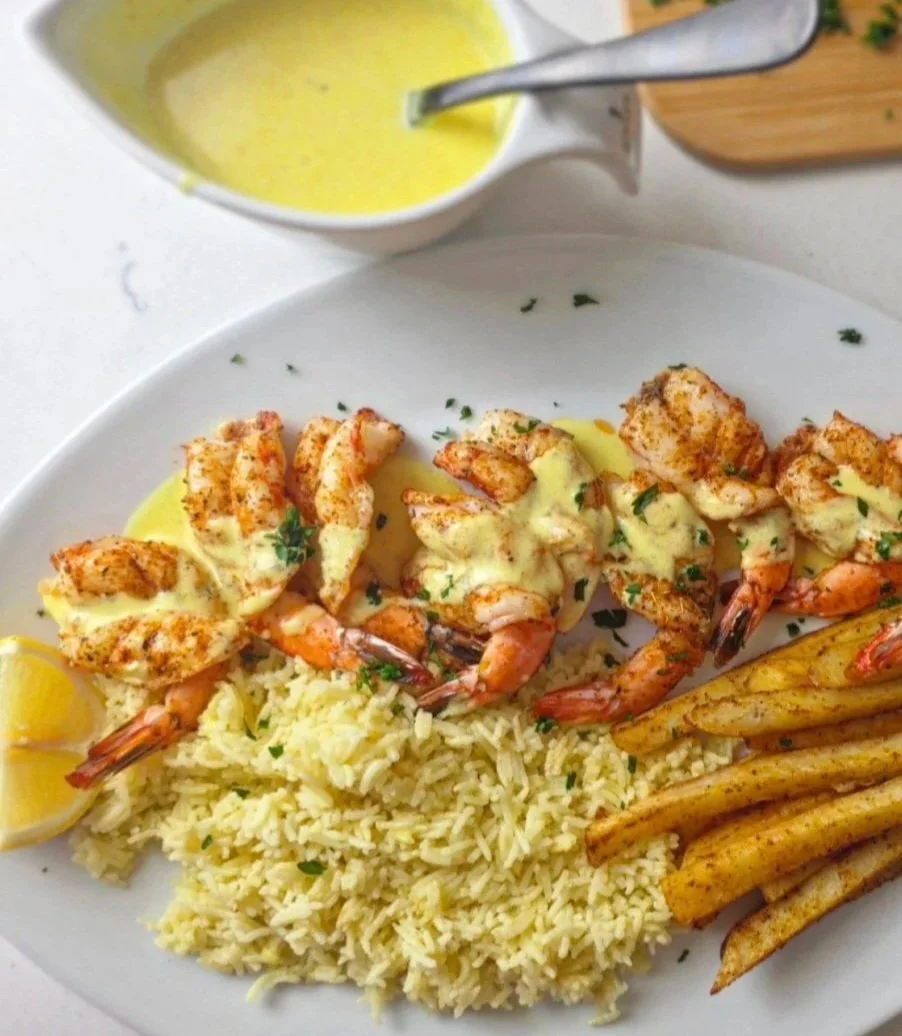
Copy Cat Ocean Basket Shrimp Platter with Lemon Cream Sauce
If you grew up in Southern Africa, or simply love a good seafood platter, you’ll recognize the iconic Ocean Basket experience. The restaurant chain became known for its generous platters of seafood, crispy fries, flagrant rice and most importantly a creamy, indulgent, lemon-forward signature that feel both comforting and celebratory.
This recipe is inspired by that classic, reimagined for a spring-ready table. The lemon cream sauce brings brightness and balance, cutting through the richness with a fresh, zesty lift that pairs beautifully with seafood. It’s a perfect example of how African coastal flavors naturally blend with Mediterranean influences (think citrus, butter, gentle spice, and herbs) creating something vibrant yet familiar. You may also see this combination with Mozambiquean peri-peri prawns.
Beyond flavor, the shrimp is a nutritional powerhouse: high in protein, low in calories, and rich in vitamin B12, selenium, and iodine. Paired with a citrus-forward cream sauce, it becomes a dish that feels indulgent without being heavy, ideal for warmer days and effortless entertaining.
Serve it simply with fries, rice, a crisp salad, or warm crusty bread to soak up the sauce.
For a wine pairing, serve with a chilled Sauvignon Blanc, crisp Chardonnay, or light rosé complements the lemon and enhances the natural sweetness of the shrimp.
Best of all, this dish comes together quickly, making it just as suited for a relaxed weekend lunch as it is for a quick but impressive spring lunch or dinner.
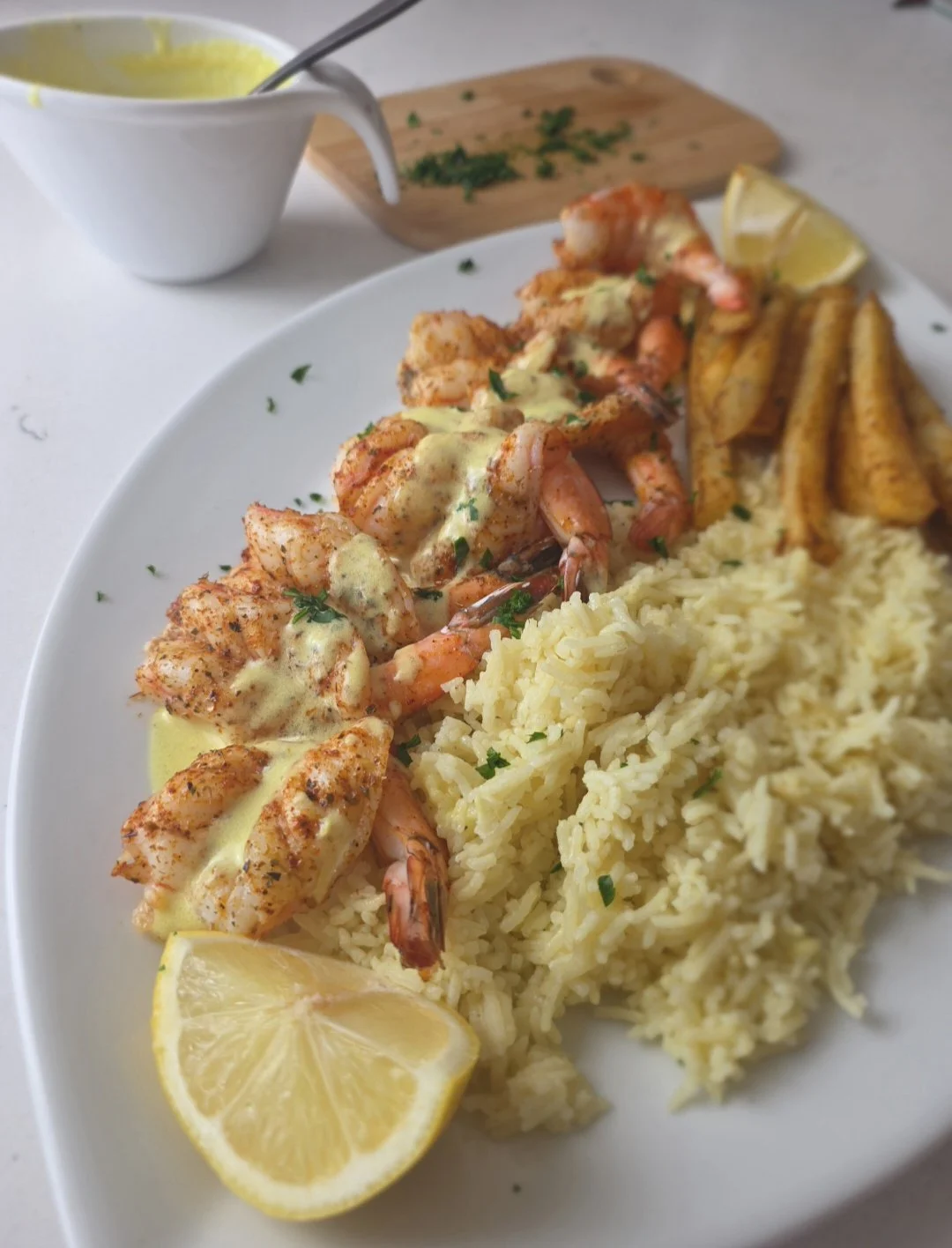

Copycat Ocean Basket Shrimp Platter with Lemon Cream Sauce
A simple, flavorful take on the iconic Ocean Basket shrimp platter. Juicy shrimp in a bright lemon cream sauce—easy enough for weeknights, but layered with flavor for something special.
Ingredients
- 1 lb (450 g) large shrimp, tail-on and deveined
- 2 tbsp olive oil
- 1 tsp Old Bay seasoning or peri-peri seasoning
- 2 tsp lemon juice (divided)
- 1/2 tsp garlic powder
- 1 tbsp smoked paprika
- 1 tbsp oregano
- Lemon wedges, for serving
- 1/2 cup (120 ml) heavy cream
- 5 tbsp unsalted butter
- 1/4 tsp flour
- 1/4 tsp turmeric (for color)
- 1 tsp Robertson’s Spice for Rice
- 1 tsp Aromat all-purpose seasoning
- Juice of 1 lemon (about 2 tbsp)
- 1 tsp lemon zest
- 1 tsp Dijon mustard
- Salt and pepper, to taste
- Chopped parsley, for garnish
Instructions
- Preheat the oven to 400°F (200°C).
- Make the lemon cream sauce: On low heat, melt the butter. Whisk in the flour until fully dissolved. Do not overheat, or the milk solids may separate.
- Turn off the heat, then add the lemon juice and zest, followed by the mustard, seasonings, salt, and pepper. Simmer for 1–2 minutes until slightly thickened. Set aside.
- Prepare the shrimp: Pat the shrimp dry. Peel the shells, keeping the tails on by pinching the tail and gently removing the outer shell. (Reserve shells for seafood stock, if desired.)
- Butterfly the shrimp: Using a sharp knife or kitchen scissors, carefully make an incision along the back of each shrimp. Do not cut all the way through. Gently open and flatten with your fingers to create a butterfly shape.
- Season the shrimp: In a bowl, mix olive oil, lemon juice, garlic powder, and Old Bay (or peri-peri). Brush the mixture evenly over the open side of the shrimp.
- Bake: Arrange shrimp flat-side down on a parchment-lined baking tray. Bake for 8–10 minutes, or until the shrimp reach an internal temperature of 145°F (63°C).
- Serve: Arrange the shrimp on a plate or tray with your chosen sides (like rice or fries). Drizzle with lemon cream sauce, garnish with parsley, and serve with lemon wedges.
Notes
- For deeper flavor, use the full spice blend listed above. You can keep it simple or build layers, it’s up to you.
- For the authentic Ocean Basket experience, serve shrimp over fries and drizzle sauce just before serving.
- Use fresh lemon juice for best flavor.
- Can be doubled for a crowd or adapted with other seafood like calamari, mussels, or fish.
- Optional: add a pinch of chili flakes for a subtle kick.
Nutrition Facts
Calories
320Fat (grams)
22 gCarbs (grams)
9 gProtein (grams)
25 gI am not a certified nutritionist and any nutritional information on dontmissmyplate.com should only be used as a general guideline.

Baked Snapper with a Quick African Pepper Sauce
At least in its authentic glory, African pepper sauce is commonly served as a condiment, dip or cooking sauce to pair with grilled meats and vegetables or used in stews, giving your dish a perfect balance of heat and depth of flavour. It's most popular in West Africa, but you see other versions of this with other peppers taking centre stage across the Continent. The combination of peppers, herbs, and spices can enhance or top off almost any dish, and it is extremely versatile. I pick this over conventional hot sauce any day because it uses fresh vegetables, and you can make batches to freeze for future use.
This version provides a quick, easy and convenient way to add flavour to your fish. I used red snapper in this recipe, but you can also use halibut, sea bass, bream, tilapia, or any fish with a mild taste that will absorb all the flavours. For the pepper sauce, instead of cooking down and frying the blended vegetables on the stovetop as is typically done, I roasted the vegetables to bring the flavours out before blending them, then used the pepper mix to coat the fish while it baked.
One great thing about this sauce is that you can tailor it to your tastes and tolerance by adding more or fewer tomatoes and peppers. You can also remove the seeds from the hot peppers to take the heat down a notch. I prefer habanero peppers in terms of the heat and flavour, but you can use a range of peppers, from jalapenos to scotch bonnet. In any case, I recommend using the freshest ingredients possible. In addition, especially since peppers are part of the Dirty Dozen, try using organic peppers if you can afford them.

Baked Red Snapper with Quick African Pepper Sauce

Ingredients
- 1 large red snapper
- 1 tablespoon garlic powder
- 2-3 garlic cloves
- 2 lemon slices (optional)
- 1 sprig fresh thyme
- 1 sprig fresh parsley
- 2 teaspoons salt
- 2 teaspoons black pepper
- 2 teaspoon Royco Usavi Mix (optional)
- 2 teaspoons oregano
- 2 teaspoons basil
- 1/2 cup olive oil, and extra for roasting the peppers
- 1 teaspoon salt
- 1/2 teaspoon black pepper
- 1 chicken bouillon cube
- 1/4 cup parsley, stems removed
- 5 large basil leaves
- 1/3 large yellow onion
- 3-4 mini sweet peppers
- 2 small habanero peppers
- 1 1/2 - 2 Roma tomatoes
- 1 inch piece fresh ginger
- Salt and pepper to taste
Instructions
- Place your peppers, onion, tomato, and garlic on a baking sheet with parchment paper—season with salt and pepper to taste.
- Roast the vegetables for 25 minutes at 400F or until roasted to your desired doneness.
- Remove from the oven and allow to cool for 15 minutes, then transfer to a food processor or blender. Add the ginger, parsley, basil, bouillon cube, salt, and pepper. Blend until combined, and a paste forms. Add the olive oil during this process to help smoothen the mixture.
- Set aside while you prepare the fish.
- Make sure your fish is clean, and then pat it dry with paper towels. Add the salt, pepper, garlic, herbs, and optional Royco/all-purpose seasoning.
- Stuff the inside of the fish with the thyme, parsley, lemon and garlic.
- Place the fish inside some foil and place it on a baking tray. Spoon the pepper sauce over both sides of the fish, ensuring it is fully coated.
- Place the fish in the oven and bake at 350F for 30 minutes. After 15-20 minutes, remove the fish, open the foil (without burning yourself with the hot air) and baste the sauce over the fish.
- Leave the foil open and allow the cause to continue cooking. This will help thicken and caramelize the sauce, developing the flavours further.
- Remove from the oven and spoon some sauce into the serving dish, placing the fish on top and adding the rest of the sauce on top. Garnish with fresh parsley and serve!
Notes
- To avoid overcooking the fish, check the internal temperature after 15-20 minutes and use that to determine how much more time you need.
- If you want a thicker sauce, you can place it on the stovetop before covering the fish with it and baking.
- If you get fresh fish from the market, ensure it is cleaned and descaled.
Nutrition Facts
Calories
237Fat (grams)
13.3 gSat. Fat (grams)
1.9 gCarbs (grams)
24.9 gFiber (grams)
6 gProtein (grams)
10.9 gI am not a certified nutritionist and any nutritional information on dontmissmyplate.com should only be used as a general guideline.