

Ugandan Rolex Egg Wrap (Street Food Recipe)
Good street food does not need to stay on the street. It can absolutely live in your kitchen.
The Rolex is a beloved Ugandan street food made from a simple vegetable omelette wrapped in soft chapati, a flaky unleavened flatbread similar to roti. I have spent time in Uganda and other parts of East Africa, and I draw inspiration from the way street food culture shows up across the region, fast, fresh, and deeply satisfying.
Across East Africa, chapati is a staple that shows up at breakfast, lunch, and everything in between. It is often used as the base for quick handheld meals like the Rolex, which makes it one of the most practical and versatile snacks you can make at home.
For me, this recipe is part of a wider way of cooking, taking inspiration from street foods across Uganda and the region, then recreating them in a home kitchen where they are just as accessible, flexible, and fun to eat.
The Rolex is exactly what it sounds like. Eggs are cooked into a thin omelette, layered with vegetables, and rolled tightly in flatbread to create a warm portable wrap. It works just as well for breakfast as it does for a midday snack or quick dinner.
There is no single correct way to make it. Some versions are simple with just eggs, onion, and tomato, while others are packed with cabbage, peppers, or whatever you have on hand. That flexibility is what makes it such a perfect everyday dish. It adapts to your kitchen and your schedule.
In this version, I keep it simple, fast, and home friendly so you can recreate it without special ingredients or long prep times. It is proof that street food does not have to stay on the street. It can become part of your everyday cooking rhythm.
Whether you are looking for a quick breakfast wrap, an easy lunch, or a satisfying snack, this Ugandan Rolex is the kind of recipe that fits into real life. No rules, just good food.

Ugandan Rolex (Omelette Rolled in Chapati)
A delicious and satisfying East African street food classic, fluffy vegetable omelette wrapped in soft, flaky chapati flatbread. This “rolex” is customizable, quick to make, and perfect for breakfast, brunch, or anytime you want a flavorful, handheld meal.
Ingredients
- 1 cup all-purpose flour
- 1 teaspoon salt
- 1 tablespoon vegetable oil, plus extra for cooking
- 1/4 cup hot water + 1 tablespoon hot water (adjust as needed)
- 4 eggs
- 1/2 teaspoon black pepper
- 1 tablespoon fresh parsley, chopped
- 1 teaspoon Italian seasoning
- 1 teaspoon dried parsley
- Pinch of salt
- 2 tablespoons pesto
- 1/4 cup Parmesan cheese, grated
- 2 tablespoons sun-dried tomatoes, chopped
- 2 tablespoons goat cheese
- 1 avocado, mashed or sliced with lemon juice
Instructions
- In a medium bowl, mix the flour and salt. Add the vegetable oil and mix. Gradually add the hot water while stirring to form a soft dough. On a lightly floured surface, knead the dough for about 5 minutes until smooth. Shape into a ball, then divide into two equal pieces. Cover and let rest for 10 minutes.
- On a lightly floured surface, roll each dough ball into a circle about 1/4 inch thick and roughly the size of the pan you’ll use to cook the omelette.
- Lightly brush each chapati with oil, then press into a lightly floured shallow plate. Flip and repeat.
- Heat a non-stick pan over medium-high heat and lightly oil it. Cook each chapati for about 15 seconds per side, flipping once, until you see brown spots and the chapatis are cooked through. Set aside.
- In a bowl, beat the eggs with black pepper, fresh parsley, Italian seasoning, dried parsley, salt, Parmesan cheese, half of the goat cheese, and half of the sun-dried tomatoes.
- Pour the egg mixture into the hot pan and cook omelettes one at a time until set.
- Place each omelette on top of a chapati. Top each with half an avocado and 1 tablespoon of pesto. Sprinkle with the remaining sun-dried tomatoes and goat cheese.
- Roll up each chapati tightly to form a “rolex.” Cut each in half, secure with toothpicks, and serve hot.
I am not a certified nutritionist and any nutritional information on dontmissmyplate.com should only be used as a general guideline.

How to Make East African Chapati – Step-by-Step Recipe
Chapati is one of the most beloved and widely eaten flatbreads in East Africa. Popular in countries like Kenya, Uganda, and Tanzania, it’s a staple at family dinners, street food stalls, and festive gatherings. While chapati originated from the Indian subcontinent and was introduced to Africa through trade and migration, it has evolved into a distinct East African version that is softer, flakier, and richer than its Indian counterpart.
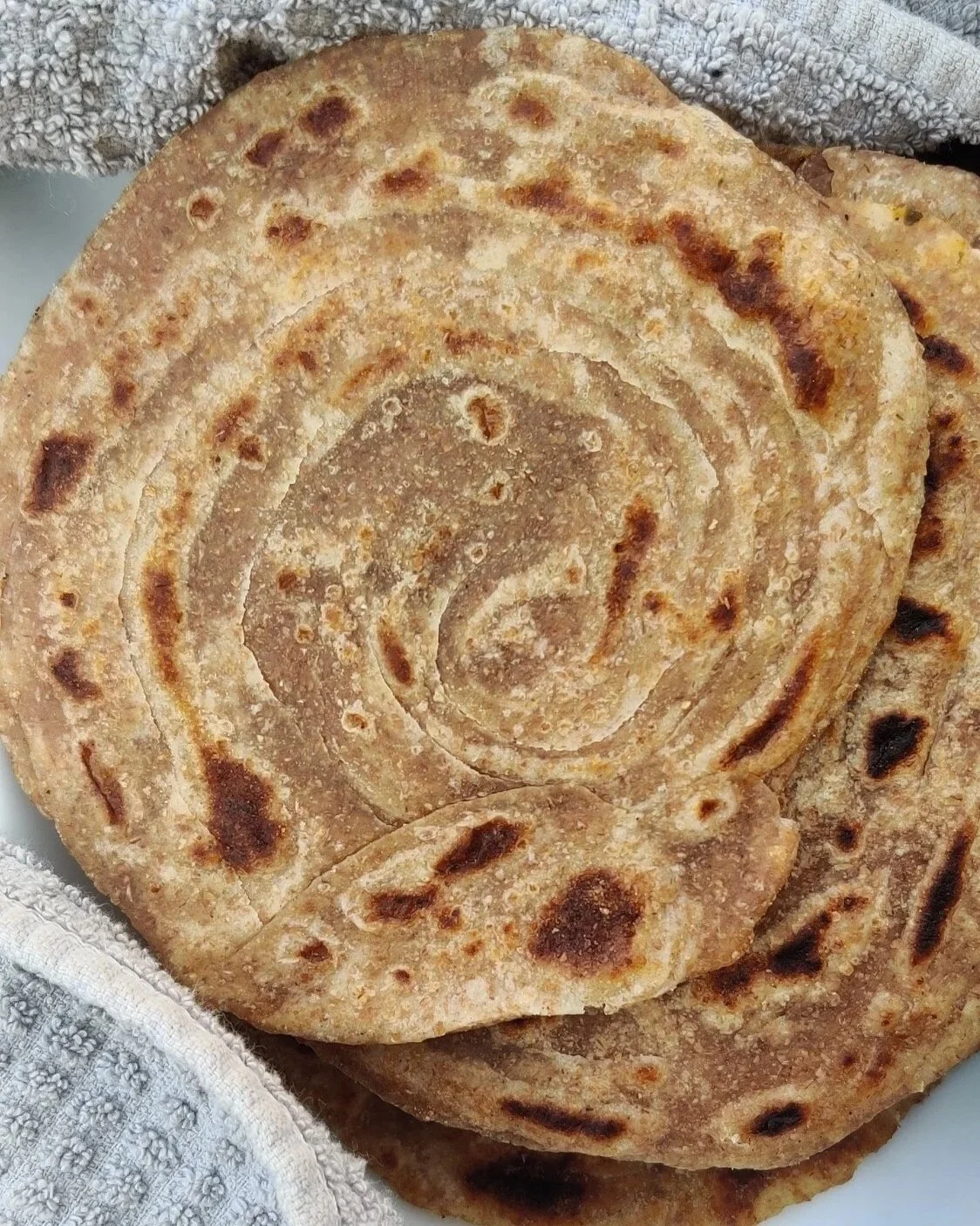
What sets East African chapati apart is the generous use of oil or ghee in both the dough and the cooking process. This gives the bread its signature soft texture and golden, flaky layers. When made well, chapati is slightly crisp on the outside, soft and chewy on the inside, and perfectly seasoned with just the right amount of salt and fat.
In many African homes, bread is more than just food. It plays an important cultural role at the table and is often shared during meals as a symbol of hospitality. Chapati in particular is used to scoop up stews, beans, or vegetables, making it an essential part of everyday meals and celebrations. For many, learning to make chapati from scratch is a family tradition passed down through generations.
I originally created this recipe to pair with a mashed kale stew, but it's incredibly versatile. Chapati is also perfect with curries, lentils, grilled meats, or simply served as a side with a variety of other dishes.
If you’ve ever ended up with dry or tough chapatis, this recipe offers a few simple but essential tips. Be generous with the oil or ghee, knead the dough thoroughly to build elasticity, and give it time to rest before rolling. For extra flaky layers, try the folding and coiling method described in the recipe. These steps make a big difference in achieving that classic East African chapati texture.
Whether served with sukuma wiki, lentils, or a cup of tea, this chapati brings the flavor and comfort of East African home cooking to your kitchen.


How to Make East African Chapati – Step-by-Step Recipe
A soft, flaky flatbread that's a staple across East Africa. This chapati is easy to make, incredibly versatile, and perfect with stews, curries, or on its own.
Ingredients
- 1 cup whole-wheat flour (you can substitute all-purpose flour if desired)
- 1 cup all-purpose flour, plus extra for dusting
- 1 teaspoon salt
- 2 tablespoons olive oil or ghee, plus extra for brushing
- ¾ cup hot water
Instructions
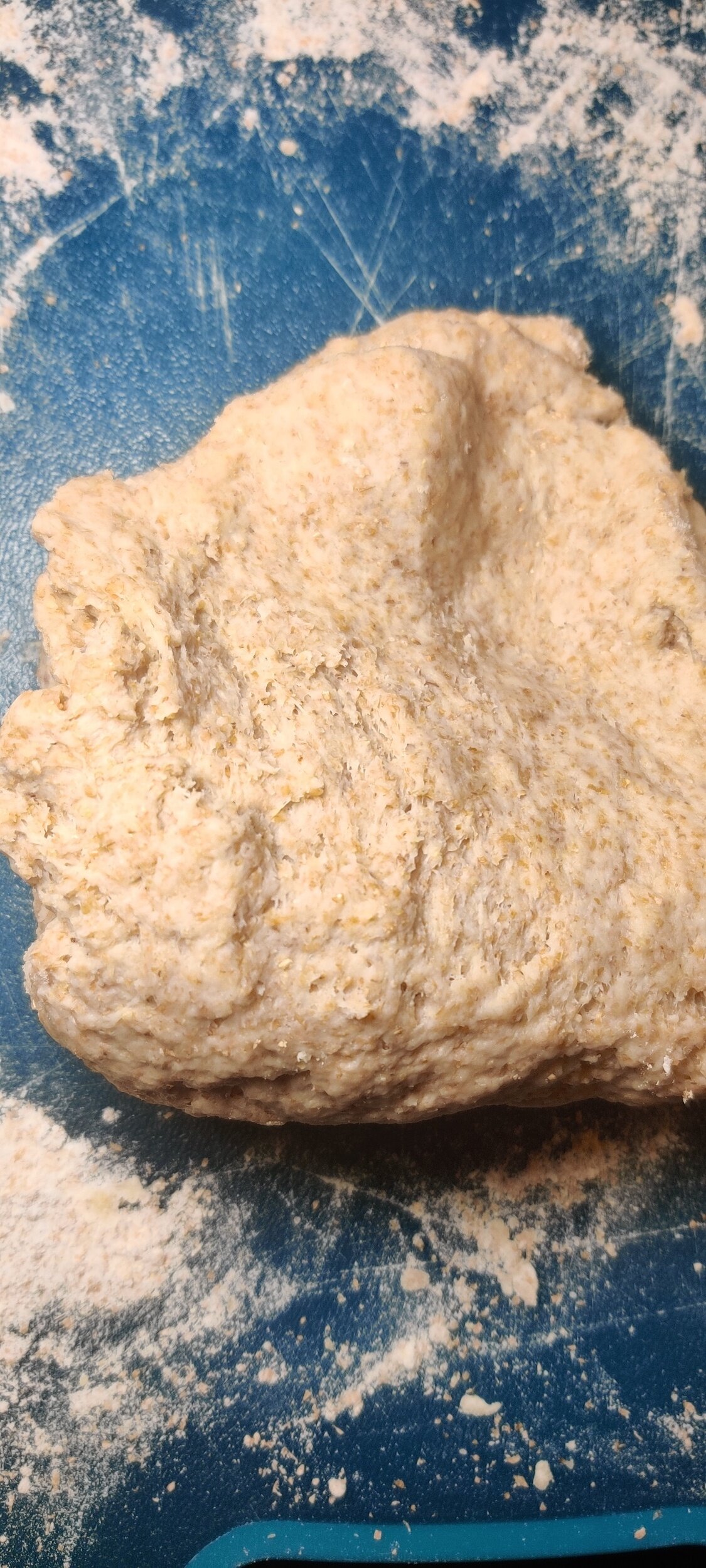
- In a large bowl, combine the whole-wheat flour, all-purpose flour, and salt.
- Using a wooden spoon or spatula, mix in the oil or ghee. Gradually add the hot water in two parts, mixing until a soft, elastic dough forms. Don’t skimp on the oil or ghee, this helps prevent dry chapatis.
- Turn the dough out onto a lightly floured surface. Knead for about 10 minutes until smooth and pliable.
- Divide the dough into 8 to 10 equal portions, depending on your preferred chapati size.
- Cover and let rest for 10 minutes.
- On a floured surface, roll out each dough ball into a round shape, similar to a tortilla but slightly thicker.
- Lightly brush each side with oil or ghee, then dip both sides in flour, shaking off any excess.
- Heat a dry, non-stick pan over medium-high heat.
- Place one chapati in the pan and cook for about 30 seconds, or until brown spots begin to form. Flip and cook the other side. Repeat with the remaining dough.
- If you'd like to create distinct layers inside your chapati, follow these extra steps after dividing the dough:
- Take each dough ball and fold it back and forth like a fan or piece of paper.
- Alternatively, roll it up tightly like a carpet.
- Coil the folded dough into a spiral shape (like a cinnamon roll), then cover and let rest under a damp towel for 30 minutes.
- After resting, gently press each dough coil flat and roll it out again into a round shape.
- Lightly brush both sides with oil/ghee, press into flour, and shake off the excess.
- Cook as described above.
Notes
Serving and Storage Tips
- Serve chapatis warm, ideally right off the pan.
- To store, wrap them tightly in foil or a clean cloth to keep them soft and prevent drying out.
I am not a certified nutritionist and any nutritional information on dontmissmyplate.com should only be used as a general guideline.